
Every week, our sales team receives messages from buyers who chose the cheapest quote—only to discover the real cost was far higher after freight, rework, and finish failures arrived at their warehouse.
To compare aluminum furniture handle quotes fairly, standardize your RFQ so every supplier quotes the same alloy, finish, dimensions, packaging, and shipping terms. Then calculate the total landed cost—unit price plus tooling, freight, duties, and defect risk—rather than comparing headline prices alone. The cheapest quote often hides the most missing information.
Below, we break down the four areas where hidden costs most often appear—material grade, logistics, mold and customization fees, and surface finish quality. Use these sections as a checklist the next time you send out an RFQ for aluminum handles.
How can I identify if a lower quote for aluminum handles is due to inferior material grades or recycled alloys?
We run our extrusion presses with both 6063-T5 and 6061-T6 billets daily, so we see firsthand how alloy choice changes the handle's strength, finish acceptance, and long-term corrosion resistance 1. A quote that seems too low often traces back to a downgrade you were never told about.
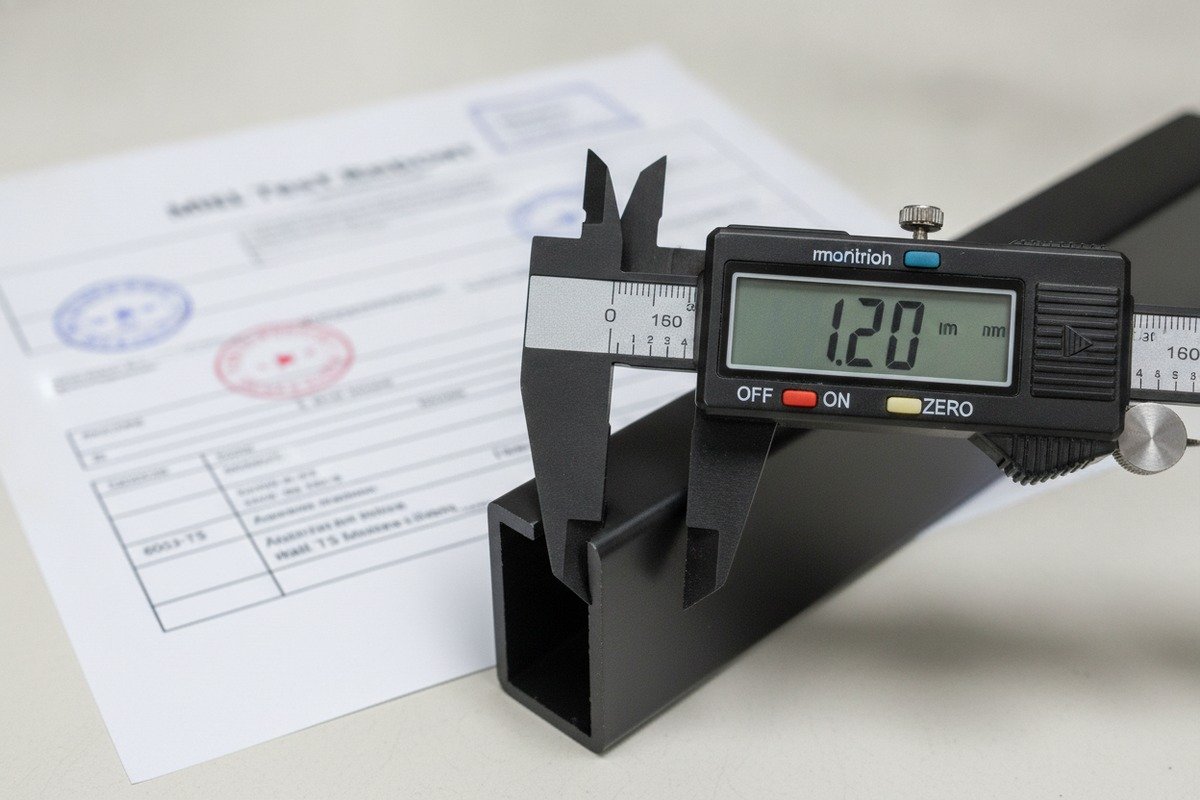
A lower aluminum handle quote frequently results from substituting a cheaper alloy—such as secondary recycled 6063 with impurities—or reducing wall thickness below your drawing tolerance. Always request a Mill Test Report (MTR), confirm the specific alloy designation, and compare the quoted weight per piece against your specification to catch material shortcuts before production starts.
Why Alloy Grade Matters for Furniture Handles
Aluminum alloys are not interchangeable. The most common grade for furniture handles is 6063-T5 because it extrudes cleanly, accepts anodizing well, and offers enough strength for daily cabinet use. Some suppliers quote 6060 or even unspecified recycled aluminum 2. Recycled alloy is not inherently bad—our factory uses a percentage of recycled billet for sustainability—but uncontrolled recycled material can contain excess iron or silicon, which causes surface pitting after anodizing and reduces corrosion resistance in humid climates like Vietnam or the Gulf region.
How to Spot a Material Downgrade
Here are practical steps:
- Ask for the alloy and temper in writing. If a supplier says "aluminum" without specifying 6063-T5 or equivalent, that is a red flag.
- Request the Mill Test Report (MTR). This document shows the chemical composition 3 of the billet. Any reputable extruder can provide it.
- Compare piece weight. If your drawing calls for a 1.2 mm wall thickness and the handle should weigh 85 grams, but the supplier's sample weighs 68 grams, the wall has been thinned.
- Order samples from each supplier. Cut one handle open and measure the cross-section with calipers. We do this routinely when benchmarking competitors for our clients.
Quick Alloy Comparison Table
| Property | 6063-T5 (Standard) | 6060-T5 (Economy) | Uncontrolled Recycled |
|---|---|---|---|
| Tensile Strength (MPa) | ≥ 175 | ≥ 160 | Variable |
| Anodize Quality | Excellent, uniform color | Good | Risk of streaks and pitting |
| Corrosion Resistance | High | Moderate | Unpredictable |
| Typical Use | Furniture handles, architectural profiles | Light-duty trim | Low-cost commodity parts |
| Price Impact | Baseline | 5–8 % lower | 10–20 % lower |
The Real Cost of Cheap Alloy
A material downgrade can save a supplier $0.05–$0.15 per handle. But if 3 % of your order develops surface defects after anodizing, and you sell to a furniture factory that rejects the batch, the rework and air-freight replacement cost can exceed the entire original material savings. When we quote, we include alloy and temper on every line item so buyers can compare apples to apples.
Our warehouse ships around 300 tons of aluminum handles and profiles each month, and we have learned that the gap between a factory gate price and the price at your door can be enormous—especially when buyers forget to ask about packaging dimensions, port charges, or transit time variability.
Hidden logistics costs include inland trucking, port handling, container fumigation, customs duties, destination demurrage, and insurance. Lead time risks arise from booking delays, peak-season surcharges, and port congestion. Always compare quotes on the same Incoterm—FOB, CIF, or DDP—and add a buffer of 7–14 days to any stated shipping timeline to protect your inventory plan.

Incoterms Change Everything
A quote labeled "EXW" (Ex-Works) looks cheap because the buyer pays for everything from the factory door onward. A quote labeled "CIF" includes cost, insurance, and freight to your destination port. If you compare an EXW price from Supplier A against a CIF price from Supplier B, you are comparing two completely different scopes. Our recommendation is to ask every supplier to quote FOB Foshan 5 (or their nearest port) so you have one common baseline, and then calculate your own freight separately.
Common Hidden Logistics Fees
| Fee Type | Where It Hides | Typical Range (USD) |
|---|---|---|
| Inland trucking (factory to port) | Often excluded from EXW quotes | $80–$250 per shipment |
| Port handling / THC | Sometimes excluded from FOB | $100–$300 per container |
| Fumigation / phytosanitary certificate | Required for wooden pallets | $50–$120 per container |
| Destination demurrage | Charged if container sits at port | $75–$250 per day after free days |
| Customs brokerage 6 at destination | Rarely mentioned by Chinese suppliers | $150–$400 per entry |
| Import duty on aluminum articles 7 | Varies by country (HS code 8302) | 0 %–10 % of CIF value |
| Insurance | Often skipped on small orders | 0.3 %–0.5 % of cargo value |
Lead Time Risks That Inflate Cost
Lead time is not just about patience. Every extra week of transit or production delay means you must hold more safety stock, which ties up working capital. During Chinese New Year or the Canton Fair season, production slots fill up fast. We keep 300 tons of stock handles ready to ship within 48 hours specifically to help buyers avoid this gap. But for custom orders, the realistic timeline is 3–7 days for production plus 20–35 days of ocean freight to the Middle East or Southeast Asia.
If a supplier promises 10-day delivery on a custom handle and the ocean transit alone takes 25 days, something does not add up. Either they are quoting air freight (expensive) or they are not being honest about the timeline.
Packaging Dimensions Matter
Bulky packaging inflates freight cost. A handle packed in oversized foam inserts may use twice the carton volume of a handle packed in nested trays. When we design packaging for our clients, we optimize carton size to maximize container loading. A 20-foot container can hold roughly 28 CBM. If poor packaging reduces your loading efficiency by 20 %, you are effectively paying 20 % more per handle in freight.
How do I evaluate mold costs and customization surcharges to ensure my total procurement budget stays on track?
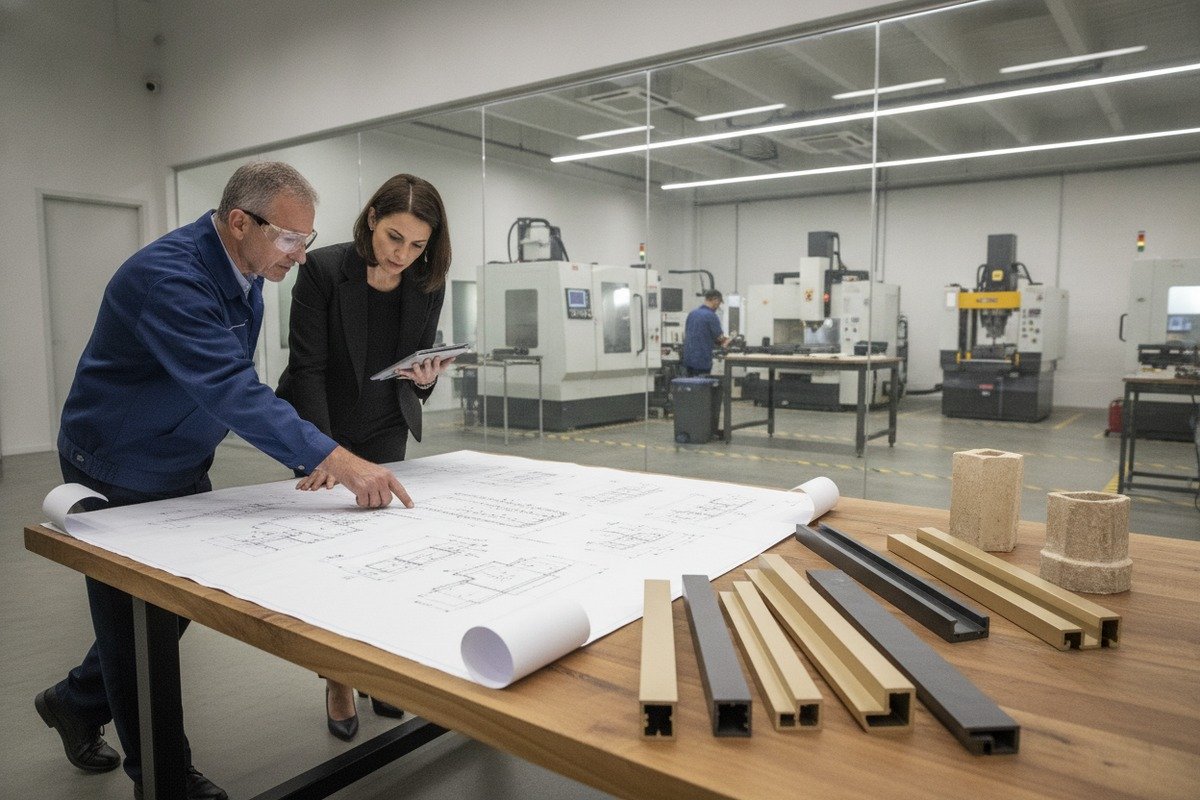
When a furniture factory client in Dubai asked us to develop a new recessed pull handle with a unique cross-section, the tooling cost discussion took longer than the handle design itself. That is normal—mold fees and customization surcharges are where budgets quietly balloon if you do not ask the right questions upfront.
Evaluate mold costs by asking whether the mold fee is a one-time charge or amortized into the unit price, who owns the mold after payment, and whether the mold can produce your exact profile tolerance. Customization surcharges for special lengths, colors, or finishes should be quoted as separate line items so you can compare them across suppliers and decide which custom features are truly worth the extra cost.
One-Time Mold Fee vs. Amortized Cost
There are two common ways suppliers handle tooling:
- One-time mold fee. You pay $300–$1,500 upfront for the extrusion die 9. After that, the unit price is lower. You typically own the mold.
- Amortized into unit price. No upfront mold fee, but the supplier adds $0.05–$0.30 per handle to recover the cost over your first order. You may not own the mold.
Both approaches are valid. The key is to calculate total cost over your expected order volume. For a buyer ordering 10,000 handles, a $600 mold fee adds only $0.06 per piece. But if you order only 1,000 handles, that same mold fee adds $0.60 per piece—which can be more than the unit price difference between two suppliers.
Common Customization Surcharges
| Customization Type | Typical Surcharge | When It Applies |
|---|---|---|
| New extrusion die (mold) | $300–$1,500 one-time | Custom cross-section profile |
| Custom anodize color | $0.05–$0.20 per piece | Non-standard color like champagne gold |
| Custom length cutting | $0.02–$0.10 per piece | Lengths outside standard catalog |
| Laser engraving / logo | $0.03–$0.15 per piece | Brand marking on handle surface |
| Special packaging (retail-ready) | $0.10–$0.50 per piece | Blister pack, barcode, branded box |
| Small-batch setup fee | $50–$200 per run | Orders below supplier's standard MOQ |
Mold Ownership Is a Negotiation Point
Always ask: "Who owns the mold after I pay for it?" In our practice, once a client pays the full mold fee, the die belongs to them and we store it at our facility for future orders. Some suppliers retain mold ownership even after charging you, which means you cannot transfer production to another factory later. Get mold ownership terms in writing before you pay.
MOQ and Its Impact on Budget
Minimum order quantities vary widely. A supplier with a 5,000-piece MOQ may quote $0.80 per handle. Another supplier with a 500-piece MOQ may quote $1.10. If you only need 2,000 handles, the first supplier forces you to buy 5,000—spending $4,000 total—while the second supplier lets you buy 2,000 at $2,200 total. The "cheaper" quote costs you nearly double in actual cash outflow. We set our MOQs as low as practical for custom orders, typically 200–500 pieces depending on the profile, because we know our wholesale clients often need to test a new handle design before scaling up.
Budget Tracking Tip
Create a simple spreadsheet with columns for unit price, mold fee, customization surcharges, packaging, and estimated freight. Divide total cost by total quantity to get your true per-piece landed cost. This single number is the only fair way to compare suppliers.
Why do surface finish prices vary between suppliers, and how can I avoid the cost of premature product wear?
On our anodizing line, we process handles in champagne gold, matte black, brushed silver, and dozens of custom colors every day. The finish is often the single biggest variable in a quote—and the single biggest source of disappointment when buyers choose the cheapest option without understanding what they are getting.
Surface finish prices vary because anodizing thickness, powder coat quality, pretreatment steps, and color-matching processes differ dramatically between suppliers. A thin 5-micron anodize costs less than a 15-micron architectural-grade anodize but wears through far faster. To avoid premature product wear, specify the finish type, coating thickness in microns, and salt spray test hours in your RFQ, and request a sample with a test report before ordering.
The Finish Spectrum: From Raw to Premium
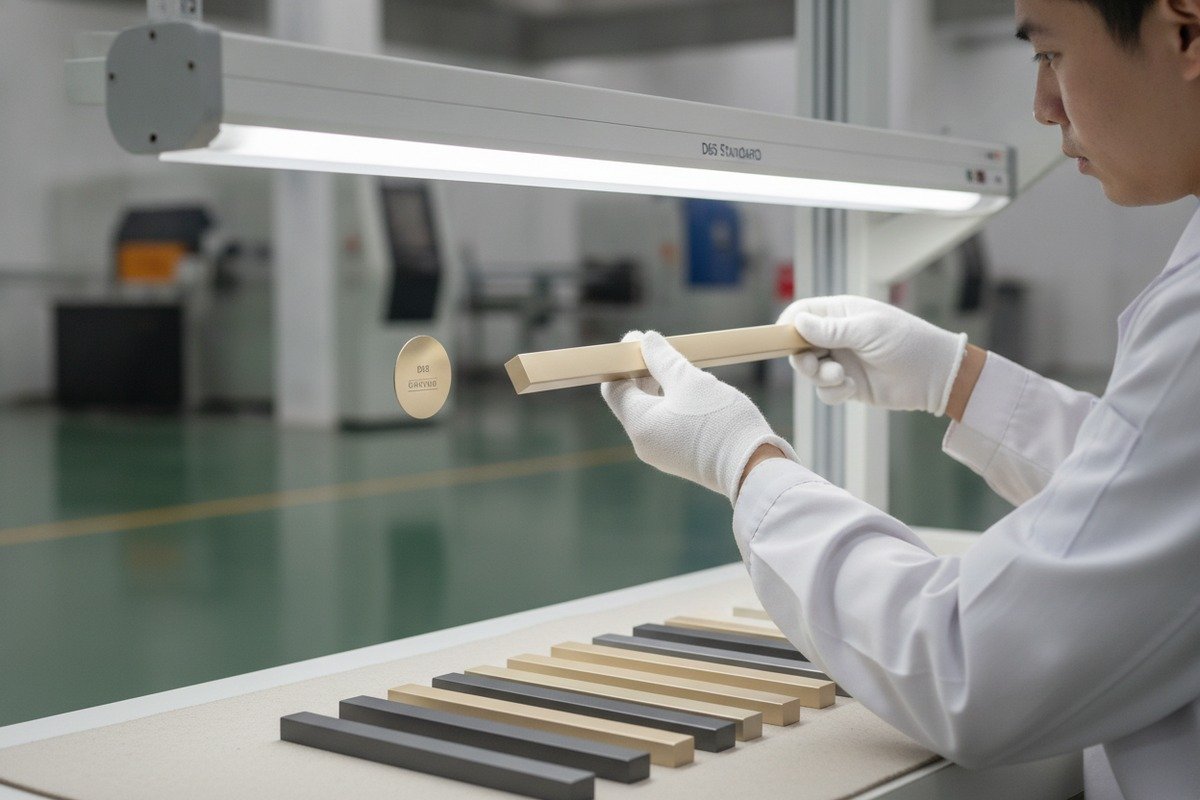
Not all "anodized" finishes are equal. Here is a simplified breakdown of common surface treatments for aluminum furniture handles and their cost and durability implications.
| Finish Type | Typical Thickness | Salt Spray Resistance | Relative Cost | Best For |
|---|---|---|---|---|
| Raw / mill finish | 0 µm (no coating) | Very low (oxidizes quickly) | Lowest | Internal components, not visible |
| Clear anodize (standard) | 5–10 µm | 200–400 hours | Low | Budget residential handles |
| Color anodize (architectural) | 15–25 µm | 600–1,000 hours | Medium | Mid-to-high end furniture, visible areas |
| Powder coat | 60–80 µm | 500–1,000 hours | Medium | Colored handles, outdoor furniture |
| PVDF / electrophoretic coating | 25–40 µm | 1,000+ hours | High | High-end, harsh environments |
| Brushed + anodized | 15–20 µm | 600–800 hours | Medium-high | Modern minimalist designs, premium feel |
Why Cheap Finish Fails
A supplier quoting $0.60 for a "black anodized" handle may be applying a 5-micron dye layer with minimal sealing. In a humid environment—common in Vietnam or the UAE coast—this finish can start showing white spots or fingerprint etching within months. The furniture factory that installed your handles then blames you, the distributor, and you face returns or warranty claims. We have seen distributors lose entire accounts over finish failures that could have been prevented by specifying 15-micron minimum anodize with proper hot-water sealing.
How to Specify Finish in Your RFQ
Be explicit. Instead of writing "anodized, black," write:
- Finish: Anodized, matte black
- Anodize thickness: ≥ 15 µm
- Sealing method: Hot water or nickel acetate
- Salt spray test: ≥ 600 hours per ASTM B117
- Color reference: RAL 9005 or provide a physical sample
When you include these details, suppliers who cannot meet the spec will either raise their price to the true level or decline to quote. Either outcome protects you.
Lifecycle Cost Thinking
A handle that costs $0.15 more per piece but lasts 10 years without finish degradation is far cheaper than a handle that needs replacement after 2 years. For a furniture factory producing 5,000 cabinets a year, the difference between a $0.60 handle and a $0.75 handle is $750 per year. A single batch of warranty replacements—including labor, shipping, and customer compensation—can easily exceed $5,000. This is why our mid-to-high-end positioning exists: we build the cost of proper finishing into the quote so our clients never face that surprise.
Matching Finish Across Orders
Color consistency across repeat orders is another hidden cost. If your first batch is champagne gold and your second batch is slightly more yellow, your furniture factory client will notice. Ask suppliers whether they use spectrophotometer readings for color QC and whether they keep a master color sample on file. At our facility, we archive a sealed reference sample for every custom color so that reorders match precisely.
Conclusion
The cheapest aluminum furniture handle quote is almost always the one with the most missing information. Build a standardized RFQ, compare total landed costs, and verify material, finish, tooling, and logistics terms line by line. That discipline protects your margin and your reputation.
Footnotes
1. Discusses the corrosion resistance properties of 6063-T5 aluminum. ↩︎
2. Provides data and environmental benefits regarding the recycling and reuse of aluminum materials. ↩︎
3. Details the chemical composition of 6063-T5 aluminum alloy. ↩︎
4. Explains what an MTR is and its importance for material certification and quality assurance. ↩︎
5. Explains the ‘Free On Board’ (FOB) Incoterm and its implications for shipping. ↩︎
6. Defines customs brokerage and the role of a customs broker in international shipping. ↩︎
7. Provides information on import duties for aluminum articles under HS code 8302.30.30. ↩︎
8. Official source for Incoterms rules, clarifying responsibilities in international trade. ↩︎
9. Describes the role and process of using an extrusion die in aluminum manufacturing. ↩︎
10. Details the ASTM B117 salt spray test for assessing corrosion resistance. ↩︎