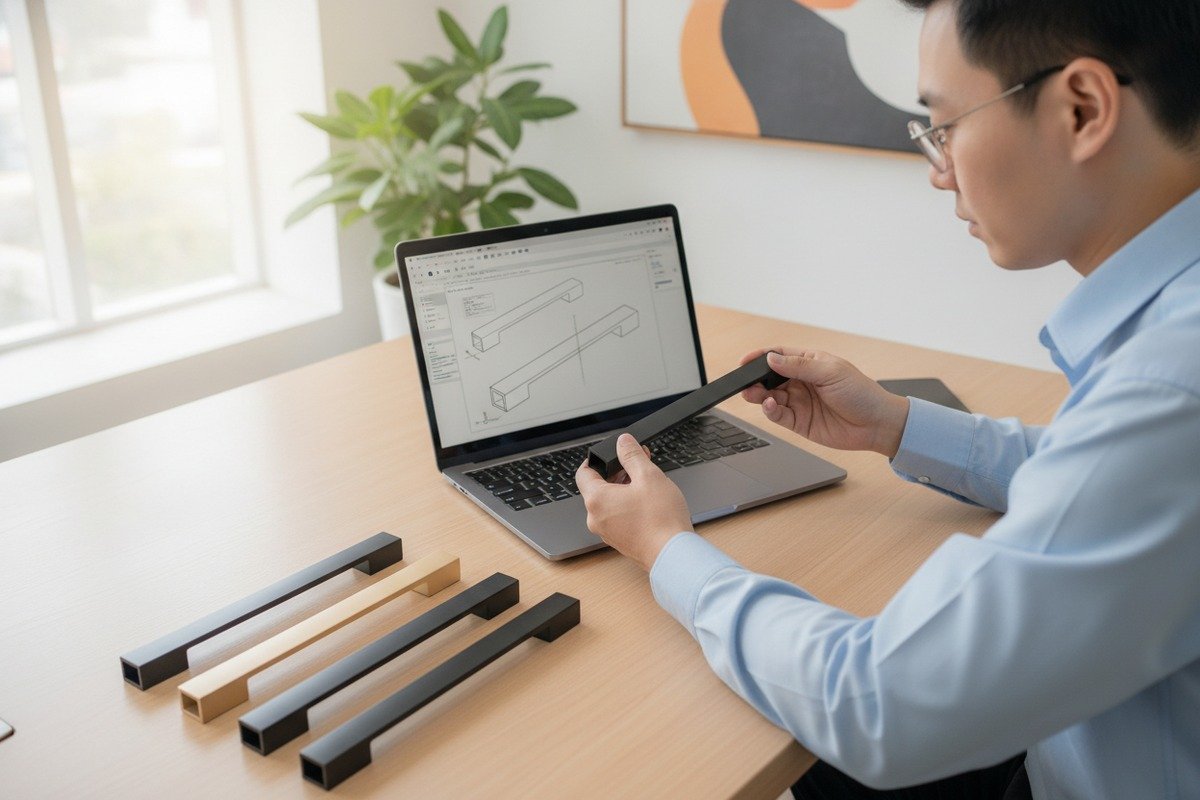
Over the past 18 years, our production floor in Foshan has handled thousands of after-sales cases — and we have learned that the real test of a supplier happens after the invoice is paid.
To evaluate a supplier’s after-sales service, test their response speed with sample inquiries, verify they have a documented complaint resolution process, confirm they provide technical support and replacement policies, and check for named contacts who own the issue from start to finish.
Price and finish quality 1 matter. But when a batch arrives with scratches, a color mismatch, or a dimensional error, your supplier’s after-sales capability decides whether you lose a day or lose a client. This guide walks you through a practical framework to assess responsiveness and problem-solving before you commit — and long after the first shipment lands.
How can I test a supplier's response speed before I commit to a large order of aluminum handles?
Many buyers skip this step entirely. They negotiate price, approve a sample, and hope for the best documented complaint resolution process 2. Our experience shipping over 300 tons of aluminum handles annually tells us that hope is not a procurement strategy.
Before placing a large order, send the supplier a test inquiry — a technical question or a simulated complaint — and measure how fast they reply, how specific their answer is, and whether they involve the right internal team to give you a real solution.

Why Response Speed Is a Leading Indicator
A supplier who takes five days to answer a simple email during the quoting stage will not magically become faster when you file a quality complaint shipping damage claims 3. Response speed is a proxy for internal discipline. It tells you whether the sales team has direct access to the factory floor, whether engineers are reachable, and whether the company treats communication as a priority.
When we onboard new wholesale clients from Vietnam or the Middle East, we often receive test questions — sometimes about alloy grades, sometimes about anodizing thickness 4. We treat every one of these as a live audit. That mindset is exactly what you should look for.
A Simple Pre-Order Test You Can Run Today
Here is a step-by-step method:
- Send an email asking a moderately technical question. For example: "What aluminum alloy 5 do you use for your recessed cabinet handles, and what is the anodized layer thickness?"
- Start a timer.
- Evaluate the reply against three criteria: speed, specificity, and follow-up initiative.
| Evaluation Criterion | Strong Signal | Weak Signal |
|---|---|---|
| First response time | Under 12 hours | Over 48 hours or no reply |
| Answer specificity | Names the alloy (e.g., 6063-T5), states anodizing thickness in microns | Generic reply like "high quality aluminum" |
| Follow-up initiative | Asks about your project needs, offers samples or data sheets | Ends the conversation with a one-liner |
| Internal coordination | References engineering or QC input | Sales rep guesses without checking |
| Communication channel | Offers WhatsApp, email, and a named contact | Only a generic info@ email address |
What to Do With the Results
If the supplier scores poorly on this simple test, do not expect improvement after you wire payment. A slow, vague reply during the courtship phase almost always means slower, vaguer replies during a crisis. Compare at least two or three suppliers using this same test to create a baseline.
Also, try sending the same question on a Friday evening or during a local holiday. This reveals whether the supplier has coverage outside peak hours — critical if your factory runs on a different time zone.
What technical support should I look for if my factory faces quality issues with the furniture profiles?
When a furniture factory discovers that a batch of aluminum handles has coating peeling, uneven color, or mounting holes that do not align, the clock starts ticking. Every hour without a fix is an hour of idle assembly lines. Our QC team deals with these scenarios regularly, and the difference between a resolved issue and a disaster comes down to one thing: technical competence on the supplier side.
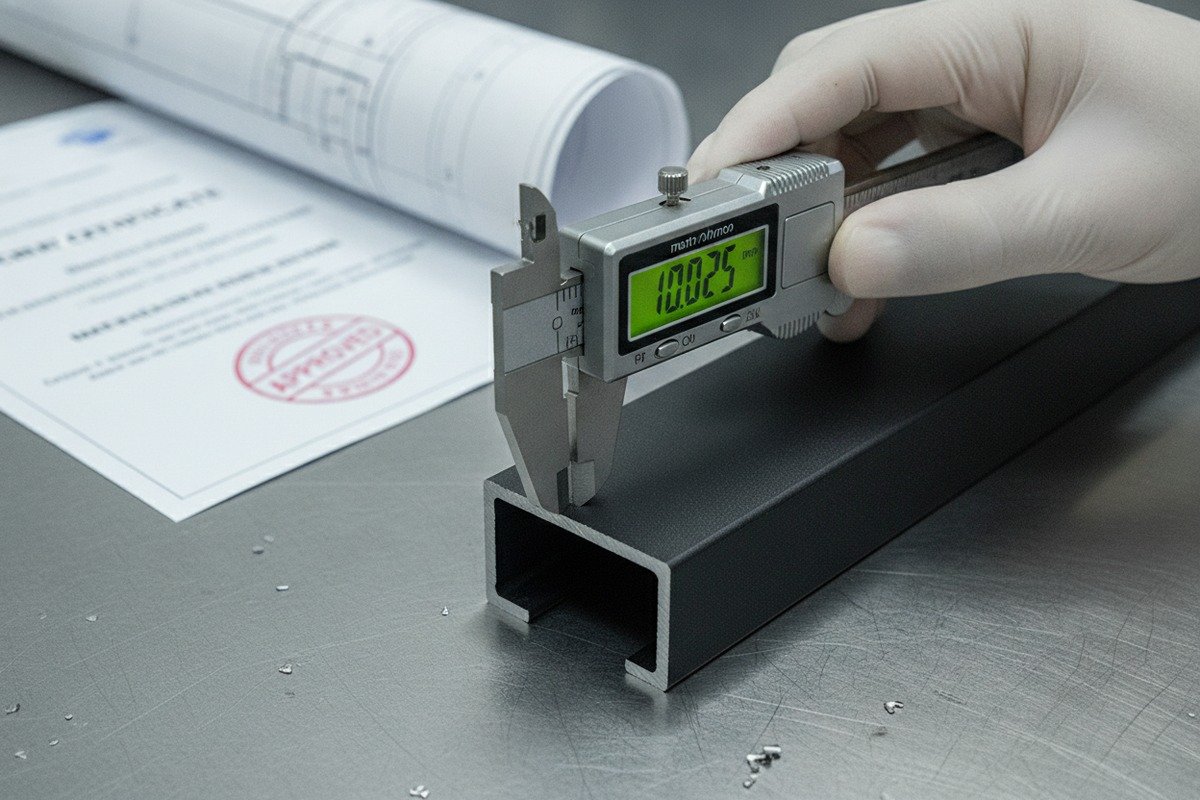
Look for suppliers who can diagnose root causes — whether the issue is alloy-related, finish-related, or dimensional — and who provide corrective actions backed by inspection reports, material certificates, and clear replacement timelines rather than vague apologies.
The Three Layers of Technical Support
Not all technical support 6 is equal. Here is how to categorize what you need:
Layer 1: Immediate Diagnosis. The supplier should ask you for photos, measurements, batch numbers, and environmental conditions. If they jump to "we'll send replacements" without understanding the problem, they will send the same defective product again.
Layer 2: Root Cause Analysis. A competent supplier distinguishes between a manufacturing defect (wrong die, incorrect extrusion temperature), a finishing defect (under-cured powder coat, contaminated anodizing bath), and an installation error (wrong screw length, over-torqued fasteners). This matters because the fix depends on the cause.
Layer 3: Corrective and Preventive Action. The best suppliers do not just fix the current batch. They update their process controls so the same defect does not appear in your next order.
What Documents Should a Supplier Provide?
| Document Type | Purpose | When to Request |
|---|---|---|
| Material certificate 7 (mill cert) | Confirms alloy grade and temper (e.g., 6063-T5) | With every shipment |
| Anodizing/coating thickness report | Verifies surface treatment meets spec | With every shipment or upon complaint |
| Dimensional inspection report | Confirms hole spacing, profile length, and tolerances | With first article and upon complaint |
| Root cause analysis 8 report | Explains why a defect occurred | After any quality complaint |
| Corrective action plan | Details process changes to prevent recurrence | After any quality complaint |
How to Spot Weak Technical Support
If you report a coating defect and the supplier says, "We will check and get back to you," but never sends a written root cause report, that is a red flag. Similarly, if they cannot explain the difference between anodizing and powder coating when asked, their technical team is likely too thin to support your needs.
In our factory, we keep traceability records for every extrusion batch. When a client in the Middle East flagged a slight color variation on champagne gold recessed handles last year, we traced it to a specific anodizing tank and adjusted the process parameters within 48 hours. We also sent a revised color sample for approval before continuing production. That level of detail is what you should demand.
Ask These Questions Before You Order
- "If I find a dimensional mismatch, what is your investigation process?"
- "Can you provide a material certificate for the alloy used in my handles?"
- "How do you document and communicate corrective actions?"
- "Who on your team handles technical complaints — sales or a dedicated QC engineer?"
The answers will tell you whether the supplier treats quality as a system or as an afterthought.
How do I ensure my supplier will take full responsibility for shipping damages or inventory discrepancies?
This is where many supplier relationships break down. The handles looked perfect when they left the factory. But when the container arrives in Ho Chi Minh City or Dubai, cartons are crushed, handles are scratched, or the count is short. Whose problem is it? Our logistics team has learned that clear agreements made before shipment prevent painful disputes after delivery.
Ensure your supplier provides written policies on shipping damage claims, defines packaging standards that protect handles during transit, includes packing lists with piece counts per carton, and agrees on a documented inspection window and claim process before the first order ships.

Packaging as the First Line of Defense
Shipping damage is often a packaging failure, not a shipping failure. Aluminum handles with anodized or matte finishes are especially vulnerable to surface scratches. If handles are loose inside cartons or stacked without protective film, damage is almost guaranteed.
Ask your supplier to describe their packaging method in detail. For our recessed cabinet handles — the slim, low-profile L-shaped designs — we use individual PE film wrapping, foam dividers between layers, and reinforced outer cartons. This is not luxury packaging. It is minimum viable protection for a surface-sensitive product.
What a Responsible Claim Process Looks Like
| Step | Supplier Responsibility | Buyer Responsibility |
|---|---|---|
| Pre-shipment | Provide detailed packing list, photos of packed goods, and carton markings | Confirm shipping terms (FOB, CIF, etc.) and insurance coverage |
| Arrival inspection | Define an inspection window (e.g., 7 days from delivery) | Inspect goods within the agreed window and document any damage with photos |
| Claim submission | Provide a clear claim form or process and a named contact | Submit photos, packing list comparisons, and quantity discrepancies |
| Resolution | Offer replacement, credit, or rework within a stated timeframe | Cooperate by returning samples or defective pieces if requested |
| Documentation | Issue a formal resolution record | File the record for future reference |
Inventory Discrepancies: Counting Matters
Short shipments happen. Sometimes the factory miscounts. Sometimes cartons are lost in transit. Either way, you need a paper trail. Insist on detailed packing lists that state the number of pieces per carton, not just total quantity. Require the supplier to photograph the loaded pallets or cartons before sealing the container.
We include a printed packing list inside every carton and send a digital copy to the client before the goods leave our warehouse. This dual record makes discrepancy resolution straightforward.
Shipping Terms and Insurance
Who bears the risk depends on the agreed Incoterm 9. Under FOB, risk transfers to the buyer once goods cross the ship's rail. Under CIF, the supplier arranges insurance but the buyer still owns the claim process. Make sure you and your supplier agree on the Incoterm in writing, and clarify who files the insurance claim if goods are damaged in transit.
If your supplier refuses to discuss these details or says, "Don't worry, we pack well," treat that as a warning. Good packing is not a substitute for a written claim process.
Can I rely on their after-sales team to provide professional guidance for my custom OEM handle designs?
Custom OEM handles 10 are where after-sales support becomes truly critical. When you design a unique recessed pull with a specific champagne gold finish and non-standard hole spacing, the margin for error is thin. Our engineering team collaborates on dozens of custom OEM projects each year, and we know that post-delivery support is just as important as the initial design phase.
For custom OEM aluminum handle designs, your supplier's after-sales team should be able to provide installation guidance, address fit and finish adjustments, supply updated CAD drawings if modifications are needed, and offer ongoing technical advice as your product evolves across production runs.

Why OEM Projects Need More After-Sales Support
Standard catalog handles are relatively forgiving. The dimensions are proven, the finishes are established, and installation is straightforward. Custom handles are different. A new profile might need slight adjustments after the first production run. The mounting method might need refinement once your factory tests it on actual cabinet bodies. The finish might look different under your showroom lighting than under the supplier's factory lights.
These are not defects. They are normal iterations in a custom development process. But they require a supplier who stays engaged after delivery — not one who considers the job done once the container leaves port.
What Professional Guidance Looks Like in Practice
Here is what we provide for our OEM clients, and what you should expect from any serious supplier:
Design iteration support. If the first batch reveals that the finger grip channel is 0.5 mm too shallow for comfortable use, the supplier should be able to modify the extrusion die and produce revised samples within days. Our typical turnaround for custom adjustments is 3 to 7 days.
Installation troubleshooting. If your assembly line finds that the handle does not sit flush against a specific panel thickness, the supplier should help diagnose whether the issue is the handle profile, the panel material, or the fastener choice.
Finish consistency across batches. Anodized finishes like champagne gold or light bronze can vary slightly between batches. A reliable supplier provides color reference samples and maintains process records to ensure consistency. If a variation occurs, they should acknowledge it and offer corrective options.
Evaluating OEM After-Sales Competence
Ask the supplier these questions:
- "If I need a minor design change after the first production run, what is the lead time and cost for die modification?"
- "Can your team provide updated 2D or 3D drawings reflecting post-delivery modifications?"
- "Do you assign a dedicated project contact for OEM orders, or does my request go into a general queue?"
- "How do you ensure finish consistency between my first order and reorders six months later?"
Red Flags in OEM After-Sales
Watch out for these signals:
- The supplier treats every post-delivery question as a new sales inquiry rather than ongoing project support.
- They cannot provide CAD files or technical drawings for the custom profile.
- The sales contact who handled your order has no technical background and cannot translate your feedback to the engineering team.
- They quote long lead times for minor adjustments, suggesting they lack in-house die-making capability.
- There is no system for storing your project specifications, meaning you have to re-explain your requirements with every reorder.
A supplier who invests in OEM after-sales support is investing in a long-term relationship. That investment signals factory discipline, engineering depth, and genuine commitment to your success — not just your purchase order.
A Quick Supplier Scorecard for After-Sales Evaluation
Use this scorecard to compare suppliers side by side before you commit:
| Evaluation Area | Score 1 (Poor) | Score 3 (Acceptable) | Score 5 (Excellent) |
|---|---|---|---|
| First response time | Over 48 hours | 12–24 hours | Under 12 hours |
| Technical diagnosis quality | Guesswork, no data requested | Asks for photos and batch info | Full root cause process with reports |
| Replacement/rework policy | No written policy | General promise, vague timeline | Documented policy with timelines |
| Documentation provided | No certs or reports | Basic packing list only | Mill certs, inspection reports, CAD files |
| Named after-sales contact | No dedicated contact | Shared sales rep | Dedicated project or QC contact |
| OEM design iteration support | Refuses post-delivery changes | Slow response, extra charges for everything | Fast turnaround, collaborative approach |
| Shipping damage claim process | No process | Informal, case-by-case | Written procedure with inspection window |
Score each supplier and total the results. A supplier scoring below 15 out of 35 is a risk. A supplier above 25 is worth building a long-term relationship with.
Conclusion
After-sales service is not a soft benefit — it is a hard cost control lever that determines whether your aluminum handle supplier is a partner or a liability. Test before you trust, document every agreement, and choose suppliers who solve problems with speed, evidence, and accountability.
Footnotes
1. Explains surface finish importance, standards, and impact on product quality and performance. ↩︎
2. Provides guidelines for establishing an effective and trusted complaints management system (ISO 10002). ↩︎
3. Provides a comprehensive guide to freight claims management, including types of claims and the claims process. ↩︎
4. Explains different types of anodizing and their typical thickness ranges, impacting wear and corrosion resistance. ↩︎
5. Details the definition, characteristics, types, properties, and applications of aluminum alloys in manufacturing. ↩︎
6. Explains the importance of technical support for efficient operations and problem-solving in manufacturing businesses. ↩︎
7. Explains what a Material Test Certificate (MTC) is, its purpose, and its importance in quality control. ↩︎
8. Defines Root Cause Analysis (RCA) as a systematic process to uncover underlying causes of problems for permanent solutions. ↩︎
9. Official resource explaining Incoterms® 2020 rules, defining responsibilities, costs, and risks in international trade. ↩︎
10. Replaced with a manufacturer specializing in custom pull handles, including OEM services, highly relevant to the article context. ↩︎