
Every year, we watch buyers tie up tens of thousands of dollars in aluminum handle inventory 1 that sits in warehouses for months. The problem is real, and the cost is silent.
You can negotiate partial shipments with Chinese suppliers by proposing a phased release plan that combines a confirmed total order quantity with staggered delivery dates, milestone-based payments, and written quality checkpoints. This approach protects your cash flow while giving the supplier production predictability and payment security.
Below, we break down the exact steps, contract terms, cost calculations, and negotiation scripts you need to make partial shipments work for aluminum furniture handles — without losing your volume discount 2 or damaging supplier trust.
How can I convince my aluminum handle supplier to store my bulk order and ship it in smaller installments?
When we talk to overseas buyers at our Foshan facility 3, the number one hesitation about large orders is not price — it is the fear of overstocking handles that might not sell fast enough phased release plan 4.
To convince your supplier, place one confirmed purchase order for the full quantity, offer a larger upfront deposit to cover production costs, and propose a storage-and-release schedule with clear dates. Most suppliers will agree if they see payment security and a predictable outbound plan.
Why Suppliers Resist — and How to Remove the Friction
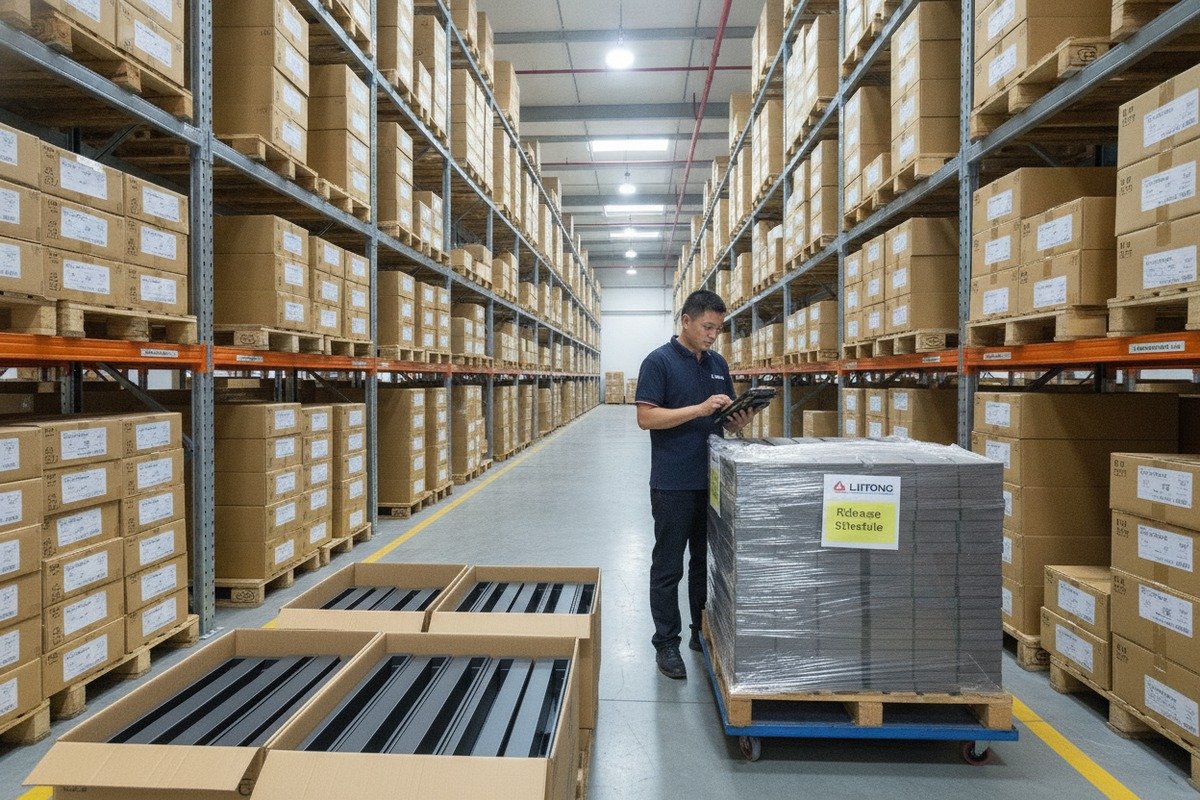
Most Chinese aluminum handle factories run on tight margins and fast turnover. When you ask a supplier to produce everything but ship only part of it, you are asking them to become your warehouse. That costs money. It ties up floor space. It creates risk.
From our production line, we know that a standard run of 5,000 recessed aluminum pulls takes about 3–5 days to extrude, anodize, and pack. Once those handles are finished, they sit on racks. Every day they sit, we lose space for the next order. So the key question the supplier asks internally is: "Who pays for this storage?"
Your job is to answer that question before the supplier raises it.
The Three-Phase Release Model
A practical approach is to structure your order into three phases:
| Phase | Shipment Timing | Quantity | Payment Trigger |
|---|---|---|---|
| Phase 1 | Immediately after production | 40% of total order | 30% deposit at PO signing + 70% before Phase 1 ships |
| Phase 2 | 30–45 days after Phase 1 | 30% of total order | Payment 3 days before Phase 2 release |
| Phase 3 | 60–90 days after Phase 1 | 30% of total order | Payment 3 days before Phase 3 release |
This model works because the supplier gets a large deposit upfront to cover raw material and labor 5. They produce everything in one efficient run. Then they release goods on a schedule you both agree to in writing.
What to Offer in Return
Do not just ask. Trade something. Here are practical concessions that make a supplier say yes:
- Higher deposit. Instead of the standard 30%, offer 40–50%. This covers the supplier's production cost and reduces their financial risk.
- Storage fee. Offer a small monthly fee — even $50–$100 — for warehouse space. It signals respect for their costs.
- Forecast visibility. Share your sales data or purchasing calendar. Suppliers feel more comfortable holding inventory when they can see a pattern.
- Repeat order commitment. Tell the supplier you plan to reorder quarterly. Back it up with a written letter of intent 6.
Sample Script You Can Use
Try this in your next WhatsApp message or email:
"We would like to place a single order for 8,000 pieces of your champagne gold recessed handle. We will pay 50% deposit now. Can you produce the full quantity and release it in three shipments over 90 days? We will pay the balance before each release. We can also discuss a small storage fee if needed."
This is direct. It shows commitment. It addresses the supplier's concern about payment and storage cost.
What is the best way to negotiate partial shipments without losing my volume discount on furniture handles?
Our sales team hears this worry almost every week: "If I split the shipment, will I lose my bulk price?" The fear is understandable, but it is based on a misunderstanding of how pricing works.
The best way is to commit to the full volume on one purchase order, let the supplier produce everything in a single run, and only split the outbound delivery. Your volume discount is tied to production quantity, not shipment frequency, so a single PO preserves the bulk price.
Understand What Drives the Volume Discount
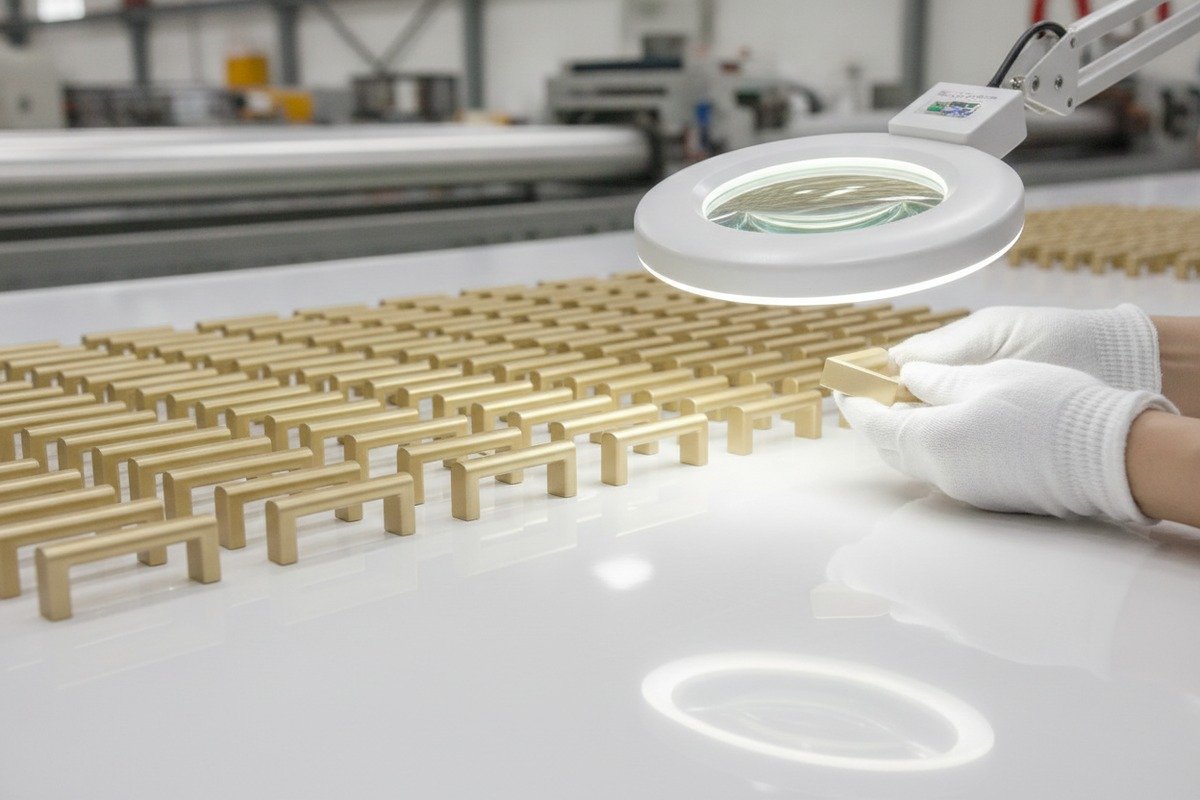
When we quote a lower price for 10,000 handles versus 1,000, the savings come from three areas:
- Material purchasing. We buy aluminum billets 7 in larger batches, which lowers our cost per kilogram.
- Machine setup. Extrusion dies only need to be set up once for the entire run.
- Anodizing efficiency. Large batches of the same finish — champagne gold, matte black, charcoal grey — go through the anodizing line together.
None of these savings disappear if you ship in three batches instead of one. The cost is locked in at production, not at shipment.
How to Structure the PO
Write your purchase order like this:
- Total quantity: 10,000 pcs
- Unit price: Based on 10,000-piece volume
- Delivery schedule: Split into 3 releases (see table below)
- Payment terms: Milestone-based
| PO Line | SKU | Finish | Qty per Release | Release 1 | Release 2 | Release 3 |
|---|---|---|---|---|---|---|
| 1 | LT-RH120 | Matte Black | 1,200 / 1,000 / 800 | Week 4 | Week 10 | Week 16 |
| 2 | LT-RH120 | Champagne Gold | 1,500 / 1,200 / 1,000 | Week 4 | Week 10 | Week 16 |
| 3 | LT-RH120 | Charcoal Grey | 1,000 / 800 / 500 | Week 4 | Week 10 | Week 16 |
| 4 | LT-RH120 | Light Beige | 500 / 300 / 200 | Week 4 | Week 10 | Week 16 |
This table tells the supplier exactly what you need and when. It eliminates ambiguity. It proves that the total volume justifies the bulk price. And it lets the factory batch production efficiently.
What If the Supplier Still Pushes Back on Price?
Sometimes a supplier will say: "Partial shipment means more packaging, more documentation, more handling. We need a higher price." This is fair. Here is how to respond:
- Ask them to quote the handling cost separately, not baked into the unit price.
- Offer to use standard export cartons for all releases instead of custom packaging.
- Agree to a modest logistics surcharge per shipment — often $30–$80 — rather than accepting a permanent price increase.
The goal is to keep the unit price intact and treat the extra logistics cost as a line item. This protects your landed cost calculation and keeps the deal transparent.
The "One Production Run, Multiple Shipments" Principle
Think of it this way: you are not asking for three small orders. You are asking for one big order with three delivery dates. When you frame it this way, the supplier has no production-efficiency reason to raise the price. Their machines run once. Their workers pack once. The only extra work is loading a truck two more times.
How do I calculate if the freight costs for multiple shipments are lower than my inventory holding costs?
We have seen buyers spend weeks negotiating a $0.02 unit price reduction, then lose five times that amount in warehouse rent and dead capital. The real cost of sourcing is not the invoice — it is the total landed and held cost.
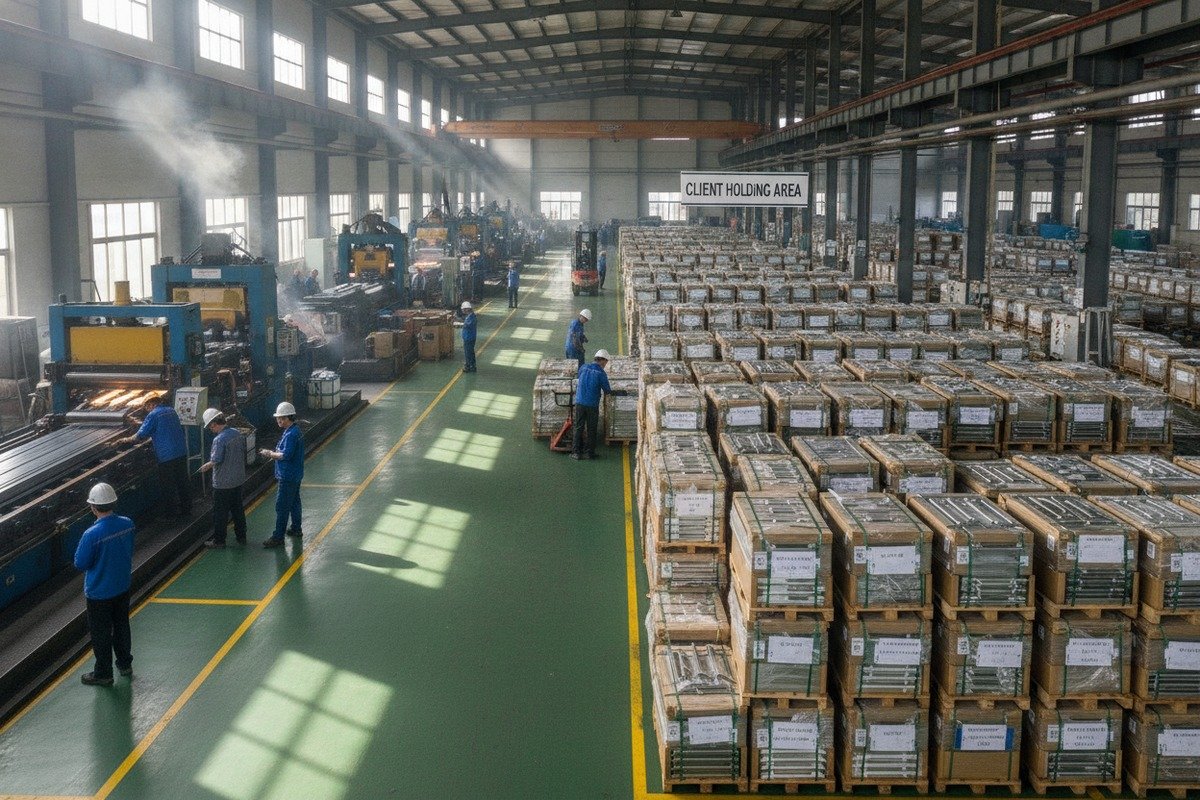
Compare total freight for multiple smaller shipments against your monthly inventory holding cost, which typically includes warehouse rent, insurance, capital interest, and obsolescence risk. If holding costs exceed the extra freight, partial shipments save you money even with higher shipping expenses.
The Basic Formula
Here is a simple way to calculate it:
Extra freight cost = (Number of additional shipments) × (Cost per shipment) − (Cost of one single shipment)
Inventory holding cost saved = (Average inventory reduced in USD) × (Monthly holding cost rate) × (Number of months saved)
If the holding cost saved is greater than the extra freight, partial shipments win.
A Real-World Example
Let us say you are importing 6,000 matte black recessed aluminum handles at $1.50 each. Total order value: $9,000.
| Scenario | Shipments | Freight per Shipment | Total Freight | Avg. Inventory Value Held | Holding Period | Holding Cost (2% per month) |
|---|---|---|---|---|---|---|
| A: Single shipment | 1 | $800 (LCL) | $800 | $9,000 | 4 months | $720 |
| B: Two shipments | 2 | $550 each (LCL) | $1,100 | $4,500 | 2 months avg. | $180 |
| C: Three shipments | 3 | $450 each (LCL) | $1,350 | $3,000 | 1.5 months avg. | $90 |
Now compare the totals:
- Scenario A total cost: $800 freight + $720 holding = $1,520
- Scenario B total cost: $1,100 freight + $180 holding = $1,280
- Scenario C total cost: $1,350 freight + $90 holding = $1,440
In this example, two shipments is the sweet spot. You save $240 compared to a single shipment. Three shipments cost more because the freight increases faster than the holding cost decreases.
What Goes Into Holding Cost?
Many buyers underestimate holding cost. Here is what to include:
- Warehouse rent allocated to the space your handles occupy.
- Insurance on stored goods.
- Cost of capital — the interest you pay or the return you lose by having $9,000 locked in inventory instead of working for your business.
- Obsolescence risk — if a finish goes out of style or a customer cancels, that inventory becomes dead stock.
- Handling labor — receiving, shelving, counting, picking.
For aluminum furniture handles, obsolescence risk is moderate. Finishes like matte black and champagne gold are stable. But trendy colors or custom designs carry higher risk. Factor that into your calculation.
When Single Shipment Still Wins
Partial shipments do not always save money. If your order is small enough to fit in a few cartons, the per-shipment minimum charge from freight forwarders can eat your savings quickly. Air freight for small parcels can cost $5–$8 per kilogram, which adds up fast for aluminum parts. Run the numbers before deciding.
What specific terms should I add to my contract to ensure quality remains the same across staggered deliveries?
From eighteen years of running our extrusion and anodizing lines, we have learned that the biggest quality risk in partial shipments is not the first batch — it is batch number two or three, when attention drifts and standards slip.
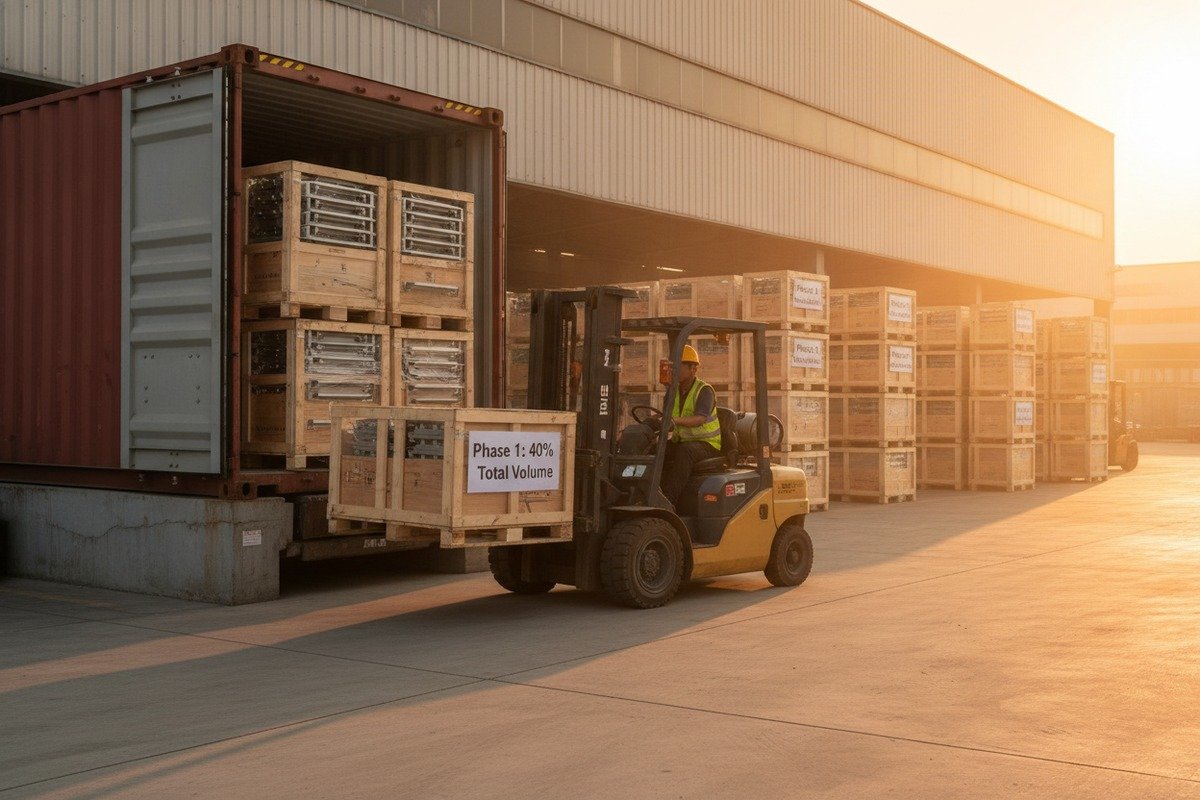
Your contract should include fixed product specifications with dimensional tolerances, surface finish standards, a reference sample clause, pre-shipment inspection rights for every release, defect acceptance limits, and remedies for non-conforming goods. Each partial shipment must meet the same written standard as the first.
The Core Quality Clauses You Need
Every purchase agreement for staggered aluminum handle deliveries should contain these terms:
Specification Lock
State the exact alloy grade (typically 6063-T5 for furniture handles), dimensions with tolerances (e.g., length 128mm ±0.3mm), finish type (anodized, powder-coated), color code or Pantone reference, and surface roughness standard. dimensional tolerances 9 Do not rely on "same as sample." Write it down.
Golden Sample Clause
Require the supplier to keep a sealed "golden sample" from the first production run. Every subsequent release must be visually and dimensionally compared to this sample before packing. Both parties sign off on the golden sample at the start.
Pre-Shipment Inspection Rights
Your contract should state that you — or your appointed third-party inspector — have the right to inspect each partial shipment before release. Specify the inspection standard (e.g., AQL 2.5 for major defects 10, AQL 4.0 for minor defects) and the timeline for inspection (e.g., supplier gives 5 business days' notice before each release).
Defect Remedies Table
Include a clear table of what happens when things go wrong:
| Defect Type | Example | Acceptable Rate | Remedy |
|---|---|---|---|
| Dimensional out of tolerance | Handle length off by >0.5mm | ≤1% of batch | Replace defective units at supplier's cost before next release |
| Surface scratch or dent | Visible mark on anodized face | ≤2% of batch | Deduct from invoice or replace |
| Color mismatch | Champagne gold shade differs from golden sample | 0% tolerance | Hold shipment, re-anodize or replace entire batch |
| Packaging damage | Crushed cartons, missing foam inserts | ≤1% of batch | Repack at supplier's cost |
Additional Terms for Staggered Deliveries
- Consistent packaging standard. Every release uses the same carton size, inner packaging, and labeling. This prevents receiving errors at your warehouse.
- Batch traceability. Each carton should be marked with batch number, release number, production date, and quantity. This lets you trace quality issues back to a specific production run.
- Late shipment penalty. If the supplier misses a release date by more than 7 days, specify a discount or penalty — typically 1–2% of that shipment's value per week of delay.
- Right to cancel remaining releases. If any single release fails inspection twice, you should have the right to cancel the remaining releases and recover your deposit for unshipped goods.
- Force majeure and communication. Require the supplier to notify you within 48 hours of any event that may delay a release. This gives you time to adjust your sales plan.
Why Written Terms Matter More for Split Deliveries
When you receive one large shipment, you inspect once and you are done. With three or four releases over several months, there are three or four opportunities for quality to drift. The supplier may change a raw material batch. A different shift may handle anodizing. A new packing team may skip foam inserts. Written terms are your insurance against each of these risks.
At our facility, we keep production records for every batch and can trace any handle back to its extrusion date, anodizing tank, and packing team. Not every factory does this. So ask your supplier: "Can you provide a batch production report with each release?" If they say yes, put it in the contract.
Conclusion
Partial shipments turn a risky bulk purchase into a controlled, cash-efficient sourcing plan. Negotiate the full package — volume, payment, storage, quality, and logistics — and put every term in writing. Your supplier relationship and your balance sheet will both be stronger for it.
Footnotes
1. Provides best practices for managing inventory to avoid overstocking and reduce costs. ↩︎
2. Explains the economic principle of volume discounting, where larger purchases lead to lower per-unit costs. ↩︎
3. Offers an overview of Foshan as a significant manufacturing and industrial hub in China. ↩︎
4. Explains a phased approach in supply chain strategy to minimize disruption and maximize efficiency. ↩︎
5. Details the fundamental components of manufacturing costs, including direct materials and labor. ↩︎
6. Defines a letter of intent as a preliminary agreement outlining intentions before a binding contract. ↩︎
7. Provides a comprehensive guide to what aluminum billets are and their manufacturing process. ↩︎
8. Outlines the formula and components for calculating inventory holding costs, including various expenses. ↩︎
9. Explains engineering tolerances as permissible variations in dimensions for manufacturing components. ↩︎
10. Clarifies the Acceptance Quality Limit (AQL) standard, specifically AQL 2.5, used in product inspections. ↩︎