
Every year, our production team handles dozens of inquiries where buyers discover fit problems only after a full container has already shipped overseas.
Yes, you should absolutely verify whether your Chinese aluminum handle supplier provides technical support and installation guidance before placing an order. These services reduce specification errors, prevent costly assembly mistakes, and lower post-purchase risk—especially for custom, high-volume, or cross-border furniture hardware projects.
This article walks you through exactly what to ask, what to expect, and how technical support from your supplier can save your factory time, money, and frustration. Let us break it down section by section.
How will technical guidance from my supplier help me reduce assembly errors in my furniture factory?
On our Foshan production floor, we see it constantly—buyers who skip the technical conversation end up with handles that do not align with their cabinet drill patterns.
Technical guidance from your supplier helps reduce assembly errors by confirming hole spacing, screw compatibility, and mounting sequences before mass production begins. This prevents misaligned handles, wasted panels, and rework costs that can exceed the price of the handles themselves.
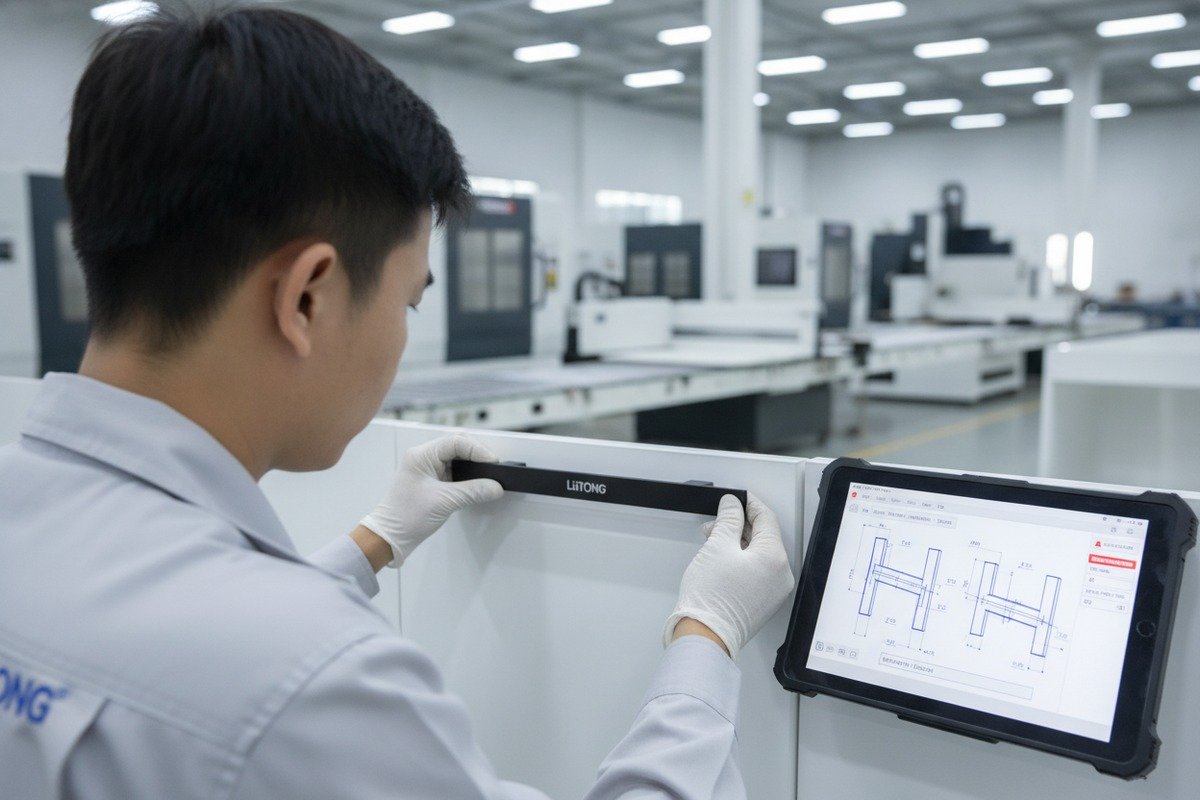
Assembly errors in furniture factories are rarely caused by bad workers. They are caused by unclear information. When a factory in Vietnam or the Middle East receives a bulk shipment of aluminum recessed handles—like the minimalist, L-shaped profile pulls we produce—even a 1mm deviation in hole spacing can ruin an entire batch of cabinet doors. The fix is not better workers. The fix is better upstream communication.
Where Assembly Errors Actually Start
Most assembly errors trace back to three root causes: ambiguous drawings, missing mounting specs, and assumptions about hardware compatibility. When our engineering team sends a handle order to a new client, we always include a specification sheet 1 that covers center-to-center hole distance, recommended screw diameter, minimum panel thickness, and clearance depth for recessed designs. Without this, the factory guesses. Guessing costs money.
The Real Cost of a Single Misalignment
Consider a furniture factory producing 500 cabinets per week. If the handle holes are drilled 2mm off because the supplier never confirmed the exact mounting template, every single door panel needs rework or replacement. The handle itself might cost $1.50 per piece. The wasted MDF panel 2 costs $8. The labor to re-drill and refinish costs another $5. Multiply that across 500 units, and you are looking at $6,500 in avoidable losses from one missing spec sheet.
| Error Type | Root Cause | Typical Cost per Unit | Preventable with Technical Guidance? |
|---|---|---|---|
| Misaligned drill holes | Wrong hole spacing data | $5–$13 rework | Yes |
| Screw pull-through | Incorrect screw length or type | $3–$7 repair | Yes |
| Finish mismatch on panel | No surface treatment compatibility note | $10–$20 replacement | Yes |
| Handle wobble after install | Missing torque specification | $2–$4 re-tighten | Yes |
What Good Technical Guidance Looks Like
A responsible supplier does not just ship handles in a box. Our team provides a one-page installation diagram, a recommended screw list, and a short note on minimum panel thickness. For custom orders—such as our champagne gold anodized extruded profiles 3—we also include surface care instructions so the installer does not scratch the finish during mounting. This is not extra service. This is baseline professionalism.
When your supplier treats technical guidance as standard practice, your factory floor runs smoother, your rejection rate drops, and your end customers receive furniture that looks and feels right.
Can I expect my aluminum handle manufacturer to provide CAD drawings for my custom OEM projects?
When we kick off an OEM project in our Foshan facility, the first deliverable is always a CAD drawing 4—not the first sample, not the first quote.
Yes, a capable aluminum handle manufacturer should provide CAD drawings for custom OEM projects. These drawings confirm exact dimensions, tolerances, cross-section profiles, and mounting details before tooling begins. If a supplier cannot deliver CAD files, they likely lack the engineering depth needed for reliable OEM collaboration.
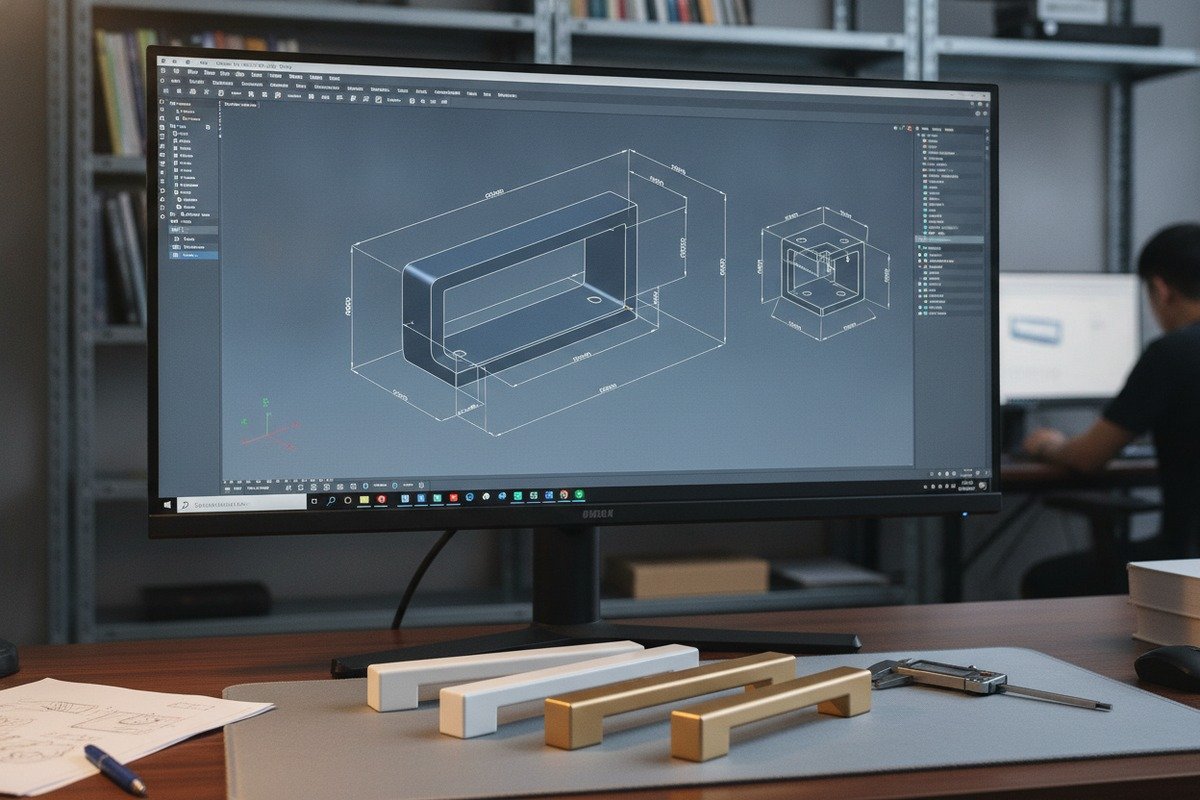
CAD drawings are not a luxury in OEM hardware manufacturing 5. They are a communication tool. When you source a custom recessed pull handle with a deep geometric channel and an L-shaped cross-section—like the matte-finish architectural handles in our product line—the drawing is the contract between your design intent and our production output. Without it, both sides are working from assumptions.
Why CAD Drawings Matter More Than Photos
A product photo shows you what a handle looks like. A CAD drawing tells you what it is. It specifies wall thickness, radius corners, channel depth, anodizing layer tolerance, and the exact position of screw holes. For furniture factories that need handles to integrate flush with a panel surface, even 0.3mm of deviation changes the feel and look of the finished piece.
What Your Supplier's CAD Package Should Include
When our team prepares CAD files for an OEM client, we deliver the following:
| Document | Format | Purpose |
|---|---|---|
| 2D profile drawing | DWG / PDF | Confirms cross-section shape, key dimensions, and tolerances |
| 3D model file | STEP / IGES | Allows client to test-fit the handle in their furniture assembly model |
| Mounting template | Shows drill pattern, screw positions, and clearance requirements | |
| Surface finish spec | Details anodizing thickness, color code, and matte/gloss level | |
| Material certificate | Confirms aluminum alloy grade (typically 6063-T5 for furniture handles) aluminum alloy 6063-T5 6 |
If a supplier cannot provide at least the 2D drawing and mounting template, that is a red flag. It suggests they are reselling, not manufacturing.
How CAD Drawings Prevent Disputes
One of the most common disputes in cross-border OEM sourcing is "the product does not match what I ordered." This happens when both parties rely on verbal descriptions or rough sketches. A signed-off CAD drawing eliminates ambiguity. It becomes the reference point for quality inspection, sample approval, and mass production 7 checks. Our quality control team uses the approved drawing at three checkpoints: after extrusion, after anodizing, and before packing. Every dimension is verified against the drawing, not against memory.
What If You Do Not Have Your Own Drawing?
Many of our clients—especially wholesale distributors—come to us with a reference photo or a competitor's sample rather than a drawing. That is perfectly fine. Our engineering team reverse-engineers the sample, produces a CAD drawing, and sends it for approval before we cut any aluminum. This is part of our standard OEM workflow, and it is a service you should expect from any serious manufacturer.
The bottom line: if your supplier cannot produce or review a CAD drawing, they are not equipped for custom work. Move on.
Why should I prioritize suppliers who offer professional installation advice for integrated glass door profiles?
Our team learned this lesson early: aluminum handles used with glass door profiles 8 fail differently than those mounted on wood or MDF panels, and the failure is always visible.
You should prioritize suppliers who offer professional installation advice for integrated glass door profiles because these systems involve tighter tolerances, fragile materials, and multi-component assemblies. A supplier who understands glass door integration can prevent cracking, misalignment, and seal failure that basic handle vendors overlook entirely.
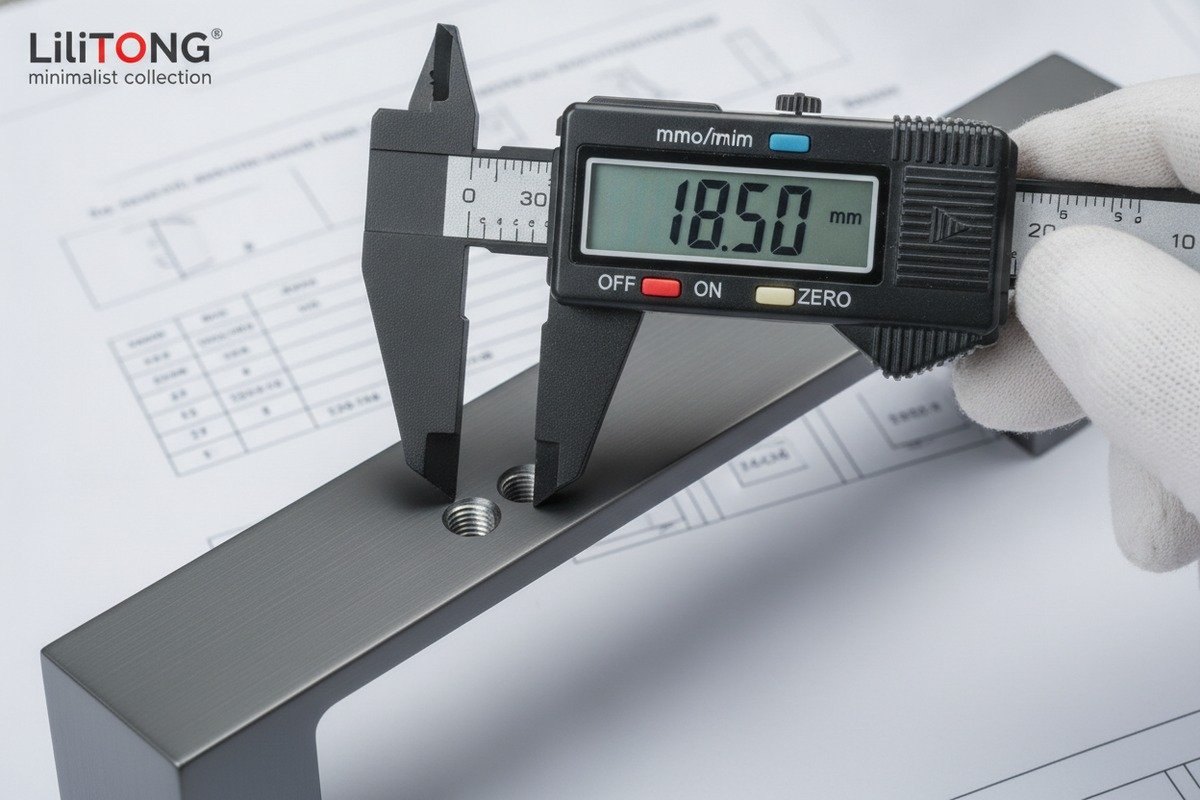
Glass door profiles are one of the most technically demanding applications for aluminum furniture hardware. Unlike a standard cabinet door where you drill two holes and screw in a pull, an integrated glass door system requires the handle, the frame profile, the glass panel, and the seal strip to work together as a single unit. If your handle supplier does not understand this system, you will have problems.
What Makes Glass Door Integration Different
When we manufacture aluminum profiles for glass doors, we design the handle and the frame profile to share precise dimensional relationships. The handle channel depth must match the glass thickness plus the gasket. The screw points must avoid the glass edge by a safe margin. The anodized surface must be compatible with the rubber seal material. These are details that a handle-only supplier may never consider.
Common Failures Without Professional Guidance
Here are the most frequent problems we see when buyers use handles from suppliers who do not understand glass door systems:
| Failure Mode | Cause | Consequence |
|---|---|---|
| Glass cracking at mount point | Screw hole too close to glass edge | Panel replacement, safety risk |
| Handle loosening over time | Wrong gasket compression ratio | Wobble, noise, customer complaints |
| Seal gap after installation | Profile dimension mismatch | Dust ingress, poor aesthetics |
| Finish peeling near glass contact | Incompatible anodizing with seal chemistry | Visible corrosion within months |
| Uneven door swing | Handle weight not factored into hinge calculation | Functional failure |
Every one of these problems is preventable with proper installation advice from a knowledgeable supplier.
What Professional Installation Advice Should Cover
For glass door applications, our technical team provides guidance on: the correct order of assembly (frame first, then glass, then seal, then handle), the recommended gasket durometer for different glass thicknesses, the maximum handle length relative to the door width to avoid flex, and the torque limit for mounting screws near glass edges. We also specify which of our champagne gold or matte black anodized finishes are compatible with common EPDM and silicone gasket materials.
Why This Matters for Distributors, Not Just Factories
If you are a building material wholesaler, you might think installation advice is only relevant to the end installer. But your customers will call you when something goes wrong. If you can pass along a clear installation guide from your supplier, you reduce your own support burden. You also position yourself as a more professional distributor—one who sells solutions, not just parts.
Suppliers who provide this level of guidance are demonstrating real manufacturing knowledge. That knowledge protects your business.
What technical documentation should I request to ensure the aluminum handles fit my specific cabinet designs?
Before we ship a single box from our warehouse, our sales team confirms that the client has reviewed and approved a specific set of technical documents—this step alone has eliminated over 80% of post-delivery complaints.
You should request a product specification sheet, a mounting template with drill patterns, a material and finish certificate, a screw compatibility list, and a tolerance report. Together, these documents confirm that the aluminum handles will physically and aesthetically fit your specific cabinet designs before you commit to a bulk order.

Documentation is not paperwork for the sake of paperwork. It is your insurance policy against fit failures. When you import aluminum handles across borders—whether you are a furniture factory in Ho Chi Minh City or a distributor in Riyadh—you cannot walk into the supplier's factory to check every detail in person. The documents do that job for you.
The Essential Documentation Checklist
Here is the complete list of documents we recommend every buyer requests before approving a sample or placing a production order:
| Document | What It Confirms | Why You Need It |
|---|---|---|
| Product specification sheet | Profile dimensions, weight, alloy grade | Verifies the handle matches your design requirements |
| Mounting template (PDF) | Hole-to-hole distance, screw positions, panel cutout dimensions | Ensures your factory drills correctly the first time |
| Material certificate | Aluminum alloy type (e.g., 6063-T5), temper | Confirms structural suitability and compliance with standards |
| Surface finish report | Anodizing thickness, color code, gloss level | Prevents color mismatches across batches |
| Screw compatibility list | Recommended screw type, length, head style | Avoids pull-through, wobble, or panel damage |
| Tolerance report | Dimensional tolerances for length, width, channel depth | Sets acceptable variation range for quality inspection |
| Installation instruction sheet | Step-by-step mounting guide with diagrams | Reduces assembly errors on the factory floor |
| Packaging specification | Inner box, outer carton, padding, labeling | Prevents transit damage and simplifies warehouse receiving |
How to Use These Documents Effectively
Do not just file these documents away. Share the mounting template directly with your production floor supervisor. Pin the installation instruction sheet at each assembly station. Give the finish report to your quality inspector so they can check incoming goods against a defined standard. When our clients in Vietnam do this, their rejection rates drop dramatically because every team member has the same reference point.
What to Do If the Supplier Cannot Provide These Documents
If a supplier hesitates or refuses to provide basic technical documentation, treat it as a serious warning sign. It may mean they are a trading company reselling handles from multiple factories, with no direct control over specifications. It may mean they lack in-house engineering capability. Either way, the risk to your business increases significantly.
Our approach at LiliTONG is to prepare these documents as part of our standard workflow for every order—stock items and custom OEM projects alike. We consider it part of the product, not an add-on service. When you are comparing suppliers, ask for the documentation upfront. The speed and completeness of their response tells you more about their capability than any marketing claim on their website.
A Note on Intellectual Property
When you share your own cabinet drawings or proprietary designs with a supplier for fit verification, make sure you have a basic NDA or IP agreement in place. Intellectual Property 10 This is especially important for OEM projects where your handle design is unique to your brand. A professional supplier will understand this request and comply without hesitation.
Technical documentation is not optional in cross-border hardware sourcing. It is the foundation of a reliable supply relationship. Request it early, review it carefully, and hold your supplier accountable to what the documents promise.
Conclusion
Technical support and installation guidance are not bonuses—they are essential qualifications when sourcing aluminum furniture handles from China. Verify these capabilities early, and your orders will go smoother.
Footnotes
1. Explains the purpose and key details of a specification sheet in manufacturing and sourcing. ↩︎
2. Replaced HTTP 404 with Wikipedia page on Medium-density fibreboard. ↩︎
3. Describes the anodizing process for aluminum extrusions and its benefits. ↩︎
4. Replaced HTTP 429 with Wikipedia page on Computer-aided design. ↩︎
5. Defines Original Equipment Manufacturer (OEM) in the context of manufacturing and supply chains. ↩︎
6. Replaced HTTP 403 with Wikipedia page on 6063 aluminium alloy, which covers the T5 temper. ↩︎
7. Replaced HTTP 403 with Wikipedia page on mass production. ↩︎
8. Explains the use and advantages of aluminum profiles for glass door systems. ↩︎
9. Describes the precision required in manufacturing and the importance of engineering tolerances. ↩︎
10. Provides a foundational understanding of intellectual property and its various forms. ↩︎