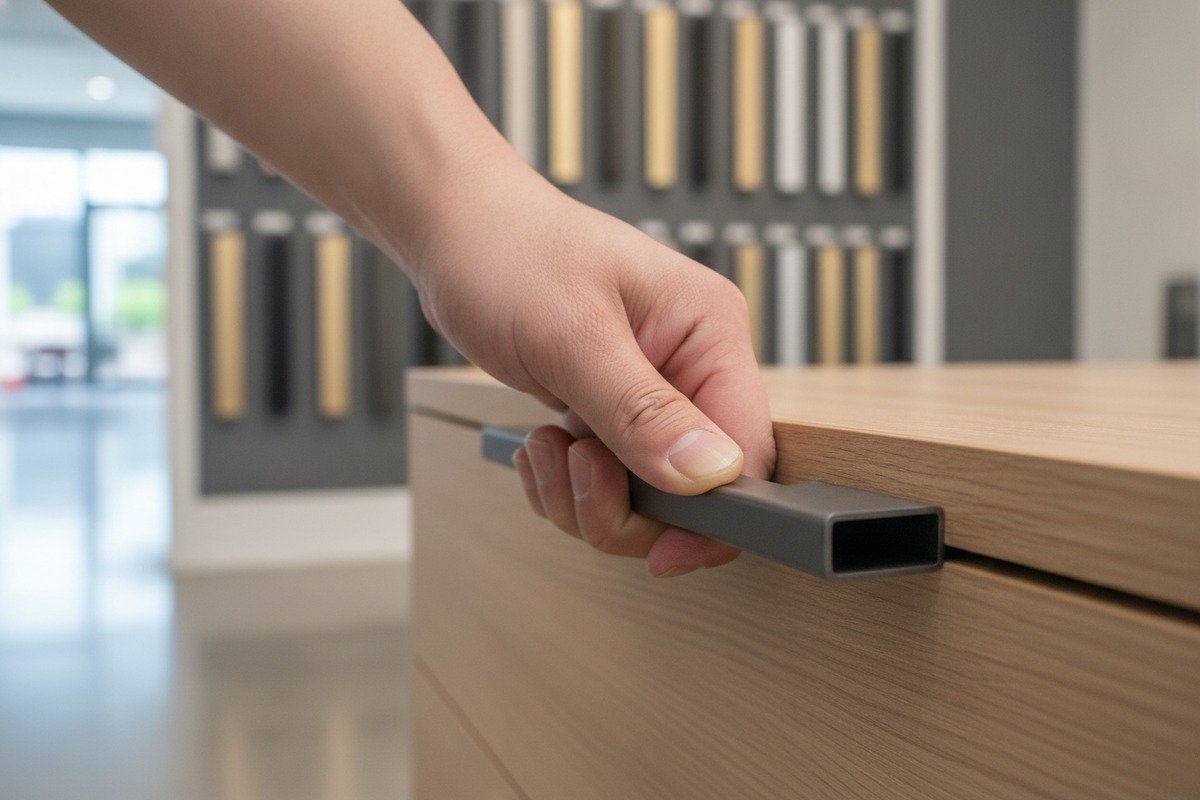
Every week, our production line runs thousands of aluminum handle profiles 1 in different cross-sections — oval, rectangular, L-shape, H-shape, and more. Yet one question keeps coming back from furniture factory owners and wholesalers: “Which shape actually feels best in daily use?” The answer is never as simple as picking the prettiest profile from a catalog. Comfort is invisible in photos. And choosing the wrong cross-section can lead to end-user complaints that damage your brand reputation.
To evaluate comfort differences in aluminum furniture handles, you should physically test each cross-sectional shape by assessing contact area, edge radius, finger clearance, and grip depth during real tasks like single-finger pulls and full-hand grabs, because comfort depends on pressure distribution and natural hand posture, not shape names alone.
This article breaks down the practical methods you can use to compare handle cross-sections before committing to a bulk order. We will cover ergonomic feel 2, edge radius, grip testing protocols, and customization options that balance aesthetics with hand comfort.
How do I compare the ergonomic feel of different aluminum handle cross-sections for my furniture production?
When our engineering team develops a new handle profile, the first prototype always goes through a hands-on ergonomic check before anything else. Many buyers rely on drawings or 3D renders to choose profiles, but flat images hide the most important variable: how the shape interacts with real human fingers under real pulling force.
Compare ergonomic feel by evaluating five measurable factors for each cross-section: contact area against the fingers, edge sharpness, grip depth, effective thickness, and finger clearance. Test each profile with light and heavy drawers using fingertip hooks, pinch pulls, and full-hand grabs to reveal true comfort differences.
Why Shape Names Can Be Misleading
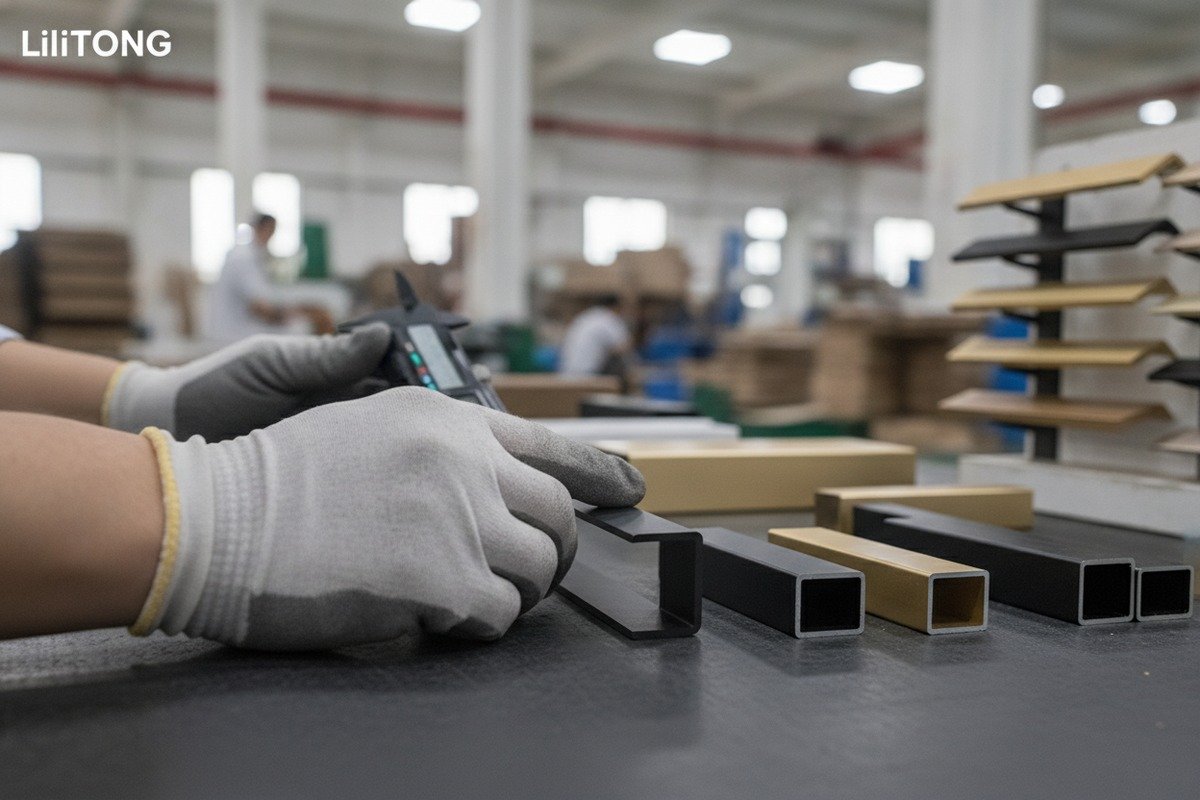
Handle suppliers — including us — label profiles as "oval," "rectangular," "H-shape," "L-shape," "T-shape," or "G-shape." These names describe geometry, not comfort. A well-finished rectangular handle with generous edge radii can feel better than a poorly designed oval handle with thin walls. So the first step is to stop choosing by name and start choosing by measurable ergonomic features.
The Five Factors That Actually Determine Comfort
Here is a breakdown of the key variables that change how any cross-section feels in the hand:
| Factor | What It Means | Why It Matters |
|---|---|---|
| Contact area 3 | The surface of the handle that touches the skin | Larger contact area spreads force and reduces pressure points |
| Edge radius 4 | How rounded or sharp the profile edges are | Sharp edges dig into fingers; rounded edges feel forgiving |
| Grip depth 5 / undercut | How far the fingers can wrap around the handle | Deeper grip means more control and less slipping |
| Effective thickness 6 | The dimension of the handle that sits across the fingers | Too thin feels like a blade; too thick is hard to curl around |
| Finger clearance 7 | Gap between the handle and the furniture surface | Too little clearance means scraped knuckles and nails |
How Common Cross-Sections Compare in Practice
Based on our experience shipping handles to furniture factories across Vietnam and the Middle East, here is a general comfort comparison. Keep in mind that these are tendencies, not absolutes. Finish quality, edge treatment, and dimensions shift the result significantly.
| Cross-Section | Grip Feel | Best Use Case | Common Limitation |
|---|---|---|---|
| Oval / Rounded | Smooth, forgiving, spreads pressure evenly | Heavy drawers, frequent daily use | May look less modern or "architectural" |
| Rectangular / Square | Stable, large flat contact patch | Wardrobe doors, wide panels | Can create pressure lines if edges are not radiused |
| H-shape / Channel | Easy to hook one finger, flush look | Modern kitchen cabinets | Narrow inner lip can feel sharp |
| L-shape | Minimal projection, clean lines | Integrated handle-less designs | Less material for fingers; comfort varies by hand size |
| T-shape | Distinct grasp point, good leverage | Pull-out pantry units | Thin stems may dig into fingers |
| G-shape | Hybrid of recessed and projecting | Bathroom vanities, laundry rooms | Comfort depends on return edge smoothness |
| Slim profiles | Seamless, architectural appearance | High-end minimalist kitchens | Small contact patch increases finger pressure under load |
Think in Terms of Tasks, Not Shapes
The most reliable way to compare ergonomic feel is to simulate actual use. Open a drawer with one finger while holding a plate in the other hand. Pull a heavy wardrobe door with a full grip. Try the handle with wet hands, as if you just washed dishes. These task-based tests reveal comfort gaps that catalog comparisons never will.
We always recommend that buyers request sample sets of at least three to four cross-sections and test them mounted on real furniture or a simple test rig. Ten minutes of hands-on testing replaces hours of debating specifications on paper.
What role does the edge radius of an aluminum profile play in the overall comfort of my custom handles?
In our extrusion workshops 8, the edge radius is one of the first things our die designers 9 discuss with buyers — yet it is one of the last things many procurement managers think about. A sharp edge that looks clean in a rendering becomes the exact spot where a user's finger feels pain after the twentieth pull of the day.
Edge radius is arguably the single most important comfort variable in aluminum handle design. Even a small increase from a sharp 0.3 mm edge to a smooth 1.5–2.0 mm radius dramatically reduces finger pressure, eliminates skin irritation, and transforms a harsh-feeling profile into one that feels premium and ergonomic in daily use.
What Exactly Is Edge Radius?
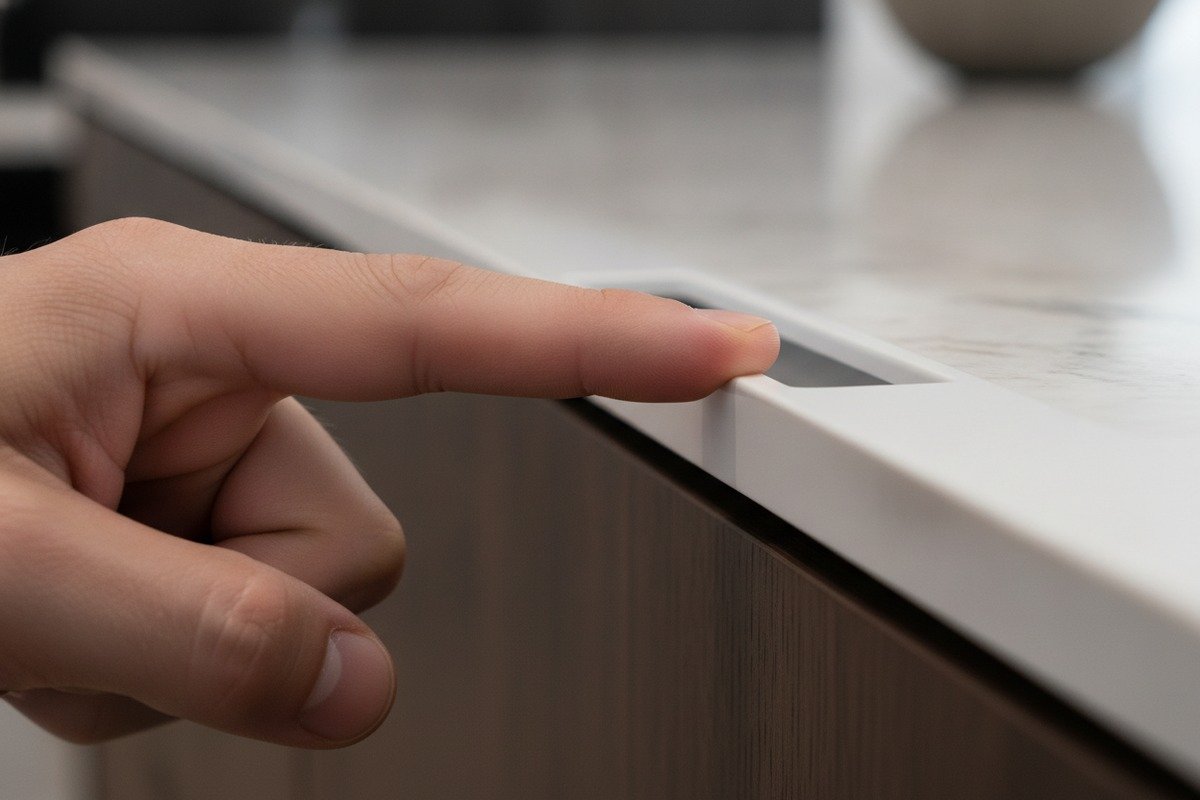
Edge radius refers to the curvature applied to the corners and edges of an extruded aluminum profile. When aluminum is pushed through a die, the raw extrusion can have relatively sharp edges. The radius can be built into the die itself, or it can be added through secondary finishing processes like tumbling, sanding, or CNC machining.
How Edge Radius Changes the Feel
A sharp edge concentrates force onto a narrow line of skin. A rounded edge spreads that same force across a wider area. The difference is subtle to the eye but obvious to the finger. Here is a practical breakdown:
| Edge Radius Range | Tactile Feel | Typical Application |
|---|---|---|
| 0.1–0.3 mm (sharp) | Crisp, can feel cutting under load | Decorative trim, non-grip surfaces |
| 0.5–0.8 mm (slight round) | Noticeable edge, acceptable for light use | Finger-pull recessed handles, light drawers |
| 1.0–1.5 mm (moderate round) | Comfortable for most users, good balance | Kitchen cabinets, bathroom vanities |
| 2.0 mm and above (generous round) | Very smooth, forgiving, premium feel | Heavy drawers, high-end furniture, accessibility designs |
The Hidden Cost of Sharp Edges
Sharp edges do not just reduce comfort. They also increase the risk of minor injuries during installation, assembly, and daily use. For furniture factories selling to the high-end market, a single complaint about a handle that "feels cheap" or "hurts the fingers" can cost a client relationship. In our experience, specifying a minimum 1.0 mm edge radius on all gripping surfaces is a low-cost way to prevent these problems.
Edge Radius and Perceived Quality
There is a direct link between edge treatment and how "premium" a handle feels. Buyers in the Middle East and Southeast Asia have told us repeatedly that a handle with smooth, well-radiused edges feels more expensive — even if the material cost is identical. The tactile impression of quality starts at the edge.
Why You Should Specify Edge Radius in Your Order
Many buyers specify only the overall dimensions and finish. We strongly recommend adding edge radius to your specification sheet. It costs very little to adjust the extrusion die or add a secondary rounding step, and the comfort improvement is disproportionately large. If your supplier does not ask about edge radius, bring it up yourself. It is a sign of sourcing sophistication that protects your end product quality.
How can I test the grip comfort of various handle shapes to ensure they meet my high-end market standards?
Our quality team runs hands-on grip tests every time we develop a new profile for an OEM client 10. We have learned through 18 years of production that what looks perfect in a CAD drawing can feel wrong in the hand. The gap between visual design and tactile comfort is where customer complaints are born.
Test grip comfort by mounting sample handles on a test board, then performing fingertip hooks, pinch pulls, and full-hand grabs with dry, wet, and cold hands across light and heavy load conditions. Check for pressure hot spots, knuckle clearance, and slip resistance after at least 20 repeated cycles to simulate real daily use.
Build a Simple Test Rig
You do not need a laboratory. Take a piece of board, mount your sample handles at typical cabinet heights (knee level, waist level, and overhead), and attach it to a frame. Use drawer slides with different resistances to simulate light cutlery drawers and heavy pot drawers. This basic setup lets you test handles in conditions that mimic real kitchens, bathrooms, and wardrobes.
A Step-by-Step Grip Comfort Test Protocol
Here is the protocol we recommend to our wholesale partners:
- Dry hand test. Pull each handle 20 times using three motions: one-finger hook, two-finger pinch, and full-hand pull. Note any discomfort, pressure lines, or awkward angles.
- Wet hand test. Dampen your hands and repeat. This reveals slipperiness and whether the profile shape provides enough mechanical grip even when friction drops.
- Cold hand test. If possible, test after holding something cold. Aluminum conducts heat quickly, and cold metal on sensitive fingertips changes perceived comfort. Thicker cross-sections and matte finishes tend to feel less harsh.
- Load test. Attach increasing weight to the drawer or door. Notice when the handle starts to feel uncomfortable — that is the load threshold for each shape.
- Knuckle and nail clearance check. Pay attention to whether your knuckles hit the cabinet surface or your nails scrape against the inner edge of the handle recess.
- Repeat with different hand sizes. Ask at least three people with different hand sizes (small, medium, large) to run the same test and report their impressions separately.
What to Look For After Testing
After each session, check your fingers for red marks or pressure lines. These "hot spots" indicate where the cross-section is concentrating force. A good handle leaves no visible marks after normal use. Also note whether the profile felt secure — a handle that requires you to grip tighter to avoid slipping is less comfortable even if the shape seems ergonomic at first touch.
The Role of Surface Finish in Grip Testing
Do not test bare extrusions and assume the result will carry over to finished handles. Anodized, brushed, powder-coated, and polished finishes all change the friction and tactile feel. A smooth polished handle is more slippery than a brushed one. A matte anodized surface provides subtle grip texture that can compensate for a less-than-ideal cross-section. Always test the finish you intend to sell.
Document and Compare
Create a simple scoring sheet. Rate each handle from 1 to 5 on comfort for each test condition. After testing four or five profiles, the numbers make the decision clear — and you have documentation to share with your design team or end clients.
Can I customize the cross-sectional dimensions with my supplier to optimize the balance between aesthetics and hand feel?
When furniture factory owners visit our Foshan facility, one of the first things we show them is the die workshop. Every aluminum handle starts as a custom extrusion die, and that die defines every millimeter of the cross-section. The truth is, most buyers do not realize how much control they have over the final profile — and how small dimensional changes can solve big comfort problems without changing the visual design.
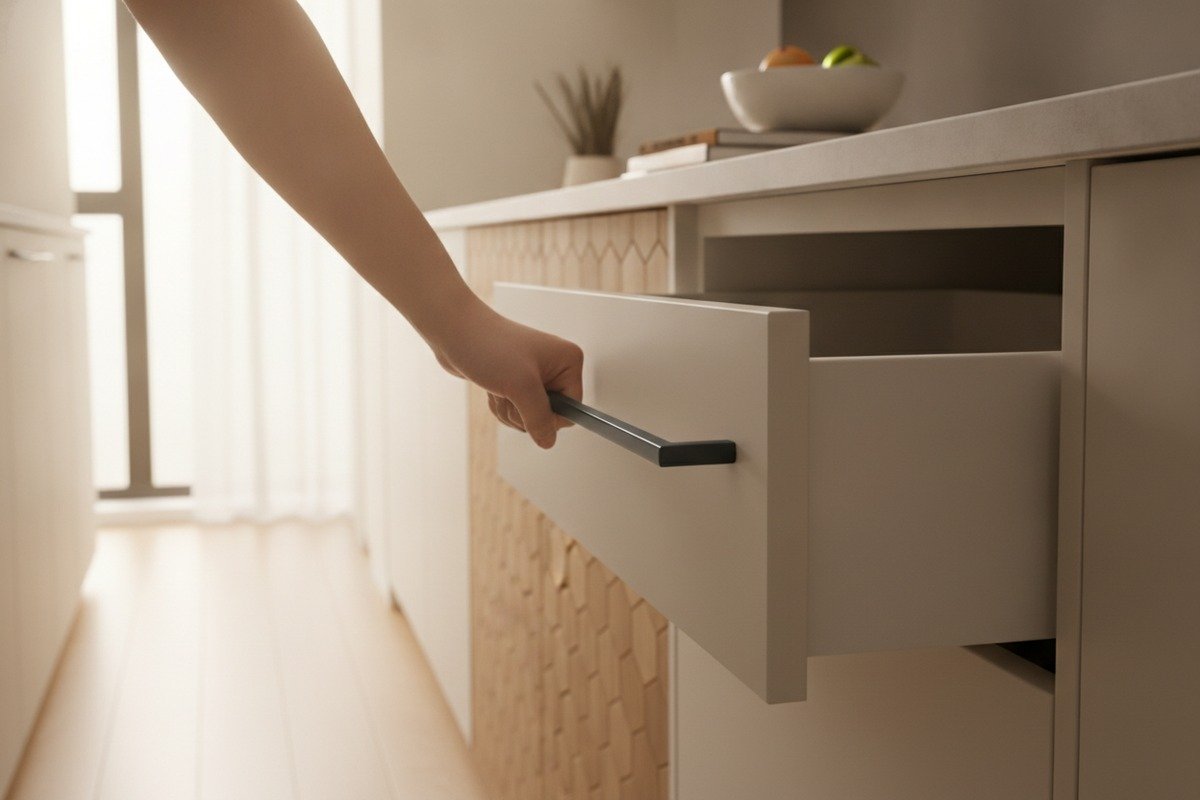
Yes, reputable aluminum handle suppliers offer full cross-sectional customization through OEM/ODM die design. You can adjust grip depth, edge radius, wall thickness, and finger clearance by fractions of a millimeter while keeping the external appearance unchanged, giving you precise control over the balance between aesthetics and ergonomic hand feel.
What Can Actually Be Customized?
Almost every dimension of the cross-section is adjustable when you work with a supplier that owns its extrusion equipment. Here are the most common customization points:
- Overall width and height of the profile
- Edge radius on all contact surfaces
- Internal channel depth (for recessed or finger-pull styles)
- Wall thickness at the grip point
- Lip dimensions that define how much finger purchase is available
- Surface curvature along the grip face (flat, convex, or concave)
The Aesthetic-Comfort Trade-Off
Modern furniture design pushes toward thinner, slimmer, more invisible handles. This creates a natural tension: the slimmer the profile, the less material is available for the fingers, and the higher the pressure per square millimeter of skin contact. The good news is that thoughtful customization can soften this trade-off significantly.
For example, on one of our best-selling recessed pull handles — the slim L-shape channel style popular in minimalist kitchens — we worked with a Vietnamese furniture factory to increase the inner lip depth by just 2 mm and add a 1.2 mm edge radius to the contact edge. The external appearance was virtually identical, but the factory owner reported noticeably fewer comfort complaints from their retail clients.
How Custom Dies Work
A new extrusion die typically takes 3 to 7 days to produce in our facility. The cost is modest relative to the total order value, especially for mid-to-high-end handles. Once the die is made, every meter of extruded profile carries your custom cross-section. Die ownership is negotiable — some buyers keep the die exclusive, others share standard dies to reduce costs.
When to Push for Customization
Not every order needs a custom die. If you are ordering a standard catalog profile and the comfort is acceptable, a stock die saves time and money. But consider custom cross-sectional adjustments when:
- Your end market demands a premium feel and you need to differentiate from competitors
- Comfort testing reveals a specific hot spot or clearance problem
- You are designing a new furniture line and want the handle integrated into the overall design language
- Your existing handle receives consistent complaints about sharpness, thinness, or awkward grip
Communication Tips for Working with Your Supplier
Be specific. Instead of asking for a "more comfortable handle," say: "Increase the grip depth by 2 mm, round all contact edges to a minimum of 1.5 mm radius, and widen the finger channel by 1 mm." Specific requests get accurate results. Send sketches, reference photos, or marked-up cross-section drawings. Our engineering team — and most capable suppliers — can translate your functional requirements into precise die specifications within a day.
Balancing MOQ and Customization
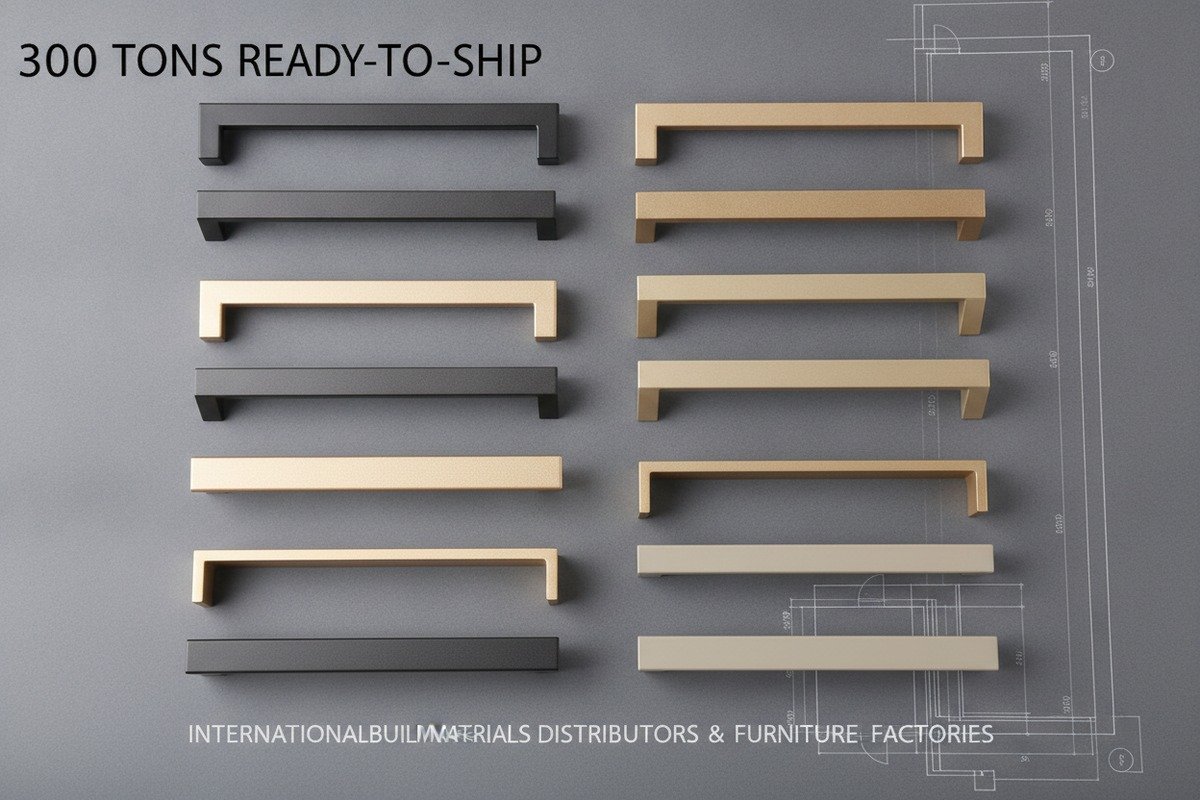
One concern buyers have is that customization raises minimum order quantities. This is sometimes true, but at our facility, we maintain a 3-to-7-day turnaround for custom profiles and keep MOQs reasonable because our 300-ton inventory of standard profiles covers baseline demand. Custom cross-section work is a focused addition, not a complete restart. Ask your supplier for a clear MOQ and lead time breakdown for custom die work — it is often more accessible than expected.
Conclusion
Comfort in aluminum furniture handles is not about picking the right shape name — it is about measuring contact area, edge radius, grip depth, and clearance, then testing those variables with real hands under real conditions. When you treat cross-sectional geometry as a precise engineering decision rather than a catalog choice, you source handles that look beautiful and feel right every single day.
Footnotes
1. Provides an overview of aluminum profiles, their manufacturing, and applications. ↩︎
2. Explains the importance of ergonomics in handle design and factors influencing it. ↩︎
3. Discusses how contact area and pressure points affect grip comfort in handle design. ↩︎
4. Defines edge radius and its importance for safety, comfort, and part performance in product design. ↩︎
5. Addresses grip length and how it impacts hand contact and comfort for users. ↩︎
6. Provides guidelines on handle diameter for power and precision grips, affecting effective thickness. ↩︎
7. Highlights the importance of proper finger clearance for a full grip and preventing knuckle contact. ↩︎
8. Offers information on workshops related to the aluminum extrusion process and finishing. ↩︎
9. Replaced HTTP 403 with an authoritative resource explaining the crucial role of ‘Die designers’ in aluminum extrusion. Anchor text remains appropriate. ↩︎
10. Defines OEM and explains its role in manufacturing, where components are made for other companies. ↩︎