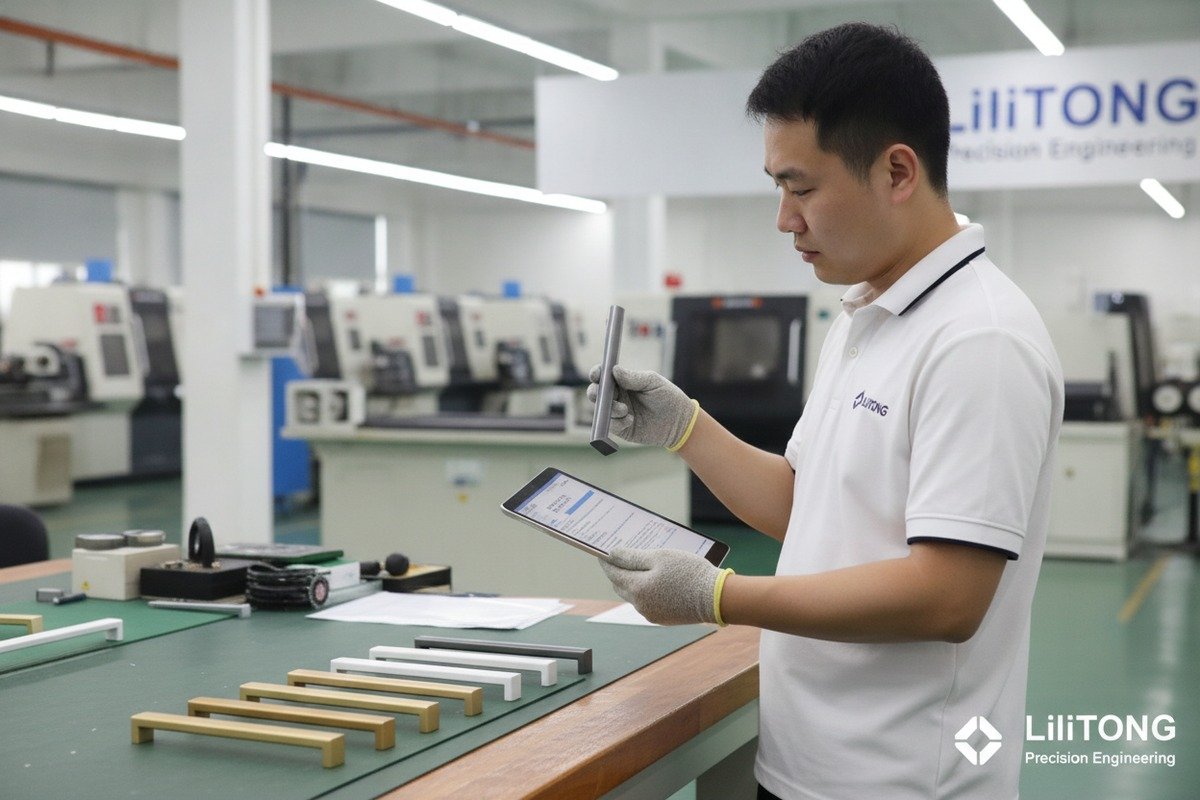
Every week, our sales team fields calls from buyers who want recycled aluminum 1 handles but worry about quality trade-offs. The concern is valid — “recycled” alone tells you nothing about alloy purity, surface finish, or long-term durability.
To determine if a supplier uses high-quality recycled aluminum, request the alloy designation, a certificate of analysis for each batch, recycled-content traceability documentation, and sample inspection results for surface finish and dimensional tolerance. Genuine quality suppliers prove both sustainability and performance with verifiable data, not marketing slogans.
This guide breaks down the exact documents, tests, and red flags you need to evaluate before placing your next order RCS or GRS certification 2. Whether you run a furniture factory or distribute building materials, these steps protect your margin and your reputation.
How Can I Verify the Specific Alloy Composition and Purity of the Aluminum Handles I'm Sourcing?
Many buyers assume all aluminum is the same. After 18 years of extruding and finishing aluminum profiles at our Foshan facility, we can tell you that small differences in alloy composition create big differences in handle performance.
To verify alloy composition, request the supplier's material specification sheet showing the exact alloy designation (e.g., 6063-T5) and temper, then ask for a certificate of analysis or mill test certificate from an independent lab confirming chemical composition percentages for each production batch.
Why Alloy Designation Matters for Furniture Handles
Aluminum is never pure in commercial applications. It is always alloyed with other elements — silicon, magnesium, copper, zinc — to achieve specific properties. For furniture handles, the most common alloys are 6063 and 6061. The 6063 alloy 3 is preferred for extruded handles because it offers excellent extrudability, good corrosion resistance, and a smooth surface that anodizes beautifully. The 6061 alloy is stronger but harder to finish.
When a supplier uses recycled aluminum, the risk is contamination. If the recycled input contains mixed alloys or foreign metals like iron or zinc beyond specification limits, the final product can be brittle, hard to anodize, or dimensionally inconsistent. That is why the alloy designation 4 and the certificate of analysis are your first line of defense.
What to Look for on a Certificate of Analysis
A proper certificate of analysis 5 (COA) lists the percentage of each element in the aluminum batch. Here is what a typical COA should show for 6063 alloy:
| Element | 6063 Specification Range | What to Watch For |
|---|---|---|
| Silicon (Si) | 0.20–0.60% | Too high causes rough surface |
| Magnesium (Mg) | 0.45–0.90% | Too low reduces strength |
| Iron (Fe) | 0.35% max | Excess iron causes brittleness |
| Copper (Cu) | 0.10% max | Too much reduces corrosion resistance |
| Zinc (Zn) | 0.10% max | Indicates mixed scrap contamination |
| Manganese (Mn) | 0.10% max | Should stay within spec |
| Chromium (Cr) | 0.10% max | Minor but controlled |
| Titanium (Ti) | 0.10% max | Grain refiner, small amounts OK |
| Aluminum (Al) | Remainder | Should be 97.5%+ for 6063 |
How to Independently Verify
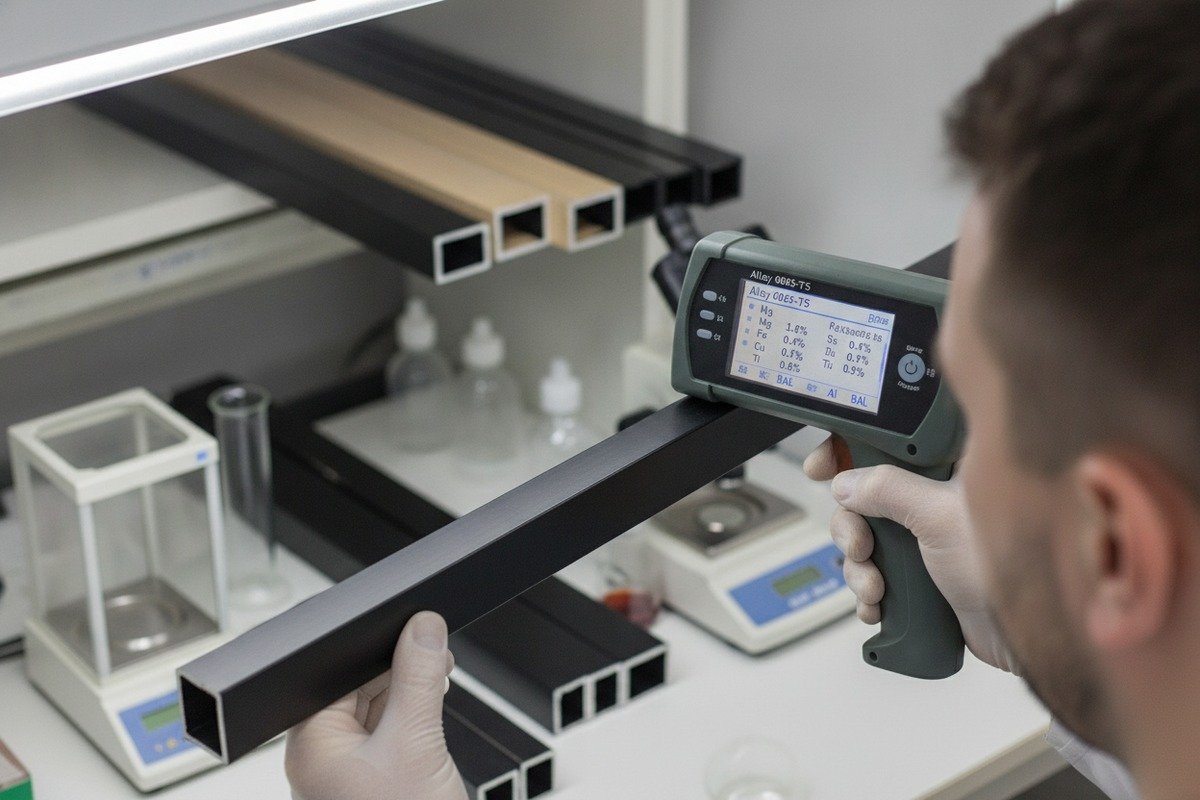
Do not rely solely on the supplier's own paperwork. You have two practical options. First, ask for a COA from a third-party testing lab, not the supplier's in-house lab. Second, use X-ray fluorescence (XRF) analysis 6 on a sample handle. Handheld XRF guns are widely available through inspection agencies. They give you a composition reading in seconds. If the numbers match the stated alloy, you have good evidence. If silicon is at 1.2% when it should be under 0.6%, the supplier is not controlling their melt.
Our production team runs XRF checks on every incoming billet before it enters the extrusion press. That discipline is what separates a controlled recycled-aluminum operation from a supplier melting whatever scrap is cheapest that week.
Batch Consistency Is the Hidden Test
One good COA is not enough. Ask whether the supplier can provide COAs from three or more consecutive batches. Consistent numbers across batches mean the supplier has a stable recycled feedstock and a reliable melting process. Wide variation between batches is a red flag — it suggests the recycled input changes with market availability rather than quality specifications.
What Certifications or Test Reports Should I Request from My Supplier to Ensure High-Quality Recycled Material?
When we prepare shipment documentation for our export clients in Vietnam and the Middle East, we include far more than a packing list. The right paperwork protects both sides and eliminates guesswork about material quality.
Request RCS or GRS certification for recycled content verification, ISO 9001 for quality management, mill test certificates per batch, salt spray test reports for corrosion resistance, and anodizing thickness reports. Together, these documents prove the supplier controls both sustainability claims and product performance.

The Certification Stack That Matters
Not all certifications carry the same weight. Some verify the recycled content itself. Others verify the manufacturing process. You need both.
| Certification / Report | What It Proves | Why It Matters for Handles |
|---|---|---|
| RCS (Recycled Claim Standard) | Verified recycled content percentage | Confirms the "recycled" claim is real |
| GRS (Global Recycled Standard) | Recycled content + social and environmental practices | Broader sustainability assurance |
| ISO 9001 | Quality management system in place | Consistent production and inspection |
| ISO 14001 | Environmental management system | Confirms eco-practices are systematic |
| Mill Test Certificate (MTC) | Alloy composition, mechanical properties per batch | Proves each batch meets spec |
| Salt Spray Test (ASTM B117) 7 | Corrosion resistance hours | Validates handle durability |
| Anodizing Thickness Report | Micron measurement of anodized layer | Prevents premature surface wear |
Post-Consumer vs. Post-Industrial Recycled Content
This distinction matters more than many buyers realize. Post-consumer recycled (PCR) aluminum comes from end-of-life products — old window frames, beverage cans, discarded hardware. Post-consumer recycled aluminum 8 Post-industrial recycled (PIR) aluminum comes from factory scrap — extrusion offcuts, stamping waste, rejected billets.
PIR is generally cleaner and easier to control because it comes from a known production stream. PCR carries greater environmental benefit because it diverts waste from landfills, but it requires more rigorous sorting and purification. Ask your supplier which type they use. A vague answer is a warning sign.
Life Cycle Assessment Data
Some forward-thinking suppliers provide Life Cycle Assessment (LCA) data 9. An LCA quantifies the environmental impact of the product from raw material to finished handle. It covers energy use, carbon emissions, water consumption, and waste generation. If your end customers or retail partners care about sustainability metrics, LCA data from your supplier gives you credible numbers to share — not just a green logo.
Traceability Documentation
Chain-of-custody records link the finished handle back to the specific recycled aluminum batch, the foundry or smelter, and the recycled feedstock source. This traceability is what separates a supplier who genuinely controls recycled quality from one who simply buys the cheapest aluminum available and labels it "eco-friendly." At our facility, each billet lot is tagged with a traceable code that follows the material through extrusion, cutting, anodizing, and packing. That code appears on the shipping documents so the buyer can trace any handle back to its source.
Red Flags in Documentation
Watch for these problems: certificates that are expired or issued to a different company name, test reports with no lab accreditation number, "100% recycled" claims with zero supporting paperwork, or a supplier who can discuss marketing benefits of recycled aluminum but cannot name the alloy or temper used in your handles.
Can I Distinguish Between High-Grade Recycled Aluminum and Low-Quality Scrap by Inspecting the Surface Finish?
Our quality control team rejects handles every week based on surface inspection alone. The surface of an aluminum handle is the most honest indicator of what happened during melting, extrusion, and finishing — and it is something any buyer can evaluate without lab equipment.
Yes, surface finish provides strong visual clues. High-grade recycled aluminum produces smooth, uniform surfaces with consistent color after anodizing. Low-quality scrap often results in visible pitting, streaking, dull patches, uneven anodizing color, or soft edges that indicate contamination or poor alloy control during manufacturing.
What a Good Surface Looks Like
A well-made aluminum handle from quality recycled stock has several visible characteristics. The surface is smooth to the touch with no bumps or rough patches. The edges are crisp and sharp — not rounded or ragged. When anodized, the color is uniform across the entire handle, with no blotchy areas or color shifts between different faces. Matte finishes appear evenly matte. Glossy finishes appear evenly glossy. The finger-grip channel on recessed handles should be as clean and well-finished as the visible face.
What a Bad Surface Reveals
Low-quality recycled aluminum shows its problems on the surface. Here are the most common defects and what they suggest about the material:
| Surface Defect | Likely Cause | What It Means for Quality |
|---|---|---|
| Pitting (tiny holes) | Gas porosity from contaminated melt | Weak spots, poor corrosion resistance |
| Streaking or lines | Impurities dragged through the die | Inconsistent alloy, poor extrusion control |
| Dull or cloudy anodizing | High iron or silicon content | Wrong alloy or contaminated recycled input |
| Uneven color across batch | Alloy composition varies between billets | No batch-to-batch consistency |
| Soft or rounded edges | Die wear or low-quality billet | Poor dimensional tolerance |
| Flaking or peeling finish | Poor surface prep before anodizing | Weak process discipline |
| White powdery spots | Corrosion already starting | Material or finish is substandard |
The Fingernail Test
This is a simple trick. Run your fingernail firmly across the anodized surface of a sample handle. If the anodizing is properly done at the correct thickness (typically 10–25 microns for architectural applications), your nail will not leave a mark. If you can scratch through the finish easily, the anodizing layer is too thin or was applied to a poorly prepared surface. Poor anodizing is one of the most common consequences of using low-quality recycled aluminum, because contaminants in the alloy interfere with the electrochemical anodizing process.
Compare Multiple Samples
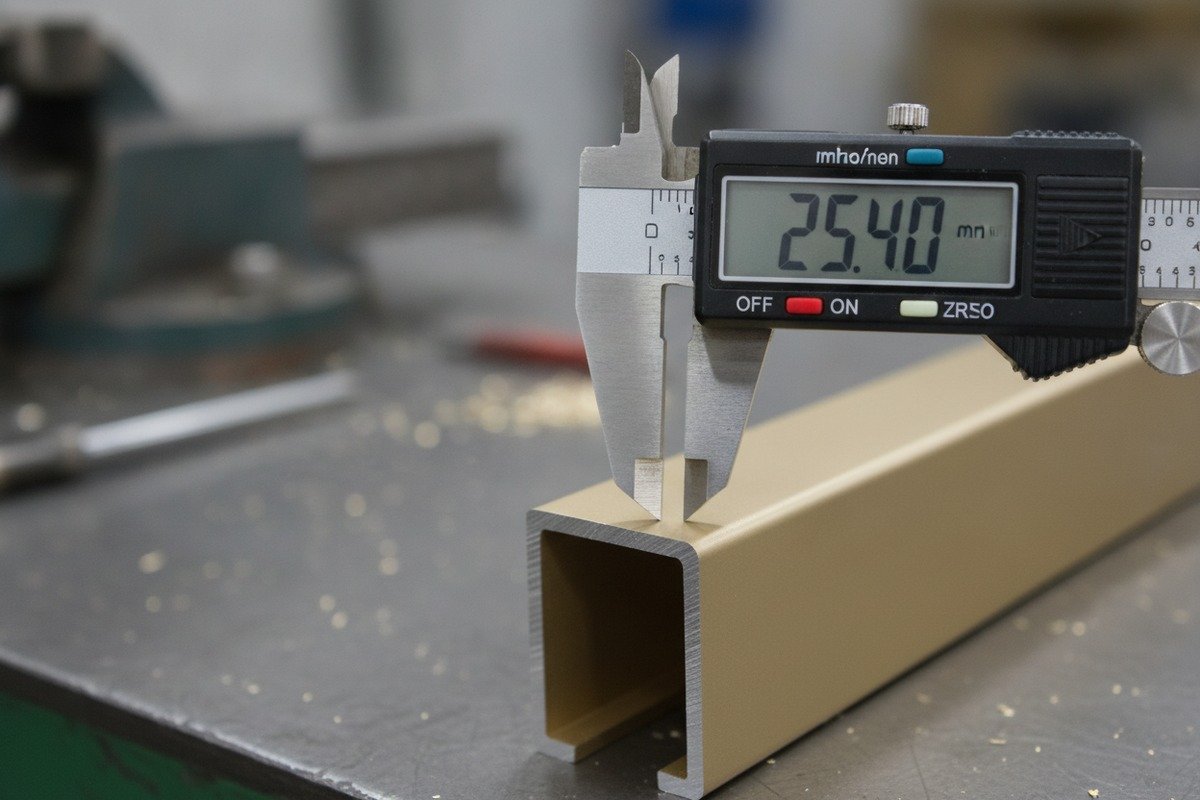
Ask the supplier to send samples from different production batches, not just their best piece. Compare them side by side under good lighting. Hold them at an angle and look for color variation. Check the dimensions with a caliper — quality extruded handles should hold tolerances of ±0.1–0.3 mm. If dimensions vary widely between samples, the extrusion process is not well controlled, which often correlates with inconsistent billet quality.
Surface Inspection Is Necessary but Not Sufficient
Visual and tactile inspection catches many problems, but it cannot tell you the exact alloy composition or the recycled content percentage. Think of surface inspection as a screening tool. If the surface looks bad, the material is almost certainly bad. If the surface looks good, you still need the documentation and test reports described above to confirm the full picture.
How Does the Use of Recycled Aluminum Affect the Structural Integrity and Anodizing Quality of My Furniture Hardware?
This is the question our engineering team hears most from procurement managers who want to go green but cannot afford field failures. The short answer is encouraging — but the details matter.
When recycled aluminum is properly sorted, purified, and alloyed to the correct specification, it performs identically to virgin aluminum in structural strength and anodizing quality. Problems arise only when the recycled input is contaminated or inconsistently composed, leading to reduced load resistance, porosity, and poor anodize adhesion.
Structural Integrity: What the Numbers Say
Furniture handles face real mechanical demands. A kitchen drawer handle experiences thousands of pull cycles per year. A wardrobe handle supports lateral and downward force when users grip and pull heavy doors. The handle must resist bending, loosening, and fatigue cracking over many years.
For 6063-T5 aluminum — whether made from virgin or recycled stock — the key mechanical properties are:
- Tensile strength: approximately 185 MPa
- Yield strength: approximately 145 MPa
- Elongation at break: approximately 12%
These numbers hold true as long as the alloy composition meets specification. Recycled aluminum that is correctly alloyed to 6063 and properly heat-treated to T5 temper will hit these same numbers. The molecular structure of aluminum does not "remember" whether it was recycled. What matters is the chemistry and the processing.
Where Recycled Aluminum Can Go Wrong Structurally
The risk comes from contamination. If the recycled melt contains excess iron, the aluminum becomes more brittle and prone to cracking under repeated stress. If zinc or copper levels exceed specification, corrosion resistance drops. If the billet has gas porosity — tiny trapped air bubbles from a poorly controlled melt — the extruded profile may have internal voids that weaken it under load.
These problems are not inherent to recycled aluminum. They are inherent to poorly controlled recycled aluminum. A supplier with disciplined scrap sorting, spectrometer testing of every melt, and degassing procedures before casting will produce billets that are indistinguishable from virgin material.
Anodizing Quality: The Real Test
Anodizing is where recycled-aluminum quality shows itself most clearly. The anodizing process grows a hard oxide layer on the aluminum surface through an electrochemical reaction. This layer provides corrosion resistance, wear resistance, and the decorative color that buyers expect — champagne gold, matte black, charcoal grey, and other finishes common in modern furniture hardware.
The problem is that anodizing is extremely sensitive to alloy composition and surface condition. Even small amounts of excess silicon or iron change how the oxide layer forms. The result can be:
- Uneven color (mottled or streaky appearance)
- Reduced hardness of the anodized layer
- Poor dye absorption (faded or washed-out color)
- Surface haze or cloudiness
- Premature wear-through of the finish
What Good Anodizing Looks Like on Recycled Aluminum
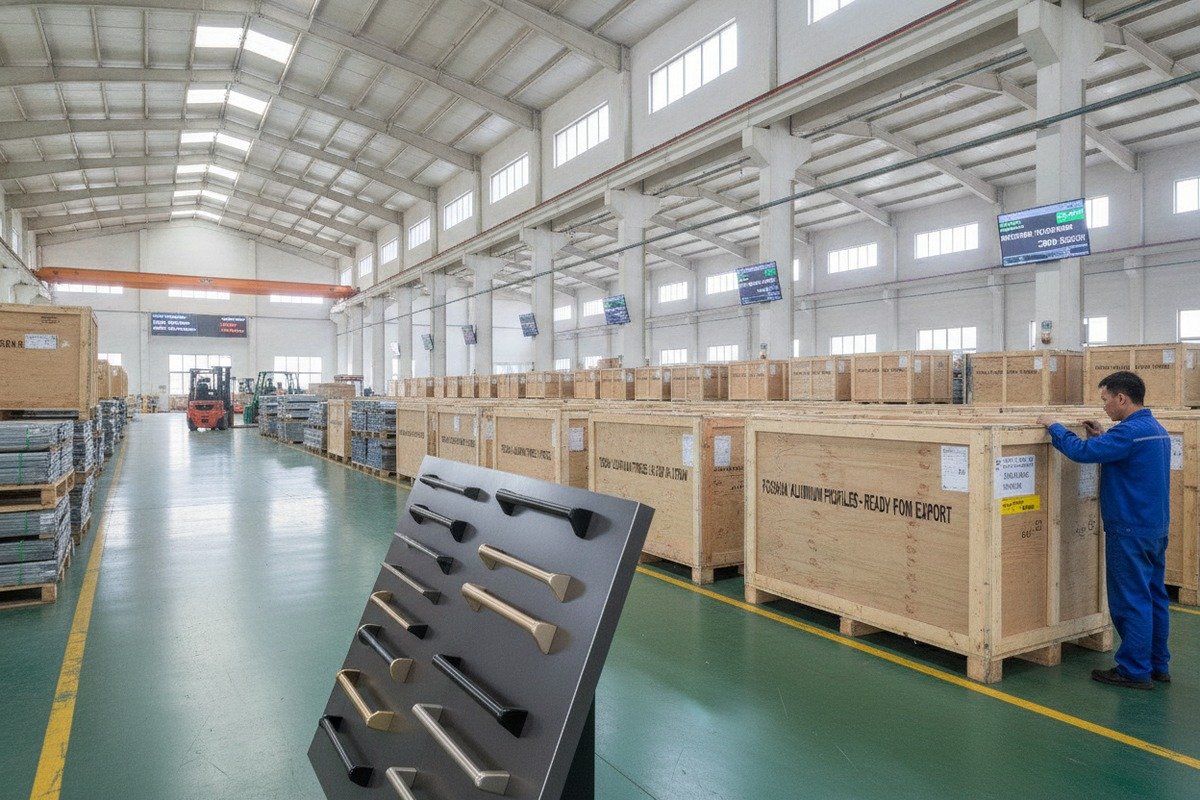
When the recycled aluminum is clean and correctly alloyed, anodizing results are excellent. Our production line processes both stock-item handles and custom OEM orders, and we routinely achieve anodizing thicknesses of 15–20 microns with uniform color across full production runs. The champagne gold and matte finishes on our recessed cabinet handles, for example, require consistent alloy quality to achieve that smooth, non-reflective aesthetic with sharp, clean edges.
Practical Tests You Can Request
Ask your supplier for these specific test results related to structural and finish performance:
| Test | Standard | What It Confirms |
|---|---|---|
| Tensile and yield strength | ASTM E8 / ISO 6892 | Handle can withstand pull forces |
| Hardness test (Webster or Rockwell) | ASTM E18 | Material is properly tempered |
| Salt spray test | ASTM B117 (min 48–96 hrs) | Corrosion resistance of finished handle |
| Anodizing thickness | ISO 7599 / ASTM B244 | Finish will last under daily use |
| Adhesion test (cross-cut) | ASTM D3359 | Coating bonds properly to substrate |
| Dimensional inspection | Per drawing ±0.1–0.3 mm | Handles fit hardware holes correctly |
If your supplier can provide passing results on all six tests for handles made from recycled aluminum, you have strong evidence that the recycled content is not compromising performance. If they cannot provide these results, or if results vary widely between batches, that is a clear signal to look elsewhere.
The Bottom Line on Performance
Recycled aluminum is not a compromise. It is a legitimate input that reduces energy consumption by up to 95% compared to primary smelting. But the quality depends entirely on the supplier's process discipline. Ask for the data. Inspect the samples. Verify the consistency. A supplier who can prove both recycled content and mechanical performance is a supplier worth partnering with long term.
Conclusion
Recycled aluminum handles can match virgin-material performance — but only when your supplier proves it with alloy data, certifications, test reports, and consistent surface quality. Buy on evidence, not on eco-labels alone.
Footnotes
1. Explains the process and importance of recycling aluminum. ↩︎
2. Official Textile Exchange page for RCS and GRS standards. ↩︎
3. Provides detailed properties and uses of 6063 aluminum alloy. ↩︎
4. Official source for aluminum alloy designation systems and standards. ↩︎
5. Explains what a Certificate of Analysis is and its importance in quality assurance. ↩︎
6. Explains the principle and applications of X-ray fluorescence for elemental analysis. ↩︎
7. Describes the ASTM B117 standard for evaluating corrosion resistance. ↩︎
8. Defines post-consumer recycled materials as per EPA guidelines. ↩︎
9. Authoritative government source (.gov) for LCA data repositories. ↩︎
10. Provides an overview of the ISO 9001 quality management system standard. ↩︎