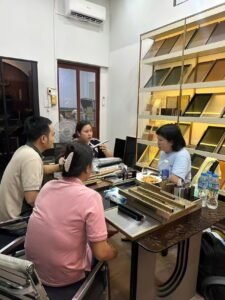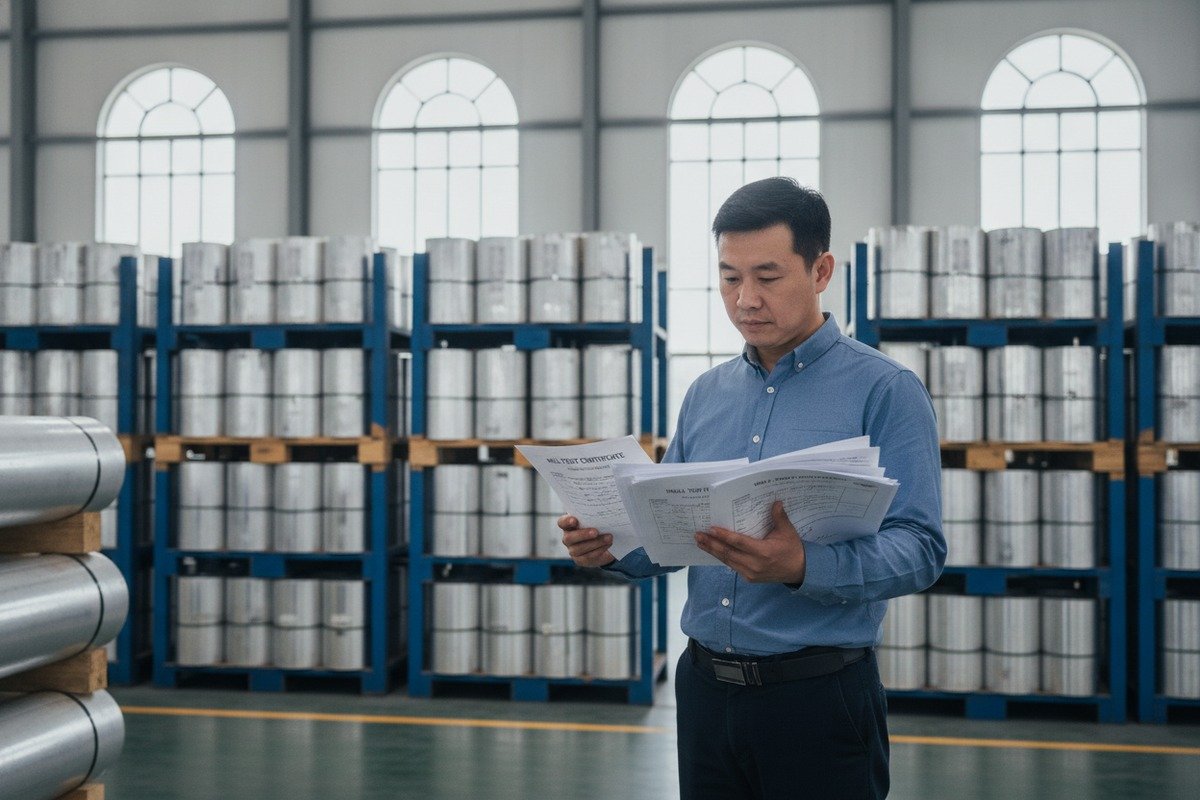
Every year, our production floor processes hundreds of tons of extruded aluminum profiles 1 into furniture handles for wholesalers and factories across Vietnam and the Middle East. One question keeps coming up during buyer calls: “How do I know you won’t run out of material mid-order?”
You can determine whether an aluminum handle supplier has a stable raw material supply by verifying their upstream billet sources, checking alloy traceability documentation, reviewing inventory buffer policies, assessing lead-time consistency over the past year, and confirming contingency plans for supply disruptions during market volatility.
This guide walks you through exactly what to check, what to ask, and what red flags to watch for Inventory buffer policies 2. Each section below tackles a specific angle so you can build a clear picture of any supplier’s material reliability before you commit to a purchase order.
How can I verify if my aluminum handle manufacturer has a reliable raw material supply chain?
Many buyers focus on price and finish quality but overlook the supply chain behind the finished handle. In our 18 years of shipping aluminum hardware, we have learned that the upstream chain determines everything downstream.
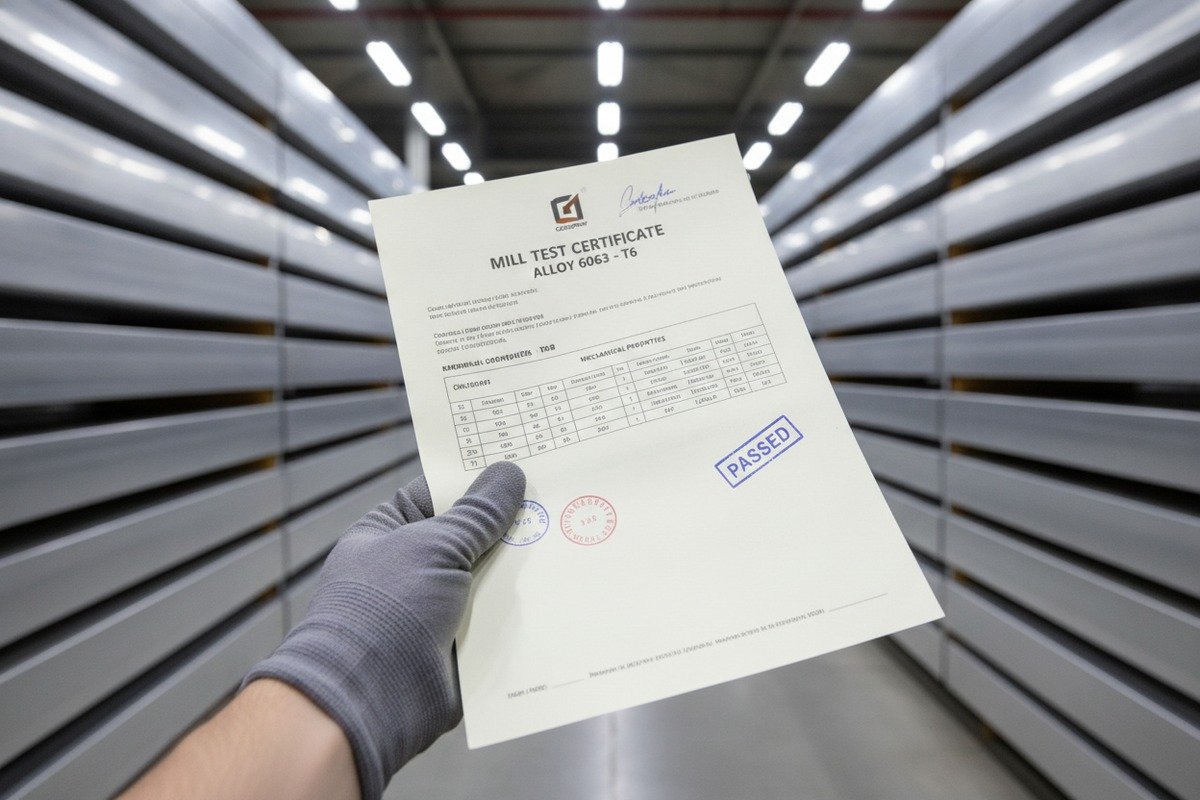
You can verify a manufacturer's raw material supply chain by requesting mill test certificates for their aluminum billets, confirming named smelter or refiner partnerships, reviewing batch traceability records from billet to finished handle, and checking whether they hold long-term supply contracts rather than relying solely on spot-market purchases.
Why the upstream chain matters for furniture handles
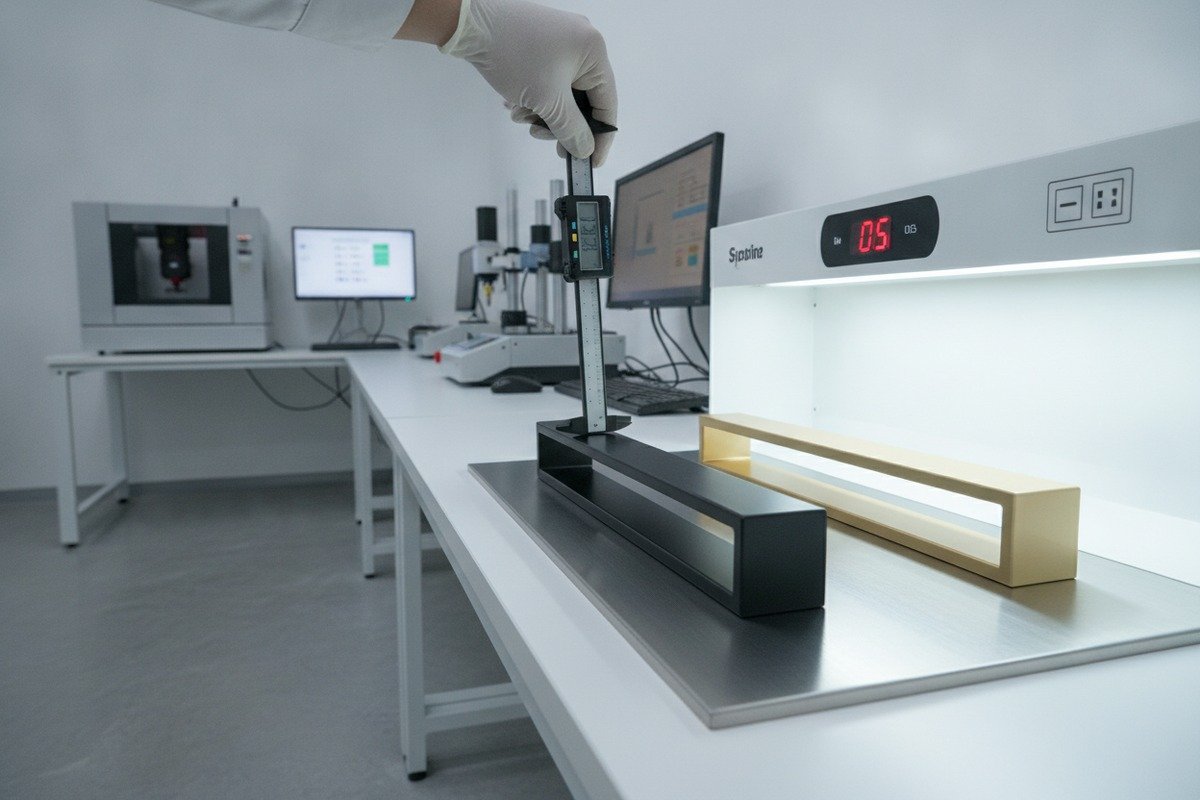
Aluminum furniture handles are made from extruded profiles. The extrusion process pushes heated aluminum billet through a die to create a precise cross-section — like the slim, recessed channel designs our team produces in champagne gold, matte black, and charcoal grey finishes. If the billet chemistry shifts even slightly between batches, the extrusion behaves differently. Surface finish changes. Anodizing color drifts. Dimensional tolerances wander. That is why the raw material source is not a background detail. It is the foundation of product consistency.
What documents to request
Start with these five items. If a supplier cannot provide them, treat that as a warning.
| Document | What It Proves | Red Flag If Missing |
|---|---|---|
| Mill Test Certificate (MTC) 3 | Confirms alloy grade, temper, and chemical composition of the billet | Supplier cannot verify what alloy they actually use |
| Certificate of Conformity (CoC) 4 | Shows the billet meets an agreed specification standard | No formal quality agreement with billet source |
| Batch traceability log | Links each finished handle lot back to a specific billet batch and heat number | No way to investigate quality drift between orders |
| Supply contract summary | Proves long-term purchasing agreements with smelters or refiners | Relies entirely on spot-market buying, which is volatile |
| Inventory policy document | Shows safety stock levels for common billet sizes and alloys | No buffer against short-term disruptions |
Named sources vs. generic answers
When we discuss our own sourcing, we name the primary billet suppliers we work with and explain why we chose them — consistency of 6063 alloy chemistry, reliable delivery schedules, and geographic proximity in Guangdong province. A trustworthy supplier should do the same. If you ask "Where does your aluminum come from?" and the answer is vague — something like "We buy from the market" — that is a sign they lack a fixed supply relationship. Named sources mean accountability. Generic answers mean risk.
Long-term contracts vs. spot-market dependence
Suppliers who lock in annual or semi-annual billet supply contracts can absorb price swings and delivery delays far better than those who buy billet order by order on the open market. Spot-market purchasing 5 is not inherently bad for small volumes, but for large-scale or recurring orders, it introduces uncertainty. Ask directly: "Do you have fixed annual supply contracts, or do you purchase billet on a per-order basis?" The answer tells you a lot about their stability.
Alloy consistency and why it matters
Most quality aluminum furniture handles use 6063 or 6061 alloy 6. 6063 is especially popular because it extrudes smoothly, accepts anodizing beautifully, resists corrosion well, and delivers the clean matte surfaces that modern kitchen and wardrobe hardware demands. But not all 6063 billet is equal. Billet from different sources can have slight variations in magnesium and silicon content, which affects hardness, surface grain, and anodizing uniformity. A supplier with a stable chain uses the same billet source batch after batch, so your handles look and perform the same every time.
Does a supplier's ready-to-ship inventory reflect their stability in sourcing aluminum profiles?
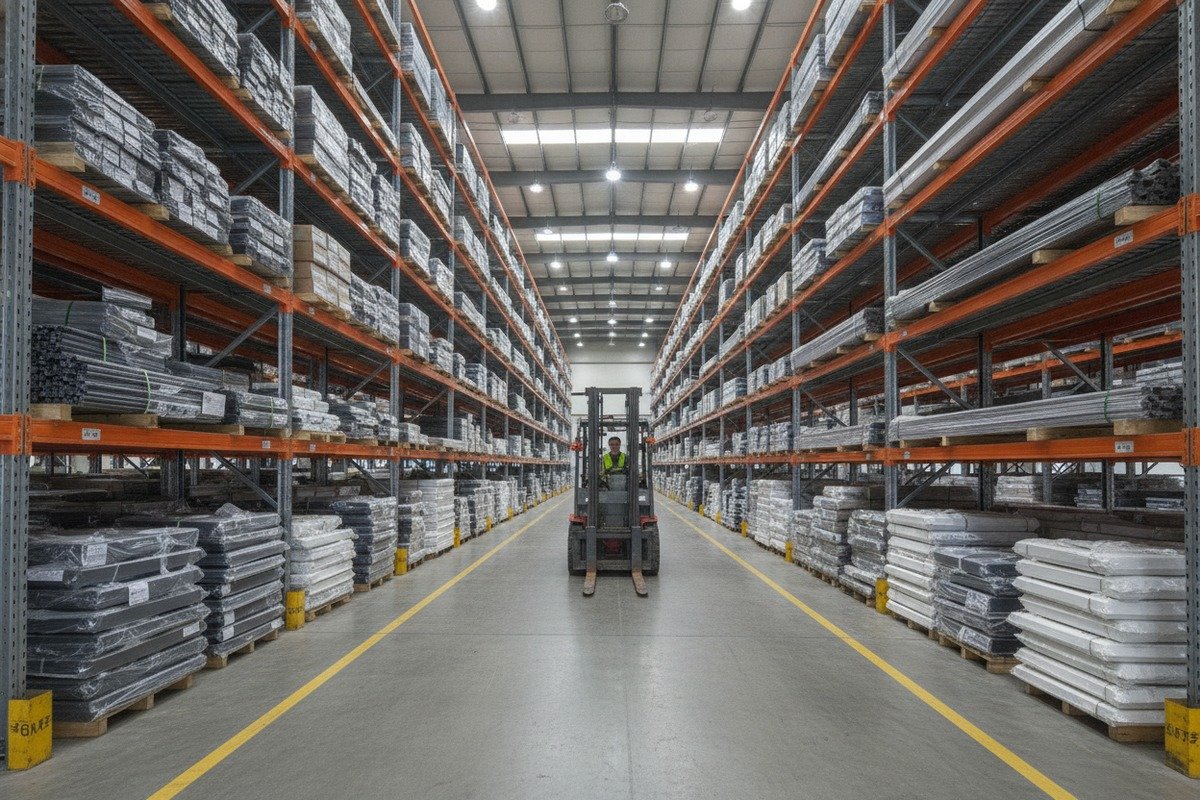
When you see a supplier advertising large ready-to-ship stock, it is tempting to assume their supply chain is solid. Our warehouse currently holds around 300 tons of finished aluminum profiles and handles ready for 48-hour dispatch — but what does that actually tell you?
A supplier's ready-to-ship inventory is a strong indicator of raw material stability because maintaining large finished-goods stock requires consistent upstream billet supply, reliable extrusion scheduling, and enough financial strength to invest in buffer inventory rather than producing only against confirmed orders.
What inventory size actually signals
A large stock of finished handles means the supplier is confident enough in their material flow to produce ahead of orders. That confidence usually comes from predictable billet deliveries and stable extrusion line output. A supplier who only produces to order and holds zero stock may be managing cash flow tightly — or may not have the upstream reliability to commit to advance production.
Inventory depth vs. inventory breadth
Not all inventory is equal. Look at both depth (how many units of each SKU they hold) and breadth (how many different profiles, finishes, and sizes they keep in stock). A supplier with deep stock across a wide range of handle profiles has invested heavily in both raw materials and production planning.
| Inventory Indicator | What It Suggests About Supply Stability |
|---|---|
| Large stock of common SKUs (e.g., 300+ tons) | Reliable billet supply and confident production planning |
| Fast restock cycle (48-hour shipment for stock items) | Efficient extrusion scheduling and steady material inflow |
| Multiple finishes in stock (anodized, matte, champagne gold) | Consistent anodizing chemistry and surface treatment capability |
| Custom order turnaround of 3–7 days | Strong production flexibility backed by available raw material |
| Frequent stockouts or long backorder lists | Possible upstream supply issues or poor production planning |
The financial dimension
Holding 300 tons of inventory ties up significant capital. A supplier willing to make that investment usually has stable revenue, healthy cash flow, and confidence in future demand. These are indirect but real indicators of supply chain health. If a supplier cannot afford to hold buffer stock, a sudden spike in billet price or a shipment delay from their smelter could stall your order.
How to test inventory claims
Do not just take a supplier's word for it. Ask for a current stock list with SKU codes, quantities, and dates. Request photos or a video tour of the warehouse. If you are visiting the factory, walk the warehouse floor yourself. Check whether the inventory matches what was promised. On our end, we welcome buyers to inspect our stock in Foshan — transparency builds trust faster than any sales pitch.
The link between stock items and custom orders
A supplier with strong stock also tends to handle custom orders better. Why? Because their extrusion lines are not constantly scrambling to fill basic orders. They have production bandwidth available for custom runs. When we keep popular handle profiles — like our slim recessed pulls in matte black and champagne gold — in ready stock, it frees up capacity for OEM and ODM projects with faster turnaround.
What questions should I ask to ensure my supplier can handle my large-scale custom orders without material shortages?
Placing a large custom order — say 10,000 or 50,000 handles in a proprietary profile — is a commitment. In our experience exporting custom hardware to furniture factories in the Middle East and Vietnam, the buyers who avoid shortages are the ones who ask the right questions before the first deposit.
To ensure your supplier can fulfill large-scale custom orders without material shortages, ask about their monthly extrusion capacity, billet inventory levels, number of approved billet suppliers, lead-time track record, contingency sourcing plans, and whether they use fixed supply contracts or rely on spot-market purchasing.
A practical buyer checklist
Here are the specific questions to ask, organized by category. Each one is designed to reveal how well the supplier controls their upstream material flow.
Alloy and specification control
- What alloy grades do you use for furniture handles? Is it always 6063-T5, or do you sometimes use other grades?
- Do you ever substitute alloy grades without buyer approval?
- Can you provide the alloy specification sheet for the billet you currently use?
Supply source and contracts
- Who supplies your aluminum billet? Can you name them?
- Do you have more than one approved billet source?
- Are your billet purchases covered by annual contracts, or do you buy on the spot market?
Inventory and capacity
- How much billet inventory do you normally keep on hand?
- What is your monthly extrusion capacity 7 in tons?
- How many extrusion lines do you operate, and what is the current utilization rate?
Lead time and delivery history
- What is your standard lead time for custom orders of this size?
- How has your lead time changed over the past 12 months?
- Can you share shipment records or delivery dates from recent comparable orders?
Contingency planning
- What happens if your primary billet supplier is delayed by two weeks?
- Do you have a backup extrusion facility or overflow partner?
- How do you manage raw material allocation when multiple large orders overlap?
What the answers reveal
| Answer Pattern | What It Means |
|---|---|
| Names specific billet suppliers and shares certificates | High transparency, likely stable chain |
| Has 2+ approved billet sources | Reduced single-point-of-failure risk |
| Holds annual supply contracts | Buffered against price and delivery volatility |
| Monthly capacity well above your order size | Room to absorb your order without crowding out other production |
| Lead times consistent over 12 months | Stable material inflow and production scheduling |
| Clear backup plan for billet delays | Proactive risk management |
| Vague or evasive answers on any of the above | Potential supply risk — proceed with caution |
Why contingency planning matters most
In our own operations, we maintain relationships with multiple billet suppliers in Guangdong and keep safety stock of the most commonly used 6063 billet sizes. That way, if one supplier faces a logistics issue, we can switch without stopping production. When you ask a supplier about contingency planning and they give a detailed, specific answer — naming backup sources, explaining reorder triggers, describing how they prioritize orders during shortages — that is a supplier who has thought through the problem. A blank stare or a generic "Don't worry, we always have material" is not reassuring.
Pilot orders as a verification tool
Before committing to a 50,000-piece custom run, consider placing a pilot order of 1,000–5,000 units. Track the lead time, inspect the quality, and check whether the alloy grade and finish match the sample. A pilot order is the cheapest insurance you can buy against supply risk. It tests the supplier's entire chain — from billet sourcing through extrusion, finishing, and shipping — under real conditions.
How does the supplier's geographical location in Foshan impact the consistency of my raw material supply?
Foshan is not just another city in China. It is the epicenter of aluminum extrusion and furniture hardware manufacturing. China's largest aluminum extrusion cluster 9 When our team set up operations here 18 years ago, the decision was driven by one factor above all others: proximity to the entire aluminum supply ecosystem.
A supplier based in Foshan benefits from direct access to China's largest aluminum extrusion cluster, dense networks of billet suppliers and surface treatment facilities, mature logistics infrastructure, and a deep pool of skilled labor — all of which contribute to more consistent raw material availability and shorter recovery times during supply disruptions.

Why Foshan is the aluminum hardware capital
Foshan, particularly the Nanhai and Dali districts, is home to hundreds of aluminum extrusion plants, anodizing lines, billet distributors, die makers, and hardware finishing workshops. This concentration creates a self-reinforcing ecosystem. Billet suppliers locate near extruders. Surface treatment companies locate near hardware makers. Logistics providers specialize in aluminum product shipping. Everything is within a short drive.
The supply chain advantage of clustering
When your supplier is in Foshan, their billet source is likely within 50 kilometers. If their primary supplier has a problem, there are dozens of alternatives nearby. Compare that to a supplier in a remote area with only one or two local billet options. Geographic clustering means:
- Shorter billet delivery times (often same-day or next-day within the region)
- More backup suppliers available on short notice
- Lower transport costs for raw materials
- Faster access to specialized services like anodizing, CNC machining, and powder coating
How location affects your lead times
Our standard turnaround for custom aluminum handles is 3–7 days. That speed is only possible because billet arrives quickly, extrusion dies are made locally, and finishing lines are either in-house or within the same industrial zone. A supplier located far from the aluminum hub would face longer material lead times, fewer backup options, and higher transport costs — all of which translate into longer and less predictable delivery to you.
Foshan's role in China's aluminum output
China produces over half the world's aluminum, and Guangdong province — where Foshan sits — is one of the top processing regions. The density of aluminum-related businesses in Foshan means that market intelligence flows fast. Suppliers here know about price movements, billet availability, and logistics disruptions almost in real time. That information advantage helps them plan better and react faster.
Does Foshan location guarantee stability?
No. Location is an advantage, not a guarantee. A poorly managed supplier in Foshan can still face shortages. But all else being equal, a Foshan-based supplier with good management practices has a structural edge over a comparable supplier in a less connected region. When you combine Foshan's ecosystem with a supplier that holds safety stock, maintains long-term billet contracts, and runs quality systems with batch traceability — like the approach we take at our facility — you get the strongest possible foundation for consistent supply.
Sustainability and recycled aluminum access
Foshan's cluster also provides better access to recycled aluminum streams 10. Many local extruders and foundries generate scrap that feeds back into the supply chain. Suppliers who incorporate recycled aluminum into their raw material mix are less dependent on volatile primary aluminum markets. This adds another layer of resilience. When evaluating a Foshan supplier, ask whether they use recycled content and whether they have internal recycling programs. Both reduce exposure to upstream price swings and supply disruptions.
Conclusion
A stable aluminum supply is something you verify with documents, questions, and evidence — not promises. Check billet sources, review traceability records, test inventory claims, and always start with a pilot order before scaling up.
Footnotes
1. Explains the process of creating aluminum profiles through extrusion. ↩︎
2. Explains buffer stock and its role in inventory management and supply chain stability. ↩︎
3. Defines MTCs and their importance in verifying material composition and quality. ↩︎
4. Explains conformity assessment, which CoCs are a part of, ensuring product meets standards. ↩︎
5. Defines the spot market and spot-market purchasing in a financial context. ↩︎
6. Found a comprehensive comparison of 6061 and 6063 aluminum alloys from an authoritative metals supplier. ↩︎
7. Details how extrusion press capacity is calculated and measured in the industry. ↩︎
8. Found an authoritative article explaining supply chain contingency planning, which includes sourcing. ↩︎
9. Describes Nanhai District, Foshan, as a major hub for the aluminum industry. ↩︎
10. Explains the process and benefits of aluminum recycling in the industry. ↩︎