
Every week, our sales team in Foshan fields pricing questions from worried buyers watching the LME ticker 1 climb, wondering if their next container of aluminum handles will blow past budget.
Aluminum price fluctuations typically affect 20–45% of a finished furniture handle’s landed cost, depending on the handle’s weight, design complexity, surface treatment, and your contracting model. The impact is real but partial—never a one-to-one pass-through—because labor, finishing, tooling, packaging, and freight absorb much of the final price structure.
Below, we break down exactly how raw aluminum volatility flows into your purchase orders, why your supplier keeps shortening quote validity, and what you can do right now to protect your margins die-cast or extruded handles 2. Let’s dig in.
How do I calculate the actual impact of raw aluminum price changes on my furniture handle procurement costs?
Most buyers assume that if aluminum jumps 10%, their handle price jumps 10% too surface treatment 3. After 18 years of quoting thousands of SKUs from our Foshan factory, we can tell you the math is more nuanced than that.
To calculate the real impact, isolate the raw aluminum share of your handle's unit cost—typically 20–45% for die-cast or extruded handles—then multiply the percentage price move in aluminum by that share. A 10% rise in aluminum with a 30% material share means roughly a 3% increase in your finished handle cost.
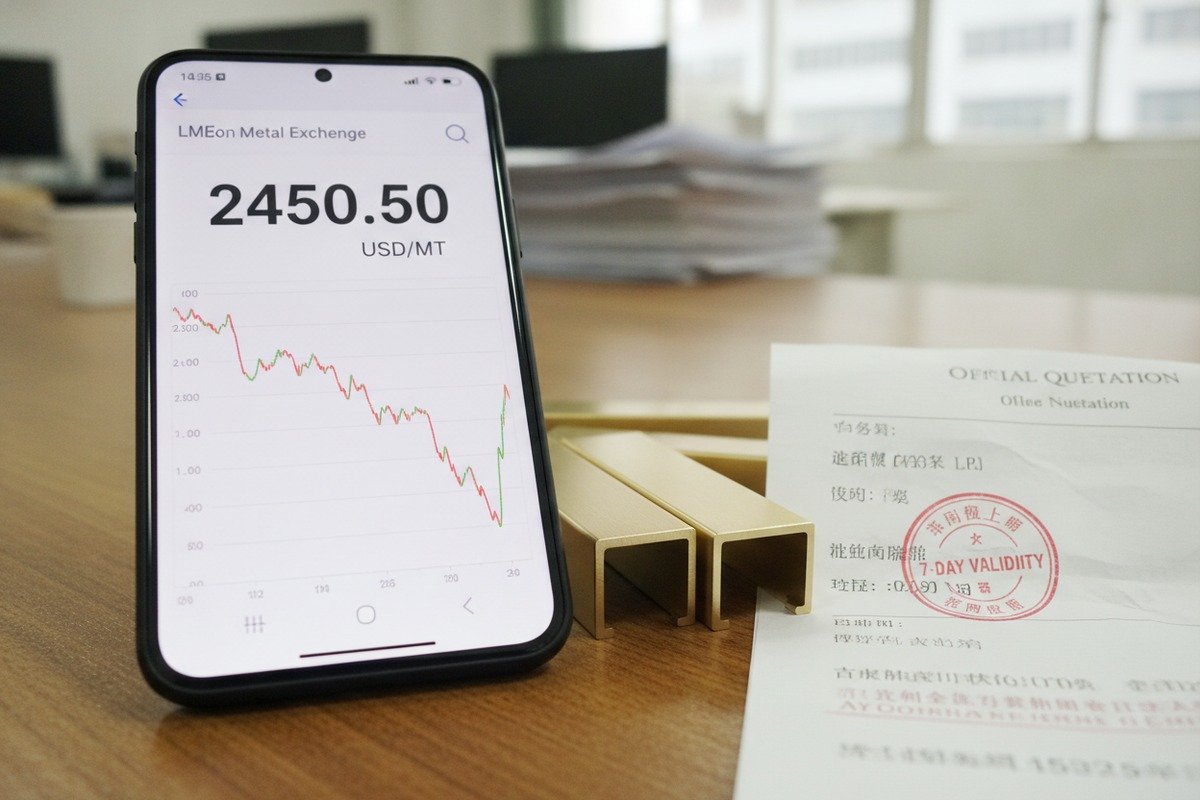
Breaking Down a Handle's Cost Stack
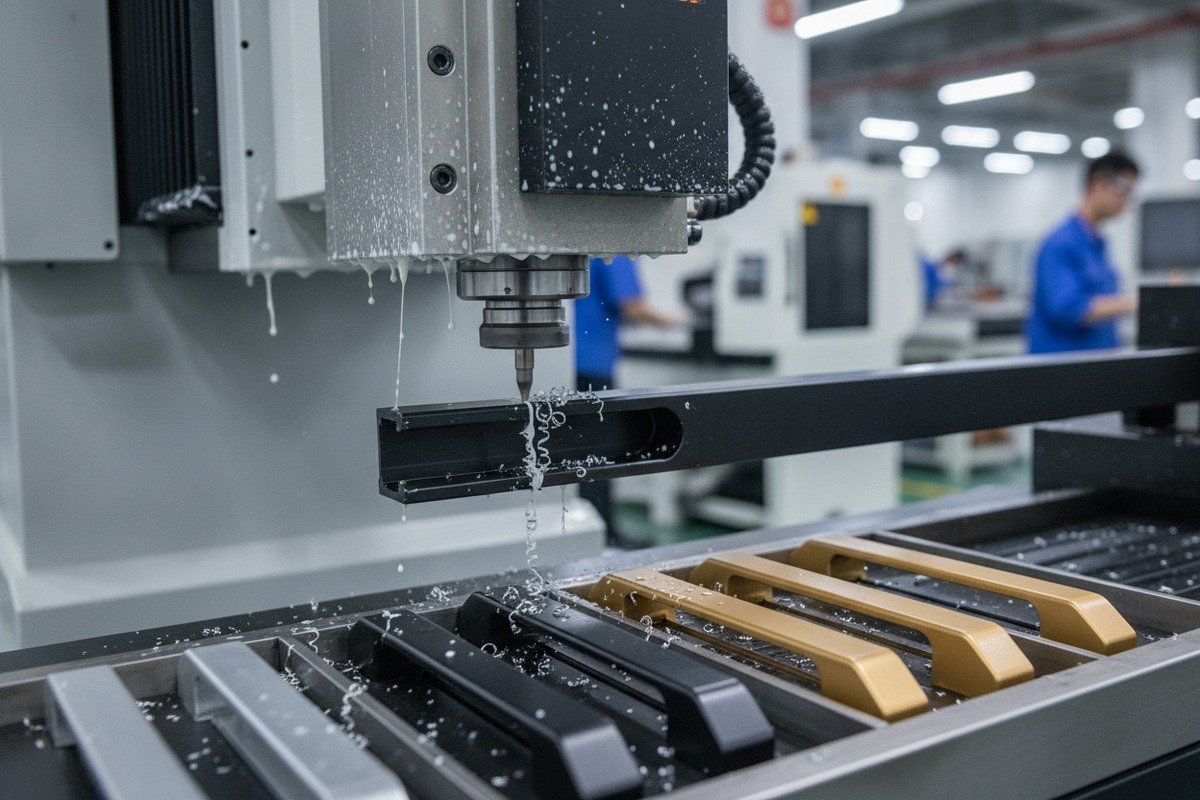
A finished aluminum furniture handle that leaves our warehouse is not just a lump of metal. It passes through extrusion or die-casting, CNC trimming 4, deburring, surface treatment, quality inspection, packaging, and palletizing. Each step adds cost that has nothing to do with the aluminum ingot price.
Here is a simplified cost breakdown for two common handle types we produce:
| Cost Component | Simple Extruded Pull (%) | CNC-Finished Anodized Pull (%) |
|---|---|---|
| Raw aluminum material | 40–45% | 20–28% |
| Extrusion / die-casting | 10–12% | 10–12% |
| CNC machining & deburring | 5–8% | 15–20% |
| Surface finishing (anodizing, PVD, powder coat) | 8–12% | 15–20% |
| Quality control & testing | 3–4% | 3–5% |
| Packaging & inner carton | 5–7% | 5–7% |
| Mold amortization | 2–5% | 3–6% |
| Factory overhead & margin | 10–15% | 10–15% |
Notice the difference. A simple brushed extruded handle might carry a 40–45% aluminum share. A precision-machined, champagne-gold anodized recessed pull—like the slim architectural channel handles we stock in matte white, charcoal, black, and champagne gold—might only be 20–28% aluminum by cost. The rest is labor and finishing.
The Formula You Need
Use this quick formula:
Handle price impact (%) = Aluminum price change (%) × Aluminum cost share (%)
So if LME aluminum rises from $2,300/MT to $2,530/MT (a 10% increase), and your handle has a 35% aluminum cost share:
- Impact = 10% × 35% = 3.5% increase in handle unit cost.
That is the theoretical number. In practice, suppliers also face energy cost shifts, wage adjustments, and exchange-rate moves that may amplify or dampen the effect.
Why Small-Volume Buyers Feel It More
When you order 500 pieces, your supplier cannot negotiate bulk ingot pricing. They buy aluminum at spot or near-spot rates. Large-volume buyers ordering 10,000+ pieces per SKU let us purchase aluminum in advance at better rates, spreading risk. This is why MOQ discussions are not just about production efficiency—they are also about raw-material purchasing power.
A Real-World Scenario
In late 2021, LME aluminum spiked above $2,700/MT—more than $1,000/MT higher than the sub-$1,700 levels seen in early 2020. For a standard 150mm extruded handle weighing about 120 grams, the raw aluminum cost per piece went from roughly $0.20 to $0.32. That $0.12 per piece matters when you are buying 50,000 units. It adds $6,000 to a single order. But the total handle price only moved from about $0.50 to $0.62—a 24% rise, not the 59% raw aluminum spike.
Why do my Chinese suppliers offer such short validity periods on my aluminum handle quotes?
If you have sourced aluminum handles in the last three years, you have probably noticed quote validity windows shrinking from 30 days to 15 days—sometimes even 7 days. Our own quoting team wrestles with this constantly.
Chinese suppliers shorten quote validity because aluminum prices on the LME and SHFE can swing 3–8% within a single month, and most handle factories purchase raw material close to production start rather than holding large metal inventories. Locking a price for 30+ days exposes the factory to margin erosion if aluminum surges after the quote is accepted.
The LME-SHFE Spread Factor
Chinese aluminum factories reference the Shanghai Futures Exchange 5 (SHFE) for domestic pricing. International buyers reference the London Metal Exchange (LME). These two benchmarks do not always move in sync. When LME prices carry a significant premium over SHFE—as they did through much of 2022 and 2023—Chinese manufacturers are incentivized to export more aggressively because international orders become more profitable. But this also means the domestic aluminum they purchase can shift price quickly in response to export demand signals, tightening the window in which a factory quote remains valid.
China's 45-Million-Tonne Cap
China's government enforces an annual primary aluminum production ceiling 6 of approximately 45 million tonnes. This structural cap means supply cannot easily ramp up to cool prices when demand surges. For us as a manufacturer, it means our aluminum suppliers sometimes cannot guarantee delivery volumes or pricing beyond a short window. That uncertainty rolls downhill to our quotations.
What Drives Quote Validity Decisions
| Factor | Short Validity (7–15 days) | Longer Validity (30+ days) |
|---|---|---|
| Aluminum price trend | Rising or highly volatile | Stable or declining |
| Supplier inventory level | Low; buying material per order | High; pre-purchased stock |
| Order volume | Small or sample orders | Large confirmed PO |
| Currency situation | Yuan weakening against USD | Stable exchange rate |
| Product type | Heavy, simple extrusions (high metal share) | Lightweight, high-finish items |
| Relationship history | New customer, no track record | Long-term partner with framework agreement |
Energy Costs and Environmental Rules
Aluminum smelting 7 is extremely energy-intensive. When coal or electricity prices spike in China—as they did during the 2021 power crunch—smelters curtail output, pushing ingot prices up fast. Our factory does not smelt aluminum, but we buy extruded billets and ingots from upstream suppliers. When their costs jump overnight, our input cost changes before we even start production. This is why we sometimes have to call a buyer back and renegotiate a quote that was issued just two weeks earlier.
Practical Tip for Buyers
Ask your supplier whether their quote is "fixed" or "index-linked." A fixed quote means the factory absorbs short-term risk, and validity is usually shorter. An index-linked quote ties the material portion to a specific LME or SHFE date, giving both parties transparency. At our company, we offer both options depending on order size and relationship history. For repeat customers ordering from our 300-ton ready-stock inventory, we can often hold prices longer because that material was already purchased.
How can I protect my profit margins when aluminum market prices fluctuate during my production cycle?
We have watched buyers lose thousands of dollars because they quoted their own downstream customers a fixed price, then aluminum surged before their Chinese supplier shipped. This is a solvable problem if you plan for it.
Protect your margins by using formula-based pricing tied to an aluminum index, negotiating price adjustment clauses with caps and floors, maintaining a buffer in your downstream quotes, consolidating orders to secure volume discounts, and keeping a portion of your needs covered through ready-to-ship stock that was priced before the market moved.
Five Concrete Strategies
1. Index-Linked Pricing Agreements
Ask your Chinese supplier to split the quote into a "material component" and a "conversion component." The conversion cost (labor, finishing, packaging) stays fixed. The material cost adjusts based on a referenced LME or SHFE closing price on a specific date—usually the week production starts. This way, neither side gambles. Both share the market reality.
2. Price Adjustment Clauses with Caps and Floors
For longer-term framework contracts, negotiate a band. For example: if aluminum moves less than ±5% from the base price, both sides hold. If it moves beyond ±5%, the difference above that threshold is shared 50/50. This limits your worst-case exposure while giving the supplier breathing room.
3. Build a Price Buffer into Downstream Quotes
If you are a distributor quoting furniture factories, add a 3–5% volatility cushion to your selling price during unstable markets. This does not make you uncompetitive—it keeps you solvent.
4. Consolidate and Pre-Order
Larger orders give your Chinese supplier leverage to buy aluminum in bulk at better rates. They also let the factory plan production, which reduces rush premiums. When you consolidate quarterly needs into a single PO, you often get both a volume discount and more stable pricing.
5. Use Ready-to-Ship Stock as a Hedge
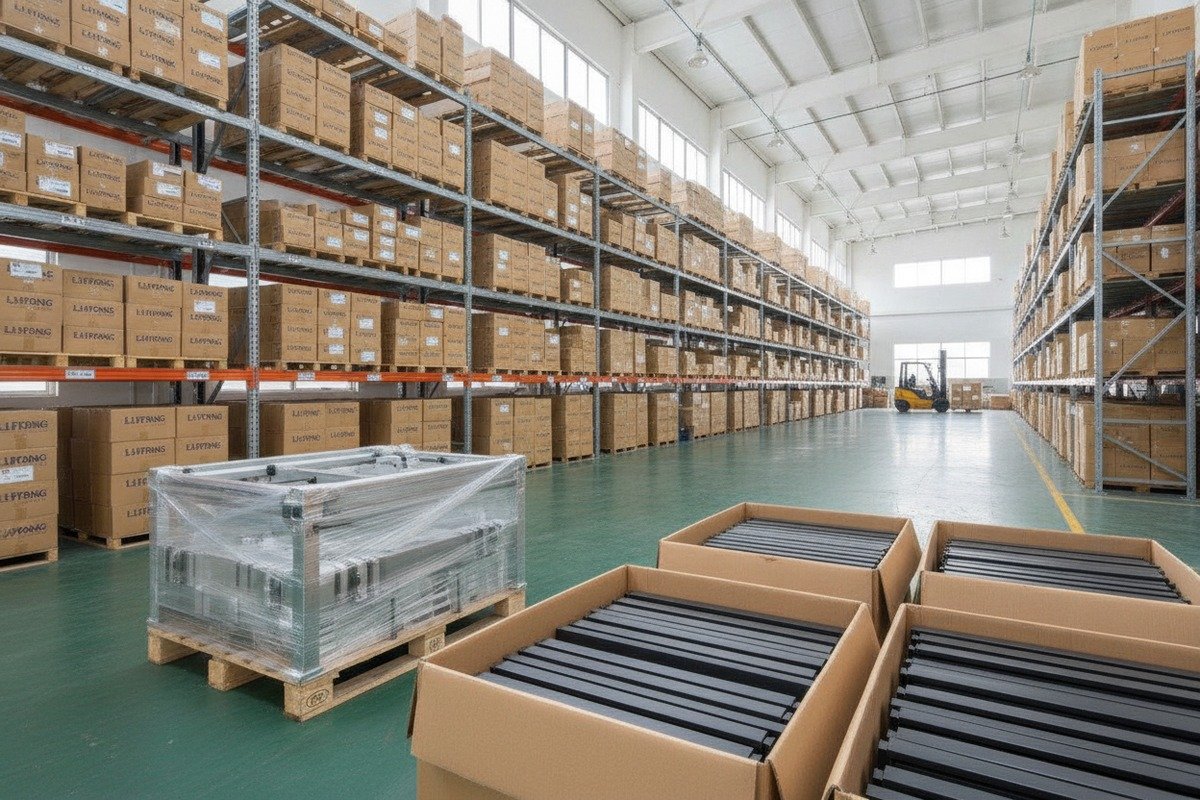
This is where our 300-ton inventory matters for buyers. Stock handles were produced with aluminum purchased weeks or months ago. Their price reflects historical aluminum costs, not today's spot rate. During a price spike, buying from stock is often cheaper than placing a new custom order. Think of ready stock as a natural hedge.
Comparing Risk by Sourcing Approach
| Sourcing Approach | Aluminum Price Exposure | Lead Time | Flexibility |
|---|---|---|---|
| Spot custom order (small qty) | High—priced at current aluminum rate | 15–25 days | Full design freedom |
| Framework contract with index link | Medium—shared risk, transparent | 7–15 days for repeat runs | Moderate; locked to agreed designs |
| Ready-to-ship stock purchase | Low—priced at historical aluminum cost | 48 hours | Limited to available SKUs/finishes |
| Blanket PO with scheduled releases | Medium-low—bulk aluminum buy upfront | Scheduled per release | Moderate; quantities pre-committed |
Currency Hedging Matters Too
Do not forget the CNY/USD or CNY/EUR exchange rate. Even if aluminum stays flat, a 3% move in the yuan can swing your landed cost meaningfully. Some buyers use forward contracts 8 through their bank to lock exchange rates for major purchases. It is not complicated and your bank's trade finance desk can set it up in a day.
A Word on Alternative Materials
When aluminum prices peak, some buyers ask us about zinc alloy 9 or stainless steel handles. Zinc alloy can replicate certain aluminum finishes at lower material cost, but it is heavier and not suitable for all designs—especially the slim, lightweight recessed channel pulls that are popular in modern kitchens. Stainless steel handles have their own cost dynamics. Switching materials mid-project has hidden costs: new molds, new finish testing, updated packaging. It is worth considering only if you expect sustained high aluminum prices and your end customers accept the material change.
Should I prioritize ready-to-ship stock or custom OEM orders when aluminum prices are rising?
When our Foshan warehouse team sees aluminum trending up on the SHFE, the first thing that happens is our stock handles start moving faster. Buyers who usually insist on custom colors and lengths suddenly ask what we have in stock. There is a smart reason behind this shift.
When aluminum prices are rising, prioritize ready-to-ship stock for your core fast-moving SKUs because the stock was produced at lower historical aluminum costs and ships within 48 hours. Reserve custom OEM orders for unique, high-margin items where design differentiation justifies the higher current-market material cost and longer lead time.

The Timing Advantage of Stock
Ready-to-ship inventory in a supplier's warehouse was manufactured days, weeks, or even months ago. The aluminum in those handles was purchased at whatever the market price was at that earlier time. If aluminum has risen 8% since then, you are effectively buying handles made with cheaper metal. The supplier may or may not pass the full savings through—it depends on their pricing policy—but stock prices are almost always more stable than fresh-production quotes during a rising market.
Our stock catalog covers the most popular profiles: slim recessed channel pulls in matte black, charcoal grey, champagne gold, white, and light beige. These are the architectural minimalist handles that move in large volumes across Vietnam, the Middle East, and beyond. If your market demands these standard finishes and lengths, stock is your fastest and often cheapest option.
When Custom OEM Still Makes Sense
Custom orders are not something to abandon just because aluminum prices are up. If you sell differentiated handles—unique lengths, proprietary finishes, branded packaging—those products carry higher margins that can absorb material cost increases. A custom champagne-gold anodized handle with a precision-engineered extruded profile commands a premium at retail. Your end customer is paying for design, not commodity metal.
The key question is: does the margin on this custom item cover the higher aluminum cost plus the additional lead time risk? If yes, proceed with the custom order. If the margin is thin and the product is a commodity shape, buy from stock.
Decision Framework
Here is a simple decision matrix we share with our buyers:
| Situation | Recommended Approach | Reasoning |
|---|---|---|
| Aluminum rising, standard handle shapes needed | Buy from stock | Lower embedded material cost, 48-hour ship |
| Aluminum rising, unique design required | Custom OEM with index-linked pricing | Protect both parties; design value justifies cost |
| Aluminum stable or falling | Custom OEM for best fit | No urgency to lock in; negotiate freely |
| Aluminum volatile with no clear trend | Split order: 60% stock, 40% custom | Diversify exposure; cover immediate needs with stock |
| Urgent restock needed regardless of price | Buy from stock | Speed is the priority; avoid production queue delays |
Combining Both Approaches
Many of our smartest buyers use a hybrid strategy. They maintain a baseline of stock handles from our inventory—covering their bread-and-butter products—and place custom OEM orders quarterly for premium or exclusive lines. This way, their everyday business is insulated from short-term aluminum spikes, and their premium products carry enough margin to absorb higher material costs.
Do Not Forget Shipping Costs
When aluminum prices rise, global freight rates and fuel surcharges often move in sympathy because the same macroeconomic forces—energy costs, supply chain bottlenecks, geopolitical disruptions—drive both. A stock order that ships in 48 hours and can consolidate with other goods often costs less in total logistics than a custom order that ships alone three weeks later at a higher spot freight rate. Factor the full landed cost—not just the handle FOB price—into your stock-versus-custom decision.
Exchange Rate as a Hidden Variable
The CNY-to-USD rate adds another layer. If the yuan is weakening against the dollar while aluminum prices rise, the two forces may partially offset each other for USD-denominated buyers. Conversely, if both the yuan and aluminum strengthen, your cost pressure doubles. Watch both numbers before committing to large orders.
Conclusion
Aluminum price swings matter when sourcing furniture handles from China, but they are only one piece of the landed-cost puzzle. Know your material share, structure your contracts wisely, use stock as a hedge, and your margins will survive any market cycle.
Footnotes
1. Explains the role of the London Metal Exchange in global commodity pricing. ↩︎
2. Describes a common manufacturing method for aluminum components. ↩︎
3. Details various methods for enhancing the appearance and durability of metal. ↩︎
4. Replaced HTTP 404 with an article explaining CNC trimming in manufacturing. ↩︎
5. Provides information on China’s primary commodity exchange for aluminum. ↩︎
6. Discusses China’s policy limiting aluminum output, impacting global supply. ↩︎
7. Replaced HTTP unknown with an authoritative .gov article on the aluminum smelting process. ↩︎
8. Explains a financial instrument used for hedging against currency fluctuations. ↩︎
9. Provides details on an alternative material for manufacturing handles. ↩︎
10. Describes a common contractual strategy to manage commodity price volatility. ↩︎