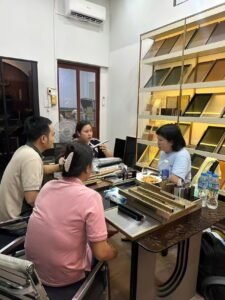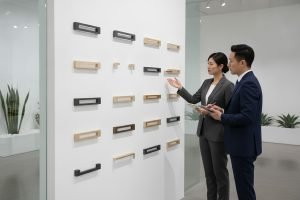
Every week, our sales team receives video call requests from overseas buyers who want to see our production floor before placing their first order. It makes perfect sense. You are spending thousands of dollars on aluminum furniture handles from a factory you have never visited, in a country you may have never been to. The fear of receiving substandard goods, discovering your “factory” is actually a trading company, or finding that sample quality does not match bulk production quality — these are real risks that keep procurement managers awake at night.
To remotely inspect a supplier’s aluminum furniture handle factory via video call, prepare a structured checklist covering facility identity, raw materials, extrusion and finishing equipment, in-process quality control stations, and finished goods packaging. Walk the entire production line live, request close-ups of random pieces, and verify documents on camera to separate real manufacturers from traders.
This guide breaks down the entire remote inspection process into clear, actionable steps. We will cover what to prepare before the call, what to look for on camera at each production stage, how to test quality in real time, and what evidence separates a capable supplier from a risky one. Let us get started.
What should I include in my pre-call checklist for a remote factory audit of aluminum handle manufacturers?
When we prepare for video inspections with new buyers, the calls that go smoothly are always the ones where the buyer came in with a clear plan. Without a checklist, video calls tend to wander, and you end up with a nice chat but very little useful data.
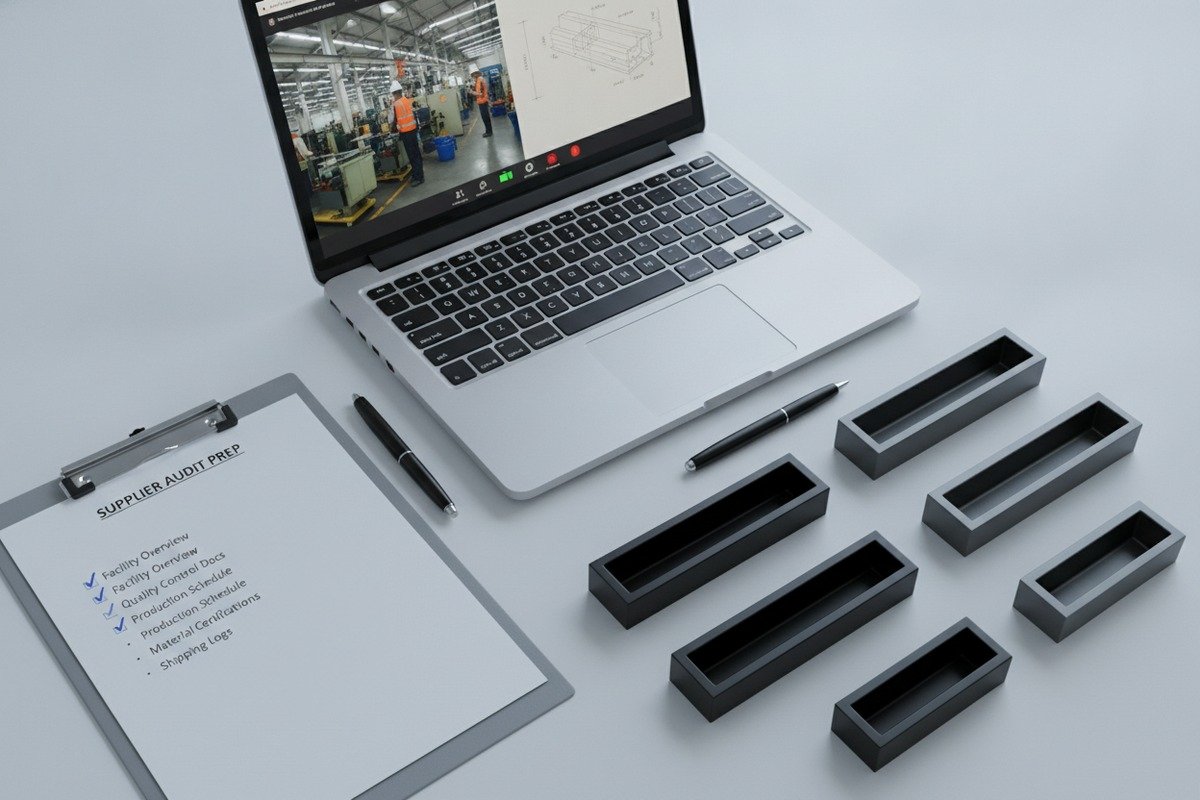
Your pre-call checklist should include company identity verification, a list of specific production areas to visit, documents to request on screen, product specifications to cross-check, questions for key personnel, and technology setup requirements — all organized into a timed agenda for a 30-to-60-minute live session.
Why a checklist matters more than you think
A remote video inspection is not the same as a casual supplier introduction call. It is your primary screening tool before you commit budget to samples, tooling, or a first order. Without structure, you will spend 40 minutes watching a polished showroom tour and miss the production floor entirely. Our experience working with buyers in Vietnam, the UAE, and Saudi Arabia tells us that the best-prepared buyers catch issues in the first call that others only discover after the first shipment arrives.
Technology setup
Before anything else, confirm the platform. In China, WeChat video is the most reliable option because apps like Zoom, Google Meet, and WhatsApp video can face connectivity issues behind the firewall. Test the connection a day in advance. Ask the supplier to use a phone with a good rear camera and a stable internet connection — not a desktop webcam in a conference room.
Your pre-call document request
Send the supplier a list of documents you want to see on screen during the call. Do not wait until the call to ask for these. Give them 48 hours to prepare. Here is what to request:
| Document | Why You Need It | How to Verify on Camera |
|---|---|---|
| Business license | Confirms legal entity and registered address | Match the company name and address to the factory signage |
| ISO 9001 or equivalent certificate 1 | Indicates a documented quality system | Check the issuing body, expiration date, and scope |
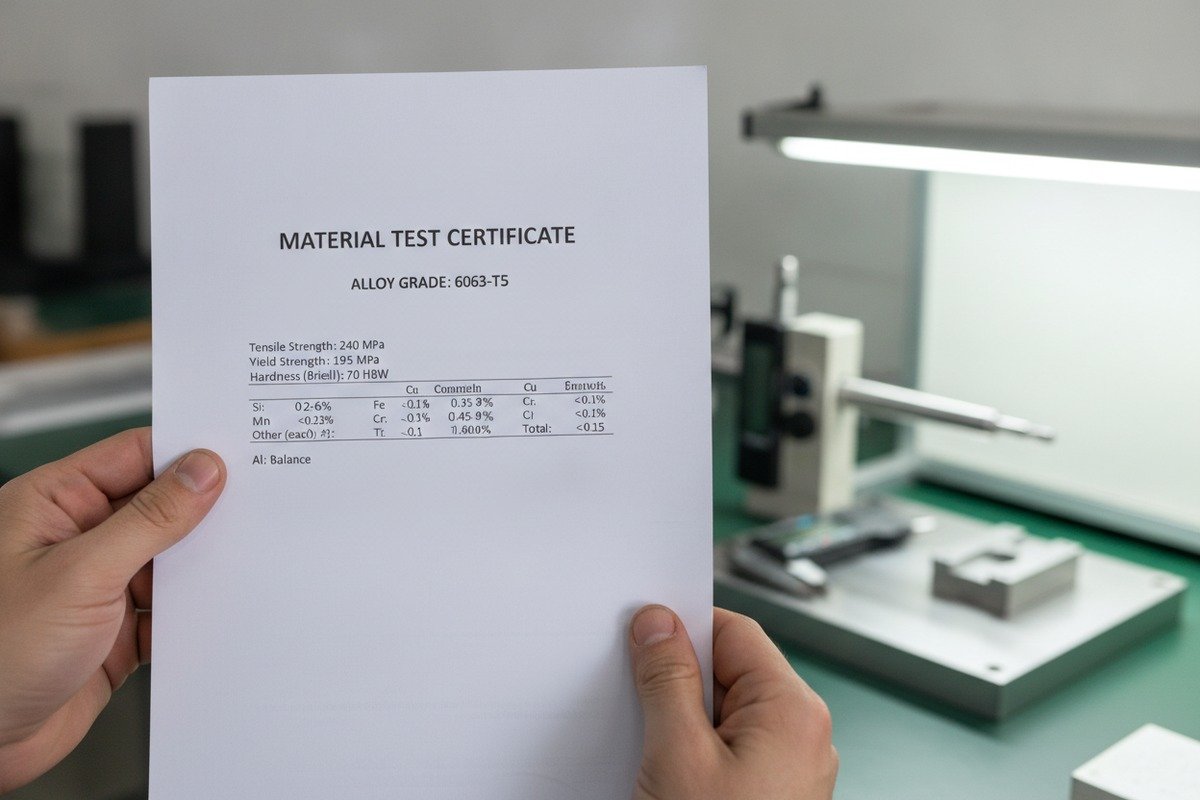
| Material test certificates for aluminum alloy | Proves the grade of aluminum used Material test reports 2 (e.g., 6063-T5) | Ask them to hold it up; note the alloy grade, lot number, and supplier name |
| Recent production order or packing list | Shows active manufacturing, not idle capacity | Look for dates within the last 30 days |
| Environmental compliance permit | Confirms legal waste and chemical handling EPA permit programs 3 | Required for anodizing and powder coating operations |
Build a timed agenda
Do not leave the call structure to the supplier. Send them a written agenda in advance. A practical format looks like this:
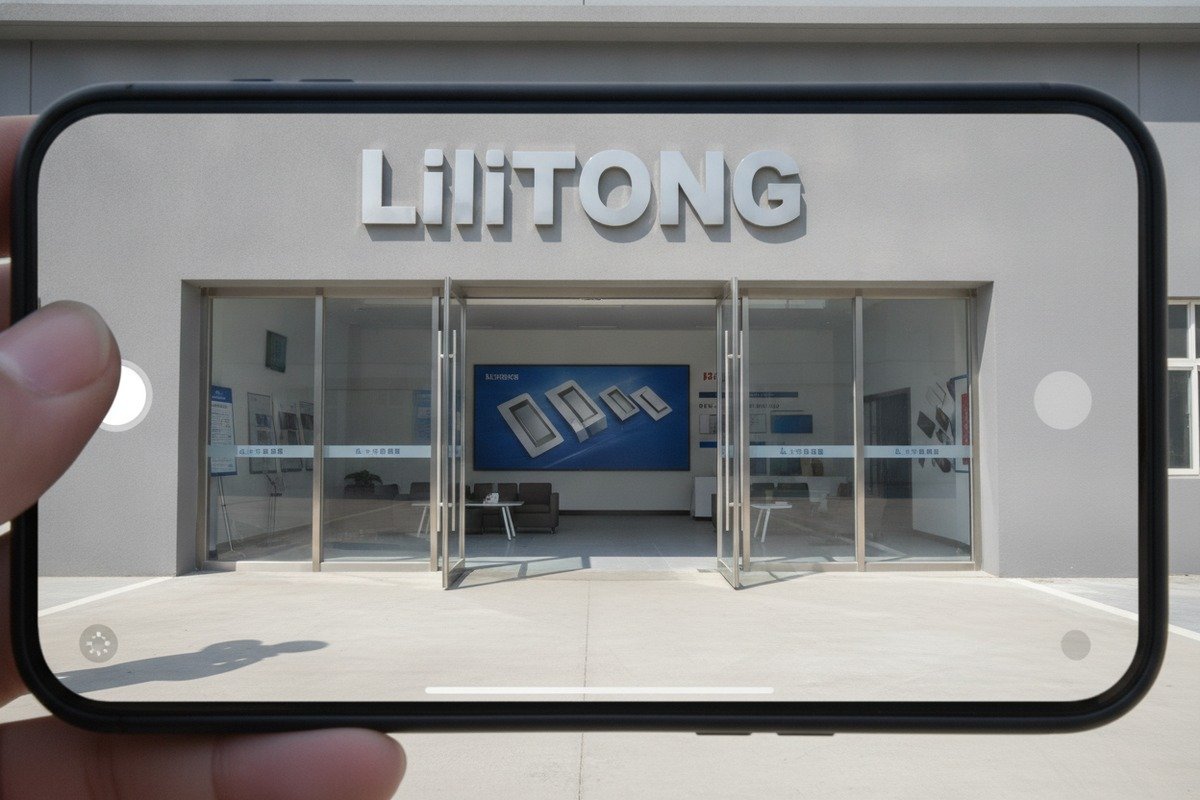
- Minutes 0–10: Verify factory entrance, signage, and company identity. Meet key contacts.
- Minutes 10–25: Walk the raw material storage and main production lines.
- Minutes 25–40: Visit finishing areas (anodizing 4, powder coating, polishing), QC stations, and testing equipment.
- Minutes 40–50: Inspect packaging lines and finished goods warehouse.
- Minutes 50–60: Review documents on screen, ask follow-up questions.
Prepare product-specific questions
Generic questions get generic answers. Prepare questions that only a real aluminum handle manufacturer can answer. For example: "What alloy grade do you use for recessed cabinet handles?" or "What is your standard anodizing layer thickness for champagne gold finishes?" If the person on the other end hesitates or deflects, that tells you something important.
Confirm who will be on the call
Ask for the production manager or QC manager to be present — not just the sales representative. A salesperson can show you a factory, but a production manager can explain why a particular CNC program is set up the way it is, or what the reject rate was on the last batch. The depth of their answers reveals the depth of their capability.
Which key production stages for aluminum furniture handles should I ask to see live on camera?
On our production floor in Foshan, aluminum furniture handles pass through at least six distinct stages before they reach a carton. Each stage introduces specific risks. If you skip any of them during a video inspection, you are leaving a gap in your quality assurance.
Ask to see the raw aluminum billet or profile storage, the extrusion or cutting process, CNC machining for precision holes and slots, surface finishing such as anodizing or powder coating, quality inspection stations with measuring tools, and the final packaging and labeling area — all in one continuous live session.
Stage 1: Raw material storage
This is where your inspection should start. Ask the camera operator to show the aluminum billets or pre-extruded profiles stored in the raw material area. Look for labeling — a real manufacturer will have batch tags, alloy grade markings (typically 6063-T5 or 6061 for furniture handles aluminum alloy 6063-T5 5), and supplier identification on the material. If you see unmarked aluminum piled in a corner, that is a concern.
Stage 2: Extrusion or profile cutting
Aluminum furniture handles are typically made from extruded aluminum profiles 6. The profile is what gives the handle its cross-sectional shape — the L-shaped channel, the finger groove, the mounting geometry. If the supplier claims to extrude their own profiles, you should see an extrusion press on site. Many handle factories purchase pre-extruded profiles and then cut and machine them. That is perfectly normal, but they should be transparent about it.
Ask to see the cutting area. Look for automated saws with length stops or CNC cutting equipment. Manual cutting with handheld saws is acceptable for small batches but raises consistency concerns for large orders.
Stage 3: CNC machining
This is a critical stage for aluminum furniture handles CNC machining 7. Machining creates the screw holes, countersinks, end profiles, and any custom features. Ask to see:
- The CNC machines in operation
- The fixturing used to hold the handle during machining
- Chips and coolant — signs of active production
- A close-up of a freshly machined piece showing hole quality
Stage 4: Surface finishing
Surface finish 8 is what your end customers see and touch. For aluminum handles, common finishes include anodizing (champagne gold, silver, black), powder coating 9 (matte white, charcoal grey, beige), and mechanical polishing or brushing.
| Finish Type | What to Look for on Camera | Common Risk |
|---|---|---|
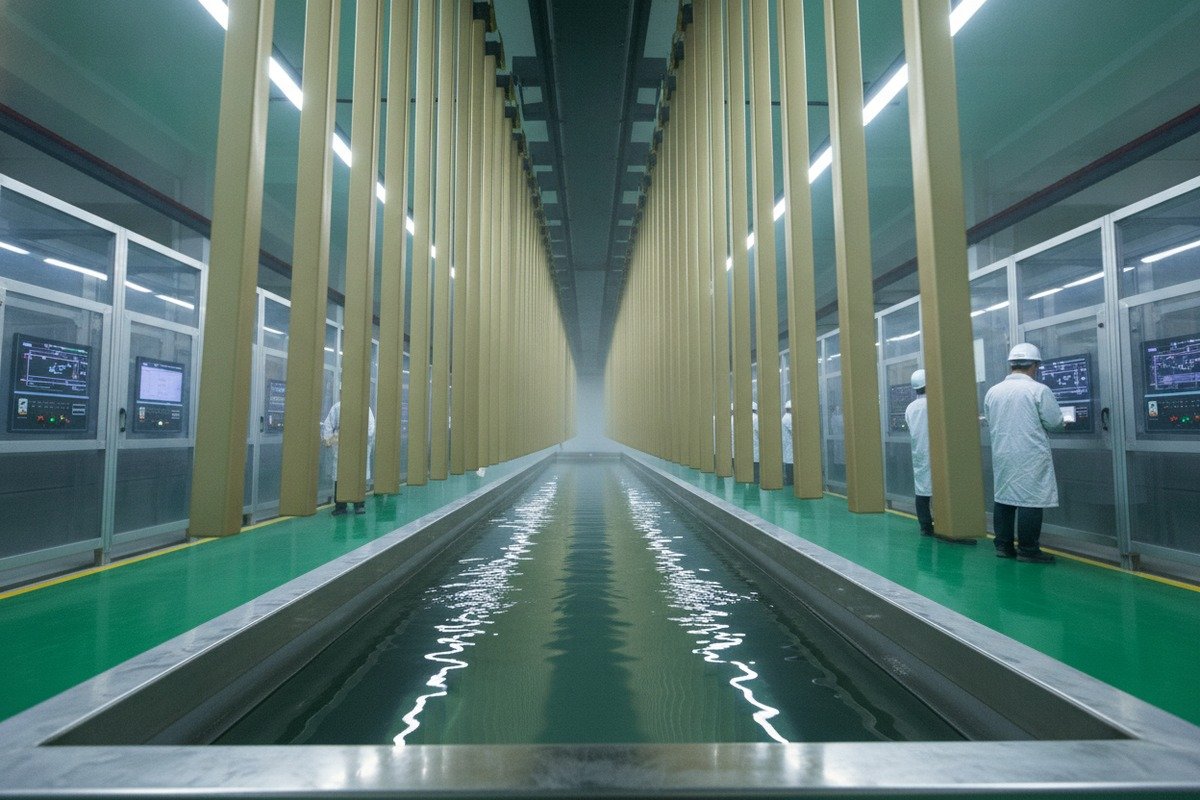
| Anodizing | Anodizing tanks, racking systems, color samples hanging to dry | Inconsistent color between batches or within a single batch |
| Powder coating | Spray booth, curing oven, powder guns, hanging conveyor | Orange peel texture, uneven thickness, poor edge coverage |
| Brushed/polished | Polishing wheels, abrasive belts, buffing stations | Directional scratches, inconsistent grain pattern |
Ask the operator to show you multiple pieces from the current batch and hold them side by side. Color variation is one of the most common complaints in aluminum handle sourcing, especially for champagne gold and light bronze anodized finishes. If the factory cannot show you consistent color across 5-10 random pieces on camera, expect problems in a 5,000-piece order.
Stage 5: Quality control stations
A factory with real process control will have dedicated QC stations between production stages — not just a final check at the end. Ask to see calipers, go/no-go gauges, surface roughness testers, or coating thickness gauges in use. Look for QC record sheets or digital logs near the inspection stations. If the factory has no visible QC presence on the line, that is a significant red flag.
Stage 6: Packaging and finished goods
Finally, ask to see how handles are packed. Aluminum handles scratch easily during transit. Good factories use individual PE bags, foam inserts, or partition dividers inside cartons. Ask the camera to show carton markings, inner packaging, and how pieces are oriented inside the box. Then ask to see the finished goods warehouse. The volume of stock tells you whether this factory actually produces at scale or assembles to order in small quantities.
Keep the camera moving
One important rule: the entire walkthrough should be live and continuous. If the supplier says "let me switch to another video" or "I will send you a recording of that area," politely decline. Pre-recorded clips can be staged, borrowed, or outdated. A live, unbroken session is the only way to confirm that all these stages exist under one roof.
How can I effectively test the quality and finish of aluminum profiles during a real-time video inspection?
When we ship handles to our wholesale buyers, we know that surface finish and dimensional accuracy are the two things that determine whether they reorder or walk away. Testing these over a video call is not as thorough as a hands-on inspection, but it can reveal a surprising amount if you know what to ask.
During a real-time video inspection, ask the supplier to measure key dimensions with calipers on camera, compare color consistency across random samples, check edge smoothness by running a finger along the profile, demonstrate coating adhesion with a cross-hatch test if available, and show the surface under natural light at multiple angles to reveal scratches or texture inconsistencies.
Dimensional checks you can observe live
Ask the factory operator to pick up a caliper and measure specific dimensions while you watch. The critical dimensions for aluminum furniture handles include:
- Overall length
- Hole center-to-center distance
- Profile depth and width
- Screw hole diameter
- Wall thickness of the profile
Have your technical drawing open on your screen. Call out specific dimensions and ask them to measure random pieces — not the piece they are holding. Say: "Please pick up the third handle from the left on that tray and measure the hole spacing." This randomness is key. A supplier who can match spec on any random piece has process control. A supplier who needs to select the "right" piece does not.
Surface finish inspection techniques
Surface quality is harder to judge through a camera, but not impossible. Here are effective techniques:
| Test | What to Ask the Supplier to Do | What to Look For |
|---|---|---|
| Natural light test | Hold the handle under a window or daylight lamp, rotate slowly | Scratches, dents, uneven color, orange peel |
| Side-by-side comparison | Line up 5-10 pieces from the current batch | Color shifts, gloss variation, texture differences |
| Edge and burr check | Run a fingertip along all edges and end cuts | Hesitation, flinching, or visible burrs indicate poor deburring |
| Cross-hatch adhesion test 10 | Score a small grid on the coating with a blade, apply tape, pull | Coating should not lift; if it does, adhesion is poor |
| Coating thickness measurement | Use a coating thickness gauge on camera | Anodizing should typically be 10-20 microns; powder coating 60-80 microns |
How to check thread and fastening quality
Aluminum furniture handles are mounted with screws. If the screw holes are improperly tapped, the handle will wobble or strip during installation. Ask the operator to thread a screw into a handle on camera. It should go in smoothly without cross-threading or excessive force. Ask them to do this on three different pieces. If any piece has a tight or misaligned thread, you have a machining consistency issue.
What you cannot test remotely
Be honest with yourself about the limits. A video call cannot tell you:
- The exact alloy composition (requires a spectrometer or mill certificate)
- Long-term corrosion resistance (requires salt spray testing)
- True coating hardness (requires a pencil hardness test or lab equipment)
- Load-bearing strength of the handle under use conditions
These require either lab testing on samples sent to you, or a third-party inspector like SGS, Bureau Veritas, or Intertek conducting during-production or pre-shipment checks at the factory. Remote video is a screening tool. It reduces risk early, but it does not replace physical inspection for final acceptance.
Ask for retained samples and QC records
A well-run factory keeps retained samples from previous batches. Ask them to show you the retained sample shelf or cabinet. Compare a retained sample to a piece from the current run. If the factory has no retained samples and no batch records, their quality system is weak regardless of what the production floor looks like.
What evidence do I need to see during the call to verify my supplier's stock levels and custom manufacturing capabilities?
One of the most common frustrations our buyers share is this: the supplier said they had 300 tons in stock, but when the order was placed, lead time suddenly became six weeks. Or the supplier promised full customization, but the "custom" handle turned out to be a minor modification of a standard catalog item. These gaps between promise and reality cost you time and money.
To verify stock levels, ask the supplier to walk through their finished goods warehouse on camera, showing labeled cartons with SKU codes, quantities, and production dates. To confirm custom manufacturing capability, ask to see CNC program files, custom tooling or dies, sample approval records, and at least one example of a non-standard product being produced on their line.
How to verify actual stock levels
Stock verification is straightforward if you know what to look for. During the warehouse walkthrough, pay attention to these details:
- Carton labels: Real stock has printed labels with item codes, quantities per carton, production dates, and sometimes destination market or customer codes. Handwritten labels or unmarked boxes suggest disorganized inventory or freshly staged goods.
- Volume and layout: A supplier claiming 300 tons of ready stock should have a warehouse that looks like it holds 300 tons. Aluminum handles are dense. Ask them to estimate the number of cartons on a pallet and count visible pallets.
- Dust and aging: Boxes that have been in stock for a while show minor dust accumulation or slight wear. A warehouse full of brand-new, pristine cartons may indicate the goods were just moved in for the call.
- Variety of SKUs: If the supplier offers 50 different handle styles, you should see a range of labeled SKUs in the warehouse, not just one or two.
Ask the operator to open a random carton on camera. Check that the handles inside match the label description in terms of finish, length, and style. This takes 60 seconds and tells you more than 10 minutes of walking past sealed boxes.
How to verify custom manufacturing capability
This is where many trading companies fail the test. A real manufacturer with custom capability will be able to show you:
Tooling and dies
If the factory makes custom profiles, they should have extrusion dies stored on site. Ask to see the die storage area. Each die corresponds to a specific profile cross-section. A factory with 18 years of experience — like ours — may have hundreds of dies. A trading company will have none.
CNC programming
For custom hole patterns, lengths, or machining features, ask the operator to show you the CNC control screen with a program loaded. Ask: "Can you show me a program for a custom order that is different from your standard catalog?" A real manufacturer switches between programs daily. A trader will not have this capability.
Sample approval process
Ask to see records of past custom orders. A capable factory will have a sample room with approved samples tagged with customer names, dates, and specifications. They should be able to show you the workflow: drawing review, sample production, customer approval, bulk production. If the entire custom process is vague or undocumented, the supplier likely outsources custom work.
What strong evidence looks like versus weak evidence
| Evidence Type | Strong Signal | Weak Signal |
|---|---|---|
| Warehouse stock | Labeled cartons, multiple SKUs, production dates visible | Unmarked boxes, single product type, no dates |
| Custom dies/tooling | On-site die rack with dozens of profiles | "We can order a die from our partner" |
| CNC capability | Live program switching, multiple fixture setups | Single program, no evidence of changeover |
| Sample room | Tagged samples with customer references and dates | A few pieces in a display cabinet with no records |
| Production records | Order tracking boards, work-in-progress tags, batch logs | No visible production management system |
Red flags that suggest a trading company
Here are warning signs that the "factory" on your screen may actually be a middleman:
- They cannot show the full production process from raw material to packaging in one location.
- The sales contact and the production area are in different buildings or cities.
- Workers seem unfamiliar with the camera operator or the equipment.
- The factory appears very clean and unused — real production floors have oil, chips, scrap bins, and minor disorder.
- They refuse to show the scrap or reject area. Every factory produces some defective pieces. A supplier who claims zero defects or hides their reject bin is not being transparent.
- When asked technical questions about alloy grades, anodizing parameters, or machining tolerances, the person on camera defers to someone off-screen or gives vague answers.
When to bring in a third-party inspector
Remote video inspection is powerful for initial screening. But if the order value is significant — say, above $10,000 — or if this is your first order with a new supplier, invest in a third-party during-production inspection. Services from companies like SGS, Bureau Veritas, Intertek, or Asia Inspection cost a few hundred dollars and provide an independent, on-site verification that no video call can match. Use the video call to decide whether a supplier deserves that next step. Use the third-party inspector to confirm it.
A practical hybrid workflow looks like this:
- Pre-screen suppliers online (website, catalog, marketplace presence).
- Conduct a structured live video inspection using the checklist in this article.
- Request physical samples shipped to your location.
- If samples pass, place a trial order with a third-party during-production inspection.
- After successful delivery, move to regular ordering with pre-shipment inspections on larger batches.
This layered approach protects your budget at every stage. The video call is step two — essential, but not the final word.
Conclusion
Remote video inspection is a practical, cost-effective first step to verify an aluminum furniture handle supplier in China — but it works best when combined with physical samples and third-party quality checks before final payment.
Footnotes
1. Explains the importance of ISO 9001 certification for quality management systems. ↩︎
2. Explains what material test reports (MTRs) are, their importance, and how to interpret them. ↩︎
3. Official EPA source detailing various environmental permit programs relevant to manufacturing. ↩︎
4. Details the anodizing process for aluminum and its benefits for durability and aesthetics. ↩︎
5. Details the properties and common uses of 6063-T5 aluminum alloy. ↩︎
6. Describes the process and applications of aluminum extrusion in manufacturing. ↩︎
7. Provides a clear definition and explanation of CNC machining from an academic institution. ↩︎
8. Explains the importance of surface finish in engineering applications and product quality. ↩︎
9. Describes the powder coating process and its advantages for metal finishing. ↩︎
10. Explains the methodology and purpose of the cross-hatch test for coating adhesion standards. ↩︎