
Every year, our factory fields dozens of calls from buyers who lost access to their own handle molds after a supplier dispute — a problem that is entirely preventable.
When sourcing aluminum furniture handles, you should define mold ownership and maintenance responsibilities through a written tooling agreement that explicitly states who owns the mold, who pays for upkeep and repairs, who may use it, and how it transfers if the relationship ends. This single document protects your design, your supply chain, and your budget.
Below, we break down the four questions buyers ask most often — and the contract language that keeps your tooling safe and your production on schedule.
How can I ensure that I retain full legal ownership of the custom handle molds I pay for?
We have seen buyers pay the full tooling fee, only to discover years later that the supplier's internal paperwork lists the mold as factory property — a painful and expensive lesson Exclusive-use clause 1.
To retain full legal ownership of a custom handle mold, your tooling agreement must include an explicit ownership clause stating the mold is buyer property from the moment the tooling fee is paid, regardless of where the mold is physically stored. Require the supplier to engrave your company name and a unique tool ID on the mold itself.
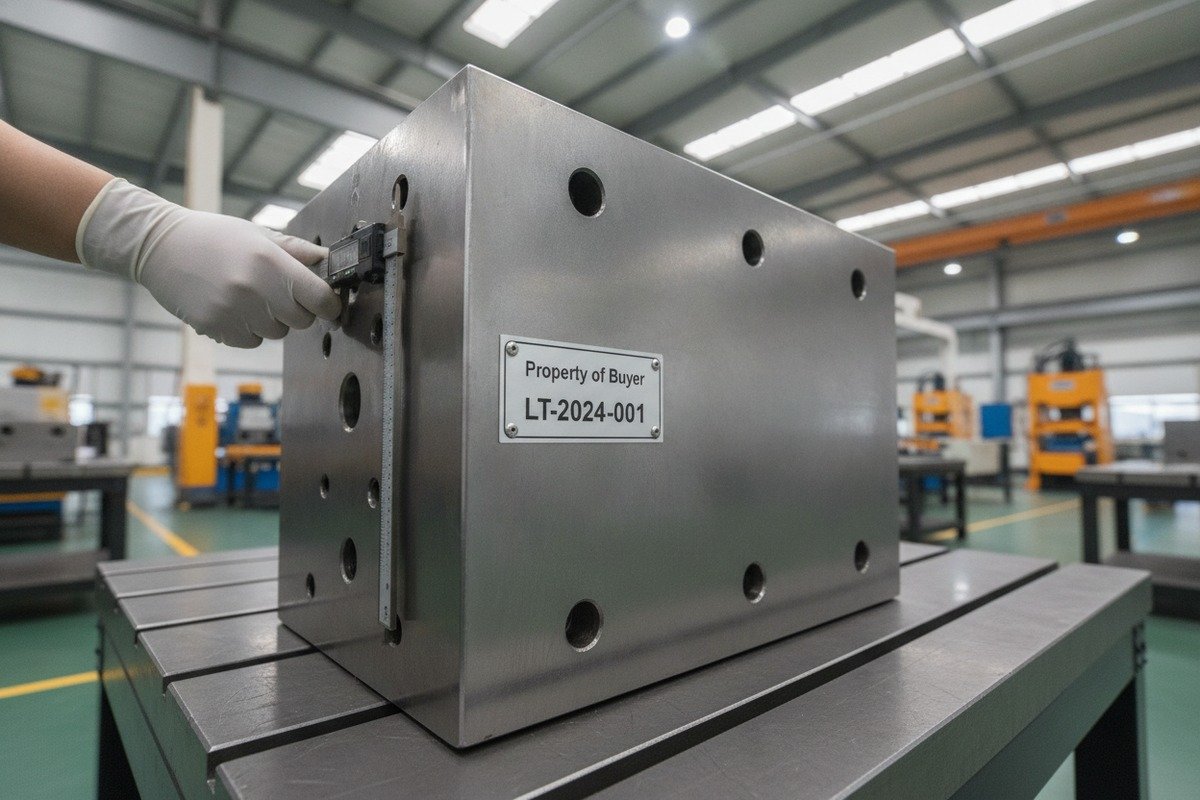
Why Mold Ownership Is the Single Most Important Clause
Aluminum furniture handles are almost always made by high-pressure die casting 2. Molten aluminum is forced into a steel mold at pressures up to 30,000 PSI. The mold defines everything: the handle's shape, tolerances as tight as ±0.05 mm, surface finish 3, and even the position of parting lines. Without the mold, you cannot reproduce the handle. That makes the mold the single most critical production asset in your supply chain. If you do not own it clearly, you are locked to one supplier with no leverage and no exit plan.
Three Common Ownership Models
Not every buyer chooses the same structure. Here are the three models we see in practice, along with the trade-offs.
| Ownership Model | Who Pays Tooling Fee | Who Holds Legal Title | Buyer's Switching Flexibility |
|---|---|---|---|
| Buyer-owned mold | Buyer pays 100% upfront | Buyer | High — buyer can retrieve and move the mold |
| Supplier-owned mold | Supplier absorbs cost, recovers via unit price | Supplier | Low — buyer cannot take the mold elsewhere |
| Buyer-paid, supplier-held mold | Buyer pays upfront but no ownership clause | Ambiguous | Very low — disputes are common |
The third model is the most dangerous. Many overseas buyers fall into it because the purchase order says "tooling charge" but never says "buyer owns the tool." If a dispute arises, local courts in the supplier's country may side with the party who physically holds the mold.
Practical Steps to Lock Down Ownership
First, separate the tooling invoice from the production invoice. This creates a paper trail showing the mold was a distinct purchase. Second, require the supplier to engrave or stamp your company name, a unique part number, and the year of manufacture directly on the mold base. Third, register the mold in a written asset list that both parties sign. Fourth, keep a copy of the original CAD files 4, 2D drawings, and any revision history. If you ever need to recreate the mold at a different factory, those files are your insurance policy.
On our production floor in Foshan, we routinely mark buyer-owned molds with a metal tag that includes the buyer's name, tool number, and creation date. It takes five minutes and prevents five years of arguments.
Separate Ownership from Custody
Ownership and custody are two different things. You can own the mold while the supplier stores and operates it. Your contract should say: "The mold is the exclusive property of [Buyer]. Supplier holds the mold as bailee and custodian only. Supplier has no lien, security interest 5, or ownership claim." This language matters if the supplier faces bankruptcy or acquisition — without it, the mold could be seized by creditors as a factory asset.
Who is responsible for the costs of mold maintenance and repairs during long-term production runs?
During a recent export order for a Middle East distributor, we discovered hairline cracks in a mold cavity after 80,000 shots — and the question of who pays for the repair nearly derailed the entire shipment.
Maintenance costs should be split based on cause: the supplier covers routine cleaning, lubrication, and wear-related upkeep as part of production overhead, while the buyer funds major repairs or refurbishments caused by reaching the mold's normal lifespan. Define these terms in measurable cycles, not vague promises.
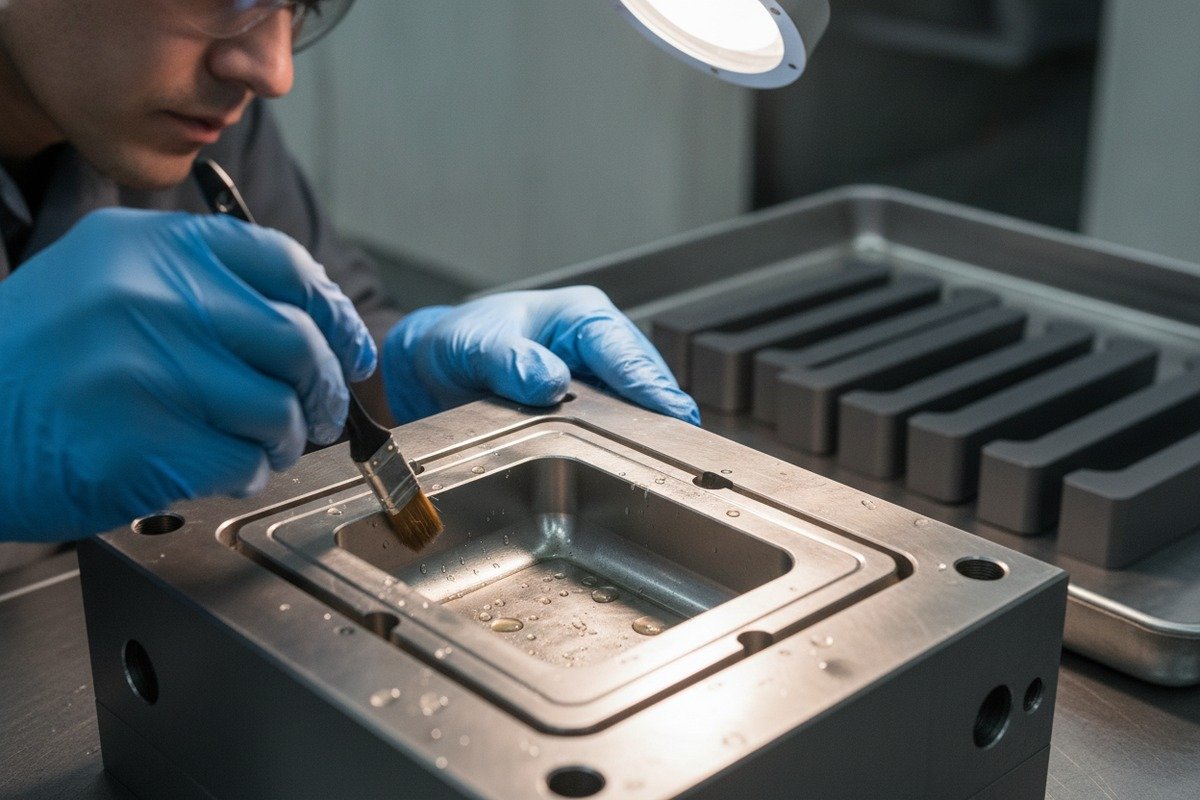
What Counts as Routine Maintenance
Die-cast molds for aluminum handles endure extreme conditions. Each cycle subjects the steel to thermal shock 6, high injection pressure, and mechanical clamping force. Routine maintenance includes cleaning residue from cavities, lubricating ejector pins, inspecting vents and cooling channels, and checking parting-line alignment. These tasks should happen at defined intervals — typically every 5,000 to 10,000 shots — and should be the supplier's responsibility because they are part of normal production operations.
Normal Wear vs. Damage
This distinction is where most disputes start. Here is a simple framework we recommend putting into your contract.
| Category | Examples | Who Pays |
|---|---|---|
| Normal wear | Gradual erosion of cavity surfaces, minor flash at parting lines 7, cooling channel buildup | Supplier (included in unit price) |
| Accelerated wear from process error | Overheating due to wrong cycle time, improper cooling, excessive injection pressure | Supplier (their process, their cost) |
| Major refurbishment at end of expected life | Cavity re-welding, re-machining, new inserts after reaching rated shot count | Buyer (if buyer owns the mold) |
| Damage from design change requested by buyer | New surface texture, revised dimensions, added features | Buyer |
Set Measurable Standards
Avoid language like "supplier will keep the mold in good condition." Instead, write: "Supplier shall perform preventative maintenance 8 every 8,000 shots, maintain a written log, and provide the log to Buyer upon request." Include a maximum allowable flash thickness, a surface roughness standard (such as Ra 0.8 for polished handles), and a dimensional tolerance band. If the mold cannot hold these standards after maintenance, it triggers the repair or replacement clause.
Require a Maintenance Log
A maintenance log is your proof. It should record the date, shot count at service, work performed, parts replaced, and the technician's name. On our lines, we keep digital logs that buyers can request at any time. This transparency builds trust and gives both sides objective data if a disagreement arises. Without a log, you are relying on the supplier's memory — not a strong position in a negotiation.
Budget for the Long Term
A typical die-cast mold for aluminum handles lasts between 50,000 and 200,000 shots, depending on the steel grade, handle complexity, and process conditions. If you expect to order 100,000 handles over three years, budget for at least one major refurbishment. Write that expectation into your agreement so neither side is surprised.
What terms should I include to prevent my supplier from using my proprietary molds for other customers?
One of our long-time distributors in Vietnam once discovered that a competitor was selling an identical handle profile — traced back to the same factory using the same mold without permission.
Your contract should include an explicit exclusivity clause stating the supplier may only use the mold to produce parts for the buyer's orders. Add a confidentiality clause covering all related CAD files and design data, a penalty for unauthorized use, and a right to audit production records at any time.
Why Exclusivity Must Be Written, Not Assumed
In many manufacturing regions, there is no default legal rule that prevents a supplier from using a mold in their custody for other customers — even if the buyer paid for it. Unless your contract says otherwise, the supplier may see the mold as a production tool on their floor and feel entitled to maximize its utilization. This is not necessarily bad faith; it is a gap in communication that a written clause closes instantly.
Key Clauses to Include
Here are the specific terms we recommend:
- Exclusive-use clause. "Supplier shall use the Mold solely and exclusively for producing products ordered by Buyer. Supplier shall not use the Mold, or any copy or derivative of the Mold, to produce products for any third party."
- Non-disclosure and confidentiality. "Supplier shall treat all CAD files, drawings, specifications, and process parameters related to the Mold as Buyer's confidential information 9. Supplier shall not disclose, share, or transfer these materials to any third party."
- Penalty clause. State a specific financial penalty — for example, two times the original tooling cost — if unauthorized production is discovered. This gives the clause teeth.
- Audit right. "Buyer or Buyer's designated agent may inspect Supplier's production records, shot counters, and shipping logs at any time with 48 hours' written notice."
Protecting Design Ownership and Engineering Revisions
Sometimes a supplier improves the mold during production — adjusting gate positions, modifying vents, or tweaking cooling channels to improve cycle time or surface quality. Who owns those improvements? If you do not address this, the supplier might claim the revised design is their proprietary know-how. Your contract should state: "Any modifications, improvements, or engineering changes made to the Mold or its associated design files during the term of this agreement shall become the property of Buyer and shall be documented in writing within 10 business days."
At our facility, when we make a process improvement to a buyer's mold, we document it, share the updated drawings, and note it in the maintenance log. The buyer always gets the latest version of their own tool.
What About the Supplier's Process Know-How?
This is the counterpoint worth acknowledging. Suppliers invest real expertise in optimizing a mold for their specific machines, alloys, and process settings. A fair agreement distinguishes between the mold design (buyer's property) and the supplier's general process parameters (supplier's know-how). You do not need to claim ownership of the supplier's machine settings or alloy recipes. You need to own the tool geometry, the CAD files, and any modifications to the part design.
Red Flags That Signal Risk
Watch for these warning signs in supplier agreements:
- No mention of exclusivity or use restrictions at all.
- The supplier insists on keeping all CAD files and refuses to share revisions.
- The contract says "supplier may use idle tooling for other production as needed."
- There is no penalty clause for unauthorized use.
- The supplier resists any form of audit or inspection rights.
If you see any of these, push back before signing. It is far easier to negotiate these terms before you pay the tooling fee than after.
What happens to my production schedule if a mold reaches its end-of-life or requires a complete replacement?
Last year, a furniture factory client needed 50,000 recessed handles for a hotel project, and the mold failed at shot 120,000 — right in the middle of the order. Because we had a replacement plan in the contract, we delivered on time. Without one, that project would have been delayed by eight weeks.
When a mold reaches end-of-life, your agreement should trigger a pre-defined replacement process: the supplier notifies the buyer at a set shot-count threshold, a replacement mold is ordered immediately, and production continues on the old mold until the new one is qualified. The contract should state who pays, the timeline, and the quality validation steps.

Plan for Replacement Before You Need It
Die-cast molds do not fail without warning. Experienced manufacturers can predict when a mold is approaching its limit by tracking shot counts, monitoring dimensional drift, and observing surface degradation. Your contract should require the supplier to notify you when the mold reaches a defined percentage of its rated life — typically 70% to 80%. This early warning gives both sides time to plan.
A Sample Replacement Timeline
| Milestone | Action | Responsible Party |
|---|---|---|
| Mold reaches 75% of rated shot life | Supplier notifies buyer in writing | Supplier |
| Within 5 business days of notification | Buyer and supplier agree on replacement plan and cost split | Both |
| Replacement mold ordered | New mold fabrication begins (typical lead time: 3–5 weeks) | Supplier manufactures; buyer pays if buyer-owned |
| Old mold continues production | Supplier monitors quality closely, increases inspection frequency | Supplier |
| New mold arrives | First-article inspection and dimensional validation | Both |
| New mold approved | Production switches to new mold; old mold retired or archived | Both |
Who Pays for the Replacement Mold?
This depends on why the mold failed. If the mold simply reached its natural end-of-life after the expected number of shots, the buyer should expect to pay for the replacement — it is a capital cost of doing business. If the mold failed prematurely due to the supplier's poor process control 10, incorrect material selection, or lack of maintenance, the supplier should bear the replacement cost. Your contract should define the mold's expected life in shot counts and allocate cost accordingly.
Protecting Your Production Schedule
The biggest risk of a mold failure is not the replacement cost — it is the production gap. For furniture handle buyers fulfilling project-based orders, even a two-week delay can mean lost contracts. Here are practical safeguards:
- Overlap period. Require the supplier to keep the old mold running at reduced speed while the new mold is being built and validated.
- Safety stock. Maintain a buffer inventory of finished handles — we recommend at least four to six weeks of average demand.
- Backup mold clause. For high-volume programs, consider investing in a backup mold from the start. The upfront cost is higher, but it eliminates downtime risk entirely.
- Qualified alternate supplier. If your tooling agreement allows mold retrieval, you can qualify a second factory as an emergency backup. This only works if you own the mold and the CAD files.
What About Sudden, Unexpected Mold Failure?
Sometimes a mold cracks without warning — a cooling line bursts, a cavity insert fractures, or a misaligned core causes catastrophic damage. Your contract should address this scenario separately. Define a maximum response time (for example, the supplier must provide a written assessment within 48 hours), a maximum repair time, and an escalation path if the mold cannot be repaired. If the mold is beyond repair, the replacement timeline activates immediately.
At our facility, we stock common mold steels and maintain relationships with tooling shops that can turn around emergency repairs in five to seven days. We also keep digital backups of every mold's CAD data, so rebuilding starts from verified files, not from scratch.
Do Not Forget Quality Validation
A new mold must produce parts that match the original specification. Your agreement should require a first-article inspection on the replacement mold — dimensional checks, surface finish measurement, and functional fit testing — before full production begins. For aluminum furniture handles, this means verifying the finger-grip channel depth, the mounting-hole positions, the anodizing compatibility of the surface, and the overall profile tolerance. Skip this step, and you risk shipping handles that do not fit your customer's cabinets.
Conclusion
A clear mold agreement is not paperwork — it is your insurance against supply disruption, design theft, and unexpected costs. Define ownership, maintenance, exclusivity, and replacement before you pay the tooling fee, and your aluminum handle sourcing will run smoothly for years.
Footnotes
1. Defines a vital contractual protection against unauthorized mold use. ↩︎
2. Explains the manufacturing process for aluminum handles. ↩︎
3. Defines a critical quality characteristic for manufactured parts. ↩︎
4. Defines a crucial engineering data format for design and manufacturing. ↩︎
5. Clarifies a legal term related to property claims in contracts. ↩︎
6. Describes a key stress factor affecting die-cast molds. ↩︎
7. Explains a key mold design feature in die casting. ↩︎
8. Explains a critical upkeep strategy for manufacturing equipment. ↩︎
9. Replaced with a highly authoritative legal definition of confidential business information from the Cornell Law School Legal Information Institute (U.S. Code of Federal Regulations). ↩︎
10. Defines a key aspect of manufacturing quality and efficiency. ↩︎