
Every week, our sales team fields the same question from new buyers placing their first custom handle orders from Foshan — how long will the mold take?
For standard custom aluminum furniture handles, new mold development in China typically takes about 12 to 15 days, covering mold fabrication and initial sample confirmation. Complex designs with tight tolerances, special finishes, or multiple revision rounds can push this timeline to 4 weeks or longer depending on project specifics.
That two-week window sounds simple, but the real story has layers CAD review 1. Below, we break down each stage of the mold development process 2, explain the variables that speed it up or slow it down, and share practical tips so you can plan your sourcing timeline with confidence.
How long should I expect the entire mold development process to take for my custom aluminum handles?
When buyers send us a new handle drawing for the first time, they usually want a single, clear number — and we understand why tight scheduling matters for product launches mold-flow analysis 3.
The entire mold development process for a custom aluminum furniture handle generally spans 12 to 15 working days from design confirmation to first sample approval. This window covers CAD review, tooling fabrication, trial extrusion or casting, and one round of sample checking before mass production begins.
What "mold development" actually includes
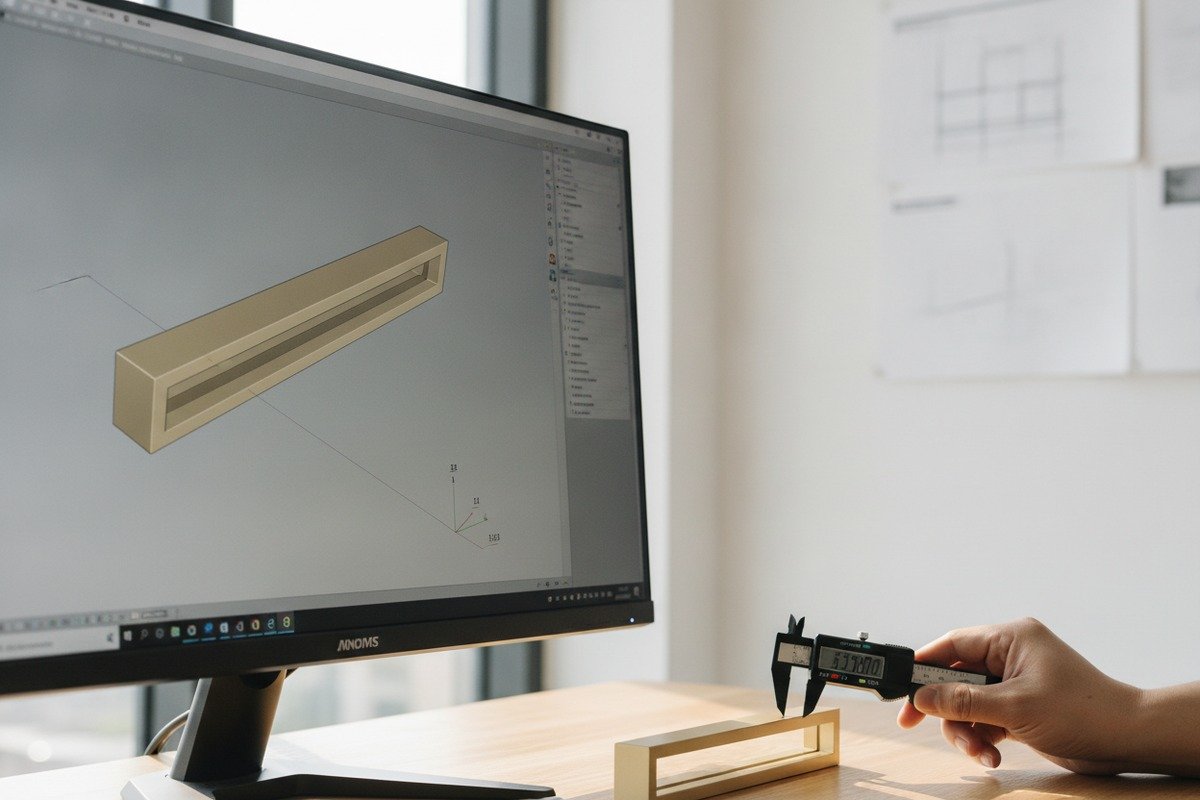
Many buyers think mold development is just machining a piece of steel or aluminum. In reality, it is a multi-step workflow. Here is what happens behind the scenes at our Foshan facility when a new handle project arrives.
Step 1 — Design review and DFM analysis. Our engineering team receives the buyer's drawing or 3D file. We check wall thickness, draft angles, tolerance callouts, and surface finish notes. DFM analysis 4 If something is not manufacturable — or if a small change could save cost — we flag it now. This stage takes one to two days.
Step 2 — CAD modeling and simulation. For extrusion dies, we model the die profile digitally and run flow simulation to predict how molten aluminum will behave. For die-cast molds 5, we add mold-flow analysis covering filling pressure, cooling channels, and shrinkage. This adds another one to three days.
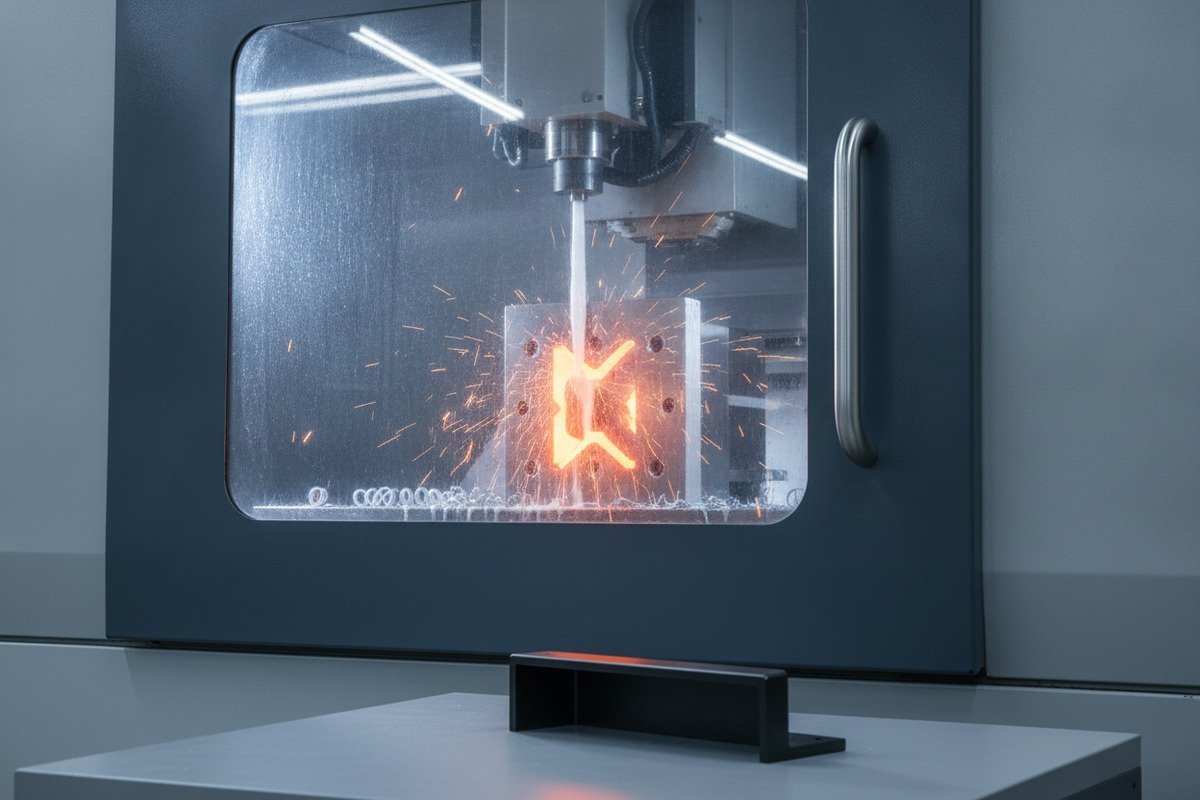
Step 3 — Tooling fabrication. CNC machining of the actual mold or extrusion die is the longest single step. A straightforward extrusion die may be cut in five to seven days. A multi-cavity die-cast mold with complex geometry can take two to four weeks.
Step 4 — Trial run and sample creation. Once the tool is ready, we run a small batch. For extrusion, this means a trial pull of a few meters of profile, then cutting and finishing sample handles. trial extrusion 6 For die casting, we shoot a handful of parts and inspect them.
Step 5 — Sample confirmation. Samples ship to the buyer (or photos and dimensions are shared digitally). The buyer approves, requests revisions, or rejects. Each revision loop can add three to five extra days.
Typical timeline breakdown
| Stage | Typical Duration | Notes |
|---|---|---|
| Design review and DFM | 1–2 days | Faster if complete drawings are provided |
| CAD modeling and simulation | 1–3 days | Complex geometries need longer simulation |
| Tooling fabrication 7 (extrusion die) | 5–7 days | Simple profile; single-cavity |
| Tooling fabrication (die-cast mold) | 14–28 days | Multi-cavity; tight tolerances |
| Trial run and sample creation | 1–2 days | Small batch for inspection |
| Sample shipping and buyer approval | 2–5 days | Depends on shipping method and buyer response |
| Total (extrusion, simple) | 12–15 days | Most common for standard aluminum handles |
| Total (die-cast, complex) | 25–40 days | High-detail decorative handles |
Why buyers should separate "tooling time" from "total lead time"
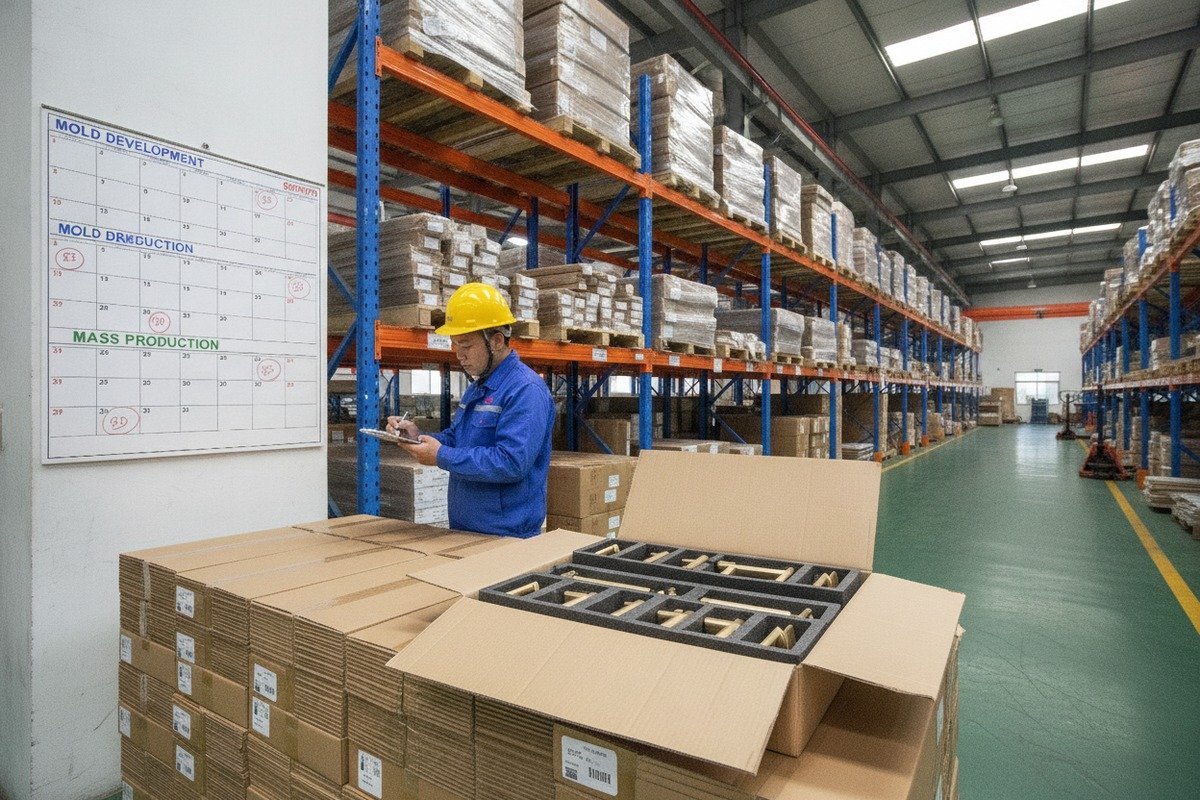
One mistake we see regularly: a buyer hears "15 days" and assumes that means handles will be in their warehouse in two weeks. That is not the case. The 12-to-15-day figure covers only tooling plus sample confirmation. After approval, mass production, surface treatment, packing, and shipping add additional weeks. Always ask your supplier whether the quoted timeline includes just the mold stage or the full order cycle.
Can I find a Chinese supplier that offers a 3 to 7 day turnaround for my new handle molds?
Our product page mentions a 3-to-7-day turnaround for custom products, and buyers sometimes wonder if that applies to brand-new mold development from scratch.
A 3-to-7-day turnaround is achievable for custom aluminum handles when the supplier already owns a compatible mold or extrusion die that only needs minor modification. Developing a completely new mold from zero within 3 to 7 days is extremely rare and usually limited to the simplest extrusion die profiles.
When a 3-to-7-day promise is realistic
There are specific situations where this speed is genuine and not a marketing trick.
Existing mold with minor tweaks. If a supplier has produced a similar recessed handle profile before, the existing die may only need slight dimensional adjustments. Reworking an existing die is far faster than building one from raw steel.
Simple extrusion die for a basic profile. A slim, rectangular recessed pull — like the minimalist channel-grip handles popular in modern cabinetry — has a relatively simple cross-section. An experienced die shop can machine this type of extrusion die in as few as five working days.
Rapid prototype mold using aluminum tooling or 3D printing. Some suppliers offer 3D-printed or soft aluminum molds for quick design validation. These are not production-grade tools, but they let you hold a physical sample fast.
When it is not realistic
If your handle design features intricate ornamentation, multiple internal cavities, undercuts, or very tight dimensional tolerances, do not expect a new mold in under a week. Die-cast molds for decorative handles regularly take three to six weeks. Pushing a complex mold too fast invites dimensional errors, poor surface quality, and costly rework.
How to interpret supplier claims
| Supplier Claim | What It Likely Means | Buyer Action |
|---|---|---|
| "3–7 days custom turnaround" | Modification of existing tooling or very simple new extrusion die | Ask if this applies to a brand-new mold or an existing mold adjustment |
| "12–15 days mold development" | New extrusion die fabrication plus sample confirmation | Confirm whether sample shipping time is included |
| "4–8 weeks mold lead time" | Complex die-cast mold with multi-cavity design | Request a stage-by-stage timeline with milestones |
| "48-hour shipping" | Applies to stock items already in inventory | Verify which SKUs are in stock vs. made to order |
At our facility, the 3-to-7-day custom turnaround applies to orders where we already hold a matching or near-matching die among our 300+ existing profiles. For a completely new handle shape that has never been produced, we quote the standard 12-to-15-day mold development window — and we are transparent about that distinction.
The role of additive manufacturing
3D printing is changing how fast buyers can validate a design. additive manufacturing 8 We sometimes produce a resin or metal-sintered prototype within two to three days so the buyer can check ergonomics, finger-grip depth, and overall aesthetics before we commit to machining the real die. This does not replace the actual mold, but it compresses the approval cycle and reduces the risk of costly mold revisions later.
What factors will influence the speed and cost of my custom mold development in Foshan?
Over 18 years of producing aluminum handles in Foshan, our team has seen projects finish ahead of schedule and others drag on for weeks — and the difference almost always traces back to a handful of controllable variables.
The speed and cost of custom mold development depend on handle geometry complexity, required tolerances, surface finish specifications, mold material choice, production volume expectations, and — critically — how quickly the buyer provides complete drawings and responds to sample approvals.
Handle geometry and ornamentation
A flat, L-shaped recessed pull with a uniform cross-section is about as simple as it gets. The extrusion die for this profile is a single-opening tool with no moving parts. Add curves, tapered edges, decorative grooves, or internal ribbing, and the machining time rises proportionally. For die-cast handles with 3D sculptural elements, the mold may require side cores, sliders, or lifters — each adding days to fabrication and cost to the tooling budget.
Tolerances and wall thickness
Furniture handles do not usually demand aerospace-level tolerances, but some high-end cabinetry brands specify ±0.05 mm on mounting-hole spacing. Tighter tolerances mean more careful CNC programming, slower feed rates, extra inspection steps, and sometimes additional mold polishing or EDM finishing. Thinner walls also demand more precise control of metal flow, which can require iterative simulation before tooling even begins.
Surface finish requirements
The finish you want on the final handle directly affects mold surface preparation. A matte anodized finish — like the champagne gold or charcoal grey on our popular recessed pulls — is relatively forgiving. A mirror-polished chrome finish requires the mold cavity itself to be polished to a near-mirror state, adding one to three extra days of hand polishing.
Mold material: aluminum vs. steel
| Factor | Aluminum Mold | Steel Mold |
|---|---|---|
| Fabrication speed | Faster (softer material, easier to machine) | Slower (harder material, more machining time) |
| Tooling cost | Lower | Higher |
| Typical lifespan | 1,000–10,000 cycles | 100,000–1,000,000+ cycles |
| Best for | Prototyping, low-to-medium volume | High-volume mass production |
| Lead time impact | Shorter overall mold development | Longer overall mold development |
For buyers testing a new handle design or running a limited collection, an aluminum mold makes sense. It costs less, arrives faster, and lets you validate the market before investing in hardened steel tooling for long production runs.
Buyer responsiveness
This is the factor suppliers rarely discuss publicly, but it is one of the biggest timeline drivers. Every day a buyer delays approving a drawing, answering a DFM question, or confirming a sample adds a day to the project calendar. In our experience, the fastest projects are ones where the buyer assigns a single decision-maker who responds within 24 hours.
Tips to keep your mold project on schedule
- Provide complete 2D and 3D drawings with all dimensions, tolerances, and finish callouts before the project starts.
- Specify the mounting-hole pattern, screw size, and panel thickness compatibility upfront.
- Agree on a sample approval method — photos and measurements vs. physical samples — before tooling begins.
- Set a maximum number of revision rounds in your purchase order to keep both sides accountable.
- Ask for a written milestone schedule with dates for design confirmation, tooling completion, trial run, and sample shipment.
How do I verify the quality of my new aluminum handle mold before starting mass production?
Before we release any new mold into full production, our quality team runs a structured verification process — and we encourage every buyer to insist on the same rigor from whichever supplier they choose.
To verify a new aluminum handle mold, request dimensional inspection reports of first-article samples, check surface finish against an agreed reference standard, perform a functional fit test on actual cabinet panels, and review the mold trial report covering fill consistency, flash, and defect rates across multiple shots.

First-article inspection
The first-article inspection 9 (FAI) is the single most important quality gate. When the mold produces its first batch of sample handles, the supplier should measure critical dimensions — overall length, width, channel depth, mounting-hole center distance, and wall thickness — and compare them against the approved drawing. Any deviation beyond the agreed tolerance triggers a mold correction before mass production starts.
At our factory, we use digital calipers and coordinate measuring machines 10 (CMM) for this step. We send the buyer a full measurement report with photos so they can approve remotely without waiting for physical samples to arrive by courier.
Surface finish verification
Surface quality is subjective unless you define it in advance. We recommend agreeing on a reference sample or a standardized finish code (for example, Ra value for roughness, or a specific anodizing color code) before tooling begins. During sample review, compare the trial handle against this reference under consistent lighting.
Functional fit test
A handle that looks perfect but does not fit the intended cabinet panel is useless. We always recommend that buyers send us a sample panel — or at least the exact panel thickness and edge profile — so we can test-fit the handle during the trial stage. For recessed pulls designed to mount on 18 mm MDF doors, even a 0.3 mm discrepancy in channel width can cause a loose or overly tight fit.
Mold trial report checklist
| Check Item | What to Look For | Acceptable Result |
|---|---|---|
| Dimensional accuracy | All critical dimensions within tolerance | ±0.1 mm or as specified |
| Surface finish | Consistent texture, no tool marks or flow lines | Matches agreed reference sample |
| Flash and burrs | Excess material at parting lines | Minimal; easily removed in secondary finishing |
| Fill consistency | Uniform density across all cavities | No short shots, voids, or porosity |
| Ejection marks | Marks from ejector pins on non-visible surfaces | Shallow, located in hidden areas only |
| Color after anodizing (if applicable) | Uniform color across all samples | Matches Pantone or RAL reference |
What to do if samples fail
Do not panic. First-round samples rarely pass every check perfectly. The key is to document every issue clearly — with photos, measurements, and comparison to the drawing — and send this feedback to the supplier in a single, organized communication. Avoid drip-feeding corrections one at a time, as this causes confusion and extends the revision cycle.
In our workflow, we typically allow for one mold correction round within the original 12-to-15-day timeline. If the buyer's design was well-defined and our DFM review was thorough, the correction is usually minor — a slight dimensional adjustment or additional cavity polishing. Major rework is rare when both sides invest time in the upfront design review.
Requesting a mold life guarantee
For buyers planning large ongoing orders, ask the supplier about mold life expectancy and what happens when the tool wears out. A standard aluminum extrusion die may last 5,000 to 10,000 cycles before needing replacement. High-quality steel die-cast molds can exceed 100,000 cycles. Some suppliers include one free mold replacement after a guaranteed number of production runs. Get this in writing before you approve the mold.
Conclusion
Plan for roughly two weeks of mold development on standard aluminum handles, build buffer time for revisions, and invest in clear upfront communication to keep your sourcing timeline on track.
Footnotes
1. Defines the initial design review using Computer-Aided Design software. ↩︎
2. Explains the general stages and importance of mold manufacturing. ↩︎
3. Explains mold flow analysis in injection molding. ↩︎
4. Explains the process of optimizing product design for easier and more cost-efficient manufacturing. ↩︎
5. Wikipedia overview of die casting molds. ↩︎
6. Details the initial test run and precautions for aluminum extrusion dies. ↩︎
7. Describes the physical creation of molds and dies based on design specifications. ↩︎
8. Authoritative definition and applications of building objects layer by layer. ↩︎
9. Comprehensive guide to First Article Inspection. ↩︎
10. Explains the function of CMMs in measuring the geometry of physical objects. ↩︎