
Every quarter, our finance team in Foshan recalculates export pricing for aluminum furniture handles, and lately, the numbers keep shifting — not because our production costs changed, but because the USD/CNY exchange rate 1 won’t sit still.
To manage sourcing cost changes caused by exchange rate fluctuations, you should combine financial hedging tools like forward contracts with supplier-negotiated currency clauses, strategic inventory buffering when rates are favorable, and diversified payment terms that share risk between buyer and seller.
The truth is, ignoring currency volatility is no longer an option currency options 2. In 2026, the Chinese yuan faces substantial appreciation pressure, and that directly raises your landed cost 3 — even if your supplier never changes a single price. Below, we break down four practical strategies you can use right now to protect your margins and keep your aluminum handle business profitable.
How can I lock in pricing with my Chinese supplier to protect my margins from currency volatility?
When we quote prices for our overseas clients, we see firsthand how a small shift in the exchange rate can turn a profitable order into a losing one — especially on high-volume, low-unit-value items like recessed cabinet pulls.
You can lock in pricing by using forward contracts through your bank, negotiating fixed-rate contract periods with your supplier, or agreeing on a currency adjustment clause that triggers price recalculations only when the exchange rate moves beyond a set band.

Why Locking In Pricing Matters for Aluminum Handles
Aluminum furniture handles are low-cost, high-volume products. A single recessed pull might cost 8 to 15 CNY. That feels small. But when you order 30,000 or 50,000 pieces, even a 5% currency swing adds thousands of dollars to your total cost.
Here is a simple example. Suppose you order 50,000 handles at 10 CNY each.
| Exchange Rate (USD/CNY) | Unit Cost (USD) | Total Order Cost (USD) | Cost Difference vs. 7.0 Rate |
|---|---|---|---|
| 7.0 | $1.43 | $71,429 | — |
| 6.8 | $1.47 | $73,529 | +$2,100 |
| 6.5 | $1.54 | $76,923 | +$5,494 |
That $5,494 difference can wipe out your entire margin on a shipment of handles. And you did nothing wrong — the market moved.
Three Tools to Lock In Pricing
Forward contracts are the most common tool. You go to your bank and agree to buy a specific amount of CNY at a fixed rate on a future date. If your shipment arrives in 90 days, you lock the rate today. You know your exact cost. No surprises.
Currency options give you more flexibility. You pay a small premium to secure the right to exchange at a set rate, but you are not forced to use it. If the market moves in your favor, you simply let the option expire and convert at the better rate.
Supplier-side fixed pricing is the simplest approach. In our experience working with furniture distributors in Vietnam and the Middle East, many buyers ask us to hold a USD price for 60 or 90 days. This is common practice. A good supplier will build a small buffer into the quote to absorb minor fluctuations. For larger swings, both sides renegotiate.
The Currency Adjustment Clause
A smarter long-term approach is a shared-risk clause. You and your supplier agree on a "band" — say, plus or minus 3% around the rate at the time of the contract. If the rate stays inside that band, the price holds. If it moves outside, both parties split the difference.
This is fair. It protects you from sudden spikes. It also protects the supplier from absorbing unreasonable losses. In our factory, we have found that buyers who propose this kind of clause tend to build stronger, longer-lasting partnerships with us.
Should I increase my stock of aluminum handles when the exchange rate is favorable to my business?
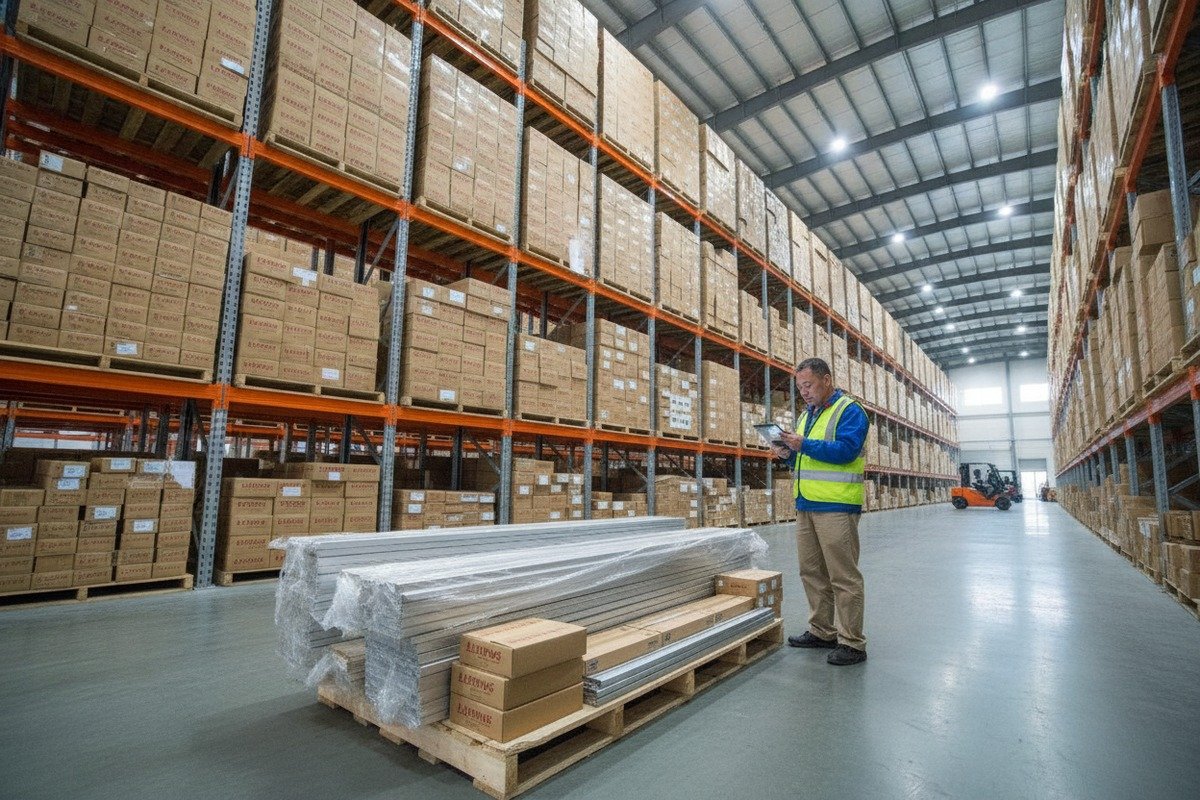
Our warehouse in Foshan holds over 300 tons of ready-to-ship aluminum profiles and handles at any given time, so we understand the real costs and benefits of stockpiling — and the risks that come with it.
Yes, strategically increasing your stock when the exchange rate is favorable can reduce your average cost per unit over time, but only if you have adequate storage capacity, sufficient cash flow, and confidence that the product designs will remain in demand.
The Logic Behind Inventory Buffering
The idea is simple. When the USD is strong — meaning you get more CNY per dollar — your handles are cheaper. Buy more now. Store them. Use them over the next few months as the rate potentially worsens.
This is called inventory buffering 5, and it works well for standardized products. Recessed aluminum handles with popular finishes like matte black, champagne gold, or charcoal grey are safe bets. They do not go out of style quickly. They do not expire.
When Buffering Makes Sense — And When It Does Not
| Factor | Favorable for Buffering | Unfavorable for Buffering |
|---|---|---|
| Product type | Standard finishes, universal sizes | Highly custom designs |
| Cash flow | Strong, with available working capital | Tight, with other obligations |
| Storage capacity | Warehouse space available | Limited or expensive storage |
| Rate forecast | USD expected to weaken further | USD expected to strengthen |
| Demand outlook | Stable or growing orders | Uncertain or seasonal |
If you tick most boxes in the "Favorable" column, buying ahead makes sense.
How Much Extra Should You Stock?
A conservative rule is to add 30–50% on top of your normal order when the rate is favorable. Do not double your order blindly. The carrying cost of inventory 6 — storage, insurance, tied-up cash — adds up. A good approach is to calculate how much margin the favorable rate gives you, and then invest a portion of that saved margin into extra stock.
For example, if a favorable rate saves you $3,000 on a $70,000 order, consider using $1,500 to $2,000 of that to purchase additional units. This way, you lock in savings without overextending your cash position.
A Word of Caution on Custom Handles
If your handles are highly customized — unique profiles, special anodized colors, or proprietary dimensions — be more conservative. Custom inventory is harder to sell if your client changes designs or cancels orders. In our production facility, we always advise buyers to keep custom orders lean and only buffer on standard, fast-moving SKUs.
Also remember that aluminum itself has price volatility 7. In mid-2026, Chinese domestic aluminum is hovering around 21,000 RMB per ton. If aluminum prices drop while you are sitting on a large stock, the handles you bought early might end up costing more than newly produced ones. It is a risk worth monitoring.
Can I negotiate long-term price stability for my furniture handle orders despite RMB fluctuations?
Over our 18 years of exporting aluminum hardware, we have seen buyers come and go — the ones who stay are the ones who negotiate for partnership, not just price.
Yes, you can negotiate long-term price stability by committing to annual volume agreements, accepting shared-risk currency clauses, and building a relationship that gives your supplier the confidence to absorb short-term fluctuations in exchange for guaranteed, recurring business.

Why Suppliers Agree to Stable Pricing
Suppliers want predictable revenue. If you offer a 12-month commitment with agreed quarterly volumes, most mid-to-high-end Chinese manufacturers will meet you halfway on price stability. The reason is simple: a guaranteed order book lets the factory plan production, buy raw materials in bulk, and keep workers busy. That predictability has real value.
At our facility in Foshan, when a furniture factory in the Middle East commits to ordering 100,000 handles over a year, we can negotiate better aluminum prices from our own suppliers. We pass a portion of that saving to the buyer. Everyone wins.
How to Structure a Long-Term Agreement
Here is a framework that works well in practice:
| Agreement Element | Recommended Approach |
|---|---|
| Contract duration | 6–12 months |
| Volume commitment | Minimum quarterly quantity (e.g., 20,000 units) |
| Pricing basis | Fixed USD price with currency review every 90 days |
| Currency band | ±3% tolerance; renegotiation outside this range |
| Aluminum clause | Price adjustment if LME aluminum moves ±10% |
| Payment terms | 30% deposit, 70% before shipment |
| Exit clause | 60-day written notice with remaining order obligation |
The Haggle Is Expected
In Chinese business culture, negotiation is not confrontational — it is expected. Your supplier anticipates that you will push back on pricing, especially when external factors like currency or tariffs change. Use this to your advantage.
A practical script: "Our landed cost has increased by 7% due to CNY appreciation this quarter. We value our partnership and want to continue our volume. Can we agree on a 3–4% price reduction on the CNY side to share the burden?"
Most experienced suppliers will counter with their own proposal. The key is to show that you understand their constraints too. They face rising aluminum costs (around 21,000 RMB/ton), energy costs, and labor costs. A one-sided demand will not work. A shared solution will.
Beyond Price: Value-Added Stability
Price is not the only lever. Ask for value-added concessions that reduce your total cost without cutting into the supplier's margin:
- Free samples for new designs each quarter
- Extended payment terms (from 30% / 70% to 20% / 80%)
- Priority production slots during peak season
- Consolidated shipping to reduce per-unit freight cost
- 48-hour dispatch on stock items (something our warehouse supports for standard handles)
These concessions often matter more than a $0.02 per-unit price cut. They improve your cash flow, speed, and flexibility — all of which protect your margin indirectly.
What payment terms should I discuss with my supplier to minimize my financial risk during exchange rate shifts?
When we finalize payment terms with our export clients, the conversation is never just about "how much" — it is about "when" and "in what currency," because both directly affect how much the buyer actually pays.
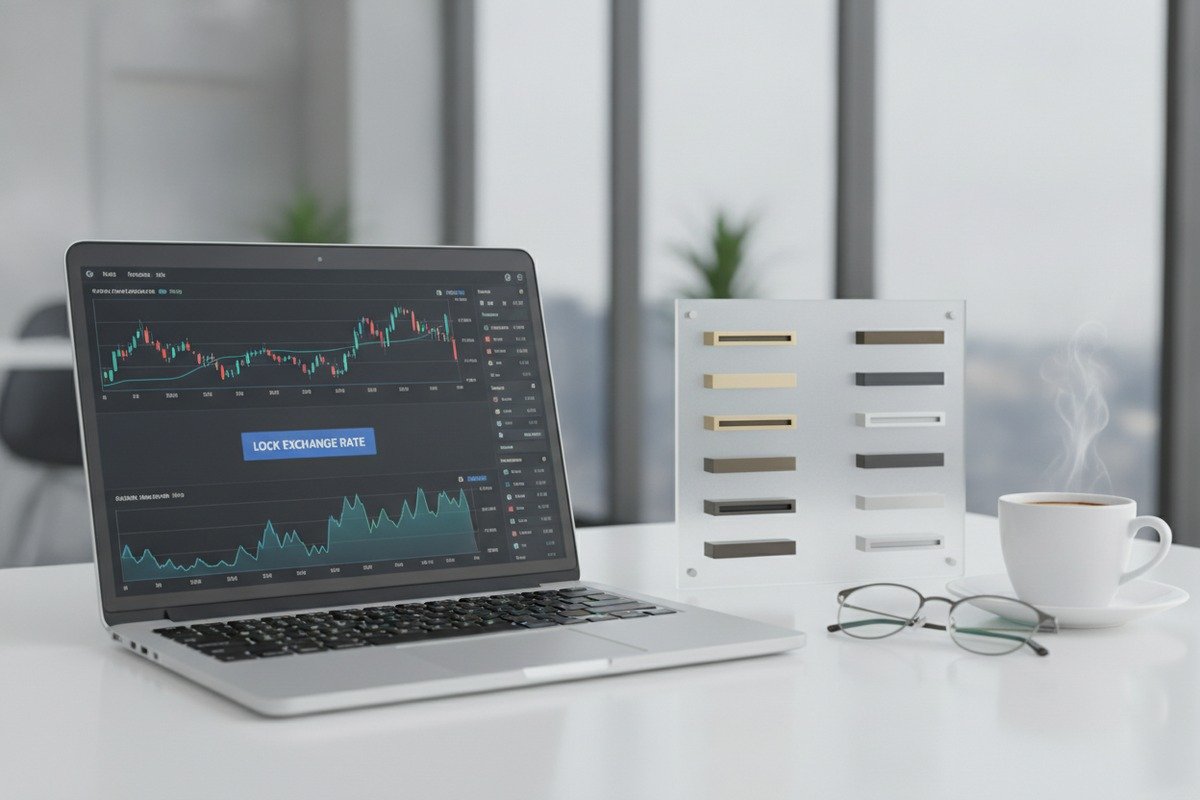
To minimize financial risk, discuss staggered payment schedules (deposit plus balance), specify the currency of settlement clearly, negotiate payment timing aligned with favorable rate windows, and explore options like letters of credit or escrow arrangements that protect both parties during volatile periods.
The Basics: Why Payment Timing Matters
When you pay matters almost as much as what you pay. If the CNY is appreciating against the USD, every day you delay conversion costs you more. Conversely, if the USD is temporarily strong, paying early locks in a better rate.
Most aluminum handle transactions follow this pattern: 30% deposit at order confirmation, 70% balance before shipment. But this structure is not set in stone. It is a starting point for negotiation.
Payment Structures to Consider
Here are several models used in international aluminum hardware trade:
Model 1 — Standard Split (30/70)
You pay 30% upfront when you place the order. The remaining 70% is due when the goods are ready to ship. This is the most common structure. Your currency exposure is concentrated at two points in time.
Model 2 — Three-Stage Payment (30/40/30)
You pay 30% at order, 40% at production completion, and 30% after delivery or within 30 days. This spreads your currency conversion over three dates, reducing the impact of a single bad rate day.
Model 3 — Letter of Credit (L/C)
A bank-backed instrument where payment is guaranteed upon presentation of shipping documents. Letter of Credit (L/C) 8 This protects the buyer from paying for goods that never ship, and protects the supplier from non-payment. The rate is typically locked when the L/C is issued.
Model 4 — Open Account with Net 30/60
You receive the goods first and pay later. This is rare for new relationships but common for established partnerships. It gives you time to sell the handles before paying, improving cash flow. However, the supplier bears more risk, so they may price this in.
Which Currency Should You Settle In?
This is a critical question. Settling in USD means the supplier bears the currency risk. Settling in CNY means you bear it. A middle ground is to agree on a USD price but include a currency adjustment mechanism.
| Settlement Currency | Who Bears Currency Risk | Best For |
|---|---|---|
| USD | Supplier | Buyers wanting cost certainty |
| CNY | Buyer | Suppliers wanting revenue certainty |
| USD with adjustment clause | Shared | Long-term partnerships |
In practice, most of our export invoices are in USD. But when the CNY appreciation pressure is strong — as it is in mid-2026 — we may propose a small price buffer or a shorter quote validity period (e.g., 30 days instead of 90 days) to protect ourselves. Buyers should be aware of this dynamic and factor it into their planning.
Practical Tips for Payment Timing
- Monitor the rate daily in the week before your payment is due. Even a 0.5% move on a $50,000 payment saves or costs you $250.
- Use multi-currency accounts. If your bank offers a CNY-denominated account, you can convert USD to CNY when the rate is good and hold it until your payment is due. multi-currency accounts 9
- Avoid paying on Fridays or before Chinese holidays. Liquidity tends to be lower, and spreads can be wider, meaning you get a slightly worse rate.
- Negotiate "rate lock" windows with your bank. Some banks allow you to lock a rate for 24–48 hours while you finalize the transaction.
Do Not Forget the Hidden Costs
Shipping, insurance, and inspection fees are often paid in USD, but some logistics providers in China invoice in CNY. Make sure you know which currency every line item is billed in. A 5% rate swing on a $2,000 freight charge is only $100 — but across 20 shipments a year, that is $2,000 in hidden cost.
Also consider the impact of tariffs 10. With current effective rates reaching up to 145% on certain Chinese goods and 25% on aluminum imports into the U.S., the tariff amount itself is calculated on the declared value — which is in USD. A higher declared cost (due to CNY appreciation) means a higher tariff payment. The currency effect compounds.
Footnotes
1. Provides historical and current official exchange rate data between USD and CNY. ↩︎
2. Defines currency options as derivative instruments for managing exchange rate risk. ↩︎
3. Explains the total cost of a product including all expenses to reach the buyer. ↩︎
4. Defines forward contracts as financial instruments for hedging future price movements. ↩︎
5. Explains inventory buffering as holding extra stock to mitigate supply chain risks. ↩︎
6. Details the expenses associated with holding unsold inventory, including storage and opportunity costs. ↩︎
7. Provides data and analysis on the fluctuating prices of aluminum as a commodity. ↩︎
8. Explains a letter of credit as a bank-backed payment guarantee in international trade. ↩︎
9. Describes bank accounts that allow holding and transacting in multiple foreign currencies. ↩︎
10. Discusses how tariffs affect prices, supply chains, and economic growth for businesses. ↩︎