
Picking the wrong handle style for a specific market is one of the fastest ways to lose a wholesale deal pull-force testing 1. Over the past 18 years on our production lines in Foshan, we have shipped aluminum handles to markets as different as Hanoi, Dubai, and Hamburg — and the design expectations in each region could not be more different.
To choose the right aluminum furniture handle style for each target market, start by identifying the region’s dominant design language — minimalist for Europe, ergonomic and versatile for North America, compact and precise for Japan, or decorative and luxurious for the Middle East. Then match handle visibility, finish, and dimensions to that preference while ensuring durability and production quality meet local standards.
Below, we break down what each major market actually expects from furniture hardware — and how you can source or customize aluminum handles that fit. Let’s walk through Europe, North America, Japan, and the Middle East one by one.
How can I match aluminum handle finishes to the minimalist aesthetic preferred by my European furniture clients?
European buyers, especially from Scandinavia, Germany, and the Netherlands, have sent us very specific finish requests over the years. If you get the surface treatment wrong for this market, even a well-designed handle profile will sit unsold in a warehouse.
To match aluminum handle finishes to European minimalist aesthetics, prioritize matte, brushed, or soft anodized surfaces in neutral tones like silver, charcoal grey, champagne, and matte black. Avoid shiny or ornate finishes. Clean geometry and low-profile forms are the safest commercial choices for Northern and Western European furniture lines.
Understanding the European Design Language
Europe is not one market. It is a collection of design preferences. But when furniture wholesalers say "European style," they usually mean one of two things: Scandinavian minimalism 2 or industrial European boldness. Both share a love for clean lines and understated surfaces. Neither wants excessive decoration on hardware.
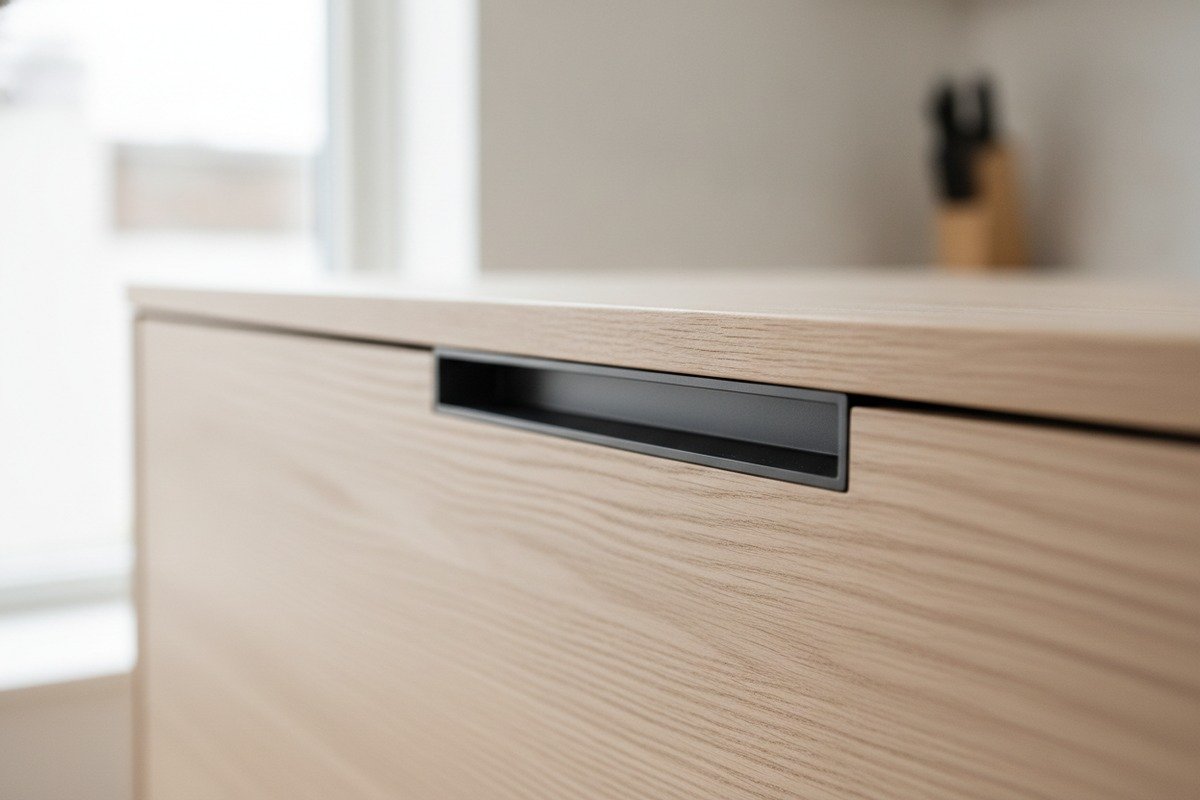
Scandinavian design emphasizes function, natural materials, and soft finishes. Handles for this segment should feel almost invisible. Recessed profiles, slim rectangular pulls, and integrated channel handles work extremely well here. The color palette stays muted — think white, light beige, soft grey, and champagne gold. Our recessed cabinet handles with deep geometric channels and sharp, clean edges are a direct answer to this demand.
Industrial European design, common in loft-style and urban furniture, leans toward bolder forms but still avoids ornament. Matte black, dark bronze, and distressed metallic finishes dominate. The handle can be more visible, but it should still look purposeful, not decorative.
Finish Selection for European Orders
| Finish Type | Best For | European Sub-Market | Notes |
|---|---|---|---|
| Brushed silver anodized | Kitchen cabinets, wardrobes | Scandinavia, Germany | Most versatile, lowest rejection rate |
| Matte black | Modern flat-panel furniture | UK, Netherlands, urban France | Strong trend, pairs with light wood tones |
| Champagne gold (matte) | Mid-to-high-end cabinetry | Italy, France, premium Scandinavian | Subtle warmth without looking flashy |
| Charcoal grey | Office furniture, built-ins | Germany, Benelux | Neutral, professional appearance |
| Light beige / white | Minimalist residential storage | Scandinavia, Denmark | Blends with cabinet surface for near-invisible look |
Handle Visibility Matters More Than You Think
In our experience exporting to European distributors, handle visibility is the first design decision, not finish. European modern furniture increasingly uses integrated or recessed handles — the kind where the handle is part of the cabinet profile rather than a bolt-on pull. This is where extruded aluminum profiles 3 shine. A precision-engineered profile with an L-shaped cross-section can serve as both an edge trim and a finger grip. It removes the need for a separate, protruding handle entirely.
For more traditional European furniture — think Provençal style or English country — exposed bar pulls in brushed nickel or antique brass are still relevant. But these represent a shrinking share of the market compared to the minimalist mainstream.
Sustainability and Repairability
European sustainability directives are pushing furniture makers toward modular, repairable designs. Aluminum handles are inherently recyclable, which is a selling point. But the bigger trend is modular hardware — handles that can be swapped, refinished, or replaced without damaging the furniture panel. When we design handle profiles for European clients, we now factor in mounting systems that allow easy removal and replacement. This aligns with circular economy principles 4 gaining traction across the EU.
One more practical note: antimicrobial coatings 5 and easy-to-clean smooth finishes have gained importance in post-pandemic Europe, particularly for kitchen and bathroom cabinetry. A smooth anodized surface is easier to sanitize than a textured or porous one.
What specific handle dimensions and durability standards should I prioritize for my North American wholesale market?
When our team first started receiving inquiries from North American furniture factories, we noticed something immediately: American buyers test handles harder than almost any other market. They pull, they yank, they stress-test. If your handle feels flimsy, the deal is over.
For the North American wholesale market, prioritize aluminum handles with a minimum 96mm to 256mm center-to-center distance, reinforced extrusion walls for high-cycle durability, and finishes like anodized silver, matte black, or brushed nickel. Handles must feel substantial in hand, pass pull-force testing, and coordinate visually across kitchen, closet, and bath hardware lines.
The American Buyer's Priorities
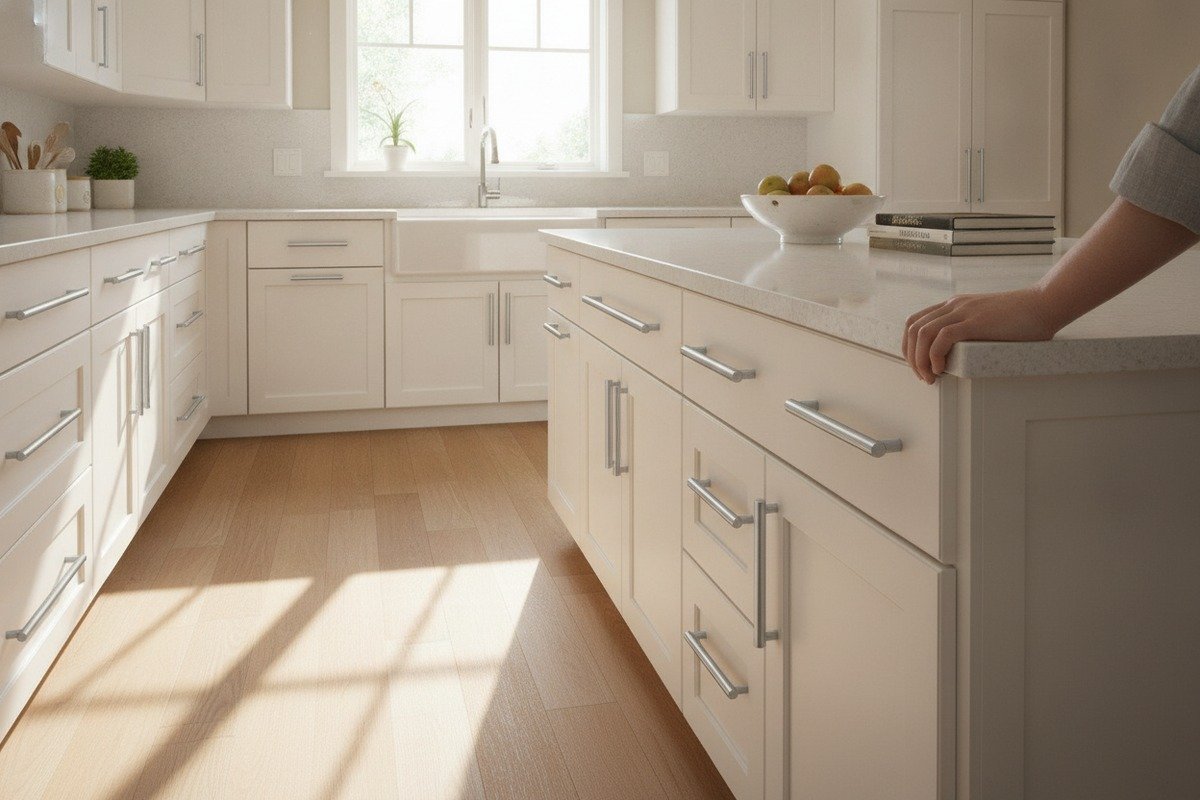
The USA market splits into two broad segments. Contemporary minimalist buyers want sleek, integrated hardware similar to European tastes. But a large portion of American furniture — especially kitchen cabinetry, closet systems, and bathroom vanities — demands handles that are more ergonomic and more visually present. American consumers often want to feel the handle. It should have enough clearance for a full grip, not just a fingertip pull.
This is where aluminum handle profiles with wider finger clearance (typically 25mm to 35mm) become critical. A shallow recessed channel that works perfectly in a Japanese compact cabinet may feel awkward to an American user with larger hands reaching into a deep kitchen drawer.
Dimension and Specification Guidelines
| Specification | Recommended Range for USA | Why It Matters |
|---|---|---|
| Center-to-center (CC) distance | 96mm, 128mm, 160mm, 192mm, 256mm | Must match standard American cabinet hole spacing |
| Finger clearance depth | 25mm – 35mm | Ensures comfortable grip for repeated daily use |
| Handle length (for oversized pulls) | 300mm – 600mm+ | Oversized horizontal pulls are a strong trend for islands and pantries |
| Wall thickness (extrusion) | ≥ 1.2mm | Prevents bending or warping under pulling force |
| Screw post diameter | M4 or ¼-20 UNC | ¼-20 is the more common US standard |
| Pull-force rating | ≥ 50,000 cycles | Kitchen and closet hardware sees heavy daily use |
Finish Versatility Is a Selling Point
American interior design is eclectic. A single kitchen remodel might pair matte black cabinet pulls with brushed gold faucet fixtures. Because of this, North American wholesalers prefer suppliers who offer the same handle profile in multiple finishes. On our production line, we typically prepare at least four finish options for any handle destined for the US market: anodized silver, matte black, brushed champagne, and satin nickel.
The ability to offer consistent finishes across different handle lengths and styles — so a builder can use the same finish family on kitchen drawers, closet doors, and bathroom vanities — is a major competitive advantage. Consistency across SKUs matters more here than in almost any other market.
Durability Beyond the Surface
Anodizing quality 6 is not negotiable for North American orders. A poorly anodized surface will show fingerprints, scratches, and discoloration within months. We run salt spray tests 7 and abrasion tests on every batch, because American distributors increasingly require test reports with their purchase orders. Reinforced extrusion walls also matter: a thin-walled aluminum pull that flexes when gripped will generate returns and complaints fast.
Load distribution is another factor. Longer handles (300mm+) need internal reinforcement or thicker profiles to avoid sagging over time. When we develop oversized pulls for the American market, we often increase wall thickness to 1.5mm or add internal ribbing in the extrusion design.
Smart handles with integrated touch-to-open mechanisms are also gaining traction in the US, especially in high-end kitchen and closet systems. While this remains a niche, it is worth discussing with your supplier if you serve the premium segment.
How do I select ergonomic and compact handle designs that align with the space-saving furniture trends in Japan?
We once shipped a batch of 160mm bar pulls to a Japanese furniture maker, and they came back asking for something half the size. That experience taught us that Japan has a completely different relationship with furniture hardware — one built around restraint, precision, and tight spaces.
For the Japanese market, select slim, low-profile aluminum handles with compact proportions — typically 64mm to 96mm center-to-center — and finely finished matte or satin surfaces. Handles should be visually discreet, ergonomically precise for light-touch operation, and proportioned for the smaller cabinet doors and drawers common in Japanese compact living spaces.
Why Japan Is Different
Japanese residential spaces are significantly smaller than American or even European ones. A standard Japanese kitchen is often half the size of an American kitchen. Furniture, cabinets, and storage units are designed to maximize every centimeter. Hardware that protrudes too far, looks too bulky, or draws too much visual attention disrupts the design intent.
Japanese design philosophy — often described through the lens of Zen minimalism 8 — values harmony, balance, and quiet simplicity. A handle should do its job without announcing itself. This means recessed profiles, slim finger pulls, and integrated channel handles are the most commercially successful forms for this market.
Preferred Handle Dimensions for Japan
| Specification | Recommended for Japan | Comparison to USA |
|---|---|---|
| Center-to-center distance 9 | 64mm, 96mm | USA often uses 128mm – 256mm |
| Handle projection from surface | ≤ 12mm | USA typically 15mm – 30mm |
| Finger clearance depth | 15mm – 22mm | USA prefers 25mm – 35mm |
| Handle bar diameter/width | 8mm – 12mm | USA often 12mm – 20mm |
| Overall handle length | 80mm – 150mm | USA oversized pulls reach 600mm+ |
| Surface finish | Satin, fine matte, light anodized | USA uses bolder matte black, brushed nickel |
Precision Is Non-Negotiable
Japanese quality expectations are among the highest in the world. When we prepare handles for Japanese clients, dimensional tolerance must be tighter — typically within ±0.1mm on critical surfaces. Any visible burr, uneven anodizing, or mounting misalignment will be flagged immediately. The handle's edge radius must be consistent. The surface must be perfectly uniform. This is not optional.
Japanese buyers often request sample batches before committing to production orders, and they inspect those samples under magnification. On our quality control line, we apply a separate inspection protocol for Japan-bound orders, checking every unit for surface continuity, color consistency, and screw-hole accuracy.
Handle-less and Near-Invisible Solutions
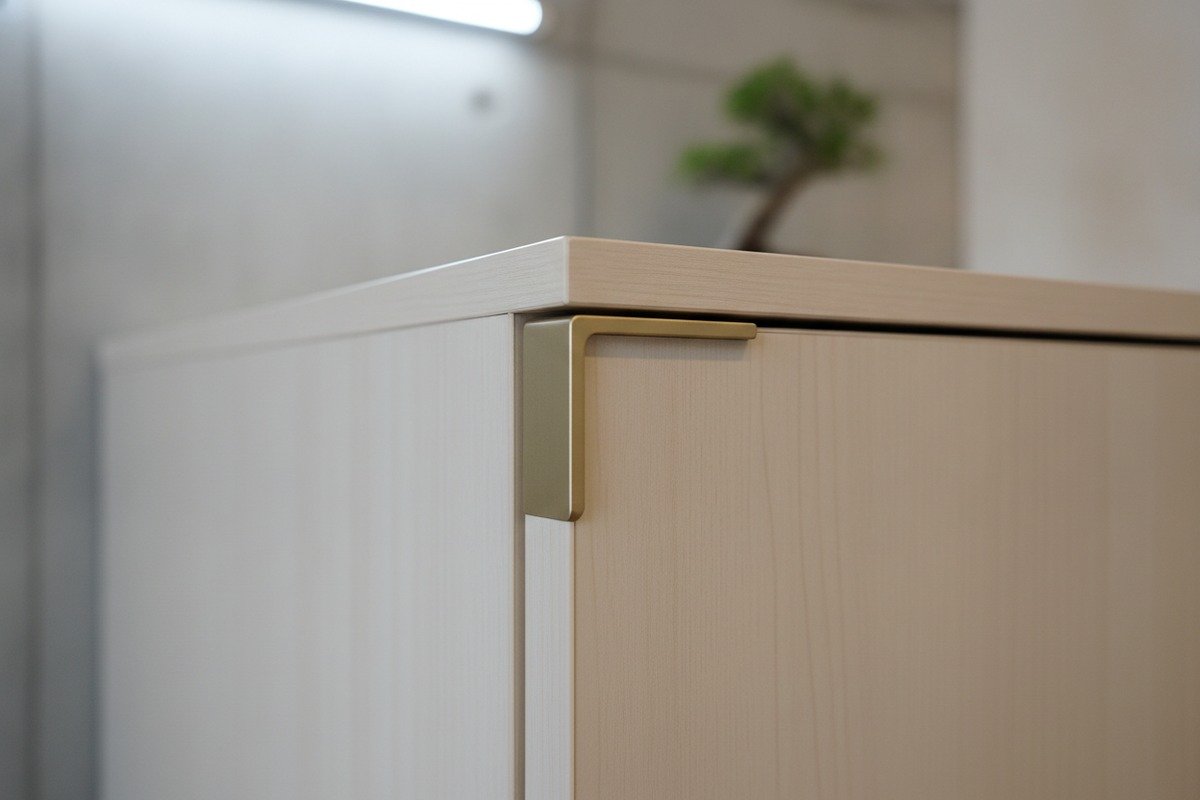
A growing segment of the Japanese market wants no visible handle at all. Touch-to-open (push-latch) systems and J-profile integrated pulls — where the handle is a routed channel at the top or bottom edge of a cabinet door — are increasingly popular. Our extruded aluminum profiles with an L-shaped or J-shaped cross-section are designed exactly for this purpose. They serve as both a structural edge and a grip surface, keeping the furniture face completely clean.
This near-invisible approach also suits the growing demand for antimicrobial or easy-to-clean surfaces in Japan. A smooth, flush aluminum channel with quality anodizing is far easier to wipe down than a protruding handle with crevices. Post-pandemic hygiene consciousness has reinforced this preference.
Color and Finish Restraint
In Japan, less is more when it comes to finish. Warm champagne gold or light bronze tones can work in premium residential furniture, but the majority of the market prefers silver, light grey, or natural aluminum tones. Matte black is acceptable in modern urban settings but should be offered carefully — it can feel too heavy for traditional Japanese interiors. When in doubt, recommend the lightest, most neutral finish available.
Can I customize handle styles to meet the luxury and gold-finish demands of my Middle Eastern and Southeast Asian customers?
This is actually the market we know best. A significant share of our orders ship to Vietnam and the Middle East, and these regions have taught us that luxury in hardware is not just about the finish — it is about the feeling of exclusivity, the weight in your hand, and the visual impact on the cabinet face.
Yes, aluminum handles can be fully customized for luxury and gold-finish demands. Through specialized anodizing, PVD coating, or electrophoretic finishing, aluminum profiles can achieve rich champagne gold, rose gold, antique brass, and even mirror-polished effects. Combined with custom lengths, decorative detailing, and premium packaging, they meet the high expectations of Middle Eastern and Southeast Asian luxury furniture markets.
What "Luxury" Means in These Markets
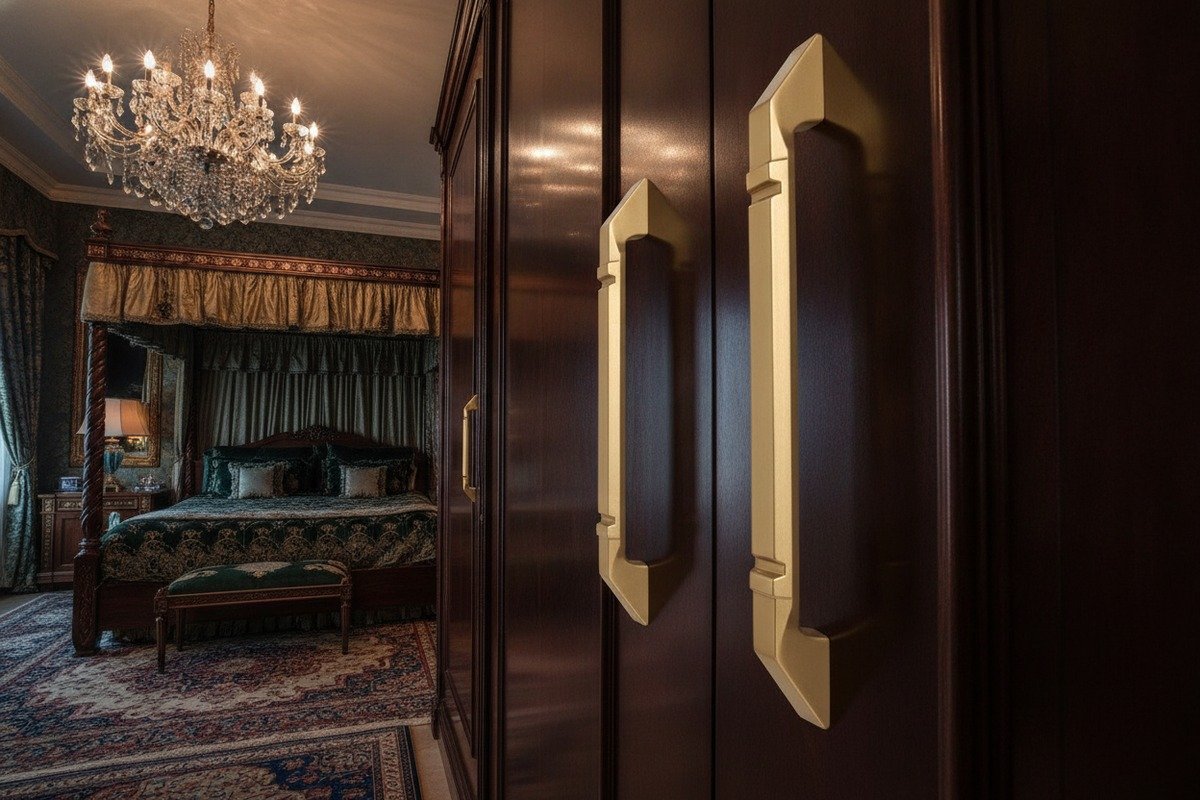
In the Middle East — particularly the UAE and Saudi Arabia — luxury furniture hardware is a visible status element. Handles are not meant to disappear. They are meant to complement marble countertops, rich wood veneers, and gilded interior elements. Gold tones dominate: champagne gold, rose gold, bright gold, and antique brass. The handle should look and feel expensive.
Southeast Asian markets, especially Vietnam and Thailand, have a similar appetite for gold and warm metallic tones, though they also accept a broader range of modern finishes for urban apartment furniture. Vietnamese furniture factories we supply often request champagne gold recessed profiles for their domestic market and simpler brushed finishes for their European export lines — from the same factory, using the same base profile, just with different surface treatments.
Customization Options We Offer
| Customization Type | Options Available | Best For |
|---|---|---|
| Surface finish | Champagne gold, rose gold, antique brass, bright gold, matte black, brushed nickel | Matching regional luxury expectations |
| Coating method | Anodizing, PVD, electrophoretic, powder coating | PVD for highest durability and color richness |
| Handle length | Custom cut to any length (e.g., 150mm to 1200mm+) | Built-in wardrobes, large kitchen islands |
| Profile shape | L-channel, J-channel, T-bar, flat bar, tubular | Architectural integration or decorative prominence |
| Texture | Smooth, knurled, ribbed, hammered | Tactile luxury or visual depth |
| Packaging | Bulk, individual poly bag, branded box, foam-lined | Retail-ready for premium distribution |
The Role of PVD Coating in Luxury Hardware
Standard anodizing can achieve a good champagne gold, but for the richest gold tones and the highest scratch resistance, PVD (Physical Vapor Deposition) coating 10 is the premium choice. PVD applies a thin metallic layer at the molecular level, creating colors that are more vivid, more durable, and more resistant to fingerprints and corrosion than standard anodizing.
For Middle Eastern orders, we frequently recommend PVD in champagne gold or rose gold. The upfront cost per handle is higher, but the perceived value increase is dramatic. A PVD-coated aluminum handle can look nearly identical to solid brass hardware at a fraction of the weight and cost.
Balancing Decoration with Durability
One common mistake is assuming that luxury markets care only about appearance. In reality, Middle Eastern and Southeast Asian buyers are very aware of durability, because their climate is harsh — high humidity, high heat, and sometimes salt air in coastal cities. A gold finish that fades or peels within a year is a disaster for any distributor's reputation.
This is why we advise against cheap gold spray paint or low-quality electroplating. Proper anodizing or PVD ensures the gold finish lasts for years, even in demanding environments. We provide salt spray test reports and UV resistance data for every luxury finish order. Quality assurance at this level builds trust and long-term repeat business.
Texture as a Luxury Signal
Textured aluminum handles — knurled grips, ribbed surfaces, or subtle hammered patterns — are gaining popularity in luxury segments. A textured surface catches light differently, adds a tactile dimension, and signals craftsmanship. For Middle Eastern palace-style furniture or premium Vietnamese showroom pieces, a knurled gold handle can elevate the entire cabinet design.
On our extrusion line, we can integrate texture directly into the die profile or apply it as a secondary machining step. This flexibility means we can offer textured handles without requiring an entirely new extrusion tool, keeping MOQs reasonable for wholesale buyers testing new designs.
Conclusion
The best aluminum furniture handle for any market is the one that matches local design expectations while meeting real-world durability and ergonomic requirements. Start with your target region's design language, verify dimensions and finish quality, and work with a supplier who can customize efficiently across markets.
Footnotes
1. Replaced with an authoritative source (Fraunhofer IMWS) explaining pull-out forces in component testing, which aligns with ‘pull-force testing’. ↩︎
2. Explains the core principles and influence of Scandinavian design. ↩︎
3. Provides information on the manufacturing process and applications of aluminum extrusion. ↩︎
4. Replaced with an authoritative source (Ellen MacArthur Foundation) that clearly defines and explains circular economy principles. ↩︎
5. Explains the function and importance of antimicrobial surfaces in various applications. ↩︎
6. Describes the anodizing process and its impact on aluminum product durability and finish. ↩︎
7. Explains the purpose and procedure of salt spray corrosion testing. ↩︎
8. Provides context on the philosophical underpinnings of Japanese design aesthetics. ↩︎
9. Clarifies the standard measurement for cabinet hardware installation. ↩︎
10. Explains the PVD coating process and its benefits for surface durability and finish. ↩︎