Every week, our sales team fields calls from Vietnamese distributors who lost months of work because their supplier’s paperwork failed a platform listing review.
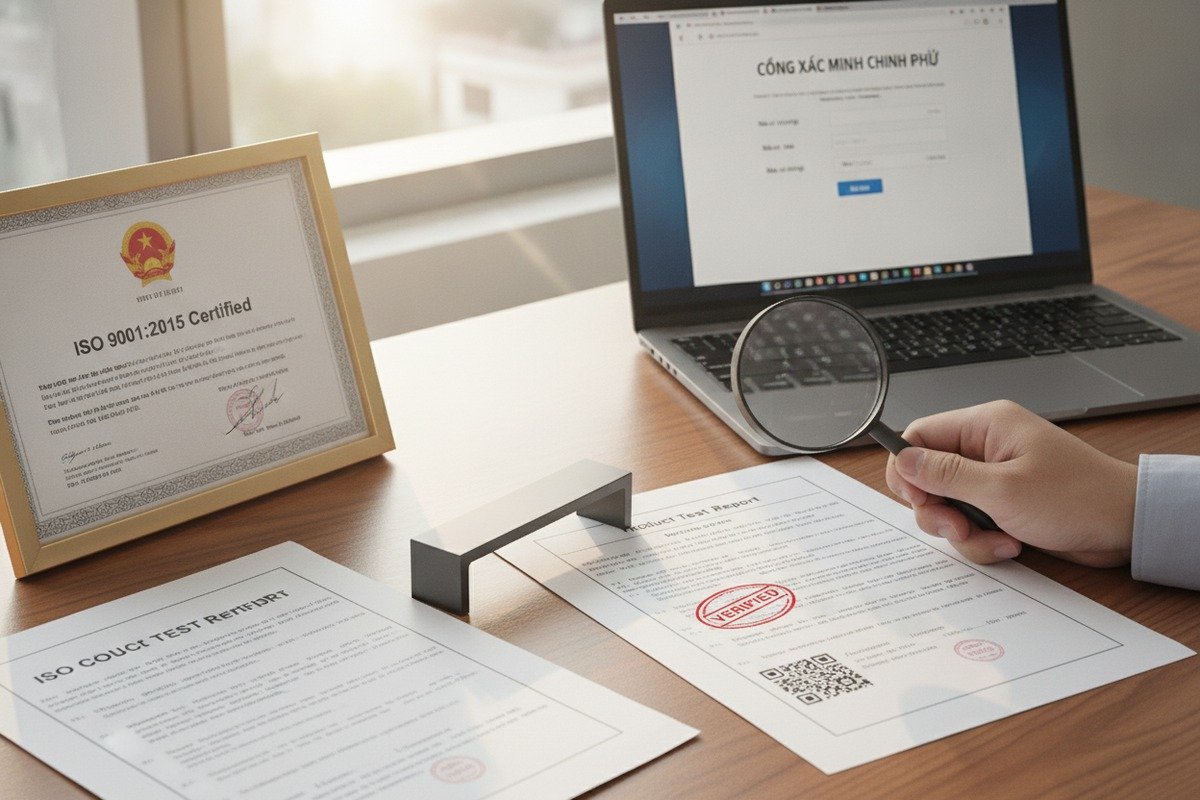
To verify a Chinese supplier’s certifications for Vietnamese e-commerce, request their business license, product-specific test reports, ISO certificates, and certificate of origin. Then independently confirm each document through the issuing body’s database before placing any order. Cross-check the legal entity name on every document against the sales contract.
This guide walks you through a practical, step-by-step verification process. We will cover which documents matter, how to spot fakes, what Vietnamese platforms actually ask for, and how to build a compliance folder that protects your business from listing rejections and customs delays.
What Specific Quality Certifications Should I Request from a Chinese Factory to Meet Vietnamese E-Commerce Compliance?
When we prepare export documentation for our Vietnamese wholesale partners, the number one confusion we see is the gap between "company certifications" and "product certifications."
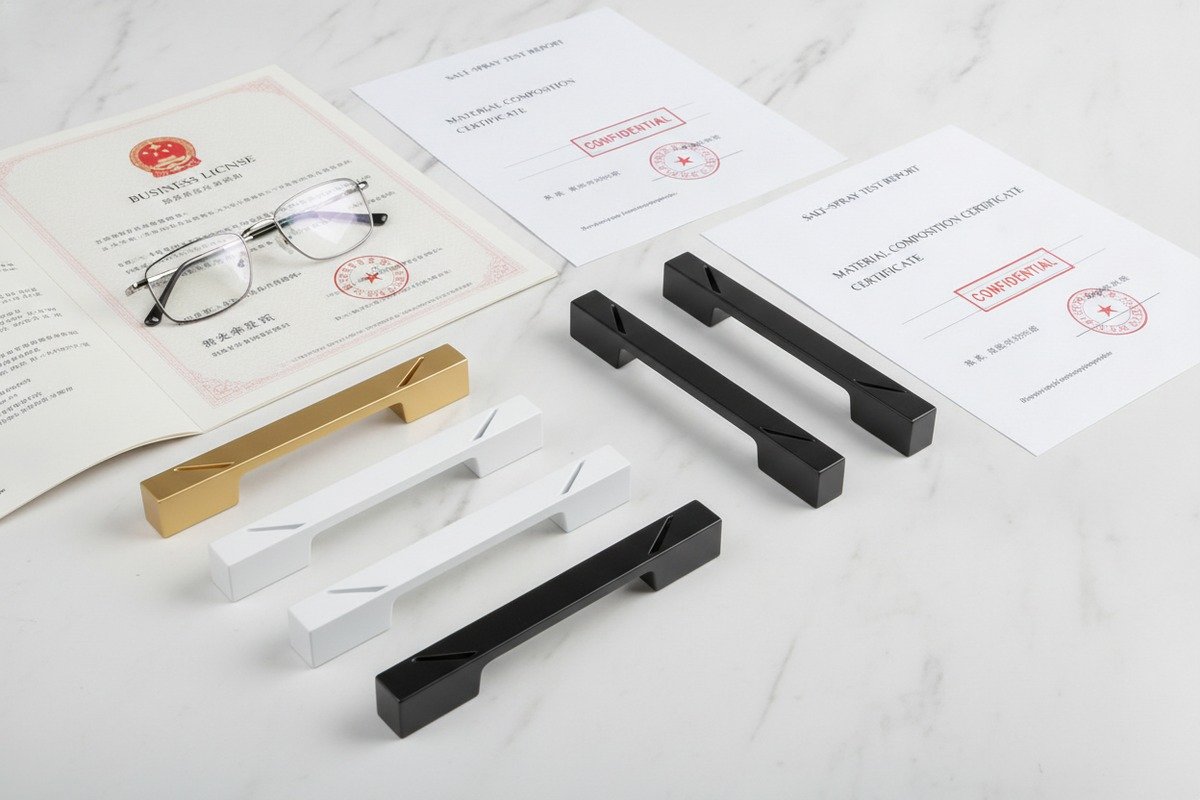
You should request the supplier's business license, ISO 9001 certificate, product-specific test reports from accredited labs, material composition certificates for the aluminum alloy, certificate of origin, and any surface-treatment compliance documentation. Each document must name the exact product model you plan to import.
Company Certifications vs. Product Certifications
Many buyers assume that an ISO 9001 certificate 1 means the product itself is certified. That is not the case. ISO 9001 confirms the factory has a quality management system 2. It says nothing about whether a specific recessed aluminum handle with a champagne gold anodized finish meets salt-spray or adhesion standards. You need both layers of proof.
Company-level documents prove the factory is real and operates under recognized management standards. Product-level documents prove the item you are buying has been tested against measurable performance criteria.
The Core Document Checklist
Here is the minimum set of documents you should collect before you negotiate price or place a sample order.
| Document | What It Proves | Who Issues It |
|---|---|---|
| Business license (营业执照) | Legal entity registration, business scope | Chinese local government |
| ISO 9001 certificate | Quality management system | Accredited certification body |
| Product test report (salt spray, adhesion, hardness) | Handle finish durability and material quality | Accredited third-party lab 3 |
| Material composition certificate | Aluminum alloy grade and restricted-substance compliance | Raw material supplier or testing lab |
| Certificate of origin 4 | Country of manufacture for customs clearance | China Council for Promotion of International Trade or customs |
| Commercial invoice and packing list | Transaction record, shipment details | Supplier |
Vietnam-Specific Requirements to Watch
Vietnam's regulatory landscape for imported goods is evolving. A new risk-based quality management model will categorize products as low, medium, or high risk, and the required level of certification changes with each category. For aluminum furniture handles, you need to determine the risk classification early. Starting mid-2026, imported furniture hardware may require registration, type-test documentation, a local authorized representative in Vietnam, and Vietnamese-language labeling 5.
Our team has helped partners navigate this by providing bilingual product labels, detailed alloy specifications, and test reports that reference internationally recognized standards like BS EN ISO 9227 6 for corrosion resistance. Even if your platform does not ask for a specific certificate today, having these files ready means you will not scramble when regulations tighten.
Surface Treatment and Chemical Compliance
For handles with anodized, powder-coated, or electroplated finishes, ask for documentation on the coating process. Some coatings contain substances restricted under environmental or consumer-safety rules. A test report confirming the finish is free of excessive lead, cadmium, or hexavalent chromium 7 protects you from future compliance surprises. This is especially important for champagne gold or bronze finishes, where certain pigments can raise flags.
How Can I Verify That My Supplier's Aluminum Handle Test Reports Are Authentic and Valid for the Vietnam Market?
Over the past 18 years, our export team has seen every kind of document issue — from expired certificates passed off as current, to test reports where the company name did not match the factory actually producing the goods.
Verify test reports by checking the report number directly with the issuing laboratory, confirming the legal company name matches the supplier's business license, ensuring the test standard is internationally recognized, and confirming the report has not expired. Never accept a scanned PDF as final proof without independent cross-checking.

Step-by-Step Verification Process
Start with the basics. Every legitimate test report includes a report number, the name and accreditation number of the issuing lab, the tested company's legal name, the test standard used, and the date of issue. If any of these are missing, treat the document as incomplete.
Next, go directly to the issuing lab's website. Most accredited labs — such as SGS, TÜV, Bureau Veritas, or Intertek — have online portals where you can enter the report number and verify its authenticity. If the lab does not have an online lookup tool, call or email them with the report number and ask them to confirm the document is genuine.
Red Flags That Signal Forged or Misleading Documents
| Red Flag | What It Suggests | What to Do |
|---|---|---|
| Company name on the report does not match the business license | Supplier may have borrowed or purchased someone else's report | Request a new test on the exact legal entity you are contracting with |
| Certificate or report is expired | Results may no longer reflect current production quality | Ask for a renewed test within the past 12 months |
| No accreditation number for the testing lab | Lab may not be recognized by international accreditation bodies | Verify the lab's accreditation through CNAS or ILAC databases 8 |
| Blurry scan with no digital verification link | Document may have been edited or fabricated | Request the original digital copy directly from the lab |
| Test standard is vague or unnamed | Report may not cover the properties relevant to your product | Confirm the standard matches your market requirements (e.g., BS EN ISO 9227 for salt spray) |
Why Standard Matters More Than Brand
Some buyers fixate on whether the certificate comes from a "big name" lab. What actually matters is whether the test standard is relevant and whether the lab is accredited. A report from a smaller but properly accredited Chinese lab that tests against BS EN ISO 9227 or ASTM B117 9 is more useful than a famous-brand certificate that only covers generic material composition without testing the finished handle's performance.
Matching the Report to Your Exact Product
A common trap is accepting a test report for "aluminum handles" when you are actually ordering a specific model with a specific finish. Our factory, for example, produces recessed handles in matte black, charcoal grey, champagne gold, and several other finishes. Each finish involves a different anodizing or coating process. A salt-spray test on a matte black handle does not automatically prove the champagne gold version has the same corrosion resistance. Ask the supplier whether the report covers the exact SKU, alloy, and surface treatment you plan to import.
Validity for the Vietnam Market
Vietnam does not currently mandate a single universal product certificate for aluminum furniture handles in the way that some countries require UL or CE marks. However, Vietnamese customs and e-commerce platforms may request proof that the product is safe and accurately described. A test report from an accredited lab, referencing an internationally recognized standard, is your strongest evidence. Keep in mind that Vietnam's upcoming regulations may introduce stricter type-test requirements, so building a habit of thorough documentation now positions you ahead of competitors.
Will My Supplier's Standard Product Certifications Be Sufficient for Me to List Furniture Hardware on Shopee or Lazada Vietnam?
When our Vietnamese distribution partners first approach us, many assume that whatever certificates we already have will automatically satisfy every marketplace. The reality is more nuanced than that.
Standard certifications like ISO 9001 and generic test reports are often not enough on their own. Shopee and Lazada Vietnam may require import licenses, Vietnamese-language labeling proof, product category-specific documentation, and a registered local business entity. Check each platform's seller requirements for your exact product category before ordering inventory.
Platform Requirements Are Not Uniform
Each Vietnamese e-commerce platform has its own listing review process. Shopee Vietnam and Lazada Vietnam both require sellers to prove they are authorized to sell the product in Vietnam. Shopee or Lazada Vietnam 10 This typically means having an active Vietnamese business registration, a valid import record, and product documentation that matches the listing description. The platforms care less about whether you have "a certificate" and more about whether your full documentation package holds up under review.
What the Platforms Typically Want
Based on what our partners report, here is a practical breakdown of what you should have ready before attempting to list aluminum furniture handles.
| Requirement | Shopee Vietnam | Lazada Vietnam |
|---|---|---|
| Seller business registration in Vietnam | Required | Required |
| Product photos matching actual item | Required — must show real product, not just catalog renders | Required |
| Import documentation (customs declaration, invoice) | May be requested during review | May be requested during review |
| Product description accuracy | Must match physical product specifications | Must match physical product specifications |
| Vietnamese-language labeling | Increasingly expected for imported goods | Increasingly expected for imported goods |
| Product safety or test reports | Requested for certain categories; furniture hardware may trigger review | Requested for certain categories; furniture hardware may trigger review |
| Certificate of origin | May be requested, especially for cross-border shipments | May be requested, especially for cross-border shipments |
The Labeling Challenge
Vietnamese regulations require imported goods to display specific information in Vietnamese, including the product name, the responsible organization's name and address, and the country of origin. If your aluminum handles arrive in China-only packaging, you will need to relabel them before sale. Our team helps partners by providing packaging with bilingual labels or by supplying label templates that can be applied in Vietnam before distribution. This small step prevents listing rejections and customer complaints.
Building a Compliance Folder for Each SKU
The smartest move is to create a single digital folder for every handle model you import. Include the product test report, material certificate, certificate of origin, commercial invoice, packing list, product photos showing labeling, and any platform-specific forms. When a marketplace reviewer asks for documentation, you can respond within hours instead of weeks. This speed matters because listing delays cost sales, and repeated failures can flag your seller account for extra scrutiny.
The Risk of Assuming "Low-Risk" Means "No Documents"
Some sellers argue that small hardware items like furniture handles are low-risk and do not need heavy documentation. While it is true that handles are not in the same regulatory category as electrical appliances or children's toys, weak paperwork still triggers problems. A buyer complaint about finish quality, a customs spot-check, or a platform audit can all expose gaps. The cost of preparing documents upfront is far lower than the cost of a blocked listing, a returned shipment, or a damaged seller rating.
How Can I Confirm if a Foshan Manufacturer Has the Experience to Handle the Specific Documentation Required for My Vietnamese Distribution Business?
Having worked out of Foshan for nearly two decades, our team has seen how this city's manufacturing cluster has matured — and also how many factories still struggle with export documentation because they have never been asked to provide it properly.
Confirm a Foshan manufacturer's experience by requesting evidence of prior Vietnamese-market shipments, asking for references from current Vietnamese buyers, reviewing their export documentation samples, and conducting a live factory tour or video audit. A supplier with real Vietnam export experience will already have templates, labeling solutions, and familiarity with common platform requirements.
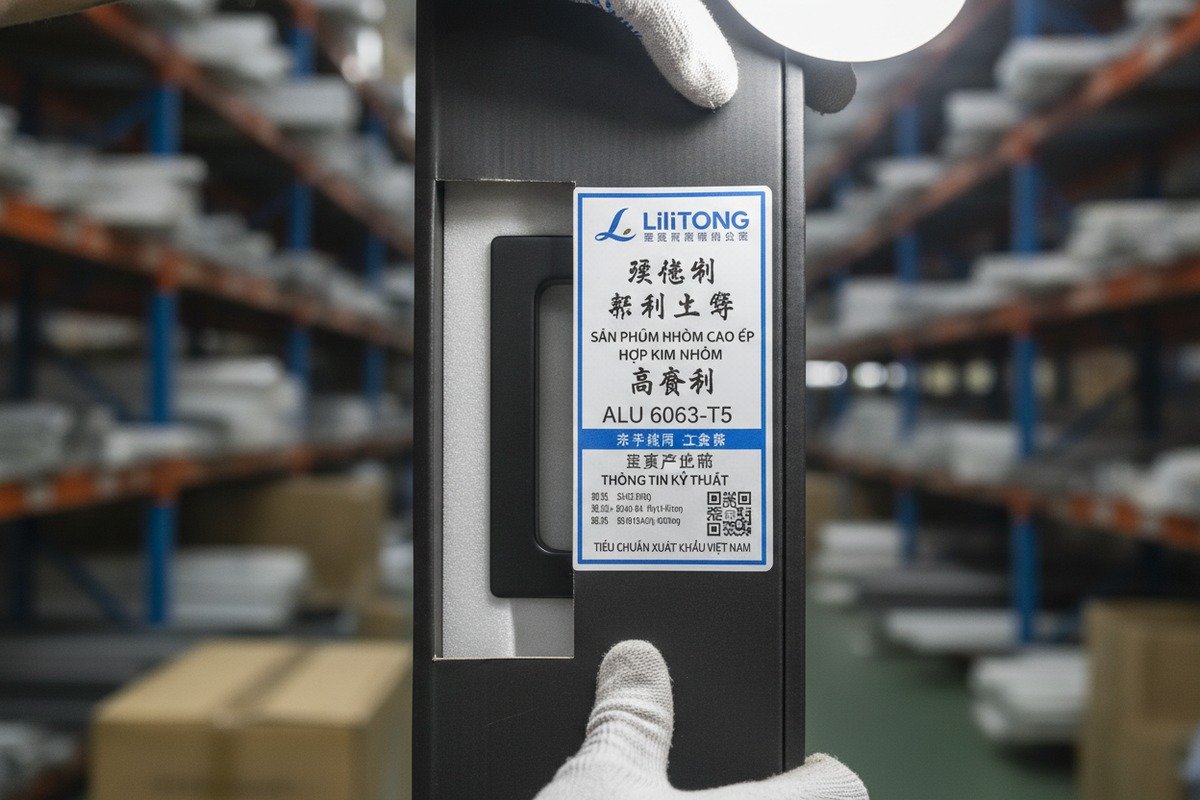
Why Foshan Experience Matters
Foshan is the heart of China's aluminum profile and furniture hardware industry. But not every Foshan factory exports, and not every exporter has shipped to Vietnam. A factory that primarily sells domestically may produce excellent handles but have zero experience preparing the documentation you need. Conversely, a factory with years of Vietnam export history will already know the common customs questions, labeling expectations, and platform documentation patterns.
Questions That Reveal Real Experience
Ask these questions during your supplier evaluation. The answers will tell you whether the factory has genuine Vietnam-market knowledge or is simply claiming it.
- Can you show me a redacted commercial invoice or bill of lading from a recent Vietnam shipment?
- What labeling format do you use for Vietnam-bound orders?
- Have any of your Vietnamese customers sold on Shopee or Lazada? Can I speak with one?
- Do you have a Vietnamese-language product label template?
- What is your process for preparing a certificate of origin for Vietnam?
A factory with real experience will answer these questions quickly and with specifics. A factory without experience will give vague answers or promise to "figure it out later."
Factory vs. Trading Company — How to Tell
This distinction is critical. A trading company may show you impressive product photos and claim to have every certification, but they do not control the production process or the documentation that comes with it. Here is how to distinguish the two.
| Indicator | Real Factory | Trading Company |
|---|---|---|
| Has a production line visible on video call or in person | Yes | Usually no; may show a partner factory |
| Can explain the extrusion, anodizing, or coating process in detail | Yes — technical staff available | Often vague or gives scripted answers |
| Business license scope includes "manufacturing" or "production" | Yes | Scope may only list "trade" or "sales" |
| Can provide raw material purchase records | Yes | Unlikely |
| Willing to allow third-party factory audit | Yes | May resist or delay |
| Has consistent export records under their own company name | Yes | May ship under different names |
The Trial Order Test
Before committing to a large purchase, place a small trial order. This does two things. First, it tests the product quality and consistency against your approved sample. Second, it tests the supplier's documentation process. Did the commercial invoice arrive complete and accurate? Did the packing list match the actual shipment? Was the certificate of origin issued correctly? Were the product labels in the right language and format?
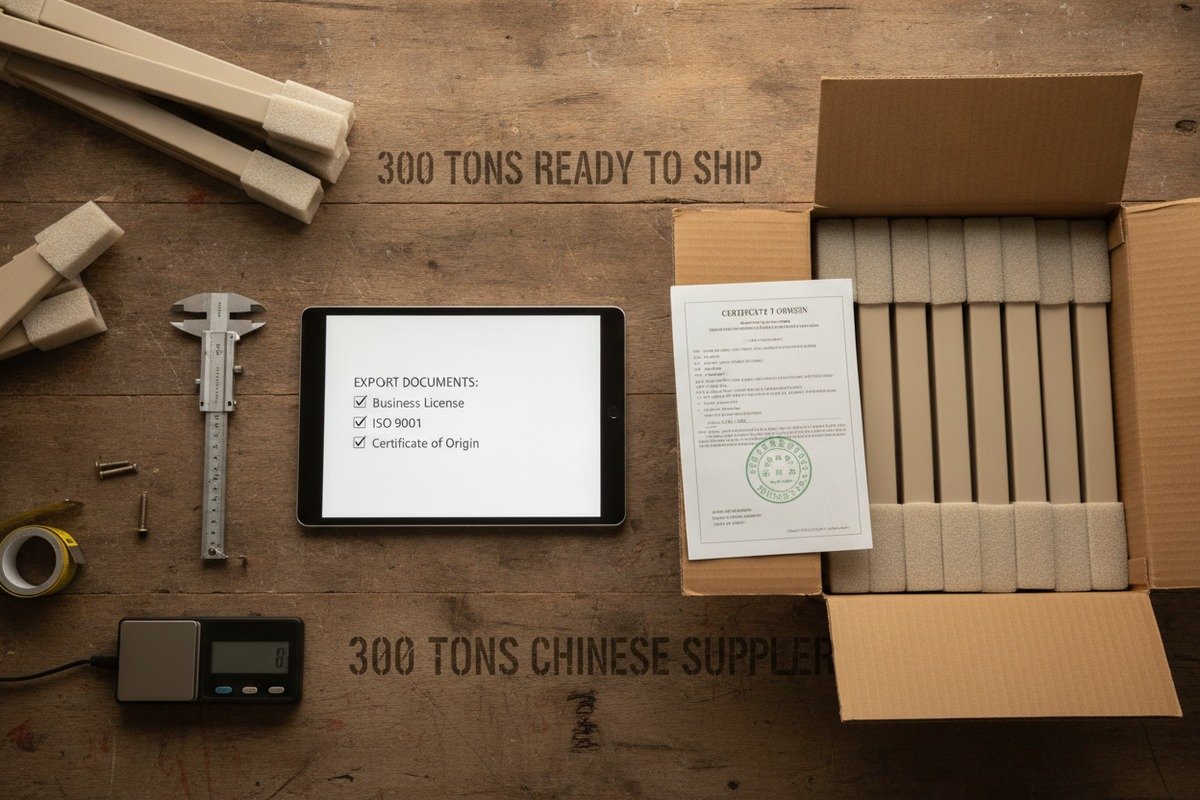
At our facility, we encourage trial orders because they build trust on both sides. With 300 tons of ready-to-ship inventory, we can fulfill trial quantities from stock within 48 hours, giving our partners a fast way to evaluate both product and paperwork quality before scaling up.
Third-Party Inspection as a Final Check
For orders above a certain value — or for your first order with any new supplier — hire a third-party inspection company to visit the factory before shipment. The inspector will verify that the product matches the approved sample, check packaging and labeling, and confirm that all documents are present and consistent. This costs a few hundred dollars but can save thousands in rejected shipments, marketplace penalties, or customer returns.
Building a Long-Term Documentation Partnership
The best supplier relationships go beyond transactional ordering. When your Foshan manufacturer understands your Vietnamese market requirements, they can proactively prepare the right documentation with every shipment. Over time, this reduces your workload, speeds up your customs clearance, and makes your marketplace listings more resilient to audits. Look for a supplier who treats documentation as part of the service, not as an afterthought you have to chase.
Conclusion
Verifying your Chinese supplier's certifications is not a one-time checkbox — it is an ongoing process that protects your Vietnamese e-commerce business from listing failures, customs delays, and quality disputes.
Footnotes
1. Official ISO page explaining the ISO 9001 quality management system standard. ↩︎
2. Replaced HTTP 403 link with an authoritative page explaining quality management systems. ↩︎
3. ANAB explains what an accredited laboratory is and its importance for reliable results. ↩︎
4. Official ICC page explaining the purpose and types of Certificates of Origin in trade. ↩︎
5. U.S. Trade.gov provides an overview of Vietnam’s mandatory labeling requirements for imported goods. ↩︎
6. Q-Lab details the BS EN ISO 9227 standard for corrosion resistance testing. ↩︎
7. Official EU page describing the RoHS Directive, which restricts hazardous substances. ↩︎
8. Official ILAC page detailing its Mutual Recognition Arrangement and signatory accreditation bodies. ↩︎
9. Official ASTM International page for the ASTM B117 standard practice for salt spray testing. ↩︎
10. Official Shopee Vietnam Seller Centre for information on platform requirements and selling. ↩︎