
Over the past year, several of our long-term wholesale partners in Vietnam have asked the same question during order discussions: will the new anti-dumping duties 1 on aluminum products change the way they buy furniture handles from us?
Vietnam’s anti-dumping duties on certain Chinese aluminum products can indirectly affect furniture handle sourcing by increasing landed costs, triggering stricter customs scrutiny on origin documentation, and complicating supply chains that route goods through Vietnam. The impact depends on whether your specific handles fall within the defined product scope.
This article breaks down the key risks, explains how to check if your products are affected, and gives you a practical checklist so you can keep sourcing confidently. Let’s walk through it step by step.
How will the new anti-dumping duties affect the total landed cost of my aluminum furniture handles?
When we first heard about Vietnam extending its anti-dumping measures on Chinese aluminum products 2 for another five years, our export team immediately ran cost simulations for our Vietnamese customers.
The new anti-dumping duties, ranging from 2.85% to 35.58%, can significantly raise the total landed cost of aluminum furniture handles if the product falls within the defined scope. However, many finished decorative handles may not be covered, so a product-by-product HS code review is essential before assuming any cost increase.

Understanding the Duty Range
Vietnam's Ministry of Industry and Trade 3 has imposed anti-dumping duty rates on certain aluminum products from China. These rates are not flat. They vary by exporter and product classification. Here is a simplified breakdown of how the duty tiers typically work:
| Duty Tier | Approximate Rate | Likely Applied To |
|---|---|---|
| Low tier | 2.85% – 10% | Cooperating exporters with verified pricing data |
| Mid tier | 10% – 25% | Partially cooperating or new shippers |
| High tier | 25% – 35.58% | Non-cooperating exporters or residual rate |
The key question is whether your aluminum furniture handle counts as a "certain aluminum product" under the scope of the investigation. In many cases, raw aluminum extrusions or semi-finished profiles are the target. A fully finished, anodized, packaged decorative handle may fall outside the scope entirely.
How to Estimate Your New Landed Cost
To understand the real financial impact, you need to calculate a revised landed cost. Here is what a basic cost comparison looks like for a hypothetical order of 5,000 aluminum recessed handles:
| Cost Element | Without AD Duty | With 15% AD Duty |
|---|---|---|
| Unit FOB price (China) | $1.20 | $1.20 |
| Freight + insurance per unit | $0.08 | $0.08 |
| Standard import duty (Vietnam) | $0.06 | $0.06 |
| Anti-dumping duty (if applicable) | $0.00 | $0.18 |
| Total landed cost per unit | $1.34 | $1.52 |
That is a 13.4% increase in landed cost per handle. For a large furniture factory processing thousands of cabinets per month, this adds up fast. But again, this only applies if your product is classified within the covered scope.
The Scope Question Is Everything
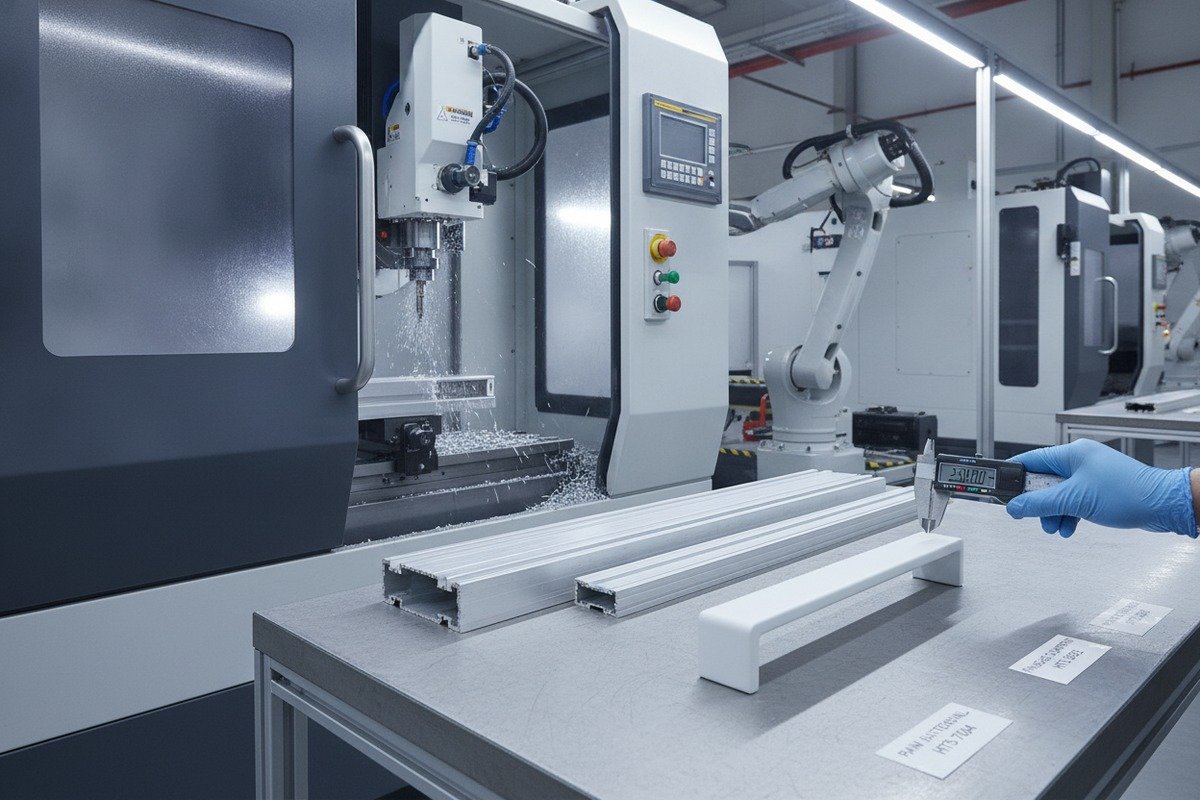
Our production line manufactures handles through extrusion, CNC machining, anodizing, and assembly. The final product is a finished furniture component, not an industrial aluminum profile. This distinction matters. Anti-dumping cases target specific product definitions. If the handle is a fully processed, ready-to-install decorative item, it may not match the product description in the investigation notice. But you cannot rely on assumptions. You need to check the exact HS code 4 and the product scope description published by Vietnam's investigating authority.
Why Finished Handles May Be Treated Differently
A raw extruded aluminum bar and a champagne-gold anodized recessed cabinet pull are very different products. The value-added steps — cutting, machining, surface treatment, quality inspection, packaging — transform the raw material into a distinct finished good. Customs authorities generally recognize this transformation. However, if your handle is essentially a minimally processed aluminum extrusion with just one cut and no further finishing, it sits closer to the covered product category. The more processing steps, the stronger your case that the product is outside the scope.
What steps can I take to ensure my supply chain remains stable during Vietnam's trade investigation?
When trade investigations hit the news, we see an immediate ripple through our order pipeline. Some buyers panic and pause orders. Others rush to stockpile. Neither reaction is ideal.
To keep your supply chain stable, diversify your sourcing strategy, maintain clear documentation of product origin, build buffer inventory for critical SKUs, communicate proactively with your Chinese supplier, and stay updated on investigation timelines so you can adjust orders before duty decisions take effect.
Do Not Wait for the Final Ruling
Anti-dumping investigations follow a timeline. There is a petition phase, a preliminary determination, and a final ruling. Between each phase, duties can be imposed provisionally. If you wait until the final ruling to act, you may already be paying higher duties or facing shipment delays at customs. Our recommendation to every wholesale partner is simple: prepare now, even if the final outcome is uncertain.
Build a Buffer Stock Strategy
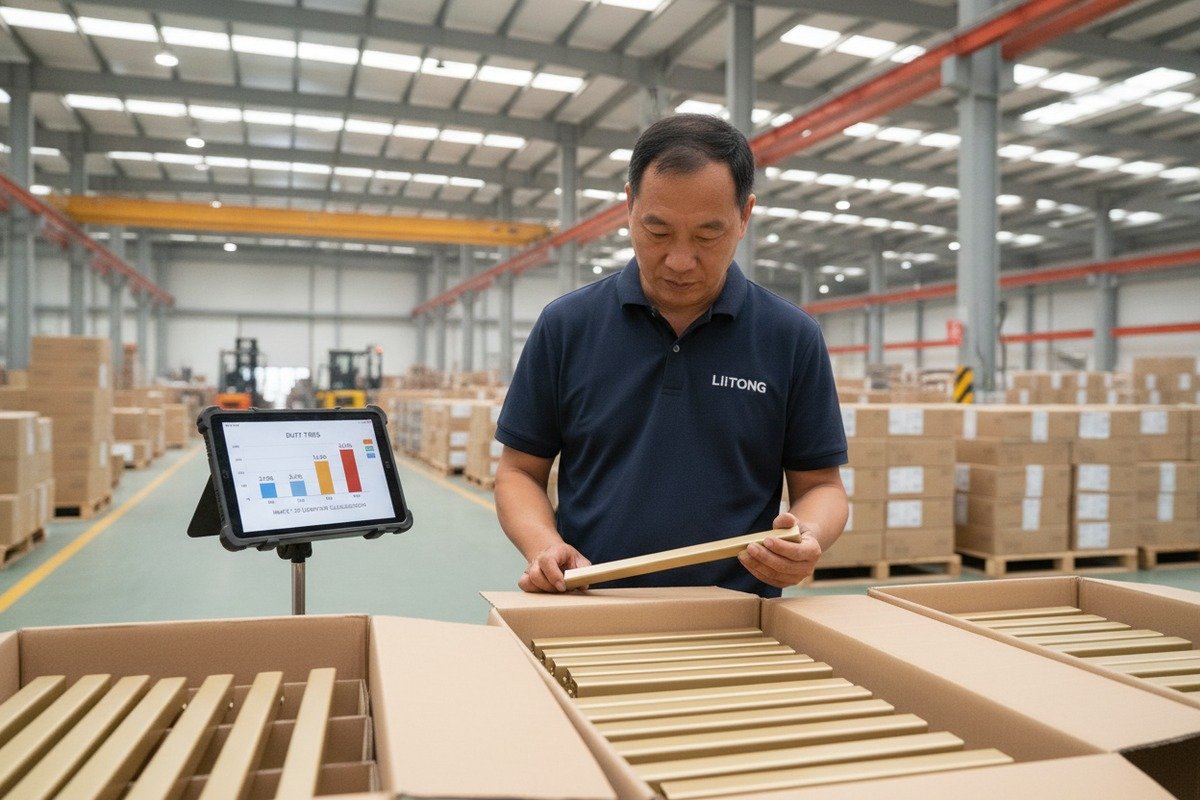
One practical step is to increase your safety stock for high-volume handle models. At our Foshan warehouse, we maintain over 300 tons of ready-to-ship inventory, including popular finishes like matte black, champagne gold, and charcoal grey recessed pulls. Buyers who place orders against existing stock can ship within 48 hours, which means you can replenish inventory before any duty changes take effect.
Diversify, But Do It Smartly
Some buyers consider shifting orders to suppliers in other Southeast Asian countries. That can work, but it introduces new risks: inconsistent quality, longer development cycles for custom profiles, and unfamiliar business relationships. A smarter approach is to keep your primary supplier relationship strong while exploring one or two backup sources for specific product lines. This way, you reduce concentration risk without sacrificing quality or lead time.
Keep Communication Lines Open
During our 18 years of exporting aluminum handles, we have learned that the buyers who weather trade disruptions best are the ones who communicate early and often. Tell your supplier what you are hearing from your local customs broker. Ask for updated shipping documents. Request alternative HS code analyses if needed. A good supplier will work with you to find solutions, not wait for you to figure it out alone.
Monitor the Investigation Calendar
Vietnam's Ministry of Industry and Trade publishes notices at each stage of an anti-dumping proceeding. You should track these dates or have your customs broker track them for you. Key milestones include the initiation notice, the preliminary determination, the provisional duty imposition date, and the final determination. Each milestone can trigger changes in how your goods are processed at the border.
How do I verify if the specific aluminum profiles I source from China are subject to these additional taxes?
This is the question we hear most often from procurement managers. They know duties exist but are not sure whether their specific product is caught by the rules.
To verify whether your aluminum furniture handles are subject to anti-dumping duties, check the exact HS code of your product against the product scope published in Vietnam's investigation notice, consult your customs broker for a formal classification opinion, and request a detailed bill of materials from your Chinese supplier showing all aluminum components.
Start With the HS Code
Every product that crosses an international border is assigned a Harmonized System (HS) code 5. This code determines the standard duty rate and also determines whether the product falls within the scope of any anti-dumping measure. The first step is to confirm the HS code your customs broker is using for your furniture handles.
Common HS codes relevant to this discussion include:
| HS Code | Description | Likely AD Scope Status |
|---|---|---|
| 7604.xx | Aluminum bars, rods, and profiles | Potentially within scope |
| 7616.99 | Other articles of aluminum (finished goods) | Often outside scope |
| 8302.42 | Base metal mountings/fittings for furniture | Usually outside scope |
The difference between 7604 and 8302 is significant. If your handle is classified as a furniture fitting under 8302.42, it is much less likely to be covered by an anti-dumping order targeting aluminum profiles or extrusions. But if it is classified under 7604 as an aluminum profile, the risk increases substantially.
Read the Product Scope Definition Carefully
Every anti-dumping investigation publishes a product scope document. product scope definition 6 This document describes exactly what is covered. It may say something like "extruded aluminum profiles with a cross-section dimension of X to Y millimeters, whether or not further worked." The phrase "whether or not further worked" is critical. If that language is present, even your anodized, cut-to-length handle profile could be within scope. If the scope is narrower and excludes finished articles, your handle may be safe.
Ask Your Supplier for a Detailed Bill of Materials
A responsible manufacturer will provide you with a bill of materials that shows exactly what goes into each handle. At our facility, we routinely issue documentation that includes the aluminum alloy grade, the extrusion die number, the surface treatment process, and the assembly components. This documentation helps your customs broker make a proper classification decision. It also protects you if customs authorities question the product later.
When in Doubt, Request a Formal Ruling
In many countries, including Vietnam, importers can request a formal tariff classification ruling from customs before importing goods. This ruling is binding and gives you legal certainty. It costs time and sometimes money, but it is far cheaper than paying incorrect duties or facing penalties for misclassification. If your annual import volume of aluminum handles is significant, a formal ruling is worth the investment.
Can my Chinese manufacturer provide the necessary documentation to help me mitigate potential legal risks?
In every trade dispute situation we have navigated with our customers, documentation has been the deciding factor between a smooth customs clearance and a costly delay.
Yes, a reputable Chinese manufacturer should provide a complete documentation package including a detailed bill of materials, country-of-origin certificates, manufacturing process flowcharts, HS code analysis, and written declarations confirming the product's classification — all of which help you demonstrate compliance and mitigate legal risks at customs.
What Documents You Should Request
Here is a practical checklist of what to ask your Chinese supplier for before any shipment that may be affected by anti-dumping scrutiny: Country of Origin Certificate 7 Bill of Materials (BOM) 8
- Bill of Materials (BOM): Lists every raw material and component, including aluminum alloy type, weight percentage, and source.
- Manufacturing Process Flow: A step-by-step description of how the handle is produced — extrusion, cutting, CNC machining, anodizing, assembly, packaging.
- Country of Origin Certificate: Issued by the local chamber of commerce or authorized body, confirming the product was manufactured in China.
- HS Code Recommendation: A suggested tariff classification with supporting reasoning.
- Product Photos and Technical Drawings: Showing the finished product in detail, including cross-section dimensions and surface treatment specifications.
- Written Compliance Declaration: A letter from the manufacturer stating that the product is a finished article and not a semi-finished aluminum extrusion intended for further industrial processing.
Why Manufacturing Process Evidence Matters
Customs authorities assess whether a product has undergone "substantial transformation 9." This concept is central to origin and scope determinations. If your handle starts as an aluminum billet in China, gets extruded into a profile, then gets cut, machined, anodized in champagne gold, inspected, and boxed with installation hardware — that is a clear chain of substantial transformation. The final product is far removed from a raw aluminum extrusion.
At our Foshan facility, every handle goes through at least five distinct manufacturing stages. We document each stage with process photos, quality control records, and batch tracking. This level of traceability is not just good manufacturing practice. It is your legal shield if customs ever questions the nature of the product.
The Transshipment Risk
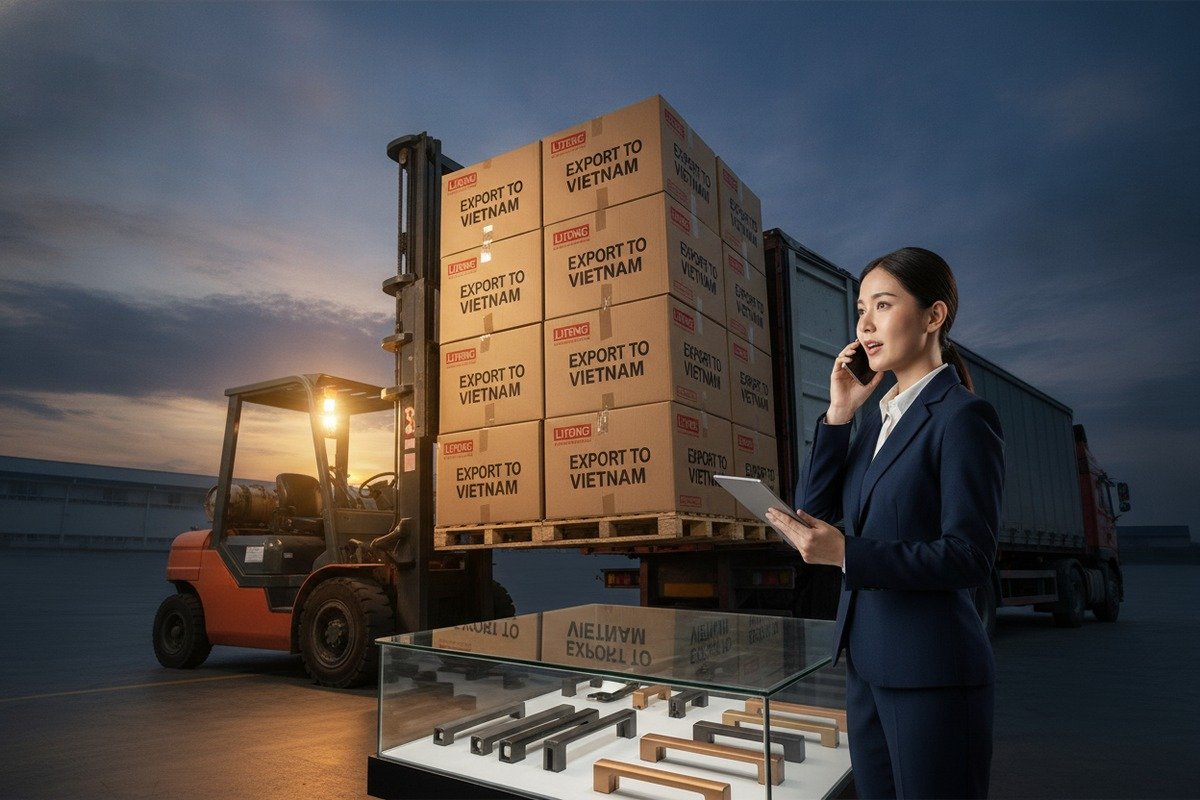
One area where documentation becomes especially critical is when goods are shipped through or assembled in Vietnam. If a Chinese-made aluminum handle is routed through Vietnam with only minor repackaging or labeling, customs authorities in both Vietnam and destination countries like the United States may view this as circumvention. The penalties for circumvention can be severe, including retroactive duties and fines.
To avoid this risk, make sure your supply chain is transparent. If you buy handles directly from China and import them into Vietnam, document that clearly. If you buy semi-finished parts from China and assemble them in Vietnam, document the value added in Vietnam. The key is to have a paper trail that matches reality.
When to Involve a Trade Lawyer
If your annual import volume exceeds a certain threshold, or if you are importing aluminum handles that are borderline in terms of scope classification, it is wise to consult a trade attorney or customs specialist. They can review your documentation, advise on classification strategy, and represent you if customs initiates an inquiry. Our team regularly collaborates with trade compliance advisors to ensure our export documentation meets the standards required by our customers' local authorities.
Conclusion
Vietnam's anti-dumping measures on Chinese aluminum products do not automatically cover every furniture handle, but they demand proactive attention from every importer sourcing aluminum components from China.
Footnotes
1. Explains what anti-dumping duties are and their purpose in international trade. ↩︎
2. Replaced HTTP 404 link with the Aluminum Association’s current statistics page, which provides comprehensive data on the North American aluminum industry. ↩︎
3. Official website of Vietnam’s Ministry of Industry and Trade. ↩︎
4. Defines Harmonized System (HS) codes and their role in international trade. ↩︎
5. Explains the international product nomenclature developed by the World Customs Organization. ↩︎
6. Describes how anti-dumping measures apply to specific products after investigation. ↩︎
7. Explains the purpose of a Certificate of Origin in international trade. ↩︎
8. Defines a Bill of Materials as a list of components for manufacturing a product. ↩︎
9. Explains the legal principle used to determine a good’s country of origin. ↩︎