Every monsoon season, our customer service team fields urgent calls from Vietnamese distributors reporting white rust 1 on handles that looked perfect at the factory. The problem is rarely the aluminum itself. It is a mismatch between the handle’s corrosion protection and the local climate it was shipped into.
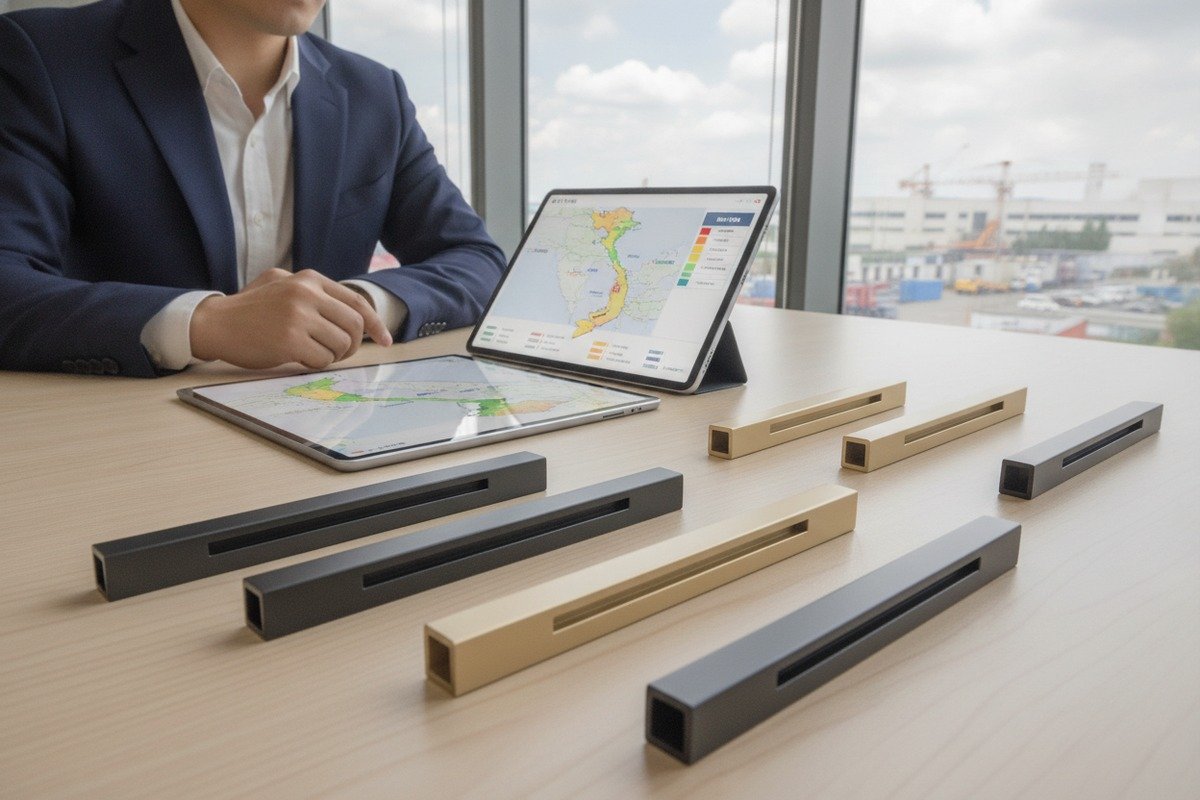
To choose the right corrosion resistance grade for aluminum furniture handles in Vietnam, map your installation region to one of three exposure tiers: standard anodized or powder-coated handles for inland urban areas, enhanced sealed coatings for monsoon-heavy northern and southern zones, and marine-grade 5052 or 5083 alloy handles with heavy-duty finishes for central coastal and island regions.
Vietnam is not one climate. It is several. And each one attacks aluminum differently. This guide breaks down the specific alloy grade 2s, surface treatments, and test standards you should demand from your Foshan supplier before placing your next order.
How do I determine the best surface treatment for aluminum handles to withstand the high humidity of Northern Vietnam and the salt air of coastal regions?
Our production engineers have spent years fine-tuning anodizing and powder-coating lines specifically for Southeast Asian humidity AAMA 2604 standards 3. The difference between a handle that lasts two years and one that lasts fifteen often comes down to one decision: which surface treatment you specify at the ordering stage.
For Northern Vietnam's high humidity, choose sealed anodized aluminum handles with a minimum 15-micron oxide layer. For coastal regions with salt air exposure, upgrade to marine-grade powder coating meeting AAMA 2604 standards or combine anodizing with a topcoat to block chloride penetration and prevent pitting corrosion.
Why Humidity and Salt Air Attack Aluminum Differently
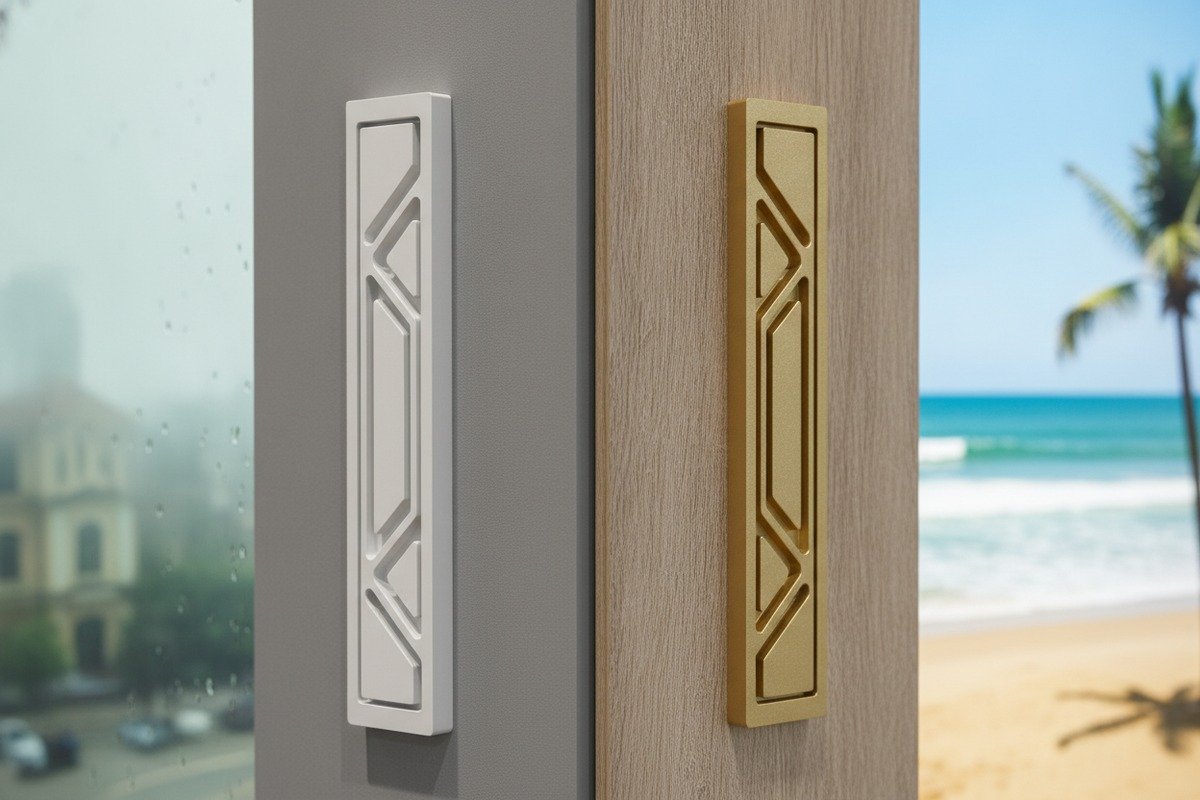
Aluminum naturally forms a thin oxide layer 4 when exposed to air. This layer protects the metal. But in Northern Vietnam, where humidity regularly exceeds 80% from May through September, constant moisture stresses that natural oxide film ISO 7599 5. Repeated wet-dry cycles cause microscopic cracks. Over time, you see white powdery spots — this is aluminum oxide corrosion, commonly called "white rust."
Salt air along the central coast is a different threat entirely MIL-A-8625 Type III 6. Chloride ions from sea spray penetrate protective layers and attack the base metal underneath. This leads to pitting corrosion 7 — small but deep holes that weaken the handle and ruin its appearance. A surface treatment that works fine in Hanoi may fail within months in Da Nang.
Matching Surface Treatment to Regional Exposure
The table below maps Vietnam's main climate zones to recommended surface treatments for aluminum furniture handles.
| Vietnam Region | Primary Climate Threat | Recommended Surface Treatment | Minimum Spec |
|---|---|---|---|
| Northern inland (Hanoi, Lao Cai) | High humidity, monsoon rain, seasonal temperature swings | Standard anodizing or quality powder coating | Anodize ≥ 15 μm; Powder coat ≥ 60 μm |
| Central coast (Da Nang, Hue, Nha Trang) | Salt spray, high humidity, typhoons | Marine-grade powder coating or anodize + topcoat | AAMA 2604 powder coat; Anodize ≥ 20 μm + sealant |
| Southern Vietnam (Ho Chi Minh City, Can Tho) | Year-round high humidity, monsoon rain | Sealed anodizing or durable powder coating | Anodize ≥ 15 μm with hot-water seal; Powder coat ≥ 60 μm |
| Coastal south and islands (Phu Quoc, Vung Tau) | Salt spray + constant humidity + UV | Marine-grade alloy + heavy-duty powder coating | 5052/5083 alloy; AAMA 2605 powder coat ≥ 80 μm |
Don't Forget the Micro-Climate
Even within a single city, exposure varies. A recessed handle installed inside a kitchen cabinet in Hanoi faces far less stress than the same handle mounted on a balcony door in a high-rise facing the Red River. When our team helps clients spec their orders, we always ask: indoor, semi-outdoor, or fully exposed? That single question changes the recommendation.
Also consider air pollution. Industrial zones around Hai Phong and Binh Duong produce sulfur dioxide 8, which creates mildly acidic conditions on metal surfaces. If your furniture ends up in these areas, a thicker powder coat provides a better chemical barrier than anodizing alone.
A Quick Note on Champagne Gold and Specialty Finishes
Many of our bestselling handles — like the slim recessed pulls in champagne gold and matte charcoal — use anodized finishes for their clean, architectural look. Anodizing is excellent for color consistency and scratch resistance. But for coastal projects, we often recommend applying a clear powder-coat layer over the anodized surface. This dual-layer approach keeps the premium aesthetic while adding a chloride barrier. It costs slightly more, but it prevents warranty claims.
What specific salt spray test hours and anodizing standards should I demand from my Foshan supplier to ensure long-term durability in my market?
When we review quality documentation with our Vietnamese distribution partners, the most common gap we find is vague test data. A supplier saying "good corrosion resistance" means nothing without numbers. You need specific test hours and standards written into your purchase agreement.
Demand a minimum of 500 hours salt spray testing (ASTM B117) for inland applications and 1,000+ hours for coastal Vietnam. For anodizing, require compliance with ISO 7599 or MIL-A-8625 with a minimum oxide thickness of 15 microns for standard use and 25 microns (Type III hard coat) for marine or high-humidity exposure.
Understanding Salt Spray Test Hours
The salt spray test, standardized as ASTM B117, simulates accelerated corrosion by exposing samples to a continuous salt fog at 35°C. The number of hours a sample survives without visible corrosion gives you a comparative durability rating. It is not a perfect simulation of real-world conditions, but it is the industry's most widely accepted benchmark.
Here is what the test hours mean in practical terms for Vietnam:
| Salt Spray Test Hours (ASTM B117) | Suitable Application in Vietnam | Typical Surface Treatment |
|---|---|---|
| 200–500 hours | Indoor furniture, low-humidity urban interiors | Basic anodizing (10–15 μm) or thin powder coat |
| 500–1,000 hours | Semi-outdoor use, high-humidity inland regions, monsoon exposure | Quality anodizing (15–20 μm) or AAMA 2604 powder coat |
| 1,000–2,000 hours | Coastal residential, resort furniture, outdoor kitchen hardware | Marine-grade anodizing (20–25 μm) + sealant, or AAMA 2605 powder coat |
| 2,000+ hours | Direct seaside exposure, island installations, fully outdoor marine use | Type III hard coat anodize (≥ 25 μm) + topcoat, or 5083 alloy + marine coating |
Key Anodizing Standards to Specify
Not all anodizing is created equal. When placing orders, reference these standards:
- MIL-A-8625 Type II — Sulfuric acid anodize, standard protective coating. Suitable for general furniture hardware in moderate climates. Oxide thickness typically 15–25 μm.
- MIL-A-8625 Type III — Hard coat anodize. Much denser and harder oxide layer, typically 25–75 μm. This is the specification you want for coastal Vietnam or heavy-use commercial projects.
- ISO 7599 — International standard for anodic oxidation of aluminum. Covers sealing quality, thickness, and performance criteria. A reliable reference when dealing with Chinese suppliers who may not use U.S. military specs.
What to Write Into Your Purchase Order
From our experience fulfilling orders for Vietnamese furniture factories and distributors, here is what we recommend you specify in writing:
- Alloy grade — State "5052" or "6063" explicitly. Do not accept "aluminum alloy" without a grade number.
- Anodize thickness — State the minimum in microns with a tolerance, e.g., "18 μm ± 2 μm."
- Sealing method — Hot-water sealing or nickel-acetate sealing. Unsealed anodize absorbs moisture and fails faster.
- Salt spray test report — Request a third-party lab report, not an in-house claim. Reputable Foshan suppliers will have SGS, TÜV, or equivalent test certificates.
- Powder coat standard — If using powder coating, specify AAMA 2604 for moderate exposure or AAMA 2605 for severe coastal exposure.
Why "Good Quality" Is Not a Specification
We have seen too many transactions where the buyer asks for "good quality handles" and the supplier ships whatever is in stock. Without a written spec, there is no basis for a quality claim if the product fails. A handle rated at 300 salt spray hours will look identical to one rated at 1,500 hours when it arrives in the box. The difference only shows up six months later, in your customer's kitchen or hotel bathroom. By then, it is your reputation on the line.
How can I identify if the aluminum handles I am importing have the necessary corrosion resistance to prevent oxidation during the Vietnamese monsoon season?
One of the most frustrating calls we get comes from importers who received a shipment that looked fine in the warehouse but started showing white spots after one monsoon cycle. The handles were not bad aluminum — they were the wrong specification for the job. Identifying the problem before it happens is far cheaper than replacing stock after it fails.
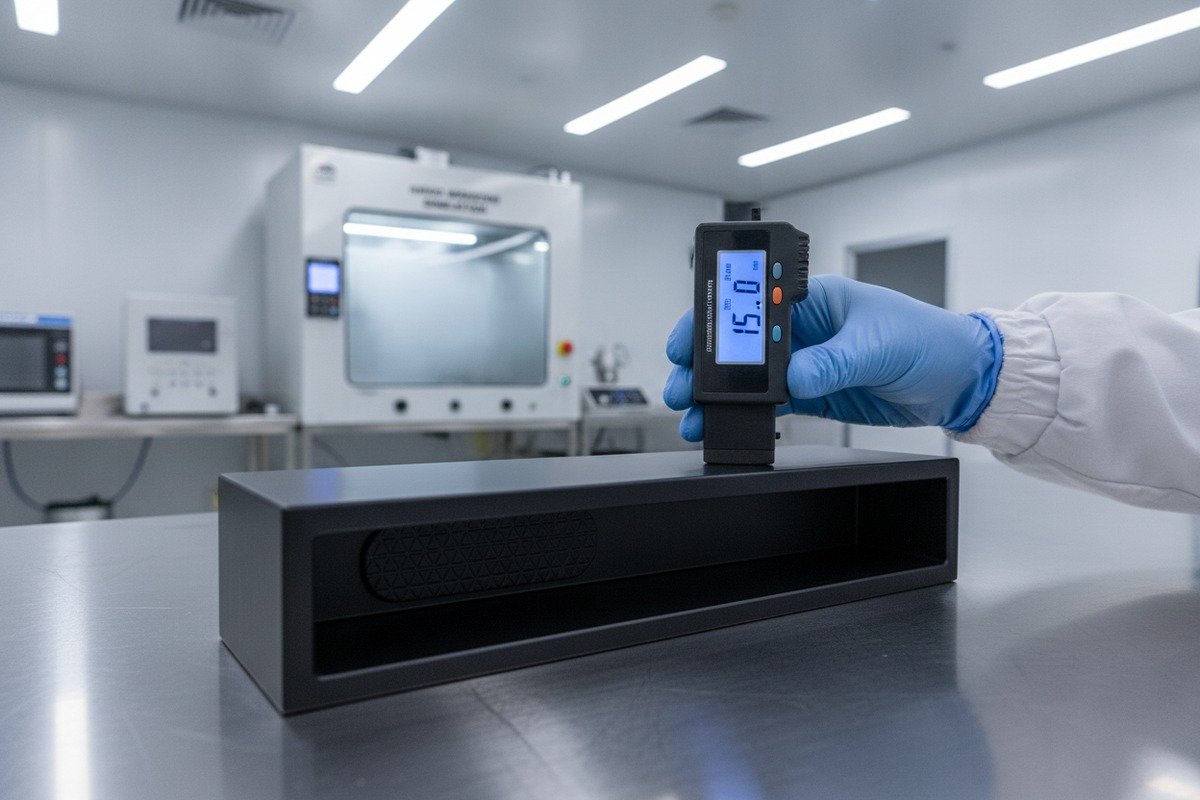
Inspect incoming aluminum handles for three indicators: verify the alloy grade on the mill certificate or supplier documentation, measure the anodize or coating thickness with an eddy-current gauge, and request the supplier's salt spray test certificate showing minimum hours that match your region's exposure tier.
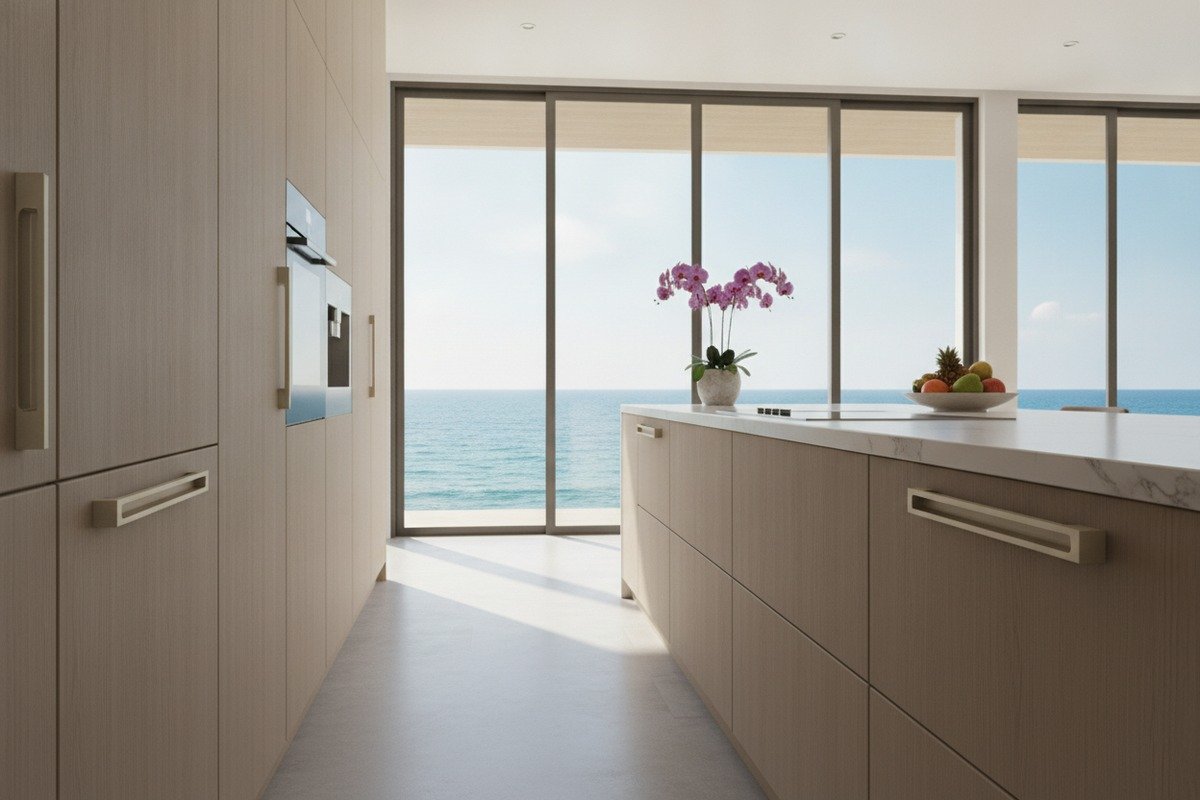
Step 1: Check the Alloy Certificate
Every reputable aluminum supplier maintains mill test certificates 10 that identify the alloy. For furniture handles, the most common alloys are 6063 (standard architectural), 6061 (stronger, good general corrosion resistance), and 5052 or 5083 (marine-grade). If your supplier cannot provide an alloy certificate, that is a red flag. At our facility, we include alloy documentation with every shipment as standard practice.
For monsoon-prone regions, 6063 with proper anodizing works for indoor-to-semi-outdoor handles. But if your handles will be installed on bathroom vanities in humid homes or on outdoor patio furniture, request 5052 minimum.
Step 2: Measure the Coating Thickness
You can verify coating thickness on-site using a portable eddy-current thickness gauge. These instruments cost a few hundred dollars and pay for themselves in the first shipment they help you verify. Here is what to look for:
| Measurement | Acceptable for Indoor/Low Humidity | Acceptable for Monsoon/High Humidity | Acceptable for Coastal |
|---|---|---|---|
| Anodize thickness | 10–15 μm | 15–20 μm | 20–25+ μm |
| Powder coat thickness | 40–60 μm | 60–80 μm | 80–120 μm |
| Combined anodize + topcoat | 15–25 μm total | 25–35 μm total | 35–50+ μm total |
If the measured values fall below the minimum for your target region, the handles may perform well for a season but degrade during the second or third monsoon.
Step 3: Look for Visual and Tactile Clues
Even without instruments, experienced buyers can spot quality differences:
- Sealed anodize feels smoother and resists fingerprints better than unsealed anodize. Run your finger along the channel of a recessed handle. If it feels slightly chalky or porous, the sealing may be incomplete.
- Quality powder coating is uniform in thickness, with no orange-peel texture, drips, or thin spots at edges. Our matte-finish handles — the white, charcoal grey, black, champagne gold, and light beige models — are inspected under angled lighting to catch any coating inconsistency before packing.
- Base metal color at cut ends or screw holes can indicate alloy family. 5000-series alloys tend to have a slightly different hue than 6000-series when unfinished, though this requires familiarity to distinguish.
Step 4: Request a Maintenance Protocol
A good supplier does not just ship product — they help you protect it. We provide our Vietnamese partners with a printed care card in Vietnamese and English, advising end users to wipe handles with a damp cloth monthly and rinse off any salt deposits if located near the coast. This simple step extends handle life by years.
The Monsoon Factor
Vietnam's monsoon season creates a specific corrosion pattern: intense rainfall followed by hot, humid drying periods. This wet-dry cycling is more aggressive than constant submersion because it repeatedly refreshes the corrosive electrolyte on the metal surface. Handles mounted in semi-enclosed spaces — like under a porch roof or near an open window — are especially vulnerable because they get wet but do not dry quickly. For these applications, always choose the next tier up from what the region alone would suggest.
Should I prioritize powder coating or anodizing for my custom furniture projects in Vietnam to achieve the best balance of aesthetics and weather resistance?
This is the question we hear most from furniture factory owners in Ho Chi Minh City and Hanoi who want their products to look premium while surviving Vietnam's climate. The truth is, both treatments work — but each excels in a different situation. The choice depends on your end market, price point, and installation environment.
For indoor and lightly exposed furniture in Vietnam, prioritize anodizing for its metallic elegance, scratch resistance, and thinner profile on slim handles. For outdoor, coastal, or high-humidity commercial projects, prioritize powder coating for its thicker barrier protection, superior UV resistance, and wider color range while accepting a slightly different surface texture.
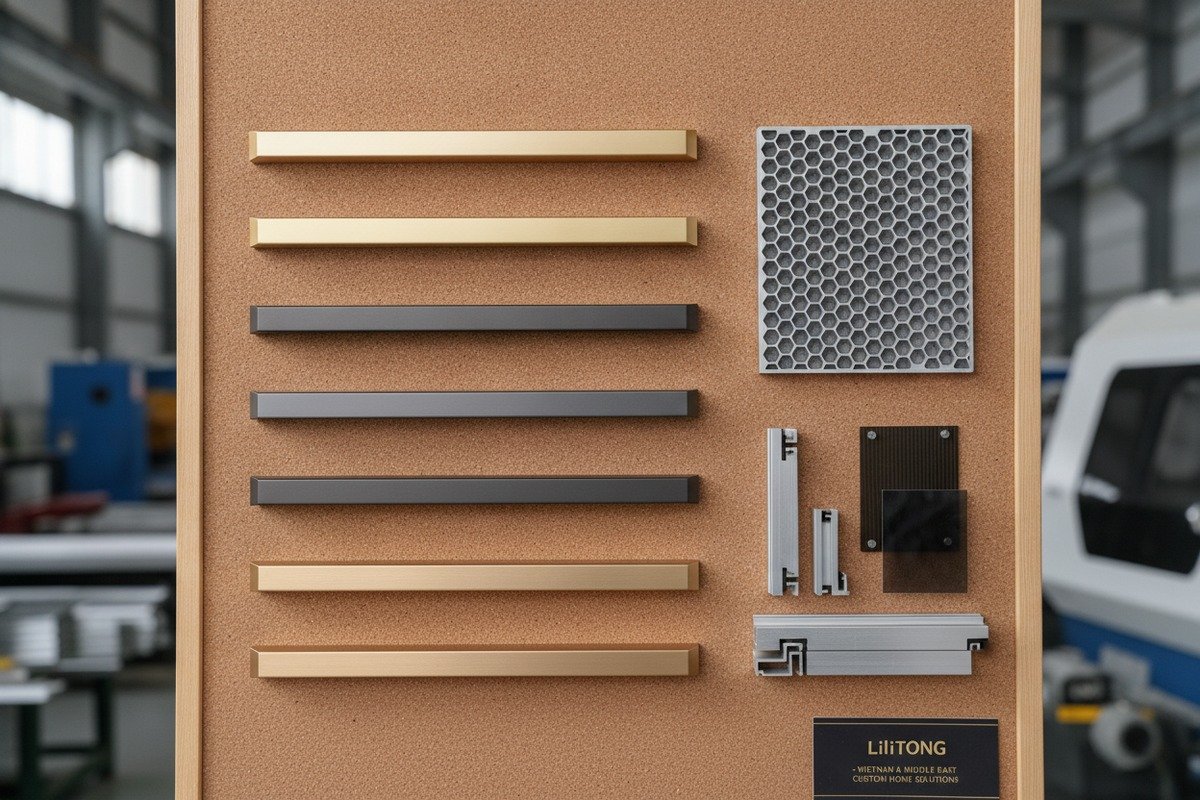
The Aesthetic Argument
Anodizing preserves the natural metallic feel of aluminum. On our recessed minimalist handles — the slim rectangular pulls with a deep geometric channel — a champagne gold anodized finish looks rich and architectural. The metal grain shows through. The surface feels cool and smooth. For high-end custom kitchens and wardrobes, this finish sells.
Powder coating, by contrast, creates an opaque, uniform surface. It hides the metal underneath completely. This is ideal when you want a matte white, deep black, or custom RAL color that anodizing cannot achieve. Powder coat also allows textured finishes — fine sand, wrinkle, or soft-touch — that anodizing cannot replicate.
The Weather Resistance Argument
From a pure corrosion standpoint, powder coating generally provides a thicker physical barrier. A standard furniture-grade powder coat runs 60–80 μm thick. A high-performance AAMA 2605 coat can reach 80–120 μm. Compare that to standard anodizing at 15–20 μm. Thicker means more material between the environment and the base metal.
However, anodizing has an advantage that thickness alone does not capture: the oxide layer is part of the metal itself, not a separate coating sitting on top. It cannot peel, chip, or delaminate the way powder coat can if the substrate preparation was poor. In humid climates where handles are frequently touched and cleaned, anodize holds up better against abrasion.
A Side-by-Side Comparison
Here is how the two treatments compare across the factors that matter most for the Vietnamese market:
| Factor | Anodizing | Powder Coating |
|---|---|---|
| Corrosion barrier thickness | 10–25 μm (standard to hard coat) | 60–120 μm |
| Scratch resistance | Excellent — oxide is very hard | Good — can chip on sharp impact |
| UV resistance | Moderate — color can fade over years | Excellent with AAMA 2604/2605 grade |
| Color range | Limited — metallics, black, champagne, bronze | Virtually unlimited — any RAL color |
| Surface feel | Cool, metallic, elegant | Smooth to textured, non-metallic |
| Repairability | Difficult — requires full re-anodize | Moderate — can spot-repair small chips |
| Best for | Indoor premium, semi-outdoor, slim profiles | Outdoor, coastal, commercial, bold colors |
| Cost | Moderate | Moderate to slightly higher for premium grades |
When to Combine Both
For projects that demand both premium aesthetics and maximum coastal protection, we recommend a hybrid approach: anodize the handle first for hardness and base protection, then apply a thin clear powder coat or liquid topcoat for chloride resistance. This dual-layer system is what we spec for resort and hospitality projects along Vietnam's central coast. It costs roughly 15–20% more than a single treatment but dramatically extends the service life.
The Fastener Weak Point
One detail many buyers overlook: the handle itself may be perfectly protected, but the screws and mounting hardware can become the corrosion entry point. In Vietnam's humid climate, using carbon steel screws with an anodized aluminum handle creates a galvanic corrosion cell. The dissimilar metals accelerate each other's degradation. Always specify 304 stainless steel screws for inland use and 316 stainless steel for coastal installations. We include stainless steel mounting hardware with all our handle orders destined for Vietnam and the Middle East as a standard practice.
Maintenance Keeps Both Treatments Working
Regardless of whether you choose anodizing or powder coating, regular cleaning matters. In Hanoi's humid summers, dust and moisture combine to form a film that traps corrosive agents against the surface. A monthly wipe with mild soap and water removes this film. Near the coast, a fresh-water rinse after storms removes salt deposits before they can attack the finish. This is simple advice, but it is the single most effective way to extend the life of any aluminum handle in Vietnam.
Conclusion
Choosing the right corrosion resistance grade for aluminum handles in Vietnam is not about picking a single product. It is about matching the alloy, surface treatment, and test documentation to the specific climate zone and installation context. Specify clearly, verify with data, and your handles will last.
Footnotes
1. Replaced with an authoritative definition of white rust on metals, including aluminum. ↩︎
2. Explains the importance of specifying aluminum alloy grades. ↩︎
3. Defines a key industry standard for architectural powder coatings. ↩︎
4. Explains the natural protective layer on aluminum surfaces. ↩︎
5. Provides an international standard for aluminum anodization. ↩︎
6. Specifies a military standard for hard coat anodizing. ↩︎
7. Describes a specific type of localized corrosion affecting aluminum. ↩︎
8. Identifies a specific pollutant contributing to acidic corrosion. ↩︎
9. Details the widely accepted standard for accelerated corrosion testing. ↩︎
10. Describes essential documentation for verifying material quality. ↩︎