
Every week, our sales team in Foshan fields questions from Vietnamese buyers about wire transfers — not about handle specs, but about why payments get stuck, cost more than expected, or arrive short.
Cross-border bank transfers from Vietnam to China typically cost 0.1%–0.2% of the transfer amount plus SWIFT fees of USD 15–30, and processing takes 1–5 business days. Hidden costs include intermediary bank deductions, exchange-rate markups, and charge-type surcharges that can add USD 20–50 or more per transaction.
Below, we break down the real numbers, the timing risks, and the practical steps you can take to keep your aluminum handle orders on schedule and on budget SWIFT MT103 copy 1. Let’s walk through it piece by piece.
How can I calculate the total transaction fees when transferring funds from my Vietnamese bank to a Chinese supplier?
Our finance team reconciles incoming payments from Vietnam every single day, and the gap between what a buyer sends and what we receive is sometimes surprising — even to experienced importers Border-trade payment channels 2.
To calculate total transaction fees, add together the remittance charge (0.1%–0.2% of the amount), the SWIFT messaging fee (USD 15), any OUR or FULL PAY surcharge (USD 20–30), and the exchange-rate spread your bank applies. For a USD 5,000 handle order, expect USD 30–65 in visible fees alone.

Breaking Down the Visible Fees
The first thing to understand is that your bank will show you a remittance fee 3. This is the main charge. Most Vietnamese banks and foreign bank branches operating in Vietnam charge between 0.1% and 0.2% of the transfer amount, with a minimum around USD 5 and a maximum cap around USD 200. So for small orders, the percentage feels high; for large orders, the cap protects you.
On top of the remittance fee, you pay a SWIFT messaging fee. SWIFT is the global messaging network that banks use to move money internationally. SWIFT messaging network 4 This fee is typically a flat USD 15 per transfer. Some banks bundle it; others list it separately.
Charge Types: SHA, OUR, and FULL PAY
This is where many buyers get confused. When you initiate a wire transfer, your bank asks you to choose a charge type. SHA, OUR, and FULL PAY 5 Here is what each one means and costs:
| Charge Type | What It Means | Extra Cost (Typical) | Who Pays Intermediary Fees? |
|---|---|---|---|
| SHA (Shared) | Sender pays sending fees; receiver pays receiving fees | USD 0 extra | Split between both sides |
| OUR | Sender pays all fees including intermediary | ~USD 20 | Sender |
| FULL PAY | Sender guarantees full invoiced amount arrives | ~USD 30 | Sender covers everything |
Many Chinese suppliers — including our own company — prefer OUR or FULL PAY. The reason is simple. When we invoice you USD 5,000 for a batch of champagne gold recessed cabinet handles, we need exactly USD 5,000 to hit our account. If an intermediary bank deducts USD 15–25 along the way, the payment arrives short. That means our accounting team has to chase the balance, and your order sits in a queue until the difference is settled.
The Hidden Cost: Exchange-Rate Spread
Your bank's published fee table never tells you the full story. When you convert Vietnamese Dong (VND) to US Dollars (USD) or Chinese Yuan (RMB), the bank applies its own exchange rate. This rate is almost always worse than the mid-market rate 6 you see on Google or financial news sites. The gap — called the spread — can be 0.5% to 1.5% of the total amount.
For a USD 10,000 order of custom matte black aluminum profiles for glass doors, a 1% spread means an extra USD 100 you never see on the fee receipt. Always compare your bank's offered rate against the mid-market rate before confirming.
Example: Total Fee Calculation for a USD 5,000 Order
| Fee Component | Amount (USD) |
|---|---|
| Remittance fee (0.2%) | 10.00 |
| SWIFT fee | 15.00 |
| OUR surcharge | 20.00 |
| Exchange-rate spread 7 (~1%) | 50.00 |
| Total estimated cost | 95.00 |
That USD 95 represents about 1.9% of the order value. For larger orders, the percentage drops because the remittance fee is capped. But for small trial orders or sample payments, the percentage can climb to 3% or more.
What is the typical processing time for my payment to clear so my aluminum handle order can begin production?
We schedule production runs the moment a deposit clears in our bank. When a payment from Ho Chi Minh City takes five days instead of two, it pushes every downstream step — extrusion, anodizing, packing — later by the same margin.
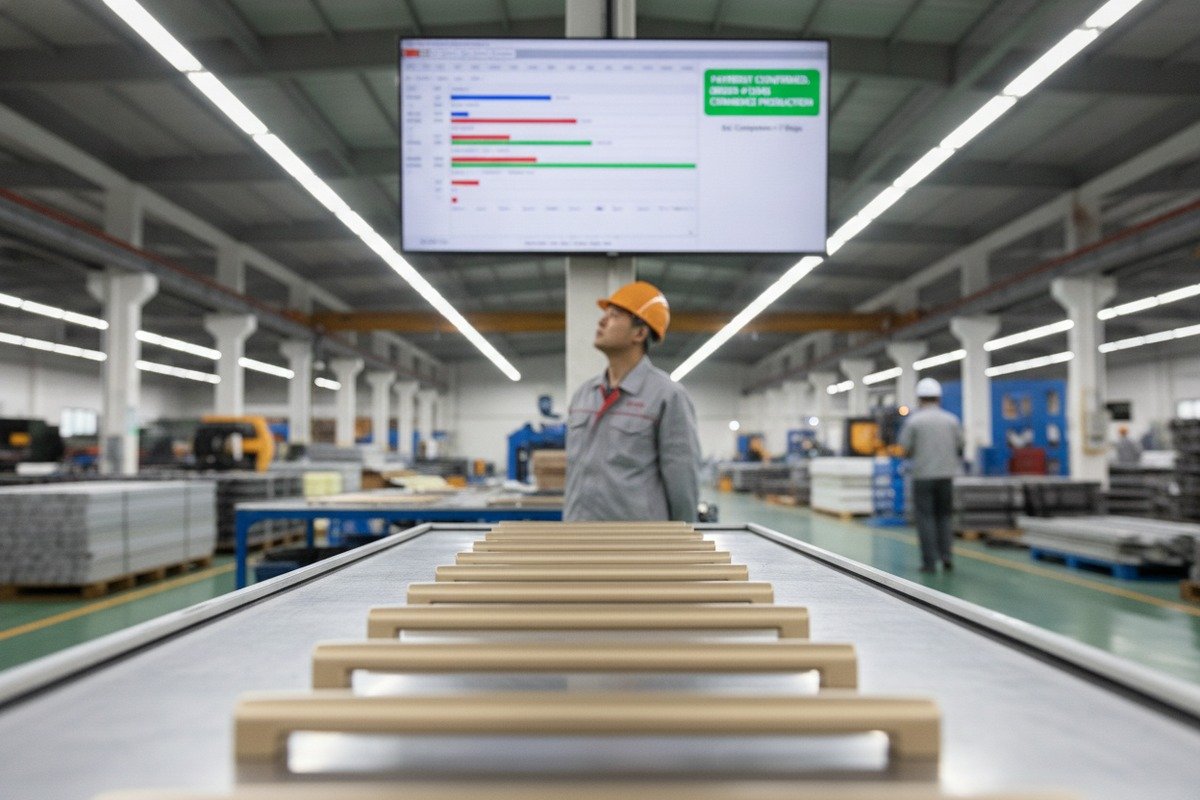
Standard cross-border bank transfers from Vietnam to China take 1–5 business days. First-time transfers often land on the longer end due to beneficiary verification and compliance checks. Payments sent before bank cutoff times on weekdays with complete documentation tend to arrive within 1–2 business days.
Why the Range Is So Wide
The 1–5 day window depends on several factors. The sending bank's cutoff time is the first one. If you submit a transfer at 4 PM on a Friday in Hanoi, it will not be processed until Monday. If Monday is a public holiday in either country, add another day.
Currency also matters. USD transfers between two banks that both hold USD correspondent accounts can move quickly — sometimes same-day. But if the payment goes through one or two intermediary banks, each one adds a processing step. RMB transfers routed through China's domestic clearing system may clear faster once they enter the Chinese banking network, but the initial hop from Vietnam can still take a day or more.
First-Time Transfer Delays
The first wire you ever send to a new Chinese supplier will almost certainly take longer. Your bank needs to verify the beneficiary details. In some cases, the compliance department will ask for supporting documents: a purchase order, a proforma invoice, or a trade contract. This is standard under Vietnam's foreign exchange control regulations enforced by the State Bank of Vietnam 9. Once your supplier is set up as an approved payee, subsequent transfers flow more smoothly.
What Happens on the Chinese Side
When we receive an incoming international payment at our bank in Foshan, the bank checks the payment against our export documentation. If the sender's name on the transfer does not match the buyer name on the contract, or if the payment reference is missing, the bank may hold the funds for manual review. This can add one to two extra days. We always ask our Vietnamese clients to include the invoice number and order reference in the payment remarks field. It is a small step that avoids big delays.
Public Holiday Overlap
China and Vietnam share some holiday periods — most notably Lunar New Year (Tet in Vietnam, Spring Festival in China). Transfers initiated just before or during these windows can be delayed by a week or more. Plan your deposits accordingly, especially for orders you need before major holidays.
Are there specific intermediary bank costs I should be aware of when sourcing furniture hardware from China?
In our eighteen years of exporting aluminum handles and profiles, we have seen payments arrive with USD 15, USD 25, even USD 40 deducted by banks the buyer never heard of — and the buyer had no idea until we flagged the shortfall.
Yes. Intermediary (correspondent) banks often deduct USD 10–25 per transaction from the transfer amount before it reaches the supplier's bank. These deductions are separate from the fees your own bank charges and are only avoidable if you select the OUR or FULL PAY charge type, which shifts all costs to the sender upfront.
How Intermediary Banks Work
When your Vietnamese bank does not have a direct relationship with the supplier's Chinese bank, it routes the payment through one or more intermediary banks. Each intermediary is entitled to deduct a handling fee. This is deducted directly from the transfer amount — not billed to you separately. So you send USD 3,000, and the supplier receives USD 2,975.
For a small order of recessed cabinet handles in charcoal grey and white finishes, that USD 25 difference may seem minor. But if you are placing monthly orders, the cumulative shortfall adds up and creates friction with your supplier.
Common Intermediary Fee Ranges
| Transfer Currency | Typical Intermediary Deduction | Number of Intermediaries |
|---|---|---|
| USD | USD 10–25 per bank | 1–2 banks |
| RMB (CNY) | CNY 50–150 per bank | 0–1 bank |
| EUR | USD 10–20 per bank | 1–2 banks |
RMB transfers sometimes pass through fewer intermediaries because China has expanded bilateral settlement channels with Vietnam. If your bank offers a direct RMB remittance path, intermediary costs may be lower or eliminated altogether.
How to Avoid Intermediary Surprises
The simplest fix is to select the OUR charge type when you initiate the transfer. This tells your bank to cover all downstream fees so the full invoice amount reaches the supplier. Yes, you pay an extra USD 20 or so upfront. But it is predictable. You know the cost before you send. And your supplier receives the exact amount, which means production starts without a back-and-forth about missing funds.
Another approach is to slightly overpay — for example, sending USD 5,030 against a USD 5,000 invoice. Some buyers do this, but it creates its own complications: the supplier may need to refund the overpayment, or the extra amount may confuse customs documentation. We generally recommend OUR instead.
Border-Trade Payment Channels
Vietnam and China share a land border, and specialized border-trade payment services exist between the two countries. Some Vietnamese banks, such as MSB, offer border-trade transfer services at a lower fee — around 0.1% of the amount — with amendment or investigation fees of approximately CNY 70. These channels may bypass some intermediary banks entirely, reducing both cost and transit time. If you import furniture hardware frequently and your volumes justify the setup, ask your bank if a border-trade payment option is available.
How can I ensure my cross-border payment doesn't delay the 3-7 day custom turnaround for my aluminum profiles?
Our production floor in Foshan can turn around custom aluminum furniture handles in 3–7 days — but that clock only starts ticking when the deposit actually lands in our account. Every day of payment delay is a day of production delay.
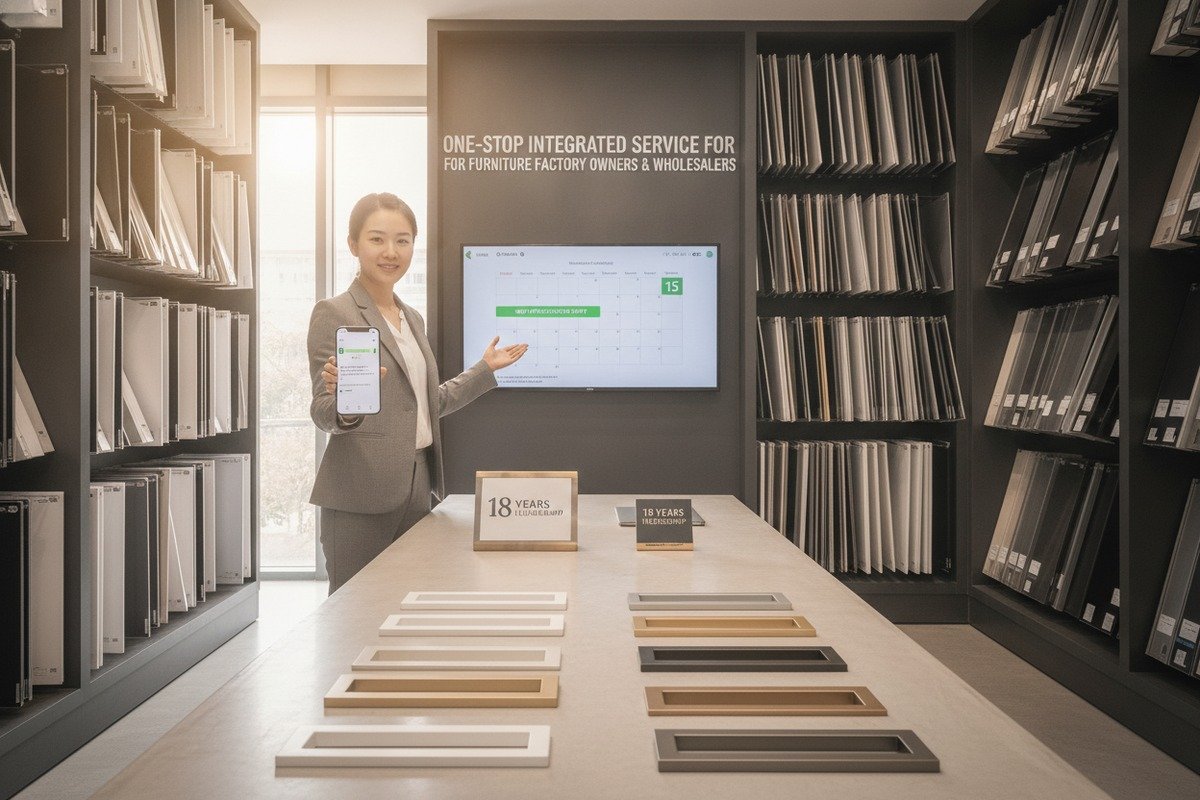
To protect the 3–7 day custom turnaround, send your deposit at least 5 business days before your desired production start date, choose the OUR charge type, include complete invoice and order references in the payment remarks, and confirm all beneficiary bank details with your supplier before initiating the transfer.
A Payment Timeline That Works
The best approach is to work backward from your delivery deadline. Here is a practical timeline we recommend to our Vietnamese clients:
| Step | Action | Suggested Lead Time |
|---|---|---|
| 1 | Confirm order details, finishes, and quantities with supplier | Day 0 |
| 2 | Receive proforma invoice with bank details | Day 1 |
| 3 | Verify all beneficiary details (bank name, SWIFT code, account number, company name) | Day 1–2 |
| 4 | Initiate bank transfer with OUR charge type and full documentation | Day 2 |
| 5 | Payment clears in supplier's account | Day 3–6 |
| 6 | Production begins (3–7 days for custom orders) | Day 4–7 |
| 7 | Goods shipped (48 hours for stock items after confirmation) | Day 7–14 |
If you are ordering stock items — say, our popular matte black or champagne gold recessed handles that we keep in our 300-ton ready-to-ship inventory — the turnaround is even faster: 48 hours from payment confirmation to dispatch. But the payment still needs to arrive first.
Pre-Transfer Checklist
Before you click "send" on your bank's remittance form, verify the following:
- Beneficiary name matches the company name on the proforma invoice exactly, character by character.
- Bank SWIFT/BIC code is correct. One wrong letter can route the payment to a different bank or trigger a rejection.
- Account number is complete. Chinese bank accounts can be long — sometimes 16–19 digits.
- Payment purpose is stated clearly. Use language like "Payment for aluminum furniture handles per Invoice #XXXX."
- Currency matches what the supplier requested. If we invoice in USD, send USD. If we invoice in RMB, send RMB. Converting at the wrong end can cost you more and confuse the receiving bank.
What to Do If the Payment Is Delayed
If three business days pass and your supplier says the payment has not arrived, take these steps immediately:
- Contact your bank and request a SWIFT MT103 copy. This is the payment instruction document that proves the transfer was sent. Share it with your supplier so they can trace the incoming wire from their side.
- Ask your bank for the intermediary bank details. If the payment is stuck at a correspondent bank, knowing which one speeds up the investigation.
- Check whether your bank's compliance team has flagged the payment for review. If they need additional documents — such as a trade contract or customs declaration — provide them the same day.
At our end, when a Vietnamese client sends us the MT103, our finance team can trace the payment within hours. We have seen cases where the money was sitting in a correspondent bank in Hong Kong for two days simply because a reference field was left blank. A quick amendment resolved it, but the order lost two production days.
Choosing the Right Payment Rail
For Vietnamese buyers sourcing aluminum handles and profiles from China, three main payment paths exist today:
- Standard SWIFT wire: Most common, works for any amount, widely supported. Costs more in fees and takes 1–5 days.
- Border-trade payment channel: Lower fees (around 0.1%), potentially faster, but limited to banks that offer this service and may require specific trade documentation.
- Fintech platforms (Wise, Panda Remit, etc.): Competitive exchange rates and transparent fees, but may have transfer limits and are better suited for smaller or sample-order payments rather than large B2B invoices.
For bulk orders of custom aluminum profiles or large shipments of architectural hardware, SWIFT remains the standard. For recurring smaller orders, exploring border-trade channels or fintech options can save you meaningful money over time.
Currency Choice: USD vs. RMB
Some of our Vietnamese clients ask whether paying in RMB saves money. The answer depends on your bank's RMB capabilities. If your bank offers direct RMB remittance to China with a competitive exchange rate, paying in RMB can reduce intermediary hops and align with the supplier's local currency. China has been expanding yuan-based cross-border settlement with Vietnam, which means more Vietnamese banks now support RMB transfers than a few years ago.
However, if your bank converts VND to USD first and then USD to RMB, you are paying two conversion spreads — which defeats the purpose. Always ask your bank for the all-in rate before choosing.
Conclusion
Cross-border payments from Vietnam to China involve more than a single bank fee. By understanding the full cost structure, choosing the right charge type, and planning your transfer timeline around your production schedule, you can keep your aluminum furniture handle orders moving without costly delays. If you need help with payment details or want to discuss your next order, reach out to us at Al**************@********************************************te.com.
Footnotes
1. Describes the MT103 document as proof of payment for international wire transfers. ↩︎
2. Discusses cross-border trade settlement and payment methods between Vietnam and China. ↩︎
3. Replaced HTTP 403 with an authoritative government source explaining remittance transfers and associated fees. ↩︎
4. Official source explaining SWIFT’s role as a global financial messaging network. ↩︎
5. Clarifies the different SWIFT charge types and their implications for payment costs. ↩︎
6. Explains the mid-market exchange rate as the true value between buying and selling currencies. ↩︎
7. Details what an exchange rate spread is and how it impacts currency conversion costs. ↩︎
8. Replaced HTTP 404 with a comprehensive guide to SWIFT transfer fees. ↩︎
9. Official website of Vietnam’s central bank, an authoritative source for financial regulations. ↩︎
10. Defines and explains how correspondent or intermediary bank fees are charged. ↩︎