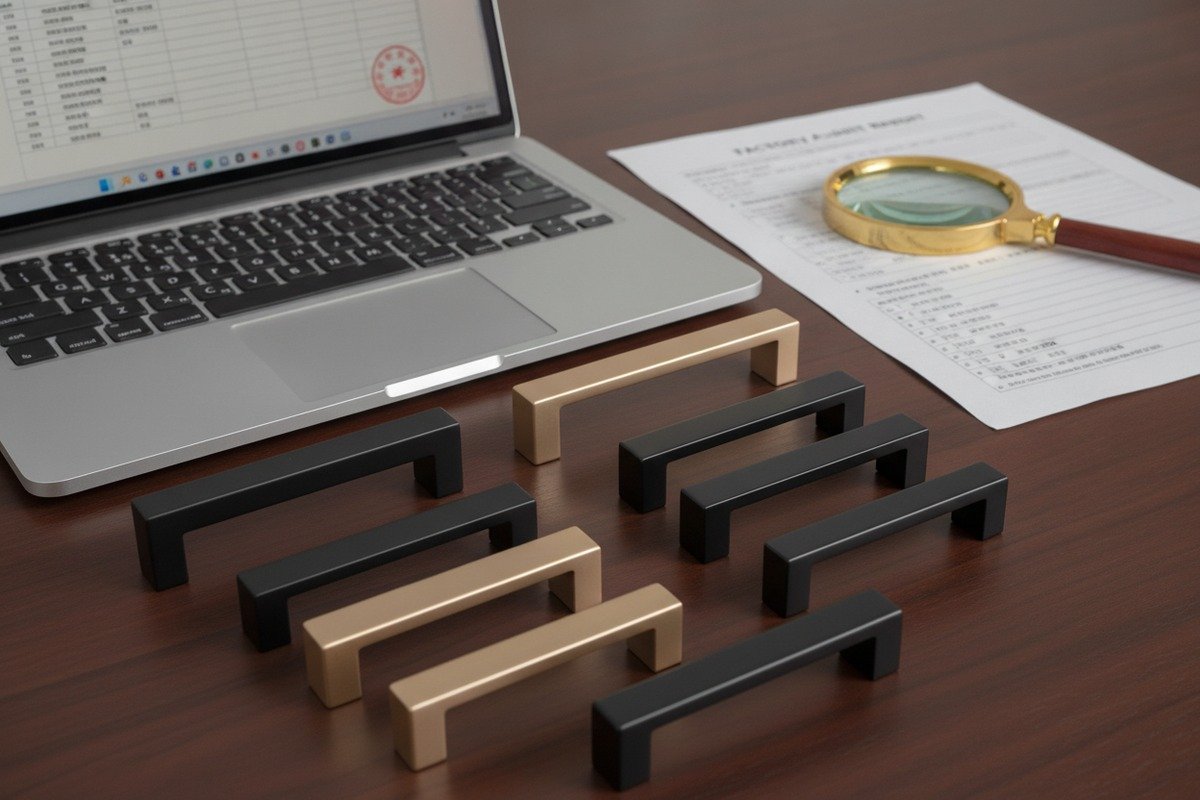
Over 18 years of producing aluminum furniture handles 1 in Foshan, our team has watched buyers lose thousands of dollars to preventable sourcing fraud.
To prevent fraud when sourcing aluminum furniture handles from China, you need a layered due diligence process: verify the supplier’s legal identity through official Chinese databases, validate factory operations with audits or agent visits, control payment flow using escrow or letters of credit, and always hold final payment until a third-party pre-shipment inspection passes.
Aluminum furniture handles look simple. A recessed pull 2 in champagne gold or matte black seems like a low-risk purchase due diligence process 3. But that simplicity is exactly what makes this product attractive to fraudulent intermediaries and weak quality-control operators. Buyers often skip verification steps because the unit cost is low SAMR enterprise credit information system 4. Then a container arrives with the wrong alloy, a different finish, or handles that do not match the approved sample. This article walks you through a practical, step-by-step workflow to protect your business at every stage of the sourcing process.
How do I verify if a Chinese aluminum handle supplier is a legitimate factory or a trading company?
When we ship samples to new customers in Vietnam or the Middle East, the first question they usually ask is whether we actually make the handles ourselves dimensional tolerances 5.
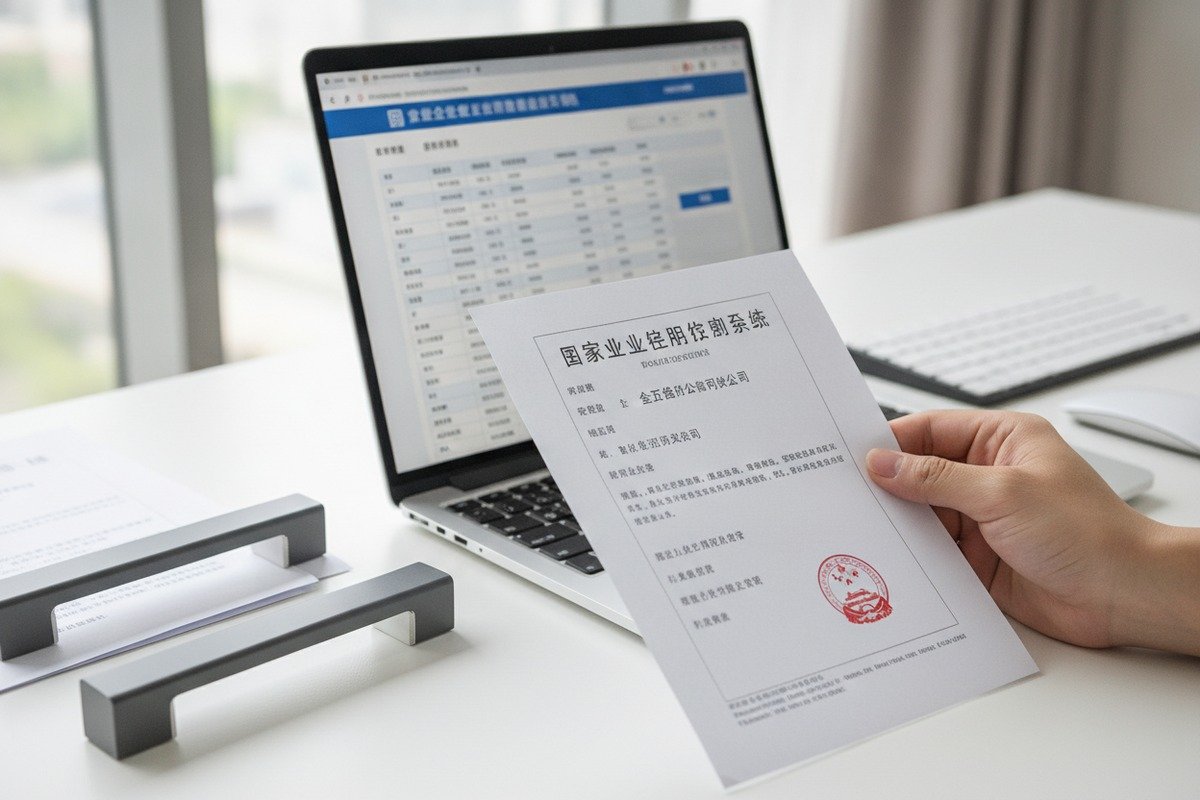
Verify a Chinese supplier by searching their exact legal Chinese company name and registration number on China's official SAMR enterprise credit information system. Cross-check bank account beneficiary names, review B2B platform histories, and use trade data tools like Panjiva to confirm real export activity. Documents sent by the supplier alone are never enough.
Why Documents Alone Are Not Proof
A business license PDF is easy to fake. Certificates for ISO 9001, SGS testing, or RoHS compliance can be photoshopped in minutes irrevocable letters of credit 6. Relying only on documents the supplier emails you is one of the most common mistakes importers make. The correct approach is to verify every claim through an independent channel.
Step-by-Step Legal Verification
Start with the supplier's exact Chinese legal name. Not the English trade name. Not the Alibaba store name. The full Chinese name that appears on their business license. Then follow this process:
- Go to the National Enterprise Credit Information Publicity System (SAMR) at gsxt.gov.cn.
- Enter the Chinese legal name or the Unified Social Credit Code 7.
- Check that the company status is "active" and the registered business scope includes manufacturing of hardware or aluminum products.
- Compare the registered address with the factory address the supplier gave you.
- Note the registered capital and founding date.
If the system returns "company not found," or shows a dissolved or revoked status, walk away immediately.
Cross-Checking Beyond Government Records
| Verification Method | What It Reveals | Reliability |
|---|---|---|
| SAMR database search | Legal existence, status, scope | High |
| Panjiva or Import Genius trade data | Real export history, shipment volume | High |
| Alibaba or Made-in-China profile review | Online reputation, years active, reviews | Medium |
| Google reverse image search on factory photos | Whether photos are stolen from another company | Medium |
| Direct contact with listed references | Actual buyer experience | High |
| Bank account beneficiary name match | Whether payment goes to the legal entity | Critical |
Trading Company vs. Real Factory
A trading company 8 is not automatically a scam. But if a supplier claims to be a factory and is actually a trader, that is a red flag. Traders add a markup, and worse, they hide the real manufacturer. This makes it nearly impossible to enforce quality claims or delivery penalties later.
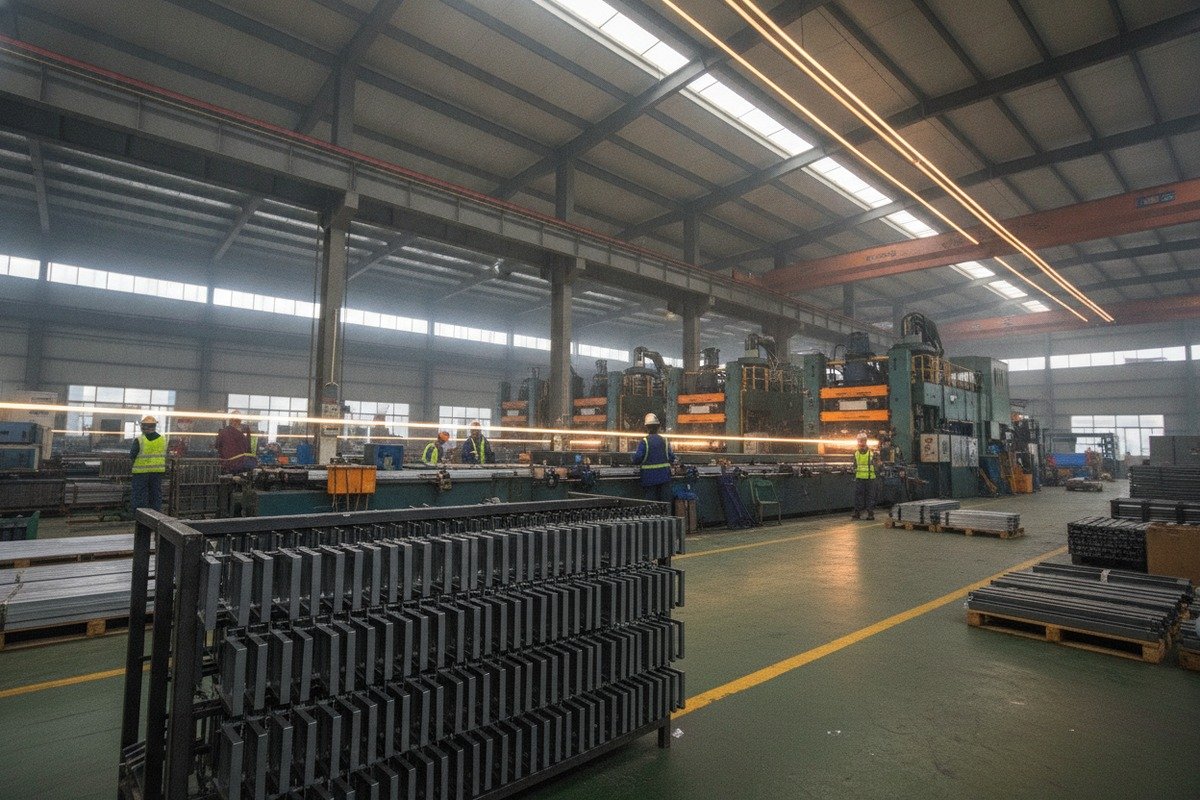
To test this, ask detailed production questions. What extrusion press tonnage 9 do they use? What is their anodizing line capacity? Can they describe the die-cutting process for a recessed handle profile? A real factory answers these questions without hesitation. A trader stalls, gives vague responses, or redirects.
Our recommendation is to either visit the factory yourself or hire a local sourcing agent in China to conduct an on-site audit. A video call showing the production floor is a good start, but it is not a substitute for boots on the ground.
Contact Existing Customers Directly
Ask the supplier for two or three customer references. Then contact those customers independently. Ask about delivery reliability, quality consistency, and communication. If the supplier refuses to share references, treat that as a warning sign.
What steps can I take to ensure the quality of my bulk order matches the samples I received?
In our production facility, we see it all the time: a buyer approves a beautiful champagne gold anodized recessed handle, then a different factory ships bulk units with a thinner coating and visible extrusion lines.
To ensure bulk order quality matches your approved samples, you must lock down written specifications covering alloy grade, dimensional tolerances, surface finish parameters, and color standards. Then require a sealed reference sample, conduct an in-process check during production, and hold final payment until a third-party pre-shipment inspection confirms compliance.
The Bait-and-Switch Problem
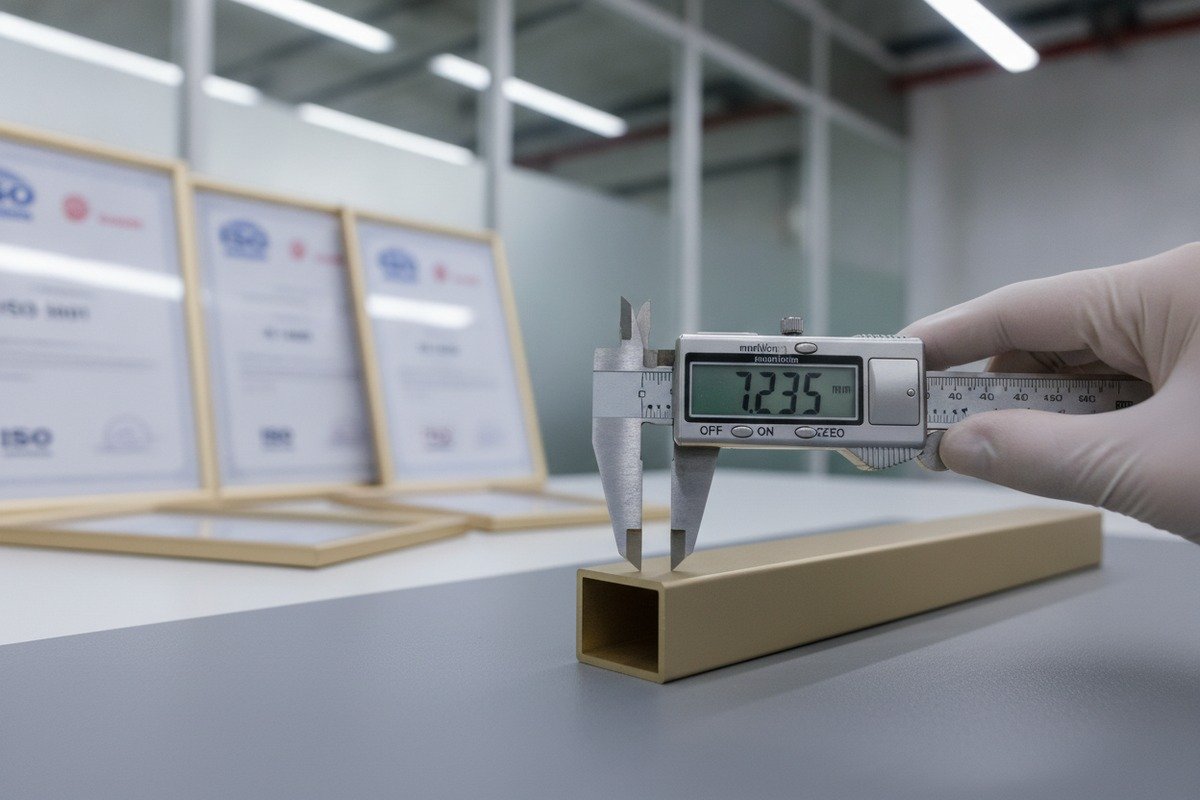
Cosmetic sample fraud is common in aluminum hardware. The sample you receive is carefully finished by hand. It uses the correct 6063-T5 aluminum alloy 10. The anodizing is uniform. The edges are crisp. But when mass production begins, the factory cuts corners. They use a lower-grade alloy, reduce the anodizing thickness, or skip the deburring step. The result looks similar in a photo but fails in the hand.
This is not always intentional fraud. Sometimes it is poor process control. But the effect on your business is the same: your customers reject the product.
Building a Bulletproof Specification Sheet
Your specification sheet is your contract's backbone. It should include:
| Specification Item | Example Requirement | Why It Matters |
|---|---|---|
| Aluminum alloy grade | 6063-T5 | Lower grades are weaker and corrode faster |
| Dimensional tolerance | ±0.15 mm on length, ±0.1 mm on profile | Prevents fitting issues in furniture assembly |
| Surface finish | Matte anodized, 10-15 μm coating thickness | Thin coatings wear off and discolor quickly |
| Color standard | Pantone or RAL reference with ΔE ≤ 1.5 | Prevents visible color variation across batches |
| Edge treatment | Full deburr, no sharp edges | Safety requirement for end users |
| Packaging | Individual PE bag, 50 pcs per inner box, export carton | Prevents scratches during shipping |
The Sealed Reference Sample
After you approve a sample, do not just file it away. Create two sealed reference samples. Keep one at your office. Send one back to the factory with a signed approval note. This sealed sample becomes the physical benchmark for the pre-shipment inspection. Any deviation from the sealed sample is a contractual failure.
Third-Party Inspection Is Non-Negotiable
Do not rely on the factory's own quality-control photos. Hire an independent inspection company such as SGS, Bureau Veritas, or a specialized China QC firm. Schedule two inspection points:
- During production (in-process check): Verify raw material, alloy certificates, and early production units against the specification sheet.
- Pre-shipment inspection: Check a statistically valid sample of finished goods against the sealed reference sample. Test dimensions, finish, color, and packaging.
Hold your final payment until the pre-shipment inspection report is in your hands and you have reviewed it. This single step prevents more quality disasters than any other measure.
Demand Material Certificates
For aluminum furniture handles, ask for the mill test certificate for the aluminum alloy. This document comes from the metal supplier and lists the exact chemical composition. A legitimate factory can provide this without delay. If the supplier cannot or will not provide it, that is a strong signal that they do not control their own material sourcing.
Which payment terms and methods provide the best protection for my business when sourcing from China?
When we onboard new wholesale partners, especially first-time importers, the payment conversation is where trust gets tested most directly.
The safest payment methods for sourcing aluminum handles from China are irrevocable letters of credit and trade assurance escrow services, combined with milestone-based payment terms such as 30% deposit and 70% against the pre-shipment inspection report. Never pay 100% upfront, and never send money to personal bank accounts.
Why Full Prepayment Is Dangerous
Full prepayment removes all your leverage. Once the money is sent, you have no mechanism to enforce quality, delivery, or specification compliance. If the supplier disappears, your options are limited to expensive and slow legal action in a foreign jurisdiction.
Some suppliers push for full payment by offering steep discounts. This is a classic fraud tactic. The discount is meaningless if the goods never arrive or arrive unusable.
Payment Methods Compared
| Payment Method | Buyer Protection Level | Best Used When |
|---|---|---|
| 100% T/T upfront | Very low | Never recommended for new suppliers |
| 30/70 T/T (30% deposit, 70% before shipment) | Low to medium | Only with verified, trusted suppliers |
| 30/70 T/T (70% against inspection report) | Medium to high | Standard for most orders |
| Irrevocable Letter of Credit (L/C) | High | Large orders, new relationships |
| Trade Assurance (Alibaba escrow) | Medium to high | Platform-based orders |
| PayPal (goods & services) | Medium | Small sample orders only |
The 30/70 Structure with Inspection Gate
The most practical structure for mid-sized aluminum handle orders works like this:
- Pay 30% as a deposit after the contract is signed.
- The factory begins production.
- A third-party inspector visits the factory before shipment.
- You review the inspection report.
- If the report passes, you release the remaining 70%.
- The factory ships the goods.
This gives the factory working capital to start production while keeping the majority of your money under your control until quality is confirmed.
Red Flags in Payment Requests
Watch out for these specific warning signs:
- The supplier asks you to pay a personal bank account instead of a corporate account.
- The beneficiary name on the bank account does not match the company's legal name.
- The supplier suddenly changes bank details mid-transaction and claims "system updates" or "new account."
- The supplier pressures you to use Western Union or cryptocurrency.
- The supplier offers a large discount only if you pay 100% upfront.
Every one of these patterns has been associated with payment diversion fraud. If you see any of them, stop the transaction and re-verify the supplier's identity.
Internal Payment Controls on Your Side
Fraud prevention is not just about the supplier. Your own team needs controls too. Separate the roles of order placement, invoice approval, and payment authorization. No single person should be able to place an order and approve the payment for that same order. This segregation of duties prevents internal procurement fraud and catches errors before money moves.
How can I identify red flags in a supplier's pricing and lead time promises before I sign a contract?
Our team processes custom aluminum handle orders with a 3-to-7-day turnaround for standard profiles, so we know exactly what realistic production timelines look like in this industry.
Red flags in pricing include quotes significantly below market rate, hidden fees revealed only after deposit, and refusal to break down costs by material, processing, and finishing. Red flags in lead times include promises that ignore realistic production and shipping schedules. Always compare at least three supplier quotes and timelines before committing to any contract.
Pricing That Seems Too Good
Aluminum furniture handles have a cost floor. The raw aluminum alloy has a market price. Extrusion, CNC cutting, deburring, anodizing or powder coating, and packaging all have labor and energy costs. When a supplier quotes 30-40% below the average of other quotes you have collected, something is wrong.
The low price might mean:
- They plan to substitute a cheaper alloy (e.g., recycled 6060 instead of 6063-T5).
- They will reduce the anodizing thickness below your specification.
- They are a broker adding a small margin on a quote from an unknown sub-factory.
- They plan to hit you with "additional fees" after your deposit is locked in.
How to Benchmark Pricing
Get quotes from at least three suppliers for the exact same specification. Use the same drawing, the same alloy grade, the same finish, and the same quantity. Then compare.
A realistic breakdown for a recessed aluminum furniture handle in champagne gold anodized finish should include:
- Raw material cost per kilogram of aluminum
- Extrusion and die cost (if custom profile)
- CNC cutting and deburring per piece
- Anodizing or finishing cost per square meter
- Packaging cost per piece
- Tooling or mold charges (one-time)
Ask every supplier to itemize these costs. A legitimate factory can do this. A broker usually cannot.
Lead Time Reality Check
For stock aluminum handle profiles, a well-organized factory with inventory can ship within 48 hours. For custom orders requiring new dies or special finishes, 3 to 7 days for production is realistic at a mid-sized factory. Anything under 3 days for a custom order with anodizing should raise questions.
If a supplier promises to deliver 10,000 custom-finished handles in 5 days when other factories quote 12 to 15 days, ask how. If the answer is vague, the supplier is likely planning to source from a sub-factory they do not control, or they will rush production and sacrifice quality.
Contract Protections That Actually Work
Before signing, your contract should include:
- Exact product specifications with alloy grade, dimensions, tolerances, and finish details.
- Delivery schedule with specific dates, not vague "about 2 weeks" language.
- Penalty clauses for late delivery (e.g., 1-2% discount per week of delay).
- Quality acceptance criteria tied to the sealed reference sample and inspection report.
- Clear terms for dispute resolution, ideally specifying arbitration under a recognized body like CIETAC.
- A clause stating that any specification change requires written buyer approval.
Without these elements, your contract is just a purchase order with no teeth. And a toothless contract is an invitation for problems.
When to Walk Away
Trust your instincts, but verify them with data. If a supplier shows three or more of these patterns, do not proceed:
- Unverifiable legal identity
- Pricing far below market
- Pressure for full upfront payment
- Refusal to allow factory visits or third-party inspections
- Constantly changing contact persons or company details
- No verifiable export history
- Vague or evasive answers to technical questions
The cost of walking away from a bad supplier is always lower than the cost of receiving a container of unusable product.
Conclusion
Fraud prevention in aluminum furniture handle sourcing is not a single step. It is a layered discipline: verify the supplier legally, validate the factory operationally, lock down specifications, control your payment flow, and inspect before you pay. Every layer you add makes fraud harder and your supply chain stronger.
Footnotes
1. Provides market overview and material segment analysis for furniture handles. ↩︎
2. Replaced HTTP 403 with a clear explanation of what a recessed pull handle is. ↩︎
3. Replaced HTTP 404 with an authoritative guide on the due diligence process. ↩︎
4. Replaced HTTP 404 PDF with an authoritative Wikipedia page explaining SAMR’s functions, including market supervision. ↩︎
5. Explains dimensional tolerances in manufacturing, referencing ISO standards like ISO 2768 for precision. ↩︎
6. Replaced HTTP 403 with an article explaining irrevocable letters of credit. ↩︎
7. Replaced HTTP 405 with an authoritative Wikipedia page explaining the Unified Social Credit Identifier. ↩︎
8. Differentiates trading companies from manufacturers, outlining their roles and impact on sourcing. ↩︎
9. Discusses how extrusion press tonnage determines billet size, profile, and production capacity in aluminum extrusion. ↩︎
10. Details the properties, applications, and temper designation of 6063-T5 aluminum alloy. ↩︎