
Every year around January, our production floor starts buzzing with urgency as wholesalers rush to lock in their aluminum handle orders before the Chinese New Year shutdown window 1 hits.
Yes, Chinese New Year factory shutdowns significantly impact delivery times for aluminum furniture handles. The disruption extends far beyond the official one-week holiday, often creating a 6–8 week gap in production and shipping capacity that can delay orders well into March or even April.
The key risk is not the holiday itself. It is the broader disruption cycle that surrounds it custom aluminum profiles 2. Let me walk you through how this affects your sourcing timeline, what you can do to protect your supply chain 3, and where the real bottlenecks happen for aluminum handle buyers specifically.
How early should I place my aluminum handle orders to avoid the Chinese New Year holiday rush?
Many of our wholesale clients have learned this lesson the hard way — waiting until December to place Q1 orders often means missing the last production window before the shutdown begins.
To avoid the Chinese New Year rush, you should place aluminum handle orders at least 8–12 weeks before the expected factory closure date. For most years, this means finalizing purchase orders by late October or early November to ensure production and shipment before the holiday.
Why the Rush Starts Earlier Than You Think
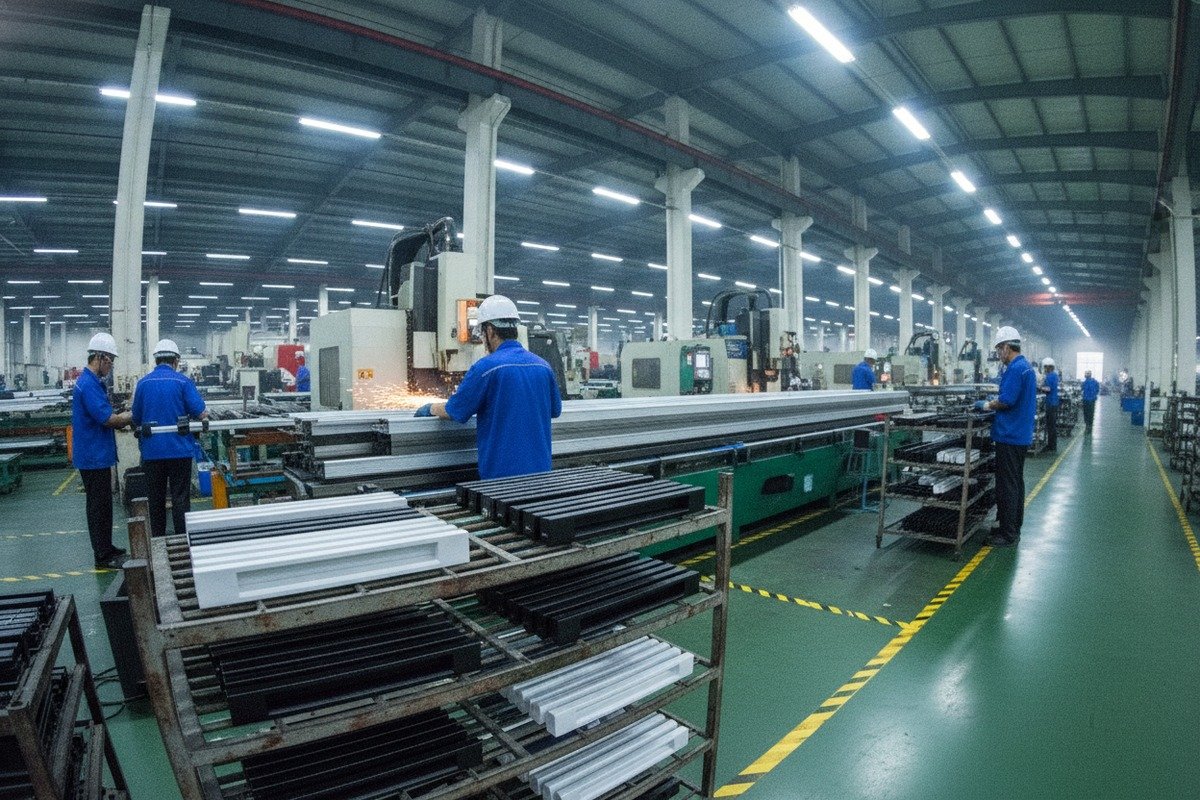
The official Chinese New Year holiday lasts about 7–9 days. But here is what actually happens on the ground. Workers from rural provinces start leaving factories 2–3 weeks before the holiday. Production lines lose capacity gradually, not all at once. In our Foshan facility, we typically see a 30–40% drop in workforce availability by mid-January in years when CNY falls in late January or early February.
This means even if a factory is technically "open," it may not have the manpower to run all production lines. Aluminum handle manufacturing 4 involves multiple steps — extrusion, CNC machining, surface finishing 5 (anodizing or powder coating 6), quality inspection, and packaging. Each step needs trained operators. When key workers leave early, the whole production chain slows down.
The Real Timeline You Should Plan Around
Here is a practical timeline showing the disruption window for a typical CNY falling in late January:
| Phase | Timeframe | Impact on Orders |
|---|---|---|
| Normal production | Before mid-December | Full capacity, standard lead times |
| Pre-holiday rush | Mid-December to early January | Overloaded lines, priority given to existing orders |
| Worker migration begins | 2–3 weeks before CNY | Reduced workforce, slower output |
| Factory shutdown | 1–4 weeks around CNY | Zero production |
| Post-holiday restart | 1–2 weeks after official holiday ends | Skeleton crew, slow ramp-up |
| Full capacity restored | 3–4 weeks after reopening | Normal operations resume |
What This Means for Your Order
If you place an order in late December for a CNY that falls on January 29, your supplier may not even start production before the shutdown. That order then sits in a queue until mid-February at the earliest. Add 2–3 weeks for post-holiday ramp-up, and your handles may not ship until mid-March.
For furniture factories and building material wholesalers who need steady Q1 inventory, this creates a dangerous gap. One delayed shipment of handles can stall an entire cabinet assembly line or leave your warehouse empty during a peak selling season.
The safest approach is simple. Treat October as your deadline month. Confirm quantities, finalize designs, and lock in production slots. By November, your order should already be in production. By December, it should be packed and heading to port.
Can I still access ready-to-ship inventory for my wholesale business during the factory shutdown?
This is one of the most common questions we hear from our distributors in Vietnam and the Middle East — and the answer depends entirely on how your supplier manages their stock.
Yes, some suppliers maintain ready-to-ship inventory during the CNY shutdown, but availability is limited and sells out fast. Suppliers with dedicated warehouses and pre-stocked popular SKUs can still fulfill orders, though custom or less common finishes will likely be unavailable until production resumes.
The Difference Between Stock Items and Custom Orders
Not all aluminum handle orders are the same. There is a clear divide between standard catalog items and custom OEM products during the CNY period.
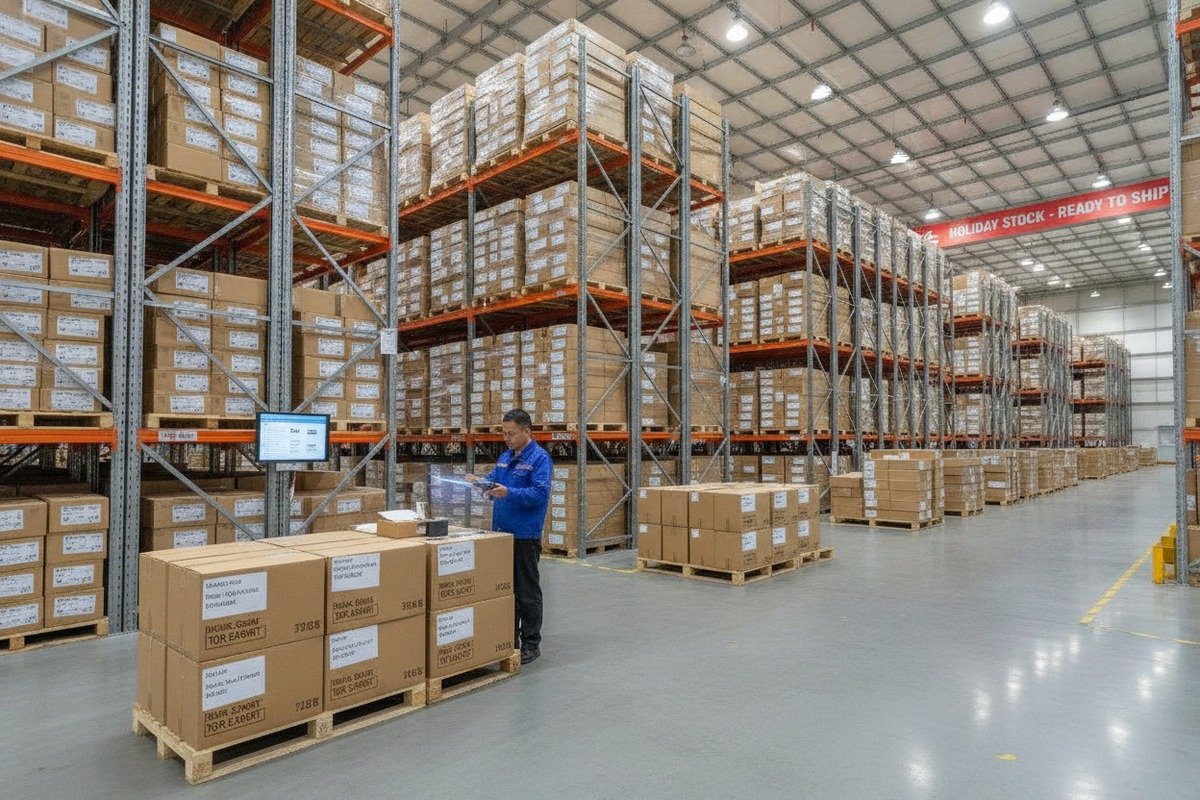
Standard items — like popular matte black, champagne gold, or charcoal grey recessed handles in common lengths — are the type of products a well-prepared supplier keeps in warehouse stock. At our facility, we maintain roughly 300 tons of ready-to-ship inventory 7 specifically to cover demand gaps during holidays and peak seasons. These items can ship within 48 hours even when our production lines are idle.
Custom orders are a different story. If you need a specific anodized color, a non-standard length, or a unique cross-section profile, that requires active production. No amount of warehouse stock can substitute for a custom run. During the shutdown, these orders simply wait.
How to Check Stock Availability Before CNY
Here is what you should ask your supplier before the holiday:
| Question to Ask | Why It Matters |
|---|---|
| Which SKUs do you keep in stock year-round? | Identifies items available during shutdown |
| How much inventory do you hold for my most-ordered items? | Confirms if stock covers your Q1 needs |
| Can you reserve stock for me before the holiday? | Locks in availability before other buyers claim it |
| What is the cutoff date for stock orders during CNY? | Tells you the last day to place an order for quick shipment |
| Will your warehouse and shipping team be available during the break? | Some factories close warehouses too, blocking even stock shipments |
A Smart Buffer Strategy
The best wholesale buyers treat CNY as a known supply gap and plan accordingly. They build a buffer stock of their top-selling handle models in Q4. This is not about hoarding — it is about having 4–6 weeks of extra inventory on hand to bridge the gap between the last pre-holiday shipment and the first post-holiday delivery.
If your top sellers are standard recessed handles in matte black and champagne gold, order an extra month's worth in November. If your customers also order light beige or white finishes regularly, add those to the buffer. The cost of carrying a few extra boxes of handles is much lower than the cost of lost sales or a stalled furniture production line.
One thing to keep in mind: even if your handle supplier has stock, the logistics chain may not cooperate. Shipping lines reduce capacity. Trucking companies shut down. Customs offices operate on skeleton crews. So even stock orders placed during the holiday week may not move until logistics normalize in mid-to-late February.
How will the holiday break impact the production timeline for my custom OEM aluminum profiles?
When we sit down with furniture factory owners to plan their custom handle projects, the first thing we check is the calendar — because a custom OEM order placed at the wrong time can easily miss its delivery window by a full month.
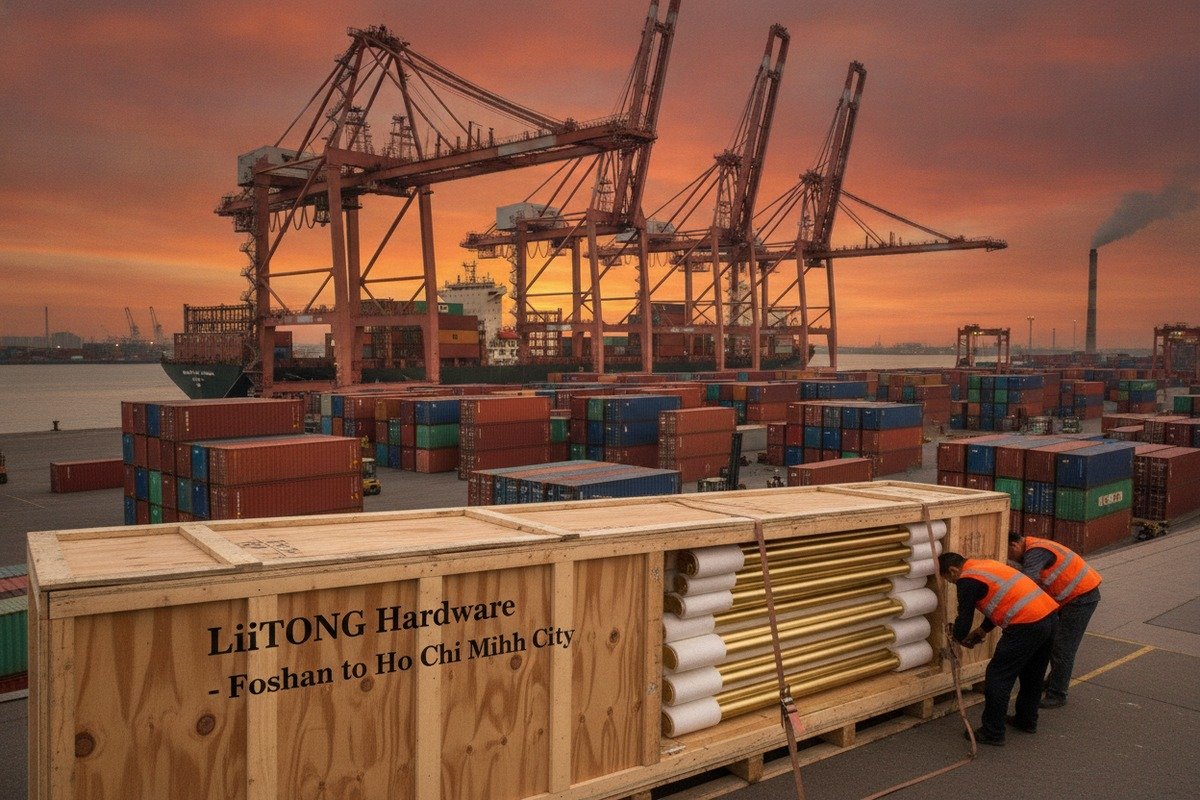
Custom OEM aluminum profile orders are the most affected by CNY shutdowns. A project that normally takes 3–7 days for production can stretch to 5–8 weeks if it overlaps with the holiday period, due to halted extrusion lines, unavailable finishing services, and post-holiday production backlogs.
The Custom Production Chain Is Only as Fast as Its Slowest Link
Custom aluminum furniture handles go through a multi-step production process. Each step depends on the previous one, and each step may involve different teams or even different sub-suppliers. Here is a simplified breakdown:
- Die preparation or selection — If your profile needs a new extrusion die 8, that alone takes 5–10 days under normal conditions.
- Aluminum extrusion — The base profile is formed by pushing heated aluminum billets through the die.
- CNC machining — Cutting to length, drilling holes, milling channels.
- Surface finishing — Anodizing, powder coating, or electrophoretic treatment. Many factories outsource this step to specialized finishing plants.
- Quality inspection — Dimensional checks, surface quality, color matching.
- Packaging and labeling — Custom packaging adds another step.
Now, here is the critical problem. Your handle factory might reopen on February 10. But what if their anodizing subcontractor does not reopen until February 17? Or what if the aluminum billet supplier is still closed? The cascading delays across the supply chain can add weeks to your timeline even after the main factory restarts.
How CNY Affects Each Production Stage
| Production Stage | Normal Lead Time | CNY-Affected Lead Time | Why It's Delayed |
|---|---|---|---|
| New die creation | 5–10 days | 15–25 days | Die shops close; backlog after reopening |
| Extrusion | 1–2 days | 7–14 days | Billet supply delays; reduced line capacity |
| CNC machining | 1–2 days | 3–7 days | Machine operators return at different times |
| Anodizing/finishing | 2–3 days | 7–14 days | Subcontractors reopen later; chemical line restart takes time |
| Inspection & packing | 1 day | 2–3 days | QC staff shortage |
| Total | 3–7 days (standard) | 5–8 weeks (CNY overlap) | Cumulative delays across all stages |
Quality Risks During the Rush Period
There is another risk that does not get talked about enough. Right before CNY, factories are under enormous pressure to finish as many orders as possible. Workers are tired. Supervisors are juggling dozens of last-minute shipments. This is when quality problems creep in — wrong dimensions, inconsistent anodizing color, scratched surfaces, or packaging errors.
After the holiday, the risk shifts. Some workers do not return. Factories hire new staff who may lack experience with precision aluminum finishing. The first few production batches in February or March sometimes show inconsistencies compared to pre-holiday samples.
What You Can Do
If you have a custom OEM project planned for Q1, start the development process in Q3 of the previous year. Approve samples by October. Confirm the production order by November. This gives the factory enough runway to complete your order before the shutdown window begins.
If your project cannot start that early, discuss a split-delivery plan with your supplier. Maybe the extrusion and machining can happen before CNY, with finishing and packing scheduled for immediately after reopening. This cuts weeks off the post-holiday timeline.
Also, always request a written production schedule with milestone dates. If your supplier cannot commit to specific dates, that is a red flag — it likely means your order will be pushed to the back of the queue.
What strategies can I use to prevent logistics delays from affecting my furniture factory's supply chain?
Over the past 18 years of exporting aluminum handles to markets across Southeast Asia and the Middle East, we have seen every type of CNY-related logistics problem — and the buyers who come through unscathed are always the ones who planned ahead.
To prevent CNY logistics delays, use a combination of early ordering, buffer inventory, split shipments, confirmed shipping bookings, and direct supplier communication. The goal is to decouple your production schedule from the Chinese holiday calendar so one disruption does not cascade into weeks of downtime.

Strategy 1: Build a CNY Sourcing Calendar
Do not rely on memory or assumptions. Every year, the CNY date shifts because it follows the lunar calendar 9. Build a sourcing calendar that works backward from the holiday date.
Here is a template you can adapt:
| Weeks Before CNY | Action Item |
|---|---|
| 16–20 weeks | Forecast Q1 demand; identify which handle SKUs need restocking |
| 12–16 weeks | Place production orders for custom items; confirm samples |
| 8–12 weeks | Place orders for standard stock items; confirm shipping method |
| 6–8 weeks | Follow up on production status; book freight space |
| 4–6 weeks | Confirm shipment dates; arrange pre-holiday quality inspection |
| 2–4 weeks | Final shipments depart; confirm warehouse receipt of buffer stock |
| CNY week | No production or shipping; maintain communication via WhatsApp |
| 2–4 weeks after CNY | Follow up on pending orders; confirm restart dates |
Strategy 2: Confirm Dates Directly With Your Supplier
Never assume your supplier follows the government's official holiday schedule. Many factories close earlier and reopen later. Some give workers an extra week. Others stagger their shutdowns.
Send a direct message to your supplier — ideally in October or November — asking these specific questions:
- What is your last production day before CNY?
- What is your last shipping day?
- When do you officially reopen?
- When do you expect to reach full production capacity?
- Will your warehouse team be available during the break for stock orders?
Get these dates in writing. Put them in your project management system. Share them with your procurement team. This is not optional — it is the single most important step in preventing surprise delays.
Strategy 3: Use Split Shipments to Reduce Risk
If your total order is large, ask your supplier to split it into two shipments. The first batch ships before CNY with your most critical SKUs. The second batch ships as soon as production restarts.
This approach has two benefits. First, you get partial inventory on hand before the holiday. Second, your post-holiday shipment is already in the production queue, so it moves faster than a brand-new order placed in February.
Strategy 4: Pre-Book Freight Space
Shipping lines and freight forwarders experience massive congestion in the weeks before and after CNY. Container availability drops. Rates spike. Booking slots fill up fast.
If you use ocean freight 10, book your container at least 3–4 weeks before your planned shipping date. If you use air freight for urgent small orders, know that air cargo rates also increase significantly in January. Work with a freight forwarder who has experience with the CNY surge and can secure capacity early.
Strategy 5: Maintain Communication Channels
During the shutdown, most factory staff go completely offline. Emails go unanswered. Phone calls are not returned. This is normal — people are with their families, often in rural areas with limited connectivity.
The best way to stay connected is through WhatsApp or WeChat. Before the holiday, identify one contact at your supplier who will be reachable during the break, even if only for urgent matters. Set clear expectations: you are not asking them to work during their holiday, but you want a way to reach someone if a critical issue arises.
Strategy 6: Prepare for Post-CNY Price Adjustments
After CNY, some suppliers adjust their pricing. Raw aluminum costs may have shifted. Labor costs often increase as factories compete to attract workers back. Shipping rates may still be elevated.
If you have confirmed pricing in your purchase order before the holiday, that price should hold. But for new orders placed after CNY, be prepared for potential increases of 3–8% depending on market conditions. Locking in pricing before the holiday is another reason to order early.
Conclusion
Chinese New Year is predictable. The disruption it causes is not a surprise — it is a planning problem. Order early, confirm dates directly, build buffer inventory, and keep your communication lines open. Your aluminum handle supply chain will thank you.
Footnotes
1. Explains the duration and impact of Chinese New Year factory shutdowns. ↩︎
2. Specializes in producing custom aluminum extrusions and profiles tailored to specific needs. ↩︎
3. Defines what a supply chain is and its components. ↩︎
4. Details the key steps in the aluminum manufacturing process. ↩︎
5. Provides a general definition and purpose of surface finishing in manufacturing. ↩︎
6. Compares two common surface finishing techniques for aluminum. ↩︎
7. Explains the concept of products being in stock and prepared for immediate shipment. ↩︎
8. Explains what an extrusion die is and its role in aluminum shaping. ↩︎
9. Explains the concept of a lunar calendar and its use in dating systems. ↩︎
10. Defines ocean freight as a method of transporting goods internationally by sea. ↩︎