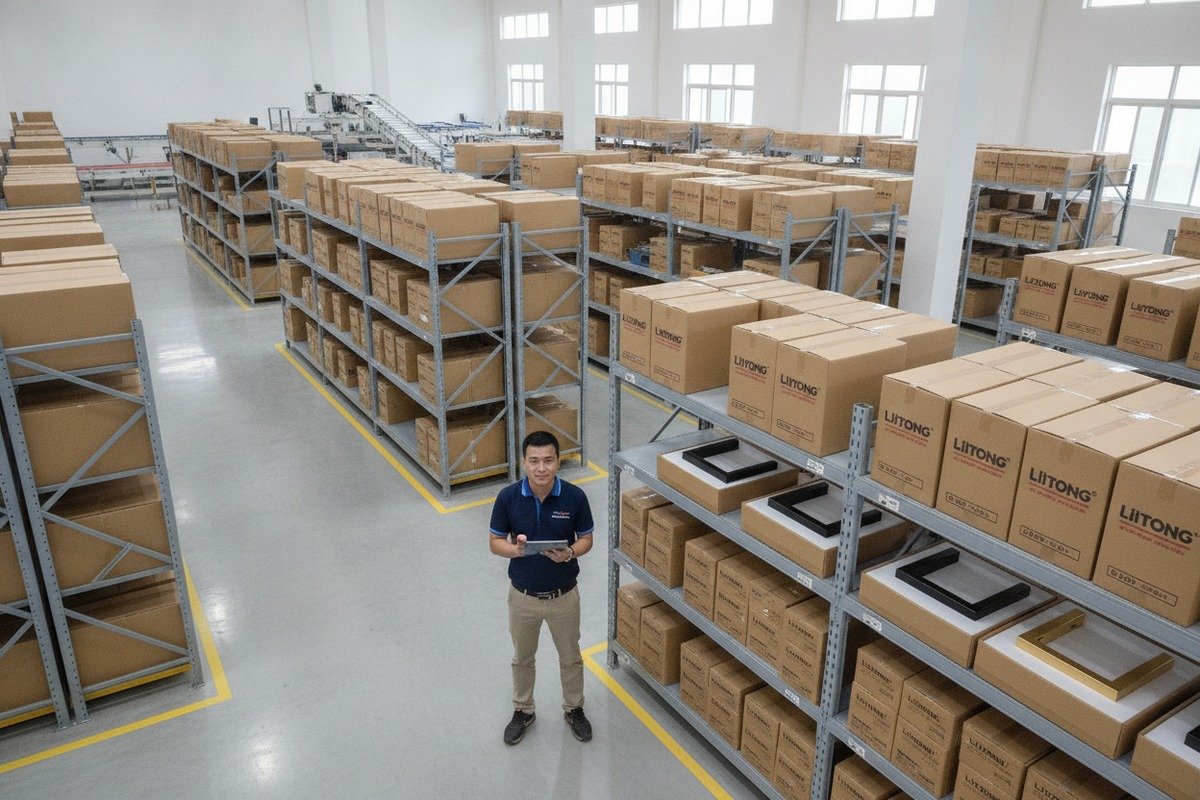
Every week, our sales team gets calls from Vietnam-based furniture factories panicking over missing handle shipments that hold up entire production runs.
To establish local safety stock for aluminum furniture handles in Vietnam, segment your SKUs by urgency, measure real replenishment lead times from your Foshan supplier, set a service-level target for urgent orders, calculate a buffer using lead-time variability, and store that buffer in a local warehouse or with a third-party logistics provider near your factory cluster.
This guide walks you through every step, from finding the right ready-stock manufacturer in Foshan to building a lean inventory system that keeps your Vietnamese operations running without tying up excess cash replenishment lead times 1. Let’s break it down.
How do I find a Foshan manufacturer that offers the ready stock I need for my Vietnam warehouse?
Many buyers in Ho Chi Minh City or Hanoi search online for aluminum handle suppliers but struggle to tell which ones actually hold inventory versus which ones only produce to order service-level target 2.
Look for a Foshan manufacturer with at least 200–300 tons of ready-to-ship inventory, verified export experience to Vietnam, and the ability to ship stock items within 48 hours. Confirm their warehouse capacity through factory visits, video calls, or third-party audits before committing to a replenishment agreement.

Why Foshan Is the Center of Gravity
Foshan is the aluminum extrusion capital 3 of China. Hundreds of factories here produce furniture handles, architectural profiles, and hardware fittings third-party logistics provider 4. But not all of them maintain finished-goods inventory. Many only start production after receiving your purchase order supply chain responsiveness 5. That means their quoted "lead time" is actually manufacturing time plus finishing time plus packing time plus shipping time. If you need safety stock in Vietnam, you need a supplier who already has common SKUs sitting on shelves, ready to pack and ship.
In our own warehouse, we keep over 300 tons of finished aluminum handles and profiles in stock at any given time. This is deliberate. We know our Vietnam customers cannot afford to wait three weeks for a new production run when a furniture factory needs handles tomorrow.
What to Check Before You Commit
Here is a simple checklist for evaluating a Foshan supplier's readiness to support your Vietnam safety stock:
| Evaluation Criteria | What to Look For | Red Flag |
|---|---|---|
| Ready stock volume | 200+ tons on hand, updated stock list monthly | "We can produce quickly" but no actual inventory |
| Shipping speed for stock items | 48-hour dispatch or less | Only weekly consolidated shipments |
| Export experience to Vietnam | Existing Vietnam clients, familiar with customs | No prior Vietnam shipments |
| MOQ flexibility | Low minimums for stock items (e.g., 50–100 pcs) | High MOQ even for standard finishes |
| Quality system | Anodizing consistency, sample matching, QC reports | No samples available, no inspection records |
| Communication | WhatsApp or Zalo response within 12 hours | Slow replies, language barriers |
Ask for the Stock List, Not Just the Catalog
A catalog shows what a factory can make. A stock list shows what they have right now. Ask your Foshan supplier for a monthly updated stock list that includes item codes, finishes, quantities on hand, and expected restock dates. This is the foundation of your replenishment planning.
When we send stock lists to our Vietnam partners, we include finish codes, length options, and real-time quantities. That way, buyers can place replenishment orders against actual availability instead of guessing.
Verify Through Samples and Small Trial Orders
Before building your safety stock around any supplier, order samples of your top five to ten handle models. Check the anodizing finish 6, dimensional accuracy, and packaging quality. Then place a small trial order of 200–500 pieces and track the entire cycle: order confirmation, production or picking, packing, shipping, customs clearance, and delivery to your Vietnam location. Measure every segment in days. That data becomes the basis for your safety stock calculation later.
How can I leverage fast shipping from China to keep my local safety stock replenished?
Shipping from Foshan to Vietnam is faster than most buyers expect, but speed only matters if you plan your replenishment cycles around real transit data rather than assumptions.
Leverage fast China-to-Vietnam shipping by using sea freight from Foshan to Ho Chi Minh City (3–5 days transit) or cross-border trucking to northern Vietnam (2–4 days), scheduling regular replenishment orders aligned with your consumption rate, and keeping a reorder point that accounts for customs clearance variability.

Understand Your Shipping Options
There are three main ways to move aluminum furniture handles from Foshan to Vietnam:
| Shipping Method | Transit Time | Best For | Cost Level |
|---|---|---|---|
| Sea freight (Foshan/Nansha to HCMC) | 3–5 days | Regular bulk replenishment | Low |
| Cross-border trucking (Foshan to Hanoi/Lang Son) | 2–4 days | Northern Vietnam factories | Medium |
| Air freight (Guangzhou to HCMC/Hanoi) | 1–2 days | True emergencies only | High |
Sea freight is the most cost-effective for routine replenishment. Cross-border trucking works well for factories in northern Vietnam, especially near Hanoi or Bac Ninh. Air freight should be your last resort because handle hardware is heavy relative to its value, so air costs can exceed the product value on small lots.
Build a Replenishment Calendar
Do not wait until stock runs out. Instead, build a fixed replenishment calendar based on your average weekly consumption. For example, if your Vietnam warehouse uses 2,000 handles per week and your total replenishment lead time (order to receipt) is 10 days, you should trigger a new order when stock drops to roughly 3,000 units. That gives you a buffer for transit delays, customs holdups, or weekend closures.
Our team helps Vietnam buyers set up these calendars. We share a simple spreadsheet that tracks order dates, expected arrival dates, and actual arrival dates. Over time, this builds a lead-time dataset that makes your safety stock calculations more accurate.
Don't Forget Customs Clearance Time
Many buyers measure shipping time from port to port but forget that customs clearance in Vietnam can add one to five days depending on paperwork accuracy, HS code classification, and inspection requirements. Aluminum handles typically fall under HS code 8302 8, but your specific finish or material composition may trigger additional checks. Work with a reliable customs broker and make sure your Foshan supplier provides clean, accurate commercial invoices and packing lists every time.
Use a Dual-Channel Approach
For critical SKUs, consider maintaining two replenishment channels. Use sea freight for your regular monthly or biweekly orders. Keep cross-border trucking or a small air freight budget as a backup for unexpected demand spikes. This way, your safety stock does not need to cover worst-case scenarios alone. You have a fast lane available when you need it.
What are the best ways for me to manage inventory for both standard and custom aluminum handles?
Managing a mixed inventory of standard finishes and custom OEM handles is one of the trickiest parts of running a Vietnam safety stock program. Get it wrong and you end up with dead stock in unpopular finishes or constant shortages of your best sellers.
Manage mixed inventory by separating standard handles (stock from ready inventory, high buffer) from custom handles (made to order, minimal buffer). Use ABC segmentation to classify SKUs by movement speed and urgency. Keep standard items in your local warehouse and order custom items only against confirmed purchase orders with pre-negotiated fast turnaround from your supplier.
ABC Segmentation for Aluminum Handles
Not every handle SKU deserves the same stock level. Use a simple ABC classification:
| Category | Description | Stock Strategy | Service Level Target |
|---|---|---|---|
| A-items | Top 10–15 SKUs by volume; popular finishes like matte black, champagne gold, charcoal grey | High safety stock; always in local warehouse | 95–98% fill rate |
| B-items | Moderate movers; less common lengths or finishes like light beige or brushed silver | Medium buffer; reorder on schedule | 85–90% fill rate |
| C-items | Slow movers, special project finishes, one-off custom colors | Minimal or zero stock; make to order only | Order-based only |
This segmentation prevents you from over-investing in inventory that does not move while ensuring your most critical items are always available.
Standard Handles: Stock Aggressively
For standard recessed handles in popular finishes—matte black, champagne gold, white—your Foshan supplier should have these in ready stock. Your job is to keep a rolling buffer in Vietnam. Set a reorder point based on your average weekly usage plus a safety margin for lead-time variability. For example, if you use 500 matte black handles per week and your lead time varies between 7 and 14 days, your safety stock should cover the gap between average and worst-case lead time.
We produce these popular finishes continuously. Our anodizing lines run standard colors every week, so replenishment from our side is predictable. That predictability is what makes local buffering work.
Custom Handles: Keep It Lean
Custom handles—unique lengths, special anodized colors, branded engravings—should not sit in your safety stock. The risk of obsolescence is too high. Instead, negotiate a fast turnaround agreement with your supplier. In our case, custom orders typically ship within 3–7 days because we hold raw aluminum profiles in stock and only need to cut, finish, and pack to your specs.
The key is to separate the two streams in your warehouse management system 9. Tag every SKU as "standard-stock" or "custom-MTO" (made to order). Run different reorder rules for each category.
Avoid the MOQ Trap
Minimum order quantities can force you to buy more than you need, especially for B-items or custom finishes. If your supplier's MOQ is 500 pieces but you only need 150, you end up with 350 pieces sitting in your warehouse for months. Ask your supplier about mixed-SKU orders where you can combine multiple handle types into one shipment to meet the MOQ threshold without overstocking any single item. We allow this for our Vietnam partners, and it significantly reduces dead stock.
Use a Simple Digital Tracker
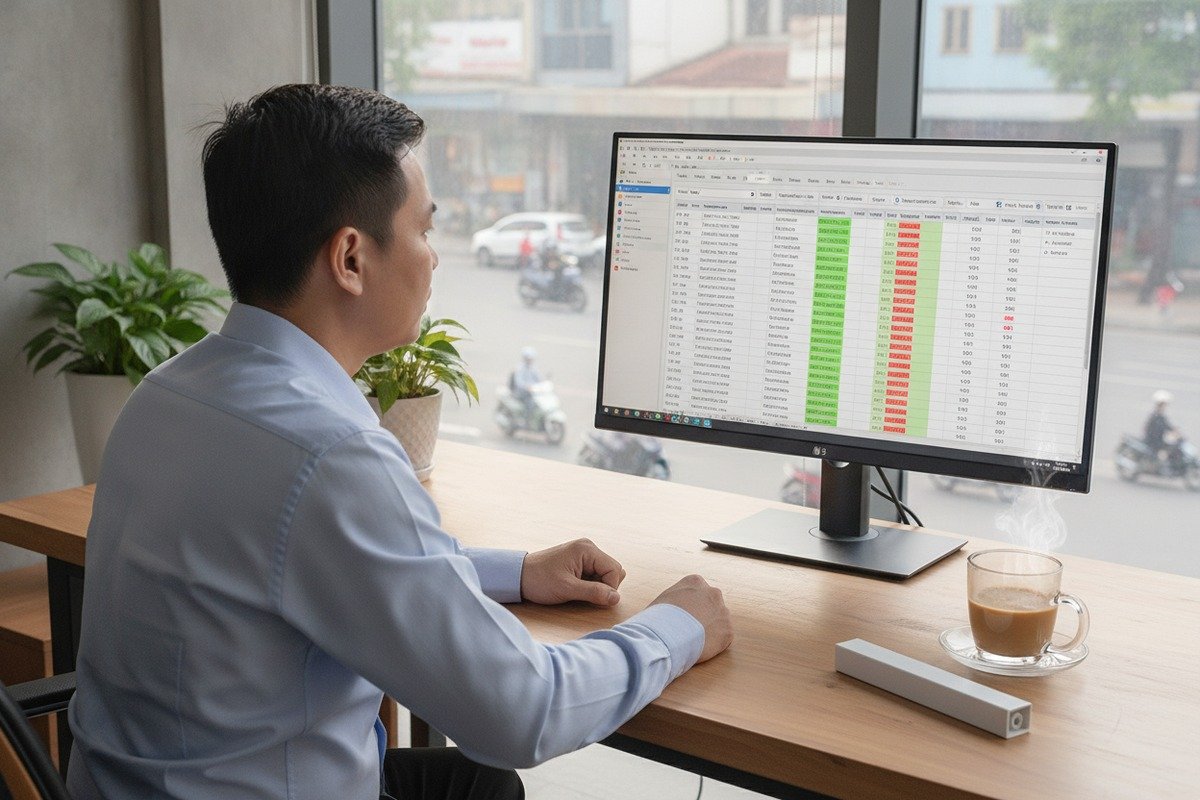
You do not need expensive ERP software to manage handle inventory in Vietnam. A shared Google Sheet or a basic inventory app works for most small to mid-size operations. Track these fields for each SKU: current stock, weekly usage rate, reorder point, order date, expected arrival, and actual arrival. Review it weekly. Adjust reorder points quarterly based on real data.
How can I ensure my supply chain is responsive enough to meet the urgent demands of local furniture factories?
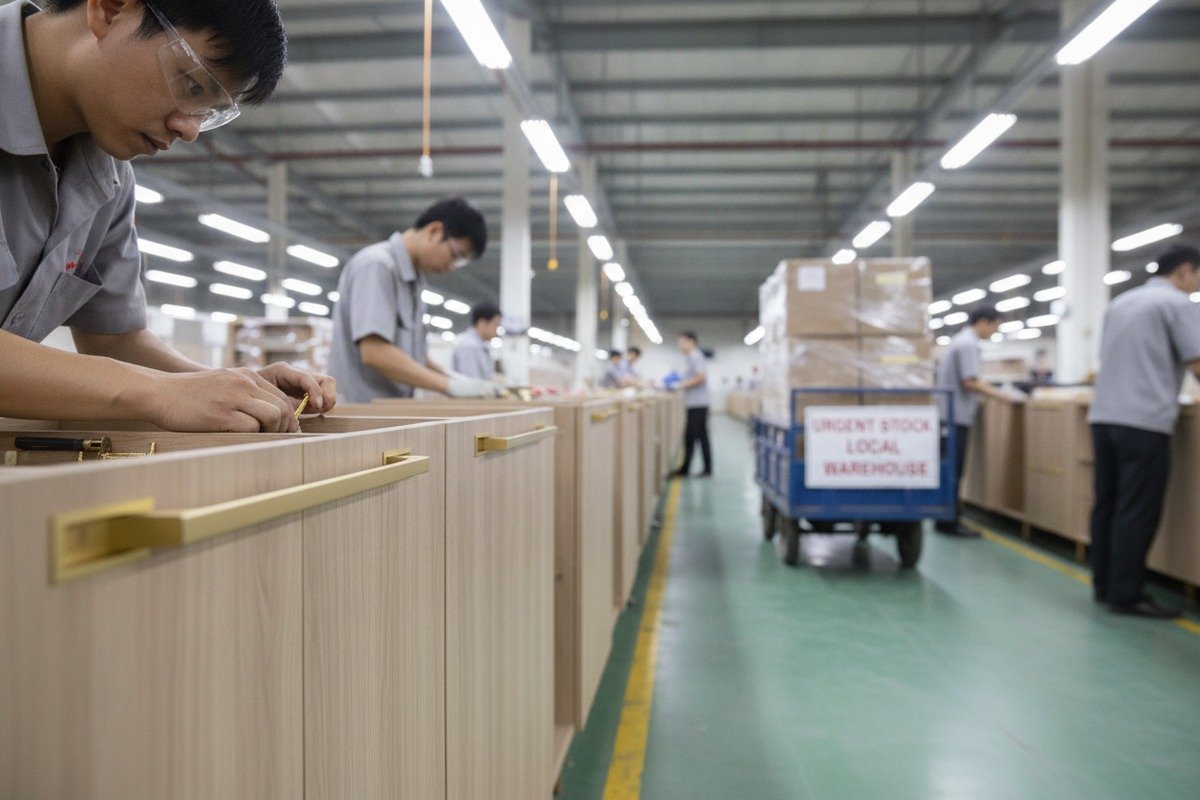
Furniture factories in Vietnam often face last-minute project deadline changes, export shipment shortages, and sudden retail replenishment orders. When handles are missing, entire cabinet lines stop.
Ensure supply chain responsiveness by combining local safety stock with a reliable Foshan supplier who offers 48-hour dispatch, pre-negotiated emergency production slots, and clear communication via WhatsApp. Add a local 3PL or micro-warehouse near your main customer cluster so you can deliver handles within 24 hours of an urgent request.
Why Urgent Orders Fail
Most urgent-order failures happen not because of demand size but because of component unavailability at the wrong time. Aluminum furniture handles are low in unit cost but high in impact. A missing handle shipment can delay a container of finished cabinets worth tens of thousands of dollars. The root causes are predictable:
- The buyer held zero stock and relied entirely on the supplier's lead time.
- The supplier's production queue was full when the urgent order arrived.
- Customs clearance took longer than expected.
- The wrong finish or length was shipped, requiring rework.
- No backup supplier or backup channel existed.
Each of these failures is preventable with the right system design.
Build a Tiered Response System
Think of your supply chain as having three speed tiers:
Tier 1 – Immediate (same day to 24 hours): Fulfilled from your local Vietnam safety stock. This is your fastest response and the primary reason to hold local inventory.
Tier 2 – Fast (3–7 days): Fulfilled from your Foshan supplier's ready stock via sea freight or cross-border trucking. This covers demand that exceeds your local buffer.
Tier 3 – Standard (7–21 days): Fulfilled through custom production orders. This covers non-urgent, planned demand or special finishes.
When a furniture factory calls with an urgent order, you check Tier 1 first. If local stock covers it, you deliver the same day. If not, you escalate to Tier 2 and give the customer a realistic 5–7 day timeline. Tier 3 is for everything else.
Pre-Negotiate Emergency Production Agreements
Ask your Foshan supplier to reserve a small production slot for emergency orders. At our factory, we offer priority production slots to long-term Vietnam partners. This means that even if our main production line is booked, we can fast-track a small urgent batch within 3 days. This kind of agreement only works with suppliers who know your business and trust your order volume.
Position Your Stock Close to the Customer
If most of your furniture factory customers are in Binh Duong or Dong Nai provinces near Ho Chi Minh City, your local stock should be there too. Do not store handles in Hanoi if your customers are in the south. Proximity is everything for same-day response. A small 20–30 square meter warehouse space or a shared 3PL facility near the industrial zone is usually enough for aluminum handles. They are compact, stackable, and not perishable.
Quality as a Responsiveness Factor
An urgent order fulfilled with defective handles is worse than a late order. Make sure every batch entering your Vietnam safety stock passes a receiving inspection. Check anodizing color consistency against your approved sample, verify dimensions, and confirm packaging integrity. We include QC reports with every shipment, but the receiving end should still spot-check. One bad batch entering your buffer can create a chain of complaints that undermines your entire urgent-response system.
Communication Is Infrastructure
Set up a dedicated WhatsApp group or channel with your Foshan supplier specifically for urgent orders. Define clear escalation rules: who approves an urgent order, who confirms stock availability within two hours, who books shipping. Speed is not just about inventory. It is about decision speed. The fastest warehouse in the world is useless if the purchase order takes three days to get approved internally.
Conclusion
Building local safety stock for aluminum furniture handles in Vietnam is not about hoarding inventory. It is about designing a lean, data-driven buffer that protects your customers from costly delays while keeping your cash flow healthy. Start with your top five SKUs, measure real lead times for 60–90 days, and expand only where stockouts persist. The combination of a reliable Foshan supplier with ready stock and a small, well-managed local warehouse gives you the responsiveness that wins repeat business from Vietnam's demanding furniture factories.
Footnotes
1. Explains the definition and importance of replenishment lead times in inventory management. ↩︎
2. Defines service level in inventory management and its impact on customer satisfaction. ↩︎
3. Explains why Foshan is a global hub for aluminum extrusion manufacturing. ↩︎
4. Wikipedia provides a comprehensive and authoritative definition of third-party logistics. ↩︎
5. Explains the concept of supply chain responsiveness and its importance. ↩︎
6. The Aluminum Anodizers Council is a highly authoritative source for the definition of anodizing. ↩︎
7. Defines finished goods inventory and its role in the supply chain. ↩︎
8. Provides official customs classification information for base metal mountings and fittings. ↩︎
9. Defines a Warehouse Management System (WMS) and its role in operations. ↩︎
10. Wikipedia offers an authoritative explanation of ABC analysis in inventory management. ↩︎