
Every quarter, our sales team fields the same urgent question from buyers across Vietnam and the Middle East: “Aluminum prices just jumped — what happens to my order cost?” It is a real pain point. One week you lock in a great quote, and the next week the London Metal Exchange 1 shifts and your entire margin evaporates. Without a clear plan, both sides lose.
To manage raw material price fluctuations when sourcing aluminum furniture handles, negotiate index-based price adjustment mechanisms tied to the LME aluminum benchmark. Structure your contract to adjust only the raw material portion of the unit cost, set caps and floors, define review frequency, and leverage supplier inventory for short-term price locks.
This guide walks you through the exact clauses, formulas, and negotiation scripts we use and recommend to our wholesale partners long-term supply contract 2. Let’s break it down section by section so you can protect your margins and build a stronger supplier relationship.
How Can I Link My Aluminum Handle Unit Price to Global Aluminum Ingot Market Trends?
When we quote aluminum handles for furniture factories, the first thing clients notice is that raw aluminum is only part of the story Dispute Resolution Process 3. Linking your handle price directly to the ingot market without understanding the cost breakdown leads to over-correction or under-protection. This confusion costs buyers thousands of dollars every year.
You can link your aluminum handle unit price to global trends by using the LME Aluminum Grade A index as your benchmark, applying a material weight factor per handle, and adjusting only the raw material share of the total cost — typically 30% to 50% — while keeping labor, finishing, and tooling costs fixed.

Understanding the Cost Composition of an Aluminum Handle
Before you link anything to the LME, you need to know what you are actually paying for. A finished aluminum furniture handle — like our recessed matte-finish pulls or champagne gold anodized profiles — is not just a chunk of metal. The price includes raw aluminum, extrusion or die-casting labor, surface finishing such as anodizing or powder coating, tooling amortization, quality inspection, packaging, and logistics.
Here is a typical cost breakdown for a mid-to-high-end extruded aluminum handle:
| Cost Component | Approximate Share | Volatile or Fixed? |
|---|---|---|
| Raw aluminum material | 30–45% | Volatile |
| Extrusion / die-casting labor | 15–20% | Relatively fixed |
| Surface finishing (anodizing, powder coating) | 10–15% | Semi-fixed |
| Tooling amortization | 5–10% | Fixed |
| Quality control & packaging | 5–8% | Fixed |
| Overhead & profit margin | 10–15% | Fixed |
This table tells you something important. If aluminum ingot prices jump 20%, your handle price should not jump 20%. It should jump roughly 20% of the material share — so maybe 6% to 9% of the total unit price. This distinction is where most negotiations go wrong.
Choosing the Right Benchmark Index
The LME Aluminum Grade A 4 is the global standard. It is transparent, updated daily, and widely accepted. For buyers sourcing from China, the Shanghai Futures Exchange 5 (SHFE) aluminum price is another option. In our experience exporting to the Middle East and Vietnam, most international contracts default to the LME because it removes regional bias.
Here is a simple comparison:
| Index | Currency | Best For | Update Frequency |
|---|---|---|---|
| LME Aluminum Grade A | USD | International contracts | Daily |
| SHFE Aluminum | CNY | China-domestic contracts | Daily |
| Platts Aluminum Assessment 6 | USD | Specialty or regional deals | Daily |
We recommend using a 3-month rolling average of the LME rather than daily spot prices. Daily prices are noisy. A rolling average smooths out short-term spikes and gives both parties a more stable reference point.
The Linking Formula
Here is a practical formula you can use in your next negotiation:
New Unit Price = Base Price + (Current LME Average − Base LME) × Weight per Handle × Material Cost Share
For example, suppose your base price is $1.20 per handle, the base LME is $2,300/ton, and each handle weighs 0.05 kg. If the material cost share is 40%, and the current LME average rises to $2,500/ton, the adjustment would be:
($2,500 − $2,300) × 0.00005 tons × 0.40 = $0.004 per handle.
The new price becomes $1.204. This is precise, fair, and verifiable.
Why This Protects Both Sides
When we explain this formula to our partners, the reaction is almost always relief. Buyers stop worrying about hidden markups. Suppliers stop worrying about absorbing losses when aluminum spikes. The key is that both sides agree on the base index date, the weight factor, and the material cost share before signing.
What Specific Price Adjustment Clauses Should I Include in My Long-Term Supply Contract?
Over the years, our team has helped wholesale clients draft and review supply contracts for aluminum handles. The biggest mistake we see is vague language. A clause that says "prices may change based on market conditions" protects nobody. It invites disputes. You need specificity.
Your long-term supply contract should include an index-based adjustment clause specifying the benchmark index, base date, adjustment formula, material weight factor, threshold trigger, cap and floor limits, review frequency, dispute resolution process, and a continuation-of-supply provision during price disagreements.
The Nine Essential Clause Elements
Let me walk you through each element that belongs in your contract.
1. Base Price and Base Index Date. State the agreed unit price and the LME value on the date the contract is signed. For example: "The base price of $1.20/unit is calculated with reference to the LME Aluminum Grade A 3-month rolling average of $2,300/ton as of January 1, 2026."
2. Adjustment Formula. Write the exact math. Do not leave it open to interpretation. Use the formula from the previous section.
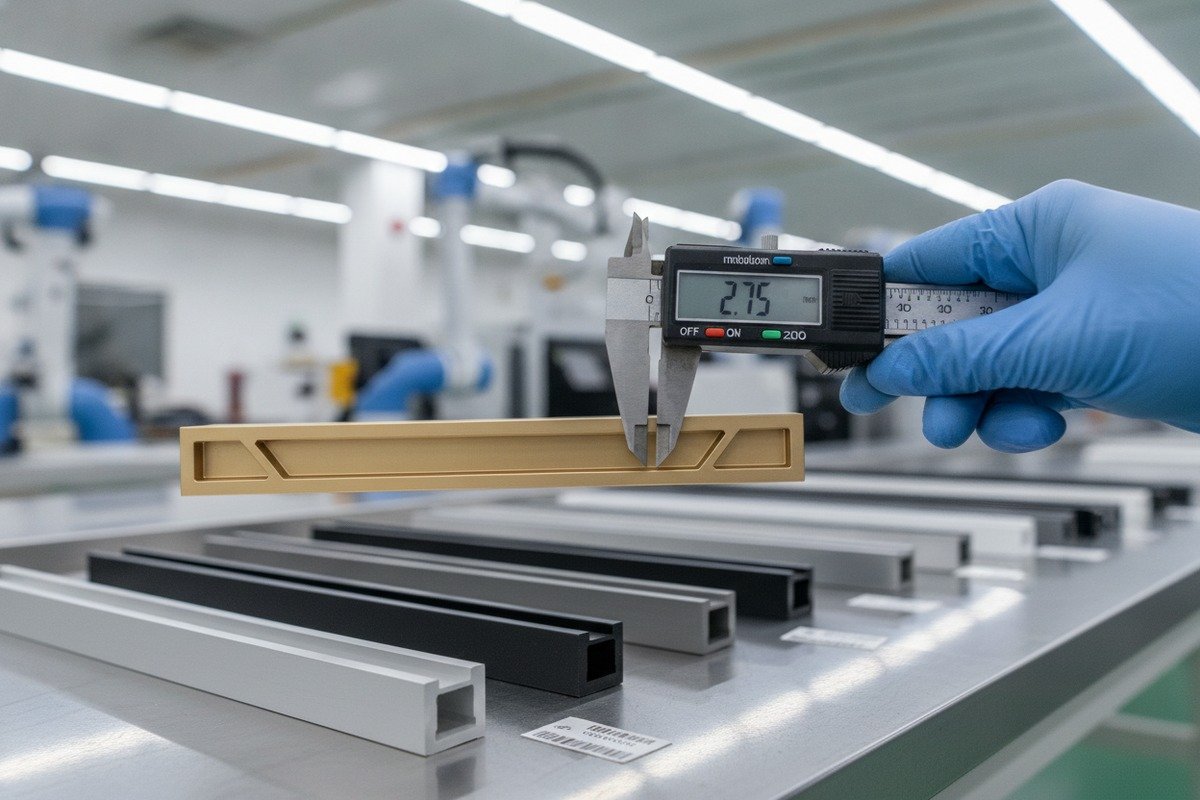
3. Material Weight Factor. Specify the aluminum weight per handle. Material Weight Factor 7 Request the CAD drawing or technical spec sheet from your supplier. Our standard recessed pulls, for instance, use between 0.04 kg and 0.08 kg of aluminum depending on the length and profile.
4. Material Cost Share. Agree on what percentage of the total price is subject to adjustment. This is negotiable, but 30–50% is the standard range for extruded aluminum handles.
5. Threshold Trigger. Set a minimum change required before any adjustment kicks in. A ±5% threshold is common. This avoids paperwork for minor fluctuations.
6. Cap and Floor. Limit the maximum adjustment in either direction. A ±10% cap protects both parties from extreme shocks.
7. Review Frequency. Decide whether adjustments happen monthly, quarterly, or per order. Quarterly is the most common for long-term contracts. Per-order works better for sporadic purchasing.
8. Verification Process. State how data will be verified. "Both parties shall reference the official LME closing price published on lme.com" is clear and neutral.
9. Continuation of Supply. This is the clause most people forget. It should state that if a price dispute arises, production and shipment continue at the last agreed price. The difference is settled retroactively within 30 days. This prevents supply disruptions.
Sample Clause Template
Here is a simplified version you can adapt:
Price Adjustment Mechanism: The unit price shall be adjusted quarterly based on the LME Aluminum Grade A 3-month rolling average. Adjustments apply only when the index changes by more than ±5% from the base index. The adjustment applies solely to the raw material component (40% of unit price). Maximum adjustment per quarter shall not exceed ±10% of the base price. During any pricing dispute, production shall continue at the last agreed price with retroactive settlement within 30 days.
Common Mistakes to Avoid
Do not use vague language like "reasonable market adjustments." Do not tie the adjustment to the supplier's internal purchase cost — that is unverifiable. Do not skip the cap and floor. And never assume verbal agreements will hold. Put every detail in writing.
Can I Negotiate a Fixed Price Period by Leveraging the Supplier's Existing Raw Material Inventory?
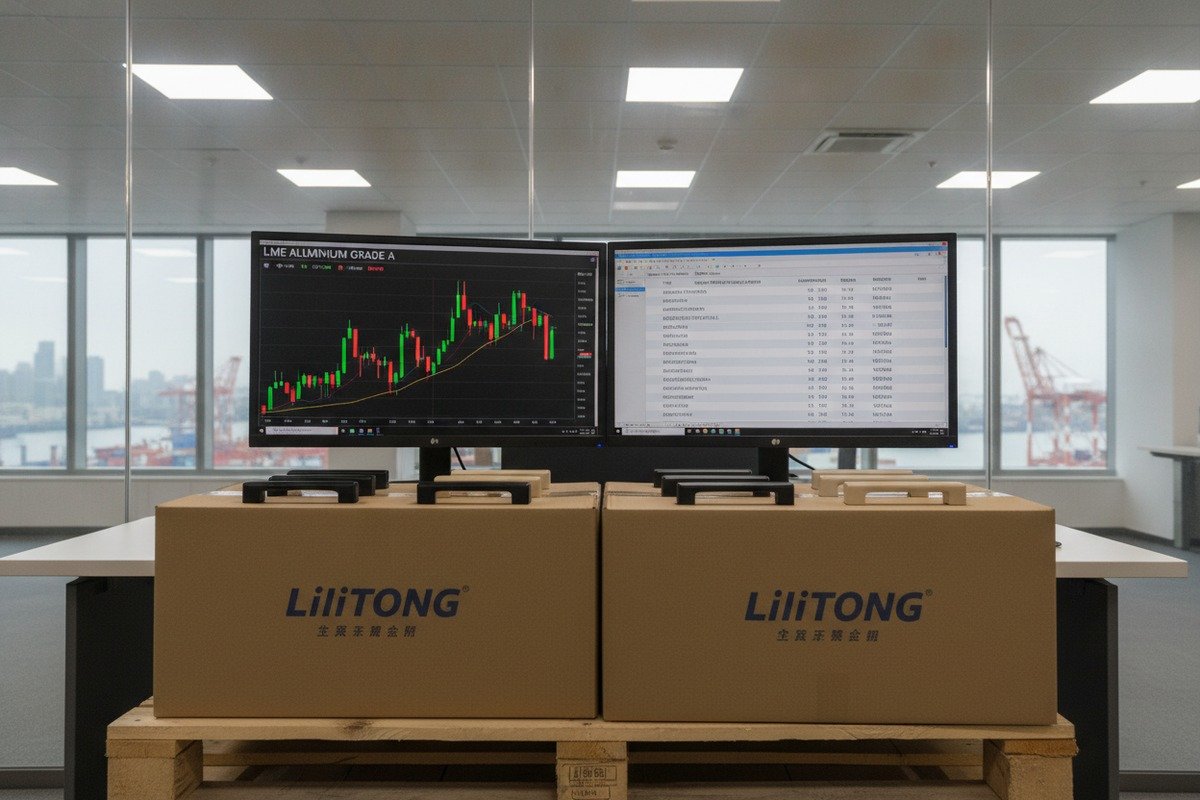
This is one of the smartest questions our furniture factory clients ask. When you place a large order, the supplier often already has aluminum rod or ingot stock in their warehouse. Our Foshan facility, for instance, maintains over 300 tons of ready-to-ship inventory at any given time. That existing stock was purchased at a known cost. So why should your price float with tomorrow's market?
Yes, you can negotiate a fixed price period by referencing the supplier's existing raw material inventory. If the supplier already holds aluminum stock purchased at a known cost, you can lock a fixed price for the volume that inventory covers — typically 60 to 90 days — before switching to an index-based adjustment for subsequent orders.
How Inventory-Based Price Locks Work
The logic is simple. If your supplier bought 50 tons of aluminum rod last month at $2,200/ton, and your order requires 5 tons, that material cost is already locked for the supplier. There is no market risk on that inventory. You can reasonably ask for a fixed price covering your order volume against that existing stock.
Here is how to structure it:
Step-by-Step Negotiation Approach
Step 1: Ask for inventory disclosure. Request a general statement of raw material stock levels. You do not need exact financial records — just confirmation that inventory exists and approximate quantities.
Step 2: Match your order volume to available stock. If the supplier has 50 tons and your order needs 5 tons, you are well within their buffer. This strengthens your case for a fixed price.
Step 3: Agree on a fixed price window. Typically 60–90 days, covering one or two order cycles. After that window, the price reverts to the index-based mechanism.
Step 4: Document it. Add a clause like: "For orders placed within the first 90 days of this agreement, the unit price is fixed at $1.20 based on supplier's existing raw material inventory 8 purchased at approximately $2,200/ton LME equivalent."
When This Strategy Works Best
| Scenario | Effectiveness | Why |
|---|---|---|
| Supplier holds large inventory (>100 tons) | High | Material cost is already locked; no market risk for supplier |
| Aluminum market is trending upward | Very high | Supplier benefits from selling at current price before stock cost rises |
| Aluminum market is trending downward | Moderate | Supplier may resist locking since future purchases will be cheaper |
| Small supplier with minimal stock | Low | Limited inventory means limited fixed-price coverage |
| Large initial order (>10 tons of product) | High | Your volume consumes a significant portion of their stock, giving you leverage |
Combining Fixed and Floating Periods
The most effective contracts we have seen from our partners combine both strategies. The first 90 days use a fixed price based on inventory. After that, the contract switches to the LME-based adjustment formula. This gives buyers immediate budget certainty while maintaining long-term fairness.
One tip from our experience: if you are planning seasonal orders — say, a big push before Q2 furniture trade shows — time your fixed-price window to cover that peak. Buy early when the supplier's stock is fresh and the price is locked. Then let the adjustment mechanism handle the rest of the year.
The Leverage of Volume Commitment
Suppliers are far more willing to offer fixed pricing when you commit to volume. volume commitment 9 A promise of "we will order 10,000 handles over the next 90 days" is powerful. It gives the supplier production planning certainty, which offsets the risk of holding inventory at a fixed cost. This is a win-win scenario.
How Do I Balance Price Stability With the Need for High-End Customization in My Furniture Hardware Orders?
This is where many of our conversations with Middle Eastern and Vietnamese distributors get interesting. They want premium finishes — champagne gold anodizing, matte charcoal powder coating, custom lengths, unique cross-section profiles — but they also want predictable costs. Customization inherently adds complexity. And complexity can make price adjustment mechanisms harder to manage.
Balance price stability and high-end customization by separating your cost structure into a variable raw material component and fixed customization fees. Negotiate the PAM on the material portion only, while locking finishing, tooling, and design fees as fixed line items. This isolates volatility from your premium features.
Why Customization Complicates Pricing
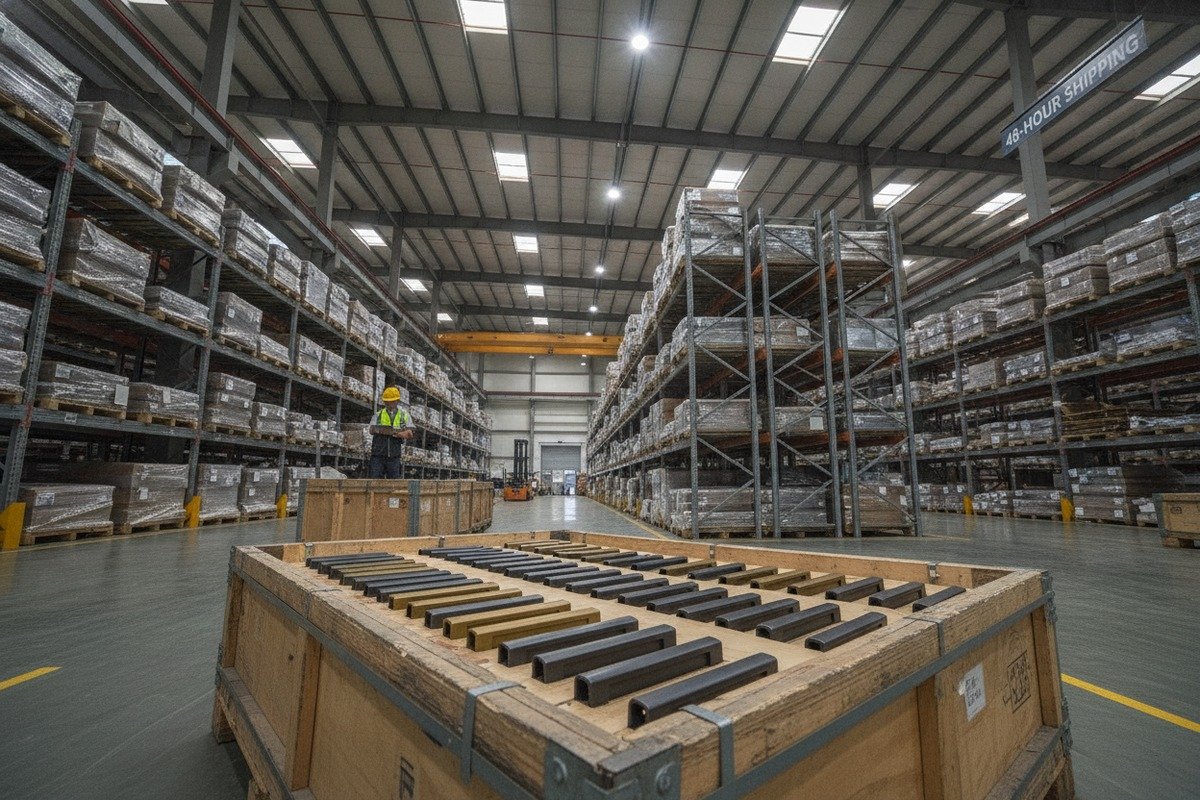
A standard extruded aluminum handle in a natural mill finish has a straightforward cost structure 10. But when you request a champagne gold anodized finish with specific Pantone color matching, or a recessed pull with a deep geometric channel for a finger grip in a non-standard length, the cost layers multiply.
Here is what custom orders add:
- New extrusion dies: $500–$3,000 per die, amortized over the order volume.
- Special anodizing or powder coating: 10–25% premium over standard finishes.
- Quality control for color consistency: Additional inspection steps.
- Smaller batch sizes: Higher per-unit overhead.
The Two-Tier Pricing Model
The solution is to split your pricing into two tiers:
Tier 1 — Material Cost (Variable): This is subject to the LME-based adjustment mechanism. It covers the raw aluminum input only.
Tier 2 — Customization Cost (Fixed): This covers everything else — die costs, finishing, tooling, special packaging, color matching. These costs are agreed upon at the start of the contract and remain fixed for the contract term, typically 12 months.
This way, if aluminum prices rise 15%, your customization fees do not change. Your champagne gold anodizing cost stays the same. Only the underlying metal cost adjusts.
Practical Example
Suppose you order our sleek, architectural recessed pulls in a matte charcoal finish with a custom 256mm length. Here is how the two-tier model might look:
| Cost Element | Amount per Handle | Tier | Subject to PAM? |
|---|---|---|---|
| Raw aluminum (0.06 kg) | $0.48 | Tier 1 — Variable | Yes |
| Extrusion labor | $0.18 | Tier 2 — Fixed | No |
| Matte charcoal powder coating | $0.22 | Tier 2 — Fixed | No |
| Custom die amortization | $0.08 | Tier 2 — Fixed | No |
| QC, packaging, overhead | $0.12 | Tier 2 — Fixed | No |
| Profit margin | $0.12 | Tier 2 — Fixed | No |
| Total | $1.20 |
If the LME rises 10%, only the $0.48 material cost adjusts — by roughly $0.048. Your new price is $1.248, not $1.32. That is a 4% increase instead of a 10% increase. This precision matters when you are ordering tens of thousands of handles.
Protecting Your Premium Brand Positioning
If you are a distributor selling high-end furniture hardware, your customers expect consistent pricing. Wild swings in your cost base make it impossible to maintain stable retail pricing. The two-tier model gives you the stability you need for your premium product line while still being fair to your supplier when raw material costs genuinely change.
Locking Customization Fees With Volume Commitments
Here is another tactic we recommend. When you commit to a 12-month volume forecast, ask your supplier to lock all Tier 2 costs for the full year. In return, you guarantee a minimum order quantity per quarter. This gives the supplier production planning certainty, and it gives you cost certainty on everything except the raw metal — which is handled by the PAM.
Some of our long-term partners in Vietnam use this exact approach. They forecast their annual handle needs in January, lock the customization fees, and let the LME-based clause handle the aluminum fluctuations. It works because both sides understand what is fixed and what is variable. There are no surprises.
When to Renegotiate Customization Fees
Even fixed fees should be reviewed annually. If energy costs spike dramatically or a new environmental regulation increases the cost of anodizing chemicals, your supplier may have a legitimate reason to adjust Tier 2 pricing. Build an annual review clause into your contract. This keeps the relationship healthy and prevents resentment from building on either side.
Conclusion
Negotiating price adjustment mechanisms is about building transparent, data-driven partnerships. Link your handle price to the LME, adjust only the material portion, set caps and floors, leverage inventory for fixed periods, and separate customization fees. These steps protect both your budget and your supplier relationship for the long term.
Footnotes
1. Provides official information and market data for the London Metal Exchange. ↩︎
2. Defines long-term supply contracts and their role in managing financial risks and operational planning. ↩︎
3. Provides information on various dispute resolution processes and services by the American Arbitration Association. ↩︎
4. Details the LME Aluminum Grade A contract, its specifications, and benefits as a global reference price. ↩︎
5. Official website of the Shanghai Futures Exchange, a major futures exchange in China. ↩︎
6. Information on S&P Global Platts’ aluminum price assessments, including benchmarks for the US market. ↩︎
7. Explains how to calculate metal weight, which is the practical application of a material weight factor. ↩︎
8. Explains raw material inventory, its management, and importance in manufacturing and supply chain. ↩︎
9. Discusses volume commitments in supply chain, their benefits, and implications for buyers and suppliers. ↩︎
10. Authoritative definition and explanation of cost structure in business. ↩︎