
Every quarter, our sales team in Foshan fields the same question from overseas buyers: “Why did your price go up?” More often than not, the answer traces back to a policy shift most buyers never see on their invoice — China’s export tax rebate 1.
China canceled the export tax rebate on aluminum products effective December 1, 2024. This means Chinese suppliers no longer receive VAT refunds on aluminum furniture handle exports, and the lost rebate is typically passed through to buyers as a higher FOB or EXW price rather than appearing as a separate line item.
Understanding this policy change is not optional if you source aluminum hardware from China Ministry of Finance 2. Below, we break down how the rebate worked, why it disappeared, and what it means for your next purchase order.
How Can I Find the Current Export Tax Rebate Rate for Aluminum Furniture Handles in China?
When our export documentation team prepares shipments, the very first thing we verify is the HS code 3 — because the rebate rate is tied to that code, not to a product's common name.
You can find the current export tax rebate rate by looking up your product's HS code on China's State Taxation Administration website or asking your supplier and freight forwarder to confirm it. Since December 1, 2024, the rebate rate for aluminum exports, including most aluminum furniture handles, is zero.

What Is an HS Code and Why Does It Matter?
Every product crossing an international border is classified under a Harmonized System 4 (HS) code. This code determines not just the import duty in your country, but also the export tax rebate rate on the Chinese side. Aluminum furniture handles 5 typically fall under codes like 8302.41 (base metal mountings, fittings, and similar articles suitable for furniture) or under specific aluminum profile codes depending on the product's form and finish.
The key point is this: if your handle is classified as an aluminum product covered by the December 2024 cancellation, the rebate is zero. If it is classified under a different heading — say, as a finished furniture fitting where aluminum is only one component — the treatment may differ. This is why confirming the HS code is critical before assuming any rebate applies or does not apply.
Where to Check the Rate
| Source | What You Find | Language |
|---|---|---|
| China State Taxation Administration website | Official rebate rate by HS code | Chinese (use browser translation) |
| Your Chinese supplier | HS code used on their export declaration | English or Chinese |
| Your freight forwarder or customs broker | Confirmation of HS code and current rebate status | English |
| China Customs online tariff lookup tool | Tariff and rebate schedule by product code | Chinese |
A Practical Tip
Do not rely on old quotes or rate sheets. Before December 2024, many aluminum furniture handles carried a 13% rebate. That rate is now zero for aluminum exports. If your supplier has not updated their pricing or if you are referencing a quote from mid-2024, the numbers are stale. We always recommend asking the supplier directly: "What HS code do you declare for this product, and what is the current export tax rebate rate?" That single question can save you from budget surprises.
Also, be aware that some aluminum furniture handles are highly processed — anodized, powder-coated, or assembled with other materials. The classification can sometimes shift depending on the degree of processing. A raw extruded aluminum pull and a fully finished, multi-material recessed handle may not share the same HS code. When in doubt, ask your freight forwarder to confirm with Chinese customs.
How Does the Chinese Export Tax Rebate Specifically Lower the Unit Price of My Furniture Handle Order?
Over the past 18 years of running our production lines, we have seen export tax rebates quietly shape every price negotiation — even when the buyer never knew the rebate existed.
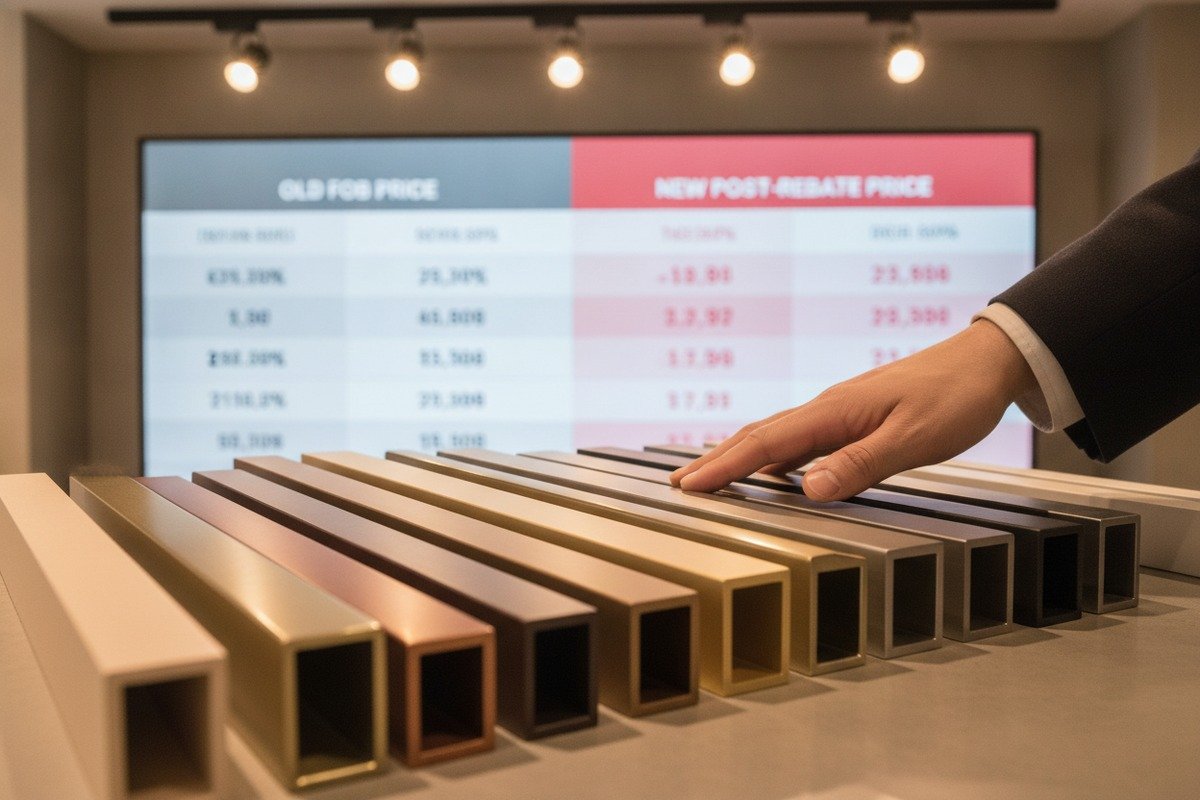
Before the cancellation, Chinese exporters recovered up to 13% of the VAT paid during production by claiming the export tax rebate. This recovery improved their net revenue and allowed them to offer lower FOB prices. Now that the rebate is zero for aluminum, suppliers have lost that financial cushion, and unit prices often rise to compensate.
How the Rebate Worked in Practice
Think of it this way. A Chinese supplier buys raw aluminum, pays for anodizing, machining, and packaging. At each step, they pay 13% VAT on inputs. When they exported the finished handle, the government used to refund that VAT — or a portion of it — through the export tax rebate. That refund went straight into the supplier's pocket, improving their margin or allowing them to price more aggressively for overseas buyers.
Here is a simplified example:
| Cost Element | Before Dec 2024 (With 13% Rebate) | After Dec 2024 (No Rebate) |
|---|---|---|
| Raw material + processing cost per handle | ¥10.00 | ¥10.00 |
| VAT paid on inputs (13%) | ¥1.30 | ¥1.30 |
| Export tax rebate recovered | ¥1.30 | ¥0.00 |
| Net cost to supplier after rebate | ¥10.00 | ¥11.30 |
| Supplier's target margin (15%) | ¥1.50 | ¥1.70 |
| Approximate FOB price per handle | ¥11.50 | ¥13.00 |
The numbers above are simplified, but the direction is clear. The rebate used to function as a cost offset. Without it, the supplier's effective cost rises, and that increase tends to flow into the quoted price.
Why It Does Not Appear on Your Invoice
This is a common source of confusion. The export tax rebate is not a discount you see on a commercial invoice. It is an internal financial mechanism between the Chinese supplier and the Chinese tax authority. You, as the buyer, never claim this rebate. You never see a line item called "tax rebate deduction." Instead, the rebate's benefit was already baked into the lower price the supplier offered you. Now that the rebate is gone, the baked-in benefit is also gone.
The Negotiation Reality
Not every supplier will raise prices by the full amount of the lost rebate. Some will absorb part of it to keep your order. Others, especially smaller factories with thin margins, may have no choice but to pass the full cost through. In our experience, the market finds a middle ground over time. During the first few months after a rebate change, pricing is volatile. Suppliers test the market. Buyers push back. Eventually, a new equilibrium forms.
The practical takeaway: if your supplier quoted you a price in mid-2024 and you are placing the order in 2025, ask them to re-quote. The old price almost certainly assumed a 13% rebate that no longer exists. Ignoring this will either lead to a surprise price increase or, worse, a supplier who cuts corners on quality to preserve margin.
What Are the Risks to My Sourcing Budget If China Changes Its Export Tax Rebate Policies?
When we plan our annual production capacity and inventory — we currently hold about 300 tons of ready-to-ship stock — we always factor in policy risk, because a single announcement from Beijing can shift our cost base overnight.
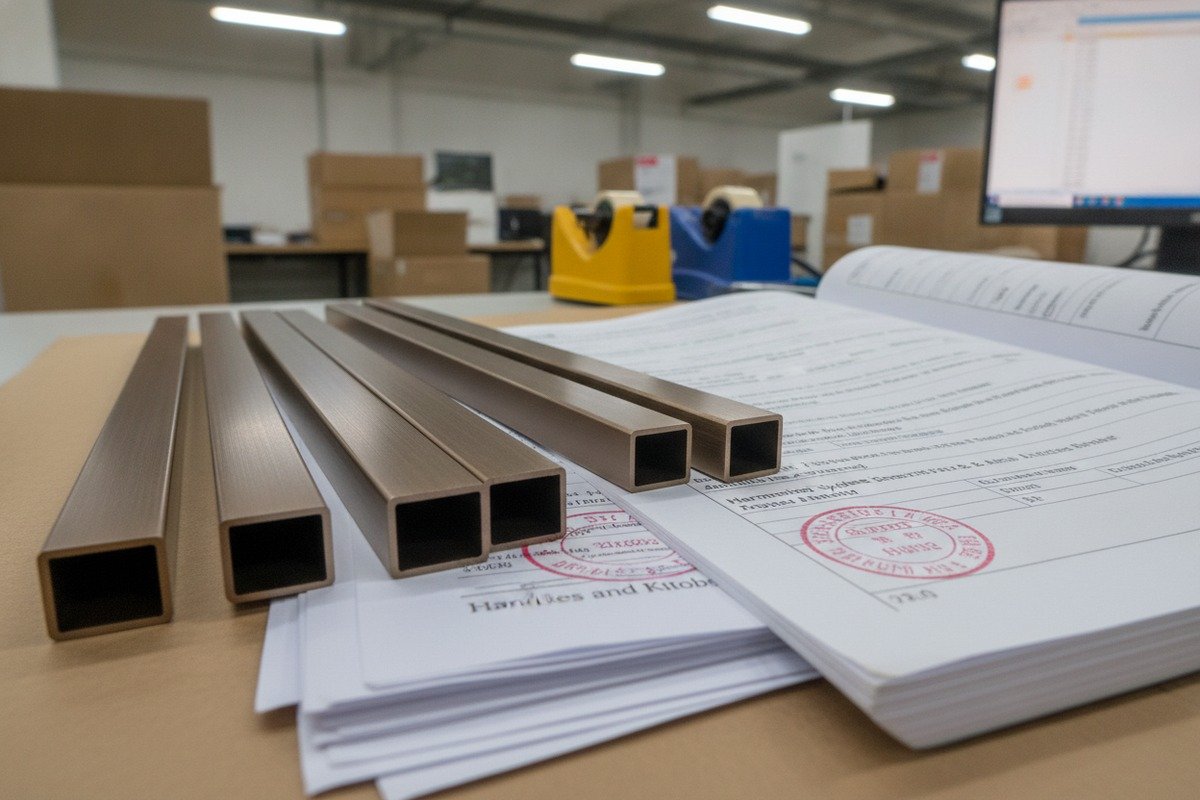
The primary risk is sudden, unpredictable price increases. China's Ministry of Finance can adjust or cancel export tax rebates with very short notice, as happened on November 15, 2024, with the policy taking effect just two weeks later on December 1. This gives buyers almost no time to renegotiate contracts or adjust budgets.
The Speed of Policy Changes
The November 15, 2024 announcement gave the market only about two weeks before the new rules kicked in on December 1, 2024. For buyers who had open purchase orders or were mid-negotiation, this created immediate uncertainty. Could the supplier honor the old price? Would a surcharge appear? Would delivery be delayed as suppliers recalculated?
Three Layers of Risk
It helps to think about the risk in three layers:
| Risk Layer | Description | Mitigation Strategy |
|---|---|---|
| Price risk | Supplier raises unit price to offset lost rebate | Lock in prices with fixed-term contracts; include rebate-change clauses |
| Supply risk | Supplier delays shipment while recalculating costs or renegotiating | Maintain safety stock; use suppliers with ready inventory (like our 48-hour shipping model) |
| Classification risk | Product's HS code is reclassified, changing its rebate or duty treatment | Verify HS code with customs broker before every major order |
Currency Amplification
Here is a factor many buyers overlook. The rebate cancellation hits the supplier in Chinese yuan. But if the yuan strengthens against your local currency at the same time, the price increase in your currency is even larger. Conversely, if the yuan weakens, it can partially offset the rebate loss. Monitoring the CNY/USD or CNY/AED exchange rate is important when you are budgeting for aluminum handle purchases from China.
Diversification as a Hedge
Some buyers respond to policy risk by diversifying their supplier base across countries. That is a valid strategy, but it comes with trade-offs. Vietnam, India, and Indonesia are growing as alternative sources, but they often lack the depth of aluminum processing infrastructure that China has built over decades. For highly finished products like anodized, precision-extruded recessed handles with tight tolerances, Chinese factories still offer a combination of quality, speed, and customization that is hard to match. The smarter approach may be to diversify within China — working with suppliers who hold stock, offer fast turnaround, and are transparent about how policy changes affect their pricing.
Long-Term Policy Direction
The Chinese government framed the December 2024 changes as part of a broader push to reduce overcapacity in basic materials 6, encourage higher-value manufacturing, and address environmental concerns. This suggests the rebate cancellation for aluminum is unlikely to be reversed soon. Buyers should plan their 2025 and 2026 budgets assuming zero rebate on aluminum exports from China. If a rebate is ever restored, treat it as a bonus, not a baseline.
Does My Supplier Need a Formal VAT Invoice to Ensure I Get the Best Price Through Tax Rebates?
On our production floor in Foshan, we deal with VAT invoices — called "fapiao" in Chinese — every single day. They are the backbone of cost recovery in China's tax system, and they directly affect what we can offer on export pricing.
Yes, your supplier must obtain formal VAT invoices (known as "zengzhi shui fapiao") from their own material and service providers to claim input tax credits. Before December 2024, these credits fed into the export tax rebate calculation, which helped lower your price. Without proper VAT invoices in their supply chain, no rebate could be claimed, and the cost savings were lost.
How VAT Invoices Connect to Your Price
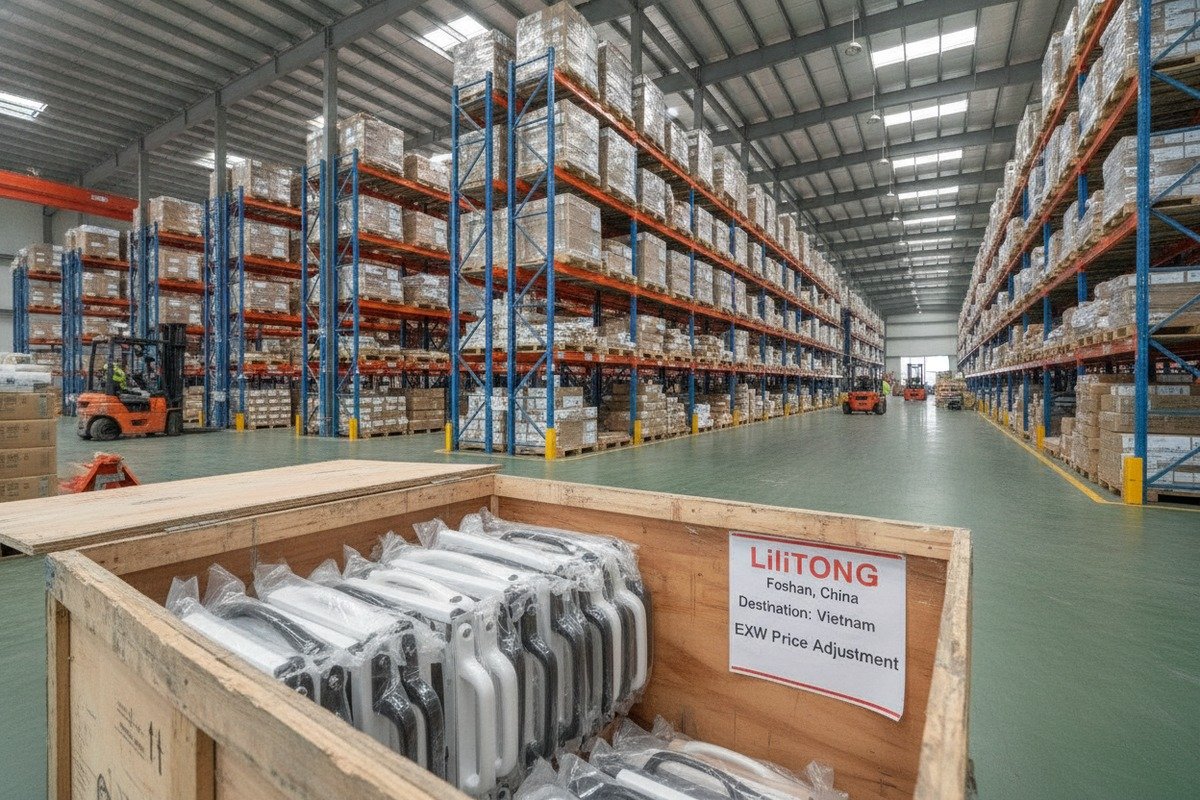
China's VAT system 7 works on a chain principle. Every business in the supply chain 8 issues and receives VAT invoices. When a supplier buys aluminum ingots, they receive a VAT invoice showing the 13% tax paid. When they buy anodizing services, another VAT invoice. These invoices allow the supplier to claim input VAT credits. Before the rebate cancellation, those credits were part of what the government refunded to the exporter upon shipping goods overseas.
If any link in the chain failed to provide a proper VAT invoice — say, a small raw material trader operating informally — the supplier could not claim the full input credit. That gap reduced their rebate and raised their effective cost, which ultimately raised your price.
Why This Still Matters After the Rebate Cancellation
Even though the aluminum export rebate is now zero, VAT invoices still matter. Here is why:
-
Domestic sales. If your supplier also sells within China, they still need input VAT credits to offset their output VAT liability on domestic sales. A supplier with clean VAT documentation is generally a more financially healthy and reliable partner.
-
Mixed product lines. Many aluminum handle manufacturers also produce zinc alloy handles, stainless steel hardware, or other items that may still carry an export rebate. Proper VAT invoicing across their business keeps their overall tax position healthy and prevents cross-subsidization that could distort your pricing.
-
Audit risk. Chinese tax authorities audit exporters regularly. A supplier with incomplete VAT documentation faces penalties, cash flow disruptions, or even loss of their export license 9. That is a supply chain risk for you.
What to Ask Your Supplier
You do not need to audit their books. But you can ask straightforward questions:
- "Do you source raw materials from VAT-registered suppliers?"
- "Are all your input costs covered by formal VAT invoices 10?"
- "Has your export license and tax status been stable over the past two years?"
These questions signal that you understand the system. They also help you identify suppliers who operate cleanly versus those who cut corners. In our experience, suppliers who maintain proper VAT documentation tend to be more reliable on quality, delivery, and pricing consistency — because they run a disciplined operation overall.
The Bigger Picture for Pricing Transparency
Here is something worth remembering. The export tax rebate was never your rebate. It was the supplier's. But it shaped the price you paid. Now that the rebate on aluminum is gone, the playing field is more transparent in one sense: there is no hidden subsidy baked into the quote. What you see in the FOB price is closer to the true production and margin cost. That can actually make negotiations simpler, because both sides are working from the same cost reality.
Conclusion
China's canceled aluminum export tax rebate changes the cost equation for every buyer sourcing aluminum furniture handles. Verify HS codes, renegotiate quotes based on current policy, and work with transparent suppliers who understand the new landscape.
Footnotes
1. Explains China’s export tax rebate policy and its purpose. ↩︎
2. Links to the official government body responsible for China’s fiscal policy. ↩︎
3. Defines HS codes and their importance in international trade. ↩︎
4. Explains the international Harmonized System for product classification. ↩︎
5. Provides context on the manufacturing and sourcing of aluminum furniture. ↩︎
6. Replaced with the Mercator Institute for China Studies (MERICS) ‘China Overcapacities Monitor,’ which directly addresses industrial overcapacity in China. ↩︎
7. Details the structure and function of China’s Value-Added Tax system. ↩︎
8. Provides general information and principles of supply chain management. ↩︎
9. Explains requirements and procedures for obtaining an export license in China. ↩︎
10. Explains the role of official VAT invoices (fapiao) in China. ↩︎