Every week, our sales team in Foshan receives dozens of inquiries from wholesalers who feel frustrated by unclear pricing and hidden fees when sourcing aluminum handles overseas.
To find a supplier’s MOQ and logo customization fees for aluminum furniture handles, request a fully itemized quotation that separates the base product price from tooling, mold, laser engraving, setup, sample, and packaging costs, and confirm whether the MOQ applies per design, finish, or logo variant.
Below, we break down the exact questions to ask, the fees to watch for, and how to compare suppliers so you never get surprised by hidden costs again factory audit reports 1. Let’s start with the most common negotiation challenge.
How do I negotiate a lower MOQ for custom logo aluminum furniture handles?
Spending months going back and forth with a supplier only to find out their MOQ jumps from 100 to 2,000 pieces once you mention a custom logo — that is a pain point our export team hears about constantly.
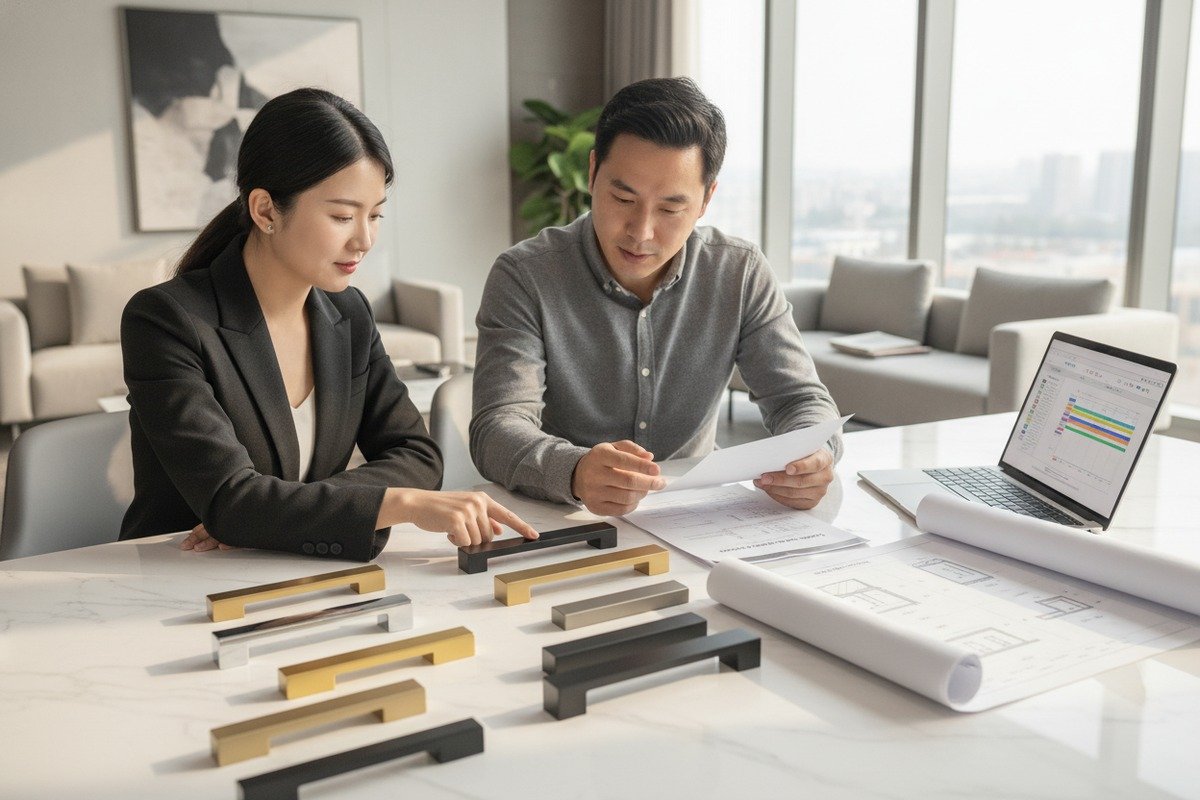
You can negotiate a lower MOQ by offering to pay a small-batch surcharge, simplifying your design to use existing molds, committing to a long-term purchase agreement, or combining multiple handle styles into a single consolidated order to meet the supplier's production threshold.
Why MOQ Exists in the First Place
Suppliers set MOQs to cover fixed costs. These include raw aluminum billet procurement, extrusion die setup, anodizing or powder-coating batch minimums, and labor allocation. When you add a custom logo, the supplier may need a new laser program, a stamping die 2, or a silk-screen plate. Each of these triggers a setup cost that must be spread across enough units to stay profitable.
On our own production line, we have seen MOQs range from as few as 3 pieces for a standard stock handle all the way up to 1,000 pieces or even 1,000 meters for custom extruded aluminum profiles 3. The difference depends almost entirely on how much customization the buyer requests.
Practical Strategies That Work
Here are proven approaches we have seen buyers use successfully:
- Pay a per-unit premium. Ask the supplier if they will accept 200 pieces instead of 500, but at a slightly higher unit price. Most factories prefer revenue over idle machines.
- Use existing tooling. If the supplier already has a die for your chosen handle profile, you skip the mold fee and the MOQ often drops.
- Commit to a blanket order. Promise 3,000 pieces over 12 months, but request delivery in smaller call-off batches of 500. The supplier gets volume certainty; you get manageable inventory.
- Simplify the logo method. Laser engraving 4 on a flat surface is cheaper and faster than deep embossing. A simpler method means lower setup cost and a lower MOQ.
- Combine SKUs. If you need three handle lengths in the same finish, ask the supplier to count them as one combined order rather than three separate MOQs.
MOQ Comparison by Customization Level
| Customization Level | Typical MOQ Range | Why |
|---|---|---|
| Stock handle, no logo | 3–100 pieces | No setup needed |
| Stock handle + laser logo | 100–500 pieces | Laser program setup cost |
| Custom finish + laser logo | 300–1,000 pieces | Anodizing/coating batch minimum |
| Fully custom profile + logo | 500–2,000 pieces | New extrusion die + logo tooling |
| Custom profile + custom packaging | 1,000+ pieces | Multiple setup stages |
The key takeaway is that MOQ is not a single number. It shifts based on what you ask for. Always request the MOQ for your exact specification, not just the catalog item.
What are the typical mold or laser engraving fees I should expect for my brand logo?
Many buyers budget only for the unit price and shipping, then get caught off guard by a mold fee invoice before production even starts — a situation our project coordinators help clients avoid every single day.
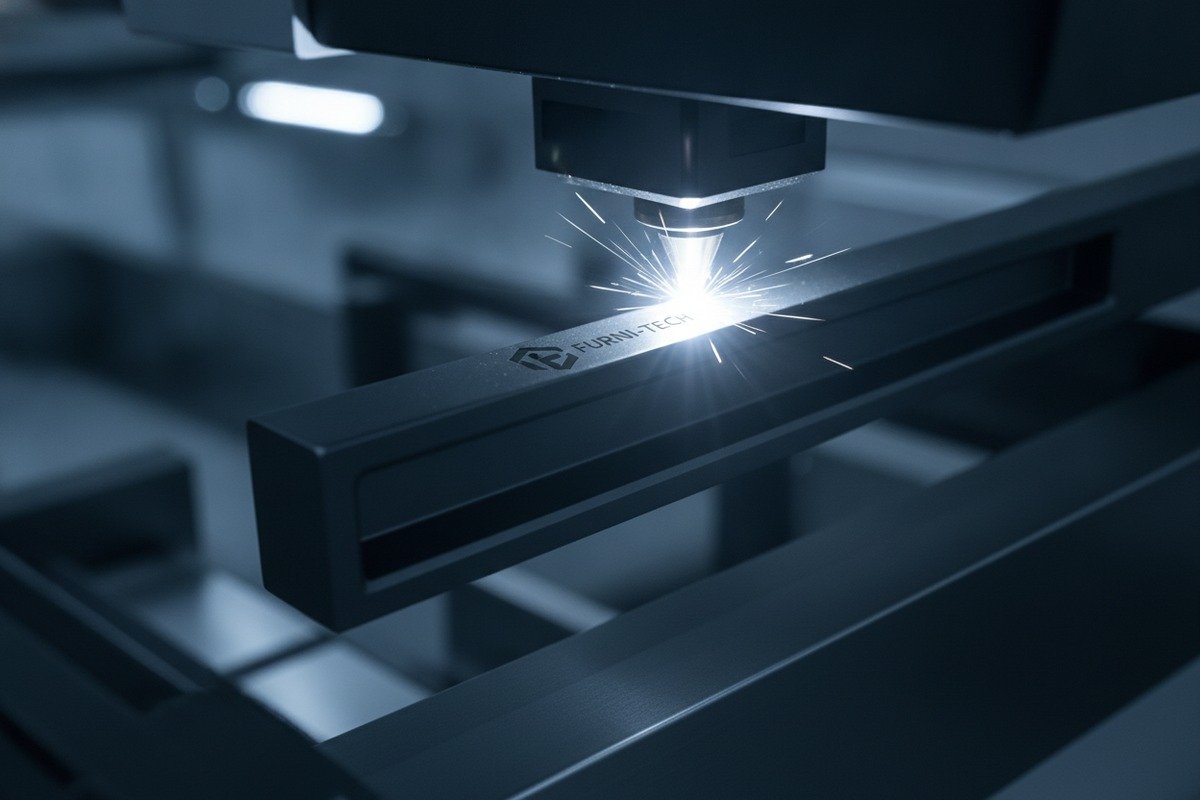
For aluminum furniture handles, expect laser engraving setup fees between $30 and $150, silk-screen or pad-printing plate fees from $50 to $200, and CNC embossing or stamping mold fees ranging from $200 to $800 or more, depending on logo complexity and handle geometry.
Common Logo Methods and Their Costs
Not all logo methods cost the same. The method you choose affects the fee structure, the per-unit add-on cost, and sometimes the MOQ itself. Here is a breakdown based on what we commonly quote from our Foshan facility:
| Logo Method | One-Time Setup Fee | Per-Unit Add-On | Best For |
|---|---|---|---|
| Laser engraving | $30–$150 | $0.02–$0.10 | Subtle, permanent marks on anodized surfaces |
| Silk-screen printing 5 | $50–$200 per color | $0.05–$0.15 | Multi-color logos on flat surfaces |
| Pad printing 6 | $50–$200 | $0.05–$0.20 | Small logos on curved surfaces |
| CNC engraving 7 | $100–$300 | $0.10–$0.30 | Deep, tactile branding |
| Stamping/embossing die | $200–$800+ | $0.05–$0.15 | High-volume, premium feel |
| Sticker/label | $0–$50 | $0.01–$0.05 | Budget branding, easy to change |
| Packaging-only branding | $50–$300 for design | Included in box cost | Low-risk branding without touching the product |
Hidden Fees to Watch For
Beyond the obvious setup fee, several indirect costs can creep in:
- Logo file preparation. Some suppliers charge $20–$50 if they need to redraw your logo into a vector format 8 suitable for their machines.
- Sample approval fee. A pre-production sample with your logo may cost $30–$100, sometimes refundable against a bulk order.
- Color matching. If your logo requires a specific Pantone color 9 on a printed or coated surface, the supplier may charge a color-match surcharge of $30–$80.
- Minimum run fee. Even if the per-unit logo cost is low, the supplier may impose a minimum charge per production run — for example, $50 minimum even if you only order 100 pieces.
How to Request a Transparent Quote
When you email a supplier, ask them to break the quote into these line items:
- Base handle unit price (including material, extrusion, and standard finish)
- Logo setup or tooling fee (one-time)
- Per-unit logo application fee
- Sample fee and whether it is refundable
- Packaging cost per unit
- Any file preparation or color-matching charges
This approach removes ambiguity. In our experience shipping to Vietnam and the Middle East, buyers who request itemized quotes upfront save an average of two to three rounds of back-and-forth emails.
Are Mold Fees Refundable?
Some suppliers refund the mold fee once you hit a certain order volume — for example, after ordering 5,000 pieces total. Others treat it as a non-refundable investment. Always ask. If refundable, get the threshold in writing.
How can I verify if a supplier's logo customization process will delay my shipping schedule?
Late deliveries can cost you more than money — they can cost you a retail season or a key client relationship. When we plan production schedules here in Foshan, logo customization is one of the first variables we flag for timeline risk.
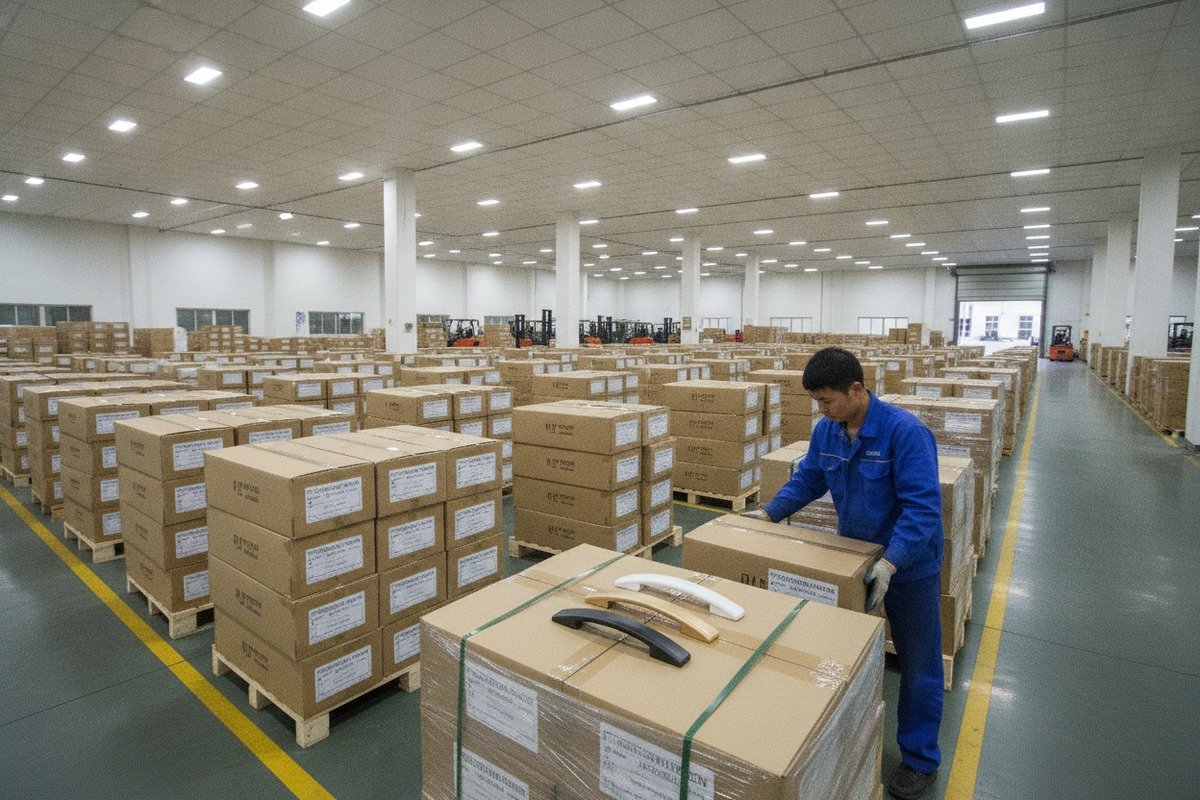
To verify if logo customization will delay shipping, ask the supplier for a detailed production timeline that separates base handle manufacturing from logo application, sample approval, and quality inspection stages, and confirm whether logo tooling lead time overlaps with or adds to the production schedule.
Where Delays Actually Happen
Logo customization itself — the physical act of engraving or printing — rarely takes long. A laser machine can engrave hundreds of handles per hour. The real delays happen in the steps around it:
- Tooling or mold fabrication. A new stamping die can take 7–15 days. If you did not account for this, your order is already two weeks behind before production starts.
- Sample approval loops. The supplier sends a sample. You request a change. They revise. You approve. Each round can add 3–7 days, especially across time zones.
- File preparation. If your logo file is low-resolution or not in the right format (AI or EPS), the supplier needs to redraw it. This can stall the process by 2–5 days.
- Quality inspection after logo application. Some buyers require third-party inspection specifically for branding accuracy. Scheduling that inspector adds time.
A Typical Timeline Breakdown
| Stage | Standard Order (No Logo) | Order with Laser Logo | Order with Stamping Die |
|---|---|---|---|
| Quote and confirmation | 1–2 days | 1–2 days | 1–2 days |
| Tooling / mold fabrication | 0 days | 0–1 day (program setup) | 7–15 days |
| Sample production | 2–3 days | 3–5 days | 5–10 days |
| Sample approval | 1–3 days | 1–5 days | 1–5 days |
| Bulk production | 7–15 days | 8–17 days | 10–20 days |
| QC and packing | 1–2 days | 1–3 days | 1–3 days |
| Total lead time | 12–25 days | 14–33 days | 25–55 days |
How to Protect Your Schedule
- Approve the logo file before placing the order. Send your vector file early. Ask the supplier to confirm it is production-ready.
- Run sample approval in parallel. While the supplier produces your base handle sample, have them simultaneously prepare the logo proof. This overlaps two timelines into one.
- Choose laser over stamping for speed. Laser engraving requires no physical tooling, so it adds almost zero lead time.
- Set a deadline in your purchase order. State the required ship-by date clearly. Ask the supplier whether the logo process fits within that window before you pay the deposit.
- Use 3D rendering for pre-approval. Some suppliers, including our team, offer 3D mockups showing logo placement. Approving a digital render first reduces physical sample rounds.
If your supplier cannot give you a stage-by-stage timeline, that is a warning sign. A professional factory will provide this breakdown without hesitation.
Where can I find a reliable OEM partner that offers flexible branding options for my wholesale business?
Scrolling through endless marketplace listings with conflicting MOQs, vague pricing, and unverified factory photos — that is the sourcing reality most wholesale buyers face, and it is exactly what drove us to build a more transparent process at our facility.
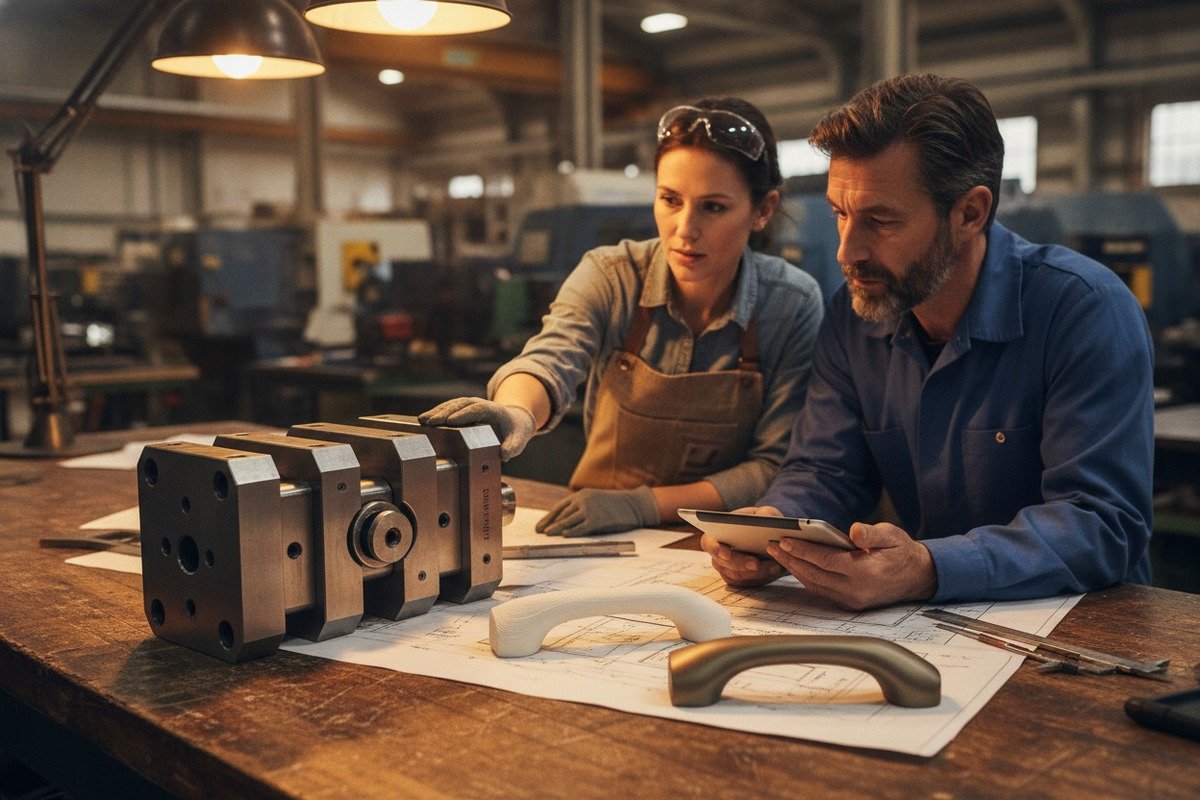
You can find reliable OEM aluminum handle partners by searching B2B marketplaces with verified supplier filters, requesting factory audit reports, comparing at least three itemized quotations, and prioritizing manufacturers who offer both stock inventory for fast shipping and custom production lines for branding flexibility.
Where to Search
Not all sourcing channels are equal. Each has strengths and trade-offs:
- B2B marketplaces. Platforms like Alibaba, Made-in-China, and Global Sources let you filter by MOQ, verified status, and product category. You can quickly compare visible pricing and MOQ ranges. However, customization fees often require direct inquiry.
- Manufacturer websites. Companies that invest in their own websites — like we do at lilitonghardware.com — tend to provide more detailed product specifications, workflow explanations, and direct contact options. You often get faster, more personalized responses.
- Trade shows. Events like the Canton Fair, CIFF, or regional building materials expos let you see and touch samples, meet the factory team, and negotiate face to face. This is still the gold standard for verifying quality.
- Industry referrals. Ask other non-competing businesses in your network. A recommendation from a fellow furniture hardware distributor carries more weight than any online listing.
What to Look for in an OEM Partner
A flexible OEM partner should check these boxes:
- Offers multiple logo methods (laser, print, emboss, packaging branding)
- Provides itemized quotes without bundling fees
- Has ready stock for common styles, enabling 48-hour shipping for urgent needs
- Supports custom extrusion profiles with a reasonable 3–7 day turnaround
- Shares clear production workflow documentation
- Willing to do small trial orders before large commitments
- Communicates promptly via WhatsApp or email
Supplier Screening Checklist
Use this checklist when evaluating any potential OEM handle supplier:
| Screening Criteria | What to Ask or Verify |
|---|---|
| Factory age and experience | How many years in aluminum hardware production? |
| Production capacity | Monthly output in pieces or tons? |
| Stock availability | Do they hold ready-to-ship inventory? |
| Customization scope | Logo methods offered? Custom profiles? Custom finishes? |
| MOQ flexibility | MOQ for stock vs. custom orders? |
| Fee transparency | Will they provide an itemized quote? |
| Sample policy | Sample cost? Turnaround? Refundable? |
| Quality control | In-house QC? Third-party inspection accepted? |
| Export experience | Which markets do they ship to? |
| Communication | Response time? Preferred channel? |
Red Flags to Avoid
Watch out for suppliers who:
- Refuse to provide an itemized quote
- Cannot show photos or videos of their actual factory floor
- Quote an unusually low MOQ but add large undisclosed fees later
- Have no verifiable export history to your region
- Take more than 48 hours to respond to a straightforward inquiry
A Note on Sustainability
More buyers now ask about recycled aluminum content 10 and eco-friendly anodizing. These options may carry a small premium or a slightly higher MOQ due to specialized sourcing, but they can differentiate your brand in competitive markets like the UAE and Southeast Asia. Ask your supplier early if they support sustainable material options.
Finding the right partner is not about picking the cheapest quote. It is about finding a supplier whose production capabilities, communication style, and pricing structure align with your business needs — whether you are ordering 200 handles for a trial or 20,000 for a quarterly replenishment.
Conclusion
Getting clear answers on MOQ and logo fees comes down to asking the right questions and demanding itemized quotes from every supplier you evaluate. Use the checklists and comparison tables above to screen partners efficiently, protect your timeline, and avoid hidden costs. If you need a quick consultation on aluminum furniture handle sourcing, feel free to reach out to our team at Al**************@********************************************te.com.
Footnotes
1. Details the systematic evaluation of manufacturing facilities for compliance and quality. ↩︎
2. Defines the specialized tooling used to shape and cut metal sheets. ↩︎
3. Replaced HTTP 404 with an updated, authoritative page from the same domain explaining aluminum extrusion process basics. ↩︎
4. Provides a comprehensive overview of the laser engraving process. ↩︎
5. Describes the technique of transferring ink through a mesh stencil. ↩︎
6. Explains the offset printing process for 3D objects. ↩︎
7. Describes the automated process of carving designs using CNC technology. ↩︎
8. Explains the scalable image format built by mathematical formulas. ↩︎
9. Describes the standardized system for consistent color matching in various industries. ↩︎
10. Highlights the environmental and energy benefits of using recycled aluminum. ↩︎