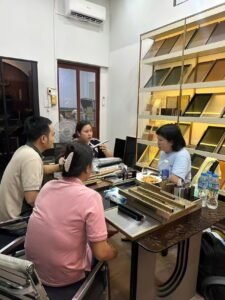
Every quarter, our product development team in Foshan reviews trend requests flooding in from Vietnamese furniture factories and distributors salt spray test reports 1. The pattern is clear: design cycles are getting shorter, and buyers who cannot refresh their handle collections fast enough lose shelf space to competitors.
To evaluate a Chinese supplier’s R&D capability for the Vietnamese market, verify their in-house design team depth, prototype turnaround speed, tooling ownership, customization breadth, and quality control integration. A strong supplier converts trend signals into manufacturable new handle SKUs within days, not months, while maintaining consistent production quality.
This article walks you through the exact checkpoints, questions, and documents you need to assess whether a Chinese aluminum handle supplier can truly be your design-response partner for Vietnam quality control integration 2. Let’s break it down section by section.
How can I verify if a Chinese handle manufacturer can deliver custom prototypes within my tight 7-day deadline for the Vietnam market?
Speed kills hesitation in the Vietnamese furniture hardware market. When our sales team receives a sketch or mood board from a Ho Chi Minh City distributor on Monday, the expectation is a physical sample by the following week.
To verify 7-day prototype capability, request a trial sample order with a new design before committing to bulk. Ask for a documented timeline showing each stage — CAD drawing, mold check, extrusion, surface finishing, and shipping — and confirm the supplier owns their tooling equipment in-house rather than outsourcing it.
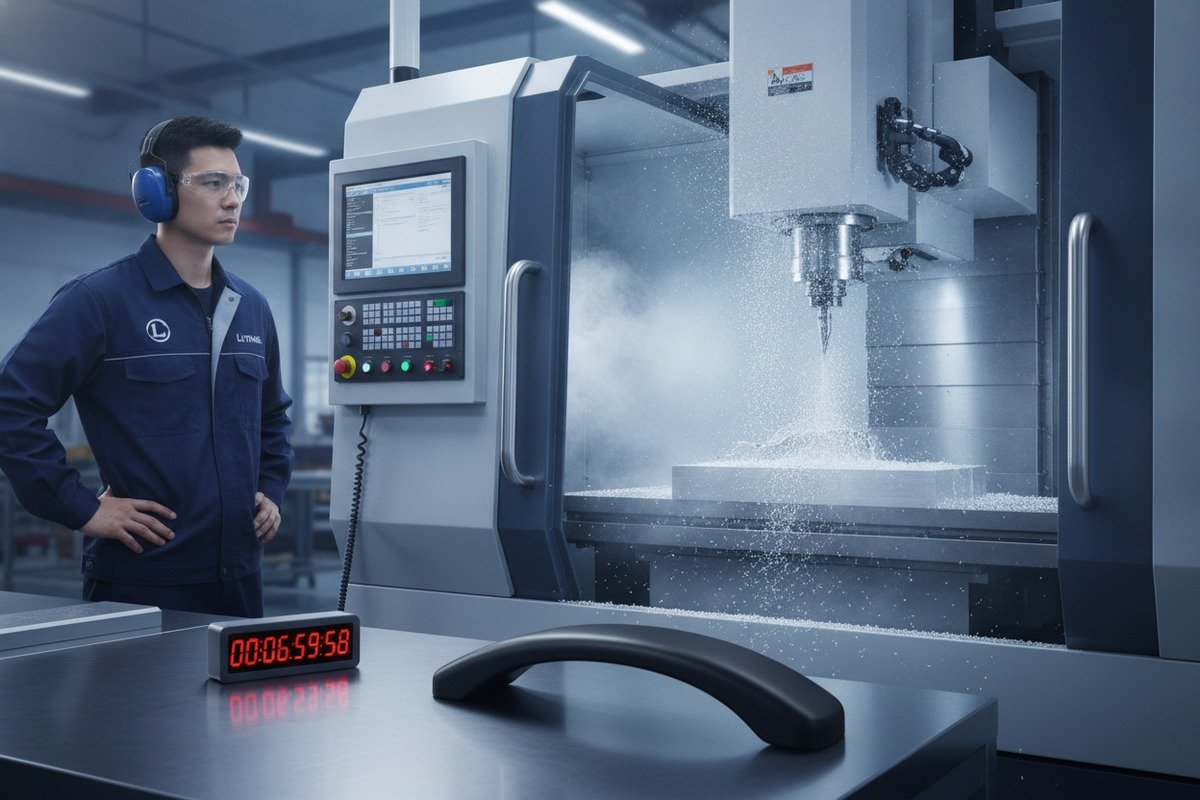
Why 7 Days Matters for Vietnam
Vietnamese furniture factories often operate on project-based timelines tied to real estate delivery schedules. A new apartment complex in Hanoi or Da Nang might require a specific handle finish and dimension that does not exist in any catalog. The factory procurement manager needs a sample to show the developer, get approval, and place a bulk order — all within weeks. If your supplier cannot produce a prototype in 7 days, you miss the project window entirely.
Breaking Down the 7-Day Prototype Timeline
Here is how a capable supplier typically allocates those 7 days:
| Stage | Day | Key Activity |
|---|---|---|
| Design confirmation | Day 1 | CAD/CAM engineer finalizes drawing from client sketch or reference photo |
| Mold preparation | Day 2 | Check existing mold library or modify a base mold |
| Extrusion | Day 3 | Produce aluminum profile using 6063-T5 alloy 3 |
| CNC machining | Day 4 | Cut to length, drill mounting holes, deburr edges |
| Surface finishing | Day 5 | Anodize, electrophorese, or powder coat in requested color |
| Quality inspection | Day 6 | Dimensional check, finish adhesion test, visual inspection |
| Packing and dispatch | Day 7 | Package sample and ship via express courier |
If a supplier cannot explain each stage with clarity, they likely do not control the full process. In our Foshan facility, having extrusion presses, CNC centers, and anodizing lines 4 under one roof is what makes a 3-to-7-day turnaround realistic rather than aspirational.
Red Flags to Watch For
Be cautious if a supplier says "about two weeks" without specifying why. Common bottlenecks include outsourced mold making, third-party anodizing, and limited CAD staff. Also ask how many revision cycles they handle before charging extra. A confident R&D team typically includes one to two free revisions because they get it close on the first attempt.
The Trial Sample Test
The simplest verification method is a paid trial. Send a new design concept — even a rough sketch of a recessed pull handle with specific dimensions and a champagne gold matte finish — and start the clock. Track communication speed, question quality, and whether they proactively suggest improvements. This single test tells you more than any factory audit document.
What technical documentation should I ask for to assess a supplier's R&D expertise in aluminum furniture profiles?
Many buyers rely on product photos alone when shortlisting suppliers. That approach works for commodity items, but for custom aluminum furniture handles, you need to see what happens behind the showroom.
Request CAD/CAM design files, mold development records, material test certificates for 6063-T5 aluminum alloy, surface finish adhesion and salt spray test reports, and dimensional inspection records. These documents reveal whether the supplier engineers products systematically or simply copies existing market designs without technical depth.

The Documentation Checklist
When we onboard a new Vietnamese distributor or factory client, we proactively share a technical package. Here is what a serious supplier should be able to provide:
| Document Type | What It Proves | Red Flag If Missing |
|---|---|---|
| CAD/CAM design files 5 (DWG, STEP, or IGES) | In-house design capability and precision engineering | Supplier may only resell, not develop |
| Mold development records | Tooling ownership and design iteration history | Likely outsources all tooling |
| Aluminum alloy mill certificate (6063-T5) | Material grade compliance and traceability | Cannot guarantee material quality |
| Anodizing / electrophoresis test report | Surface durability — salt spray, adhesion, hardness | Finish may fade or peel within months |
| Dimensional inspection report | Consistency between sample and mass production | High rejection risk in bulk orders |
| New product launch log (last 12 months) | Active R&D pipeline and trend responsiveness | Stagnant catalog with no innovation |
Why Material Certificates Matter for Vietnam
Vietnamese furniture factories often export finished cabinets and wardrobes to Europe, Australia, or the United States. End customers in those markets increasingly ask for material traceability 6 and environmental compliance. If your handle supplier cannot provide a mill certificate proving the aluminum is 6063-T5 alloy — the standard grade for architectural and furniture profiles — you risk a compliance failure down the line. Aluminum's recyclability is also a selling point, but only if documented properly.
Reading Between the Lines of a Product Catalog
A catalog that shows 200 handle styles updated annually signals an active R&D function. A catalog that has not changed in three years suggests the supplier is a pure trader or a factory with no design investment. Ask specifically: "How many new SKUs did you introduce last year?" and "Can you show me the design evolution of a single handle series?" These questions separate real developers from resellers.
Intellectual Property Protection Documents
If you are commissioning a custom handle design for your Vietnamese clients, ask whether the supplier will sign a non-disclosure agreement 7 and a design ownership clause. A supplier with genuine R&D confidence will have standard IP protection templates ready. One that hesitates may have a history of sharing custom designs across multiple buyers in the same market.
How do I ensure my supplier's R&D team can provide the professional design guidance needed to reduce my production costs?
One of the biggest pain points we hear from Vietnamese furniture factory owners is this: they receive a handle design from their end client, pass it to the supplier, and get back exactly what they sent — with no improvement suggestions. That is not R&D support. That is order processing.
Ensure cost-reducing design guidance by evaluating whether the supplier's R&D team proactively suggests material-saving profile modifications, finish alternatives, and mounting optimizations. A capable team reviews your design, identifies unnecessary complexity, and proposes functionally equivalent alternatives that lower per-unit cost without compromising aesthetics or durability.
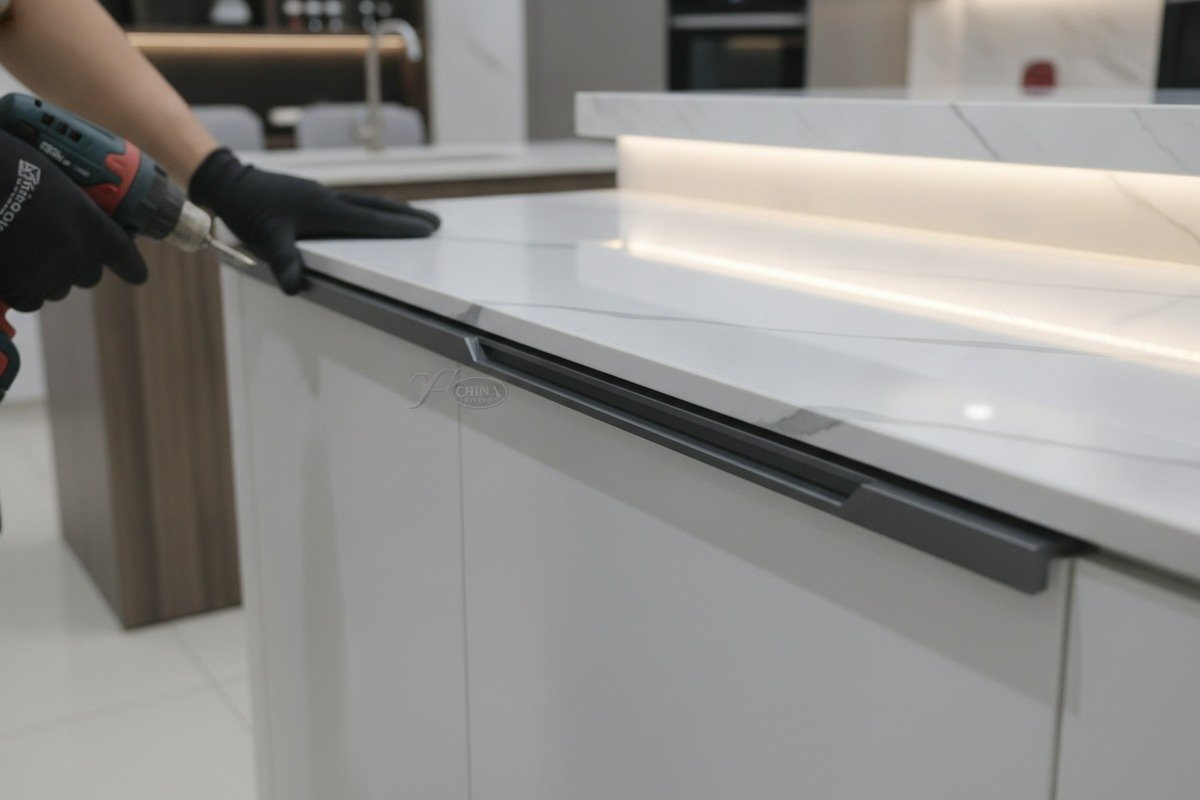
What "Design Guidance" Actually Looks Like
True design guidance goes beyond making a handle look good. It means an engineer looks at your drawing and says: "If we reduce the wall thickness from 1.5 mm to 1.2 mm here, you save 12% on material cost and the handle still passes a 30 kg pull test." Or: "This champagne gold finish can be achieved with anodizing instead of PVD coating 8, cutting your surface treatment cost by 40%."
In our experience developing recessed cabinet pulls — the slim, minimalist type popular in modern Vietnamese kitchens — small profile adjustments make a big cost difference at scale.
Where Cost Savings Typically Hide
Here are the most common areas where R&D-driven design guidance reduces cost:
| Cost Factor | Standard Approach | R&D-Optimized Approach | Typical Savings |
|---|---|---|---|
| Wall thickness | 1.5 mm uniform | Variable thickness — thicker at stress points, thinner elsewhere | 8–15% material cost |
| Surface finish | PVD coating for gold tones | Anodizing with color sealing | 30–40% finishing cost |
| Mounting system | Custom screw pattern | Standardized hole spacing compatible with existing cabinet hardware | Reduced drilling time at factory |
| Packaging | Individual retail boxes | Bulk furniture-factory packing with foam dividers | 20–30% packaging cost |
| Profile design | Solid cross-section | Hollow or semi-hollow extrusion 9 where structurally viable | 10–20% weight and material |
How to Test This Before Placing a Big Order
Send the supplier a design you are currently producing and ask them to review it for cost reduction opportunities. Do not tell them what you want changed — let them identify the improvements. A strong R&D team will come back with specific, quantified suggestions within 48 hours. A weak one will say "looks fine" or simply quote the design as-is.
The Long-Term Value of a Design Partner
When a supplier's R&D team understands your Vietnamese market segment — whether it is mid-range apartment furniture or high-end villa cabinetry — they begin suggesting designs proactively. Over 18 years of serving this industry, we have found that the most successful buyer-supplier relationships are those where the supplier brings new ideas to the table each season, not just fills repeat orders. This is the difference between a vendor and a partner.
Can a supplier with large ready-to-ship inventory also offer the high-level customization my Vietnamese furniture factory clients demand?
This question comes up in almost every first conversation with a new Vietnamese buyer. They see our 300-ton ready-to-ship inventory and assume we are a pure stock supplier with no customization flexibility. The reality is the opposite.
Yes, but only if the supplier deliberately designs their inventory system to complement customization. Look for suppliers who maintain a deep stock of popular base profiles and finishes for fast delivery, while simultaneously operating a flexible R&D and production line that handles custom dimensions, colors, hole patterns, and packaging within 3–7 days.
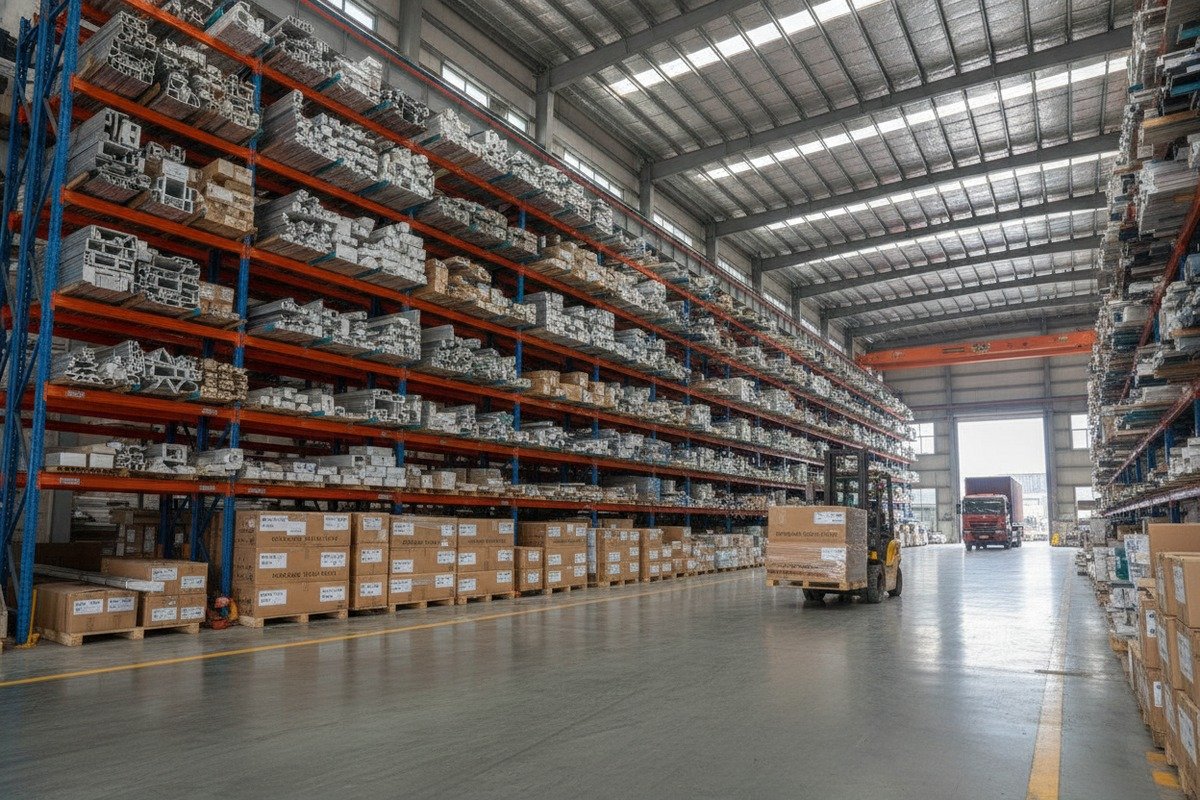
The Dual-Track Model Explained
The best Chinese aluminum handle suppliers operate on a dual-track system. Track one is the stock catalog — proven bestsellers in standard lengths, finishes, and hole spacings that ship within 48 hours. Track two is the custom line — where R&D, extrusion, finishing, and QC work together to produce made-to-order handles in short cycles.
These two tracks are not contradictory. In fact, they reinforce each other. The stock catalog is built from years of R&D data about what sells best across multiple markets. The custom line uses the same tooling library, the same alloy supply, and the same finishing equipment — just configured for a specific client request.
What Vietnamese Buyers Typically Customize
Based on our order history, here are the most common customization requests from Vietnam:
- Length: Standard 128 mm or 160 mm center-to-center spacing adjusted to 192 mm or 256 mm for wider cabinet doors popular in Vietnamese kitchen designs.
- Finish color: Champagne gold and matte black dominate, but rose gold and dark bronze are rising fast in Ho Chi Minh City showrooms.
- Texture: Brushed vs. smooth matte — Vietnamese buyers increasingly prefer the brushed texture for fingerprint resistance in humid climates.
- Packaging: Factory-pack in bulk cartons with foam separators, not retail blister packs, because the handles go directly into production lines.
- Branding: Laser-engraved client logos on the back of handles for OEM furniture brands.
How Inventory Depth Supports Customization Speed
Having 300 tons of base aluminum profiles in stock means we do not wait for raw material when a custom order arrives. The extrusion step — often the longest bottleneck — is already done for common cross-sections. We simply cut, machine, finish, and pack to custom specifications. This hybrid approach is what enables a 3-to-7-day turnaround on custom orders while still offering 48-hour shipping on stock items.
Questions to Ask Your Supplier
Before assuming a stock-heavy supplier cannot customize, ask these specific questions:
- What percentage of your monthly output is custom vs. stock orders?
- Do you maintain a base profile library that can be adapted for custom lengths and finishes?
- Can you show me a custom order you fulfilled for a Southeast Asian client with a turnaround under 7 days?
- What is your minimum order quantity for a custom finish on an existing profile shape?
- Do you charge a mold fee if I modify an existing profile slightly?
A supplier that answers these confidently — with examples — has a genuine dual-track capability. One that deflects or quotes long lead times for any customization is likely running a stock-only operation.
Conclusion
Evaluating a Chinese supplier's R&D capability for aluminum furniture handles goes far beyond checking a website. Test their prototype speed, demand technical documentation, assess their design guidance quality, and verify that their inventory model supports true customization. The right supplier becomes your design-response partner for the fast-moving Vietnamese market — not just another vendor filling orders.
Footnotes
1. Details the ASTM B-117 standard for salt spray testing, a common corrosion resistance method. ↩︎
2. Highlights the benefits of integrating quality control within manufacturing operations. ↩︎
3. Replaced HTTP 403 with an authoritative Wikipedia page detailing 6063-T5 aluminum alloy. ↩︎
4. Explains the electrochemical anodizing process for aluminum and its benefits. ↩︎
5. Explains what CAD files are, their types, formats, and uses in modern manufacturing. ↩︎
6. Explains what material traceability is, its importance, and benefits in manufacturing. ↩︎
7. Replaced HTTP 404 with an authoritative Wikipedia page on non-disclosure agreements. ↩︎
8. Describes the physical vapor deposition (PVD) coating process and its applications. ↩︎
9. Discusses the manufacturing process and benefits of hollow aluminum extrusions. ↩︎