
Late deliveries from China have stalled more furniture projects than most buyers care to admit shipping schedule 1. Over the past 18 years running our production lines in Foshan, we have seen firsthand how a missed shipment date can cascade into lost contracts, angry end-customers, and warehouse chaos for our wholesale partners.
To ensure on-time delivery of aluminum furniture handles from China, verify the supplier’s real production capacity, lock delivery milestones into a written contract with penalty clauses, require third-party inspections before shipment, and track every stage from deposit confirmation through freight booking separately from manufacturing lead time.
The truth is, “on time” in China sourcing has two distinct parts: the manufacturing schedule 2 and the shipping schedule. Many buyers confuse the two and end up disappointed. Below, we break down exactly how to turn a supplier’s verbal lead-time promise into a managed, measurable commitment you can rely on.
How Can I Verify If a Foshan Supplier Actually Has the Ready Stock Needed to Meet My Urgent Furniture Handle Deadlines?
When an urgent order lands on your desk, every hour counts. In our warehouse, we maintain over 300 tons of ready-to-ship aluminum handle inventory 3 precisely because we know our distributors in Vietnam and the Middle East cannot afford to wait weeks for standard items.
To verify ready stock, request real-time warehouse photos or a short video walkthrough, ask for the exact SKU count and finish availability, and confirm the supplier can ship within 48 hours. Cross-check their claims by ordering a small trial batch before committing to a large purchase.

Why "In Stock" Does Not Always Mean "Ready to Ship"
Many suppliers list items as "in stock" on their website or Alibaba page, but the reality can be very different. The handles might exist as semi-finished profiles that still need anodizing, polishing, or packaging 4. Others might be allocated to another buyer's order. You need to ask pointed questions:
- What finishes are available right now?
- How many pieces of each SKU are physically in the warehouse today?
- Are these pieces already packed and labeled, or do they need further processing?
A genuine ready-stock supplier will answer these questions within hours, not days. In our experience, response time during the inquiry stage is a strong predictor of execution speed during the order stage. Suppliers who respond within one hour tend to run tighter operations than those who take 15 hours or more.
The Trial-Order Test
Before trusting a large urgent order to any supplier, place a small trial order 5 of 50–100 pieces. Time everything. Measure how long it takes from payment confirmation to tracking number. This gives you hard data, not promises.
| Verification Step | What to Ask | Red Flag |
|---|---|---|
| Warehouse proof | Request timestamped photos of the specific SKU | Supplier sends only catalog images |
| SKU-level count | Ask for exact quantity per finish and size | Vague answer like "we have plenty" |
| Shipping speed | Confirm 48-hour dispatch for stock items | "We will try our best" with no commitment |
| Trial order | Place a small order and time the delivery | Excuses or delays on a simple trial |
| Packaging readiness | Ask if items are pre-packed or need finishing | Stock is semi-finished and needs extra days |
Check the Supplier's Location Advantage
Foshan is the aluminum hardware capital 6 of China. A supplier based here has direct access to raw material markets, anodizing plants, and packaging vendors within a short driving radius. That proximity matters. A Foshan-based factory with on-site inventory can often cut two to five days off lead time compared to a trading company sourcing from multiple remote factories.
Always confirm whether you are dealing with the actual manufacturer or a middleman. Ask for the business license, factory address, and a live video call showing the warehouse floor. If they hesitate, move on.
How Can I Ensure My Custom Aluminum Handle Designs Are Produced and Shipped Within the Promised 7-Day Window?
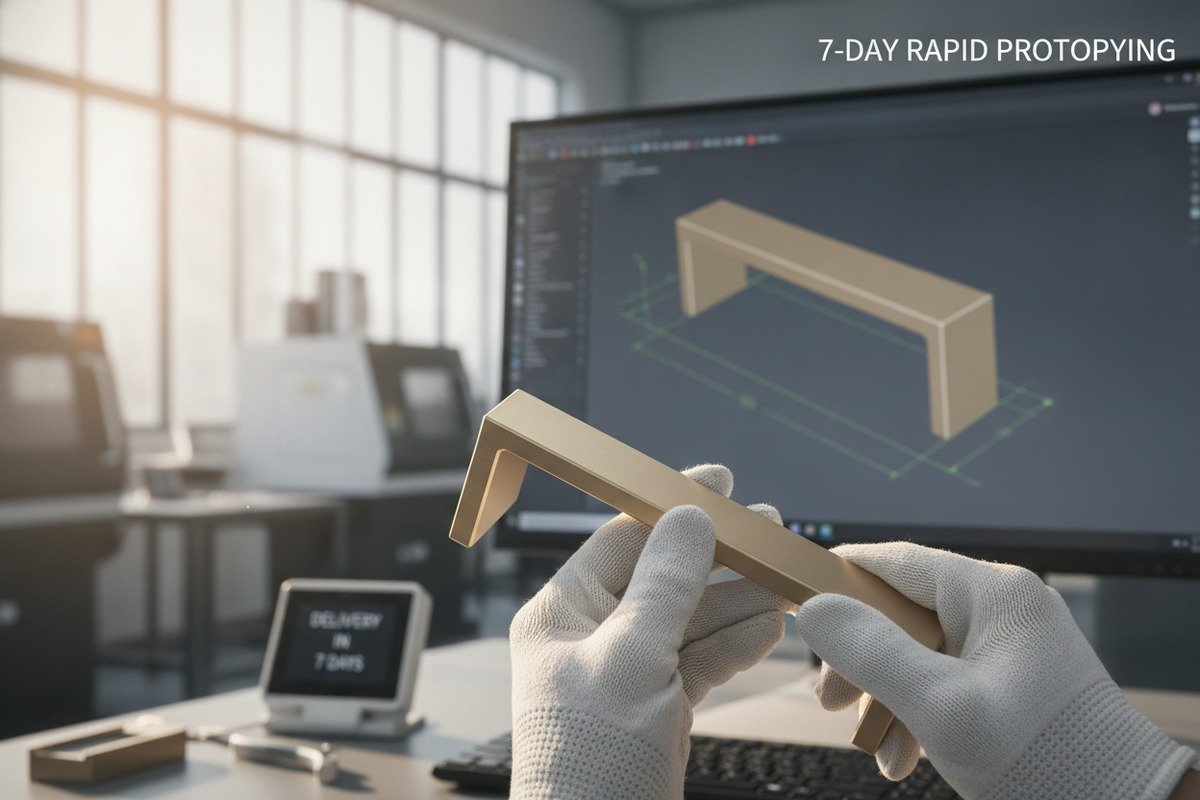
Custom orders are where delivery timelines get tricky. On our production floor, we run a 3-to-7-day turnaround for custom aluminum handles 7, but hitting that window consistently requires discipline on both sides — the factory and the buyer.
To ensure custom handles ship within seven days, approve the sample before production starts, confirm material and finish specifications in writing, require a milestone schedule tied to deposit receipt, and arrange a pre-shipment inspection. Delays most often come from unclear specs or late sample approvals, not slow machines.
The Real Causes of Custom Order Delays
Most people assume delays happen because factories are slow. In reality, the biggest time killers are:
- Unclear specifications. If the buyer changes the finish from matte champagne gold to brushed nickel after production begins, the clock resets.
- Late sample approval. Every day the buyer waits to confirm the sample is a day added to the delivery window.
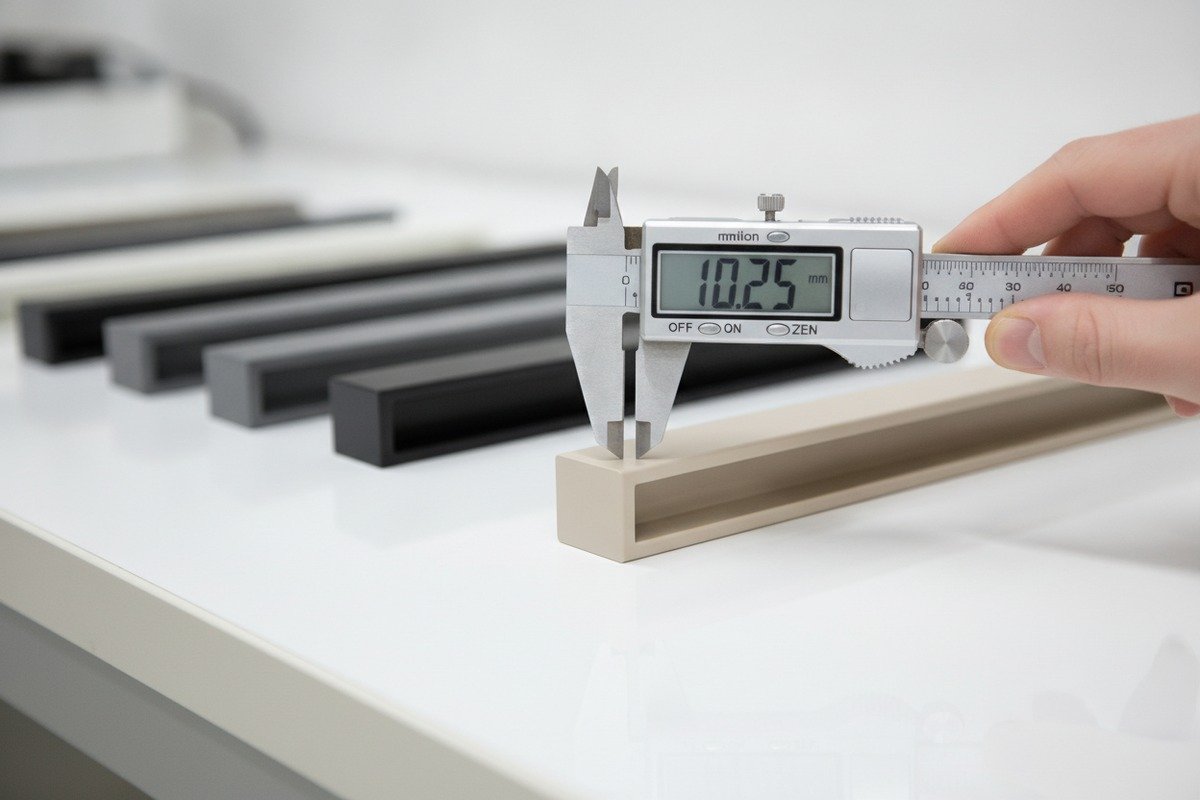
- Rework from quality failures. If tolerances are not defined upfront, parts may fail inspection and need to be remade.
The solution is front-loading all decisions before the deposit is paid. At our facility, we require signed-off technical drawings 8, confirmed finish swatches, and an approved physical sample before we start cutting aluminum profiles. This eliminates ambiguity and protects the timeline.
Build a Milestone Schedule
A 7-day custom production window should be broken into clear stages. Here is how we structure it internally:
| Day | Milestone | Buyer Action Required |
|---|---|---|
| Day 0 | Deposit received, PO confirmed | Confirm all specs are final |
| Day 1 | Raw material cut and prepared | None |
| Day 2–3 | Extrusion, machining, drilling | None |
| Day 3–4 | Surface finishing (anodizing, polishing) | None |
| Day 5 | Quality inspection, packaging | Review inspection photos if requested |
| Day 6 | Pre-shipment check, labeling | Approve shipment release |
| Day 7 | Handoff to freight forwarder | Confirm logistics details |
When each stage is documented and agreed upon before production, both parties know exactly where the order stands on any given day. If something slips on Day 3, you catch it on Day 3 — not after the container is packed.
The Role of Sample Approval
Never skip the sample step for custom orders. Even if the design looks simple — a recessed rectangular pull with a champagne gold anodized finish and clean L-shaped cross-section — small differences in channel depth, edge sharpness, or color tone can cause rejection at the warehouse.
Request a physical sample shipped via express courier. Compare it to your technical drawing. Check the finger-grip channel depth, the matte surface consistency, and the mounting hole positions. Once you approve, put that approval in writing with a date stamp. This document becomes your quality benchmark for the entire production run and protects you if a dispute arises later.
Why "After Deposit" Matters
Many Chinese suppliers quote lead times as "30–35 days after deposit" or "7 days after deposit." This phrasing is important. The clock does not start when you send the purchase order. It starts when the factory confirms receipt of your payment. If your bank transfer takes three business days to clear, those are three days you lose. Plan accordingly and use payment methods that clear quickly.
What Are the Best Ways for Me to Track My Order Status to Prevent Shipping Delays from China to My Local Warehouse?
A factory can finish your aluminum handles on schedule and you can still miss your project deadline. The gap between "production complete" and "delivered to your warehouse" is where many orders get lost. We have learned to guide our buyers through this gap because it protects both parties.
Track your order by requiring weekly milestone updates with photo or video evidence, separating manufacturing lead time from freight transit time, using a reliable freight forwarder with real-time tracking, and confirming customs documentation is complete before the goods leave the factory. Proactive tracking is always cheaper than expediting a late shipment.
Separate Factory Time from Freight Time
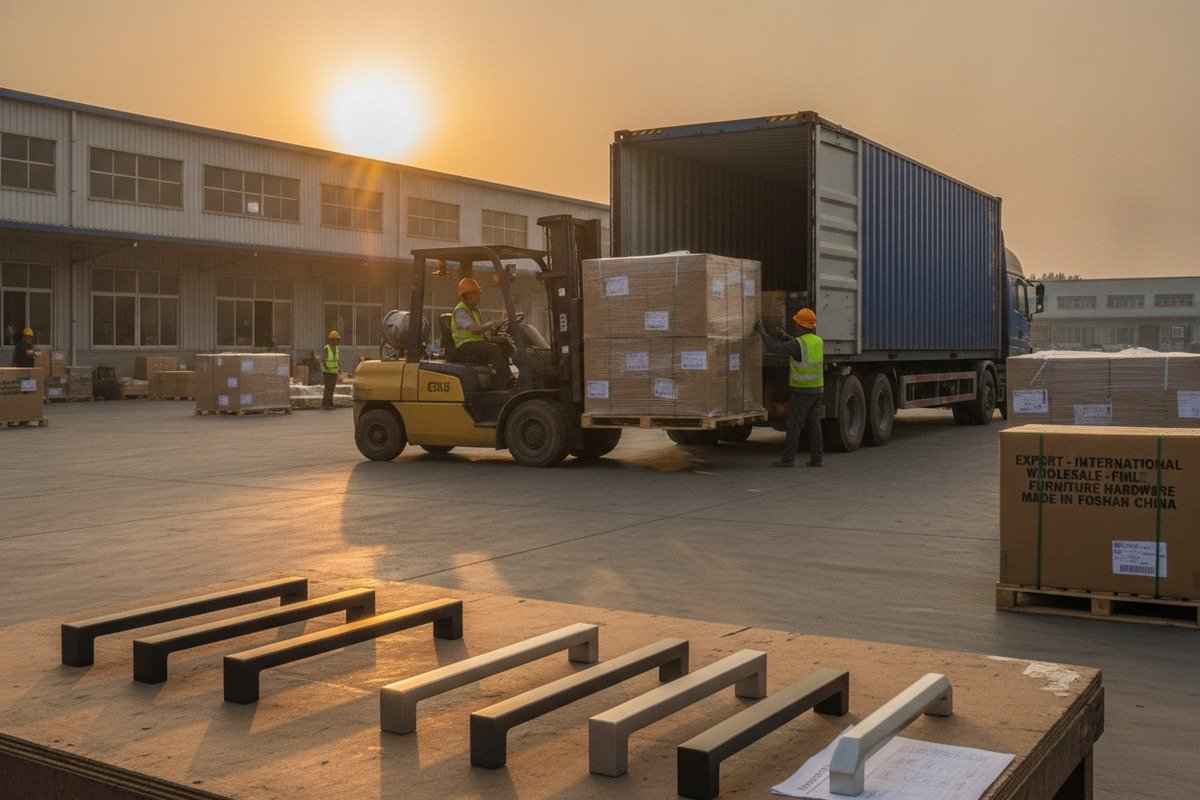
This is the single most important concept in China sourcing timelines. Your total delivery time equals manufacturing time plus freight time. Many buyers hear "7 days" or "30 days" and assume that is when the handles will arrive at their door. It is not. That is when the handles leave the factory.
Sea freight from Foshan to Ho Chi Minh City may take 7–10 days. To Dubai, expect 18–22 days. To Jeddah, roughly 20–25 days. Add customs clearance at your port, and the total end-to-end timeline can stretch significantly beyond the production window.
| Destination | Approximate Sea Freight Transit | Customs Clearance Estimate | Total Post-Production Time |
|---|---|---|---|
| Ho Chi Minh City, Vietnam | 7–10 days | 3–5 days | 10–15 days |
| Dubai, UAE | 18–22 days | 3–7 days | 21–29 days |
| Jeddah, Saudi Arabia | 20–25 days | 5–10 days | 25–35 days |
Plan your order date backward from your need-by date. If you need handles in your Dubai warehouse by March 15, and total post-production time is roughly 25 days, and production takes 7 days, your deposit should clear no later than mid-February. Build in a buffer of at least five days for unexpected customs holds or port congestion.
Require Weekly Updates with Evidence
Do not wait until the shipping date to check on your order. Set a weekly update cadence. Ask the supplier to send:
- Photos of raw material receipt (Day 1–2).
- Photos or short video of handles on the production line (Day 3–4).
- Inspection report with measurements and finish photos (Day 5–6).
- Packing photos with carton count and labeling (Day 6–7).
- Bill of lading or air waybill 9 once goods are handed to the forwarder.
This does not require micromanagement. A disciplined factory already documents these stages internally. You are simply asking them to share what they already have. If a supplier resists providing progress updates, treat that as a red flag.
Use Third-Party Inspections Before Final Payment
For orders above a certain value or for first-time suppliers, hire a third-party inspection firm such as SGS or Intertek. They will visit the factory before shipment, verify quantities, check surface finishes against your approved sample, measure critical dimensions, and confirm packaging meets your requirements. The cost is typically a few hundred dollars — a small price compared to receiving 5,000 defective handles that need to be returned or scrapped.
Confirm Documentation Early
Shipping delays are often caused by missing or incorrect export documents, not by slow boats. Make sure the following are prepared before the goods reach the port:
- Commercial invoice matching the PO.
- Packing list with accurate carton counts and weights.
- Certificate of origin if required for tariff benefits.
- Correct HS code for aluminum furniture handles.
- Fumigation certificate for wooden pallets (if applicable).
One missing document can hold your container at the port for days. Confirm all paperwork at the same time you confirm the shipment is packed and ready.
How Can I Evaluate a Manufacturer's Production Capacity to Ensure They Can Handle My Bulk Furniture Handle Orders on Time?
Placing a bulk order with a factory that cannot absorb it is a recipe for late delivery. Before we take on any large order, we walk our buyers through our capacity numbers so they can see for themselves whether the timeline is realistic. Transparency here protects everyone.
Evaluate production capacity by asking for monthly output data, current order backlog, staff count, machine list, and facility size. Request references from buyers with similar order volumes. A reliable manufacturer should demonstrate a 95% or higher on-time delivery rate and be willing to prove it with documentation or client testimonials.
What Numbers to Ask For
Do not accept vague answers like "we can handle it" or "our factory is very big." Ask for specifics:
- Monthly output in units. How many aluminum handles does the factory produce per month under normal conditions?
- Current backlog. How many orders are in the queue ahead of yours?
- Staff count. How many production workers are on the floor? How many shifts do they run?
- Machine inventory. How many CNC machines, extrusion presses, and anodizing lines do they operate?
- Facility size. Square meters of production space and warehouse space.
A factory with 30 staff, multiple extrusion lines, and a dedicated anodizing facility can typically handle mid-to-large orders without subcontracting. If the supplier needs to outsource finishing or packaging, ask who the subcontractor is and whether they have been vetted.
Seasonal Capacity Risks
Chinese manufacturing has predictable slowdowns. The most significant is Chinese New Year, which typically falls in January or February. Factories shut down for 15–30 days, and the backlog before and after the holiday can add another 2–4 weeks to lead times. Golden Week in October causes a shorter but still disruptive pause.
If your order lands during these windows, expect delays unless you plan months ahead. Place your order at least 60 days before Chinese New Year to avoid the pre-holiday rush.
| Risk Period | Typical Duration | Impact on Lead Time | Recommended Action |
|---|---|---|---|
| Chinese New Year | 15–30 days shutdown | +2 to 6 weeks | Order 60+ days in advance |
| Golden Week (October) | 7 days shutdown | +1 to 2 weeks | Order 30+ days in advance |
| Peak export season (Sep–Nov) | Ongoing congestion | +1 to 3 weeks | Confirm capacity and book freight early |
| Summer (Jul–Aug) | Minor slowdowns | Minimal | Standard planning sufficient |
How to Audit Capacity Remotely
If you cannot visit the factory in person, these remote methods work well:
- Virtual factory tour. Ask for a live video call walking through the production floor, warehouse, and finishing area. A real factory will agree without hesitation.
- ISO and certification documents. ISO 9001 certification 10 indicates a quality management system is in place, which correlates with production discipline.
- Client references. Ask for two or three references from buyers who placed orders of similar size. Contact them directly and ask about delivery performance.
- Online verification. Check the supplier's business registration, export records, and any available revenue data on platforms like Global Sources or Made-in-China.
When to Walk Away
Some warning signs should end the conversation immediately:
- The supplier cannot tell you their monthly output.
- They refuse to share a production schedule or milestone plan.
- They will not send samples or charge an unreasonable fee for them.
- Their only answer to "when will it ship?" is "about one month."
- They have no inspection process and resist third-party audits.
A factory that cannot explain how it will meet your schedule probably cannot meet your schedule. Your time is better spent finding a supplier who treats delivery as a contracted operational requirement — not a hopeful estimate.
Put It All in the Contract
Every commitment should be in writing. Your purchase order or supply agreement should include:
- Product specifications with drawings, material grade, finish, and tolerances.
- Agreed ship date, not just a vague production window.
- Milestone schedule tied to deposit receipt.
- Incoterms (FOB, CIF, or DDP) with clear handoff responsibility.
- Penalty clause for late delivery — even a modest one signals that you take deadlines seriously.
- Inspection requirements and approval process.
- Packaging and labeling standards.
When the schedule is written, measurable, and enforceable, both parties perform better. That is not distrust. That is professional sourcing.
Conclusion
You cannot guarantee on-time delivery from China by trust alone. Verify capacity, lock milestones into the contract, track production proactively, and plan freight separately — that is how reliable sourcing works.
Footnotes
1. This article provides a comprehensive overview of shipping schedules and their importance in logistics. ↩︎
2. Explains the importance of a well-defined manufacturing timeline. ↩︎
3. Discusses effective management of metal stock for timely fulfillment. ↩︎
4. Explains common metal finishing and preparation processes. ↩︎
5. Highlights the strategic use of small orders for supplier evaluation. ↩︎
6. Provides context on Foshan’s significance in the aluminum industry. ↩︎
7. Explores the manufacturing process for bespoke metal components. ↩︎
8. Underlines the role of detailed engineering plans in production. ↩︎
9. Defines key shipping documents for cargo transportation. ↩︎
10. Explains the significance of this quality management standard. ↩︎