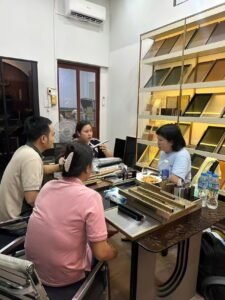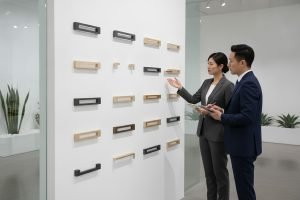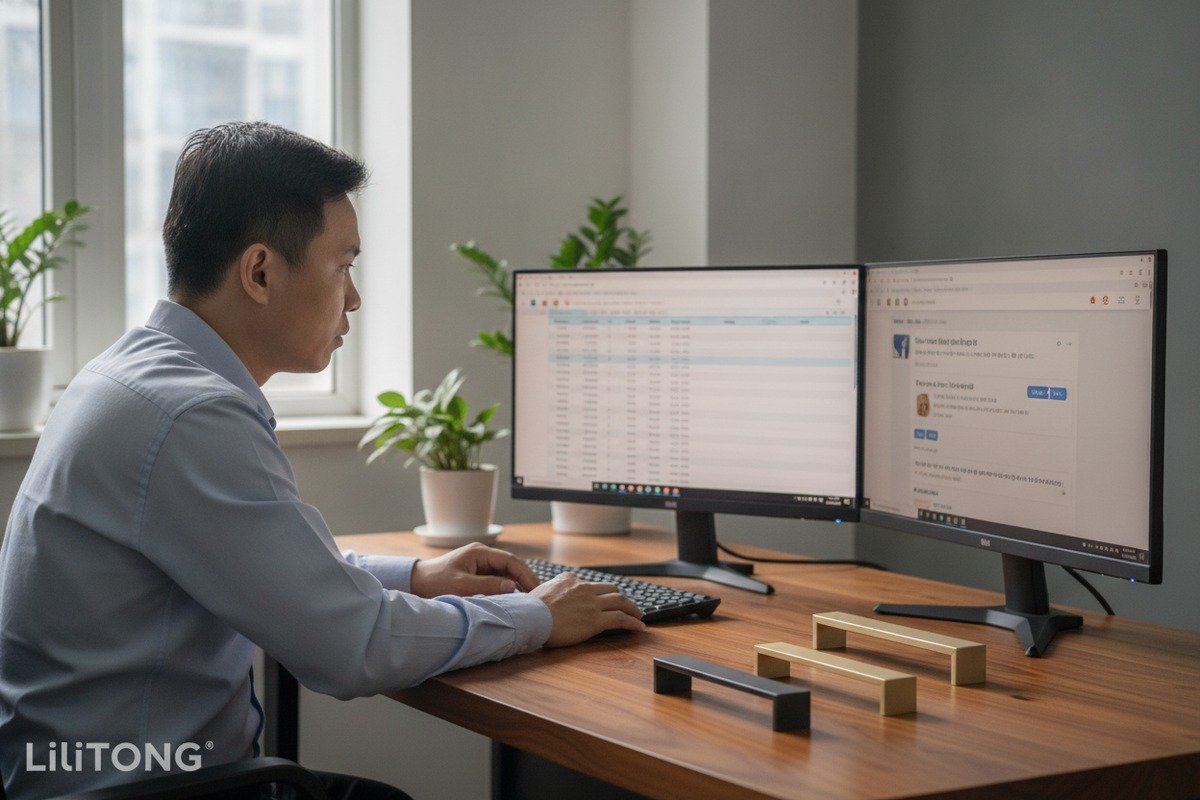
Every week, our sales team in Foshan fields calls from Vietnamese furniture factory owners 1 who all ask the same question before placing an order: “Can you show me proof that other Vietnamese buyers trust you?” It is a fair question. The challenge is that authentic buyer reviews for B2B aluminum hardware are scattered across platforms, languages, and private groups — making verification feel like detective work.
To find authentic reviews from other Vietnamese buyers about a Chinese aluminum handle supplier, you should cross-check Vietnamese Facebook sourcing groups, B2B marketplace transaction histories, direct client reference lists from the supplier, and Vietnam-based trade association forums. No single channel is enough — combining several gives the most reliable picture.
Below, we break down the four most practical channels and show you exactly how to use each one HAWA (Handicraft and Wood Industry Association of Ho Chi Minh City) 2. We also share red flags we have seen from our 18 years of exporting aluminum profiles and handles 3 to Vietnam and the Middle East, so you can spot fake reviews before they cost you money.
How can I find Facebook groups where Vietnamese furniture factory owners discuss Chinese aluminum handle suppliers?
Our export team has noticed that most Vietnamese buyers who contact us through our website have already discussed our brand inside a Facebook group before they ever send a WhatsApp message. Facebook is the first stop for peer-level trust in Vietnam, and ignoring it means missing the richest source of unfiltered buyer opinions.
Vietnamese furniture factory owners and building material distributors actively share supplier experiences in private Facebook groups dedicated to hardware sourcing, Chinese imports, and custom furniture production. Search Facebook in Vietnamese using terms like "phụ kiện nội thất nhập Trung Quốc" or "tay nắm tủ nhôm" to find these groups.
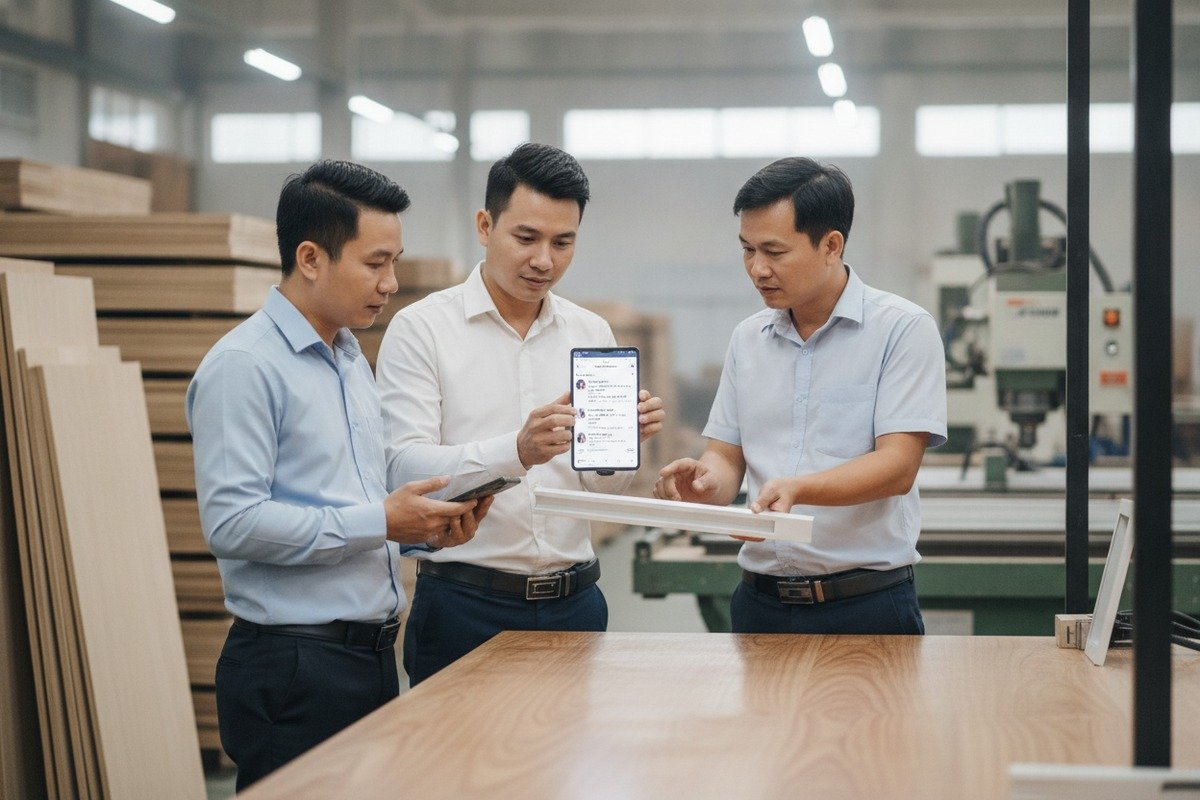
Where to search and what keywords to use
Facebook's search bar supports Vietnamese characters. Start by typing phrases that Vietnamese buyers actually use when discussing hardware imports. Here are practical search terms:
| Vietnamese Search Term | English Meaning | What You Will Find |
|---|---|---|
| Phụ kiện nội thất nhập Trung Quốc | Furniture accessories imported from China | General import discussion groups |
| Tay nắm tủ nhôm Trung Quốc | Aluminum cabinet handles from China | Niche hardware sourcing threads |
| Nhập hàng nội thất từ Quảng Châu | Importing furniture goods from Guangzhou | Groups focused on Guangdong suppliers |
| Hội nhập khẩu vật liệu xây dựng | Building material import community | Broader construction material groups |
| Xưởng gỗ nội thất Việt Nam | Vietnamese wood furniture factories | Factory owner peer groups |
Once you find groups with 5,000 or more members, request to join. Most groups require you to answer a few screening questions. After joining, use the group's internal search to type the supplier's name, brand, or even their phone number. Real buyer discussions often include photos of received goods, packaging complaints, shipping timeline updates, and pricing comparisons.
How to tell real feedback from planted comments
Not every positive comment is genuine. Suppliers sometimes ask friends or employees to post favorable reviews. Here is how to check:
- Profile age and activity: Click on the commenter's profile. A real Vietnamese furniture buyer usually has years of personal posts, photos of their factory or showroom, and connections to other industry people. A fresh profile with only a few posts is suspicious.
- Specificity of the review: Authentic reviews mention order quantities, delivery dates, product codes, or specific problems. Vague praise like "Great supplier, highly recommend!" with no details is a warning sign.
- Follow-up discussion: Real reviews generate questions from other group members. If nobody asks a follow-up question, the post may have been ignored because members recognized it as promotional.
- Complaint threads are gold: A supplier who has been discussed in a complaint thread — and responded well — is often more trustworthy than one with zero mentions. The absence of any negative feedback can mean the supplier is too new or too small to have a track record.
A practical workflow
First, join at least three to five relevant groups. Second, search for the supplier's name in both English and Vietnamese. Third, screenshot any mentions and note the commenter's name. Fourth, cross-reference that commenter on Google or Zalo to see if they run a real business. This takes about two hours but saves you from a bad shipment worth thousands of dollars.
Which B2B platforms show the most reliable transaction history and feedback from my fellow Vietnamese distributors?
When we first listed our aluminum handle profiles on Alibaba 4 years ago, we quickly learned that platform reviews work differently in B2B than in consumer e-commerce. A furniture handle supplier might complete hundreds of orders yet show zero public reviews — not because the product is bad, but because B2B buyers rarely leave feedback unless prompted.
Alibaba, Global Sources, and Made-in-China are the most commonly used B2B platforms where Vietnamese distributors can check transaction history and buyer feedback. However, the absence of reviews on these platforms is common and should trigger deeper investigation rather than immediate rejection of the supplier.

Understanding what each platform actually shows
Each B2B marketplace presents supplier credibility differently. Here is a comparison:
| Platform | Review System | Transaction History Visibility | Verification Features |
|---|---|---|---|
| Alibaba | Star ratings + written reviews | Shows transaction volume and repeat buyer rate | Trade Assurance 5, Verified Supplier badge, factory inspection reports |
| Global Sources 6 | Buyer review section (limited) | Shows supplier's export history and certifications | Verified Supplier program, on-site audit reports |
| Made-in-China 7 | Buyer feedback section | Shows assessed supplier credentials | Audited Supplier label, SGS or TÜV inspection 8 |
| 1688.com 9 | Chinese-language buyer reviews | Domestic transaction data visible | Useful for cross-checking the supplier's local reputation |
How to read Alibaba reviews critically
Many Vietnamese distributors start on Alibaba. Here is what to look for beyond the star rating:
- Transaction volume vs. review count: A supplier with 500 transactions and only 2 reviews is normal for B2B. But a supplier with 500 transactions and 50 reviews deserves close reading — those reviews likely represent genuine experiences.
- Review language and origin: Filter reviews by country if possible. Look for reviews written in Vietnamese or from buyers with Vietnamese company names. Even one detailed Vietnamese review that mentions product specifications, lead time, and packaging quality is worth more than ten generic one-line ratings.
- Trade Assurance orders: On Alibaba, orders processed through Trade Assurance offer payment protection. Suppliers with a high percentage of Trade Assurance orders signal that buyers felt comfortable enough to transact but also wanted a safety net.
- Response rate and time: Alibaba shows how quickly a supplier responds to inquiries. In our experience, suppliers who respond within 6 hours tend to have stronger operational discipline, which correlates with better quality control.
Why "No reviews yet" is not a dealbreaker
An Alibaba listing for aluminum furniture handles that shows "No reviews yet" does not automatically mean the supplier is untrustworthy. Many B2B transactions happen off-platform after the initial contact is made on Alibaba. The buyer and supplier move to WhatsApp, email, or direct bank transfer, so no review is ever recorded on the platform.
What you should do instead: ask the supplier to show you their Alibaba backend dashboard with order history (with buyer names redacted for privacy). A legitimate supplier will usually share a screenshot. If they refuse entirely, that is a yellow flag.
Cross-checking on 1688.com
This is a technique many Vietnamese buyers overlook. 1688.com is Alibaba's domestic Chinese marketplace. If your supplier also sells on 1688, you can see their Chinese buyer reviews, which are often more plentiful and candid. Use Google Translate or a Vietnamese sourcing agent to read these reviews. They reveal product consistency, packaging quality, and delivery reliability from buyers who order frequently.
Can I request a list of existing Vietnamese clients from the supplier to verify their service quality myself?
During factory visits at our Foshan facility, Vietnamese buyers often ask us directly: "Who else in Vietnam buys from you?" We understand why they ask. Hearing from someone in your own market, who imports the same product category and deals with the same logistics challenges, is the most convincing form of proof.
Yes, you can and should request a list of existing Vietnamese clients from the supplier. A confident supplier with real Vietnamese buyers will typically share two to three reference contacts. However, always verify those references independently through business registration checks, social media profiles, and direct phone calls before treating their testimonials as credible.
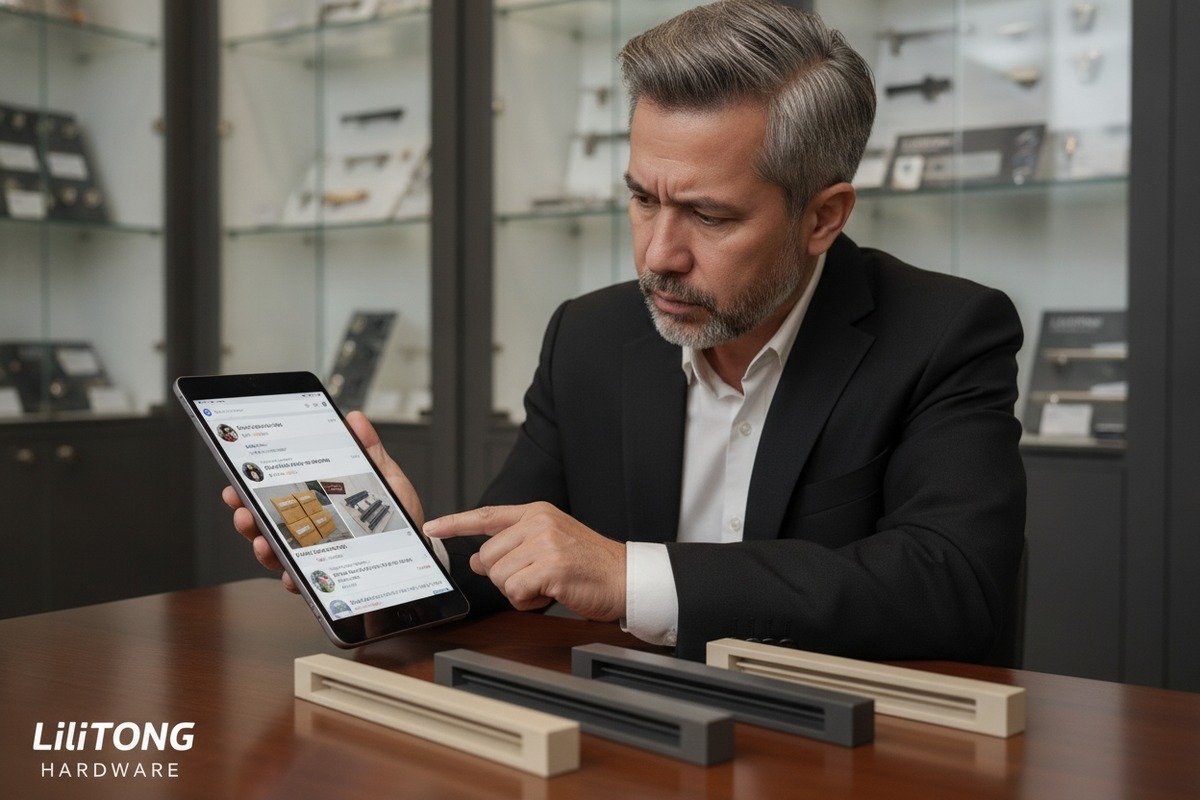
How to make the request without awkwardness
Some buyers feel uncomfortable asking for client references. Here is a simple framework:
Send this message via WhatsApp or email: "We are very interested in your aluminum handles. Before we place a trial order, could you share the contact information of two or three Vietnamese companies that have ordered from you recently? We would like to hear about their experience with quality and delivery."
A professional supplier will not be offended. In fact, at our company, we prepare a short reference list for Vietnamese prospects because we know this step accelerates trust. If a supplier refuses to share any references, that is a significant red flag — it suggests they either have no Vietnamese clients or those clients had negative experiences.
How to verify the references are real
Getting names is only step one. Here is a verification checklist:
| Verification Step | What to Check | Tool or Method |
|---|---|---|
| Business registration | Is the referenced company legally registered in Vietnam? | Search on the National Business Registration Portal of Vietnam 10 |
| Social media presence | Does the company have an active Facebook page or website? | Facebook search, Google search with company name in Vietnamese |
| Product alignment | Does the referenced company actually sell or use aluminum furniture handles? | Check their product catalog, showroom photos, or factory images |
| Direct contact | Can you reach the reference by phone or Zalo? | Call the number provided; verify they are willing to speak openly |
| Order details | Can the reference confirm approximate order size, product type, and timeline? | Ask specific questions during your call |
What to ask during the reference call
Do not just ask "Was the supplier good?" That question invites a yes-or-no answer. Instead, ask:
- "What product did you order, and what finish or specification?"
- "How long did it take from order confirmation to delivery at your port?"
- "Did the final product match the sample you approved?"
- "Were there any quality issues? If so, how did the supplier handle them?"
- "Would you reorder from them?"
These questions force specific answers. A real buyer will recall details. A fake reference will struggle to provide specifics.
When references are unavailable
Sometimes a supplier is genuinely new to the Vietnamese market. They may have strong clients in the Middle East or Southeast Asia but no Vietnamese buyers yet. In that case, ask for references from any market. A satisfied buyer in Saudi Arabia or the UAE can still confirm production quality, communication standards, and shipping reliability. You can then assess whether the supplier is operationally strong enough to serve Vietnam.
If the supplier cannot provide any client references from any country, proceed with extreme caution. Order a very small trial batch, use Trade Assurance or escrow payment, and inspect the goods thoroughly upon arrival.
Where can I find industry forums or local trade associations in Vietnam that review Chinese hardware manufacturers?
Over the years of exporting aluminum handles and profiles to Ho Chi Minh City and Hanoi, our team has learned that Vietnamese buyers trust institutional voices — trade associations, industry expos, and government-backed directories — as a layer of validation that sits above social media chatter.
Vietnamese trade associations such as HAWA (Handicraft and Wood Industry Association of Ho Chi Minh City), VIFORES (Vietnam Timber and Forest Product Association), and local chambers of commerce maintain member networks and sometimes publish supplier directories. Industry expos like VIFA EXPO and VietnamWood also provide networking opportunities where you can gather peer reviews in person.

Key organizations and what they offer
Vietnamese industry associations serve as both networking hubs and informal quality filters. Here is a breakdown:
- HAWA (Ho Chi Minh City): Focuses on wood products and furniture. Members include furniture factories that import Chinese hardware. HAWA organizes VIFA EXPO, where Chinese exhibitors display products. Attending this expo lets you meet both suppliers and Vietnamese buyers face-to-face, which is far more powerful than any online review.
- VIFORES: A national-level association covering timber and forest products. Their member directory can help you identify large Vietnamese furniture manufacturers who likely have experience sourcing handles and hardware from China.
- BIFA (Binh Duong Furniture Association): Binh Duong province is one of Vietnam's largest furniture manufacturing hubs. BIFA members are exactly the type of factory owners who import aluminum handles in bulk. Connecting with BIFA can lead you to buyers who will share their supplier lists openly.
- Local Chambers of Commerce: Both the Vietnam Chamber of Commerce and Industry (VCCI) and city-level chambers can connect you with importers and distributors in your area.
Online forums and directories worth checking
Beyond associations, several online resources can help:
- Vietnamese business forums: Websites like Webso.vn, Raovat.vn, and industry-specific sections of Vietnamese forums sometimes feature supplier discussions. Search for the supplier's name or product category in Vietnamese.
- Vietnam Yellow Pages (Trang Vàng Việt Nam): This directory lists Vietnamese companies by category. Search for aluminum hardware or furniture accessories to find local importers and distributors. Once you identify them, reach out and ask about their Chinese suppliers.
- Government trade promotion portals: The Vietnam Trade Promotion Agency (Vietrade) publishes import-export data and sometimes organizes trade matching events with Chinese manufacturers.
Trade shows as live review sessions
Trade shows deserve special attention. When you attend VIFA EXPO, VietnamWood, or even Canton Fair in Guangzhou, you can do something no online platform allows: walk up to a supplier's booth, touch the aluminum handles, check the anodized finish quality, and then walk to the next booth where a Vietnamese buyer is standing. Strike up a conversation. Ask them what they think. These informal hallway conversations often reveal more truth than any platform review.
At our booth during trade fairs, we regularly see Vietnamese buyers comparing our champagne gold anodized handles and matte charcoal recessed pulls side by side with competitors. The ones who make the best purchasing decisions are always the ones who talked to multiple people on the expo floor before choosing.
Building a supplier scorecard from multiple channels
The smartest approach is to combine all four channels discussed in this article into a single evaluation. Here is a simple scorecard template:
| Channel | What to Look For | Score (1-5) |
|---|---|---|
| Facebook groups | Peer mentions, complaint threads, photo evidence | ___ |
| B2B platform reviews | Transaction volume, Trade Assurance usage, detailed reviews | ___ |
| Direct client references | Verified business, specific order details, willingness to speak | ___ |
| Trade associations and expos | Association membership, expo participation, in-person feedback | ___ |
| Total | ___/20 |
A supplier scoring 14 or above across all four channels is generally a safe bet. A score below 10 means you need more evidence before committing to a large order.
Conclusion
Finding authentic Vietnamese buyer reviews requires effort across multiple channels, but it protects your business from costly sourcing mistakes. Combine Facebook group research, B2B platform checks, direct client references, and trade association connections to build a complete picture of any Chinese aluminum handle supplier before you commit.
Footnotes
1. Official website of the Vietnam Furniture Association, representing furniture businesses. ↩︎
2. Official website of HAWA, a key Vietnamese industry association for wood products and furniture. ↩︎
3. Authoritative source on aluminum extrusion profiles, their manufacturing, and applications. ↩︎
4. Official website of Alibaba, a major global B2B e-commerce platform. ↩︎
5. Official Alibaba page explaining its Trade Assurance service for buyer protection. ↩︎
6. Official website of Global Sources, an internationally recognized B2B sourcing platform. ↩︎
7. Official website of Made-in-China.com, a leading B2B e-commerce platform for Chinese products. ↩︎
8. Official website of SGS, a world-leading inspection, verification, testing, and certification company. ↩︎
9. Official website of 1688.com, Alibaba’s domestic Chinese wholesale marketplace. ↩︎
10. Official government portal for business registration in Vietnam. ↩︎