Every week, our sales team hears the same frustration from furniture wholesalers in Ho Chi Minh City and Hanoi: their previous aluminum handle supplier looked great on paper but failed on delivery, finish quality, or compliance humid climates 1. The cost of choosing the wrong partner goes far beyond a single bad shipment — it damages your reputation with your own customers. The real question is not whether a supplier claims SEA experience ASTM D3359 for adhesion 2. It is whether they can prove it.
To effectively ask suppliers for past success stories, request specific case studies from 2024–2026 that detail aluminum handle exports to Vietnam or Southeast Asia, including certifications like BS EN ISO 9227, finish durability data for humid climates, shipment volumes, customs navigation, and verifiable client references from the region.
This guide walks you through exactly what to ask, what proof to demand, and how to separate genuine SEA export experience from vague global claims. Let’s break it down by the four critical questions every buyer should raise.
How can I verify if a supplier has a proven track record with furniture wholesalers in the Vietnam market?
Many buyers in Vietnam have told our team they wasted months testing suppliers who had never shipped a single container to Southeast Asia 3. The gap between "we can do it" and "we have done it" is enormous — and expensive.
Verify a supplier's Vietnam track record by requesting documented proof: specific client references in Vietnamese cities, shipping records to major ports like Cat Lai or Hai Phong, BS EN ISO 9227 corrosion test reports, and photographic evidence of their aluminum handles installed in Vietnamese furniture products.

Why Generic Claims Are Not Enough
When a supplier says "we export globally," that tells you nothing about Vietnam. Vietnam's furniture market is unique. It is a multibillion-dollar export sector with over $8 billion in wood processing and furniture output in recent years, growing at roughly 14% annually. The country's climate is hot and humid. Aluminum handles that work fine in a dry European warehouse can corrode, peel, or discolor within months in a Ho Chi Minh City factory.
Our production team learned this firsthand. Early in our export journey, we had to reformulate our anodizing process specifically for handles going to southern Vietnam. The salt spray resistance that passed European standards was not enough for the Mekong Delta's humidity levels. That experience shaped how we now present our SEA case studies to prospective buyers.
What Specific Proof to Request
Here is a checklist you can send directly to any supplier:
| Verification Point | What to Ask For | Red Flag If Missing |
|---|---|---|
| Client references | Names of 2–3 furniture wholesalers or factories in Vietnam | "We can't share client names due to confidentiality" with no alternative proof |
| Port experience | Shipping records to Cat Lai (HCMC), Hai Phong, or Da Nang Cat Lai or Hai Phong 4 | No knowledge of Vietnamese port names |
| Climate testing | BS EN ISO 9227 5 or ASTM B117 salt spray test reports | No corrosion testing documentation at all |
| Finish durability | Photos of Matte Black 6 or Brushed finishes after 6–12 months in Vietnam | Only factory-fresh product photos |
| Customs experience | Proof of successful customs clearance, including HS codes used | Vague answers about "our freight forwarder handles everything" |
How to Cross-Check Their Answers
Do not take their word alone. Ask for the contact details of at least one Vietnamese reference. A confident supplier will provide this. You can also verify certifications independently. For example, if they claim ISO 9227 compliance, ask for the certificate number and check it against the issuing body's online database.
Another trick: ask them to name the specific aluminum alloy 7 they used for Vietnamese orders. If they shipped handles for outdoor garden furniture, they should know whether they used 6063-T5 or 6061-T6 and why. A supplier who stumbles on this basic detail likely has no real Vietnam experience.
In our experience shipping over 300 tons of aluminum profiles and handles annually, the clients who verify these details upfront are the ones who avoid costly mistakes later.
What specific questions should I ask to see examples of their successful aluminum handle exports to Southeast Asia?
When our team visits trade fairs in Ho Chi Minh City or Bangkok, we notice that buyers often ask suppliers the same vague question: "Do you export to Southeast Asia?" The answer is always yes. The real skill lies in asking questions that force specific, verifiable answers.
Ask suppliers to share 2–3 detailed case studies from 2024–2026 covering aluminum handle exports to specific SEA countries, including the alloy type, finish method, corrosion test results, shipment volume, lead time performance, and whether the client relationship evolved into an ongoing OEM partnership.

The 5-Point Inquiry Script
You can copy and adapt this script for your next supplier conversation. Send it via email or WhatsApp — whatever your preferred channel.
Question 1: "Please provide 2–3 detailed case studies of aluminum handle exports to Vietnam or Southeast Asia from 2024–2026. Include the destination country, product type, and order volume."
Question 2: "In these cases, did you supply aluminum alloy handles specifically? What alloy grade did you use (e.g., 6063-T5)? How did you handle Matte Black, Brushed Nickel, or Champagne Gold finishes to ensure durability in humid SEA climates?"
Question 3: "Did these exports meet BS EN ISO 9227 for corrosion resistance, ASTM B117 for salt spray 8, and ASTM D3359 for adhesion? Can you share the actual test reports?"
Question 4: "What was the shipment volume — a sample order, a single container, or ongoing bulk orders? How did you manage lead times and customs clearance?"
Question 5: "Can you share a testimonial or reference contact from a Vietnamese or SEA buyer? Did the relationship grow into a long-term OEM/ODM partnership?"
Why Finish Durability Is the Most Important Question
Among all five questions, finish durability deserves the most attention. In our Foshan facility, we process thousands of aluminum handles monthly in finishes like Matte Black, Brushed Brass, and Champagne Gold. We know from direct experience that a poorly anodized Matte Black handle can show white oxidation spots within three months in Vietnam's climate. A properly processed one lasts years.
| Finish Type | Common SEA Application | Key Risk in Humid Climate | Test to Request |
|---|---|---|---|
| Matte Black | Kitchen cabinet handles, wardrobe pulls | White oxidation spots, chalking | BS EN ISO 9227 (min. 48 hrs salt spray) |
| Brushed Nickel | Bathroom vanity handles | Tarnishing, fingerprint corrosion | ASTM B117 + ASTM D3359 adhesion |
| Champagne Gold | High-end furniture drawer pulls | Color fading, uneven patina | UV resistance + salt spray combined |
| Brushed Brass | Luxury wardrobe and display cabinet | Green oxidation if not sealed | Lacquer adhesion + humidity cycling |
Reading Between the Lines of Supplier Responses
If a supplier responds to your five questions with detailed, specific answers — naming cities, alloy grades, test hours, and container counts — that is a strong green flag. If they respond with marketing language like "we have rich export experience" or "our products are popular worldwide," that is a red flag. Specificity equals credibility.
Also pay attention to timeline details. A supplier who says "we shipped 2 containers of Matte Black recessed handles to a furniture factory in Binh Duong Province in March 2025, with a 15-day lead time" is far more credible than one who says "we regularly export to Asia."
Can I request case studies that demonstrate their ability to meet the quality standards of my local furniture factory?
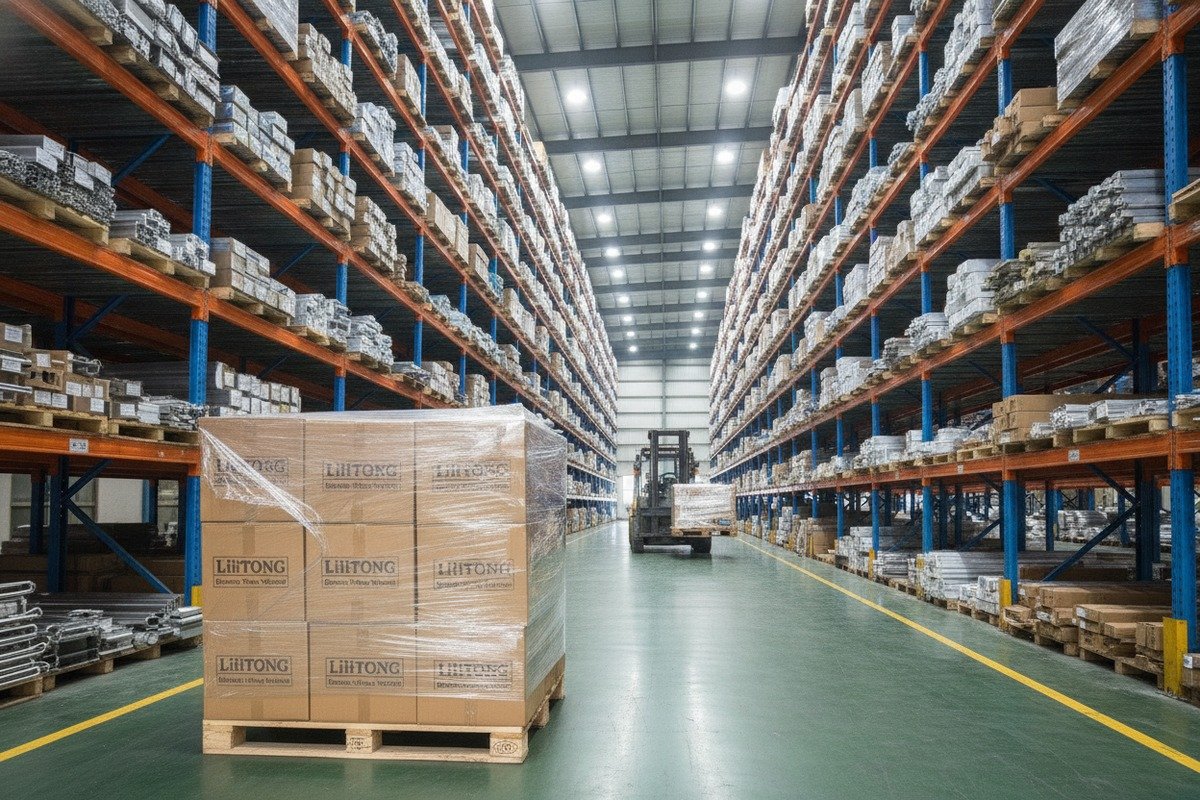
One of the most common complaints we hear from furniture factory owners in Vietnam is this: the sample looked perfect, but the bulk order was a different story. Handles arrived with uneven finishes, inconsistent dimensions, or surfaces that scratched during assembly. This gap between sample and production quality is the core risk.
Yes, you should request case studies that specifically address production consistency, dimensional tolerance, finish uniformity across bulk orders, and compliance with your factory's assembly requirements — not just single-piece sample quality. Ask for before-and-after photos, batch inspection reports, and defect rate data from past SEA orders.
What "Quality Standards" Really Means for a Furniture Factory
Quality is not abstract. For a furniture factory assembling kitchen cabinets or wardrobes, quality means the handle fits the pre-drilled hole pattern precisely, the finish matches across 500 or 5,000 pieces, and the handle does not loosen after repeated use. When we develop custom OEM handles at our Foshan facility, we calibrate to tolerances of ±0.1mm because we know that even a 0.3mm deviation can cause assembly line slowdowns.
Ask suppliers to address these specific quality dimensions in their case studies:
The Quality Dimensions That Matter
Dimensional consistency. Request data showing the tolerance range across a full production batch. If they shipped 3,000 handles to a Vietnamese factory, what was the measured deviation? A good supplier will have Statistical Process Control (SPC) data 9 or at least incoming quality control (IQC) reports.
Finish uniformity. Matte Black handles should look identical whether you pick one from the first box or the last. Ask for photos of handles from different production batches side by side. Color variation (Delta E) 10 should be within acceptable limits — typically ΔE < 1.0 for premium finishes.
Mechanical durability. Handles on kitchen cabinets get pulled thousands of times. Ask if the supplier has conducted pull-test or fatigue-test data. Our engineering team tests handles to 50,000 open-close cycles before approving any design for production.
Assembly compatibility. Does the handle fit standard European-style 32mm system holes? Or does your factory use custom spacing? A supplier who has worked with Vietnamese factories will already know the common hole patterns used in the region.
A Sample Case Study Structure to Request
Ask the supplier to present their case study in this format:
| Case Study Element | What You Want to See |
|---|---|
| Client type | Furniture factory or wholesaler (with country specified) |
| Product | Specific handle model, dimensions, alloy, finish |
| Order volume | Number of pieces and number of shipments |
| Quality metrics | Defect rate (%), tolerance achieved, finish ΔE value |
| Certifications applied | ISO 9227, REACH, Prop 65, or other |
| Problem solved | A specific challenge overcome (e.g., humidity, finish matching) |
| Client feedback | Direct quote or testimonial |
If a supplier cannot fill in these seven fields for even one past SEA order, they likely do not have the depth of experience you need. At our facility, we maintain detailed case files for every major export project specifically so we can share this information transparently with prospective partners.
The Sample-to-Bulk Gap
This is perhaps the biggest pitfall. A supplier sends you a beautiful Champagne Gold recessed handle sample. You approve it. Then the bulk order arrives and the color is slightly off, or the channel depth is inconsistent. To prevent this, ask the supplier: "In your past SEA case studies, how did you ensure the bulk production matched the approved sample? What was your process for color matching and dimensional verification across the full run?"
A trustworthy supplier will describe their process in detail — pre-production samples, first-article inspection, mid-run checks, and final random sampling. If they cannot describe this process, proceed with caution.
How do I ask for proof of their experience in handling custom OEM designs for other clients in my region?
Custom OEM work is where supplier relationships either flourish or fall apart. When we first started offering OEM services for aluminum handles nearly 18 years ago, we quickly learned that the technical capability to make a custom design is only half the equation. The other half is understanding the client's market — their end customers' aesthetic preferences, their factory's assembly workflow, and their region's regulatory landscape.
Ask suppliers to share documented OEM project timelines from SEA clients, including the design brief, prototype iterations, material and finish selections, tooling lead times, production volumes, and final client approval records. Request photos of the custom handles in their installed application, not just factory glamour shots.

What Makes SEA OEM Projects Different
OEM projects for Vietnam and Southeast Asia have specific characteristics that differ from European or North American projects. First, the turnaround expectation is faster. Vietnamese furniture factories often work on tight production schedules tied to their own export deadlines. They cannot wait 45 days for a custom handle. Our standard OEM turnaround is 3–7 days for custom products based on existing tooling, and we maintain this speed because we understand the pressure our SEA clients face.
Second, the design aesthetic is shifting. Southeast Asian furniture is moving toward modern minimalism — sleek recessed pulls, geometric channels, low-profile L-shaped cross-sections in Matte Black and Champagne Gold. A supplier who has only made traditional round knobs for the European market may not understand these design preferences.
Third, MOQ flexibility matters. Many Vietnamese wholesalers start with smaller test orders before committing to bulk. A supplier experienced in the SEA market will accommodate lower MOQs for the first order and scale up as trust builds.
The Right Questions to Ask About OEM Experience
Here is a focused list of questions:
- "Can you show me 2–3 OEM projects you completed for clients in Vietnam, Thailand, or Indonesia between 2024 and 2026?"
- "How many prototype iterations did each project require before the client approved production?"
- "What was the tooling lead time? Did you use existing extrusion dies or create new ones?"
- "What finishes did the client select, and how did you ensure the custom finish would perform in a humid climate?"
- "Can you share photos of the finished OEM handles installed in the client's furniture product?"
- "What was the MOQ for the first order, and did the client place repeat orders?"
Evaluating the Depth of Their OEM Capability
The answers to these questions reveal a lot. A supplier who created a new extrusion die for a Vietnamese client's unique recessed handle profile demonstrates serious investment in the relationship. A supplier who only modified an off-the-shelf design shows less commitment.
Look for these green flags in their OEM case studies:
- They describe the client's design brief and how they translated it into a technical drawing.
- They show at least 2–3 prototype photos with visible iterative improvements.
- They mention specific alloy choices (e.g., "We recommended 6063-T5 for this recessed pull because the client needed sharp edges and a smooth anodized finish").
- They describe the testing they performed before shipping (salt spray, adhesion, dimensional checks).
- They can provide the client's name or at least the country and furniture type.
And watch for these red flags:
- They show only catalog products and claim they are "custom."
- They cannot explain why they chose a specific alloy or finish for the project.
- They have no photos of the handle in its installed context.
- They avoid discussing MOQ or lead time specifics.
Protecting Your Custom Design
One concern many buyers raise is intellectual property. If you share a custom design, how do you know the supplier will not sell it to your competitor? Ask directly: "What is your policy on protecting OEM client designs? Do you sign NDAs? Can you provide evidence that you have honored design exclusivity for past SEA clients?" A reputable supplier will have a clear answer and documentation to back it up. In our business, every OEM project includes a signed design protection agreement. We treat our clients' designs as confidential assets — because they are.
Conclusion
Sourcing aluminum furniture handles for Vietnam and Southeast Asia requires more than price comparisons. Ask specific, evidence-based questions. Demand case studies with real data. Verify every claim independently. The right supplier will welcome your scrutiny — because their track record speaks for itself.
Footnotes
1. Explains how high humidity accelerates metal corrosion due to moisture, oxygen, and metal surface interactions. ↩︎
2. Details standard test methods for measuring adhesion of coatings to metallic substrates by tape test. ↩︎
3. Offers an overview of the economic growth, integration, and market dynamics of the Southeast Asian region. ↩︎
4. Details major shipping ports in Vietnam, crucial for understanding logistics and trade routes. ↩︎
5. Provides details on the international standard for salt spray corrosion tests for metallic materials. ↩︎
6. Discusses the characteristics, durability, and applications of Matte Black anodized aluminum finishes. ↩︎
7. Replaced HTTP 403 link with a comprehensive and authoritative Wikipedia article on aluminum alloys. ↩︎
8. Replaced HTTP 404 link with the official ASTM International page for the ASTM B117 standard, the most authoritative source. ↩︎
9. Defines Statistical Process Control as a method for monitoring and controlling manufacturing processes to ensure quality. ↩︎
10. Explains Delta E as a standardized metric for quantifying the visible difference between two colors. ↩︎