
Every year, our sales team hears the same story from new buyers who got burned by a supplier that looked perfect on paper.
To screen reliable aluminum furniture handle suppliers from China, use third-party platform credit ratings as an initial filter — not a final verdict. Combine digital credit scores with company registration checks, business-scope verification, factory audits, and transaction history reviews to build a full risk picture before placing any order.
Credit ratings can save you weeks of research. But they can also create a false sense of safety if you treat them as the only checkpoint National Enterprise Credit Information Publicity System 1. Below, I break down exactly which metrics matter, how to read them, what risks hide behind good scores, and how to verify real delivery capability — all from the perspective of someone who ships aluminum handles out of Foshan every single day.
Which specific third-party credit metrics should I prioritize when evaluating aluminum handle manufacturers in Foshan?
When we onboard new wholesale partners, we often walk them through the same credit metrics our own procurement team uses to vet raw material suppliers Payment behavior records 2.
Prioritize five core credit metrics: legal registration status, tax credit rating (A/B/C/D), financial health score, litigation history, and payment behavior records. These five data points, pulled from platforms like GSXT, S&P China Credit Analytics, or Moody's vendor-risk tools, give you the fastest and most reliable initial snapshot of any Foshan manufacturer.

Understanding the Five Core Metrics
Not all credit data carries equal weight. Here is a simple breakdown of what each metric actually tells you — and what it does not academic research 3.
Legal registration status is the foundation. Every legitimate Chinese manufacturer has a unified social credit code. Unified Social Credit Identifier 4 You can verify it on the National Enterprise Credit Information Publicity System (GSXT). If the code is missing, expired, or tied to a different business scope, stop immediately.
Tax credit rating is assigned annually by Chinese tax authorities. An "A" rating means the company has strong tax compliance. A "D" rating signals serious problems. This metric is public and hard to fake.
Financial health score comes from platforms like RapidRatings or S&P Global's China Credit Analytics. These scores condense balance sheet data, debt ratios, and cash flow patterns into a single number. They help you compare dozens of suppliers quickly.
Litigation history reveals lawsuits, enforcement actions, and regulatory penalties. A supplier with multiple recent court cases is a red flag, even if their credit score looks clean.
Payment behavior records track whether the supplier pays its own vendors on time. Late payments to upstream aluminum billet suppliers often predict delivery delays to you.
Metric Priority Table
| Metric | What It Measures | Where to Find It | Risk Signal If Poor |
|---|---|---|---|
| Legal Registration | Company legitimacy, business scope | GSXT (China government database) | Fictitious or mismatched entity |
| Tax Credit Rating 5 | Tax compliance (A/B/C/D scale) | Local tax authority / credit reports | Potential fraud or insolvency |
| Financial Health Score 6 | Debt, cash flow, bankruptcy risk | S&P, RapidRatings, Moody's | Undercapitalized, may fail mid-order |
| Litigation History 7 | Lawsuits, enforcement records | Court databases, credit reports | Disputes, non-delivery, IP issues |
| Payment Behavior | On-time payments to own suppliers | Trade credit platforms | Likely to delay your shipment too |
Why Business Scope Matters for Aluminum Handles
Here is something many buyers overlook. A company can have a perfect credit score but still be the wrong supplier for you. In Foshan, thousands of trading companies register under broad categories like "hardware products" or "building materials." That does not mean they own a single extrusion press or anodizing line.
When our team checks a potential partner, we always confirm the business scope includes specific terms like "aluminum profile manufacturing," "metal surface treatment," or "furniture hardware production." If the scope only says "trade" or "import-export," you are probably dealing with a middleman, not a factory.
Cross-Referencing Is Non-Negotiable
One platform is never enough. Domestic Chinese rating agencies tend to assign more optimistic scores than global agencies. CreditRiskMonitor 8 and academic research both confirm this pattern. So if you pull a score from a Chinese domestic platform and it looks great, pull a second score from an international tool. If the two scores disagree sharply, dig deeper before you commit.
How can I tell if a supplier's high platform rating actually guarantees the quality of my custom furniture handle order?
In our 18 years of producing aluminum profiles and furniture handles, we have seen suppliers with gold-level badges deliver defective goods — and small factories with no badges deliver flawless orders.
A high platform rating measures financial stability and compliance history, not product quality. It cannot guarantee your custom aluminum handles will meet tolerance, finish, or packaging specifications. You must supplement credit ratings with sample testing, factory capability audits, and quality control process verification before trusting any supplier with a custom order.

What Platform Ratings Actually Cover vs. What They Miss
This distinction is critical. Let me lay it out clearly.
| What Credit Ratings Cover | What Credit Ratings Do NOT Cover |
|---|---|
| Financial solvency and debt levels | Surface finish consistency (anodizing, powder coating) |
| Legal compliance and registration | Dimensional tolerance on extrusions |
| Tax payment history | Tooling capability for custom profiles |
| Bankruptcy or distress probability | Packaging quality for export shipping |
| Payment behavior to creditors | Color matching across production batches |
A supplier can be financially healthy and still produce handles that wobble in the channel, have uneven anodizing, or arrive with scratched surfaces because of poor packaging. Credit scores do not inspect your product. They inspect the company's books.
The "Verified Supplier" Badge Trap
Platforms like Alibaba 9 offer "Verified Supplier" and "Trade Assurance" badges. These badges confirm that someone visited the factory and that the platform holds a payment guarantee. They do not confirm that the factory can produce a precision-engineered recessed handle with a champagne gold anodized finish at ±0.1mm tolerance.
When we talk to buyers who had bad experiences, the most common mistake is this: they saw the badge, read some reviews, and placed a large custom order without requesting a physical sample first. The badge gave them confidence that was not earned.
How to Bridge the Gap Between Rating and Quality
Here is a practical workflow our export team recommends to every new client:
- Check the credit rating first. If the score is poor, do not waste time on samples.
- Request a physical sample. Pay for it if necessary. Test the finish, the grip depth, the edge sharpness, and the fit in your furniture panel.
- Ask for production photos or videos. A real manufacturer can show you their extrusion line, cutting station, and anodizing bath. A trading company cannot.
- Request a test report. Aluminum alloy grade (usually 6063-T5 for furniture handles), surface thickness of anodizing (typically 10–15 microns), and hardness test results.
- Order a small trial batch before committing to bulk. Even 50–100 pieces will reveal consistency issues that a single sample cannot.
Why "Cheap Hardware" Does Not Mean "Low Risk"
Aluminum furniture handles are low-ticket items. A single handle might cost less than $1. But think about what happens when 5,000 defective handles arrive at your warehouse. Your furniture factory clients cannot assemble cabinets on schedule. Your wholesale customers demand replacements. You eat the shipping cost, the rework cost, and the reputational cost. A $3,000 order can easily cause $15,000 in downstream damage.
That is why treating credit ratings as a quality guarantee is dangerous. They are a financial filter. Quality requires a separate, product-specific verification process.
Our finance team once flagged a raw material supplier whose credit score had been "A-level" for three consecutive years — right up until they defaulted on a major delivery. The score lagged reality by almost six months.
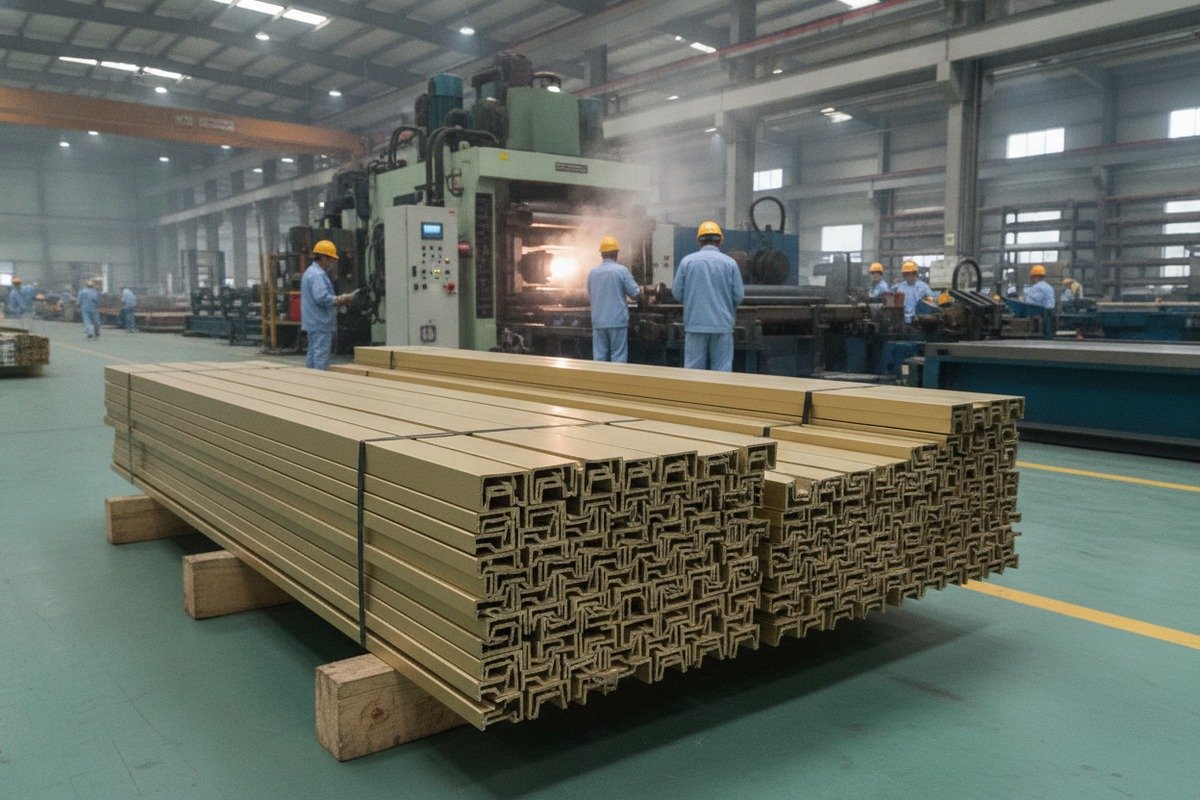
The hidden risks include ratings inflation by domestic Chinese agencies, lagging data that misses recent financial deterioration, incomplete disclosure from private companies, issuer-pays conflicts of interest, and the inability of any score to detect operational fraud, subcontracting, or quality manipulation. Sole reliance on digital scores can lead to costly surprises.
Risk #1: Ratings Inflation in China
This is well-documented. Chinese domestic rating agencies have historically assigned more optimistic ratings than global agencies like S&P or Moody's. The reasons include regulatory structure, competitive pressure among agencies, and the issuer-pays model 10 where the company being rated also pays for the rating. This creates a conflict of interest.
For you as a buyer, this means a "high" score from a domestic platform might only equal a "medium" score on an international scale. If you only look at one source, you may be lulled into false confidence.
Risk #2: Data Lag
Credit scores update periodically — sometimes quarterly, sometimes annually. A supplier could lose a major client, face a lawsuit, or run into cash flow problems between updates. By the time the score drops, you may already have a container on the water.
Risk #3: Private Company Opacity
Most aluminum handle manufacturers in Foshan are privately held. They are not required to disclose financials the way publicly traded companies are. This means credit scoring models work with less data, and the resulting scores may be less reliable.
Risk #4: Entity Mismatch
Some trading companies use the factory's registration details to appear as manufacturers. The credit score may be attached to the trading entity, not the actual production facility. If the factory behind the scenes is different from the legal entity you checked, your due diligence has a blind spot.
Summary of Hidden Risks
| Hidden Risk | How It Hurts You | How to Mitigate |
|---|---|---|
| Ratings inflation | False confidence in risky suppliers | Compare domestic and international scores |
| Data lag | Score does not reflect recent problems | Monitor continuously, check recent litigation |
| Private company opacity | Score based on limited data | Request financial statements directly |
| Entity mismatch | Score belongs to trader, not factory | Verify factory ownership separately |
| Issuer-pays conflict | Agency incentivized to rate favorably | Use independent, buyer-funded reports |
| No quality signal | Score ignores product defects | Require samples and factory audits |
Risk #5: Over-Reliance Kills Negotiation Leverage
When you trust a score blindly, you skip the hard questions. You do not ask for references. You do not push for penalty clauses in the purchase agreement. You do not demand a pre-shipment inspection. All of these steps cost very little but protect you enormously.
In our experience shipping to Vietnam and the Middle East, the buyers who have the smoothest experience are the ones who treat credit scores as a triage tool. They use the score to create three buckets: pass, investigate further, or reject. Then they do the real work on the "pass" and "investigate" groups.
The Balanced Approach
Think of credit ratings like a metal detector at the beach. It tells you something is buried in the sand. It does not tell you if it is gold or a bottle cap. You still have to dig.
How do I use platform transaction history to verify if a supplier can truly handle my urgent 48-hour shipping needs?
Speed is one of the most common promises in our industry — and one of the most commonly broken. When we built our 300-ton ready-to-ship inventory system, it was precisely because we saw how many buyers were being let down by suppliers who claimed fast shipping but could not deliver.
To verify 48-hour shipping capability, examine the supplier's platform transaction history for order frequency, repeat buyer rates, average fulfillment times, and recent transaction volume. High repeat-buyer percentages and consistent recent order completions are stronger indicators of real delivery speed than any self-reported claim or static credit score.
What Transaction History Actually Reveals
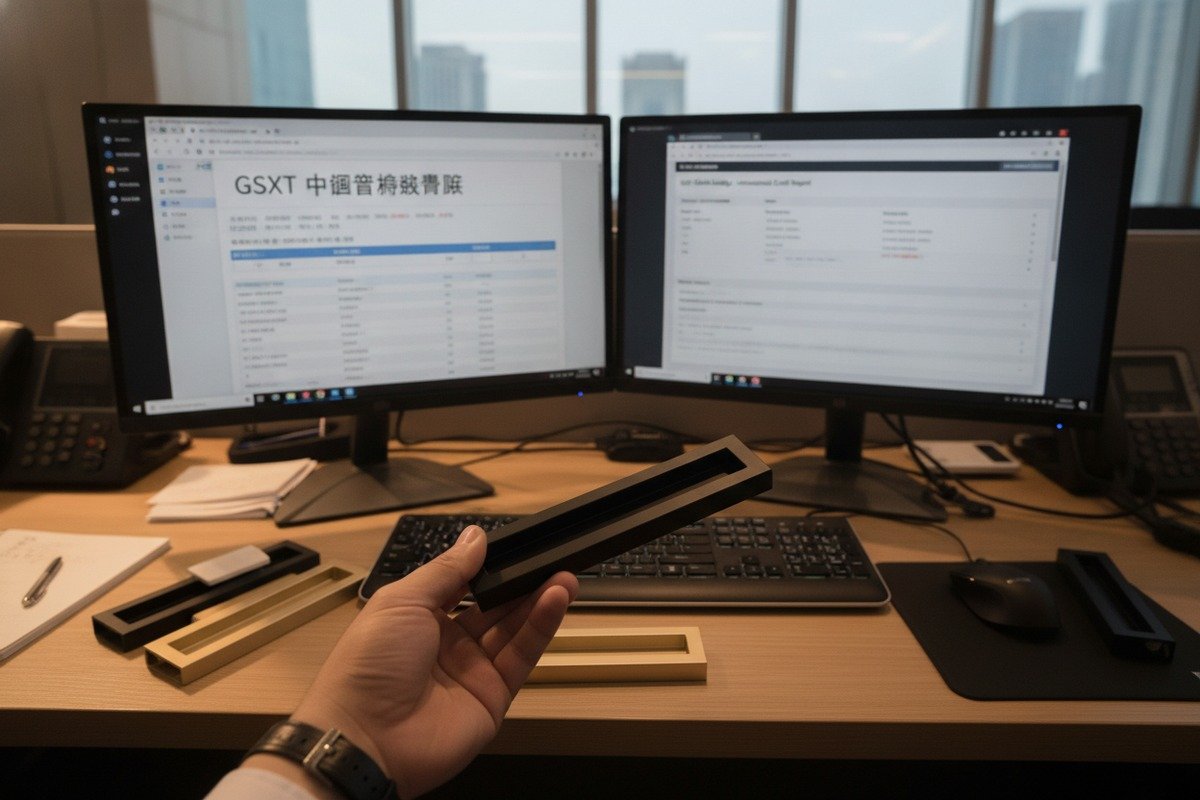
Most B2B platforms display some version of transaction data. On Alibaba, you can see transaction amounts, response times, and on-time delivery rates. On other platforms, you may see order counts or buyer feedback scores. Here is how to read this data critically.
Order frequency tells you whether the supplier is actively shipping or dormant. A supplier with dozens of completed orders in the past 90 days is far more likely to have stock and operational systems in place than one with only two or three transactions per quarter.
Repeat buyer rate is the single most powerful signal. If buyers come back, the supplier delivered on its promises. Nobody reorders from a company that missed deadlines or shipped garbage. A repeat rate above 30% is a strong positive indicator.
Average fulfillment time — if the platform reports it — lets you see the gap between order placement and shipment. If the average is 7–10 days, a promise of 48-hour shipping is suspect unless the supplier explicitly distinguishes between stock items and custom orders.
Red Flags in Transaction History
| Red Flag | What It Suggests | Your Next Step |
|---|---|---|
| Very few transactions in recent months | Low activity, possible cash flow issues | Ask for explanation, check litigation |
| No repeat buyers visible | Buyers did not return — quality or delivery problems | Request references directly |
| Large gap between claimed speed and actual fulfillment | Overpromising, underdelivering | Request proof of current inventory |
| All transactions are tiny amounts | May not have capacity for your bulk order | Ask for evidence of large-order fulfillment |
| Sudden spike in negative reviews | Recent operational or quality breakdown | Investigate before ordering |
How to Verify Stock Availability for 48-Hour Shipping
A 48-hour shipping promise only works if the product is already manufactured, finished, and sitting in a warehouse. For aluminum furniture handles, this means the supplier needs to maintain ready stock in the specific profile, finish, and length you need.
Here is what I recommend:
- Ask for a current stock list with quantities. A real manufacturer with ready inventory can provide this within hours.
- Request a dated warehouse photo. Insist on a photo with a visible date stamp or newspaper. This is old-school but effective.
- Place a small test order with a tight deadline. Order 50 pieces and request 48-hour shipping. Track the actual time from payment confirmation to shipping notification. This costs very little and gives you hard data.
- Check if the supplier separates stock items from custom items in their listings. A transparent supplier will clearly mark which SKUs are in stock and which require production lead time.
Why Transaction Volume Alone Is Not Enough
High transaction volume can be misleading. A trading company that sources from multiple factories might show high volume but have zero control over delivery speed. When an urgent order comes in, they have to call their factory partner, check availability, negotiate priority, and arrange logistics. That process rarely fits inside 48 hours.
A manufacturer with in-house inventory — like our facility in Foshan with 300 tons of ready profiles — controls every step. The handles are already extruded, anodized, cut to length, and packed. When an order comes in, we pick, label, and ship. That is how real 48-hour fulfillment works.
Combining Transaction Data with Credit Data
The strongest verification approach layers transaction history on top of credit ratings. A supplier with good credit AND strong transaction history is your safest bet. A supplier with good credit but thin transaction history needs more investigation. A supplier with poor credit but high transaction volume might be churning through buyers because of quality issues — proceed with extreme caution.
Use both data sets together. Neither one alone tells the full story.
Conclusion
Credit ratings are a powerful triage tool, but they work best as the first step in a layered due diligence process — not the last.
Footnotes
1. Guide to China’s official enterprise credit information system for company verification. ↩︎
2. Discusses how trade credit and payment behavior impact supply chain liquidity and supplier relationships. ↩︎
3. Academic paper on conflicts of interest and rating inflation in credit rating agencies. ↩︎
4. Wikipedia provides a comprehensive and authoritative definition of the Unified Social Credit Identifier. ↩︎
5. China Briefing (Dezan Shira & Associates) offers a relevant and up-to-date article explaining China’s taxpayer credit rating system. ↩︎
6. Details how a financial health score (H-Score) measures a company’s financial health. ↩︎
7. PACER (Public Access to Court Electronic Records) is the official U.S. federal government system for accessing federal court records and litigation history. ↩︎
8. Official website of CreditRiskMonitor, a platform for financial risk management and monitoring. ↩︎
9. Official Alibaba page explaining its supplier verification and trade assurance programs. ↩︎
10. SEC statement explaining the issuer-pays model in credit ratings and its conflict of interest. ↩︎