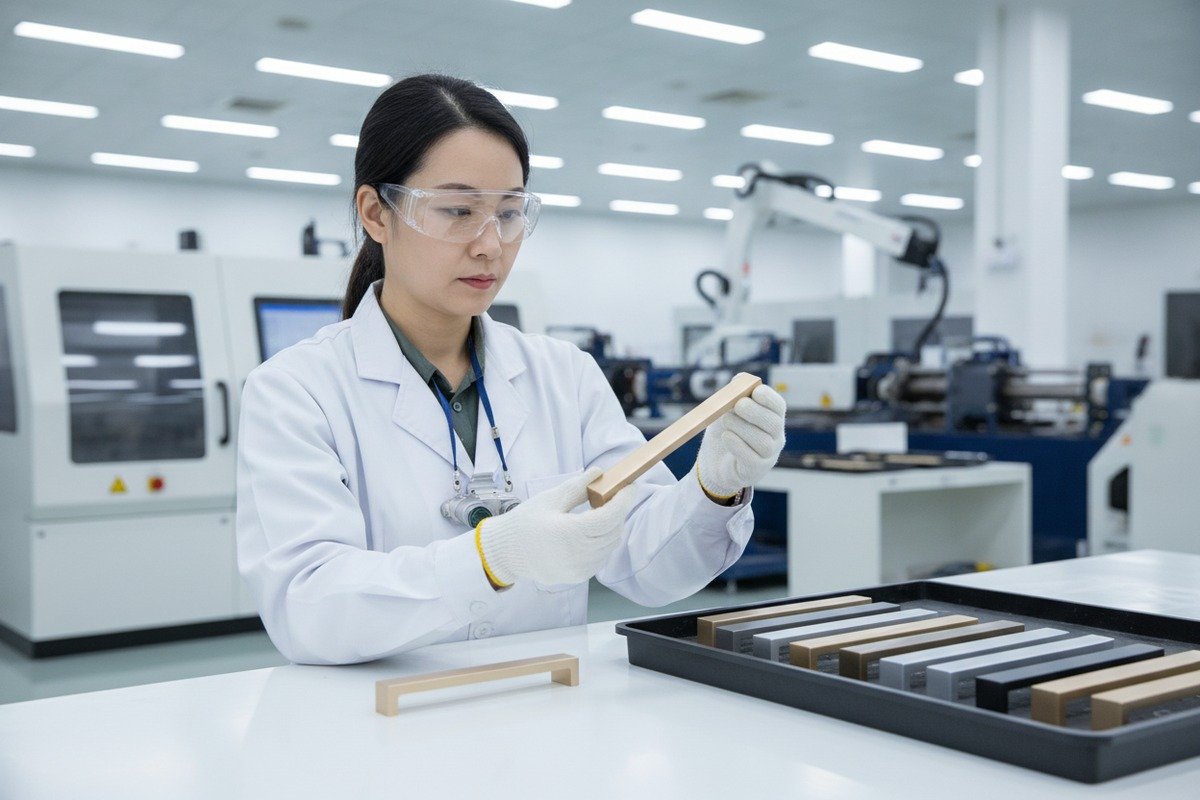
Every year, our production line processes thousands of aluminum handle orders, and the number one complaint we hear from new buyers switching suppliers is coating failure aluminum surface preparation 1. Handles that looked perfect in photos arrive with uneven color, rough edges, or finish that starts peeling within months. The frustration is real — mismatched handles on a finished cabinet line can cost a furniture factory an entire batch of product credibility.
To ensure your aluminum furniture handles have a uniform coating that resists peeling, verify the supplier’s surface preparation method, confirm whether they use anodizing or properly cured powder coating, request samples from the actual production batch, and inspect for consistent color, thickness, and adhesion before placing a bulk order.
This guide breaks down the specific finish technologies, the tests you can run, the questions you should ask your supplier, and the maintenance steps that protect your investment long after installation. Let’s walk through each step so you can buy with confidence.
How Can I Test the Adhesion of Aluminum Handle Coatings to Prevent Peeling in My Furniture Projects?
Peeling handles on a finished piece of furniture are more than a cosmetic issue — they erode trust with your end customers. In our experience exporting to Vietnam and the Middle East, adhesion testing is the single most overlooked step buyers skip before committing to a bulk order.
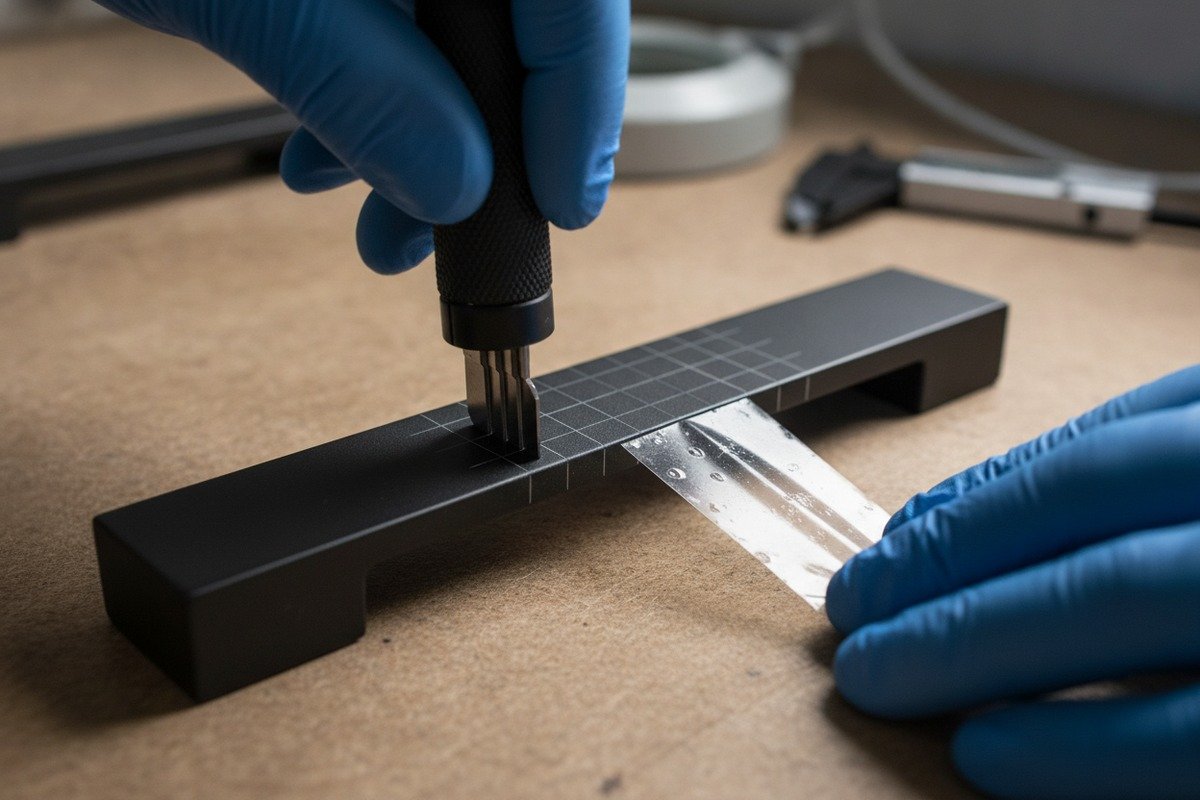
You can test coating adhesion using the cross-cut adhesion test (ASTM D3359), which involves scoring a grid pattern into the coating with a blade, applying standardized tape, and pulling it off to check if any coating lifts. Requesting this test result from your supplier is a practical first step.
Why Coatings Peel in the First Place
Before you test, it helps to understand why coatings fail. The root cause is almost always at the interface between the aluminum surface and the coating layer. If the metal was not properly cleaned, degreased, or pre-treated, the coating sits on a weak foundation. Oil residue from the extrusion process, oxidation, or dust particles all act as barriers that prevent the finish from bonding to the aluminum.
Uneven application compounds the problem. If the coating is too thin in one area and too thick in another, the thin spots become weak points. Improper curing — not reaching the right temperature for the right duration — leaves the coating soft and prone to lifting. We have seen batches from other factories where the powder coating looked fine visually but could be scratched off with a fingernail because the oven temperature was 15°C too low.
The Cross-Cut Adhesion Test Explained
This is the industry-standard method. Here is how it works:
- Use a sharp blade to cut a grid of small squares into the coating surface.
- Apply a piece of standardized pressure-sensitive tape over the grid.
- Pull the tape off at a consistent angle.
- Examine the grid. Count how many squares remain intact.
The result is graded on a scale from 0B (complete removal) to 5B (no removal at all). For furniture handles that will be touched daily, you want a rating of 4B or higher.
Other Practical Tests You Can Do
| Test Method | What It Checks | How to Do It | Pass Criteria |
|---|---|---|---|
| Cross-cut adhesion (ASTM D3359) | Bond strength between coating and metal | Score grid, apply tape, pull off | 4B or higher — minimal flaking |
| Fingernail scratch test | Surface hardness | Drag fingernail firmly across surface | No visible scratch or coating lift |
| Rubbing test with damp cloth | Pigment stability and cure quality | Rub white cloth on surface 20 times | No color transfer to cloth |
| Boiling water immersion | Accelerated moisture resistance | Submerge coated sample for 30 minutes | No blistering, peeling, or color shift |
What to Request From Your Supplier
Ask your supplier to provide a test report from a third-party lab or share video evidence of the cross-cut test performed on samples from your specific order batch. At our facility, we run adhesion checks on every new color batch and after any change in the anodizing or powder coating line parameters. A reliable supplier should not hesitate to share these results. If they avoid the question, that is a signal worth paying attention to.
You should also ask whether they perform salt spray testing 2, which simulates long-term corrosion exposure. For handles destined for humid kitchens or coastal markets in the Middle East, a 48-hour salt spray test with no visible corrosion is a reasonable minimum expectation.
What Surface Treatment Standards Should I Require From My Supplier to Ensure a Uniform Finish?
When we calibrate our anodizing tanks and powder coating ovens, every parameter — from chemical concentration to oven dwell time — directly shapes whether the final handle looks consistent or patchy. A uniform finish is not accidental. It is the result of controlled processes from start to end.
Require your supplier to follow recognized surface treatment standards such as ISO 7599 for anodizing or ISO 8681 for aluminum surface preparation. Ask for documentation on pre-treatment steps, coating thickness specifications, curing parameters, and quality certifications like ISO 9001 for process consistency.
Understanding the Two Leading Finish Types
The two strongest options for aluminum furniture handles are anodizing and powder coating. Each works differently and has distinct advantages.
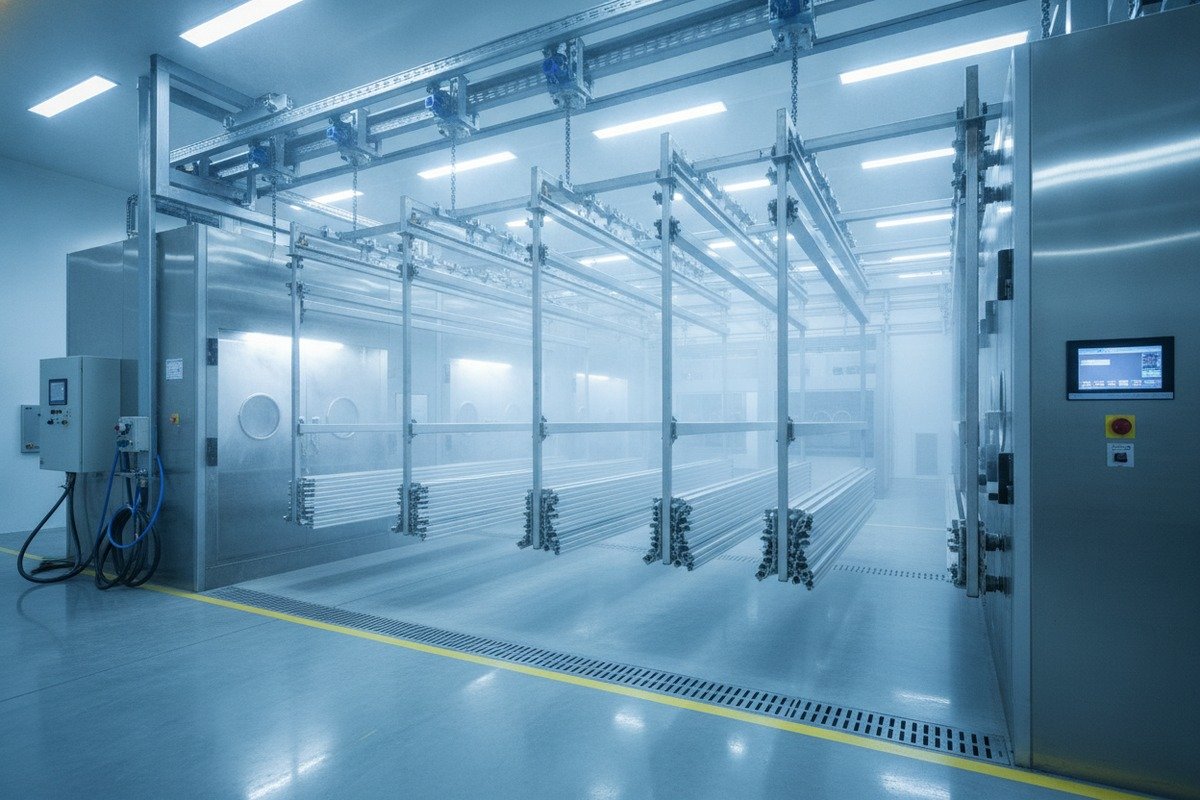
Anodizing is an electrochemical process 4. The aluminum part is submerged in an acid electrolyte bath, and an electric current converts the outer layer of aluminum into aluminum oxide. This oxide layer is not applied on top of the metal — it grows from within the metal itself. That is why anodized finishes are highly resistant to peeling and chipping. The layer becomes an integral part of the handle.
Powder coating uses a different approach. A dry powder is applied to the handle surface using an electrostatic spray gun 5, and then the part is placed in an oven where the powder melts and cures into a solid, continuous film. When done correctly, this film is thick, smooth, and scratch-resistant. However, because it sits on top of the metal, it can chip or peel if the surface was not properly prepared or the cure was incomplete.
Finish Comparison Table
| Feature | Anodizing | Powder Coating |
|---|---|---|
| How it bonds | Integrated oxide layer within the metal | Surface-applied cured film |
| Peel resistance | Excellent — layer cannot separate from base | Good if cured properly; can chip if prep fails |
| Color range | Limited — mostly metallic and earth tones | Very wide — almost any color or texture |
| Typical thickness | 5–25 microns | 60–120 microns |
| Best use case | Maximum durability, peel resistance | Decorative variety, thicker protection |
| Scratch visibility | Low on matte/brushed finishes | Low to moderate depending on formulation |
| Environmental impact | Low VOC process | Low VOC (no solvents in powder) |
What "Uniform" Actually Means
A uniform coating is more than just even color. Here is a checklist of what to look for:
- Even color across the full length of the handle, including ends and edges.
- No thin spots at corners, screw holes, or recessed grip channels.
- No runs, sags, or orange peel texture — these indicate poor spray technique or incorrect viscosity.
- No dust nibs or pinholes — these suggest contamination during application.
- Consistent sheen level across all pieces in the batch. If you install five handles on a row of drawers, they should all look the same under the same light.
- Consistent thickness from piece to piece. Thickness variation leads to color variation, especially in anodized finishes.
Standards and Certifications to Ask For
At minimum, ask whether your supplier holds ISO 9001 certification 6, which ensures a quality management system is in place. For the coating itself, reference standards like ISO 7599 (anodizing of aluminum) or AAMA 2604/2605 7 (architectural coating performance). ISO 7599 for anodizing 8 These are not just buzzwords — they define measurable criteria for adhesion, hardness, weathering, and chemical resistance. A supplier that can cite these standards is more likely to deliver consistent results than one that simply promises "high quality."
Our team in Foshan runs thickness checks using digital coating gauges on random samples during every production run. We also keep color master samples for each SKU so we can compare new batches against the original approved standard. This kind of process discipline is what separates a uniform batch from a problematic one.
How Do I Verify That a Manufacturer's Bulk Production Matches the Quality of the Initial Samples?
One frustrating pattern we hear about from buyers sourcing in China is the "sample bait and switch." The first few samples look perfect, but when the bulk order arrives, the color is slightly off, the finish feels different, or some handles have visible defects. On our end, we have invested years in process controls specifically to eliminate this gap.
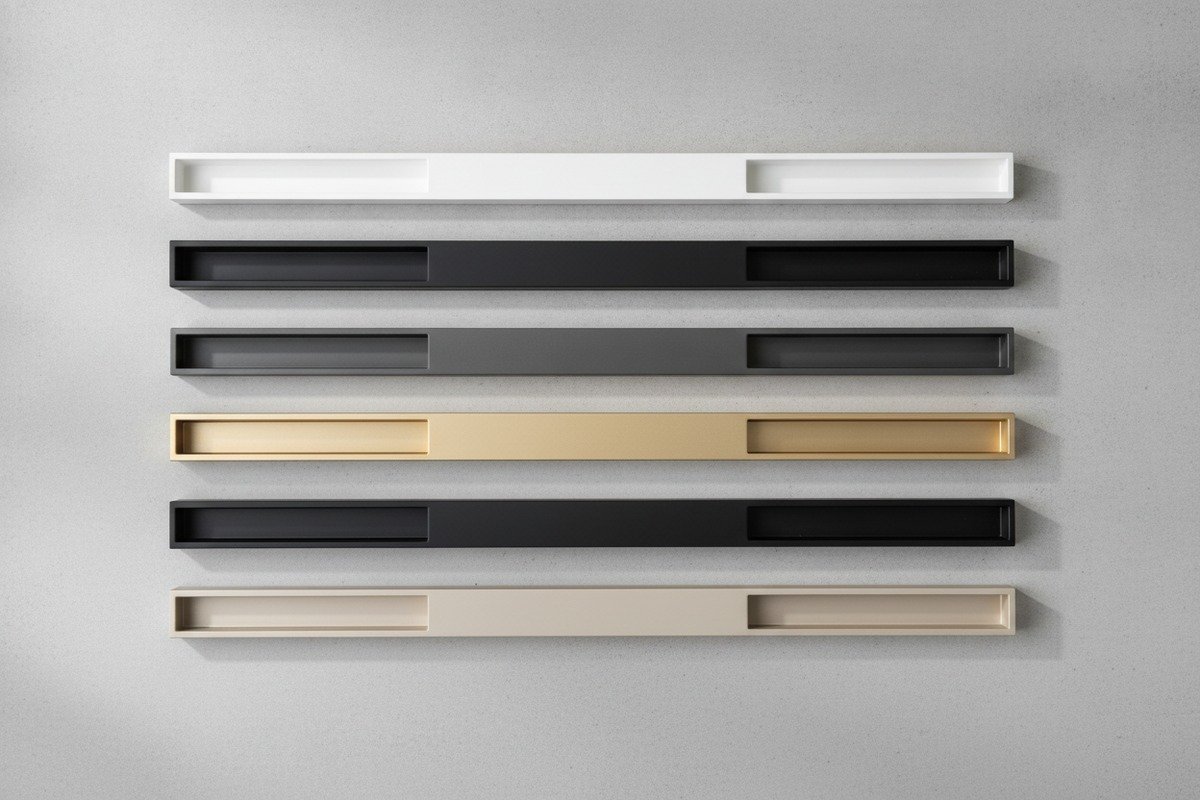
To verify bulk production matches your approved samples, retain a sealed reference sample, request pre-shipment inspection photos and videos from the actual batch, conduct random sampling upon delivery, and compare color, thickness, texture, and adhesion against your original approval standard side by side.
Why Samples and Bulk Orders Differ
The gap between samples and bulk production usually traces back to one of these causes:
- Different production lines. Samples may be produced on a carefully monitored small batch line, while bulk orders go through a faster, less controlled process.
- Material variation. The aluminum alloy grade or supplier may change between the sample run and the main order.
- Process drift. Anodizing bath chemistry changes over time. Powder coating guns wear. Oven temperatures fluctuate. Without regular calibration, the output shifts.
- Human error. Operators on the main production line may not follow the same settings used for the sample run.
A Step-by-Step Verification Approach
Here is a practical workflow for ensuring consistency:
- Seal and label your approved sample. Store it in a clean, light-protected environment. This is your master reference.
- Specify your quality standards in the purchase order. Include acceptable color delta (ΔE ≤ 1.5 is a common target for visible color consistency), minimum coating thickness, adhesion grade, and surface defect limits.
- Request first-article inspection. Before full production begins, ask the factory to produce a small run and send you photos, measurements, and test results for approval.
- Arrange pre-shipment inspection. Either visit the factory, send a third-party inspector, or require the supplier to send detailed photos and videos of random pieces from the packed order — including close-ups of edges, screw holes, and undersides.
- Conduct incoming quality checks. When the order arrives, pull random samples and compare them to your sealed reference. Check color under natural light and artificial light. Run a fingernail scratch test. Wipe with a damp cloth.
Quality Verification Checklist
| Checkpoint | When | What to Check | Red Flag |
|---|---|---|---|
| Sample approval | Before production | Color, finish, dimensions, adhesion | Any deviation from your specification |
| First-article inspection | Start of production run | Match to approved sample | Color shift, texture difference |
| Mid-production check | During production | Random piece vs. master sample | Gradual drift in color or thickness |
| Pre-shipment inspection | Before packing | Random sampling from packed goods | Inconsistent pieces, visible defects |
| Incoming inspection | Upon delivery | Side-by-side comparison with sealed sample | Mismatch in color, sheen, or feel |
The Role of Communication
Clear communication prevents most quality gaps. When we work with furniture factories in Vietnam, we share production photos at each stage — after extrusion, after surface treatment, and after packing. We also confirm the exact alloy, finish code, and coating parameters before every order. Buyers who provide written specifications and reference samples get the most consistent results. Verbal agreements leave too much room for misinterpretation.
If your supplier cannot clearly explain their internal quality control process, or if they resist sending production-stage photos, treat that as a warning sign. A manufacturer that is confident in their process will be happy to show it.
Which Coating Technologies Are Best for Ensuring My Aluminum Handles Remain Durable in Humid Climates?
Humid climates are the toughest test for any metal finish. Markets like Vietnam and the coastal regions of the Middle East expose hardware to constant moisture, salt air, cooking steam, and aggressive cleaning. When we developed our handle finishes for these regions, durability under humidity was the primary design criterion, not just appearance.
For humid climates, anodizing is the most reliable coating technology because its oxide layer is chemically bonded to the aluminum and resists moisture penetration. Properly cured powder coating is a strong second choice, offering thicker protection and broader color options when applied over thorough pre-treatment.

How Humidity Attacks Coatings
Moisture does not just sit on the surface — it works its way into any gap, pinhole, or weak bond in the coating. Once water reaches the aluminum substrate through a defect, it can trigger localized corrosion underneath the finish. This creates bubbling, blistering, and eventually peeling. In kitchens, the problem intensifies because handles are exposed to steam, oil fumes, and acidic or alkaline cleaning agents that can chemically degrade a weak finish.
Comparing Technologies for Humid Conditions
Not all coating methods perform equally in these conditions. Here is a focused comparison for buyers in high-humidity markets:
| Coating Technology | Moisture Resistance | Maintenance Level | Color Options | Peel Risk in Humidity |
|---|---|---|---|---|
| Anodizing (sealed) | Excellent — integrated oxide layer blocks moisture | Very low | Limited to metallic tones | Very low |
| Powder coating (properly cured) | Very good — thick continuous film | Low | Wide range of colors and textures | Low if prep and cure are correct |
| Electrophoretic coating (e-coating) | Good — uniform thin film via electrodeposition | Low | Moderate range | Low to moderate |
| PVD (Physical Vapor Deposition) | Good — thin but very hard surface | Low | Metallic and decorative | Low but can scratch on edges |
| Brushed finish (no topcoat) | Moderate — relies on natural oxide | Higher — needs regular wiping | Natural aluminum only | Moderate if exposed to chemicals |
Why Anodizing Wins for Humidity
Anodizing stands out because the protective layer is not a separate material sitting on the aluminum — it is the aluminum itself, transformed into aluminum oxide. This oxide is extremely hard, non-porous (once properly sealed), and chemically stable. It does not chip because there is no distinct boundary between the coating and the base metal where delamination could start.
For our champagne gold and light bronze handle finishes, we use a controlled anodizing process followed by a hot sealing step that closes the pores of the oxide layer. This sealing step is critical. An unsealed anodized surface is porous and can absorb stains or moisture over time. A properly sealed surface repels water and resists discoloration for years.
Powder Coating in Humid Environments
Powder coating can also perform very well in humid conditions, but it is more dependent on process quality. The key factors are:
- Pre-treatment: The aluminum must be cleaned, degreased, and given a conversion coating 9 (such as chromate or chrome-free alternatives) to create a bonding layer between the metal and the powder.
- Application consistency: The electrostatic spray must cover all surfaces evenly, including inside recessed grip channels and around screw holes.
- Curing: The coated handles must reach the correct internal temperature for the correct duration. Under-curing leaves the coating soft and permeable. Over-curing can cause brittleness and color shift.
When all three steps are done right, powder coating provides a thick, seamless barrier that handles moisture, cleaning chemicals, and daily wear with ease.
Practical Advice for Buyers in Humid Markets
Choose matte or brushed finishes over high-gloss options. Glossy surfaces show fingerprints, water spots, and micro-scratches more readily, which makes them look worn faster in humid kitchens. Matte and satin finishes hide daily wear and maintain a clean appearance with less effort.
Also consider the cleaning products your end customers will use. Alkaline or abrasive cleaners can damage even good coatings over time. Recommend that end users clean handles with a soft damp cloth and mild soap. Avoid ammonia-based products or scouring pads. This simple care routine extends the life of any finish significantly.
If you are sourcing handles for a market where humidity and heat are constant, ask your supplier specifically whether the handles have been tested under accelerated humidity conditions. At our facility, we run humidity chamber tests 10 and salt spray tests on finish samples before approving a new color or coating process for production. This gives us data, not just claims, to share with buyers.
Conclusion
Coating quality on aluminum furniture handles depends on finish type, surface preparation, curing control, and honest supplier communication — not just appearance. Choose your finish wisely, test before you commit, and maintain gently after installation.
Footnotes
1. Surface preparation is crucial for coating adhesion and corrosion resistance on aluminum. ↩︎
2. Salt spray testing is a standardized corrosion test method for materials and surface coatings. ↩︎
3. ASTM D3359 is the standard for evaluating coating adhesion on metallic substrates. ↩︎
4. Anodizing is an electrochemical process that converts a metal surface into an oxide layer. ↩︎
5. Electrostatic spray guns are used in powder coating to apply dry powder with an electric charge. ↩︎
6. ISO 9001 is a globally recognized standard for quality management systems. ↩︎
7. AAMA 2604 and 2605 are performance specifications for architectural coatings on aluminum. ↩︎
8. ISO 7599 specifies requirements for decorative and protective anodic oxidation coatings on aluminum. ↩︎
9. Conversion coatings protect aluminum against corrosion and improve paint adhesion. ↩︎
10. Humidity chamber tests assess product behavior under controlled humidity and temperature conditions. ↩︎