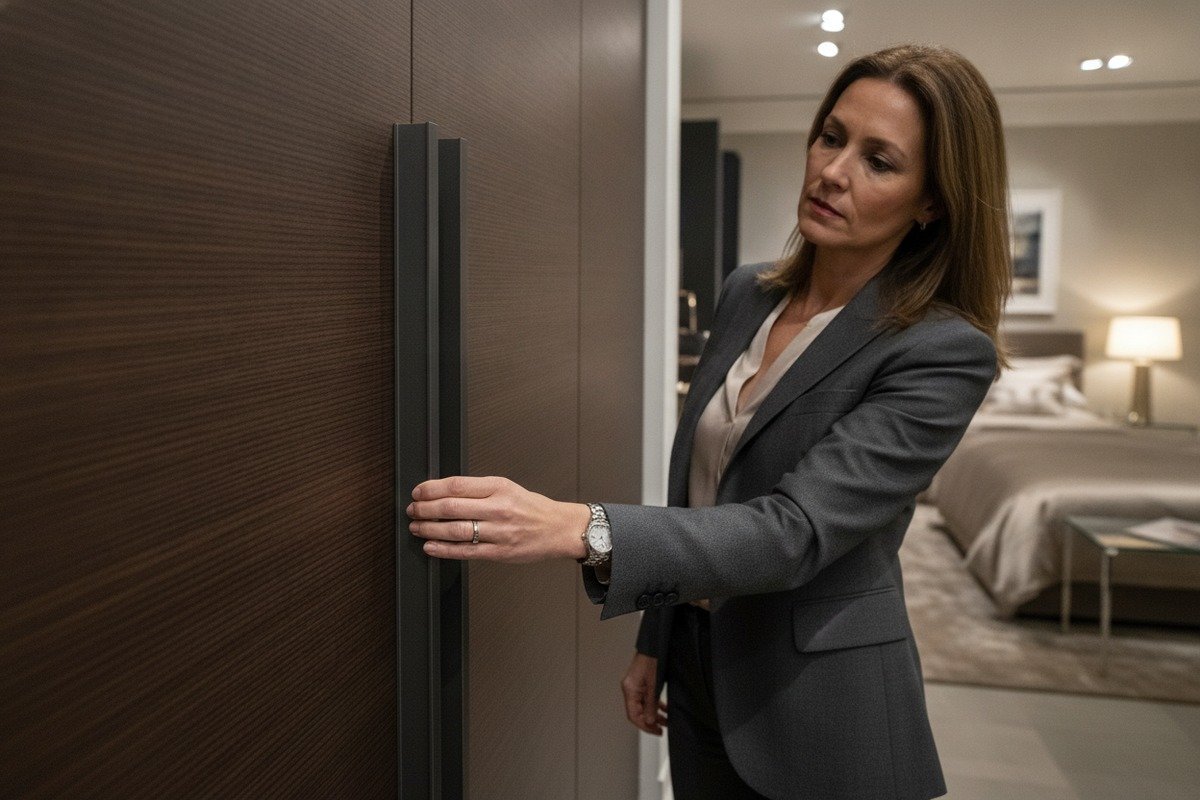
Every year, our production line ships thousands of aluminum wardrobe handles to furniture factories across Vietnam and the Middle East mill test report 1. Yet one complaint keeps coming back: the handles looked perfect as samples but fell apart in bulk. Choosing the right minimalist aluminum handle is not just about aesthetics. It is about finding hardware that holds up across thousands of units, installs quickly, and matches the clean-lined look modern bedrooms demand. The wrong choice costs you returns, rework, and lost trust with your end customers.
To choose minimalist aluminum furniture handles for bedroom wardrobes, evaluate the handle profile, alloy grade, surface finish durability, mounting method, and supplier batch consistency. Prioritize slim recessed or profile pulls in neutral finishes, and always test samples for grip comfort, scratch resistance, and installation fit before committing to bulk orders.
This guide walks you through the exact criteria our buyers use when selecting wardrobe handles. We cover material verification, trending designs, lead time 2 strategies, and customization options so you can source with confidence.
How can I verify the material quality and finish durability of minimalist aluminum handles before placing a bulk order?
When we first started exporting handles eighteen years ago, finish complaints were our biggest headache. Buyers received containers of handles that looked different from the approved sample. That painful lesson taught us that verification before ordering is not optional — it is survival.
Request physical samples from at least two production batches and perform scratch tests, salt spray tests, and color consistency checks under different lighting. Verify the aluminum alloy grade documentation, confirm the finish type (anodized, powder-coated, or brushed), and compare samples side by side to catch variations before committing to volume.
Start with the Alloy Grade
Not all aluminum is the same. The alloy grade determines hardness, corrosion resistance, and how well the surface accepts finishing treatments. Most quality furniture handles use 6063 or 6061 aluminum alloy 3. These grades offer a good balance of strength, extrudability, and surface quality. Ask your supplier for a material certificate 4 or mill test report. If they cannot provide one, that is a red flag.
Understand Finish Types and Their Trade-offs
The finish is what your end customer sees and touches every day. Each finish type has different durability, cost, and visual characteristics.
| Finish Type | Scratch Resistance | Fingerprint Visibility | Cost Level | Best For |
|---|---|---|---|---|
| Anodized (matte) | High | Low | Medium | Premium bedroom wardrobes |
| Powder-coated | Medium-High | Low | Medium | Color-matched projects |
| Brushed | Medium | Medium | Low-Medium | Industrial or modern styles |
| Polished | Low | High | Low | Budget lines (not recommended for wardrobes) |
| Painted | Low | Low-Medium | Low | Short-term or display furniture |
Anodized finishes 5 penetrate the metal surface, making them harder to chip or peel. Powder coating 6 sits on top but offers a wider color range. Brushed finishes hide minor scratches well but can show fingerprints more than matte anodized options. For bedroom wardrobes, where handles get touched multiple times a day, we consistently recommend anodized or powder-coated finishes.
Run Simple In-House Tests
You do not need a laboratory to check basic quality. Here are tests our team recommends to every buyer:
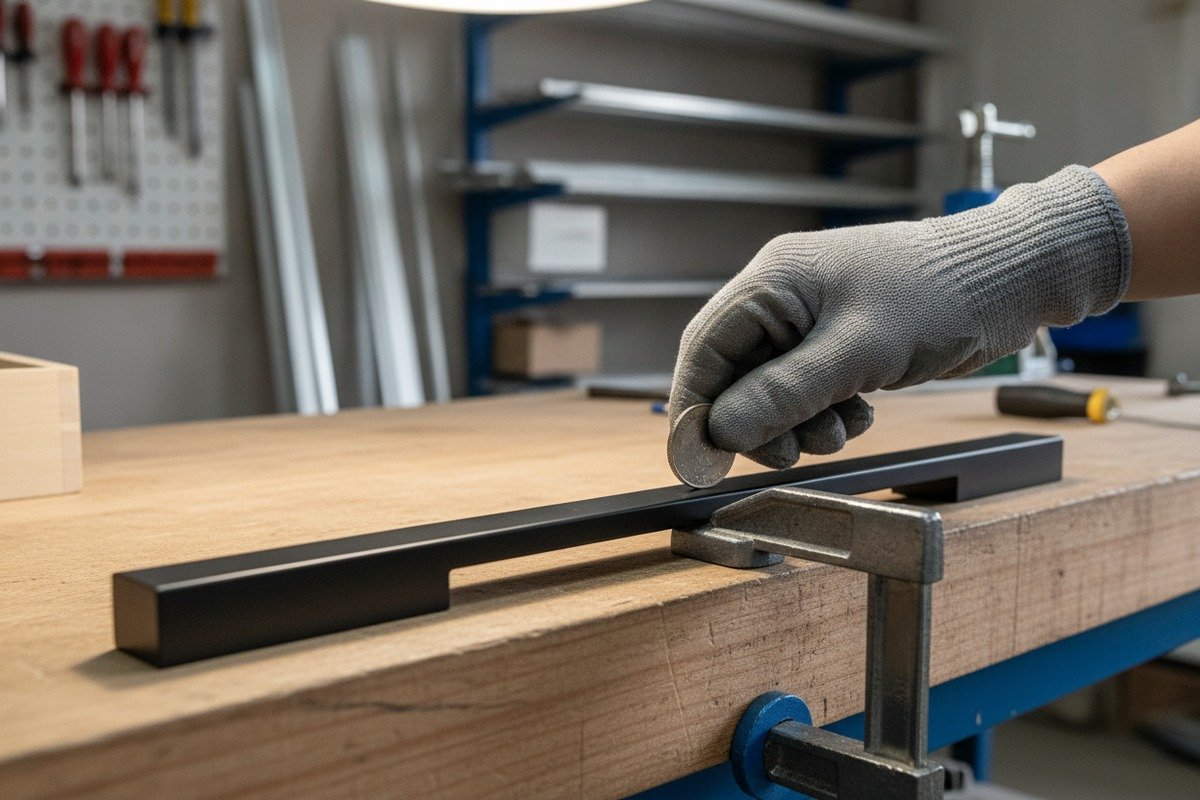
- Scratch test: Run a coin or key across the handle surface with moderate pressure. Scratch test 7 A quality anodized finish should resist light scratches.
- Adhesion test: Apply masking tape firmly to the finished surface, then pull it off quickly. Adhesion test 8 Paint or low-quality coatings will lift. Good anodized or powder-coated finishes stay intact.
- Color match test: Place handles from different boxes under natural light, warm LED light, and cool fluorescent light. Color shifts between batches become obvious under varied lighting.
- Weight check: Weigh multiple handles from the same batch. Significant weight variation suggests inconsistent wall thickness in the aluminum extrusion 9.
Batch Consistency Matters More Than a Single Sample
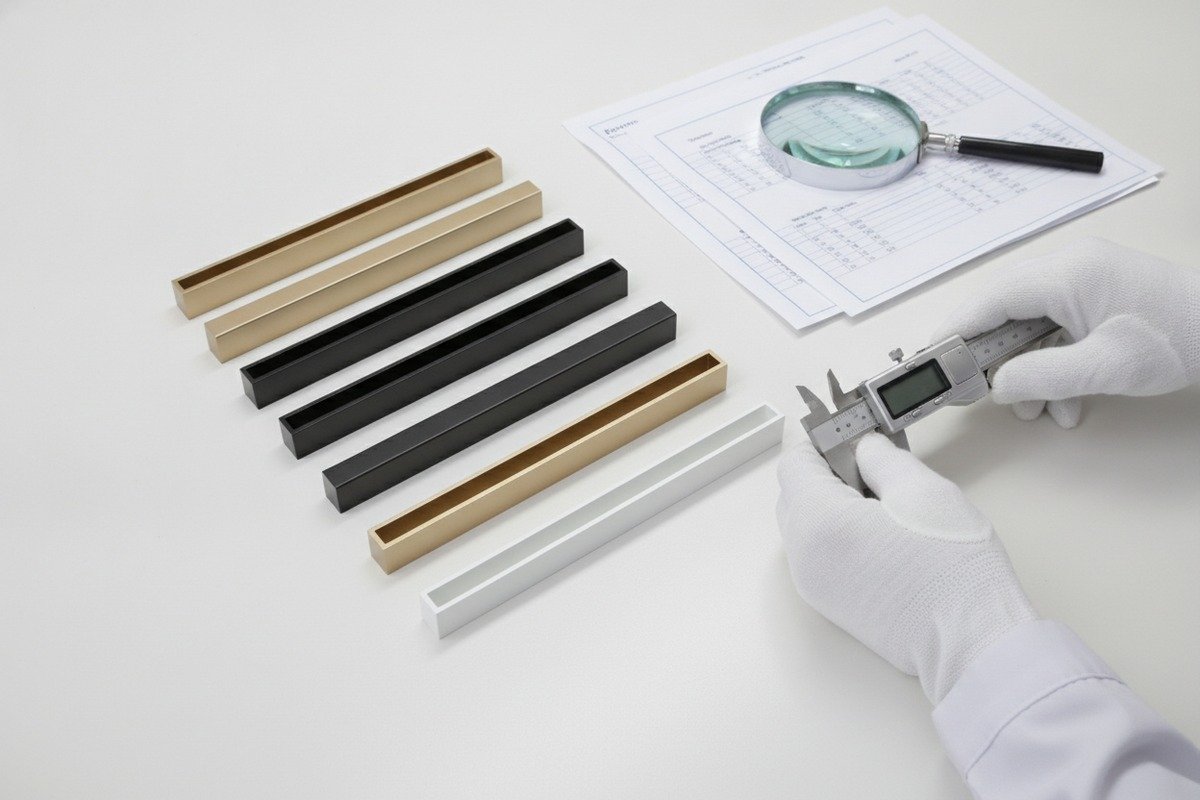
A single perfect sample means nothing if your supplier cannot replicate it across 5,000 pieces. Ask for samples from two or three different production runs. Compare them directly. Check hole spacing with calipers. Measure the projection depth. Look at the edge sharpness under a magnifying glass. Our quality control team checks every batch against a master sample using a standardized checklist, and we encourage our buyers to do the same on arrival.
Which minimalist handle designs and colors should I stock to meet the aesthetic demands of modern bedroom wardrobe projects?
Over the past three years, our order data has shown a clear shift. Furniture factories that once ordered ornate handles now request clean-lined profiles almost exclusively. The bedroom wardrobe market has moved toward invisible or near-invisible hardware, and stocking the wrong styles means dead inventory.
Stock slim recessed pulls, profile edge handles, and elongated bar pulls in matte black, champagne gold, silver, and white. These four colors cover over 80% of modern bedroom wardrobe projects. Prioritize low-profile designs with clean geometric lines that complement flat-panel and slab-door wardrobe construction.
The Four Handle Styles That Dominate Modern Wardrobes
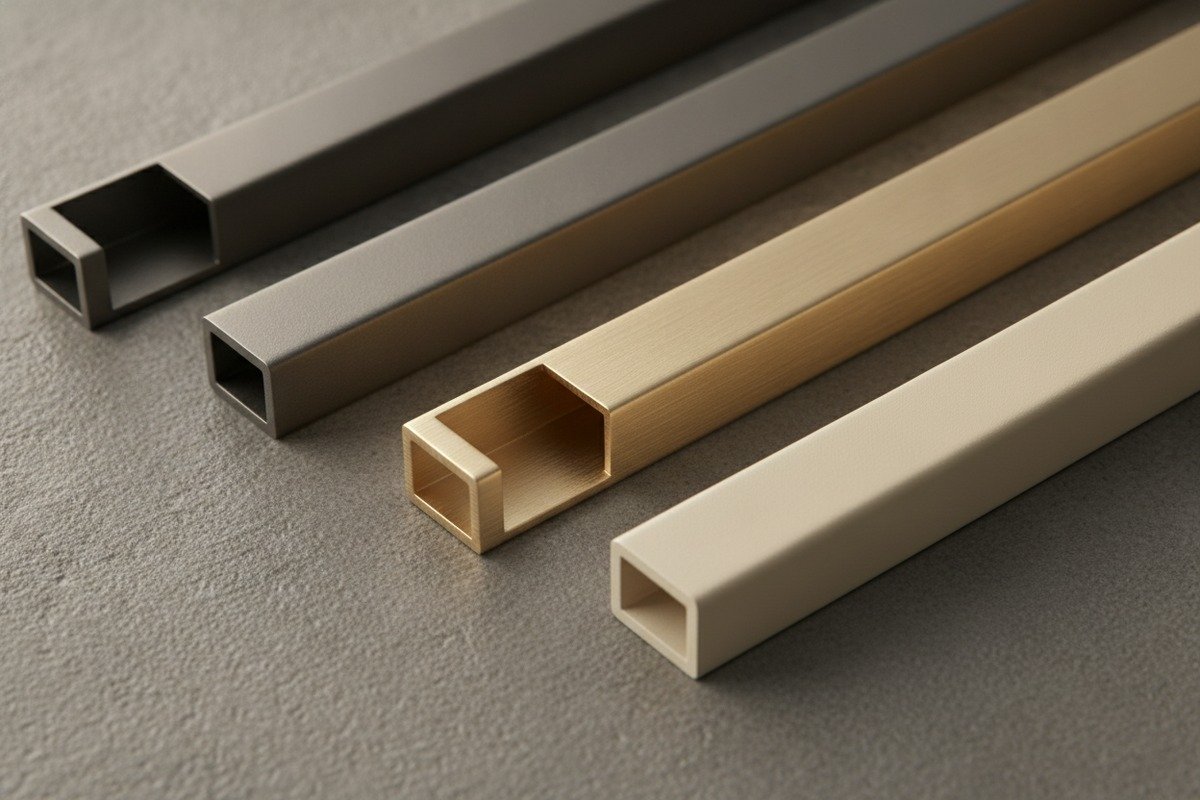
Each style serves a different design goal. Understanding the differences helps you advise your own customers and stock smarter.
| Handle Style | Visual Impact | Grip Comfort | Installation Complexity | Best Wardrobe Type |
|---|---|---|---|---|
| Recessed / Hidden pull | Very low — nearly invisible | Moderate | Medium (requires routed channel) | Flat-panel, push-to-open |
| Profile / Edge pull (G or C shape) | Low — integrated into door edge | Good | Medium (clips or screws to panel edge) | Frameless, handleless-look |
| Elongated bar pull | Low-Medium — visible but slim | Excellent | Easy (two-screw mounting) | Hinged or sliding doors |
| Minimalist knob | Low | Moderate | Easy (single screw) | Smaller wardrobe doors, drawers |
Recessed pulls 10 give the cleanest facade. The wardrobe front looks like an unbroken panel. However, they require a routed or milled channel in the door, which adds a production step for furniture factories. Profile handles mount to the top or bottom edge of the door panel. They preserve a handleless look from the front while offering a comfortable grip along the full width of the door. Elongated bar pulls remain popular because they are simple to install, easy to grip, and visually proportionate on large wardrobe doors.
Color Trends in Bedroom Hardware
Color choice is not random. It follows interior design trends and regional preferences. From our shipments to Vietnam and the Middle East, we see clear patterns.
- Matte black: The most requested color globally. It works with white, grey, and wood-toned wardrobes. It hides fingerprints better than polished finishes.
- Champagne gold: Strong demand in the Middle East and Southeast Asia. It adds warmth without looking flashy. Our champagne gold anodized finish has become one of our best sellers because it pairs well with light wood and cream-colored panels.
- Silver / Brushed aluminum: A safe default for any modern project. It reads as neutral and professional.
- White / Off-white: Growing demand for tone-on-tone designs where the handle nearly disappears against a white wardrobe front.
Proportion and Scale
A common mistake is choosing a handle that looks good on a sample board but feels wrong on a full-size wardrobe. For single hinged wardrobe doors (400–600 mm wide), a handle length of 128–192 mm works well. For larger doors or double wardrobes, consider handles 256 mm or longer. The handle should feel proportionate — not too small and lost on the surface, not so large it dominates the design.
Minimalism vs. Usability
There is a real tension here. The most invisible handle is not always the most user-friendly. Elderly users and children may struggle with recessed pulls that offer only a shallow finger grip. If your market includes family homes or senior housing, consider profile handles or elongated bars that look minimal but provide a full hand grip. The best sourcing decision balances visual appeal with daily practicality.
How can I reduce my lead times by sourcing from a supplier with ready-to-ship inventory and fast custom turnaround?
Long lead times kill deals. We have seen furniture factory owners lose project bids because their hardware supplier needed six weeks to deliver. In fast-moving markets like Vietnam and the Gulf states, the ability to ship within days — not weeks — is a competitive advantage that directly affects your bottom line.
Choose a supplier that maintains 200–300+ tons of ready-to-ship stock in popular handle profiles and finishes, offers 48-hour dispatch for in-stock items, and delivers custom orders within 3–7 days. This combination lets you respond to urgent orders without holding excess inventory yourself.
Why Lead Time Is a Sourcing Problem, Not Just a Logistics Problem
Lead time is not only about shipping speed. It starts at the factory. If your supplier has to extrude raw aluminum, anodize it, cut it, drill it, and pack it from scratch for every order, you are looking at 15–30 days minimum. Add international shipping and customs, and your total cycle can stretch to 45–60 days. That is too slow for most furniture production schedules.
The solution is to work with a supplier who has already done most of the work before you place your order. A supplier with large standing inventory of popular profiles, finishes, and lengths can cut your factory-to-door time dramatically.
What to Look For in a Fast-Turnaround Supplier
| Capability | Why It Matters | What to Ask |
|---|---|---|
| Ready-to-ship stock (300+ tons) | Eliminates extrusion and finishing wait time | "What profiles and finishes do you keep in stock?" |
| 48-hour dispatch for stock items | Enables urgent order fulfillment | "Can you ship within 48 hours for standard items?" |
| 3–7 day custom turnaround | Covers non-standard sizes or finishes quickly | "What is your turnaround for custom lengths or colors?" |
| In-house finishing (anodizing, powder coating) | Removes dependency on third-party finishers | "Do you finish handles in your own facility?" |
| Flexible MOQ | Lets you test new styles without overcommitting | "What is your minimum order for stock vs. custom items?" |
The Hidden Cost of Slow Suppliers
When your handle shipment arrives late, it does not just delay one order. It stalls your entire production line. Workers sit idle. Wardrobe carcasses stack up waiting for hardware. Delivery promises to your own customers get broken. We have seen buyers switch suppliers mid-project because of a two-week delay, which adds emergency shipping costs and quality risks from an unknown source.
How Our Inventory Model Works
At our Foshan facility, we maintain over 300 tons of finished aluminum handle stock. The most popular minimalist profiles — recessed pulls, edge profiles, and elongated bars in matte black, champagne gold, silver, and white — are always on the shelf. When a stock order comes in, our warehouse team picks, packs, and dispatches within 48 hours. For custom dimensions or special finishes, our production team works on a 3–7 day cycle because we keep raw extruded profiles in intermediate stock. This means we only need to cut, drill, finish, and pack — skipping the longest step in the process.
Build a Hybrid Sourcing Strategy
Smart buyers do not rely on a single approach. They keep their top three to five best-selling handle SKUs stocked through a supplier with ready inventory. For project-specific or custom orders, they place orders 7–14 days ahead. This hybrid approach gives you speed for routine orders and flexibility for special projects without tying up cash in excessive warehouse stock.
Can I customize the dimensions and styles of aluminum handles to fit my specific furniture factory production requirements?
Early in our history, a furniture factory in Ho Chi Minh City asked us to modify a standard 128 mm handle to 140 mm center-to-center spacing. Their wardrobe doors used a non-standard panel thickness, and no off-the-shelf handle fit properly. That single customization request turned into a five-year partnership. Customization is not a luxury — for many factories, it is a basic requirement.
Yes, reputable aluminum handle suppliers offer full OEM and ODM customization including handle length, projection depth, hole spacing, cross-section profile, surface finish, and color. Provide your technical drawings or specifications, request a prototype sample, and confirm tolerances before approving mass production to ensure a perfect fit for your wardrobe line.

What Can Be Customized
Almost every dimension and aesthetic element of an aluminum handle can be adjusted. Here is what our OEM/ODM team regularly modifies:
- Length: Cut to any length your wardrobe door requires, from 64 mm to 1200 mm or more.
- Hole spacing (center-to-center): Adjusted to match your existing drilling patterns. Common spacings include 96, 128, 160, 192, 256, and 320 mm, but we regularly produce non-standard distances.
- Projection depth: How far the handle sticks out from the door surface. Ultra-slim profiles project as little as 8–12 mm, while more ergonomic designs project 20–30 mm.
- Cross-section profile: The shape of the handle when viewed from the end. L-shaped, C-shaped, G-shaped, or fully custom geometric profiles are possible with aluminum extrusion.
- Finish and color: Any RAL color for powder coating, or standard and custom anodized tones including champagne gold, bronze, black, and silver.
- Mounting method: Screw-fixed, clip-on, adhesive-backed, or concealed fastener — depending on your door construction.
The Customization Process Step by Step
- Share your requirements: Send a drawing, sketch, or reference photo with dimensions and finish preferences.
- Receive a technical review: Our engineering team checks feasibility, suggests material and finish options, and provides a quotation.
- Approve a prototype: We produce one to five sample pieces for your approval. You test fit, finish, and function.
- Confirm tolerances: Agree on acceptable dimensional tolerances (typically ±0.1–0.3 mm for extruded aluminum handles) and finish standards.
- Mass production: After sample approval, production runs on our standard 3–7 day custom turnaround.
When Custom Is Worth It — and When Standard Works
Not every project needs custom handles. If your wardrobe doors use standard 18 mm panels and common hinge systems, a stock handle in a popular profile will fit fine. Customization makes sense when:
- Your panel thickness is non-standard (e.g., 15 mm, 22 mm, or 25 mm).
- Your drilling pattern does not match common hole spacings.
- You want a unique profile or finish that differentiates your product line.
- You need matching hardware across handles, edge trims, and frame profiles for a cohesive wardrobe system.
Minimum Order Quantities for Custom Orders
One concern buyers raise is MOQ. Fully custom extrusion dies can require higher minimums because the tooling cost needs to be amortized. However, if the customization is limited to cutting a standard profile to a non-standard length or applying a different finish, the MOQ drops significantly. We work with furniture factories on orders as small as a few hundred pieces for modified-standard items, while fully new profiles typically start at higher volumes. The key is to discuss your volume honestly with your supplier early so they can recommend the most cost-effective approach.
Avoiding Common Customization Mistakes
- Do not skip the prototype step. Even a 2 mm difference in projection depth can change how a handle feels on a wardrobe door.
- Specify the door edge detail. A handle designed for a flat-edge panel will not sit correctly on a beveled or rounded edge.
- Confirm screw length and type. The screws included with a handle must match your door and substrate thickness. Too short, and the handle pulls out. Too long, and the screw tip protrudes through the panel face.
- Check ergonomics on a real door. Mount the prototype on an actual wardrobe door and open it 50 times. Notice if the handle digs into your fingers, feels loose, or creates an awkward wrist angle. These details only surface in physical testing.
Conclusion
Choosing minimalist aluminum handles for bedroom wardrobes comes down to five things: material quality, finish durability, the right design for your market, fast and reliable supply, and customization that fits your production. Verify before you order. Stock what sells. Partner with a supplier who keeps inventory ready and can adapt to your specifications. That is how you source smarter and build wardrobes that look and feel premium.
Footnotes
1. Replaced HTTP 404 with an authoritative Wikipedia entry defining a mill test report. ↩︎
2. Replaced HTTP 404 with an article defining and explaining lead time in the supply chain. ↩︎
3. Explains differences and uses of 6063 and 6061 aluminum alloys. ↩︎
4. Defines material certificates and their importance in verifying material properties. ↩︎
5. Describes the anodizing process and benefits for aluminum surface durability. ↩︎
6. Explains the powder coating process and its advantages as a finish. ↩︎
7. Replaced HTTP 404 with a page detailing scratch testing from the original domain. ↩︎
8. Describes methods for evaluating the adhesion of coatings to a substrate. ↩︎
9. Details the manufacturing process of shaping aluminum alloys into profiles. ↩︎
10. Explains the design and aesthetic of recessed furniture pulls. ↩︎