
Every week, our sales team in Foshan fields calls from Vietnamese distributors who fixate on the unit price we quote — only to be blindsided later by freight charges, customs duties 1, and handling fees they never budgeted for. That gap between the quoted price and the real delivered cost is where profit margins quietly disappear.
To calculate the total cost per unit for aluminum furniture handles delivered from a factory to your Vietnam warehouse, add the factory unit price, packaging, tooling or sample amortization, quality inspection fees, international or domestic freight, import duties, VAT, customs brokerage, and local handling charges — then divide by accepted units only.
Below, we break this calculation into four clear layers less-than-container loads (LCL) 2. Each section gives you a formula, a table, and practical tips so you can build your own landed-cost worksheet before placing your next order.
How do my specific customization requirements and order volume impact the initial factory price per unit?
When we quote aluminum handles to a furniture factory in Ho Chi Minh City or a distributor in Hanoi, the first question is never just "what is your price?" It is "what exactly do you need?" Because a minor change in finish or profile shape can swing the unit cost by 30% or more.
Your customization choices — including aluminum alloy grade, surface finish, profile complexity, fastener type, and packaging — directly set the base factory price. Higher order volumes reduce the per-unit share of fixed costs like tooling, setup, and sampling, often lowering the price by 10–25% at common MOQ breakpoints.
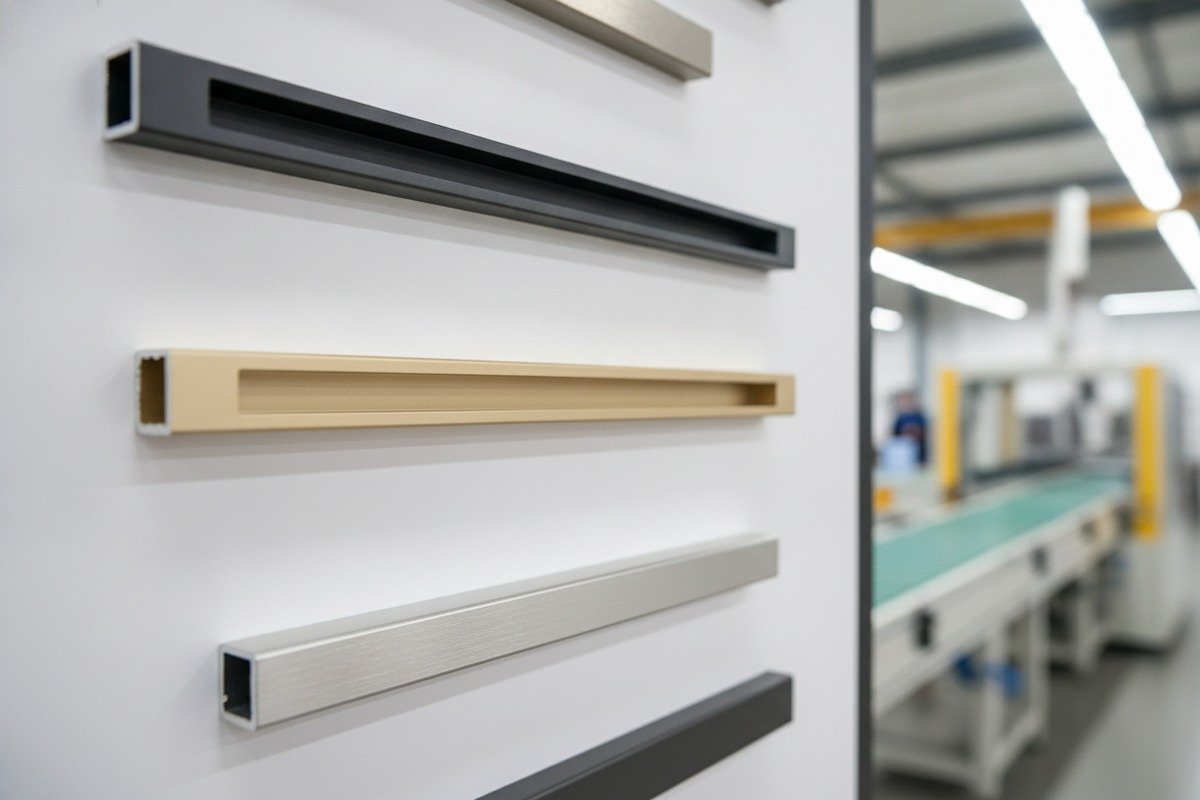
How Material and Finish Drive the Base Price
Aluminum furniture handles start as extruded or machined profiles. The alloy you choose (commonly 6063-T5 for handles) determines raw material cost. aluminum alloy grade 3 But the real cost driver for small hardware is usually not the aluminum weight — it is the machining complexity and surface treatment.
A simple anodized handle 4 in natural silver costs less than the same handle in champagne gold or matte black powder coat 5. Why? Each finish has different process steps, chemical costs, and reject rates. Polished or brushed finishes add manual labor. Electrophoretic coating adds a full extra production stage. On our production line, we track these differences daily, and they add up fast.
Here is a simplified breakdown of how finish choice impacts cost:
| Surface Finish | Relative Cost Index | Typical Lead Time Impact |
|---|---|---|
| Mill finish (raw) | 1.0x (baseline) | None |
| Clear anodizing | 1.10–1.15x | +0.5 day |
| Colored anodizing (champagne, black) | 1.15–1.25x | +1 day |
| Powder coating (matte/gloss) | 1.20–1.30x | +1 day |
| Electrophoretic (E-coat) | 1.25–1.35x | +1–2 days |
| Hand-polished / mirror | 1.40–1.60x | +2–3 days |
How Order Volume Changes the Math
Fixed costs exist on every order. Tooling for a new extrusion die 6, sample development, color matching, and production setup all cost roughly the same whether you order 1,000 handles or 50,000. The difference is how many units share that burden.
For example, a new extrusion die for a custom handle profile might cost $300–$600. If you order 2,000 pieces, that adds $0.15–$0.30 per handle. Order 20,000 pieces and the allocation drops to $0.015–$0.03 per handle — essentially negligible.
We typically see these MOQ-related pricing tiers:
| Order Quantity | Tooling Allocation per Unit | Typical Unit Price Reduction vs. 1,000 pcs |
|---|---|---|
| 1,000 pcs | $0.30–$0.60 | Baseline |
| 5,000 pcs | $0.06–$0.12 | 8–12% lower |
| 10,000 pcs | $0.03–$0.06 | 12–18% lower |
| 20,000+ pcs | $0.015–$0.03 | 18–25% lower |
Common Mistakes When Comparing Factory Quotes
Many buyers compare quotes from two or three factories and pick the lowest number. But those numbers often do not include the same things. One factory may include polybag packaging in the unit price. Another may quote the handle only and charge packaging separately. One may include fastener screws; another may not.
Before comparing, make sure every quote covers the same specification: alloy grade, length, finish, fastener inclusion, individual polybag, inner box count, carton size, and labeling. If you skip this alignment step, you are comparing apples to oranges.
Another frequent oversight is ignoring sample costs. Some factories offer free samples but quietly build recovery into the unit price. Others charge $50–$150 for samples and keep the unit price clean. Ask for a fully itemized quote so you can see every line.
What logistics fees and shipping methods should I consider when moving aluminum handles from Foshan to my Vietnam warehouse?
Our warehouse team in Foshan ships containers to Vietnam multiple times each month. Over 18 years, we have learned that the freight line from southern China to Vietnam looks simple on a map — but the cost structure has several layers that catch first-time buyers off guard.
When shipping aluminum handles from Foshan to Vietnam, factor in inland trucking to the port, export customs clearance, ocean freight or land transport via cross-border trucking, terminal handling charges, and any consolidation or LCL fees. Sea freight to Ho Chi Minh City typically takes 3–5 days; cross-border land transport to Hanoi can take 2–4 days.
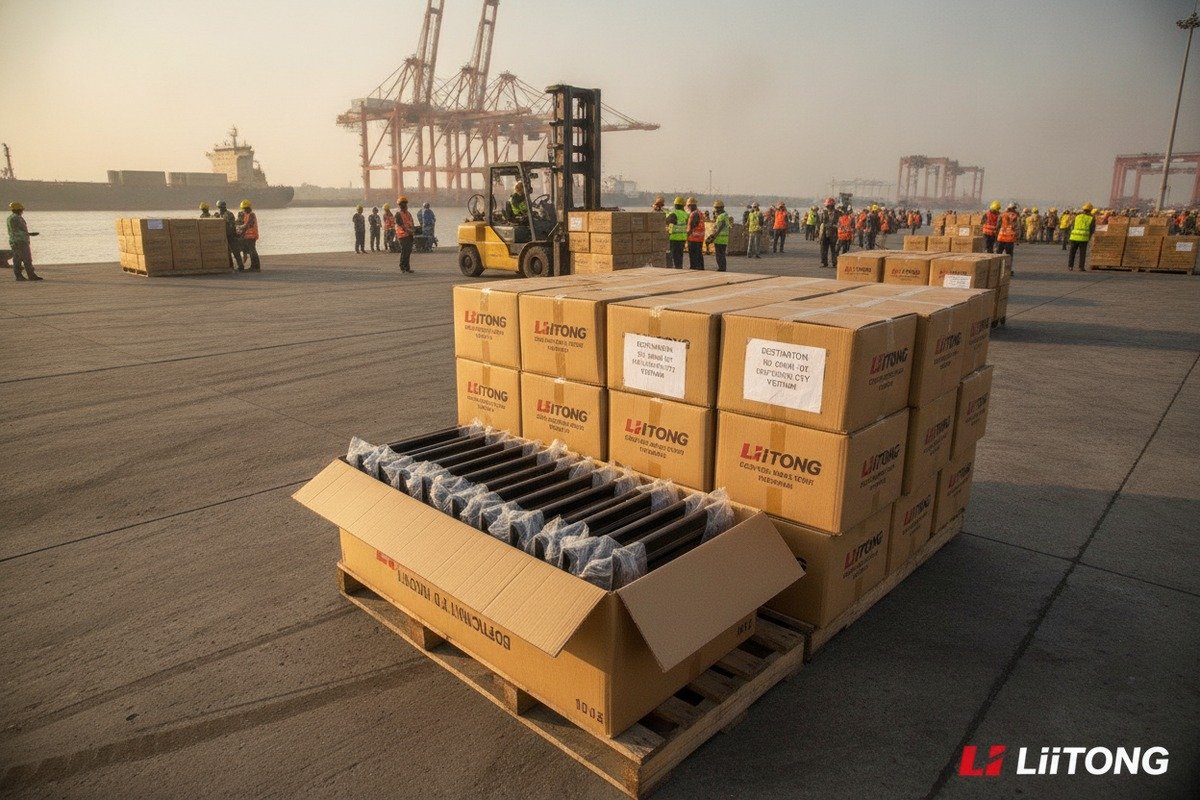
Choosing Between Sea Freight, Land Transport, and Air
For aluminum furniture handles, the three realistic options are ocean freight, cross-border road transport, and air freight. Each suits a different scenario.
Ocean freight is the most common for full-container loads (FCL) 7 or larger less-than-container loads (LCL). A 20-foot container from Foshan to Ho Chi Minh City port currently costs roughly $400–$800 depending on season and carrier, and transit takes 3–5 days port to port. For LCL, you pay per cubic meter — typically $40–$80 per CBM on this route.
Cross-border land transport is popular for shipments going to northern Vietnam (Hanoi, Hai Phong). Trucks travel from Foshan through Guangxi province and cross at the Friendship Gate (Youyi Guan / Hữu Nghị). Transit is 2–4 days. This method can be cheaper and faster than sea for smaller volumes headed north.
Air freight is rarely cost-effective for aluminum handles because they are heavy relative to value. But if you need an emergency restock — say 200 kg of handles to meet a project deadline — air freight from Guangzhou Baiyun Airport to Tan Son Nhat takes 1–2 days and costs roughly $3–$6 per kg.
Breaking Down the Logistics Cost Chain
Here is a practical cost chain for a typical sea freight shipment from Foshan to a warehouse in Ho Chi Minh City:
| Cost Component | Typical Range | Notes |
|---|---|---|
| Inland trucking (factory to Foshan/Nansha port) | $80–$150 per shipment | Depends on distance and truck type |
| Export customs declaration | $30–$60 per shipment | Standard documentation fee |
| Terminal handling charge (origin) | $50–$120 per container | Charged by the port/terminal |
| Ocean freight (Foshan → HCMC, FCL 20') | $400–$800 | Fluctuates with season and fuel surcharges |
| Ocean freight (LCL per CBM) | $40–$80 per CBM | For smaller shipments |
| Bill of lading fee | $20–$50 | Carrier documentation |
| Destination terminal handling | $80–$150 | Charged at Vietnam port |
| Customs brokerage (Vietnam side) | $50–$120 | Broker service fee |
| Local trucking (Vietnam port to warehouse) | $60–$200 | Depends on warehouse location |
How to Allocate Freight Cost per Unit
Suppose you ship 10,000 aluminum handles in one LCL shipment. The handles weigh 0.08 kg each and are packed 50 pieces per carton. Each carton measures 0.015 CBM. That is 200 cartons occupying 3.0 CBM total.
If your total logistics cost from Foshan to your HCMC warehouse is $650 for that shipment, your freight allocation per handle is $650 ÷ 10,000 = $0.065 per handle. That number is small but real. On a handle with a $0.80 factory price, freight adds about 8% to the cost.
For smaller shipments — say 2,000 handles — the per-unit freight jumps because many fees are fixed per shipment, not per piece. This is why consolidating orders or combining handle styles into one shipment makes financial sense.
Incoterms Matter
The Incoterm 8 you agree on with your supplier determines who pays what. If you buy EXW (Ex Works), you pay everything from the factory gate onward. If you buy FOB (Free On Board), the supplier covers inland trucking, export clearance, and loading — you pay from the ship onward. CIF includes freight and insurance to the destination port but not unloading or customs.
Always confirm the Incoterm before comparing quotes. A $0.75 EXW price and a $0.85 FOB price might actually be the same cost once you add factory-side logistics to the EXW quote.
How do I accurately estimate the import duties and taxes required for clearing aluminum furniture hardware in Vietnam?
One of the most frequent questions we get from our Vietnamese distributors is: "How much will customs charge me?" The answer depends on correct product classification, applicable trade agreements, and Vietnam's layered tax structure. Getting this wrong does not just cost money — it causes delays that ripple through your entire project timeline.
To estimate Vietnam import costs for aluminum furniture handles, identify the correct HS code (typically under 8302.42 for base metal furniture fittings), check the MFN or preferential duty rate under ACFTA, add Vietnam's standard 10% VAT calculated on CIF value plus duty, and include customs brokerage fees. ACFTA preferential rates for qualifying Chinese aluminum hardware can be 0–5%.

Understanding HS Code Classification
The Harmonized System (HS) code 9 is the foundation of your duty calculation. Aluminum furniture handles generally fall under HS heading 8302, specifically:
- 8302.42: Base metal mountings, fittings, and similar articles suitable for furniture.
Within Vietnam's tariff schedule, this code may have sub-classifications. The exact rate depends on whether the product is classified as a "handle," a "pull," or a "mounting." Misclassification can result in a higher duty rate, penalties, or shipment holds. If you are unsure, consult a licensed customs broker in Vietnam before shipping.
Duty Rates and Free Trade Agreements
Vietnam applies multiple duty rate tiers:
- MFN (Most Favored Nation) rate: The standard rate for WTO member countries. For HS 8302.42, this is commonly around 20–25% in Vietnam.
- ACFTA preferential rate: Under the ASEAN-China Free Trade Agreement, aluminum furniture hardware from China can qualify for significantly reduced rates — often 0–5%. This requires a valid Form E (Certificate of Origin) issued in China.
- Other FTA rates: Vietnam has FTAs with many countries. If the aluminum handles originate elsewhere or components qualify under different agreements, other preferential rates may apply.
The savings from ACFTA are substantial. On a $10,000 CIF shipment, the difference between a 20% MFN rate ($2,000) and a 0% ACFTA rate ($0) is enormous. Always obtain a Form E from your Chinese supplier.
How Vietnam's Import Tax Is Calculated
Vietnam's import tax structure is layered. Here is the sequence:
- Import Duty = CIF Value × Import Duty Rate
- Special Consumption Tax (SCT) = Usually 0% for aluminum hardware (not applicable for most furniture fittings)
- VAT = (CIF Value + Import Duty + SCT) × VAT Rate (standard 10%)
So the total tax burden is not just "duty plus VAT on product cost." VAT is calculated on the already-taxed value, which makes it slightly higher than many buyers expect.
Example: CIF value = $8,000. ACFTA duty rate = 0%. VAT = ($8,000 + $0) × 10% = $800. Total tax = $800.
If MFN rate applied at 20%: Duty = $1,600. VAT = ($8,000 + $1,600) × 10% = $960. Total tax = $2,560.
That is a $1,760 difference — just from having the correct Certificate of Origin.
Do Not Forget Brokerage and Compliance Costs
A customs broker in Vietnam typically charges $50–$150 per declaration. You may also face inspection fees if customs selects your shipment for physical examination, document legalization costs, or quarantine-related charges for certain packaging materials (wooden pallets, for example, must meet ISPM-15 standards).
Also be aware of anti-dumping duties. The U.S. has investigated aluminum extrusions from Vietnam in certain categories. While this primarily affects exports from Vietnam, it signals that aluminum product classification is under global regulatory scrutiny. Make sure your product description and HS code are defensible.
After years of processing orders for Vietnamese wholesalers, our team has built a checklist of costs that rarely appear on anyone's first budget draft. These "hidden" costs are not really hidden — they are just easy to overlook until the invoice arrives.
Yes, several commonly overlooked costs must be included in your landed cost: sample and development charges, special packaging or labeling requirements, pre-shipment quality inspection, port storage or demurrage fees, currency exchange margins, and a scrap or rejection allowance of 1–3% to account for transit damage or defective units.
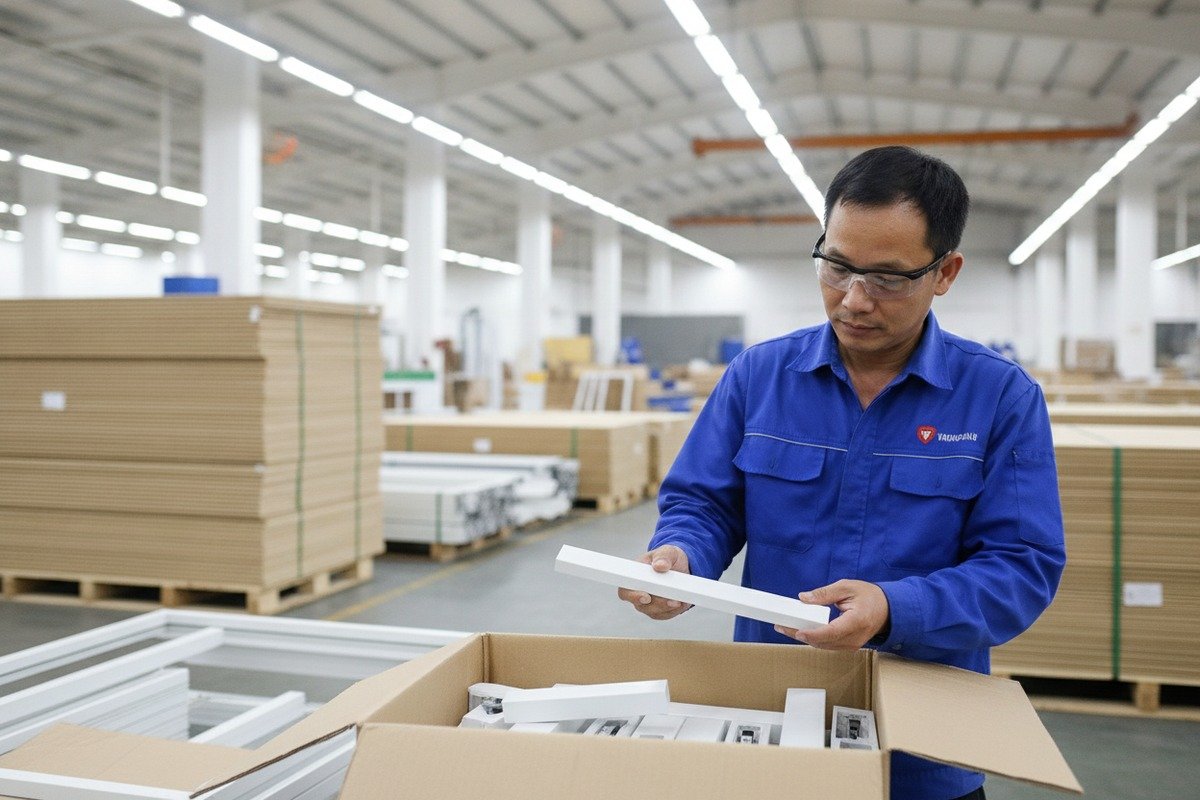
The Full Landed Cost Formula
Here is the complete formula we recommend to every buyer:
Total Landed Cost per Unit = (Product Cost + Packaging + Tooling Allocation + Sample Allocation + QC Inspection + Freight + Duties + VAT + Brokerage + Local Handling + Contingency) ÷ Accepted Units
Notice the denominator: accepted units, not ordered units. If you order 10,000 handles and 150 arrive damaged or defective, your costs are spread over 9,850 usable pieces. This small adjustment makes your real unit cost more accurate.
Commonly Missed Cost Items
Here are the items buyers most frequently forget:
Sampling and development fees. If you request custom profiles, new colors, or modified dimensions, the factory invests time and materials in samples. Some factories absorb this cost for large orders; others charge $50–$200 per round of samples. If you go through three sampling rounds, that is $150–$600 before production even starts.
Special packaging. Standard packaging might be a polybag per handle, 50 pieces per carton. But if your warehouse or end customer requires barcode labels, branded boxes, foam inserts, or blister packs, each adds cost. A branded inner box might add $0.03–$0.08 per handle. Foam inserts for premium handles can add $0.05–$0.12 each.
Pre-shipment inspection. Hiring a third-party QC company to inspect your order before shipping costs $200–$400 per man-day in China. For a standard inspection of 10,000 handles, one inspector for one day is typical. That allocates to $0.02–$0.04 per handle. Skipping inspection might save this cost — but it risks receiving defective goods with no recourse, which costs far more.
Port storage and demurrage. If your shipment sits at the Vietnam port because paperwork is delayed, storage charges accumulate quickly — often $30–$100 per day for a container after the free storage period (usually 3–7 days). Demurrage on the container itself can add another $50–$150 per day.
Currency exchange. If you pay in USD but your supplier invoices in CNY (or vice versa), the bank's exchange rate spread can quietly add 1–2% to your cost. For a $10,000 order, that is $100–$200. Wire transfer fees of $15–$40 per transaction also add up over multiple payments.
Worked Example: 10,000 Handles from Foshan to Ho Chi Minh City
Let us put all the layers together in one realistic example:
| Cost Item | Total Cost (USD) | Per Unit (10,000 pcs) |
|---|---|---|
| Factory unit price (FOB Foshan) | $8,000.00 | $0.800 |
| Custom packaging (branded polybag + label) | $300.00 | $0.030 |
| Tooling amortization (new profile die) | $450.00 | $0.045 |
| Sample rounds (2 rounds) | $120.00 | $0.012 |
| Pre-shipment QC inspection (1 day) | $280.00 | $0.028 |
| Ocean freight (LCL, 3 CBM) | $210.00 | $0.021 |
| Origin terminal + documentation | $130.00 | $0.013 |
| Import duty (ACFTA 0%) | $0.00 | $0.000 |
| VAT (10% on CIF + duty) | $857.00 | $0.086 |
| Customs brokerage (Vietnam) | $100.00 | $0.010 |
| Local trucking (port to HCMC warehouse) | $120.00 | $0.012 |
| Warehouse receiving/unloading | $50.00 | $0.005 |
| Currency exchange spread (1.5%) | $120.00 | $0.012 |
| Wire transfer fees (2 payments) | $60.00 | $0.006 |
| Scrap/reject allowance (1.5% = 150 pcs) | — | — |
| Total | $10,797.00 | — |
| Accepted units | 9,850 pcs | — |
| True Landed Cost per Unit | — | $1.096 |
The factory quoted $0.80 per handle. The true delivered cost is $1.096 — a 37% increase over the quoted price. This is not unusual. Vietnam sourcing professionals consistently report that the real cost is 20–40% above the factory quote once all allocations are included.
Tips to Reduce Hidden Costs
- Consolidate orders. Combine multiple handle styles or product lines into one shipment to share fixed logistics costs.
- Align specifications before quoting. Send a detailed specification sheet — alloy, dimensions, finish, fasteners, packaging — to every supplier so quotes are comparable.
- Request itemized quotations. Ask suppliers to break out material, finishing, packaging, tooling, and transport as separate line items.
- Use ACFTA. Always request a Form E Certificate of Origin from your Chinese supplier. The duty savings alone can offset most logistics costs.
- Plan documentation early. Customs delays from missing paperwork are the most expensive hidden cost because they trigger storage, demurrage, and project delays simultaneously.
- Build a 2–3% contingency. Transit damage, slight overages or shortages, and exchange rate fluctuations are normal. Budget for them rather than being surprised.
Conclusion
Calculating total landed cost is the only honest way to compare aluminum handle suppliers. Add every cost layer — factory price, packaging, tooling, inspection, freight, duties, taxes, handling, and contingency — then divide by accepted units. That final number is your real price per handle. If you need an itemized quote with all costs transparent, reach out to our team at Al**************@********************************************te.com.
Footnotes
1. Explains what customs duties are and their role in international trade. ↩︎
2. Explains LCL shipping, an option for smaller international freight volumes. ↩︎
3. Replaced with a comprehensive Wikipedia article on aluminum alloys and their classifications. ↩︎
4. Describes the anodizing process for aluminum and its benefits as a surface finish. ↩︎
5. Replaced with an authoritative Wikipedia article explaining powder coating. ↩︎
6. Provides a general overview of extrusion dies used in manufacturing processes. ↩︎
7. Defines FCL shipping, a common method for international freight. ↩︎
8. Official source for Incoterms, defining responsibilities in international trade. ↩︎
9. Official explanation of the Harmonized System for classifying goods in international trade. ↩︎
10. Provides an overview of the ASEAN-China Free Trade Agreement and its benefits. ↩︎