
Every year, our production lines in Foshan push out thousands of aluminum furniture handles bound for markets in Vietnam, the Middle East, and beyond — and the question we hear most from first-time buyers is not about the unit price, but about what the unit price does not include.
For most aluminum furniture handle shipments from China, you should set aside an extra 10%–20% of the product value to cover shipping damage risk and customs clearance costs. First-time buyers or those using LCL shipping should budget 15%–25% extra as a safety margin against unforeseen duties, port charges, broker fees, and transit losses.
That percentage range is not a guess. It comes from years of watching buyers get surprised by costs that never appeared on the original invoice cargo insurance premiums 1. Below, I break down exactly where those extra dollars go — and how to keep them as low as possible.
How do I calculate the financial risk of shipping damage for my aluminum handle shipment?
When we pack handles at our Foshan warehouse, we know the journey ahead includes forklifts, cranes, ocean swells, and sometimes rough truck roads at the destination. Damage is not a question of "if" but "how much."
To calculate the financial risk, estimate 3%–5% of goods value for well-packed full-container loads and 8%–12% for LCL or mixed shipments. This covers packaging upgrades, cargo insurance premiums, and a small buffer for scratched, bent, or lost pieces upon arrival.
Why Aluminum Handles Are Vulnerable in Transit
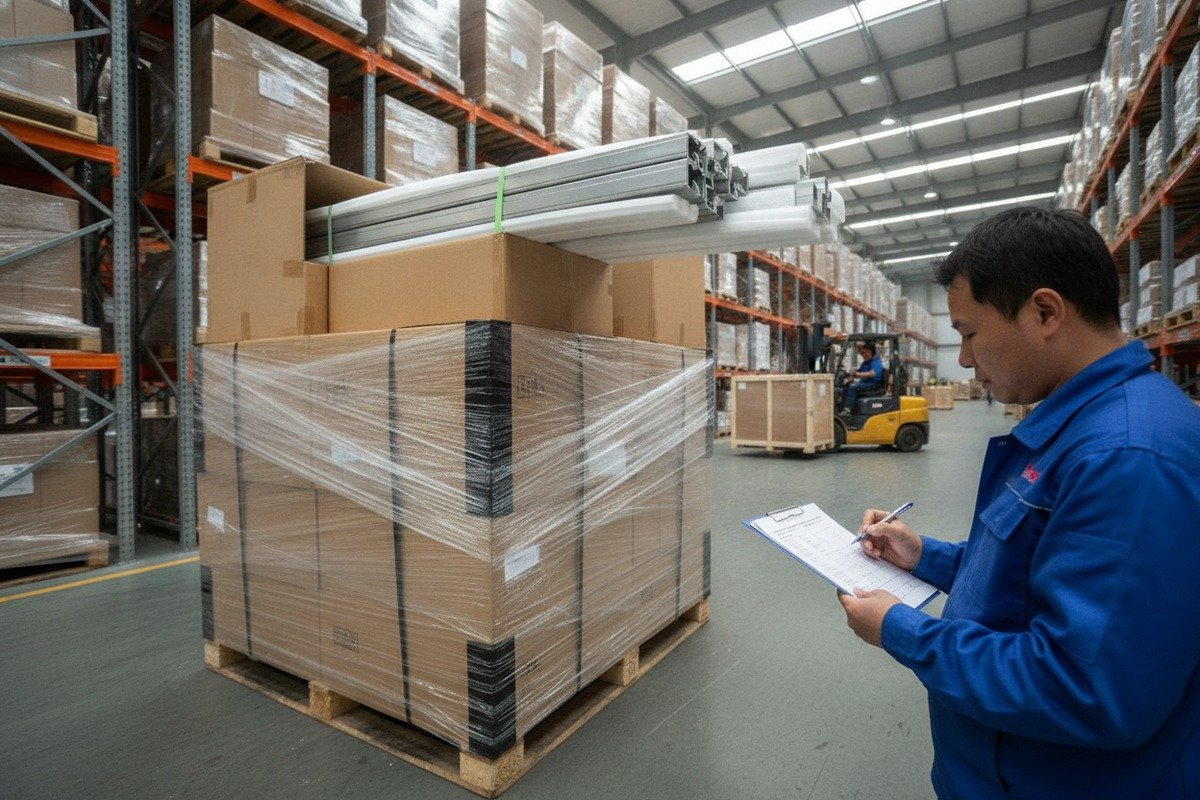
Aluminum furniture handles look tough on a showroom shelf. But in transit, they face real threats. Surface scratches show instantly on anodized or matte finishes. Bent profiles cannot be straightened without visible marks. And when handles shift inside a carton, they rub against each other and destroy the finish.
The risk multiplies with LCL shipments 2. Your cartons share a container with other cargo. Stevedores stack, restack, and move pallets at the consolidation warehouse and again at the deconsolidation point. Each touch is a chance for damage.
Packaging Upgrades That Reduce Your Damage Budget
Good export packaging is the cheapest insurance you can buy. Here is what we recommend to every buyer before we load a single carton:
- Inner wrapping: Each handle wrapped individually in EPE foam or bubble wrap.
- Carton reinforcement: Double-wall corrugated boxes with edge protectors.
- Palletization: Shrink-wrapped pallets prevent carton shifting inside the container.
- Crating: For high-value or unusually long profiles, wooden crates add a rigid shell.
These upgrades might add $0.02–$0.10 per handle in packaging cost. That is far less than replacing damaged goods or issuing credits.
What Cargo Insurance Actually Covers
Marine cargo insurance 3 typically costs 0.05%–0.5% of the insured cargo value. Most policies cover 110% of the CIF value to account for lost profit margin. But insurance does not cover poor packaging or pre-existing defects. That is why a pre-shipment inspection 4 matters.
Damage Budget by Shipment Type
| Shipment Type | Packaging Level | Recommended Damage Buffer | Insurance Cost |
|---|---|---|---|
| FCL, palletized, reinforced cartons | High | 3%–5% of goods value | 0.1%–0.3% of CIF |
| FCL, standard cartons, no pallets | Medium | 5%–8% of goods value | 0.2%–0.4% of CIF |
| LCL, mixed SKUs, standard cartons | Low–Medium | 8%–12% of goods value | 0.3%–0.5% of CIF |
Pre-Shipment Inspection: A Cost That Saves Money
A third-party inspection before loading costs roughly $250–$350 per visit. The inspector checks product quality, packaging integrity, carton drop-test results, and loading conditions. We encourage every buyer to arrange one, even on repeat orders. It catches problems before they board a vessel, not after they arrive at your warehouse 30 days later.
A Simple Damage-Risk Formula
Here is a quick way to estimate your damage budget line:
Damage Budget = (Goods Value × Damage Buffer %) + Insurance Premium + Inspection Fee
For a $10,000 FOB order of aluminum handles shipped FCL with good packaging:
- Damage buffer at 4%: $400
- Insurance at 0.2% of $11,000 CIF: $22
- Pre-shipment inspection: $300
- Total damage budget: $722, or about 7.2% of goods value
That number drops on repeat orders once you trust the packing quality and the freight route.
What are the typical customs clearance and import tax percentages I should expect?
When our clients in Vietnam or Saudi Arabia ask about landed cost, the conversation always turns to duties and clearance fees. These costs sit outside the supplier's invoice, and they vary dramatically depending on where your shipment lands.
Customs clearance costs typically include a broker fee of $200–$500, port handling charges of $300–$800 per container, and import duties ranging from 0% to over 30% of declared value depending on your country's tariff schedule and any additional trade-policy surcharges on Chinese aluminum products.
How Aluminum Handles Are Classified
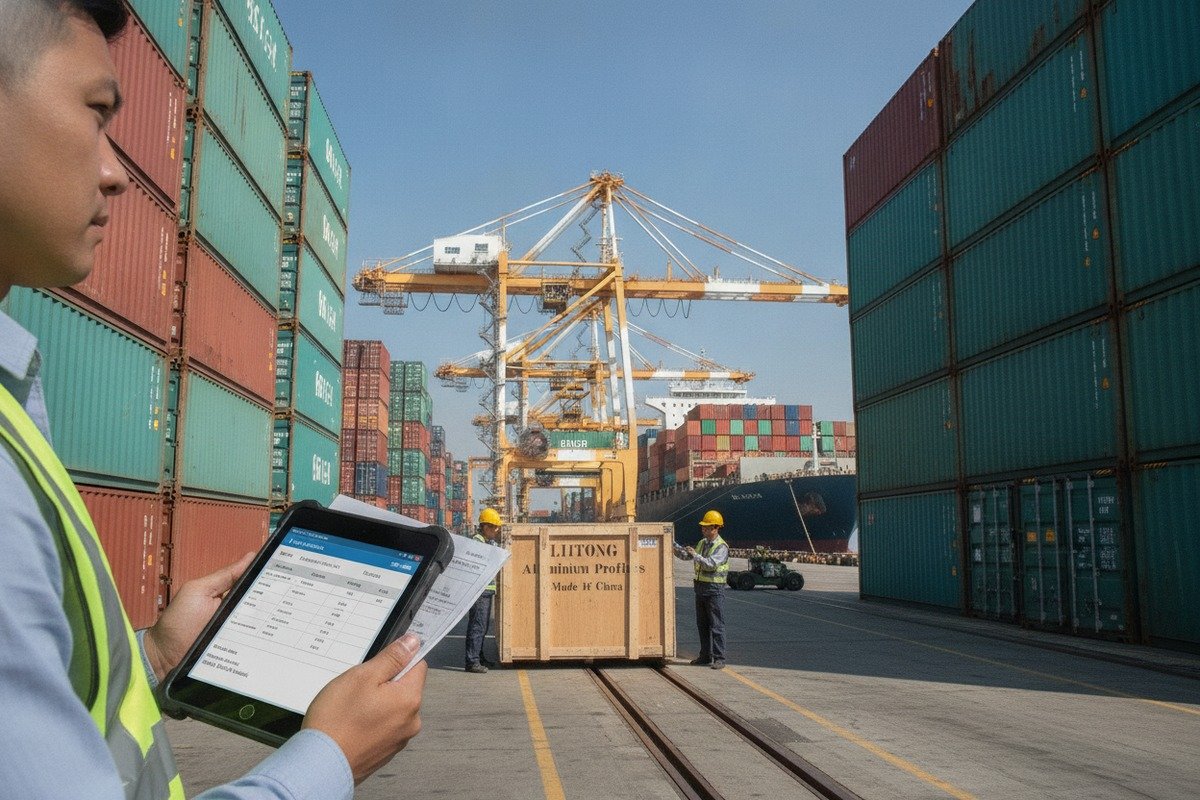
The tariff code (HS code) 5 for your handles determines the duty rate. Aluminum furniture handles usually fall under HS codes related to aluminum articles or furniture fittings. The exact classification matters because a small difference in the HS code can swing the duty rate by 10% or more. Work with your customs broker before the first shipment to confirm the correct code.
Duty Rates by Major Destination
| Destination Country | Base Import Duty | Possible Additional Tariffs | VAT / Sales Tax |
|---|---|---|---|
| United States | 2.5%–5% (aluminum articles) | Up to 25% Section 301 on Chinese goods | None at federal level |
| Vietnam | 0%–5% (ACFTA preferential) | Rarely applied | 10% VAT |
| UAE | 5% standard | None typical | 5% VAT |
| Saudi Arabia | 5%–12% | Anti-dumping possible on some aluminum products | 15% VAT |
| EU (Germany, etc.) | 2.5%–6% | Anti-dumping duties on some aluminum extrusions | 19%–27% VAT |
These numbers shift with trade policy. The U.S. market is especially volatile right now. Section 301 tariffs 6 can push the effective duty on Chinese aluminum hardware to 25%–30% combined. Always confirm the current rate before you finalize your budget.
Fixed Fees at Destination
Beyond percentage-based duties, you face flat fees at the port: Merchandise Processing Fee (MPF) 7
- Customs broker fee: $200–$500 per entry, depending on shipment complexity.
- Merchandise Processing Fee (MPF) in the U.S.: 0.3464% of declared value, with a minimum of $31.67 and a maximum of $614.35 per entry.
- Harbor Maintenance Fee (HMF) in the U.S.: 0.125% of the cargo value.
- Terminal Handling Charge (THC): $150–$400 per container at most ports.
- Documentation fees: $50–$150 for bill of lading 8 processing, delivery orders, etc.
The De Minimis Exemption Is Gone for China
U.S. importers used to skip duties on shipments valued under $800. That de minimis exemption no longer applies to goods from China. Even a small parcel of sample handles now incurs duties and handling fees. Factor this into your budget if you are testing suppliers with small trial orders.
Document Accuracy Saves Money
Wrong paperwork is the fastest way to inflate your clearance cost. If the commercial invoice does not match the packing list, or if the HS code is wrong, customs may hold your shipment for examination. That triggers:
- Examination fees: $300–$1,000 depending on the port.
- Storage charges: $75–$200 per day after the free period expires.
- Re-filing fees from your broker.
We always provide our buyers with a full document package — commercial invoice, packing list, bill of lading, certificate of origin, and material test reports — checked twice before shipment. Clean documents mean smooth clearance.
In our 18 years of exporting aluminum profiles and handles, we have seen buyers build careful budgets — and then get blindsided by charges they never knew existed. The problem is not dishonesty. It is that logistics has layers, and each layer has its own billing.
Hidden logistics fees include inland China trucking, export fumigation, container loading charges, ocean freight surcharges, destination drayage, chassis rental, warehouse receiving fees, and demurrage or detention penalties — any of which can add 5%–15% to your original FOB quote if not anticipated.
The Gap Between FOB Price and Landed Cost
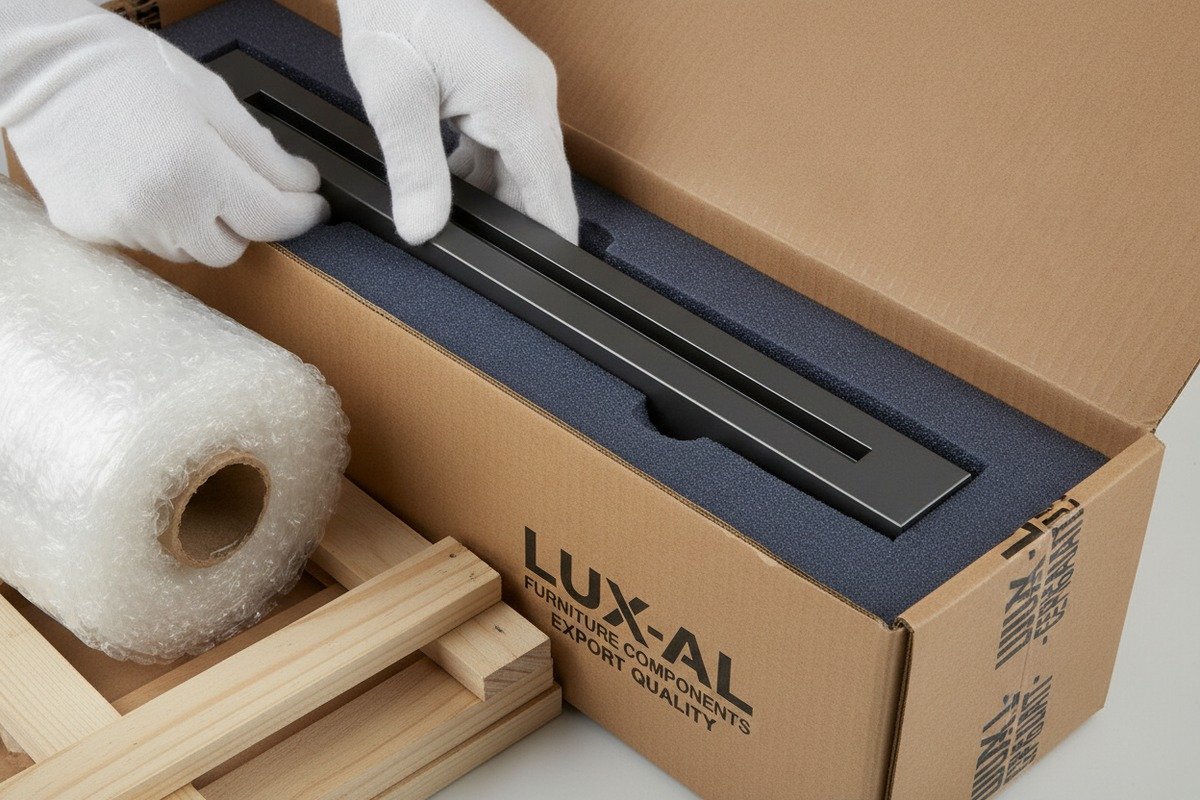
When you get a quote at FOB Foshan or FOB Nansha, that price covers the product, export packing, and delivery to the port. It does not cover:
- Ocean freight
- Insurance
- Destination port charges
- Customs clearance
- Inland delivery to your warehouse
Each of these stages carries its own fees, and some of those fees are not obvious until you receive the invoice.
A Breakdown of Common Hidden Fees
| Fee Category | Typical Range | When It Appears |
|---|---|---|
| Inland China trucking (factory to port) | $80–$300 | Before vessel departure |
| Export fumigation / phytosanitary certificate | $50–$150 | Before vessel departure |
| Bill of lading fee | $30–$80 | At booking |
| Ocean freight BAF / CAF surcharges | $50–$500 | Billed by carrier |
| Destination drayage (port to warehouse) | $200–$800 | After vessel arrival |
| Chassis rental | $30–$75 per day | During drayage |
| Warehouse receiving / unloading | $100–$400 | At your warehouse |
| Demurrage (late container return) | $75–$350 per day | After free days expire |
| Detention (keeping container at your site) | $75–$300 per day | After free days expire |
Surcharges That Fluctuate
Ocean carriers add surcharges that change by season and trade lane. Peak Season Surcharge (PSS), Bunker Adjustment Factor (BAF), Currency Adjustment Factor (CAF), and General Rate Increase (GRI) can collectively add $200–$1,000 to a single container shipment. These are rarely included in an initial freight quote from months earlier.
General Average: The Fee Nobody Expects
If a vessel has an emergency — fire, grounding, or jettisoned cargo — all cargo owners share the loss proportionally. This is called General Average 9. Even if your handles arrive perfectly, you may owe a contribution. Comprehensive marine cargo insurance covers this. Without it, your goods can be held at port until you post a bond or pay the assessed share.
How to Protect Yourself
- Request an all-in freight quote from your forwarder, not just the base ocean rate.
- Ask specifically about surcharges, destination charges, and free days for demurrage and detention.
- Get the forwarder's estimate in writing before booking.
- Compare at least two forwarders per shipment.
- When we ship for our clients, we provide a full cost breakdown from factory gate to FOB. This transparency helps buyers fill in the rest of the cost chain with their forwarder's numbers.
The Incoterms Factor
Your chosen Incoterm 10 defines where the supplier's cost responsibility ends and yours begins. Under FOB, the seller handles everything up to the vessel. Under CIF, the seller also covers freight and insurance. Under DDP, the seller pays all the way to your door including duties. Each Incoterm shifts who pays which hidden fees. Misunderstanding this is one of the most expensive mistakes a new importer can make.
How much extra buffer should I add to my budget for unforeseen port charges and delivery delays?
Our team has helped buyers in the Middle East and Southeast Asia navigate first-time shipments many times. The single biggest lesson we pass on is this: your budget should have a line item simply called "contingency," and it should not be zero.
For unforeseen port charges and delivery delays, add a contingency buffer of 5%–10% of your total estimated landed cost. This covers unexpected storage fees, customs examination charges, re-delivery attempts, documentation errors, and seasonal port congestion that can hold your cargo for days or weeks beyond the planned schedule.

Why Delays Happen Even When Everything Seems Right
Port congestion is seasonal and unpredictable. A typhoon in the South China Sea can delay a vessel by a week. Ramadan schedules in the Middle East slow customs processing. A random customs examination at the destination port adds days. None of these are anyone's fault, but all of them cost money.
The Cost of a One-Week Delay
Let us put a number on it. Suppose your container of aluminum handles arrives at the destination port, but customs holds it for examination for five business days beyond the free storage period.
- Storage at port: 5 days × $150/day = $750
- Demurrage on the container: 5 days × $100/day = $500
- Broker re-filing or expediting fee: $200
- Lost sales or production delay: hard to quantify, but real
That is $1,450 in unplanned cost from a single five-day hold. On a $15,000 shipment, that is almost 10% of the product value.
Building Your Contingency Line
Here is a practical framework we share with our buyers:
| Scenario | Base Landed Cost | Recommended Contingency % | Contingency Amount |
|---|---|---|---|
| Repeat buyer, FCL, clean documents | $20,000 | 5% | $1,000 |
| First-time buyer, FCL, new broker | $20,000 | 10% | $2,000 |
| First-time buyer, LCL, mixed SKUs | $8,000 | 15% | $1,200 |
| High-tariff destination, first order | $15,000 | 12%–15% | $1,800–$2,250 |
How to Shrink the Contingency Over Time
The contingency is highest on your first order. As you build a relationship with your supplier, forwarder, and customs broker, the unknowns decrease. After two or three successful shipments, you will have real data on:
- Actual clearance timelines at your port
- True drayage and delivery costs
- Realistic damage rates
- Exact duty payments
At that point, you can tighten your contingency to 3%–5%. But for the first order, being generous with the buffer protects your cash flow and your peace of mind.
Build a Landed-Cost Spreadsheet
The best tool for managing all of this is a simple spreadsheet. Here is the structure we recommend:
- Product cost (unit price × quantity)
- Inland China transport (factory to port)
- Export packing upgrades (if any, above standard)
- Ocean freight (including surcharges)
- Cargo insurance
- Customs broker fee
- Port handling and documentation fees
- Duties and taxes
- Destination drayage (port to warehouse)
- Contingency buffer (% of lines 1–9 total)
When you fill in each line with real quotes, the total is your true landed cost. The gap between this number and the FOB price is where most budgeting surprises live. Closing that gap with data — not guessing — is the difference between a profitable import and a painful one.
When to Re-Quote Your Freight
Freight rates and surcharges change frequently. If more than 30 days pass between your freight quote and your actual booking, ask for an updated quote. Rates can shift by hundreds of dollars in a month, especially during peak shipping season from August to November.
Conclusion
Budget the extras before you place the order, not after the invoice arrives. Set aside 10%–20% for standard shipments and 15%–25% for first-time or complex orders to stay ahead of damage, duties, and delays.
Footnotes
1. Defines cargo insurance and explains what it covers and its purpose. ↩︎
2. Explains LCL shipping, its benefits, and differences from FCL. ↩︎
3. Provides a clear definition and scope of marine cargo insurance. ↩︎
4. Explains the definition, procedure, and importance of pre-shipment inspections. ↩︎
5. Defines HS codes, their structure, and their role in international trade. ↩︎
6. Provides background and current status of Section 301 tariffs on China. ↩︎
7. Explains the Merchandise Processing Fee charged by US Customs and Border Protection. ↩︎
8. Defines a bill of lading, its purpose, and key components in shipping. ↩︎
9. Explains the maritime law principle of General Average and its implications. ↩︎
10. Provides an overview of Incoterms and their role in international trade. ↩︎