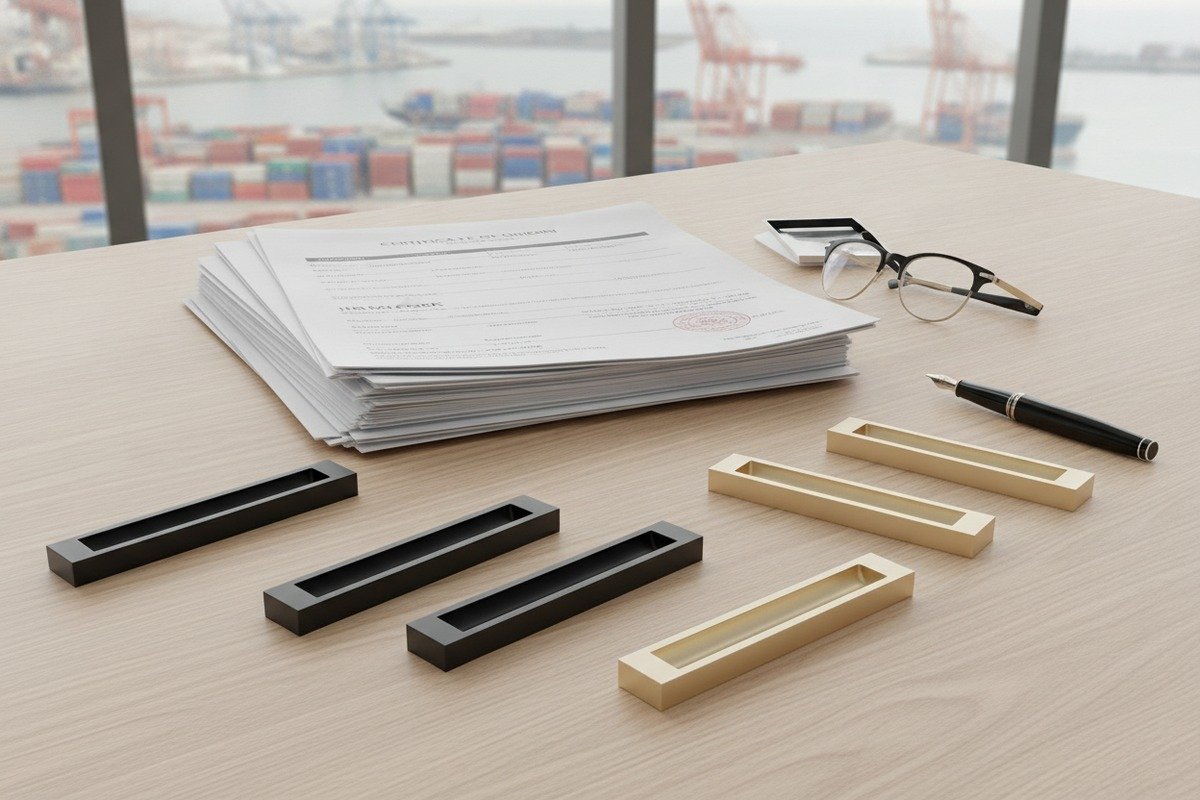
Every month, our Foshan factory ships containers of aluminum furniture handles 1 to Vietnamese distributors and furniture makers. One question keeps coming up before the first order: “Do I need a special license to import these into Vietnam?”
In most cases, aluminum furniture handles classified as ordinary aluminum hardware do not require a special import license in Vietnam. However, importers must still complete standard customs filing, confirm the correct HS code, prepare commercial documents, ensure Vietnamese labeling compliance, and secure a certificate of origin if claiming preferential duty rates under ACFTA or RCEP.
The answer sounds simple, but the details matter ASEAN-China Free Trade Area 2. A wrong HS code 3 or a missing certificate of origin can stall your shipment at port for days and cost you money. Below, we walk through every step so you can source aluminum furniture handles from China with confidence and zero surprises at Vietnam customs.
What specific import licenses do I need to clear Chinese aluminum furniture handles through Vietnam customs?
Many of our Vietnamese buyers worry about permits before placing their first purchase order Regional Comprehensive Economic Partnership 4. The fear of a rejected shipment is real, but the reality for standard aluminum hardware is much more straightforward than most people expect.
Ordinary aluminum furniture handles generally fall outside Vietnam's restricted import list, so no sector-specific import license is needed. Importers must hold a valid business registration that covers trading or importing activities, file a standard customs declaration, and present the required commercial documents to clear the goods.

How Vietnam's Import Regime Works
Vietnam operates a tiered import control system 5. At the top level, goods are split into three categories: prohibited, restricted (requiring a ministry-specific permit), and freely imported. Aluminum furniture handles — think recessed pulls, slim profile handles, and cabinet knobs made from extruded aluminum — are classified as general-use hardware automatic import licensing mechanism 6. They do not appear on Vietnam's restricted or prohibited lists.
This means you do not need to apply to any ministry for a special import permit. What you do need is an active import-export business license. If you are a Vietnamese-registered trading company, your business registration certificate must include import-export activity lines. If you are a foreign-invested enterprise, your investment certificate must authorize the import of the relevant goods.
The Automatic Licensing Distinction
Vietnam uses an "automatic import licensing" mechanism for a broad range of goods. This is not a permit in the traditional sense. It is a monitoring tool. When your goods pass through customs, the system logs the import automatically. For aluminum furniture handles, this automatic process is all that applies. There is no application form, no waiting period, and no approval step beyond the normal customs declaration.
When a License Might Be Required
The exception arises if your aluminum handles contain restricted materials, are bundled with regulated components, or are reclassified into a controlled product category. For example, if your handles include an integrated electronic component, the electronic part might trigger a separate compliance requirement. Similarly, if the aluminum alloy contains certain controlled substances, additional checks could apply. In practice, standard 6063-T5 or 6061-T6 aluminum handles with anodized or powder-coated finishes do not trigger any of these exceptions.
| Scenario | License Required? | What You Need Instead |
|---|---|---|
| Plain aluminum recessed handle | No | Standard customs documents |
| Handle with integrated LED light | Possibly | Check electronic product import rules |
| Handle made from recycled aluminum with unknown alloy | Possibly | Material composition certificate may be requested |
| Handle imported as part of a complete furniture unit | No special handle license | Furniture-level classification may apply |
| Handle containing restricted heavy metals | Possibly | Test report or compliance certificate |
The bottom line: verify your product classification first. For the vast majority of aluminum furniture handles we produce and ship, no special license is needed.
How can I leverage the ASEAN-China FTA to lower my import taxes on aluminum profiles?
When we quote aluminum furniture handles to Vietnamese buyers, one of the first things we discuss is duty optimization. The price difference between MFN duty and preferential duty under a free trade agreement can be significant — sometimes enough to shift your entire sourcing decision.
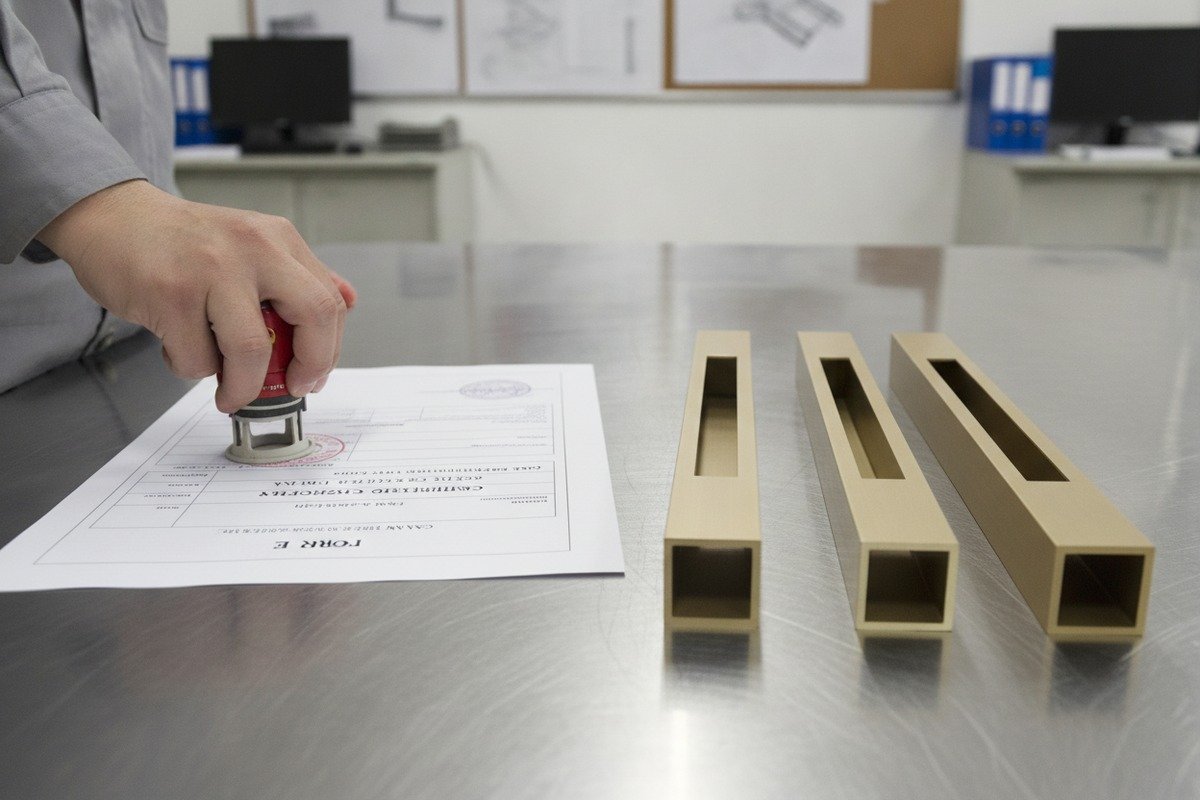
Under the ASEAN-China Free Trade Area (ACFTA) and the Regional Comprehensive Economic Partnership (RCEP), aluminum furniture handles originating from China may qualify for reduced or zero import duty in Vietnam. To claim this preference, the importer must present a valid Certificate of Origin (Form E for ACFTA or Form RCEP) that matches the shipment details exactly.
Understanding the Duty Structure
Every import into Vietnam faces two main taxes: import duty and value-added tax (VAT). The import duty rate depends on two things — the HS code and the origin of the goods. VAT in Vietnam is typically 10% for most industrial goods, applied on top of the CIF value plus import duty.
For aluminum furniture handles, the HS code is critical. Depending on the design, handles may be classified under HS 8302.41 (base metal mountings, fittings, and similar articles suitable for furniture) or HS 7616.99 (other articles of aluminum). The MFN (Most Favored Nation) duty rate for these codes can range from 15% to 25%. Under ACFTA, the preferential rate can drop to 0% to 5% for many tariff lines.
How to Claim Preferential Duty
The process requires coordination between the Chinese supplier and the Vietnamese importer. Here is the step-by-step flow:
- The supplier confirms the goods are manufactured or substantially processed in China.
- The supplier applies for a Certificate of Origin 8 (Form E) from the local China Council for the Promotion of International Trade (CCPIT) or the relevant customs authority.
- The certificate must list the correct HS code, product description, FOB value, and consignee details.
- The importer presents the original Form E to Vietnam customs at the time of declaration.
- Customs verifies the document and applies the preferential rate.
At our factory, we handle Form E applications routinely. We advise all Vietnamese buyers to request this document at the time of order placement so there are no last-minute scrambles.
ACFTA vs. RCEP: Which One to Use?
| Factor | ACFTA (Form E) | RCEP (Form RCEP) |
|---|---|---|
| Duty rate for aluminum handles | Often 0–5% | Often 0–5%, varies by tariff schedule |
| Certificate issuer | CCPIT or China Customs | CCPIT or China Customs (also allows self-certification in some cases) |
| Rules of origin | ASEAN-China specific | Cumulative origin rules across RCEP members |
| Document format | Form E | RCEP Certificate of Origin |
| Best for | Direct China-to-Vietnam shipments | Shipments involving multiple RCEP countries in the supply chain |
In most cases, ACFTA offers the lowest rate for direct shipments. However, if your supply chain involves components from multiple RCEP member countries, RCEP's cumulative origin rules may offer more flexibility.
Watch Out for Anti-Dumping Duties
Vietnam has investigated and imposed anti-dumping duties 9 on certain aluminum products originating from China. While aluminum furniture handles have not been the direct target of these measures, related product categories like aluminum profiles and aluminum extrusions have faced scrutiny. If your handles are classified under an HS code that overlaps with an anti-dumping order, the preferential duty rate will not override the anti-dumping duty. Always cross-check the latest anti-dumping duty list published by Vietnam's Ministry of Industry and Trade before finalizing your cost calculations.
Practical Cost Impact
Consider a shipment of aluminum recessed cabinet handles with a CIF value of $10,000. Without a Form E, the MFN duty might be 20%, adding $2,000 in duty before VAT. With a valid Form E under ACFTA, the duty might drop to 0%, saving the full $2,000. After adding 10% VAT on the adjusted base, the total landed cost difference can exceed $2,200 on a single container. Over a year of regular imports, that adds up to tens of thousands of dollars.
What mandatory filing documents should I request from my Chinese supplier to avoid port delays?
From years of shipping to Ho Chi Minh City, Hai Phong, and Da Nang, our logistics team has learned that port delays almost always trace back to one thing: missing or incorrect documents. The cost of a stuck container — storage fees, missed delivery windows, unhappy end customers — far exceeds the effort of getting paperwork right the first time.
To avoid port delays, Vietnamese importers should request from their Chinese supplier a commercial invoice, packing list, bill of lading (or air waybill), Certificate of Origin (Form E or RCEP if claiming preferential duty), and any applicable material test reports or product specifications needed for customs classification and labeling compliance.

The Core Document Set
Every shipment of aluminum furniture handles from China to Vietnam requires a minimum set of documents. Missing even one can cause customs to hold the shipment for verification, which adds days and fees.
Here is the complete checklist:
| Document | Who Prepares It | Why It Matters |
|---|---|---|
| Commercial Invoice 10 | Chinese supplier | States the transaction value, product description, quantity, unit price, and payment terms. Used to calculate duty and VAT. |
| Packing List | Chinese supplier | Details carton count, net and gross weight, dimensions, and product breakdown per carton. Customs uses this to verify physical cargo. |
| Bill of Lading (B/L) | Shipping line / freight forwarder | Proof of shipment and title to goods. Required for customs release. |
| Certificate of Origin (Form E / RCEP) | Issued by CCPIT or China Customs | Required to claim preferential duty. Must match invoice and B/L details exactly. |
| Sales Contract or Purchase Order | Buyer and supplier jointly | Some customs offices request the underlying contract as supporting evidence. |
| Material Test Report (if applicable) | Supplier or third-party lab | May be requested if customs questions the material composition or if the product falls near a controlled category. |
Common Document Mistakes That Cause Delays
The most frequent problems we see are mismatches between documents. If the commercial invoice says "aluminum cabinet pull — 500 pieces" but the packing list says "aluminum handle — 480 pieces," customs will flag the discrepancy. Even small wording differences can trigger a review.
Another common issue is an incorrect or missing HS code on the commercial invoice. Vietnamese customs officers use the declared HS code as the starting point for classification. If the code is wrong, the officer may reclassify the goods, leading to a different duty rate and a potential delay while the importer disputes or accepts the new classification.
Tips From the Supplier Side
At our facility, we prepare all export documents in-house using standardized templates that our Vietnamese customers have vetted with their customs brokers. Here are a few practices that save time:
- We print the HS code on every commercial invoice, cross-referenced with the buyer's confirmed code.
- We include clear product photos in the packing list attachment so customs officers can visually confirm the goods without opening every carton.
- We coordinate Form E applications with the local CCPIT office as soon as the shipment is booked, not after it sails.
- We provide material composition data sheets upon request so the importer has them ready if customs asks.
Digital Filing in Vietnam
Vietnam's General Department of Customs operates the VNACCS/VCIS electronic customs system. All import declarations are filed digitally. Your customs broker will input the shipment data, upload scanned documents, and submit the declaration online. Physical originals of certain documents — especially the Certificate of Origin — may still need to be presented at the customs counter. Make sure your supplier sends originals via courier well before the vessel arrives.
Planning ahead is the simplest way to avoid delays. We recommend finalizing all documents at least five days before the estimated time of arrival at the Vietnamese port.
Are there any local technical standards or quality certifications I must meet for my furniture hardware imports?
When we develop new handle profiles for the Vietnamese market — whether it is a slim recessed pull in champagne gold or a matte black architectural channel handle — our engineering team always checks the destination country's compliance requirements before finalizing production.
Vietnam does not currently mandate a specific national quality certification for importing standard aluminum furniture handles. However, imported goods must comply with Vietnamese labeling regulations, and importers should be prepared for potential future requirements related to restricted substances, product safety testing, and sustainable sourcing standards.
Vietnamese Labeling Requirements
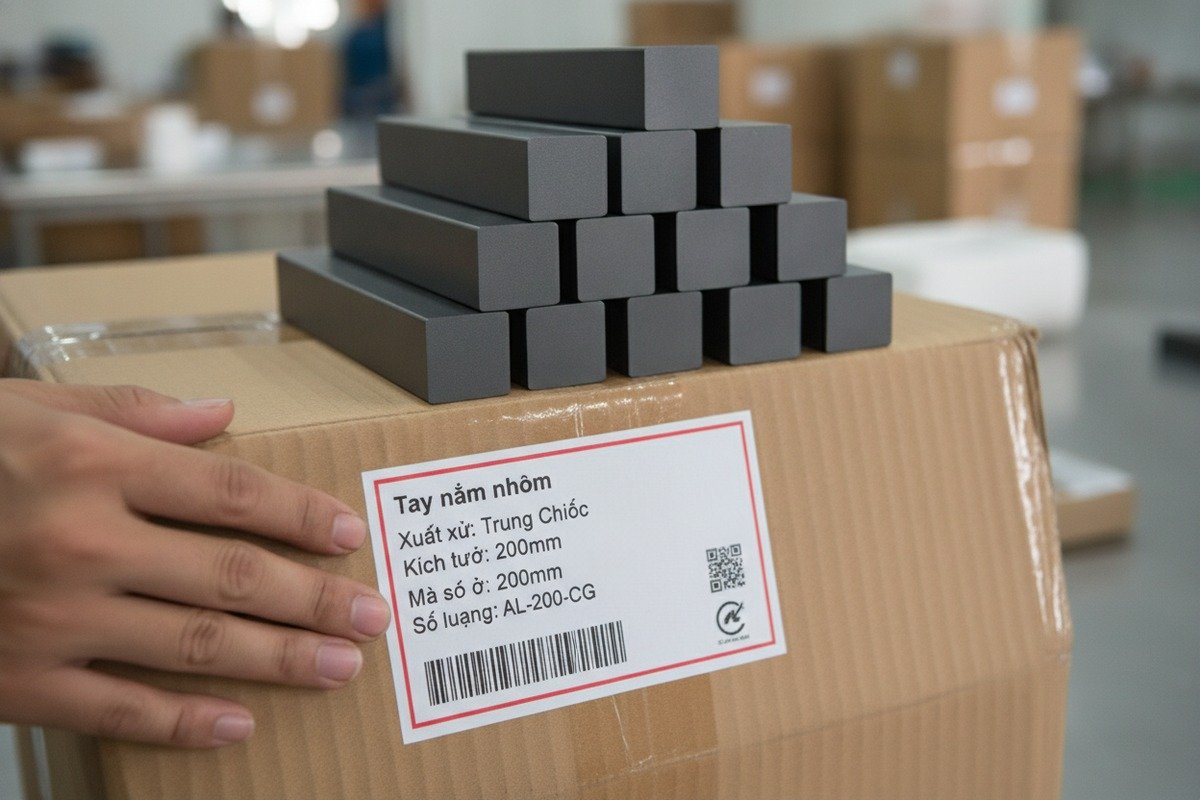
All imported goods sold in Vietnam must meet labeling rules set by the government. For aluminum furniture handles, the label — or an accompanying sticker applied before sale — must include:
- Product name
- Name and address of the responsible entity (importer or distributor in Vietnam)
- Country of origin (e.g., "Made in China")
- Quantity or weight
- Any other information required by the specific product category
Labeling can be in Vietnamese, or the product can carry its original label with a supplementary Vietnamese-language sticker. Our factory can pre-apply Vietnamese labels during packing if the buyer provides the required text and layout, which saves time and cost compared to relabeling at the destination warehouse.
Current Certification Landscape
As of now, aluminum furniture handles are not subject to a mandatory national standard (TCVN) certification before import. They are not classified as products requiring a "Certificate of Conformity" or "Declaration of Conformity" at the border. This is consistent with how Vietnam treats most general-purpose hardware and furniture fittings.
However, this does not mean quality is irrelevant. Vietnamese distributors and furniture factories increasingly request their own quality checks. Common requirements include:
- Surface finish consistency (anodizing thickness, powder coat adhesion)
- Dimensional accuracy (tolerance within ±0.1 mm for precision-fit handles)
- Material composition verification (alloy grade confirmation)
- Salt spray test results (corrosion resistance for coastal or high-humidity regions)
What Might Change
Several regulatory trends could introduce new compliance requirements for furniture hardware imports into Vietnam in the near future:
Restricted substances. International frameworks like REACH (EU) increasingly influence Asian markets. Vietnam may adopt limits on heavy metals or hazardous substances in consumer-facing hardware products. If your handles are anodized or painted, the finish may eventually need to be tested for lead, cadmium, or chromium VI.
ESG and sustainability. Vietnam's furniture export industry is under pressure from European and North American buyers to demonstrate supply chain sustainability. This pressure is trickling down to component imports. Importers may eventually need to document recycled content, energy consumption in manufacturing, or carbon footprint data for their sourced hardware.
Product safety testing. While not yet mandatory for passive hardware like handles, there is a global trend toward testing furniture components for sharp edges, breakage risk, and load capacity. Vietnam could adopt standards aligned with ISO or EN norms.
Practical Recommendations
For now, focus on three things:
- Get your labeling right. This is the one compliance area that is actively enforced at the border and in the retail market.
- Keep test reports on file. Even if not mandatory today, having material composition and surface finish test data ready positions you well for any future requirement and builds buyer confidence.
- Work with a supplier who understands compliance. Our team maintains up-to-date test reports for all standard aluminum alloys and finishes we use. We can provide these documents with any shipment, so our Vietnamese buyers always have evidence of product quality when they need it.
The smartest importers treat compliance not as a barrier but as a competitive advantage. When your customers know your handles meet international quality benchmarks — even before Vietnam mandates them — you stand out in the market.
Conclusion
Importing aluminum furniture handles from China into Vietnam is a straightforward process when you get the classification, documents, and labeling right. Focus on your HS code, secure your Certificate of Origin, and work with a supplier who prepares export-ready documentation — and your shipments will clear smoothly every time.
Footnotes
1. The original Wikipedia page for ‘Furniture handle’ was a 404. The ‘Door handle’ Wikipedia page discusses various types of handles, including those used on cupboards and drawers, which are relevant to furniture handles. ↩︎
2. Official information about the ASEAN-China Free Trade Area from the ASEAN Secretariat. ↩︎
3. Explains the Harmonized System (HS) code, its purpose, and administration. ↩︎
4. Official information about RCEP from the ASEAN Secretariat. ↩︎
5. Provides an overview of Vietnam’s import regulations and control mechanisms. ↩︎
6. The original USTR.gov URL was a 404. This replacement is from the official World Trade Organization (WTO) website and provides a direct explanation and definition of the ‘Agreement on Import Licensing Procedures,’ including the ‘automatic import licensing’ mechanism. ↩︎
7. Official overview of import-export procedures by Vietnam Customs. ↩︎
8. Defines Certificate of Origin and its role in international trade. ↩︎
9. Explains anti-dumping measures and their purpose under WTO rules. ↩︎
10. Defines a commercial invoice and its role in international trade and customs. ↩︎