
Every quarter, our sales team in Foshan fields dozens of calls from Vietnamese and Middle Eastern distributors asking one question: “Can you help me lower my landed cost?” The answer often lives not in squeezing factory prices, but in a trade framework most buyers overlook Regional Value Content (RVC) 1. China-ASEAN Free Trade Area 2
You can leverage CAFTA preferential tariffs by ensuring your aluminum furniture handles meet the agreement’s rules of origin, obtaining a valid Form E certificate from the exporting country’s authority, and aligning all shipping documents so your customs office grants a reduced or zero duty rate on eligible hardware.
This article walks you through the documents, savings, origin rules, and supplier selection strategies that make CAFTA work in practice—not just on paper. Whether you run a furniture factory in Ho Chi Minh City or a building-material wholesale operation in Riyadh, the logic is the same: tariff savings only show up when classification, origin, and paperwork line up together. Let’s break it down section by section.
What specific documents do I need from my Chinese supplier to claim CAFTA tariff exemptions for aluminum handles?
When we prepare export shipments from our Foshan warehouse, the most common delay at destination customs isn't a missing handle—it's a missing document. Procurement managers often assume the supplier's commercial invoice 3 is enough. It isn't.
To claim CAFTA tariff exemptions, you need a valid Form E (Certificate of Origin), a commercial invoice matching the Form E details, a packing list, a bill of lading, and consistent product descriptions across all documents that align with the correct HS code for aluminum furniture handles.

What Is Form E and Who Issues It?
Form E is the official Certificate of Origin under the CAFTA framework. Form E certificate 4 It proves that the goods exported qualify for preferential tariff treatment. In China, Form E is issued by the General Administration of Customs (GACC) 5 or authorized local branches. Your Chinese supplier must apply for this document before shipment. The form includes the product description, HS code, FOB value, origin criteria, and the importer's details.
If the Form E contains even a small mismatch with your commercial invoice—say a different product description or a wrong HS code—your destination customs office can reject the preferential rate and charge you the full MFN (Most Favored Nation) duty 6.
The Full Document Checklist
Here is a practical checklist our team uses when preparing CAFTA-eligible shipments:
| Document | Who Provides It | Key Detail to Verify |
|---|---|---|
| Form E (Certificate of Origin) | Chinese supplier, issued by GACC | HS code, product description, origin criteria code |
| Commercial Invoice | Chinese supplier | Must match Form E description and value exactly |
| Packing List | Chinese supplier | Quantity, net/gross weight, carton dimensions |
| Bill of Lading (B/L) | Freight forwarder / shipping line | Consignee name must match Form E importer field |
| Product Description Statement | Chinese supplier | Material composition, manufacturing process summary |
| Customs Declaration (Export) | Chinese customs broker | HS code alignment with Form E |
Common Mistakes That Void Your Tariff Claim
I have seen three recurring errors that cost buyers their preferential rate:
- HS code mismatch. The supplier writes one code on the invoice and a different code on the Form E. This triggers an automatic flag at destination customs.
- Vague product description. Writing "metal handles" instead of "aluminum alloy furniture handles" can cause classification disputes.
- Late Form E application. Form E must generally be applied for before or at the time of export. A retroactive application is possible in some cases, but it adds cost and delay.
Why Internal Audit Trails Matter
Your customs broker at the destination port may ask for supporting documents during a post-clearance audit 7. Keep copies of purchase orders, supplier quotations, production records, and even photos of the product and packaging. This paper trail proves that the goods described on the Form E are the same goods that arrived at your warehouse.
A customs brokerage review before shipment is worth the small fee. It catches errors that could cost you thousands in denied duty savings.
How much can I actually save on my import duties by using a Form E certificate for my furniture hardware?
Our clients in Vietnam often ask us to quote "landed cost" rather than just FOB Foshan. That exercise always starts with one variable: the duty rate. And the gap between the MFN rate and the CAFTA preferential rate can be the difference between a profitable order and a break-even one.
Depending on the importing ASEAN country and the exact HS code, a Form E certificate can reduce your import duty on aluminum furniture handles from rates as high as 15–30% down to 0–5%, potentially saving hundreds or thousands of dollars per container load.

Understanding the Tariff Gap
Aluminum furniture handles are commonly classified under HS codes in the 8302 heading 8 (base metal mountings, fittings, and similar articles suitable for furniture). The exact subheading depends on the product design and function. In many ASEAN countries, the MFN duty rate on these items ranges from 10% to 30%. Under CAFTA, the preferential rate often drops to 0% or 5%.
Here is a simplified comparison for a hypothetical $20,000 FOB shipment of aluminum handles:
| Scenario | Duty Rate | Duty Payable | Savings vs. MFN |
|---|---|---|---|
| MFN Rate (No Form E) | 20% | $4,000 | — |
| CAFTA Preferential Rate (With Form E) | 0% | $0 | $4,000 |
| CAFTA Preferential Rate (With Form E) | 5% | $1,000 | $3,000 |
On a single container, those savings are significant. Over a year of monthly shipments, the numbers become transformative for your bottom line.
But Tariffs Are Not the Whole Story
Landed cost includes more than just duty. You must factor in freight, insurance, customs brokerage fees, and the compliance cost of obtaining and verifying the Form E. For most buyers, the compliance cost is small—perhaps $50 to $150 per shipment for Form E processing and customs broker review. Compare that to thousands of dollars in duty savings, and the ROI is obvious.
However, if the product's MFN rate is already low—say 3%—the savings from CAFTA may not justify the paperwork effort. Always check the exact tariff schedule for your destination country before building a CAFTA strategy.
A Landed-Cost Comparison: Three Sourcing Models
| Cost Component | Direct from China (No Form E) | Direct from China (With Form E) | ASEAN Assembly + Form E |
|---|---|---|---|
| Ex-factory Price | $10.00/unit | $10.00/unit | $11.50/unit |
| Freight to Destination | $0.80/unit | $0.80/unit | $0.60/unit |
| Insurance | $0.05/unit | $0.05/unit | $0.05/unit |
| Import Duty (20% MFN vs. 0% CAFTA) | $2.00/unit | $0.00/unit | $0.00/unit |
| Compliance / Form E Cost | $0.00/unit | $0.02/unit | $0.05/unit |
| Landed Cost | $12.85/unit | $10.87/unit | $12.20/unit |
This table shows that, in many cases, sourcing directly from a qualified Chinese supplier with a valid Form E offers the best landed cost. The ASEAN assembly route only makes sense when additional origin requirements demand it or when geopolitical considerations push you to diversify.
When Savings Are Real and When They Are Not
Savings are real when your HS code qualifies for a significant duty reduction, your supplier consistently provides correct Form E documentation, and your customs broker reviews everything before arrival. Savings evaporate when classification is wrong, documentation is inconsistent, or the destination customs authority conducts a verification and finds discrepancies. The penalty for a failed origin claim can include back-payment of full duties plus fines.
How do I verify if my custom aluminum handle order meets the rules of origin required for preferential treatment?
When we develop custom handle profiles for overseas clients—say, a champagne gold anodized recessed pull with a specific L-shaped cross-section—the design conversation is exciting. But the origin conversation is where the money is saved or lost.
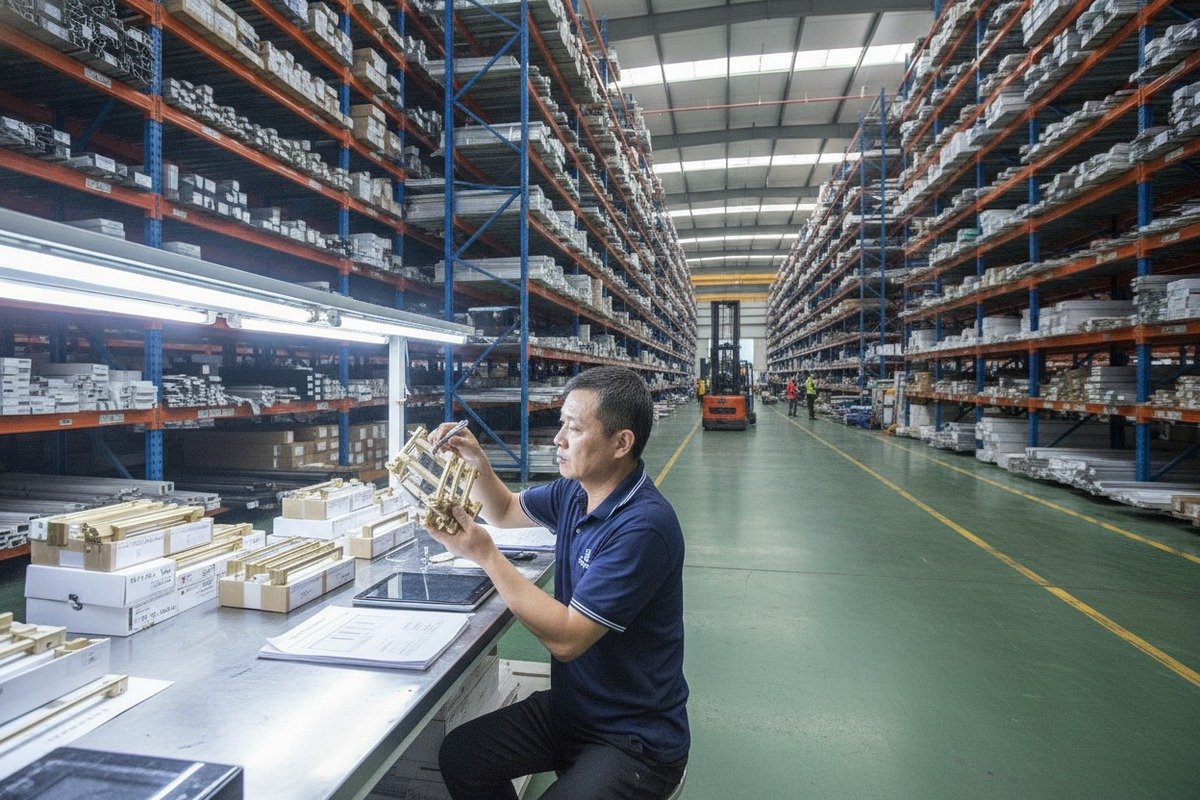
Your custom aluminum handles meet CAFTA rules of origin if they are wholly obtained in a member country, or if they undergo substantial transformation there—typically measured by a Regional Value Content (RVC) of at least 40% or a Change in Tariff Classification (CTC) at the specified heading level.
The Two Main Origin Tests
CAFTA uses two primary methods to determine if a product qualifies as originating:
-
Regional Value Content (RVC). The product must contain at least 40% value added within the CAFTA region (China + ASEAN). For aluminum handles manufactured entirely in China from locally sourced or regionally sourced aluminum billets, this threshold is usually met easily.
-
Change in Tariff Classification (CTC). The final product must be classified under a different HS heading than its non-originating inputs. Change in Tariff Classification (CTC) 9 If you import raw aluminum ingots from outside CAFTA and extrude, cut, anodize, and assemble them into handles in China, the transformation from raw material to finished handle typically satisfies the CTC requirement.
What "Substantial Transformation" Means in Practice
Simply packaging or labeling a product does not count. Neither does minor finishing like polishing a pre-made handle. The processing must be significant enough to change the character of the product. For aluminum furniture handles, the key manufacturing steps include:
- Extrusion of aluminum billet into a profile shape
- Cutting to length
- Surface treatment (anodizing, powder coating, electrophoresis)
- Drilling, tapping, or other machining
- Quality inspection and packing
When all of these steps happen in one CAFTA country—China, for example—origin is straightforward. Our factory in Foshan performs every step from extrusion to final packing, which gives us a clean origin story that customs authorities can verify.
Why Transshipment Alone Does Not Work
Some buyers think they can ship Chinese-made handles to Vietnam or Thailand, slap on a new label, and claim ASEAN origin. This does not work. CAFTA rules specifically exclude simple operations like repackaging, sorting, or relabeling from qualifying as substantial transformation. If customs discovers that the only "processing" in the ASEAN country was a change of shipping label, the preferential tariff claim will be denied, and penalties may follow.
Regional Cumulation: A Hidden Advantage
CAFTA allows regional cumulation 10. This means that materials originating in any CAFTA member can count toward the RVC calculation. For example, if a Vietnamese furniture factory imports semi-finished aluminum profiles from China and then performs significant further processing (cutting, drilling, anodizing, assembling), the Chinese aluminum value counts as regional content. The finished handles may qualify as ASEAN-originating under cumulation rules, which is useful for re-export to third-party markets with ASEAN trade preferences.
How to Verify Before You Ship
Ask your supplier for a material declaration that lists all inputs, their HS codes, their country of origin, and their value. Compare this against the CAFTA product-specific rules for your HS heading. If unsure, request a pre-ruling from your destination customs authority. It costs a small fee and gives you certainty before you commit to a large order.
Over 18 years of producing aluminum furniture handles, our team has learned that tariff savings on paper mean nothing if your supplier cannot deliver the documentation, consistency, and production traceability that CAFTA demands.
Choosing a Foshan-based manufacturer like LiliTONG is critical because Foshan is China's aluminum processing hub, offering vertically integrated production, experienced export documentation teams, and established Form E issuance channels—all of which ensure your CAFTA claims survive customs scrutiny.
Why Foshan Matters for Aluminum Hardware
Foshan is not just any city. It is China's largest aluminum processing cluster. Raw aluminum billets, extrusion presses, anodizing lines, and packaging facilities are all concentrated in a small geographic area. This concentration drives two advantages for CAFTA buyers:
- Lower production cost. Proximity to raw material suppliers and shared infrastructure keeps ex-factory prices competitive.
- Clean origin documentation. When every manufacturing step—from billet to finished handle—happens in one location, the origin story is simple and verifiable. Customs authorities prefer clear, single-source production records.
What LiliTONG Brings to the Table
Our facility runs the entire process in-house. We extrude aluminum profiles, cut them to length, apply surface treatments including anodizing in champagne gold, matte black, charcoal grey, and other finishes, and perform final assembly and packing. This vertical integration means:
- We control every step that determines origin status.
- We can provide detailed material declarations showing exactly where each input comes from.
- Our export team is experienced in Form E applications and works directly with the local GACC branch.
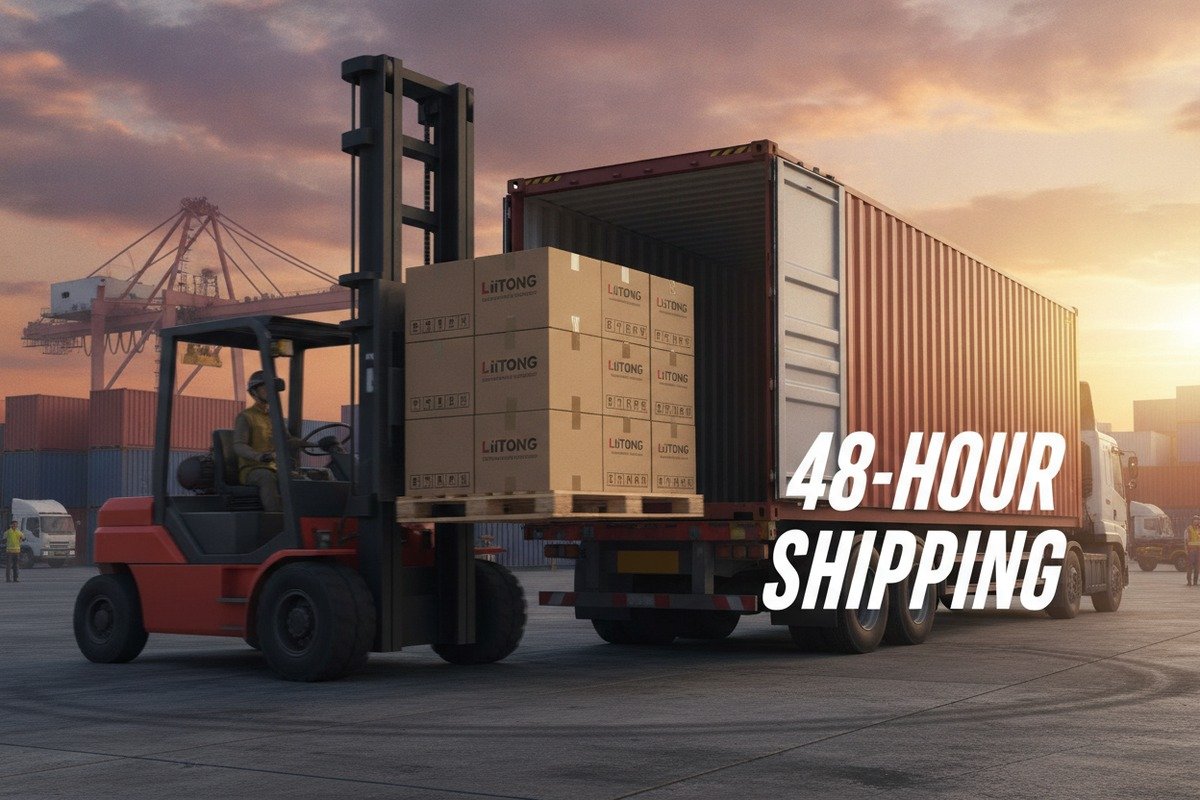
We also maintain over 300 tons of ready-to-ship inventory. For standard recessed handles—like the minimalist rectangular pulls with deep geometric channels that are popular in modern kitchens—we can ship within 48 hours. For custom profiles, our turnaround is 3 to 7 days. Speed matters because CAFTA compliance adds a documentation step. If your supplier is slow on paperwork, your container sits at the port and your cash flow suffers.
The Risk of Choosing the Wrong Supplier
Not every Chinese handle supplier can support CAFTA claims. Smaller traders who buy from multiple sub-suppliers often cannot trace the origin of their aluminum. If they cannot prove where the raw material came from or where each processing step occurred, your Form E application may be rejected—or worse, approved but later challenged during a post-clearance audit.
A supplier that merely assembles handles from purchased components does not have the same origin clarity as a vertically integrated manufacturer. When your margin depends on a 15–20% duty reduction, you cannot afford to gamble on a supplier who cannot document their production chain.
The Bigger Picture: CAFTA 3.0 and Supply Chain Strategy
The upgraded CAFTA 3.0 agreement, signed in 2025, expands cooperation into supply chain connectivity, digital economy, and green economy. For procurement teams, this signals a future where origin traceability will become even more important—and more digitized. Manufacturers who invest in production records, ERP systems, and export compliance today will be better positioned to serve buyers under the new framework.
China-ASEAN bilateral trade reached $982 billion in 2024. The relationship is deepening, not shrinking. Buyers who build strong supplier relationships in Foshan now are positioning themselves for long-term cost advantages as CAFTA's scope expands.
Building a Dual-Source Strategy
Some of our clients use a dual-source model. They buy standard handles from our Foshan stock for quick delivery to their domestic market, and they source custom or specialty items through ASEAN-based processors who use our profiles as inputs. This approach lets them claim ASEAN origin for re-exports while maintaining quality through a trusted Chinese supply base.
The key is transparency. We work with our clients to plan which items qualify for CAFTA preference and which do not. Not every handle in every order needs a Form E. Sometimes the best strategy is to separate CAFTA-eligible items into dedicated shipments to simplify documentation and reduce audit risk.
Conclusion
CAFTA turns tariff strategy into a procurement advantage—but only when classification, origin, and documentation work together. Start by verifying your HS code, then partner with a manufacturer who can deliver both quality handles and bulletproof paperwork.
Footnotes
1. Explains a key method for determining product origin in trade agreements. ↩︎
2. Official information on the establishment and agreements of CAFTA. ↩︎
3. Replaced HTTP unknown with an authoritative government source on commercial invoices. ↩︎
4. Explains the purpose and usage of Form E for preferential tariffs under CAFTA. ↩︎
5. Official website of China’s General Administration of Customs. ↩︎
6. World Trade Organization’s explanation of Most Favored Nation treatment. ↩︎
7. Official guidelines from the World Customs Organization on post-clearance audits. ↩︎
8. Provides a tool and information for Harmonized System code classification, specifically for heading 8302. ↩︎
9. Explains a key method for determining product origin based on tariff shifts. ↩︎
10. Provides a detailed explanation of regional cumulation in rules of origin. ↩︎