
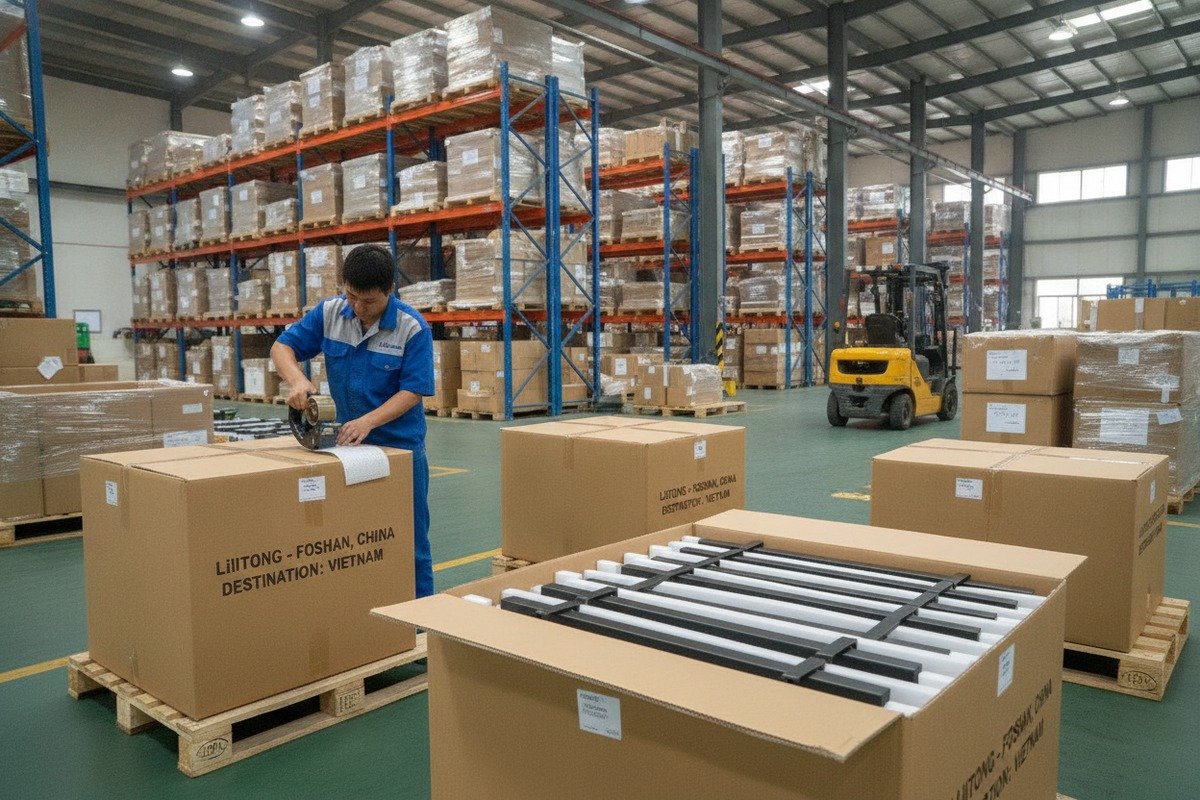
Every week, our Foshan warehouse ships hundreds of cartons of aluminum furniture handles to Vietnam — and the questions we hear most from buyers are about customs paperwork and duties.
To import aluminum furniture handles from China into Vietnam, you need a commercial invoice, packing list, bill of lading, customs declaration filed via VNACCS, and ideally a Form E Certificate of Origin to claim preferential or zero duties under the ASEAN-China Free Trade Area agreement.
The good news is that aluminum furniture handles are not a restricted product in Vietnam ASEAN-China Free Trade Area 1. No special license is needed. But “simple” does not mean “automatic.” Mismatched documents, a wrong HS code, or a missing Certificate of Origin can freeze your shipment at the port for days Form E Certificate of Origin 2. Below, we walk through every step so your next order clears smoothly.
How can I use the Form E Certificate of Origin to get zero import duties on my aluminum handles?
When we prepare shipments for our Vietnamese distributors, the single document that saves them the most money is the Form E — yet many first-time buyers skip it entirely General Administration of Customs 3.
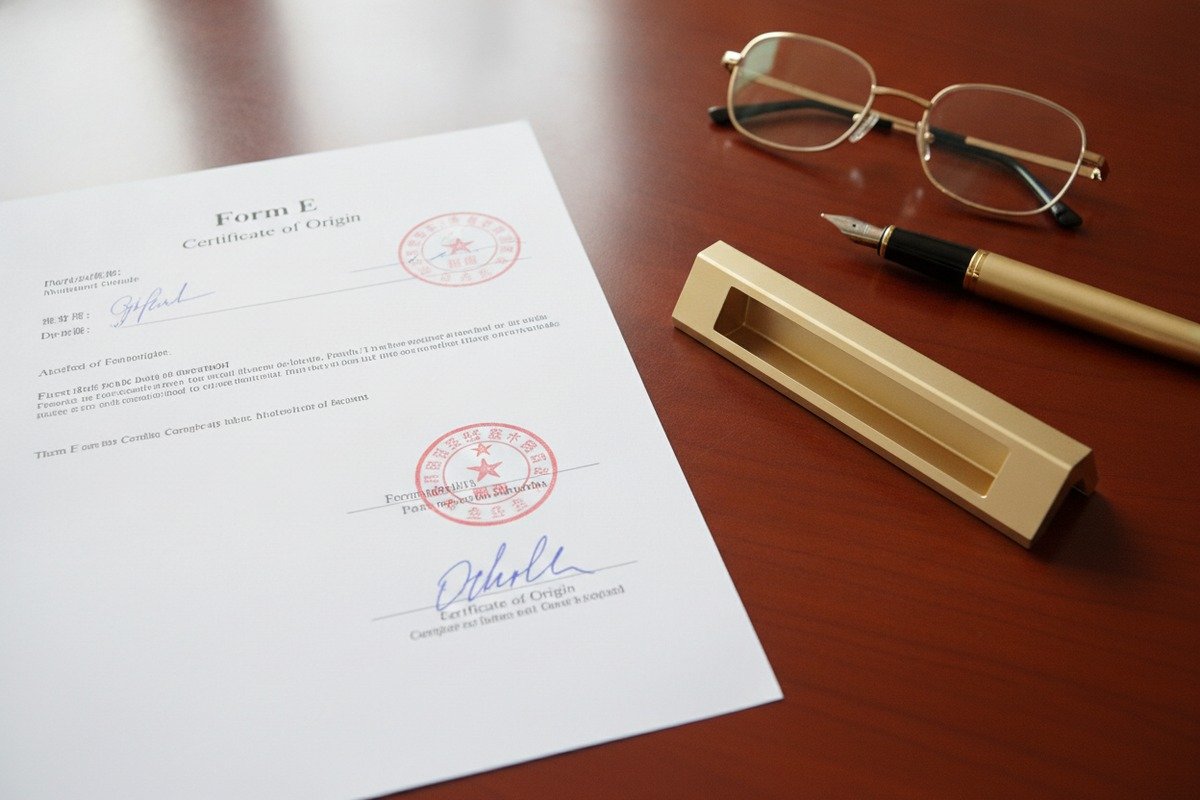
A Form E Certificate of Origin, issued in China under the ASEAN-China Free Trade Area (ACFTA), lets Vietnamese importers claim preferential duty rates — often 0% — on qualifying aluminum furniture handles, instead of the standard MFN rate that can reach 15% or higher.
What Is the Form E?
The Form E is a specific certificate format used exclusively under ACFTA bill of lading 4. It proves that the goods originate in China, which is a member of the agreement. When Vietnamese customs sees a valid Form E attached to your declaration, they apply the preferential tariff rate instead of the normal import duty Value-Added Tax (VAT) 5.
How to Obtain a Form E
The exporter — in most cases, your Chinese supplier — applies for the Form E at the local branch of China's Council for the Promotion of International Trade (CCPIT) 6 or the General Administration of Customs. The application must include the commercial invoice 7, packing list, and a declaration of origin. Processing usually takes 1–3 working days.
At our facility, we handle Form E applications as part of our standard export service. This means our buyers do not need to chase paperwork themselves.
Key Rules to Follow
There are a few conditions that must be met for the Form E to be accepted by Vietnam customs:
- The product must qualify under ACFTA rules of origin. Aluminum handles extruded and finished in China normally meet this requirement.
- The Form E must be issued before or on the date of shipment.
- The descriptions on the Form E must match the commercial invoice exactly — product name, quantity, value, and HS code.
- The Form E must carry an official stamp and signature from the issuing authority.
Form E vs. Other Certificates
| Certificate Type | Applicable Agreement | Typical Duty on Aluminum Handles | When to Use |
|---|---|---|---|
| Form E | ACFTA (ASEAN-China) | 0% – 5% (preferential) | Most common for China-to-Vietnam trade |
| RCEP Certificate of Origin | RCEP | Varies, often 0% – 5% | Alternative if Form E is unavailable |
| No Certificate | MFN rate applies | 10% – 20% depending on HS code | Not recommended — costs more |
What Happens Without a Form E?
If you do not present a valid Form E at the time of customs declaration, Vietnam customs will apply the Most Favored Nation (MFN) duty rate 8. For many aluminum hardware items, this rate sits between 10% and 20%. On a $10,000 shipment, that difference can be $1,000 to $2,000 in extra duties. We always advise our buyers to request the Form E upfront — it costs very little to obtain but saves a significant amount on every order.
Common Mistakes That Invalidate a Form E
One issue we see repeatedly: the product description on the Form E says "aluminum profile" while the invoice says "aluminum furniture handle." Customs officers treat this as a mismatch and reject the preferential claim. Always make sure every document uses the same terminology.
What specific documents must I prepare to clear my furniture hardware shipment through Vietnam customs?
Over 18 years of exporting aluminum handles, our team has seen shipments delayed not because of product quality, but because one document was missing or filled out incorrectly.
You need at minimum five core documents: a commercial invoice, a packing list, a bill of lading (or airway bill), a customs declaration filed electronically through Vietnam's VNACCS system, and a Certificate of Origin if you want preferential duty treatment.

The Core Document Set
Let's break down each document and what it must contain.
1. Commercial Invoice
This is the primary document that customs uses to determine the value of your shipment. It must show:
- Seller name and address (the Chinese supplier)
- Buyer name and address (the Vietnamese importer)
- Product description — use clear, specific language like "aluminum alloy recessed furniture handles"
- Unit price, quantity, and total value
- Trade terms (FOB, CIF, etc.)
- Currency
2. Packing List
The packing list complements the invoice. It tells customs what is inside each carton or pallet:
- Number of packages
- Net weight and gross weight per package
- Dimensions of each carton
- Breakdown of items per package
3. Bill of Lading (B/L)
The B/L is your proof of shipment. It shows:
- Shipper and consignee details
- Port of loading and port of discharge
- Container number or cargo description
- Shipping date
For air freight, you will have an airway bill instead.
4. Customs Declaration (Electronic)
Vietnam requires all import declarations to be filed electronically through the VNACCS/VCIS system 9. Your customs broker in Vietnam will handle this step, but you need to provide them with accurate data from documents 1–3 above.
5. Certificate of Origin
As discussed, the Form E is the most valuable certificate for China-to-Vietnam shipments. But even if you do not apply for preferential treatment, customs may still ask for proof of origin.
Additional Documents That May Be Required
| Document | When It Is Needed | Who Provides It |
|---|---|---|
| Import license | Not required for standard aluminum handles | N/A |
| Quality test report | If customs requests product verification | Supplier or third-party lab |
| Product labeling information | Required for all imported goods in Vietnam | Importer prepares Vietnamese-language labels |
| Sales contract | Sometimes requested during post-clearance audit | Buyer and seller |
| Insurance certificate | If shipping on CIF terms | Insurance company |
Labeling Compliance
This is an area many importers overlook. Vietnamese regulations require imported goods to carry labels in Vietnamese showing:
- Product name
- Name and address of the responsible organization or individual in Vietnam
- Country of origin
- Quantity and specifications
For small hardware items like handles, these labels are often applied to the outer carton rather than each individual piece. But the labels must be in place before the goods enter domestic circulation.
Consistency Is Everything
The number one reason for customs delays on our shipments is inconsistency between documents. If your invoice says "500 pieces" but your packing list says "50 cartons × 12 pieces = 600 pieces," customs will flag the shipment. We always cross-check every document before the container leaves our warehouse.
How do I find the correct HS code for my aluminum profiles to avoid customs delays and fines?
When our team prepares export documents, the HS code is the first thing we confirm — because everything else in the import process depends on it.
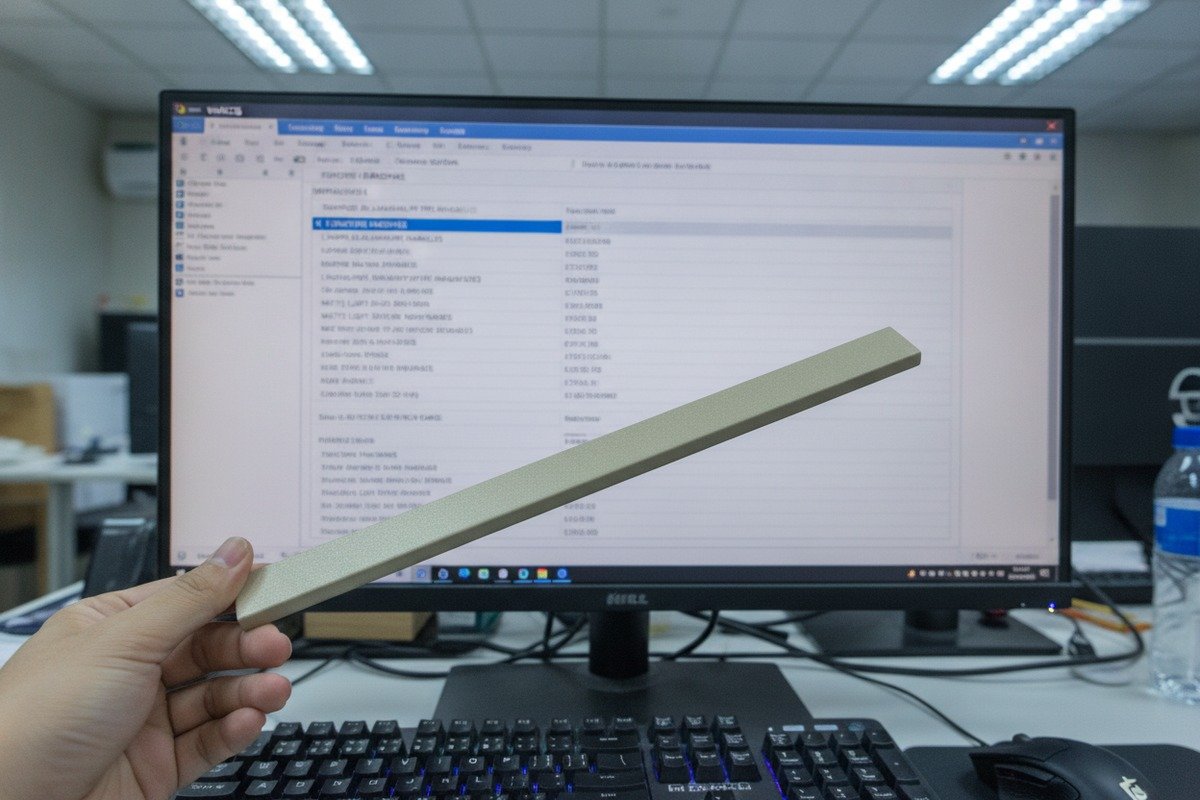
Aluminum furniture handles typically fall under HS code 8302.41 (base metal mountings and fittings for furniture) or 7616.99 (other articles of aluminum). The correct code depends on the product's function, material, and design. Using the wrong code can trigger customs holds, reclassification penalties, and unexpected duty charges.
Why the HS Code Matters So Much
The Harmonized System code 10 determines three critical things:
- Import duty rate — Different codes carry different tariff percentages.
- Preferential eligibility — Whether your Form E applies depends on the HS code listed.
- Inspection risk — Some HS codes trigger automatic physical inspection; others go through green channel clearance.
A wrong HS code does not just cost you money. It can also cause customs to suspect under-declaration or fraud, which leads to audits and fines.
Most Likely HS Codes for Aluminum Furniture Handles
| HS Code | Description | Typical Use Case | Notes |
|---|---|---|---|
| 8302.41 | Base metal mountings, fittings, and similar articles suitable for furniture | Recessed pulls, cabinet handles, drawer pulls | Most common classification for furniture handles |
| 7616.99 | Other articles of aluminum, not elsewhere specified | Aluminum profiles used as handles but not explicitly furniture fittings | Used when the product is classified by material rather than function |
| 7604.29 | Aluminum alloy profiles | Raw or semi-finished extruded aluminum profiles | Applies if the product is sold as a profile, not a finished handle |
How to Confirm Your HS Code
Here is the process we recommend to our buyers:
- Check Vietnam's tariff schedule online. Vietnam Customs publishes the full tariff database. Search by keyword or browse Chapter 83 (base metal hardware) and Chapter 76 (aluminum articles).
- Ask your customs broker. A licensed broker in Vietnam can issue a pre-classification ruling. This gives you certainty before the shipment arrives.
- Request your supplier's classification. At our factory, we include the recommended HS code on every commercial invoice. This is based on how the product is used and its material composition.
- Cross-reference with China's export HS code. The HS code on the Chinese export declaration should align with the Vietnam import code at the 6-digit level. The last 2–4 digits may differ because each country adds its own subdivisions.
When Customs Reclassifies Your Product
If Vietnamese customs disagrees with your declared HS code, they will reclassify the product. This means:
- A different duty rate applies, often higher.
- Your Form E may become invalid if the new code is not covered.
- You may face a fine for incorrect declaration.
This usually happens when the product description is vague. "Aluminum parts" is too generic. "Aluminum alloy recessed cabinet handle, anodized finish, 128mm center-to-center" is specific enough to support your classification.
A Practical Tip
We always advise buyers to include a product photo and technical drawing in the customs broker's file. This helps the broker defend the classification if customs questions it. A picture of a champagne gold anodized recessed handle clearly shows it is a furniture fitting — not a raw aluminum profile.
What are the total import taxes and VAT I should expect to pay for my shipment from China?
Our buyers in Ho Chi Minh City and Hanoi always ask the same question before placing an order: "What is my total landed cost?" The answer depends on three tax layers.
For aluminum furniture handles from China, you should budget for import duty (0%–20% depending on HS code and Certificate of Origin), plus 10% Value-Added Tax (VAT) on the combined CIF value and duty. With a valid Form E, total taxes can be as low as 10% VAT only.
The Three Tax Layers
Every import into Vietnam is subject to up to three types of tax:
- Import Duty — Based on HS code and origin.
- Special Consumption Tax (SCT) — Does not apply to aluminum furniture handles.
- Value-Added Tax (VAT) — Currently 10% for most industrial goods.
For aluminum handles, you only need to worry about import duty and VAT.
How to Calculate Your Total Tax
Here is a step-by-step example.
Scenario: You import a shipment of aluminum recessed cabinet handles worth $10,000 CIF Ho Chi Minh City. Your HS code is 8302.41. You have a valid Form E.
| Cost Component | Calculation | Amount |
|---|---|---|
| CIF Value | Declared value | $10,000 |
| Import Duty (with Form E, 0%) | $10,000 × 0% | $0 |
| Taxable Value for VAT | $10,000 + $0 | $10,000 |
| VAT (10%) | $10,000 × 10% | $1,000 |
| Total Taxes | $1,000 |
Now compare this to the same shipment without a Form E, where the MFN duty rate is 15%:
| Cost Component | Calculation | Amount |
|---|---|---|
| CIF Value | Declared value | $10,000 |
| Import Duty (MFN, 15%) | $10,000 × 15% | $1,500 |
| Taxable Value for VAT | $10,000 + $1,500 | $11,500 |
| VAT (10%) | $11,500 × 10% | $1,150 |
| Total Taxes | $2,650 |
The difference is $1,650 on a single $10,000 shipment. Over a year of regular orders, the savings from having a Form E are substantial.
Important Notes on Customs Valuation
Vietnam customs has the right to reject your declared value if it seems unusually low. They maintain a reference price database. If your invoice price is significantly below market rates for similar goods, customs may adjust the value upward. This is another reason to work with a reputable supplier who provides realistic pricing on documents.
At our company, we price our aluminum handles at fair market value. This keeps our buyers safe from valuation disputes while still being competitive.
Anti-Dumping Duties
As of the time of writing, there are no anti-dumping duties specifically targeting aluminum furniture handles from China in Vietnam. However, this can change. Vietnam has imposed anti-dumping measures on other aluminum products in the past. We recommend checking Vietnam's Ministry of Industry and Trade website for the latest trade defense measures before each large order.
Post-Clearance Audits
Even after your shipment clears customs, Vietnam reserves the right to audit your import records for up to five years. Keep copies of all invoices, packing lists, bills of lading, Form E certificates, and payment records. If customs finds discrepancies during an audit, they can retroactively assess additional duties and penalties.
Conclusion
Importing aluminum furniture handles from China into Vietnam is straightforward when you get the documents, HS code, and Form E right — most delays come from preventable paperwork mistakes, not from the product itself.
Footnotes
1. Provides official information about the ASEAN-China Free Trade Area. ↩︎
2. Explains the purpose and rules of Form E under ACFTA. ↩︎
3. Official website of China’s customs authority. ↩︎
4. Explains the function and types of a bill of lading in shipping. ↩︎
5. Details Vietnam’s Value-Added Tax rates and regulations. ↩︎
6. Official website of the organization responsible for issuing Form E in China. ↩︎
7. Provides official guidance on commercial invoices for international trade. ↩︎
8. Explains the definition and implications of MFN tariff rates. ↩︎
9. Replaced with an official article from the Vietnam Customs website discussing the VNACCS/VCIS system. ↩︎
10. Provides official explanation of the international HS code system. ↩︎