
Every year, our production lines ship thousands of aluminum handle orders to Vietnam, and the compliance question comes up in nearly every first conversation with a new buyer mandatory import certification 1. The problem is real: one rejected container at a Vietnamese port can cost you months and thousands of dollars. Many wholesalers assume their Chinese supplier “handles” compliance automatically, but that assumption is where quality disasters begin.
To ensure aluminum furniture handles comply with Vietnam’s safety standards, you need a documentation-plus-testing approach: verify the supplier’s alloy composition, request third-party test reports covering durability, corrosion, coatings, and harmful substances, and conduct pre-shipment inspections before every order leaves the factory.
Vietnam does not have a single dedicated standard just for aluminum furniture handles. Instead, compliance is built by combining material safety, product performance testing 2, factory quality control, and proper import documentation. Safety Data Sheets 3 Below, we break down each step so you can source with confidence.
What specific safety certifications should I request from my Chinese supplier to meet Vietnam's furniture hardware regulations?
When we prepare shipments for our Vietnamese wholesale partners, the documentation package is just as important as the product itself. Many buyers ask for "the certificate," but the reality is more layered than a single document.
You should request ISO 9001 certification for quality management, SGS or TÜV test reports for material safety, REACH compliance documentation for chemical substances, and a factory inspection report from an accredited third-party body like V-Trust or QUATEST.

Why There Is No Single "Handle Certificate"
Vietnam's furniture hardware regulations treat handles as part of the furniture assembly rather than as standalone certified products. This means there is no single certificate you can ask for that covers everything. Instead, you must build a compliance file from several documents that together prove your handles are safe, durable, and free of harmful substances 4.
Starting June 1, 2026, Vietnam's updated mandatory import certification for furniture hardware will require registration, type test documentation, local authorized representation, and labeling in Vietnamese. Smart buyers are preparing for this now.
The Core Documents to Request
| Document | What It Proves | Who Issues It |
|---|---|---|
| ISO 9001 Certificate | Factory has a quality management system | Accredited certification body |
| SGS/TÜV Material Test Report | Alloy composition meets declared specs | Third-party lab |
| REACH Compliance 5 Report | No restricted chemicals in coatings or base metal | Accredited testing lab |
| Salt Spray Test Report | Corrosion resistance of the finish | Factory lab or third party |
| Pre-shipment Inspection Report | Batch matches approved samples | Independent inspector |
| Certificate of Origin | Product origin for customs clearance | Chamber of Commerce |
Do Not Accept Factory Self-Declarations Alone
A common mistake is accepting a supplier's own internal quality report as proof of compliance. In our experience, self-declarations carry very little weight with Vietnamese customs or with your end customers. Third-party reports 6 from recognized labs like SGS, TÜV, or Intertek are the gold standard. They cost money, but they save you far more in avoided rejections and returns.
Ask About Coating-Specific Documentation
For aluminum handles with anodized, powder-coated, or painted finishes, you need coating-specific test reports. These should cover adhesion (cross-cut test), thickness, UV resistance 7, and chemical safety. A beautiful champagne gold anodized finish means nothing if it peels after six months in Vietnam's humid climate.
We always recommend buyers ask for both the base material report and the finished product report. The alloy might be perfect, but a non-compliant coating can still fail the entire product.
How can I confirm that the chemical composition of my aluminum handles is safe for my residential furniture projects?
Our engineering team runs alloy composition checks on every batch of raw aluminum extrusion before it enters the production line, and we have learned that what is printed on a material certificate and what is actually in the metal can sometimes differ.
Confirm chemical safety by requesting a mill certificate for the aluminum alloy grade, commissioning a third-party XRF or ICP-OES analysis of the finished handle, and verifying that surface coatings comply with REACH and RoHS restrictions on heavy metals and harmful substances.

Understanding Aluminum Alloy Grades
Not all aluminum is the same. Furniture handles are typically made from 6063-T5 or 6061-T6 alloy 8. The alloy grade determines strength, corrosion resistance, and machinability. For residential furniture, 6063-T5 is the most common choice because it extrudes cleanly, anodizes well, and offers good corrosion resistance in indoor environments.
Ask your supplier to declare the exact alloy grade and temper. Then verify it with a third-party test.
Key Chemical Elements to Check
| Element | Acceptable Range (6063-T5) | Why It Matters |
|---|---|---|
| Silicon (Si) | 0.20–0.60% | Affects extrusion quality and surface finish |
| Magnesium (Mg) | 0.45–0.90% | Determines strength and hardness |
| Iron (Fe) | ≤ 0.35% | Excess iron weakens corrosion resistance |
| Copper (Cu) | ≤ 0.10% | High copper reduces anodizing quality |
| Lead (Pb) | ≤ 0.05% | Restricted under REACH and RoHS |
| Chromium (Cr) | ≤ 0.10% | Excess chromium can be a health concern |
Surface Coating Chemical Safety
For residential furniture, the coating is the part your end users touch every day. Powder coatings and anodized finishes must be free of restricted substances. REACH compliance is the most widely recognized standard for chemical safety in coatings. It restricts substances like hexavalent chromium, lead, cadmium, and certain phthalates.
If your handles have a champagne gold, matte black, or charcoal grey finish, ask for a test report specific to that color batch. Different pigments use different chemical formulations, and a report on a white finish does not cover a black one.
The Role of Material Traceability
We keep traceable records for every aluminum billet we use, including the smelter of origin, alloy batch number, and mill certificate. This traceability matters because it lets you prove to your Vietnamese customers — or to inspectors — that the raw material is consistent and verified.
If your supplier cannot tell you where the aluminum comes from, that is a red flag. Recycled aluminum 9 is not inherently bad, but mixed-source recycled material can have inconsistent composition that leads to strength or finishing problems. Always ask whether the alloy is primary, recycled, or blended, and request documentation either way.
Formaldehyde and VOC Concerns
While formaldehyde emissions (CARB standards) apply mainly to wood-based panels, some furniture assembly adhesives or gaskets used alongside handles can release VOCs. If your aluminum handles are pre-assembled with rubber gaskets or adhesive-backed inserts, check those components separately for VOC compliance 10.
What steps can I take to verify that my custom handle samples will pass Vietnam's local quality inspections?
When we develop custom handle profiles for a new Vietnamese buyer — say a recessed pull with a deep geometric channel in matte charcoal grey — we follow a sample validation process that eliminates surprises at the inspection stage.
Verify your samples by conducting a dimensional check against approved drawings, performing a salt spray corrosion test, testing pull strength and repeated-use durability, inspecting for sharp edges and burrs, and submitting the sample to an accredited Vietnamese lab like QUATEST for pre-production evaluation.

Step-by-Step Sample Verification Workflow
The most reliable approach is to treat sample approval as a multi-stage gate. Do not skip any step, even if you trust the supplier.
Step 1: Physical dimension check. Use calipers and a profile gauge to confirm every dimension matches the approved drawing. Even 0.3 mm deviation on a recessed handle channel can affect finger grip and installation fit.
Step 2: Finish and color check. Compare the sample against the agreed color swatch or RAL/Pantone reference under consistent lighting. Matte finishes can look different under warehouse fluorescent lights versus natural daylight.
Step 3: Edge and safety inspection. Run your finger along every edge, corner, and channel. For residential furniture — especially in homes with children — any burr, sharp corner, or rough spot is a failure. Our quality team uses a finger-safe edge tester to check all accessible surfaces.
Step 4: Mechanical testing. Pull the handle with a measured force to simulate real-world use. A typical cabinet handle should withstand at least 50 N of static pull force without loosening. For drawer pulls, test repeated open-close cycles — a minimum of 10,000 cycles is a reasonable benchmark.
Step 5: Corrosion testing. Submit the sample for a salt spray test. For indoor use in Vietnam's climate, a minimum of 48 hours of salt spray exposure without visible corrosion on the handle surface is a solid starting point. For coastal or outdoor applications, aim for 200+ hours.
Step 6: Third-party lab submission. Send the approved sample to a recognized Vietnamese testing lab such as QUATEST or an international lab with Vietnamese accreditation. They will test against the relevant safety parameters and issue a report you can present to local inspectors.
Common Failure Points in Sample Inspection
| Failure Type | What to Look For | How to Prevent It |
|---|---|---|
| Dimensional deviation | Handle does not fit furniture panel cutout | Require tolerance specifications on drawing (±0.1 mm) |
| Coating adhesion failure | Finish peels or chips during cross-cut test | Specify coating thickness and adhesion test in order contract |
| Sharp edges | Burrs on channel lip or screw hole | Mandate deburring and edge-rounding in production spec |
| Color mismatch | Sample color differs from production batch | Lock in RAL/Pantone code and require color consistency report |
| Screw hole misalignment | Holes do not match standard furniture hardware spacing | Confirm hole center distances against furniture panel standards |
Why Installation Testing Matters
A perfectly made handle can still fail if the screw type, insert, or mounting method is wrong for the furniture substrate. We always recommend that buyers test the handle on an actual furniture panel — whether it is MDF, particleboard, plywood, or solid wood. The combination of handle, screw, and panel material determines whether the handle feels solid or wobbles after a few months of use.
If you are buying recessed pulls with an L-shaped cross-section, the mounting depth and panel thickness must match precisely. A handle designed for 18 mm panels will not sit properly in a 16 mm panel, and the exposed gap can create a safety issue or aesthetic defect.
How do I choose a Foshan manufacturer that understands the technical compliance needs of my Vietnamese wholesale business?
Over the past 18 years, our team here in Foshan has worked with dozens of Vietnamese furniture distributors and factory owners. The pattern we see is clear: buyers who choose their manufacturer based only on price end up spending more on rework, rejections, and lost customers.
Choose a Foshan manufacturer that has direct export experience to Vietnam, maintains third-party test reports for their products, offers full technical files with drawings and material specs, supports OEM/ODM customization, and can provide pre-shipment inspection documentation for every order.
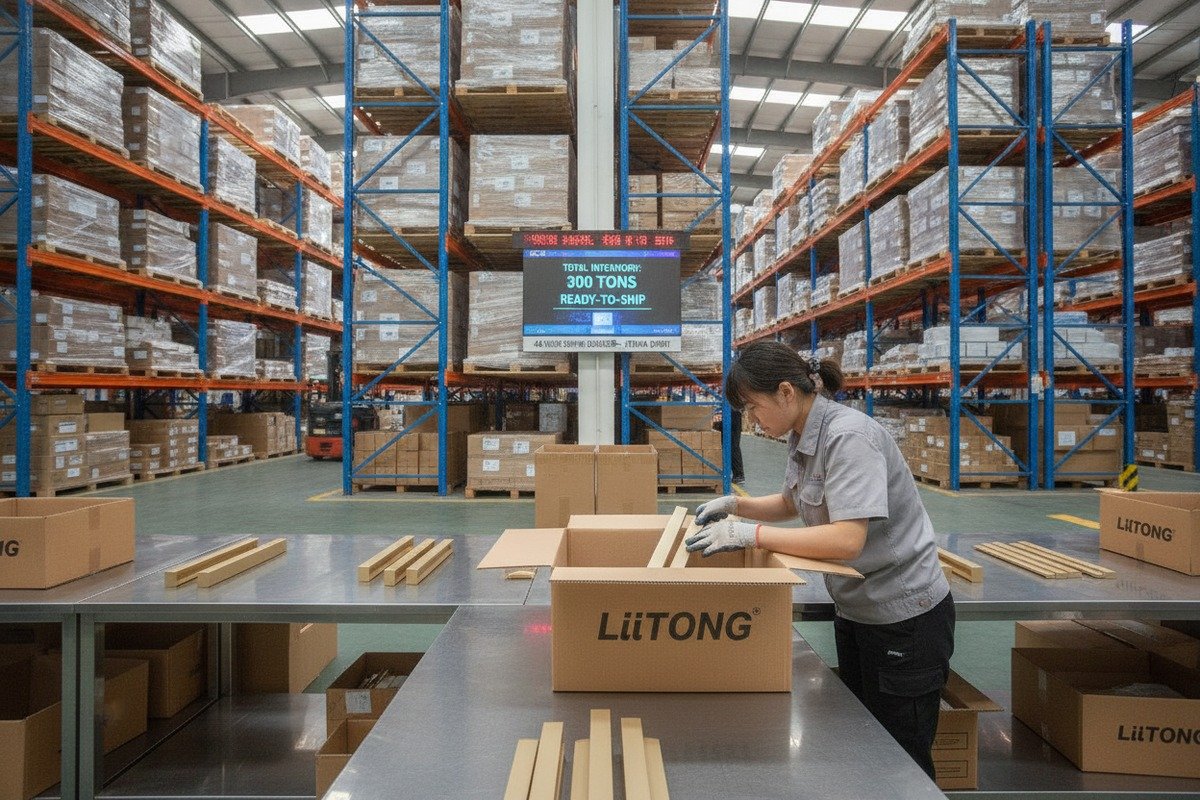
What "Compliance-Ready" Looks Like in a Factory
A manufacturer that truly understands Vietnamese market compliance will not wait for you to ask for documents. They will offer them proactively. Here is what to look for when evaluating a Foshan supplier:
Dedicated export documentation team. The factory should have staff who understand what Vietnamese customs and local inspectors require. This includes certificates of origin, commercial invoices with correct HS codes, packing lists, and quality reports formatted for your market.
Ready-to-share test reports. Ask for existing SGS, TÜV, or Intertek reports. If the factory has never tested their products with a third-party lab, that tells you something about their quality culture.
Sample turnaround speed. A factory that can deliver custom samples in 3–7 days demonstrates process control and material readiness. Long sample lead times often indicate production bottlenecks or material sourcing problems that will also affect your bulk orders.
Evaluating the Factory's QC System
| QC Indicator | Good Sign | Warning Sign |
|---|---|---|
| Incoming material inspection | Factory checks every aluminum billet batch | No incoming material records |
| In-process quality checks | Documented checkpoints during extrusion, cutting, finishing | Quality checked only at final packing |
| Final inspection protocol | Written checklist with dimensional, finish, and packaging criteria | Visual spot-check only |
| Third-party audit history | Factory has been audited by international inspection firms | Factory refuses or avoids audits |
| Customer complaint tracking | Documented corrective action system | No records of past issues |
The Importance of Vietnam-Specific Experience
Vietnam has its own import documentation requirements, labeling rules, and market preferences that differ from the Middle East, Europe, or the Americas. A Foshan manufacturer with active Vietnamese clients will already know, for example, that Vietnamese buyers often need specific screw sizes that match locally available furniture panels, or that certain matte finishes sell better in the Hanoi market versus Ho Chi Minh City.
We maintain an inventory of over 300 tons specifically to support fast restocking for our Vietnamese partners. This stock-ready approach means our buyers can order popular items — like matte black or champagne gold recessed pulls — and receive shipment within 48 hours. For custom profiles, our typical turnaround is 3–7 days from design confirmation.
Contract Controls That Protect You
Even the best factory relationship needs a solid contract. Make sure your purchase agreement includes:
- Locked material specifications. The contract should name the exact alloy grade (e.g., 6063-T5), coating type (e.g., electrophoretic champagne gold), and thickness tolerances. This prevents the factory from substituting cheaper materials on later orders.
- Approved sample reference. Attach a signed and sealed reference sample or high-resolution sample photos to the contract. Any deviation from the approved sample is grounds for rejection.
- Inspection rights. Include a clause that allows you or your third-party inspector to visit the factory and inspect goods before shipment.
- Defect and return policy. Define what constitutes a defect, the acceptable defect rate (AQL level), and who pays for returns or rework.
Sustainability and Future-Proofing
Vietnam's regulatory environment is evolving. Smart buyers are already looking at lifecycle assessment data, environmental impact, and digital traceability for their supply chains. While blockchain-based traceability is still emerging in the furniture hardware sector, having a supplier who tracks material origins and maintains batch records puts you ahead of competitors who cannot answer these questions.
Ergonomic design is another growing factor. Recessed pulls with a deep geometric channel for finger grip — like the minimalist profiles we produce — are not just an aesthetic choice. They reduce hand strain and improve daily usability, which aligns with broader user-safety trends in the Vietnamese residential furniture market.
Conclusion
Compliance for aluminum furniture handles in Vietnam is not a single checkbox — it is a system of verified materials, tested performance, proper documentation, and a supplier relationship built on transparency. Start with the right factory, lock in the right specifications, and test before you ship.
Footnotes
1. Provides official information on Vietnam’s import requirements and documentation. ↩︎
2. UL Solutions explains product performance testing for consumer goods. ↩︎
3. Direct link to OSHA’s Hazard Communication Standard, which includes comprehensive information on Safety Data Sheets. ↩︎
4. EPA regulates production and distribution of chemicals to protect health and environment. ↩︎
5. Official EU page providing an overview of the REACH regulation for chemicals. ↩︎
6. CPSC explains the role of third-party accredited laboratories for product safety. ↩︎
7. Explains ASTM G154, a standard practice for evaluating UV resistance of materials. ↩︎
8. Authoritative Wikipedia page providing detailed information on 6061 aluminum alloy, with links to related alloys like 6063. ↩︎
9. Highlights significant environmental benefits of recycling aluminum. ↩︎
10. EPA sets national volatile organic compound emission standards for consumer products. ↩︎