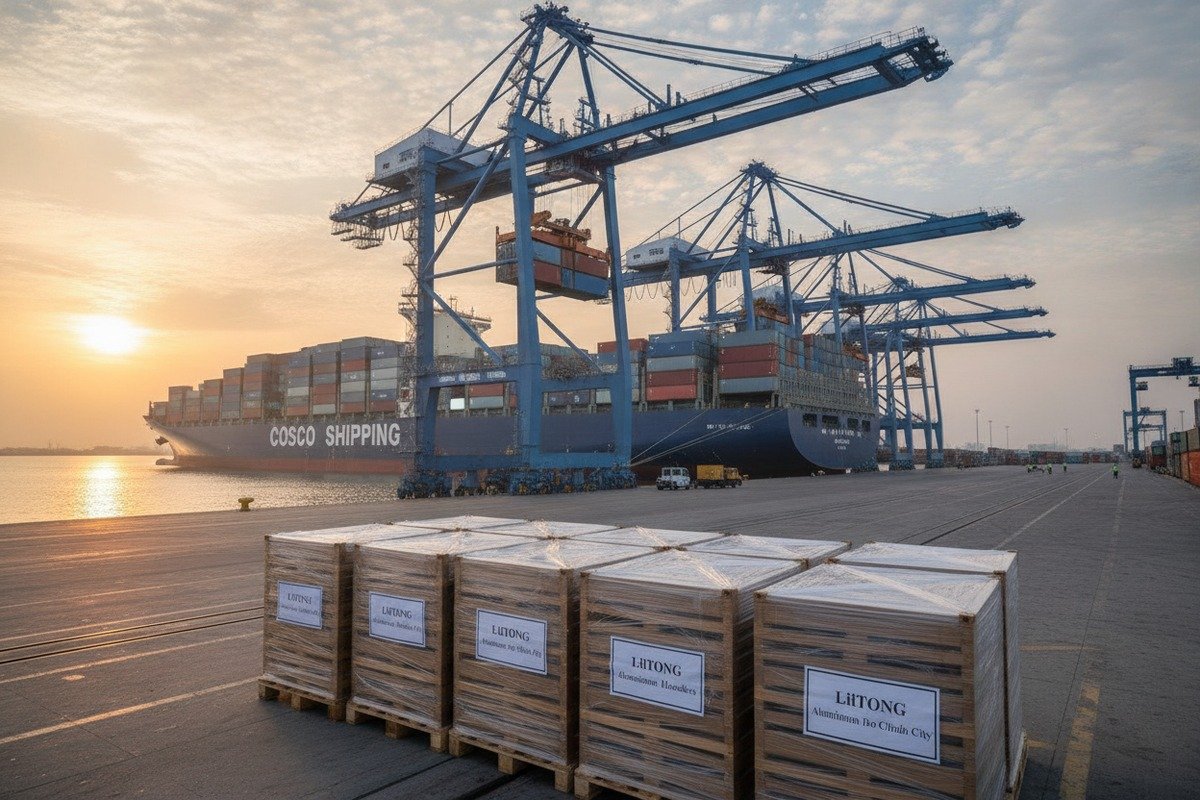
Every week, our warehouse team in Foshan loads pallets of aluminum handles destined for furniture factories across Vietnam. aluminum furniture handles 1 The one question buyers ask us more than any other is simple: how long will it take to arrive?
The typical sea freight transit time from Guangdong, China to Ho Chi Minh City, Vietnam is 7 to 14 days port-to-port. Direct feeder services from ports like Jiangmen or Shenzhen can arrive in as few as 5 to 7 days, while LCL shipments or routes through Guangzhou Nansha port may take 10 to 14 days or longer.
But port-to-port transit is only one piece of the puzzle. Your total lead time 2 depends on production, customs clearance, and inland delivery on both ends. Let me break down every factor so you can plan your next order with confidence.
How can I accurately estimate the total lead time for my bulk aluminum handle order from Foshan to Vietnam?
Most buyers focus only on shipping days. From our experience fulfilling hundreds of orders to Ho Chi Minh City, the real timeline is much longer than the vessel's sailing schedule.
To accurately estimate total lead time, add production time (3–25 days), export customs (1–2 days), sea transit (7–14 days), import customs (2–5 days), and inland delivery (1–2 days). For a standard bulk order of aluminum handles from Foshan, expect a total of 15 to 50 days from order confirmation to your warehouse door.

Breaking down the total lead time
The biggest mistake we see buyers make is treating "transit time" as "lead time." They are not the same thing. Transit time is just the days the vessel spends at sea. Lead time covers everything from the moment you confirm your order to the moment the goods reach your factory in Vietnam.
Here is a realistic breakdown:
| Stage | Duration | Notes |
|---|---|---|
| Order confirmation & production | 3–25 days | 48 hours for stock items; 3–7 days for light customization; 15–25 days for full custom orders |
| Pre-shipment inspection | 1–2 days | Quality check and packing verification |
| Inland transport to port (China) | 1–2 days | Foshan to Jiangmen or Nansha port |
| Export customs clearance (China) | 1–2 days | Aluminum handles are non-hazardous; clearance is fast |
| Sea freight transit (port-to-port) | 7–14 days | Depends on origin port and FCL vs. LCL |
| Import customs clearance (Vietnam) | 2–5 days | Requires proper documentation including Form E |
| Inland delivery to your factory (Vietnam) | 1–2 days | From Cat Lai or Tan Cang port to your location |
| Total estimated lead time | 15–50 days | Range depends on stock vs. custom and FCL vs. LCL |
Why the range is so wide
The gap between 15 days and 50 days comes down to two main choices: stock versus custom products, and FCL versus LCL shipping.
If you order ready-to-ship handles from our 300-ton inventory and ship them FCL through Jiangmen port, you could receive goods in as little as 15 days. On the other hand, a fully customized order with a new anodized finish, shipped LCL through Guangzhou Nansha, could push the timeline past 45 days.
The port you ship from matters more than you think
Our factory is in Foshan, which sits in the heart of Guangdong province 3. We have access to multiple ports. Each one offers a different transit time to Ho Chi Minh City.
| Origin Port | Distance to Foshan | FCL Transit to HCMC | LCL Transit to HCMC | Best For |
|---|---|---|---|---|
| Jiangmen | ~60 km | 5–7 days | 7–10 days | Fastest direct feeder route |
| Guangzhou Nansha | ~80 km | 10–14 days | 14–18 days | High capacity, more carrier options |
| Shenzhen (Yantian/Shekou) | ~150 km | 8–10 days | 12–14 days | Frequent sailings, reliable schedules |
| Zhongshan | ~50 km | 9–12 days | 13–15 days | Good for suppliers in the Zhongshan furniture cluster |
We usually recommend Jiangmen for buyers who need the fastest delivery. It is the closest deep-water port to Foshan's aluminum hardware manufacturing zone. Direct feeder vessels run frequently between Jiangmen and Ho Chi Minh City.
A practical tip for planning
When we quote lead times to our Vietnam-based clients, we always add a 3-day buffer on top of the estimated schedule. Port congestion, weather delays, or a slow customs day can all push timelines. Build that buffer into your production planning and you will never be caught off guard.
Will choosing ready-to-ship stock items significantly reduce my waiting time for sea freight delivery?
One of the most common requests we get from furniture factory owners in Vietnam is this: "Can you ship faster?" The answer almost always starts with what is already on our shelves.
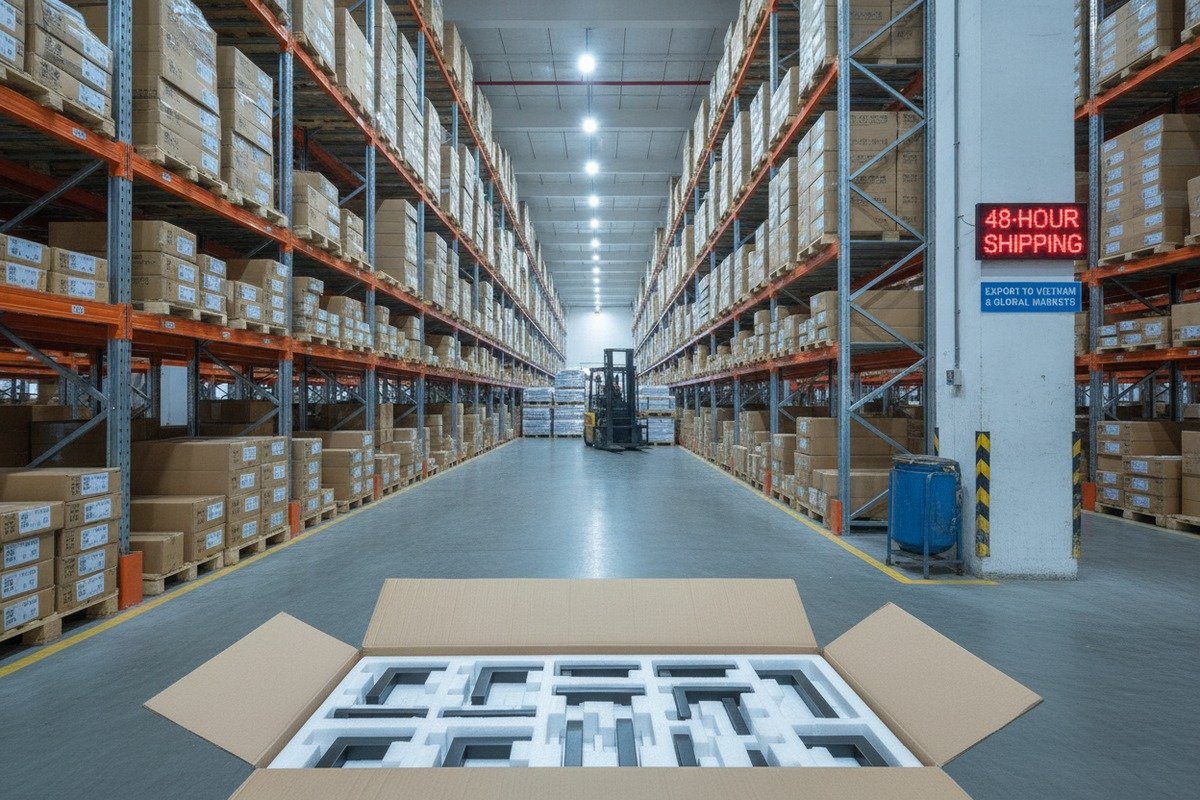
Yes, choosing ready-to-ship stock items can cut your total lead time by 10 to 20 days compared to custom orders. With our 300-ton inventory in Foshan, stock aluminum handles ship within 48 hours of order confirmation, meaning your goods can reach Ho Chi Minh City in as few as 12 to 18 days door-to-door.
How stock items change the timeline
The production stage is the single biggest variable in your total lead time. For a custom order, you may wait 15 to 25 days for manufacturing alone. For stock items, that drops to zero.
Here is a side-by-side comparison:
| Timeline Stage | Stock Items | Custom Items |
|---|---|---|
| Production | 0 days (ships in 48 hours) | 15–25 days |
| Packing & inspection | 1 day | 1–2 days |
| Inland to port (China) | 1–2 days | 1–2 days |
| Export customs | 1 day | 1–2 days |
| Sea transit (FCL, Jiangmen) | 5–7 days | 5–7 days |
| Import customs (Vietnam) | 2–5 days | 2–5 days |
| Inland delivery (Vietnam) | 1–2 days | 1–2 days |
| Total door-to-door | 12–18 days | 27–45 days |
The difference is dramatic. Stock items remove the longest stage from the process entirely.
What stock items look like in practice
Our ready-to-ship collection includes the most popular aluminum handle profiles in the market. Think minimalist recessed pulls with matte finishes in white, charcoal grey, black, champagne gold, and light beige. These are the designs that furniture factories order again and again. We keep them produced and packed, sitting on pallets, ready to load.
When a buyer in Ho Chi Minh City places an order for a popular profile, our team picks, inspects, and dispatches within 48 hours. No waiting for extrusion. No waiting for anodizing. No waiting for packaging. The goods go straight to the port.
When stock makes sense — and when it does not
Stock is perfect for standard orders. If you need classic recessed handles in common lengths and finishes, stock is the fastest and most cost-effective path. But if your furniture line demands a unique cross-section, a special color, or a non-standard length, you will need a custom run. The good news is that our customization turnaround is just 3 to 7 days for most modifications, which is still much faster than the industry average of 15 to 25 days.
A real scenario
One of our regular buyers, a furniture factory owner near Ho Chi Minh City, orders champagne gold recessed handles every month. Because the item is always in stock, his repeat orders arrive in about two weeks. He plans his production schedule around that. No guessing. No delays. That reliability is the main advantage of stocking standard items.
How does the 3-7 day customization process affect my overall shipping schedule to Ho Chi Minh City?
Our production team handles customization requests daily — new lengths, special anodized colors, laser-engraved logos. Each request adds time, but perhaps less than you expect.
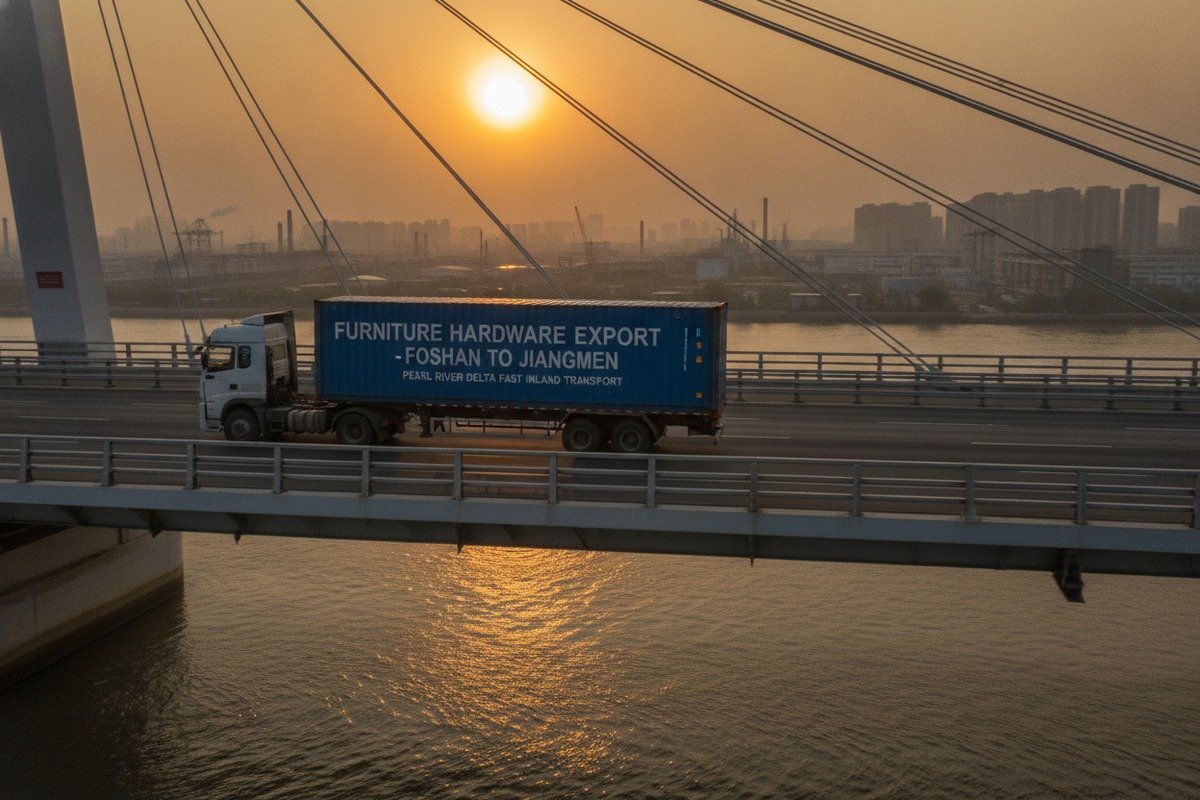
A 3 to 7 day customization process adds a modest but manageable window to your shipping schedule. When combined with sea freight transit of 7 to 14 days and customs clearance of 2 to 5 days, a lightly customized aluminum handle order typically arrives in Ho Chi Minh City within 18 to 30 days door-to-door.
What falls under the 3-7 day customization window
Not all customization is equal. Some changes are quick. Others take longer. Here is what typically fits within our 3 to 7 day turnaround:
- Cutting standard profiles to non-standard lengths
- Applying a specific anodized color from our color library
- Adding laser-engraved logos or batch codes
- Adjusting hole spacing for specific cabinet configurations
- Mixing multiple finishes in one order
Full custom extrusion — where we create an entirely new profile shape from a new mold — falls outside the 3-7 day window. That requires mold development (7–15 days) plus production (15–25 days). Always clarify with your supplier which type of customization you need.
How customization fits into the full timeline
Think of your total lead time as a chain. Each link adds days. Customization is just one link.
For a lightly customized order:
- Customization and production: 3–7 days
- Packing and inspection: 1–2 days
- Inland transport to Jiangmen port: 1 day
- Export customs: 1 day
- Sea freight (FCL, direct feeder): 5–7 days
- Import customs in Vietnam: 2–5 days
- Inland delivery: 1–2 days
- Total: approximately 18–30 days
Compare that to a fully custom order with new tooling, which can push the total to 45–60 days. The difference is significant.
Overlap strategy: save time by running tasks in parallel
Here is something we advise our buyers to do. While your custom handles are in production, start preparing your shipping documents. Get your freight forwarder booked. Have your Form E paperwork ready. Arrange customs clearance in advance.
By overlapping preparation with production, you can shave 2 to 3 days off the total lead time. It is a simple tactic, but it works.
The risk of rushing customization
Speed is important. But not at the expense of quality. We have seen competitors rush a custom anodizing job to save two days, only to ship handles with uneven color. The buyer rejects the shipment at the Vietnam port. Suddenly, a "fast" order becomes a 60-day nightmare with returns and re-production.
Our approach is different. We set the 3 to 7 day window because it allows proper quality control at every stage. The anodizing has time to cure. The laser engraving is inspected. The packing meets export standards. This protects your schedule far more than shaving a day off production.
What steps can I take to ensure my sea freight shipment arrives safely and on time for my furniture production?
Over 18 years of shipping aluminum handles to Vietnam, we have learned that on-time delivery is not luck. It is the result of careful planning at every step.
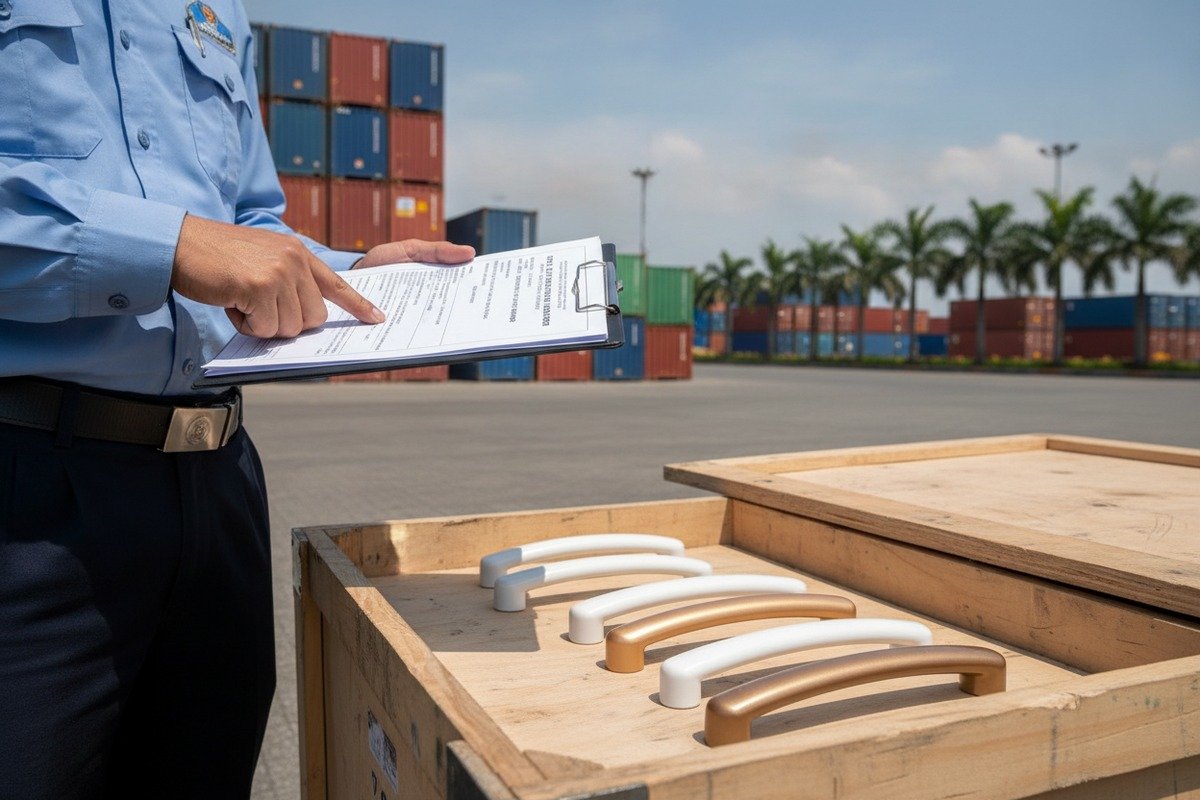
To ensure safe and on-time delivery, verify your supplier's port location, book direct feeder services, request a Form E Certificate of Origin, use moisture-protective packaging, and build a 3-day buffer into your production schedule. These five steps address the most common causes of shipping delays and cargo damage.
Step 1: Confirm the exact departure port
This sounds basic, but many buyers never ask. They assume "Guangdong" means one port. It does not. As we showed earlier, the difference between Jiangmen (5–7 days) and Guangzhou Nansha (10–14 days) is almost a full week.
When you place your order, ask your supplier: "Which port will you ship from?" Then verify that port has direct feeder services to Ho Chi Minh City. This single question can save you days.
Step 2: Choose FCL over LCL when possible
LCL shipments 6 require consolidation at the origin and deconsolidation at the destination. Each process adds 2 to 4 days. If your order volume justifies a full container — even a 20ft container — always choose FCL.
For aluminum handles, a 20ft container can hold a large quantity due to the favorable weight-to-volume ratio. Handles are dense but compact. You may be surprised how little volume you need to fill a container cost-effectively.
Step 3: Demand a Form E Certificate of Origin
Vietnam and China are both members of the ASEAN-China Free Trade Agreement 7. A Form E allows your aluminum handles to enter Vietnam with reduced or zero import duties. But the benefit goes beyond cost savings.
Without a valid Form E, Vietnamese customs may hold your shipment for additional inspection. We have seen clearance delays of 1 to 2 weeks when documentation was missing or incorrectly prepared. We issue Form E certificates for every qualifying shipment. Make sure your supplier does the same.
Step 4: Protect aluminum from sea moisture
Aluminum does not rust like steel, but it can corrode when exposed to prolonged moisture — especially in the humid South China Sea 8 environment. We pack all handles using:
- VCI (Vapor Corrosion Inhibitor) bags 9 for individual handle wraps
- Silica gel desiccant packets inside each carton
- Double-walled corrugated cartons to prevent crushing
- Stretch-wrapped pallets for container stability
If your supplier does not mention moisture protection, ask about it. Damaged goods cause customs inspection delays, rejection, and costly returns.
Step 5: Build a buffer into your production calendar
No matter how well you plan, unexpected delays happen. A typhoon in the South China Sea. A holiday backlog at Cat Lai port. A customs officer requesting one more document.
We advise all our Vietnam-based buyers to add at least 3 days of buffer to their expected delivery date. If you need the handles by June 15, plan as if your deadline is June 12. This simple habit prevents production line shutdowns and missed delivery commitments to your own customers.
The rainy season factor
Between May and November, the South China Sea experiences heavy monsoon weather. Direct feeder vessels — which are smaller than large ocean-going ships — are more affected by rough seas. During this period, expect potential delays of 1 to 3 days on top of normal transit times. Plan your orders accordingly, especially for Q3 and Q4 production runs.
Conclusion
Sea freight from Guangdong to Ho Chi Minh City takes 7 to 14 days port-to-port. Plan for 15 to 50 days total depending on stock availability, customization, and shipping mode. Reach out to us at Al**************@********************************************te.com to get a precise timeline for your next order.
Footnotes
1. Explains the manufacturing process of aluminum alloy handles. ↩︎
2. Explains the definition and importance of total lead time in supply chain management. ↩︎
3. Provides official information and context about Guangdong province, China. ↩︎
4. Defines sea freight transit time and factors influencing it in logistics. ↩︎
5. Explains the concept of Full Container Load (FCL) shipping in ocean freight. ↩︎
6. Describes Less than Container Load (LCL) shipping and its operational aspects. ↩︎
7. Provides an overview of the ASEAN-China Free Trade Agreement. ↩︎
8. Replaced with the Wikipedia page for South China Sea, which is a comprehensive and authoritative source for geographical information. ↩︎
9. Explains the function and benefits of Vapor Corrosion Inhibitor (VCI) bags. ↩︎
10. Explains the purpose and benefits of Form E for preferential tariffs. ↩︎