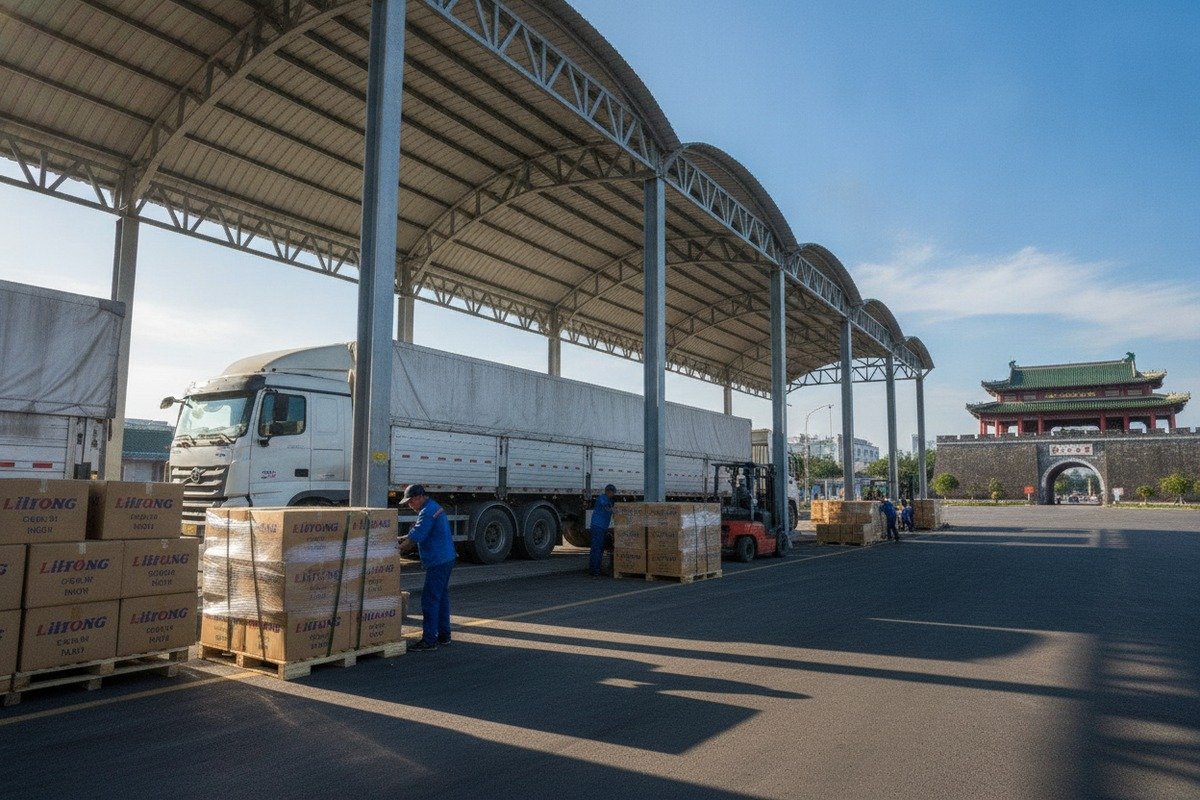
Every quarter, our Foshan warehouse ships hundreds of cartons of aluminum furniture handles 1 to buyers across Northern Vietnam. The question we hear most often is not about the product itself — it is about how to get it there without overpaying, losing time, or running into customs trouble at the border.
The best land transport logistics solution for shipping aluminum furniture handles from China to Northern Vietnam is cross-border trucking via Guangxi’s border gates into the Hanoi–Bac Ninh–Hai Phong corridor, chosen based on your shipment size, delivery urgency, customs documentation readiness, and final destination within Vietnam’s northern industrial belt.
This guide breaks down the key decisions you need to make — from balancing cost against speed, to protecting your cargo, to simplifying border clearance land transport logistics solution 2. Each section gives you a practical framework so you can stop guessing and start shipping with confidence.
How can I balance shipping costs and delivery speed when transporting aluminum handles to Northern Vietnam?
Our production team in Foshan can turn around a custom handle order in three to seven days full truckload (FTL) service 3. But if the logistics leg takes two weeks, that fast turnaround means nothing to the buyer waiting in Bac Ninh.
To balance cost and speed, compare direct full truckload (FTL) service for urgent or large orders against consolidated less-than-truckload (LTL) freight for smaller shipments, and always factor in border clearance time — not just road transit time — as the real variable that determines your total delivery window.
Why Road Transit Time Is Not the Whole Story
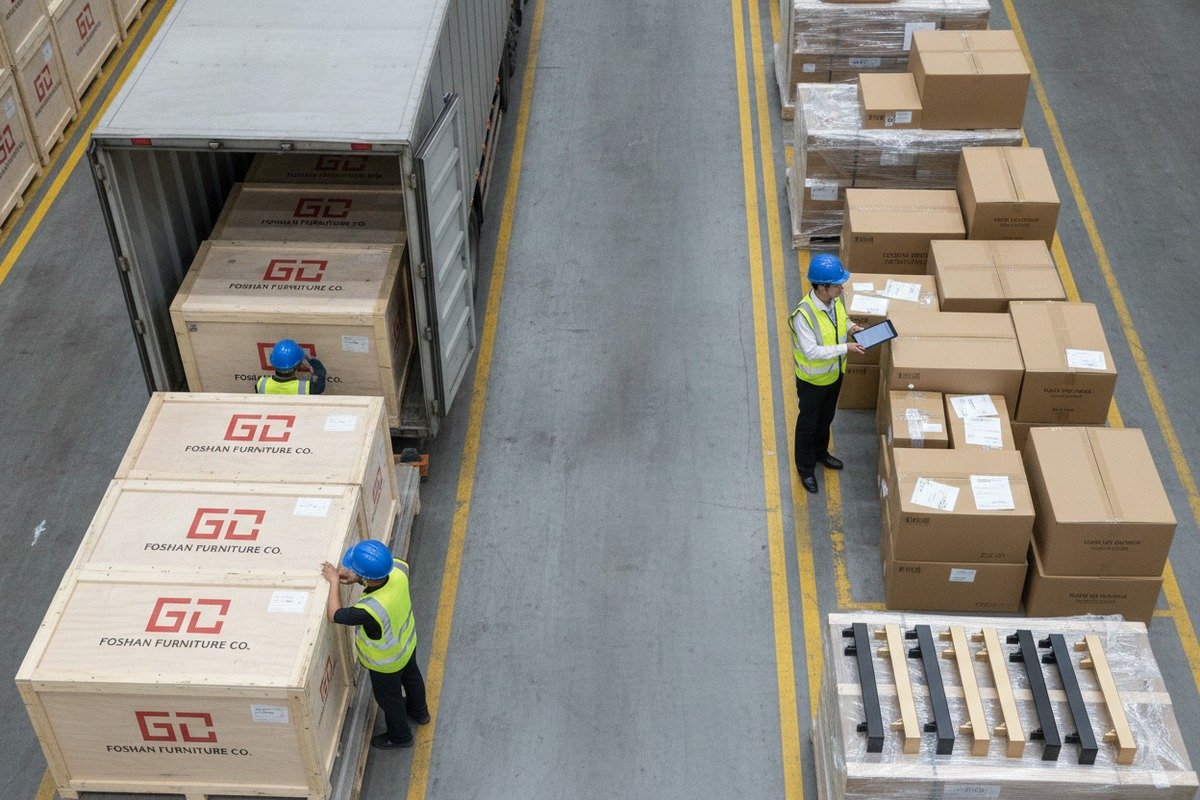
Many buyers look at a map, see that Nanning to Hanoi is roughly 400 kilometers, and assume delivery will take a day less-than-truckload (LTL) freight 4. The highway portion is fast — sometimes as short as 12 hours from Hai Phong to Dongguan in ideal conditions. But real-world delivery typically takes two to three days once you include customs processing and the truck exchange at the border gate PE foam wrapping 5.
The Hanoi–Hai Phong expressway has cut travel time between those two cities from about 2.5 hours to under one hour. That helps with last-mile delivery inside Vietnam. But the bottleneck is almost always at the border itself, not on the road.
FTL vs. LTL: Which Makes Sense for Your Order?
Here is how we advise our clients to think about it:
| Factor | Full Truckload (FTL) | Less-Than-Truckload (LTL) |
|---|---|---|
| Best for | Large orders, 5+ CBM or urgent delivery | Smaller orders, under 3 CBM |
| Cost per unit | Lower — you use the full truck capacity | Higher — you share space but pay a premium rate |
| Speed | Faster — direct route, no consolidation stops | Slower — waits for other cargo to fill the truck |
| Schedule control | You control departure timing | Departure depends on the consolidator's schedule |
| Typical transit | 2–3 days border to door | 4–7 days including consolidation wait |
Benchmark Costs You Should Know
Exact pricing shifts with fuel prices, season, and route. But a rough benchmark for land shipping from South China to Northern Vietnam is about $500 to $1,500 per truckload, depending on distance, cargo volume, and service level. For LTL shipments, you will usually see rates quoted per cubic meter or per kilogram.
The key insight is this: land freight sits in the middle between sea and air. Sea freight is cheaper for large volumes but slower and less direct for inland Northern Vietnam destinations. Air is faster but almost never justified for aluminum furniture handles unless the order is extremely small and extremely urgent. Land freight gives you the best combination of speed, flexibility, and cost for cross-border industrial supply 6 into the Hanoi–Bac Ninh–Bac Giang–Hai Phong belt.
A Simple Rule for Decision-Making
If your buyer needs handles on the production line within a week, choose FTL direct truck service. If the order is smaller and the timeline allows a 7-day window, choose consolidated LTL through a reliable cross-border freight forwarder. Never choose based on freight rate alone — a $200 savings on shipping can cost you $2,000 in production delays if the truck sits at Lang Son for three extra days.
What steps should I take to ensure my bulk aluminum profile orders are protected during cross-border land transit?
When we anodize a batch of champagne gold handles to a flawless matte finish, the last thing we want is for them to arrive scratched or dented after 400 kilometers on a truck. Surface damage is the number one complaint we hear from Vietnam-based furniture factories about their imports.
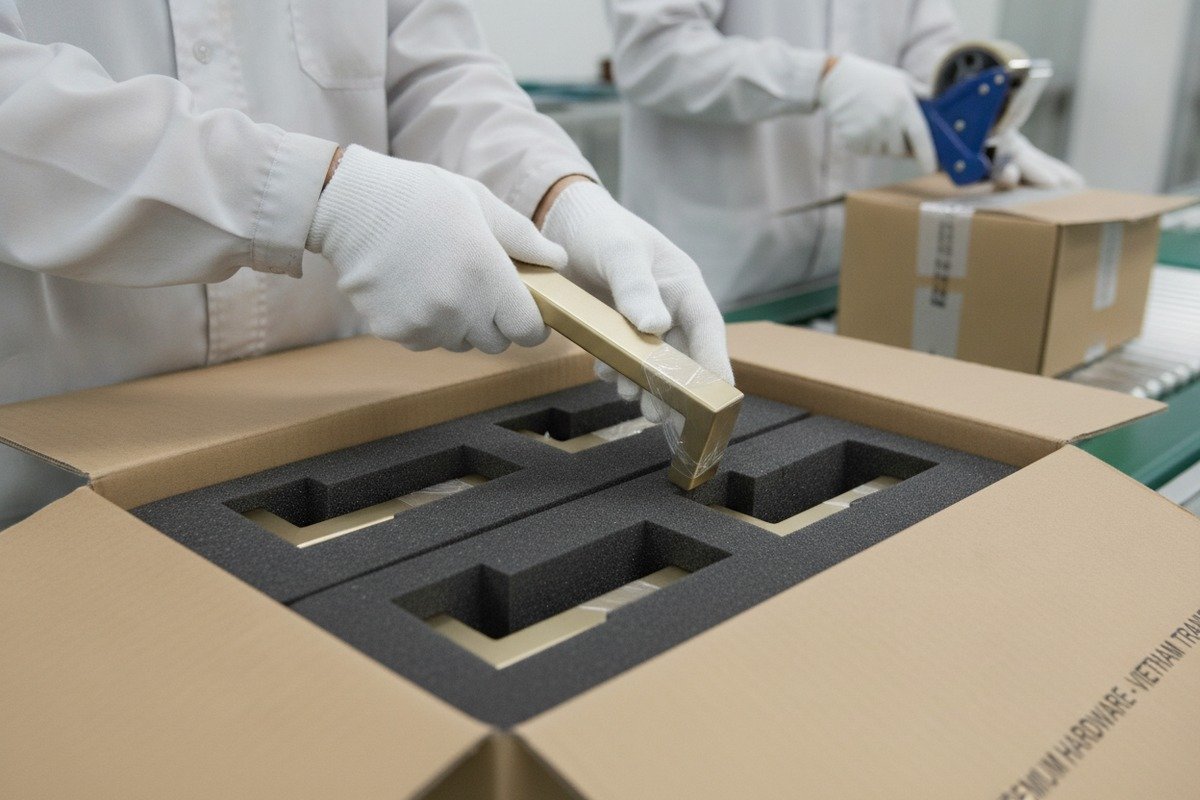
To protect bulk aluminum handle orders during cross-border land transit, use individual PE foam wrapping for each piece, pack handles tightly in reinforced cartons with internal dividers, palletize all cartons for forklift handling, and specify "no double stacking" instructions to your logistics provider for the truck loading plan.
Understanding the Damage Risks
Aluminum furniture handles are small, lightweight, and relatively sturdy. But they have one vulnerability: their surface finish. A recessed cabinet handle with a matte black anodized coating can show even a hairline scratch under showroom lighting. During truck transit, the main risks are:
- Vibration abrasion — handles rubbing against each other inside a loose carton
- Impact damage — cartons shifting during braking or turning
- Compression damage — heavy cargo stacked on top of handle cartons
- Moisture exposure — condensation inside the truck during temperature changes at the border
Our Recommended Packing Protocol
Here is the packing method we use for every shipment leaving our Foshan warehouse:
| Packing Layer | Material | Purpose |
|---|---|---|
| Individual wrap | PE foam sleeve or bubble wrap | Prevents surface-to-surface contact between handles |
| Inner box dividers | Corrugated cardboard inserts | Keeps handles separated and immobile inside the carton |
| Outer carton | Double-wall corrugated box, minimum 5-ply | Resists compression and impact |
| Carton sealing | Reinforced packing tape + corner protectors | Prevents carton opening during transit |
| Pallet level | Stretch-wrapped palletized stack | Stabilizes the entire shipment as a single unit |
| Truck loading | "No stack" labels + load-securing straps | Prevents top-loading by other cargo |
The Border Transfer Problem
One issue specific to China-Vietnam land transport is the truck exchange at the border. In many cases, cargo is unloaded from a Chinese truck and reloaded onto a Vietnamese truck at the border crossing. This extra handling step doubles the risk of drops, mishandling, and compression damage.
To mitigate this, we recommend palletizing your cargo so that it can be moved by forklift as a unit rather than handled carton by carton. If your logistics provider uses a transshipment warehouse at the border, ask them specifically how cargo is transferred and whether forklift handling is available.
Inspection and Documentation
Always include a detailed packing list inside and outside each pallet. When the cargo arrives in Vietnam, your buyer or their warehouse staff should do a spot check against the packing list before signing the delivery receipt. Photograph any damage immediately. This documentation is essential if you need to file a claim with the logistics provider or insurer.
For high-value orders — say, a custom run of architectural-grade champagne gold handles — we also recommend purchasing cargo transit insurance 7. The cost is minimal compared to the replacement value of a damaged shipment.
How do I choose a logistics partner that offers flexible shipping options for my custom furniture handle orders?
We work with buyers who order everything from a single pallet of stock handles to a full container of custom-profiled architectural pulls. No single shipping setup fits every order, which is why the flexibility of your logistics partner matters as much as their price.
Choose a logistics partner with direct experience on China–Vietnam land routes, the ability to handle both FTL and LTL shipments, strong border clearance capability at Guangxi gateways, door-to-door coordination into Northern Vietnam's industrial clusters, and familiarity with HS code classification for aluminum building materials.
What "Flexibility" Really Means in This Context
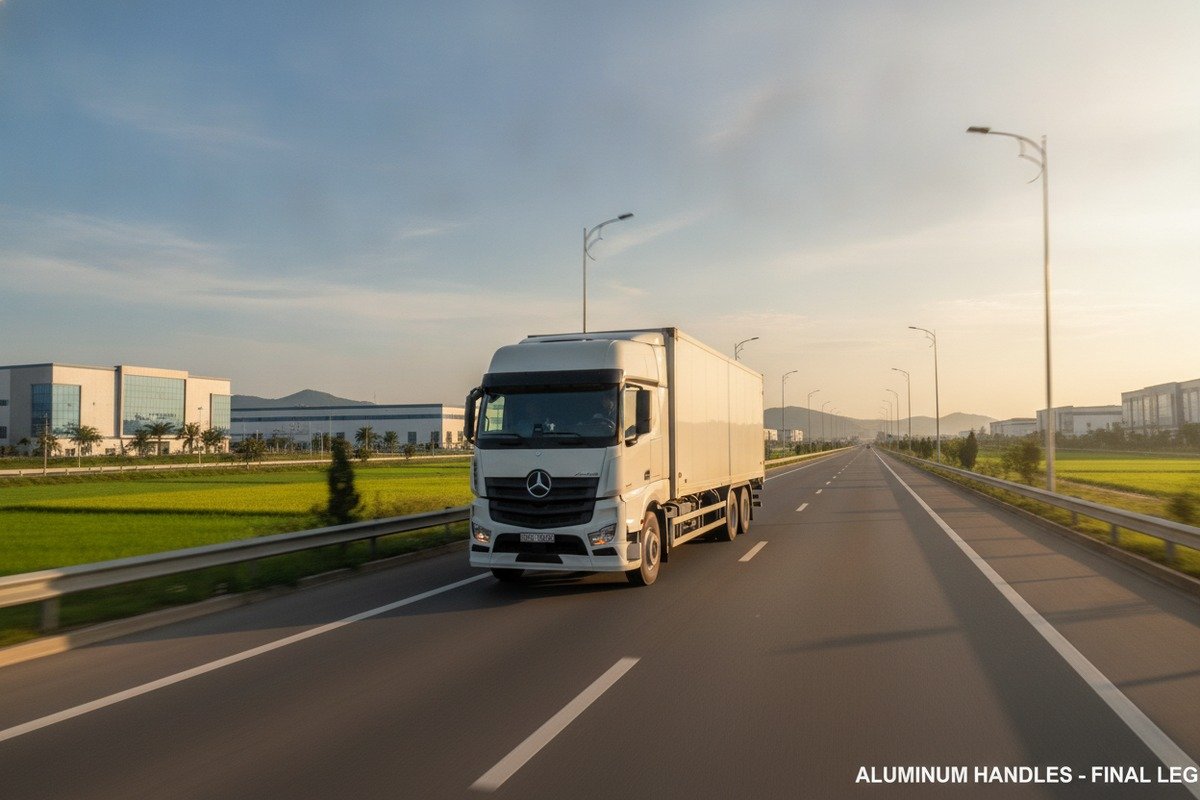
Flexibility is not a vague concept. For aluminum furniture handle imports into Northern Vietnam, it means your logistics provider can handle these specific scenarios:
- Mixed shipment sizes — Some months you order 200 kg of stock handles. Other months you order 2 tons of custom profiles. Your partner should accommodate both without forcing you into a rigid contract.
- Variable delivery points — Your factory is in Bac Giang, but your distributor's warehouse is in Hai Phong. The logistics partner should deliver to either location.
- Fast turnaround on stock items — Our warehouse can ship stock handles within 48 hours. If your logistics partner needs five days just to arrange pickup, that speed advantage is lost.
- Custom order coordination — For OEM orders with a 3–7 day production cycle, the logistics partner should be ready to book transport as soon as production finishes, not two weeks later.
Key Questions to Ask a Potential Logistics Partner
Before you sign with any freight forwarder, ask these questions:
- Do you operate your own trucks on the China–Vietnam route, or do you subcontract?
- Which border gates do you use? (Friendship Pass / Lang Son is most common for the Hanoi corridor.)
- Can you handle both FTL and LTL shipments?
- What is your average clearance time at the border?
- Do you offer door-to-door service from Foshan or Guangzhou to Bac Ninh, Bac Giang, or Hanoi?
- Can you assist with HS code classification 8 and Certificate of Origin documentation?
- Do you provide real-time shipment tracking?
- What is your claims process if cargo is damaged?
Red Flags to Watch For
Be cautious of logistics providers who:
- Only quote the lowest price without explaining what is included
- Cannot name the specific border gate they will use
- Have no local presence or partner network in Northern Vietnam
- Cannot explain the truck exchange or transshipment process at the border
- Require minimum shipment volumes that do not match your order pattern
The 2025 CBTA Corridor Advantage
A recent development worth noting is the 2025 launch of a new international road transport corridor connecting China to Hanoi under the Cross-Border Transport Agreement (CBTA) framework. This corridor has been associated with clearance time reductions of over 50%. Ask your logistics partner whether they are operating on this new corridor, because it could significantly cut your total delivery time.
The right logistics partner is not the one with the cheapest quote. It is the one who can adapt to your order pattern, clear the border efficiently, and deliver to the exact industrial zone your buyer operates in.
What are the best ways for me to simplify customs clearance at the China-Vietnam border for my building material imports?
Over the past 18 years, our team has seen shipments sail through customs in hours and shipments stuck at the border for days. The difference almost always comes down to paperwork preparation — not the cargo itself.
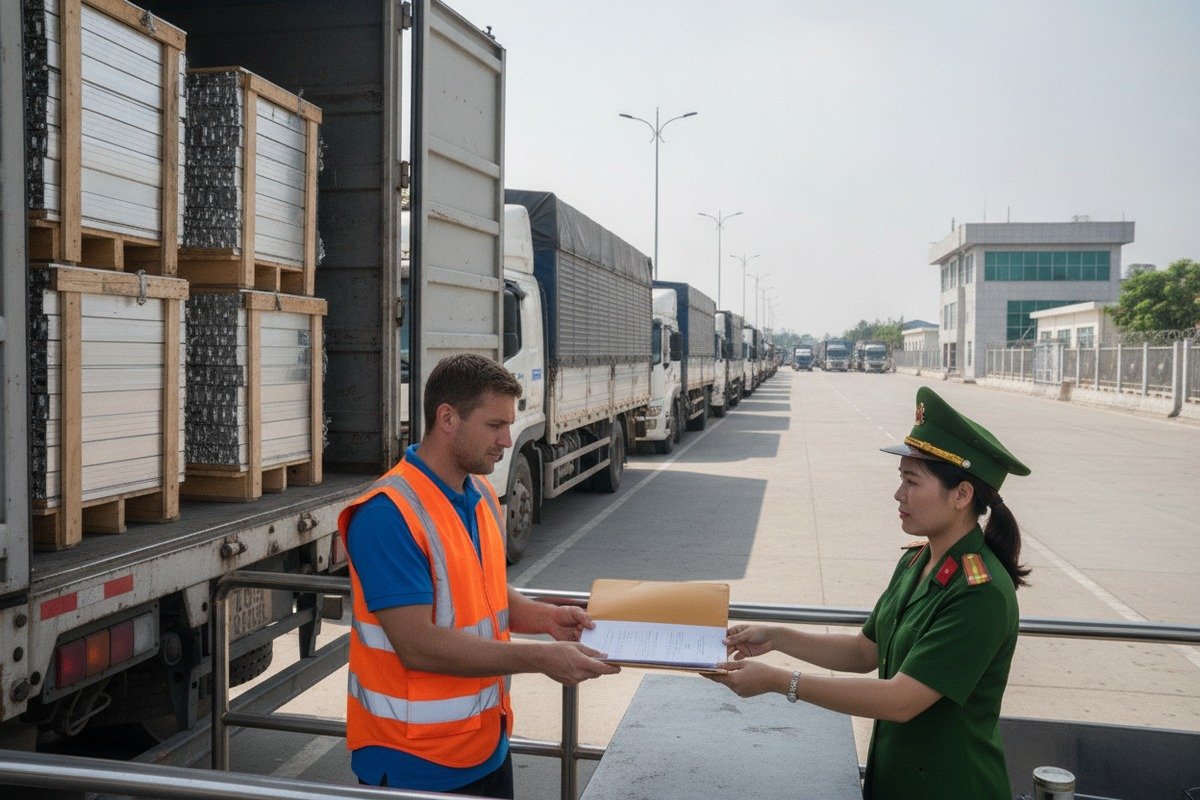
To simplify customs clearance at the China-Vietnam border, prepare accurate commercial invoices with correct HS codes before shipment, obtain a Certificate of Origin to claim ASEAN–China FTA or RCEP tariff preferences, work with a customs broker experienced at Guangxi border gates, and ensure your packing list matches the actual cargo exactly.
The Documents You Need — No Exceptions
Here is a complete checklist of what your customs broker will require:
| Document | Purpose | Who Prepares It |
|---|---|---|
| Commercial Invoice | States value, quantity, terms of sale | Exporter (supplier) |
| Packing List | Describes contents of each carton/pallet | Exporter (supplier) |
| HS Code Classification | Determines tariff rate and import eligibility | Exporter or customs broker |
| Certificate of Origin 9 (CO) | Proves goods qualify for preferential tariff rates | Issued by China's trade authority |
| Customs Declaration | Formal import entry document | Customs broker on importer's behalf |
| Import License | Required only if the product category is restricted | Importer |
| Bill of Lading / Transport Document | Confirms shipment details and carrier | Logistics provider |
Getting the HS Code Right
This is where many importers make costly mistakes. Aluminum furniture handles can fall under several HS code headings depending on the exact product type, material composition, and intended use. A misclassified HS code can trigger:
- Higher-than-necessary import duties
- Customs inspection and delay
- Fines or penalties from Vietnamese customs
- Rejection of your Certificate of Origin
We always recommend that our buyers confirm the HS code with their Vietnamese customs broker before we ship. We provide the technical specifications, material certificates, and product descriptions they need to classify correctly.
Leveraging RCEP and ASEAN–China FTA Preferences
If your aluminum handles are manufactured in China — which ours are, entirely at our Foshan facility — they may qualify for reduced import duties under the Regional Comprehensive Economic Partnership (RCEP) 10 or the China–ASEAN Free Trade Agreement. To claim these preferences, you need a valid Certificate of Origin that proves the goods meet the rules of origin requirements.
This is not automatic. You must apply for the CO before shipment, and the product must genuinely qualify. But the tariff savings can be significant — often the difference between a 5% and 15% duty rate.
Practical Tips to Avoid Border Delays
Here are the most common causes of customs delays we have observed, and how to avoid each one:
- Mismatched quantities — The packing list says 5,000 pieces, but the cartons contain 4,800. Always double-count before sealing.
- Missing CO — The Certificate of Origin was not applied for in time. Start the CO application as soon as the order is confirmed.
- Vague product descriptions — "Aluminum handles" is not enough. Use specific descriptions like "extruded aluminum recessed cabinet pull, 6063-T5 alloy, champagne gold anodized finish, 160 mm length."
- Incomplete importer details — The Vietnamese importer's tax code, company name, and address must match exactly what is registered with Vietnamese customs.
The Border Gate Matters
Not all border gates have the same processing speed. The Friendship Pass (Huu Nghi) in Lang Son is the most commonly used gate for the Hanoi corridor and generally has the most established infrastructure. Mong Cai in Quang Ninh is another option, especially for cargo heading to Hai Phong. Ask your logistics partner which gate they plan to use and what the current average clearance time is.
With the new CBTA corridor launched in 2025, clearance times at some crossings have dropped by over 50%. This is a meaningful improvement for time-sensitive industrial cargo like furniture handles destined for production lines.
Conclusion
Choosing the right land transport solution for aluminum furniture handles from China to Northern Vietnam is a decision about fit — not just freight rates. Match your logistics setup to your shipment size, delivery urgency, border documentation readiness, and your buyer's exact location in Vietnam's northern industrial corridor.
Footnotes
1. Explains properties, applications, and advantages of aluminum handles. ↩︎
2. Details characteristics, types, and advantages of land shipments in logistics. ↩︎
3. Provides a clear definition and explanation of FTL shipping. ↩︎
4. Offers a concise definition and explanation of LTL freight shipping. ↩︎
5. Describes the useful properties of polyethylene foam for packaging. ↩︎
6. Provides a comprehensive overview of supply chain management principles. ↩︎
7. Explains cargo insurance, its coverage, and importance for shipments. ↩︎
8. An authoritative government source explaining Harmonized System (HS) codes and their classification. ↩︎
9. Provides comprehensive guidelines on Certificates of Origin from the International Chamber of Commerce, an authoritative source. ↩︎
10. Provides official information and objectives of the RCEP agreement. ↩︎