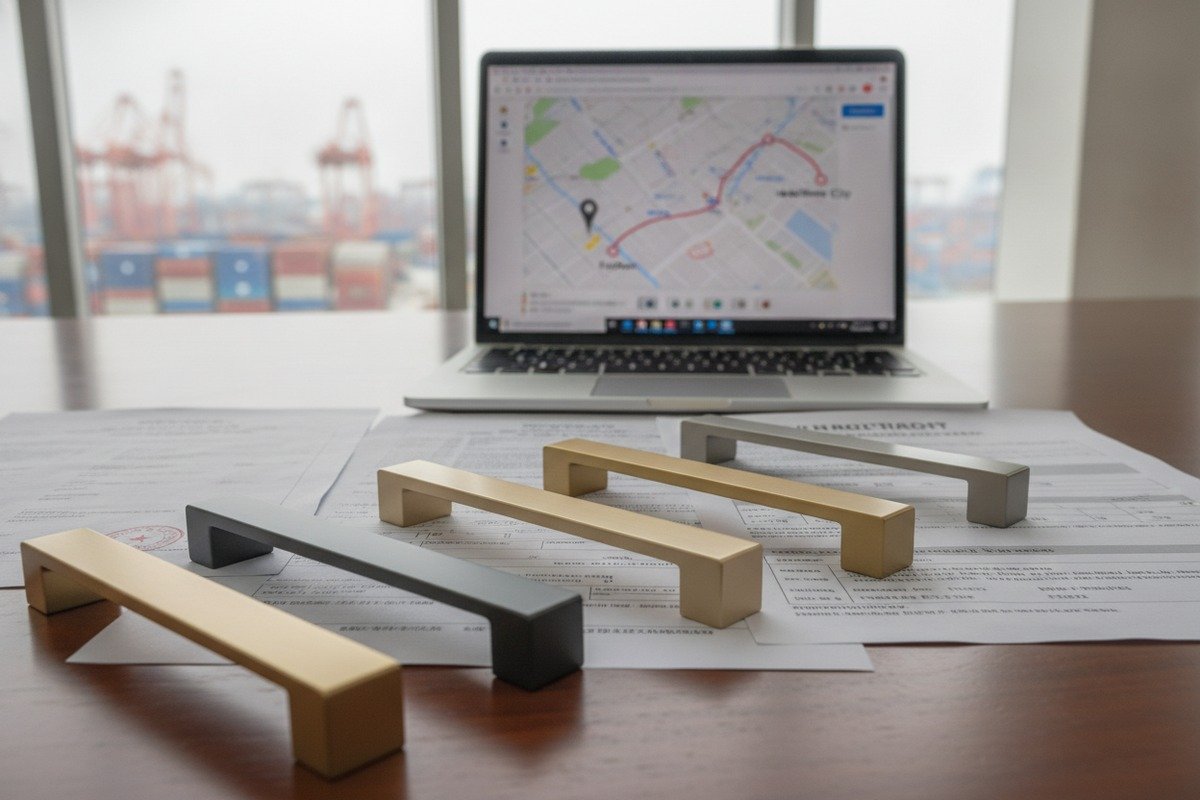
Sourcing aluminum handles along the China-Vietnam corridor can feel simple until a shipment gets held at customs over a wrong HS code or a missing origin certificate import duties 1. HS code classification 2
When sourcing aluminum furniture handles from China for the Vietnamese market, you must navigate HS code classification, import duties, VAT, rules of origin under ACFTA or RCEP, Form E certificates, and potential anti-dumping exposure. Proper documentation and correct product classification are the keys to avoiding costly delays and unexpected charges at Vietnamese customs.
Below, we break down the four most critical trade-policy questions our Vietnamese wholesale partners ask us every month ASEAN-China Free Trade Agreement 3. Each section gives you the exact steps, documents, and risk factors you need to know before placing your next order.
How can I use the ACFTA or RCEP agreements to get zero-tariff treatment on my aluminum handle imports?
Every year, we ship hundreds of tons of aluminum furniture handles to distributors in Ho Chi Minh City and Hanoi. The number-one question they ask is whether they can pay zero duty under a free trade agreement.
Under the ASEAN-China Free Trade Agreement (ACFTA) and the Regional Comprehensive Economic Partnership (RCEP), many aluminum articles — including furniture handles — can qualify for reduced or zero import duty in Vietnam, provided the goods meet strict rules of origin and are accompanied by a valid Form E or RCEP Certificate of Origin.
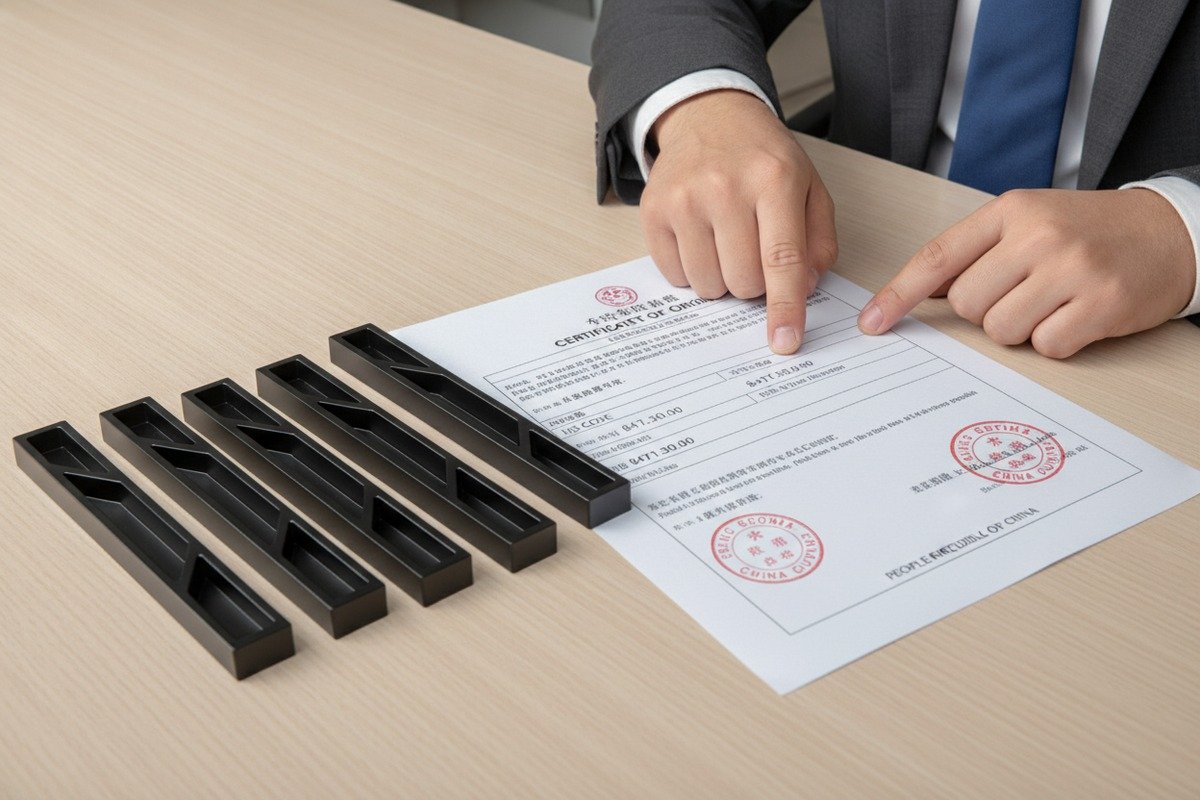
Understanding ACFTA and RCEP at a Glance
ACFTA has been in force since 2010. It covers trade between China and the ten ASEAN member states, including Vietnam. RCEP took effect on January 1, 2022, and includes 15 Asia-Pacific countries. Regional Comprehensive Economic Partnership 4 Both agreements aim to lower tariff barriers, but each has its own origin rules and documentation requirements.
For aluminum furniture handles, the applicable HS codes typically fall under Chapter 76 (articles of aluminum) 5 or Chapter 83 (base metal mountings and fittings for furniture). The exact tariff line determines whether zero duty is available under ACFTA, RCEP, or Vietnam's Most Favored Nation (MFN) schedule.
Which Agreement Offers a Better Rate?
| Factor | ACFTA | RCEP |
|---|---|---|
| Tariff on aluminum articles (general) | Often 0% for qualifying goods | Often 0%–5%, phased reduction |
| Rules of origin 6 threshold | Regional Value Content ≥ 40% or Change in Tariff Classification | Regional Value Content ≥ 40% or Change in Tariff Heading |
| Certificate required | Form E | RCEP Certificate of Origin or self-declaration |
| Cumulation | ASEAN + China content can be cumulated | Content from all 15 RCEP members can be cumulated |
| Ease of use | Well-established, widely understood | Newer, broader cumulation rules |
In our experience exporting to Vietnamese furniture factories, ACFTA is still the most commonly used route because customs brokers in Vietnam are highly familiar with Form E procedures. RCEP is newer, but its broader cumulation rules can help when your handle incorporates materials from multiple RCEP countries.
Key Steps to Claim Preferential Treatment
First, confirm the correct HS code with your Vietnamese customs broker. A furniture handle classified under HS 8302.42 (base metal mountings for furniture) may carry a different preferential rate than one classified under HS 7616.99 (other articles of aluminum). Second, request a Form E or RCEP Certificate of Origin from your Chinese supplier before the goods ship. Third, make sure the invoice value, product description, and HS code on the certificate match the commercial invoice 7 exactly. Any mismatch gives customs a reason to reject preferential treatment and apply the higher MFN rate.
One critical point: the goods must be shipped directly from China to Vietnam. If the shipment is transshipped through a third country — say, through a port in Hong Kong or Singapore — you need a through bill of lading 8 or a non-manipulation certificate to prove the goods were not altered in transit.
When Zero Duty Does Not Apply
Not every aluminum handle qualifies for zero tariff. If your product contains components sourced from a non-ACFTA or non-RCEP country and the regional value content falls below 40%, the preferential rate will not apply. Similarly, if the Form E contains errors or arrives late, Vietnamese customs will assess the standard MFN duty, which can range from 5% to 20% depending on the tariff line.
What specific documents do I need from my Chinese supplier to ensure a smooth customs clearance in Vietnam?
We learned this lesson early: even a perfectly made batch of recessed aluminum pulls can sit in a Vietnamese port for weeks if the paperwork is wrong or incomplete.
To clear aluminum furniture handles through Vietnamese customs smoothly, you need a commercial invoice, packing list, bill of lading or airway bill, Form E or RCEP Certificate of Origin, sales contract, and often a quality inspection report. Each document must show consistent product descriptions, HS codes, and values to avoid delays or duty reassessment.

The Core Document Checklist
Here is the complete list of documents your Chinese supplier and freight forwarder should provide:
| Document | Issued By | Purpose |
|---|---|---|
| Commercial Invoice | Supplier (exporter) | States price, quantity, trade terms (FOB, CIF, etc.) |
| Packing List | Supplier | Details carton count, weight, dimensions, handle specifications |
| Bill of Lading (B/L) or Airway Bill | Shipping line or airline | Proves shipment and direct transport route |
| Form E (ACFTA) or RCEP CO | China's authorized issuing body (e.g., CCPIT) | Claims preferential tariff treatment |
| Sales Contract | Buyer and supplier jointly | Supports declared customs value |
| Quality Inspection Report | Supplier or third-party lab | May be required for certain product categories |
| Insurance Certificate | Insurance company | Required if trade terms include insurance (CIF) |
| Fumigation Certificate | Issued if wooden pallets are used | Compliance with phytosanitary rules |
Why Consistency Across Documents Matters
Vietnamese customs officers cross-check every document. If your commercial invoice says "aluminum cabinet handle, HS 8302.42" but your Form E says "aluminum profile, HS 7604.29," you have a problem. The mismatch can trigger a customs audit, delay clearance by days or weeks, and result in the loss of preferential duty treatment.
When we prepare export documents at our Foshan facility, our documentation team runs a five-point consistency check across all paperwork: product description, HS code, quantity, unit price, and total value. We strongly recommend that every buyer ask their supplier to do the same before shipping.
Special Attention Points for Vietnamese Customs
Vietnam has been digitalizing its customs process through the VNACCS/VCIS system. Electronic declarations are now standard. Your customs broker in Vietnam will need digital copies of all documents uploaded in the correct format. Late or incorrect electronic submissions can cause the system to flag your shipment for manual inspection.
Another practical tip: if your handles have a special finish — like our champagne gold anodized series or matte charcoal options — include that finish description in the packing list and invoice. Vietnamese customs sometimes questions whether an anodized or coated aluminum handle should be classified differently from a raw aluminum handle. Clear descriptions prevent reclassification surprises.
Finally, keep your records for at least five years. Vietnam's customs authority can conduct post-clearance audits, and you must be able to produce the original documentation upon request.
How does the Form E Certificate of Origin impact my total sourcing costs for aluminum furniture profiles?
In our 18 years of exporting aluminum hardware, we have seen buyers save anywhere from 5% to 15% on landed costs simply by handling the Form E correctly — and we have seen others lose those savings by treating the certificate as an afterthought.
A valid Form E Certificate of Origin can reduce or eliminate import duty on aluminum furniture handles entering Vietnam under ACFTA, directly lowering your total landed cost by 5%–15% compared to the standard MFN duty rate. Without it, you pay the full tariff and lose the cost advantage that makes Chinese-sourced handles price-competitive.
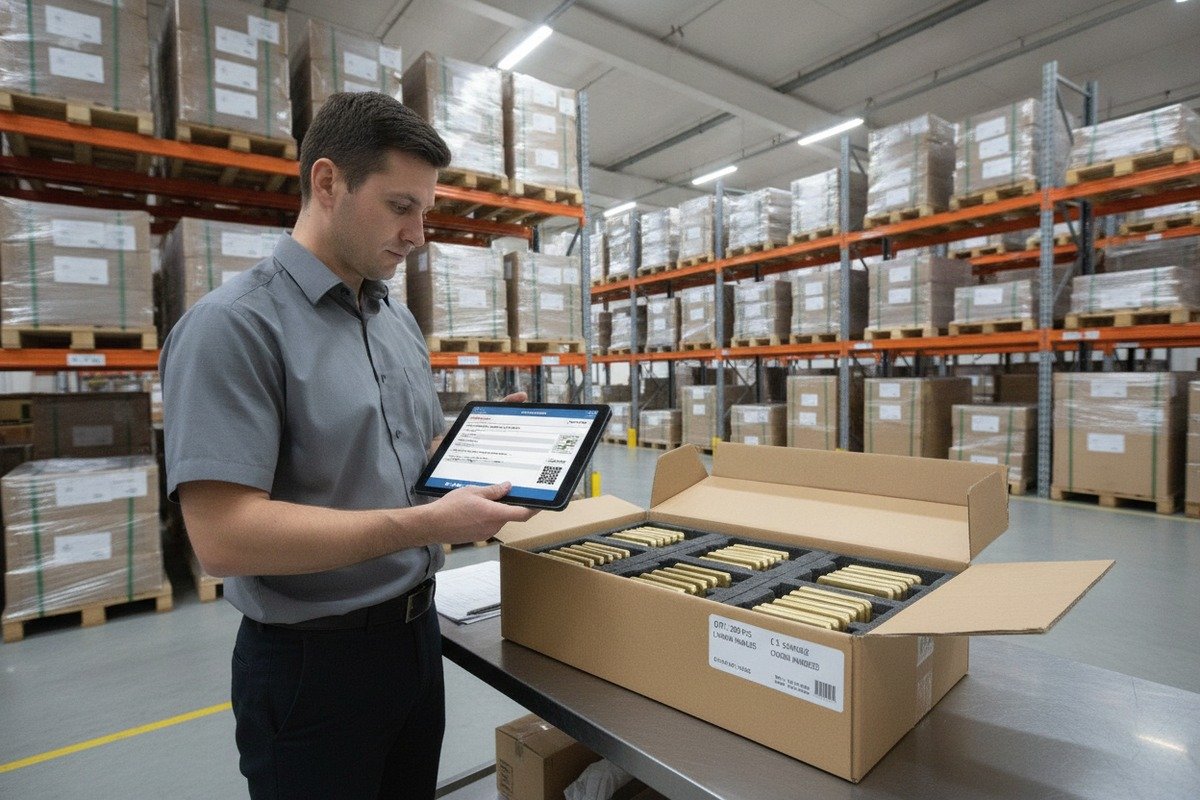
How the Form E Affects Your Cost Breakdown
Let us walk through a simplified cost comparison. Assume you are importing a container of aluminum recessed handles with a CIF value of $10,000.
| Cost Component | With Valid Form E (0% Duty) | Without Form E (MFN ~12% Duty) |
|---|---|---|
| CIF Value | $10,000 | $10,000 |
| Import Duty | $0 | $1,200 |
| VAT (10% on CIF + Duty) | $1,000 | $1,120 |
| Customs Broker Fee | $80 | $80 |
| Total Landed Cost | $11,080 | $12,400 |
| Cost Savings with Form E | $1,320 | — |
The $1,320 difference on a single $10,000 shipment may seem modest, but if you import monthly, that adds up to nearly $16,000 per year in savings. For a wholesaler operating on thin margins, that is the difference between a profitable year and a break-even year.
How to Get a Form E From Your Chinese Supplier
The Form E is issued by authorized bodies in China, most commonly the China Council for the Promotion of International Trade (CCPIT) or local branches of the General Administration of Customs. Your supplier applies for it before or at the time of shipment.
Here is what you should tell your supplier:
- Request the Form E at the time of order confirmation, not after shipping.
- Provide your exact HS code as classified by Vietnamese customs so the code on the Form E matches.
- Ask for a draft of the Form E before it is finalized so you can check for errors.
- Ensure the Form E is issued no later than three days after the shipment date.
Common Mistakes That Void a Form E
The most frequent mistake we see is a mismatch in the product description. For example, our champagne gold anodized recessed handle might be described as "aluminum furniture handle" on the invoice but "aluminum profile" on the Form E. That inconsistency gives Vietnamese customs grounds to reject the certificate.
Other common errors include listing the wrong port of discharge, showing an incorrect FOB value, or failing to include a signature from the authorized signatory. Each of these can void the Form E entirely, meaning you pay the full MFN rate.
The Hidden Cost of Not Having a Form E
Beyond the direct duty cost, a rejected or missing Form E can create indirect costs. Your shipment may be held for inspection. Storage fees at the port accumulate daily. Your production line or retail shelves sit empty. And if Vietnamese customs decides to reassess the customs value upward, the duty bill can climb even higher.
The bottom line: treat the Form E as a non-negotiable part of every purchase order. At our facility, we include Form E issuance as a standard service for all Vietnamese customers, because we know how much it matters to their bottom line.
Are there any anti-dumping duties or trade barriers I should be worried about when importing aluminum hardware from China?
When our sales team first started fielding questions about anti-dumping duties 9 from Vietnamese buyers, the concern was always the same: "Will my handles get hit with extra taxes?"
While Vietnam has not imposed specific anti-dumping duties on aluminum furniture handles as of now, it has applied anti-dumping measures on certain aluminum extrusion products from China. Buyers must also watch for anti-circumvention investigations, especially if goods are routed through Vietnam to third markets like the United States, where metal products from China face aggressive trade enforcement.

The Anti-Dumping Landscape for Aluminum Products
Vietnam's Ministry of Industry and Trade (MOIT) has the authority to initiate anti-dumping investigations on any imported product if domestic producers file a complaint showing material injury. Vietnam has already applied AD duties on certain Chinese aluminum extrusions, which signals that the precedent exists. If Vietnamese domestic producers of aluminum hardware grow and feel threatened by Chinese imports, a future investigation is not impossible.
For now, generic aluminum furniture handles — especially niche architectural pulls like our matte-finish recessed series — have not been targeted. But the situation can change quickly. Monitoring MOIT announcements is essential.
The Bigger Risk: Anti-Circumvention
The more immediate concern for many of our buyers is not Vietnamese AD duties but third-country enforcement. Here is why this matters.
Many furniture manufacturers in Vietnam source aluminum handles and components from China, assemble finished furniture, and export to the United States or Europe. If the assembly process in Vietnam is considered "minimal" — for example, just screwing handles onto a cabinet door — then U.S. or EU customs authorities may treat the finished product as still being of Chinese origin. This can trigger anti-circumvention duties on top of existing anti-dumping orders.
The U.S. has already investigated and penalized cases involving metal tool chests, cabinets, and other furniture-related goods where Chinese-origin components were assembled in Vietnam with little added value.
What Counts as Substantial Transformation?
The key legal concept is "substantial transformation." A Chinese-made aluminum handle does not become Vietnamese-origin just because it is shipped to Vietnam, repackaged, or lightly assembled. To change the country of origin, the product must undergo a manufacturing process in Vietnam that fundamentally changes its character, name, or use.
For aluminum handles specifically, simply anodizing a handle in Vietnam that was extruded and machined in China may not meet the threshold. However, if Vietnam-based production includes extrusion, CNC machining, surface treatment, and quality testing — a full production cycle — the origin change is more defensible.
Practical Steps to Reduce Your Anti-Dumping Risk
- Know your end market. If you are importing handles for domestic sale in Vietnam, AD risk is currently low. If you are exporting finished furniture to the U.S. or EU, scrutinize your supply chain.
- Document everything. Keep manufacturing records, material sourcing invoices, and process flow documentation to prove where real production happens.
- Monitor trade investigations. Subscribe to MOIT trade remedy notices and U.S. International Trade Commission announcements.
- Work with a trade compliance advisor. For high-volume shipments or complex supply chains, professional guidance pays for itself.
Currency and Other Hidden Barriers
Beyond tariffs and AD duties, do not overlook currency volatility. The Chinese Yuan (CNY), Vietnamese Dong (VND), and U.S. Dollar (USD) fluctuate against each other. A 3% swing in the CNY/VND rate can wipe out tariff savings. Some of our long-term partners hedge currency exposure by locking in exchange rates with their banks at the time of order placement.
Also consider ESG compliance. European and increasingly Southeast Asian buyers want to see sustainability documentation. While this is not a tariff barrier, it is a market access barrier. Buyers who cannot show responsible sourcing may lose contracts regardless of price.
Conclusion
Sourcing aluminum furniture handles from China into Vietnam is a well-established trade route, but it demands careful attention to HS codes, origin documentation, Form E certificates 10, and anti-dumping awareness. Get these right, and your landed costs stay predictable. Get them wrong, and unexpected duties and delays can erode your margins overnight. If you need a supplier who understands this corridor inside and out, reach out to our team at LiliTONG — we handle the compliance details so you can focus on growing your business.
Footnotes
1. Provides an overview of Vietnam’s import duties, VAT, and other taxes on imported goods. ↩︎
2. Explains the global Harmonized System (HS) for classifying traded products, crucial for customs. ↩︎
3. Official overview of the ASEAN-China Free Trade Agreement (ACFTA) and its objectives. ↩︎
4. Provides an official summary of the RCEP agreement, its members, and objectives. ↩︎
5. Details the Harmonized System Chapter 76, covering aluminum and its various articles. ↩︎
6. Defines rules of origin, their purpose in international trade, and impact on preferential tariffs. ↩︎
7. Replaced with an authoritative source from the U.S. International Trade Administration (.gov) explaining commercial invoices. ↩︎
8. Explains the bill of lading as a legal document issued by a carrier, detailing shipment and ownership. ↩︎
9. Defines anti-dumping duties and their role as a trade remedy under WTO agreements. ↩︎
10. Explains Form E as a preferential certificate of origin under ACFTA for reduced tariffs. ↩︎