Every year, our team ships hundreds of tons of aluminum handles into Southeast Asia, and Vietnam consistently punishes weak finishes faster than any other market we serve.
When sourcing aluminum furniture handles for the Vietnamese market, prioritize corrosion-resistant alloys like 6063-T5 or marine-grade 5052, paired with anodized or high-quality powder-coated surface treatments. These combinations deliver the best balance of durability, aesthetics, and compliance with Vietnam’s humid, salt-exposed, and increasingly green-building-conscious environment.
This guide breaks down exactly which alloys, finishes, and quality checks matter most — and why the right finish stack often matters more than the base metal alone marine-grade 5052 1. Let’s walk through it section by section.
How do I choose the right aluminum alloy grade to ensure my furniture handles last in Vietnam's humid environment?
We learned this lesson early when a batch of handles we shipped to a Ho Chi Minh City distributor started showing pitting within six months — the alloy was fine for dry climates, but Vietnam's humidity exposed its limits fast.
Choose aluminum alloys with strong corrosion resistance and good formability, such as 6063-T5 for standard residential handles or 5052/5083 for coastal and high-moisture applications. These grades resist tropical humidity, salt air, and frequent cleaning without sacrificing machinability or surface finish quality.
Why Vietnam Is a Harsher Test Than Most Markets
Vietnam's climate creates conditions that accelerate aluminum degradation. Average relative humidity 2 in southern Vietnam sits above 80% for much of the year. Coastal cities like Da Nang and Nha Trang add salt air into the mix. And Vietnamese kitchens see frequent cleaning with water, sometimes with acidic or alkaline agents. All of this means that an aluminum handle performing well in a dry warehouse showroom may fail quickly once installed in a real Vietnamese kitchen or bathroom.
The Vietnamese kitchen furniture market is projected to grow from USD 339.64 million in 2026 to USD 401.30 million by 2031, with metal as the fastest-growing material segment at a 4.17% CAGR. This growth is being driven precisely by the demand for hygiene, corrosion resistance 3, and longer service life. Aluminum handles are at the center of that shift.
Which Alloy Grade Fits Which Application?
Not every project needs the same grade. Here is a practical breakdown based on what we recommend to our Vietnamese buyers:
| Alloy Grade | Corrosion Resistance | Formability | Best Use Case | Relative Cost |
|---|---|---|---|---|
| 6063-T5 4 | Good | Excellent | Standard residential cabinet handles, wardrobe pulls | Low–Medium |
| 6061-T6 | Good | Good | Heavy-duty drawer pulls, commercial furniture | Medium |
| 5052-H32 | Very High | Good | Coastal projects, humid kitchens, hospitality | Medium–High |
| 5083 | Excellent | Moderate | Marine-adjacent, outdoor, extreme salt exposure | High |
| 1050/1060 | Low | Excellent | Decorative only, dry environments | Low |
Our production line primarily works with 6063-T5 for the majority of Vietnamese orders. It extrudes cleanly, takes anodizing well, and holds up in standard humid conditions. But when a furniture factory in Da Nang or a hospitality project in Phu Quoc comes calling, we always push them toward 5052 or 5083. The upfront cost is higher, but the replacement cost of failed handles is far worse.
The Alloy Is Only Half the Story
One critical point that many buyers overlook: the alloy grade sets the floor for performance, but the surface treatment determines the ceiling. A 6063-T5 handle with a properly pretreated and anodized finish will outperform a 5052 handle with a cheap paint job in almost every real-world scenario. This is why our engineering team always discusses alloy and finish together as a system, not as separate decisions.
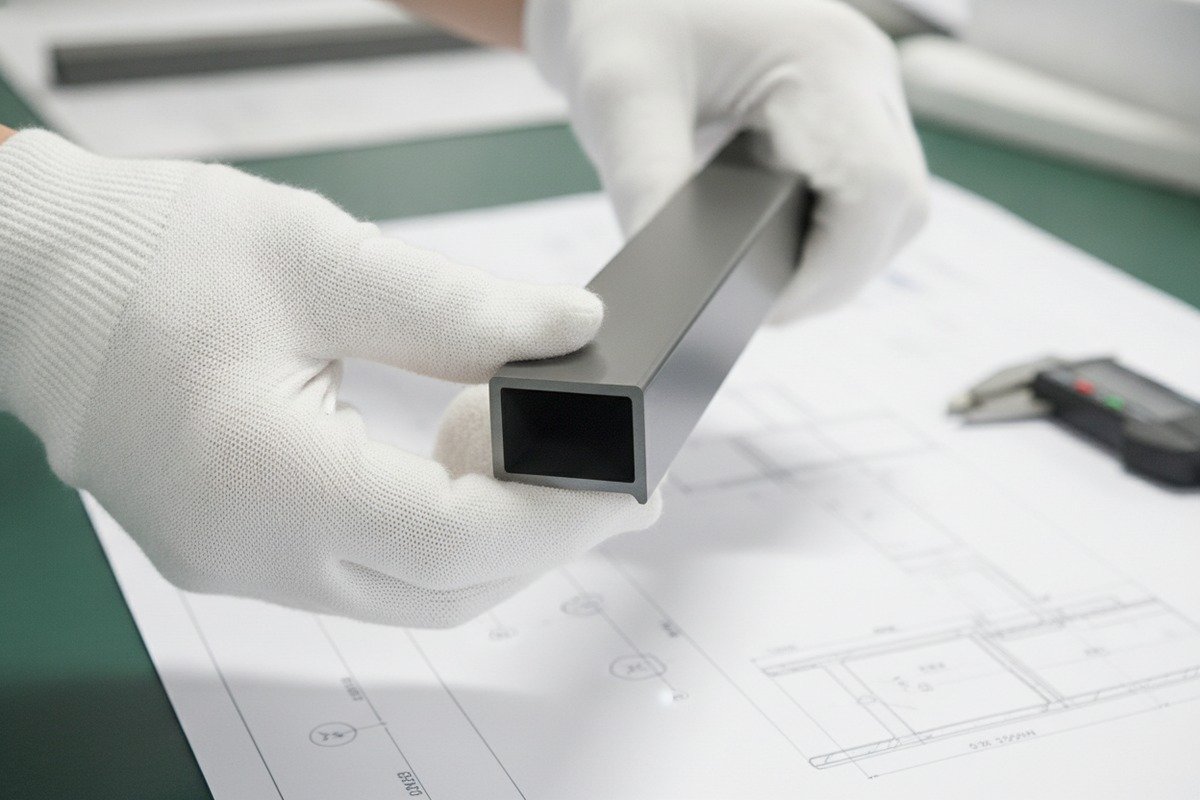
When we calibrate our extrusion dies for a new handle profile, the alloy choice also affects dimensional stability, surface smoothness, and how well the handle accepts downstream finishing. Choosing the wrong alloy for a specific finish process creates problems that show up months later — micro-cracking in anodized layers, poor powder adhesion, or uneven color across a batch.
Don't Overlook Temper Designation
The "T5" or "H32" after the alloy number matters. Temper Designation 5 T5 means the aluminum was artificially aged after extrusion, giving it a good balance of strength and workability. T6 means it was solution heat-treated and then aged, making it harder but slightly less forgiving in post-processing. For furniture handles, T5 is usually the sweet spot. It machines cleanly, bends without cracking for curved profiles, and accepts surface treatments uniformly.
Which surface finishes should I prioritize to meet the aesthetic demands of my high-end Vietnamese clients?
When our sales team visits furniture fairs in Vietnam, the first thing buyers touch is the handle surface — and that split-second tactile impression often decides whether they place an order or move on.
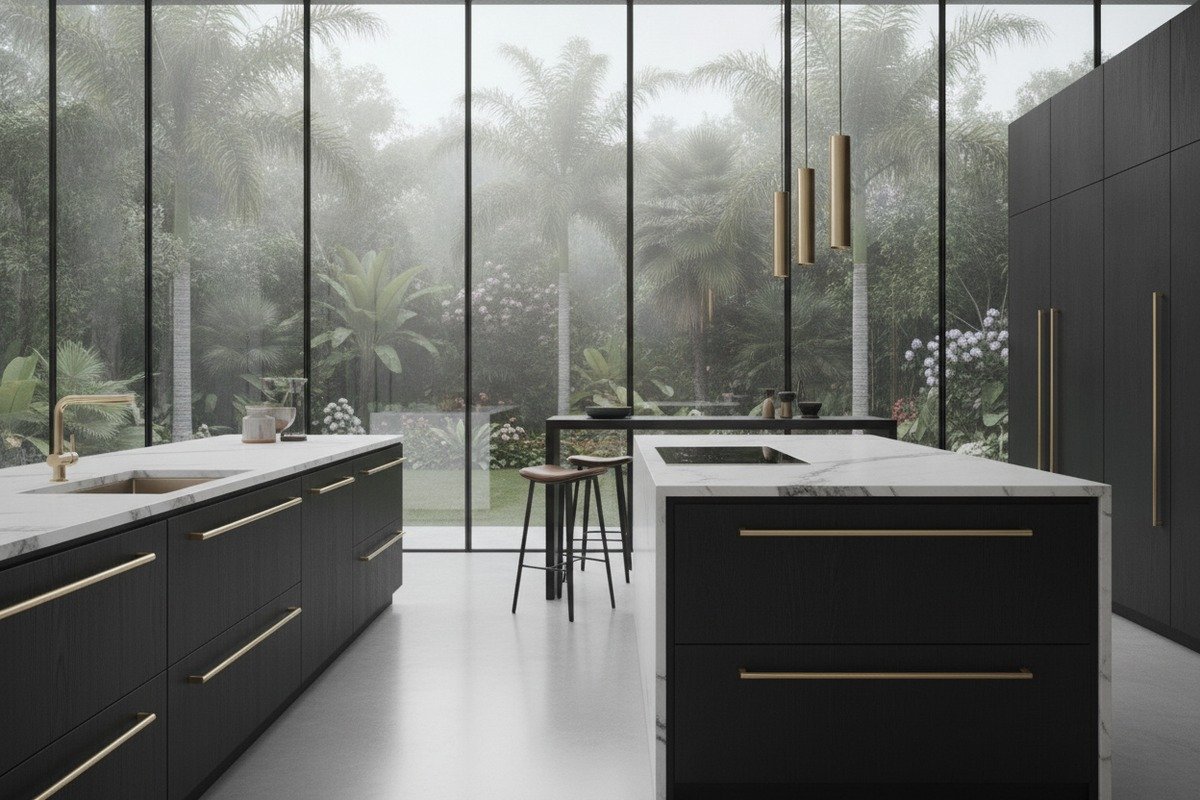
For high-end Vietnamese clients, prioritize anodized finishes for premium durability and color depth, followed by high-quality powder coating for design flexibility. Satin and brushed textures outperform mirror polish in real-world use, while champagne gold, matte black, and light bronze remain the most requested tones across luxury residential and hospitality projects.
Understanding What Vietnamese Buyers Actually Want
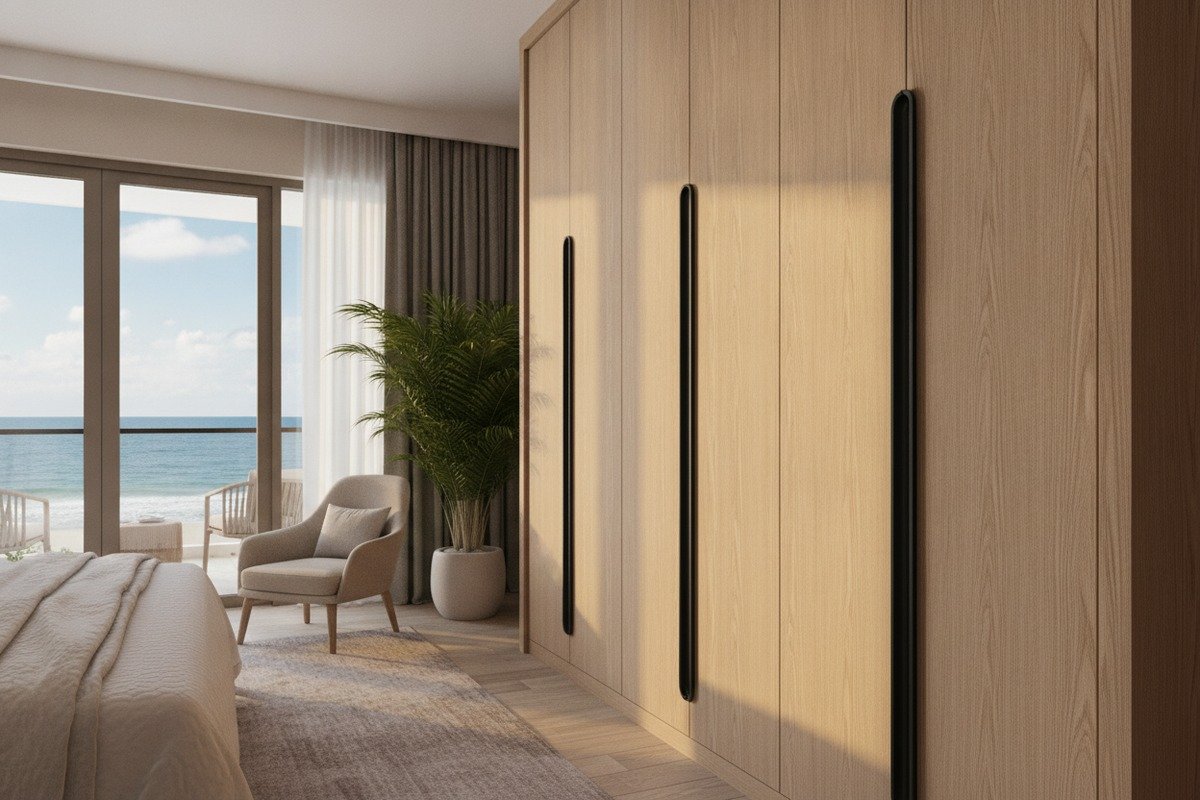
The Vietnamese furniture market is evolving fast. Modern, minimalist design is now dominant in urban centers like Hanoi and Ho Chi Minh City. High-end clients want handles that look integrated into the furniture — low-profile recessed pulls, slim architectural bars, and clean geometric forms. The finish must complement this minimalism. That means smooth matte textures, subtle metallic warmth, and zero visible defects.
Furniture hardware may account for only 5%–8% of total furniture cost, yet it has a disproportionately large impact on perceived quality. A beautiful cabinet with a cheap-looking handle instantly feels downmarket. Our experience confirms this: Vietnamese buyers in the mid-to-high segment are willing to pay more for a finish that feels "right" under the hand.
Finish-by-Finish Comparison
Here is a practical comparison of the most common finish types we produce and how they perform against Vietnamese market demands:
| Finish Type | Aesthetic Quality | Durability in Humidity | Fingerprint Resistance | Color Range | Best For |
|---|---|---|---|---|---|
| Anodized (matte) | Excellent | Excellent | Good | Moderate (natural, champagne, bronze, black) | Premium residential, hospitality |
| Anodized (satin/brushed) | Excellent | Excellent | Excellent | Moderate | Kitchen cabinets, wardrobes |
| Powder coated (matte) | Very Good | Very Good | Very Good | Wide (any RAL color) | Design-driven projects, modern interiors |
| Powder coated (textured) | Good | Very Good | Excellent | Wide | Commercial, high-traffic |
| Mirror polished | Very High visual impact | Moderate | Poor | Limited (silver, chrome look) | Showrooms, low-touch display |
| Chrome plated | High visual impact | Variable | Poor | Limited | Accent pieces, dry environments |
| Painted (spray) | Good | Low–Moderate | Moderate | Very Wide | Budget projects |
Why Anodizing Wins for Premium Segments
Anodizing creates a hard oxide layer that is part of the metal itself, not just sitting on top. This means it won't peel, chip, or flake the way paint or thin plating can. For our champagne gold and light bronze recessed handles — the ones with the deep geometric channel for finger grip — anodizing gives a depth of color that paint simply cannot replicate. The surface feels warm and substantial. It resists scratches from daily use. And it holds its color even after years of exposure to humid air and cleaning agents.
We produce anodized handles in thicknesses typically ranging from 10 to 25 microns. For standard residential use, 15 microns is sufficient. For hospitality or coastal installations, we recommend going to 20–25 microns. The thicker the oxide layer, the better it resists salt and moisture.
When Powder Coating Makes More Sense
Powder coating 6 is the right choice when your client wants a specific color that anodizing cannot achieve. Matte black, pure white, custom RAL tones — these are powder coating territory. RAL colors 7 Our powder line can match virtually any color swatch a furniture factory sends us. The finish is tough, UV-resistant, and easy to clean.
The key is pretreatment. A powder-coated handle is only as good as the surface preparation underneath. We use a multi-stage chemical pretreatment process — degreasing, chromate-free conversion coating 8, and thorough drying — before any powder is applied. This ensures adhesion and long-term performance. Buyers should always ask their supplier what pretreatment steps are used. If a supplier cannot answer this question clearly, that is a red flag.
Satin and Brushed Over Mirror Polish
Mirror-polished handles look stunning in a catalog photo. But in a real Vietnamese kitchen, they show every fingerprint, every water mark, and every micro-scratch within weeks. Satin and brushed finishes are far more forgiving. They hide minor wear, they feel good under the hand, and they photograph nearly as well in a modern interior. For mainstream kitchen and wardrobe use, this is what we recommend.
Can I customize the surface treatments of my aluminum handles to match the specific designs of my furniture factory?
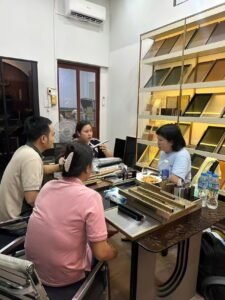
One of the most common questions we hear from Vietnamese furniture factory owners is whether they can get a handle that matches their cabinet color exactly — and the answer is almost always yes, but with important caveats.
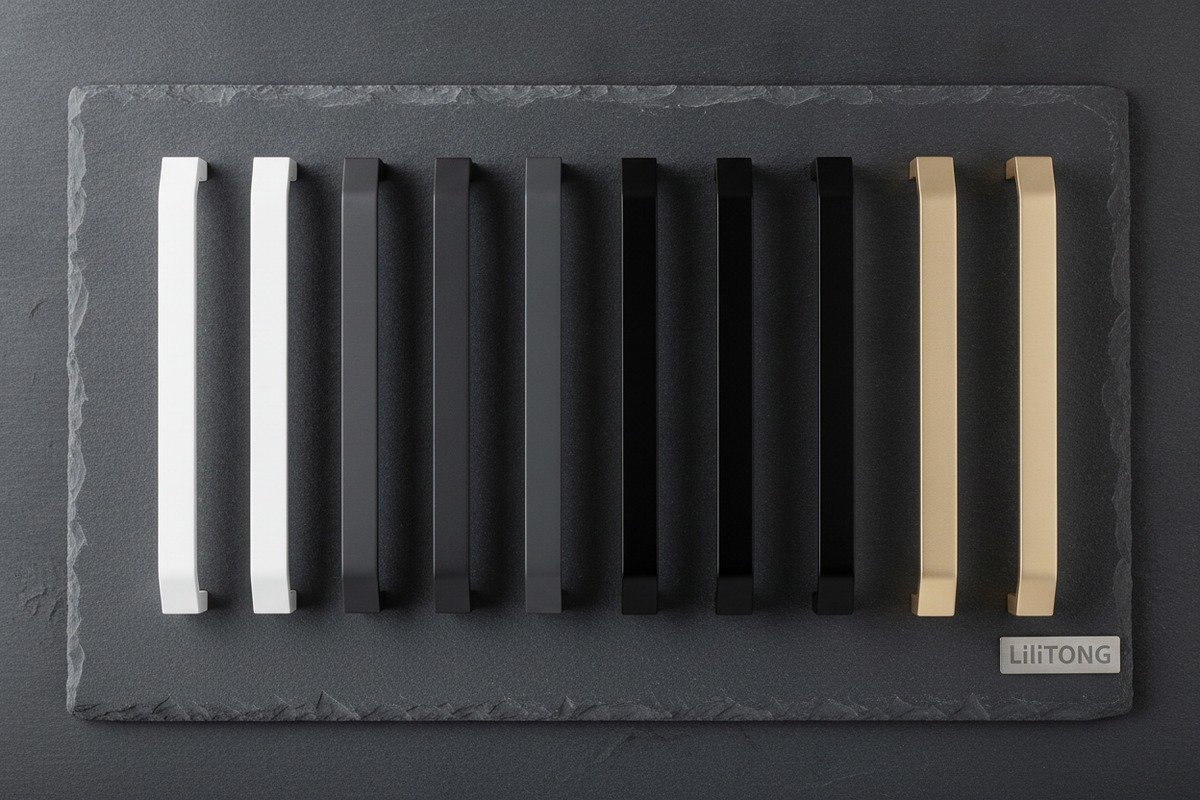
Yes, most reputable aluminum handle suppliers offer full customization of surface treatments, including custom colors, textures, and finish types. With OEM/ODM services, you can specify exact RAL colors, unique brushed or textured patterns, and even combine treatments like anodizing plus lacquer to achieve a precise match with your furniture line's design language.
What Customization Actually Means in Practice
Customization is not just about picking a color from a catalog. When a furniture factory sends us a design brief, the conversation covers several layers: base alloy selection, surface texture (smooth, brushed, sandblasted, textured), primary finish type (anodized, powder coated, painted, plated), secondary treatments (clear lacquer topcoat, anti-fingerprint coating, antimicrobial additive), and color matching to a physical sample or RAL/Pantone reference.
Our facility in Foshan handles all of these steps in-house. This matters because when the extrusion, machining, and finishing all happen under one roof, the feedback loop is tight. If a color run comes out slightly off, we catch it before the handles leave the factory — not after they arrive in Vietnam.
The Customization Decision Matrix
Here is how we help buyers think through their customization options:
| Customization Need | Recommended Approach | Lead Time Impact | MOQ Consideration |
|---|---|---|---|
| Exact RAL color match | Powder coating with color-matched powder | +1–2 days for powder procurement | Low — standard MOQ applies |
| Unique metallic tone (e.g., rose gold, gunmetal) | Anodizing with dye matching or PVD | +3–5 days for dye tuning | Moderate — minimum batch for anodizing tank |
| Wood-grain or stone-grain effect | Heat-transfer printing over powder coat | +2–3 days | Moderate — film sourcing required |
| Anti-fingerprint matte | Clear nano-coating over anodized or powder base | +1 day | Low |
| Antimicrobial surface | Silver-ion additive in powder coat or specialized anodize | +3–5 days | Higher — specialized materials needed |
| Dual-tone or two-color | Masking + two-stage finishing | +3–5 days | Higher — labor-intensive |
Realistic Expectations for Turnaround
Our standard turnaround for custom-finished handles is 3 to 7 days, depending on the complexity of the finish. Stock items in our standard finishes — matte black, champagne gold, satin chrome, light bronze — can ship within 48 hours from our 300-ton ready inventory. For fully custom projects, we typically ask for a confirmed sample approval before starting the production run. This one step eliminates the most common pain point we hear about from buyers: receiving a bulk shipment that doesn't match the approved sample.
Combining Treatments for Maximum Effect
Some of our most popular Vietnamese orders combine two treatments. For example, a champagne gold anodized base with a clear anti-fingerprint topcoat. Or a matte black powder coat with a subtle textured sandblast underneath for enhanced grip. These layered approaches give furniture factories a design edge — their handles look and feel different from commodity products flooding the market.
The key is communication. When a buyer sends us a reference photo or a physical sample, our team creates a treatment specification sheet that lists every step. We share this back with the buyer for confirmation before production starts. This eliminates guesswork and ensures the final product matches the intent.
Low-VOC and Green-Building Compliance
Vietnam's green building movement is growing. Projects targeting LEED, LOTUS, or other green certifications increasingly require low-VOC materials throughout the interior. Powder coatings are inherently low-VOC compared to liquid spray paints because they release virtually no volatile organic compounds during application. Our anodizing line uses chromate-free processes, which further supports environmental compliance. If your project requires VOC documentation, we can supply test certificates for the specific finish system used.
How can I verify that the surface finish quality from my Chinese supplier will remain consistent across bulk shipments?
This is the question that keeps procurement managers up at night — and honestly, it is the question that separates serious suppliers from unreliable ones. We have seen competitors deliver a perfect first sample and then ship inconsistent bulk orders, and the damage to the buyer's reputation with their own customers is real.
To verify finish consistency, request salt-spray test reports (minimum 48–96 hours for standard use, 200+ hours for coastal), adhesion cross-cut test results, color deviation data (ΔE ≤ 1.0 for premium), and batch-to-batch comparison photos. Insist on ISO 9001 certification, written pretreatment specifications, and third-party inspection access before committing to bulk orders.
Why Consistency Is Harder Than Quality
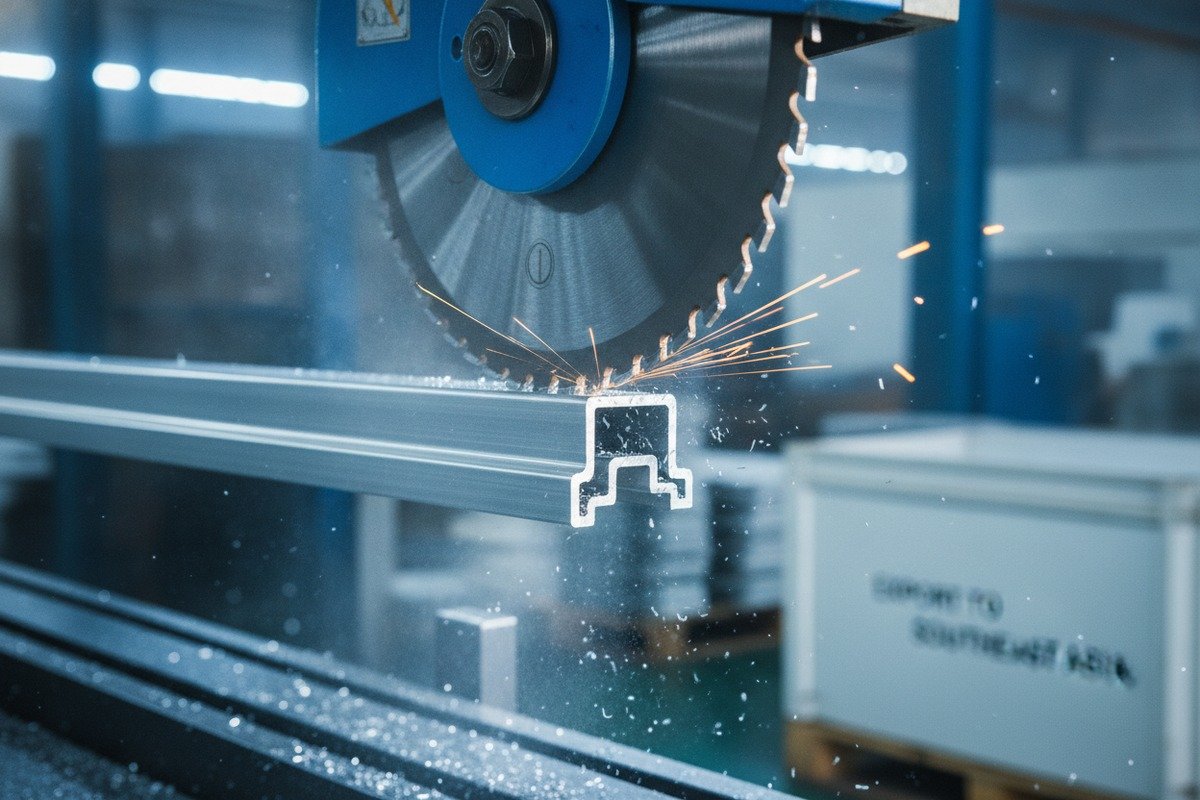
Achieving a great finish on one sample is not difficult. Achieving the same finish on 10,000 handles, batch after batch, month after month — that is where most quality problems originate. Variables like bath chemistry in anodizing tanks, powder application thickness, oven temperature profiles, and even ambient humidity during spraying all affect the final result. A supplier who cannot monitor and control these variables will produce inconsistent output.
In our factory, we run daily quality checks on our anodizing bath chemistry, weekly calibration of our powder coating guns, and per-batch color measurement using a spectrophotometer. This is not optional — it is what consistent output requires.
The Verification Checklist
Here are the specific things we recommend every Vietnamese buyer ask for before committing to a bulk order:
Salt-Spray Testing: This is the single most important performance test for handles destined for Vietnam. Salt-spray testing per ASTM B117 10 or ISO 9227 simulates accelerated corrosion exposure. For inland residential use, 48 hours of salt-spray resistance is a reasonable baseline. For coastal or hospitality projects, demand 200 hours or more. Some suppliers in the market advertise 100,000-cycle endurance claims, which signals that durability testing is commercially relevant and expected.
Adhesion Testing: Cross-cut adhesion testing per ISO 2409 checks whether the finish stays bonded to the aluminum under stress. A clean result with no peeling at the cross-cut grid means the pretreatment was done properly. This is a quick, cheap test — any supplier who resists doing it is hiding something.
Color Consistency (ΔE Measurement): For anodized and powder-coated handles, color deviation between batches should be measured with a spectrophotometer. A ΔE value of 1.0 or less is generally considered acceptable for premium finishes. Above 1.5, the human eye can detect the difference, and your furniture factory will notice.
What to Watch for in Supplier Behavior
Pay attention to how a supplier responds to your quality questions. A reliable partner will proactively offer test reports, reference standards, and sample comparison sets. They will have documented pretreatment procedures and be willing to share them. They will invite factory audits or third-party inspections.
Red flags include: vague answers about pretreatment ("we do standard cleaning"), reluctance to provide salt-spray data, inconsistency between the sample and the first bulk shipment, and no mention of ISO 9001 or equivalent quality management systems. Compliance with EN 1670, which specifically covers corrosion resistance of building hardware, is another strong signal of a serious supplier.
Building a Long-Term Quality Partnership
Consistency is ultimately a relationship issue, not just a technical one. When we work with a Vietnamese buyer, we maintain a file for their specific handle profiles, including alloy grade, temper, finish specification, color reference, pretreatment protocol, and inspection criteria. Every reorder references this file. This means batch 50 looks the same as batch 1.
We also encourage buyers to establish a retained sample system. Keep one handle from each batch as a reference. Compare it against the next shipment. Over time, this creates a visual and measurable quality record that protects both parties.
Footnotes
1. Authoritative metal supplier providing comprehensive information on 5052 aluminum, specifically highlighting its marine-grade properties and corrosion resistance in saltwater environments. ↩︎
2. Defines a key environmental factor impacting material degradation. ↩︎
3. Explains the importance and properties of corrosion resistance in materials. ↩︎
4. Offers detailed information on the properties and applications of this specific aluminum alloy. ↩︎
5. Explains the meaning and significance of aluminum temper designations. ↩︎
6. Explains the process, benefits, and applications of powder coating for metal finishes. ↩︎
7. Provides context for an internationally recognized color matching system. ↩︎
8. Explains an environmentally preferred pretreatment method for powder coating. ↩︎
9. Describes the fundamental nature and benefits of anodizing for aluminum. ↩︎
10. Details an international standard for salt spray corrosion testing. ↩︎