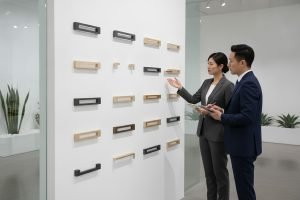
Every week, our sales team fields the same question from new buyers around the world powder coating ovens 1. They find a handle design they love, but the listed MOQ stops them cold. The fear of overcommitting on a first purchase is real, and it costs many importers valuable time.
A reasonable MOQ for a first order of aluminum furniture handles from China is typically 200 to 500 units per design. While most suppliers list 1,000 to 2,000 units, these numbers are negotiable. Buyers who signal long-term intent or accept a modest price increase can usually secure a smaller trial quantity.
The sections below break down exactly how MOQs work, how to negotiate them lower, and what traps to avoid economies of scale 2. Whether you run a furniture factory or a wholesale distribution business 3, this guide will help you place a smarter first order.
How can I negotiate a lower MOQ for my first trial order of aluminum handles?
Over the past 18 years, our export team has helped hundreds of first-time buyers navigate this exact challenge. The biggest mistake we see is treating the listed MOQ as a final, fixed rule. It rarely is. Suppliers want your business, but they need a reason to bend.
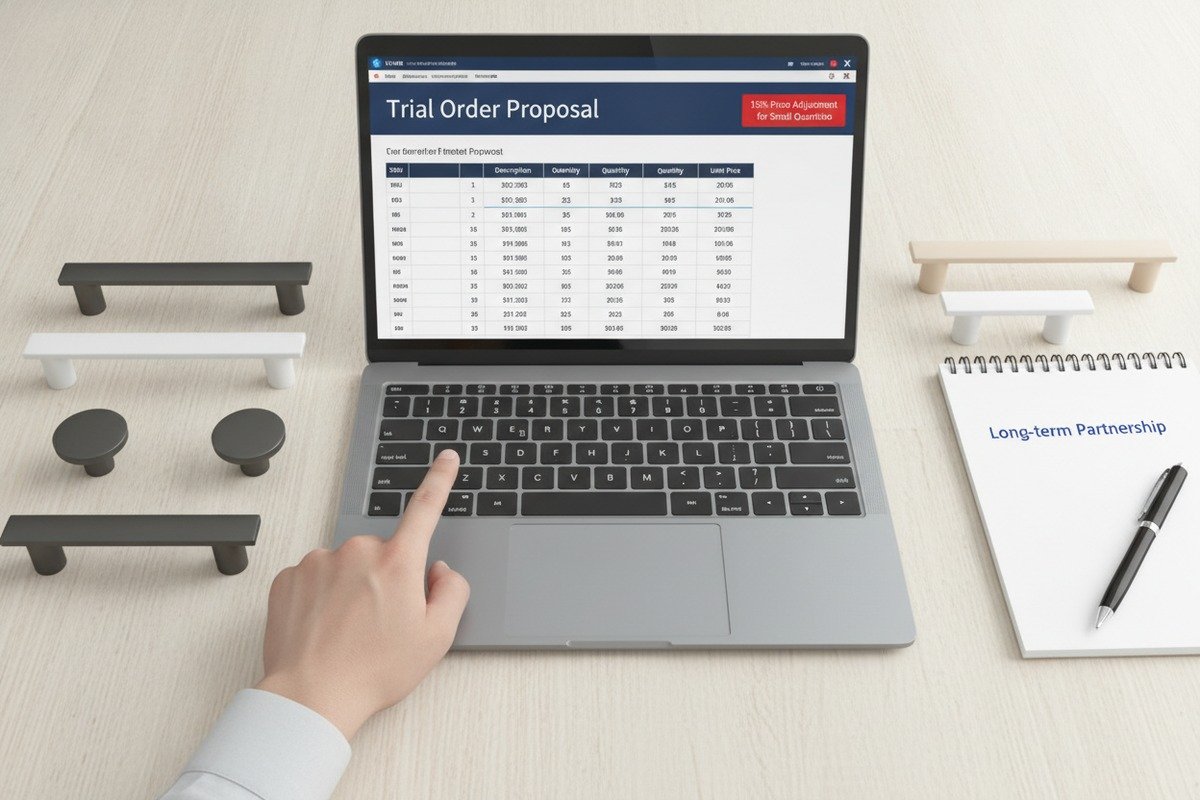
You can negotiate a lower MOQ by framing your first order as a quality test for a long-term partnership. Offer to accept a 10–15% higher unit price, ask about stock items, propose mixed-SKU orders, and provide a clear projection for future volume. Most suppliers will meet you halfway.
Why Suppliers Set High MOQs in the First Place
Before you negotiate, understand the supplier's position. Every production run has fixed costs. For aluminum handles, those costs come from three areas:
- Material minimums. Aluminum extrusion 4 requires a minimum length of raw material. Short runs waste metal.
- Machine setup. Switching a die-casting machine 5 or extrusion line takes time. Small batches mean more downtime per unit.
- Surface finishing batches. Anodizing tanks 6 and powder coating ovens run most efficiently at full capacity. A half-empty oven costs nearly the same as a full one.
When you understand these constraints, you can address them directly in your negotiation.
Five Proven Negotiation Tactics
| Tactic | What You Say | Why It Works |
|---|---|---|
| Long-term partnership pitch | "This is a test order. If quality passes, I plan to order 2,000+ units quarterly." | Suppliers invest in relationships, not one-off sales. |
| Price premium offer | "I accept a 10–15% higher price for this small first batch." | Covers the supplier's fixed-cost gap immediately. |
| Stock item inquiry | "Do you have similar handles ready to ship from inventory?" | Eliminates production setup costs entirely. |
| Mixed-SKU order | "Can I combine 200 of Design A, 200 of Design B, and 200 of Design C?" | Meets the supplier's total quantity threshold across multiple SKUs. |
| Packaging compromise | "I can accept bulk packaging instead of individual retail boxes." | Removes a secondary MOQ constraint tied to custom packaging runs. |
The Script That Works
Here is a message template our buyers have used successfully:
"Hi, I am a furniture hardware distributor in [Country]. I found your aluminum handles and I am very interested. This is my first order, and I want to test quality and shipping before committing to larger volumes. Can you accept 300–500 units for this trial? I understand the unit price may be slightly higher. If everything goes well, I plan to reorder 1,000+ units every quarter."
This script works because it is honest, specific, and forward-looking. It gives the supplier confidence without locking you into a commitment you cannot keep.
What If the Supplier Still Says No?
Some factories simply cannot run small batches. Their equipment or workflow does not allow it. In that case, consider working with a trading company or a smaller workshop that specializes in flexible orders. At our facility, we maintain over 300 tons of ready-to-ship inventory specifically to serve buyers who need lower starting quantities with fast turnaround.
Will my MOQ increase if I request custom OEM designs for my furniture factory?
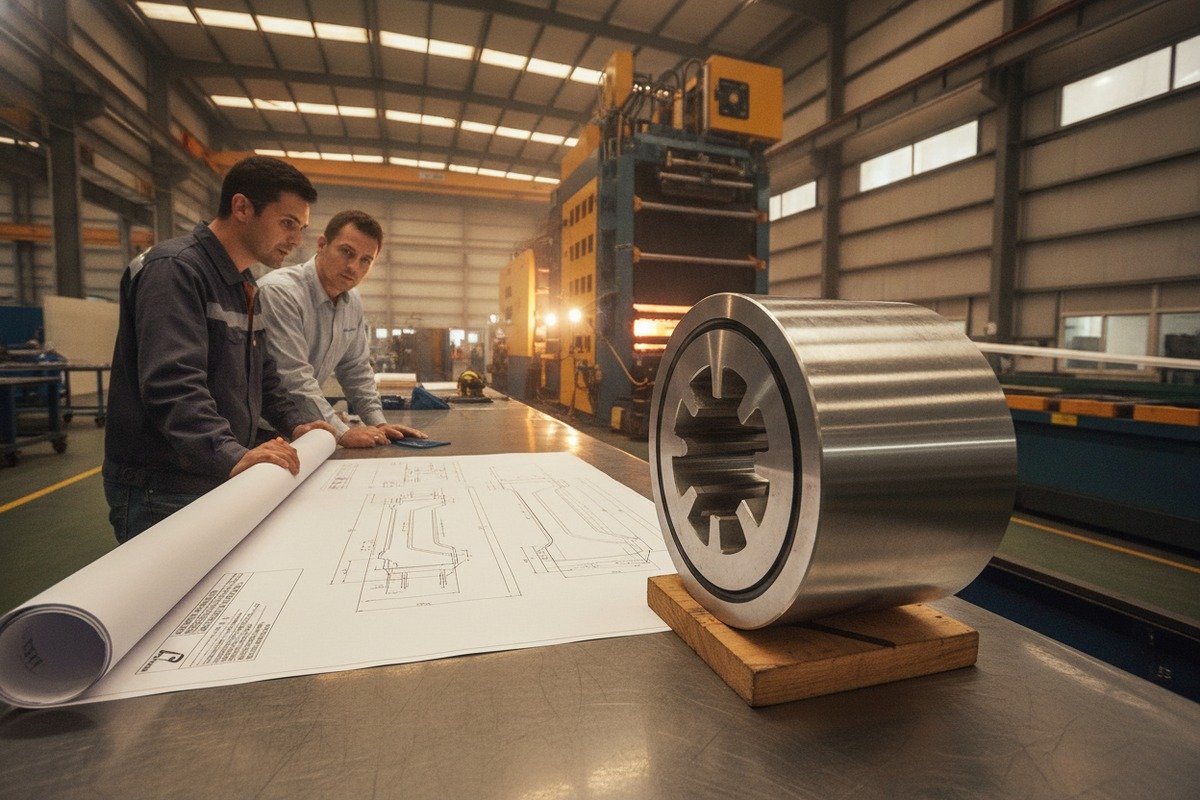
When furniture factory owners approach us with unique handle designs, the conversation always shifts to tooling. Custom OEM work is one of our core services, but it does introduce additional cost layers that directly affect the minimum order quantity. custom OEM designs 7
Yes, custom OEM designs typically raise the MOQ to 500–1,000 units or more because the supplier must create new molds or extrusion dies. However, if you pay the full mold fee upfront, many suppliers will accept a lower production quantity, sometimes as few as 200–300 units.
How Mold Costs Drive the MOQ
A new die-casting mold 8 for an aluminum handle costs between $500 and $2,000, depending on complexity. An extrusion die 9 is usually cheaper, around $300 to $800. The supplier needs to recover this investment. If the mold costs $1,000 and the handle sells for $2 profit per unit, the supplier needs at least 500 units to break even on the tooling alone.
That math is the real reason custom MOQs are higher. It is not about production difficulty. It is about cost recovery.
Standard vs. Custom MOQ Comparison
| Factor | Standard Handle (Existing Mold) | Custom OEM Handle (New Mold) |
|---|---|---|
| Mold cost | $0 (already amortized) | $500–$2,000 |
| Typical listed MOQ | 500–1,000 units | 1,000–2,000 units |
| Negotiated first-order MOQ | 200–500 units | 300–800 units |
| Lead time | 3–7 days (if in stock) | 15–30 days (mold + production) |
| Unit price flexibility | Moderate | Lower (mold fee is separate) |
The Mold Fee Trade Strategy
This is the most effective tactic for custom orders. Here is how it works:
- You pay the full mold fee upfront before production starts.
- In return, the supplier agrees to a lower production MOQ, often 200–500 units instead of 1,000.
- The mold belongs to you. If you switch suppliers later, you can request the mold be shipped to you.
In our factory, we regularly use this arrangement. A furniture factory owner in Vietnam recently paid $1,200 for a custom recessed pull mold and ordered just 300 units for the first batch. Three months later, he reordered 2,000 units at a significantly lower per-unit price.
Tips for Reducing Custom OEM Complexity
- Simplify the geometry. Fewer curves and undercuts mean a cheaper mold.
- Use standard finishes. Custom colors require separate finishing runs. Start with common finishes like matte black, champagne gold, or brushed silver.
- Adopt existing cross-sections. If your design can use an existing extrusion profile with minor modifications, you avoid a completely new die.
The key takeaway is that custom work does raise the MOQ, but smart planning and upfront investment can bring it back down to a manageable level.
Can I get a lower MOQ if I choose from the supplier's ready-to-ship aluminum handle inventory?
One of the most common questions we hear from new distributors is whether our stock catalog has different ordering rules than our custom production line. The answer is a clear yes, and this is actually the fastest path to a low-risk first purchase.
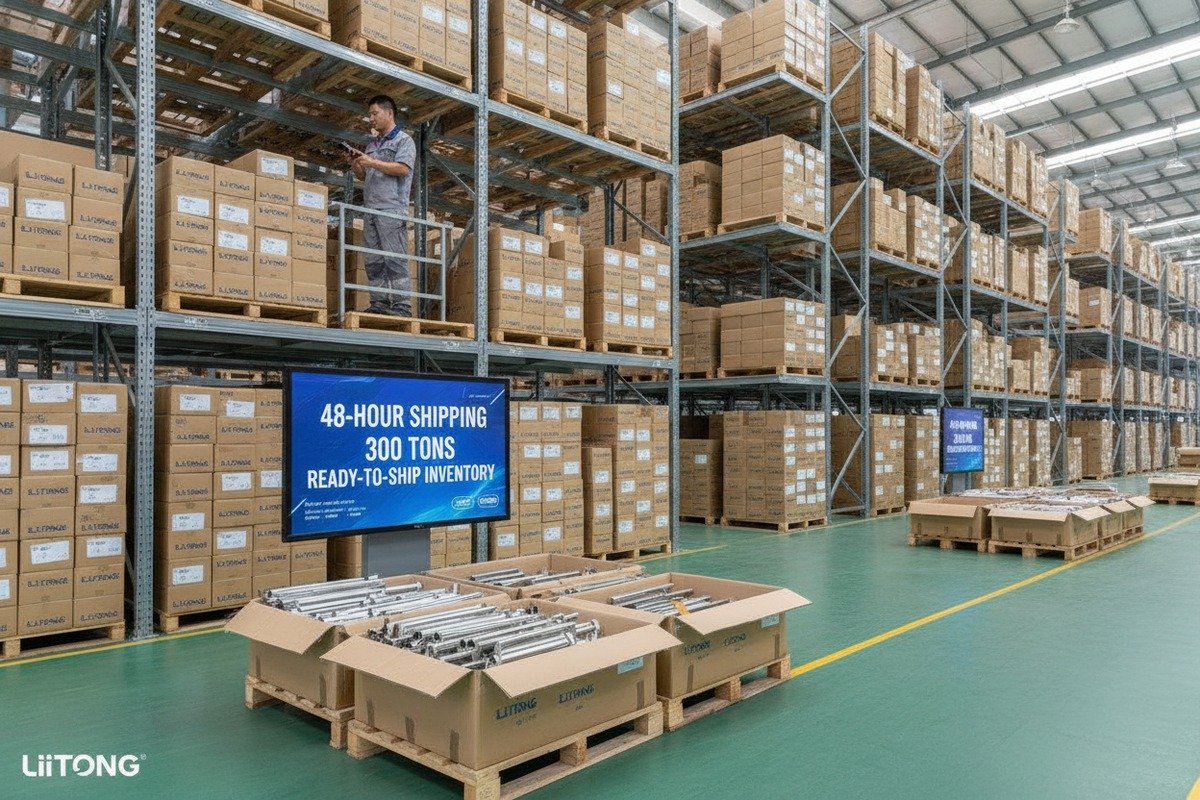
Choosing from a supplier's ready-to-ship inventory almost always results in a lower MOQ, often as low as 50–200 units. Since these handles are already produced, packed, and warehoused, the supplier avoids production setup costs entirely. This makes small orders financially viable for both sides.
Why Stock Items Have Lower MOQs
The math is simple. When a handle is already sitting in a warehouse, the supplier has already paid for:
- Raw aluminum material
- Machine time and labor
- Surface finishing (anodizing, powder coating, brushing)
- Quality inspection
- Basic packaging
The only remaining cost is picking, packing, and shipping. There is no production minimum to worry about. The supplier just wants to move inventory and free up warehouse space.
At our Foshan facility, we maintain over 300 tons of finished aluminum handles and profiles. This inventory exists specifically to serve buyers who need quick delivery and low entry quantities. We can ship stock items within 48 hours.
Stock vs. Custom: A Side-by-Side Look
| Criteria | Stock / Ready-to-Ship | Custom / Made-to-Order |
|---|---|---|
| MOQ | 50–200 units | 500–2,000 units |
| Lead time | 1–3 days | 15–30 days |
| Design flexibility | None (choose from catalog) | Full (your design) |
| Unit price | Fixed catalog price | Negotiable based on volume |
| Risk level | Very low | Moderate to high |
| Best for | First-time buyers, market testing | Established brands, specific projects |
The Smart First-Order Strategy
Many of our most successful long-term partners started with a stock order. Here is a common path:
- Order 100–200 stock handles from 2–3 designs to test the market.
- Evaluate quality, packaging, and shipping speed.
- Identify the best-selling design from your initial batch.
- Place a larger custom order with your own branding, finish, or dimensional tweaks.
This approach cuts your initial risk dramatically. You invest a small amount, learn how the supplier operates, and gather real market data before committing to a custom production run.
What to Watch Out For
Stock items have limitations. You cannot change the finish, dimensions, or packaging. If your brand requires a specific look, stock handles may not fit. Also, popular stock items can sell out. If you find a design you like, confirm current inventory levels before placing your order.
Another consideration is exclusivity. Stock designs are available to all buyers. Your competitor could sell the same handle. If differentiation matters, plan to transition to custom OEM after your trial.
How does the MOQ affect the final wholesale price I pay for my aluminum hardware?
In our experience exporting aluminum handles to Vietnam and the Middle East, price is the topic that comes up in every single conversation. Buyers understand that ordering more means paying less per unit. But few realize exactly how steep the difference can be, or where the hidden costs lurk at low volumes.
The MOQ directly impacts your wholesale price through economies of scale. Ordering 200 units instead of 1,000 can increase your per-unit cost by 20–40%. This premium covers the supplier's higher per-unit fixed costs for material setup, machine changeover, and surface finishing on smaller batches.
The Price-Volume Relationship
Every aluminum handle has two cost components:
- Fixed costs: Mold amortization, machine setup, finishing line startup, packaging design. These costs stay the same whether you order 100 or 10,000 units.
- Variable costs: Raw aluminum, labor per unit, energy per unit. These scale linearly with quantity.
When you order fewer units, the fixed costs get spread over a smaller number. That is why the per-unit price rises.
Real-World Pricing Example
Here is a typical pricing structure for a standard matte-finish aluminum recessed pull handle, 160mm center-to-center:
| Order Quantity | Unit Price (FOB) | Total Order Cost | Fixed Cost Per Unit | Variable Cost Per Unit |
|---|---|---|---|---|
| 100 units | $3.80 | $380 | $1.80 | $2.00 |
| 300 units | $3.20 | $960 | $1.00 | $2.20 |
| 500 units | $2.80 | $1,400 | $0.60 | $2.20 |
| 1,000 units | $2.40 | $2,400 | $0.30 | $2.10 |
| 2,000 units | $2.10 | $4,200 | $0.15 | $1.95 |
Notice that the variable cost also drops slightly at very high volumes. This is because bulk aluminum purchases get better raw material pricing, and labor efficiency improves on longer runs.
The Hidden Cost: Shipping
MOQ does not just affect the handle price. It affects your total landed cost. Small orders almost always ship by air freight or LCL (Less than Container Load) sea freight 10. Both are expensive per unit compared to a full container.
- Air freight for 100 handles: Roughly $2–$4 per unit.
- LCL sea freight for 300 handles: Roughly $0.80–$1.50 per unit.
- FCL sea freight for 2,000+ handles: Roughly $0.15–$0.30 per unit.
So a $2.80 handle at 500 units with LCL shipping could cost you $4.00+ landed. The same handle at 2,000 units with FCL shipping lands at around $2.30. That is a 42% difference in total cost.
How to Minimize the Price Penalty
- Consolidate products. Order handles along with other hardware (hinges, knobs, profiles) from the same supplier or region to fill a container.
- Use a freight forwarder. They combine your shipment with other clients' cargo to get better LCL rates.
- Accept the premium strategically. A 20% price increase on 300 test units is a small price to pay compared to being stuck with 2,000 units of a handle your customers do not want.
- Negotiate price tiers in advance. Ask the supplier for a written price schedule: "300 units at $X, 1,000 units at $Y, 3,000 units at $Z." This gives you a clear roadmap for cost reduction as your volume grows.
The Break-Even Mindset
Do not think of the first order as a profit opportunity. Think of it as an investment. The goal is to validate the product, test the supplier, and learn the logistics. Once you have confidence, scale up. The price drops will come naturally with volume.
Our most profitable partners are the ones who started small, tested fast, and scaled deliberately. They paid more per unit on order one. By order three, they were getting the best prices in their market.
Conclusion
A reasonable first-order MOQ for aluminum furniture handles from China is 200–500 units. Start with stock items to minimize risk, negotiate with confidence, and scale up as your market responds. Smart sourcing is not about the lowest quantity — it is about the right quantity for your stage of growth.
Footnotes
1. Details the powder coating process and the role of ovens. ↩︎
2. Provides an economic explanation of economies of scale. ↩︎
3. Explains the function and importance of wholesale distribution. ↩︎
4. Provides details on the aluminum extrusion manufacturing process. ↩︎
5. Replaced with an authoritative overview of die casting, including machine types, from Wikipedia. ↩︎
6. Replaced with a comprehensive article explaining anodizing tanks and their role in the process. ↩︎
7. Defines OEM and its role in product manufacturing and customization. ↩︎
8. Explains the design and function of die-casting molds. ↩︎
9. Describes the purpose and types of extrusion dies. ↩︎
10. Defines LCL sea freight and its use in shipping. ↩︎