
Every week, our logistics team in Foshan processes shipments of aluminum furniture handles bound for Vietnamese distributors — and the VAT questions never stop coming.
To calculate VAT on aluminum furniture handles imported from China to Vietnam, you must first determine the correct HS code, apply the import duty to the CIF value, then calculate VAT at 10% on the combined total of CIF value plus import duty. The VAT method your Vietnamese business uses — credit or direct — determines whether that import VAT is recoverable.
This guide walks you through the full VAT calculation process step by step. VAT calculation methods 1 We cover HS codes, duty rates, ACFTA preferences, and the two Vietnamese VAT methods. Let’s make sure you pay exactly what you owe — not a dong more.
How do I calculate the specific VAT amount for importing aluminum handles into Vietnam?
When we prepare commercial invoices for our Vietnamese buyers, we always include CIF breakdowns — because that single number drives the entire tax calculation on the other end.
Import VAT on aluminum furniture handles in Vietnam is calculated by multiplying the VAT rate (typically 10%) by the sum of the CIF customs value plus the import duty amount. The formula is: Import VAT = (CIF Value + Import Duty + Other Applicable Taxes) × 10%.
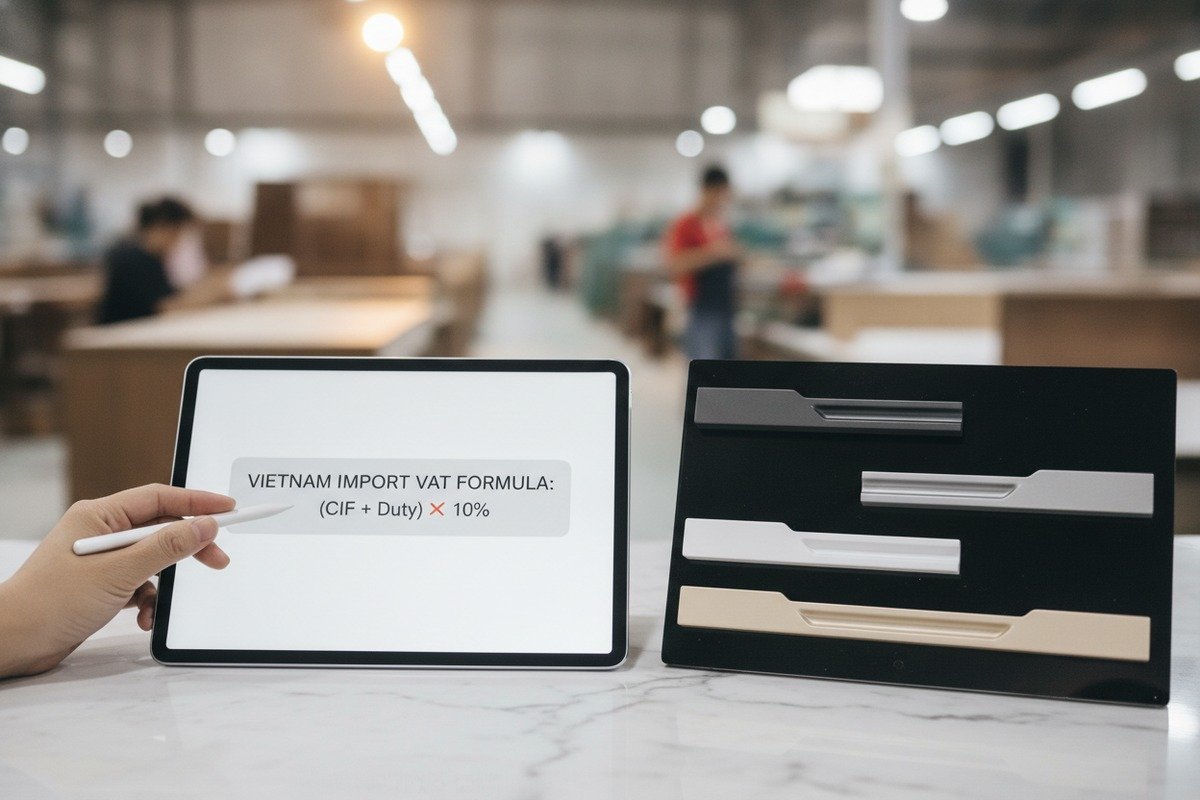
Understanding the Basic Formula
The Vietnamese customs authority does not apply VAT directly to your purchase price. Instead, it builds a "taxable price" layer by layer. Here is the sequence:
- Start with CIF value. This is the cost of the goods, plus insurance, plus freight to the first Vietnamese port. If your Incoterm is FOB, you must add the insurance and shipping costs to reach CIF.
- Calculate import duty. Import duty = CIF value 2 × import duty rate. The duty rate depends on your HS code 3 and whether you have a preferential certificate of origin.
- Calculate VAT. Import VAT = (CIF value + import duty + any special consumption tax or anti-dumping duty, if applicable) × VAT rate 4.
Most aluminum furniture handles fall under the standard 10% VAT rate. Vietnam does offer a temporary reduction to 8% for certain goods until December 31, 2026, but you must verify whether your specific product qualifies.
A Worked Example
Let's say you order a shipment of our recessed aluminum cabinet handles — the sleek, minimalist style with a matte champagne gold anodized finish. Here is a realistic scenario:
| Item | Value |
|---|---|
| FOB price (Foshan) | USD 5,000 |
| Freight to Ho Chi Minh City | USD 400 |
| Insurance | USD 50 |
| CIF value | USD 5,450 |
| Import duty rate 5 (MFN, no ACFTA) | 20% |
| Import duty amount | USD 1,090 |
| Taxable price for VAT | USD 6,540 |
| VAT rate | 10% |
| Import VAT | USD 654 |
| Total taxes at customs | USD 1,744 |
That total of USD 1,744 is what you pay at customs before the goods are released. The key insight: VAT is not 10% of your product price. It is 10% of your product price plus the duty. This stacking effect means every percentage point of import duty also increases your VAT bill.
Exchange Rate Matters
Vietnamese customs converts foreign currency amounts into Vietnamese Dong (VND) using the exchange rate published on the date of your customs declaration — not the date of your invoice or payment. Currency fluctuations between CNY or USD and VND can shift your actual tax bill by several percent. Our advice to buyers: watch the exchange rate trend and time your declaration strategically when possible.
The Two Domestic VAT Methods
Once you clear customs, your Vietnamese business entity also deals with domestic VAT accounting. Vietnam uses two methods:
- Credit method (khấu trừ): Your payable VAT = output VAT on your sales minus input VAT (including import VAT). This means the USD 654 you paid at customs can be credited against the VAT you collect when you resell the handles. Most established wholesalers and furniture factories use this method.
- Direct method (trực tiếp): VAT is calculated on revenue or added value. Import VAT paid at customs is treated as a cost, not a credit. This method is used by smaller businesses or those not yet registered for the credit method.
If you are a mid-to-large distributor buying aluminum handles for resale, the credit method makes the import VAT essentially recoverable — as long as your documentation is complete.
How does the ACFTA Form E affect the taxable value of my furniture handle order?
We ship hundreds of tons of aluminum profiles and handles to Vietnam every year, and the single document that saves our buyers the most money is the ACFTA Form E 6 certificate of origin.
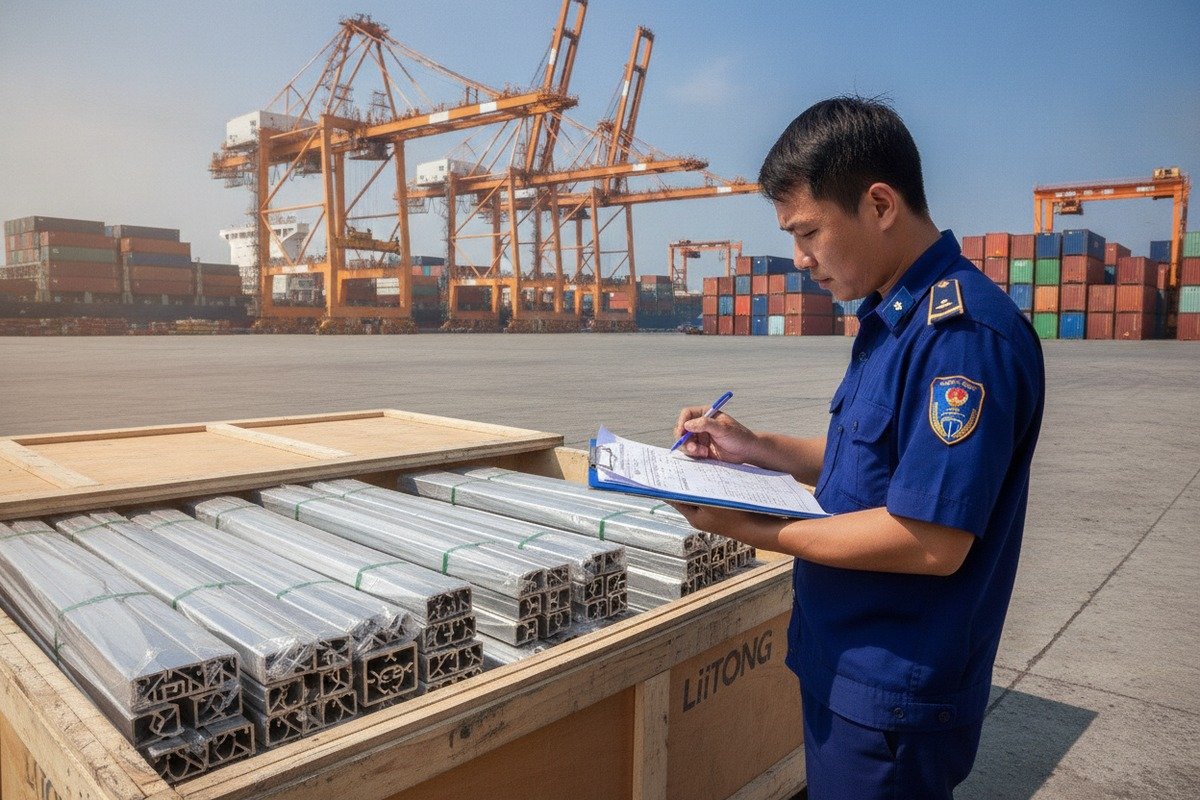
The ACFTA Form E allows aluminum furniture handles originating from China to qualify for preferential import duty rates — often 0% to 5% instead of the standard MFN rate of 15%–20%. Because import duty directly feeds into the VAT base, a lower duty rate also reduces the total import VAT you pay.
What Is the ACFTA Form E?
The ASEAN-China Free Trade Area (ACFTA) is a trade agreement between China and the ten ASEAN member states, including Vietnam. Under this agreement, goods that meet specific origin criteria can enter Vietnam at reduced or zero import duty rates. The Form E is the official certificate of origin that proves your goods qualify.
For aluminum furniture handles, the Form E can reduce import duty from the MFN rate (often around 20%) down to as low as 0% or 5%, depending on the exact HS code and the current ACFTA tariff schedule.
How Form E Changes Your Tax Bill
Let's revisit our earlier example and compare the numbers with and without a Form E:
| Scenario | Without Form E (MFN) | With Form E (ACFTA) |
|---|---|---|
| CIF value | USD 5,450 | USD 5,450 |
| Import duty rate | 20% | 0% |
| Import duty amount | USD 1,090 | USD 0 |
| Taxable price for VAT | USD 6,540 | USD 5,450 |
| VAT (10%) | USD 654 | USD 545 |
| Total taxes at customs | USD 1,744 | USD 545 |
| Tax savings | — | USD 1,199 |
That is a 69% reduction in total import taxes. The duty saving alone is USD 1,090, but notice that the VAT also drops by USD 109 because the VAT base shrinks when duty is eliminated. This cascading effect is why the Form E is so valuable.
Requirements for a Valid Form E
Getting a Form E is not automatic. The goods must genuinely originate in China and meet the ACFTA rules of origin 7. Here is what you need:
- Application by the exporter. We apply for the Form E through the Chinese customs authorities or authorized issuing bodies before shipment.
- Origin criteria met. The aluminum handles must be manufactured in China with sufficient local content or processing. For our extruded aluminum handles — where we source raw aluminum billets, extrude, anodize, and finish them entirely in our Foshan facility — this is straightforward.
- Direct consignment rule. The goods must ship directly from China to Vietnam. If they transit through a third country, they must remain under customs control and not enter the commerce of that country.
- Correct and consistent documentation. The HS code, product description, and value on the Form E must match the commercial invoice, packing list, and bill of lading exactly. Any discrepancy gives Vietnamese customs a reason to reject the Form E.
Common Mistakes That Invalidate a Form E
From our experience, these are the errors that cause rejections:
- Mismatched HS codes between the Form E and the customs declaration.
- Late issuance — the Form E has a validity period (usually 12 months from issuance).
- Incomplete or illegible stamps from the issuing authority.
- Product description too vague (e.g., "aluminum parts" instead of "aluminum alloy furniture handles, anodized finish").
If Vietnamese customs rejects your Form E, they will apply the MFN duty rate, and your entire tax calculation resets to the higher amount.
Which HS codes should I use to ensure my VAT calculation is compliant with Vietnamese customs?
Our product development team designs aluminum handles that blend furniture hardware function with architectural aesthetics — and that design flexibility is exactly what makes HS code classification tricky.
Aluminum furniture handles typically fall under HS heading 8302 (base metal mountings and fittings for furniture) or HS heading 7616 (other articles of aluminum). The correct 8-digit or 10-digit HS code determines your import duty rate, which directly changes your VAT base. Misclassification can trigger penalties, audits, and retroactive tax adjustments.
The Classification Problem
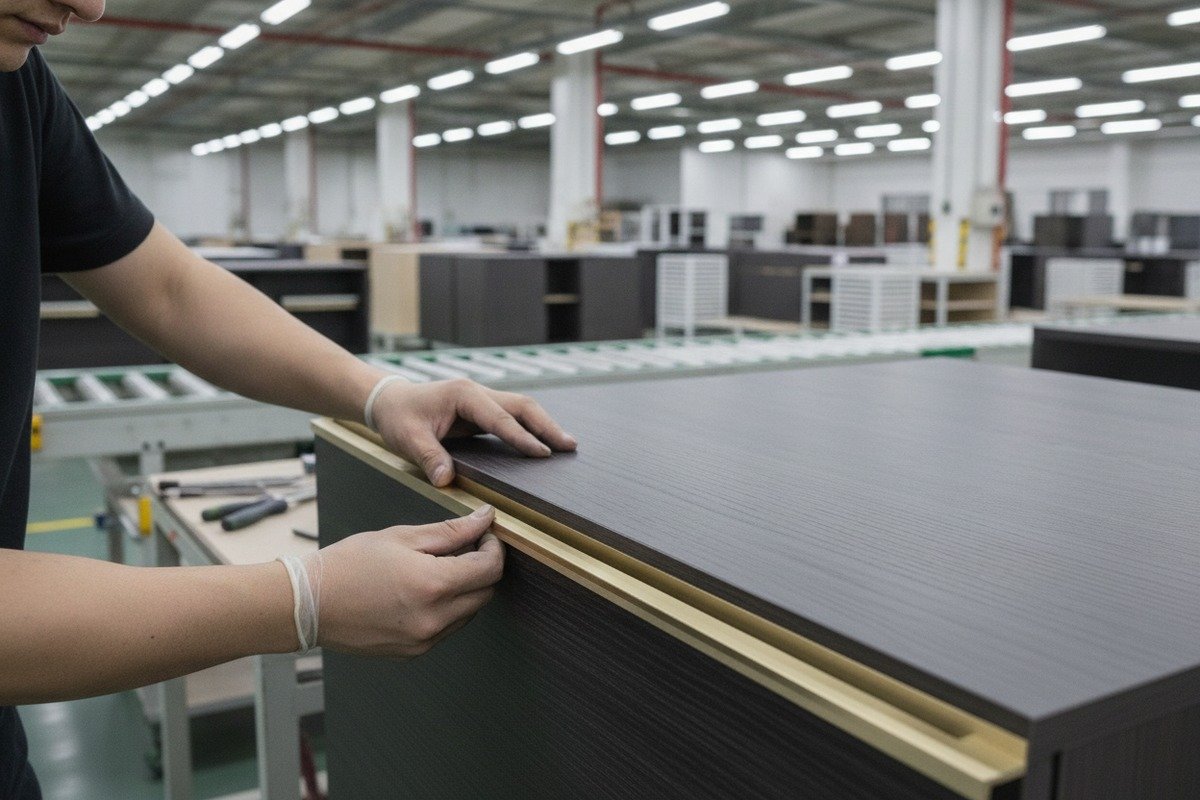
"Aluminum furniture handle" sounds simple. But customs authorities classify goods based on material, function, and specific design characteristics. Here are the main HS headings that could apply:
- 8302: Base metal mountings, fittings, and similar articles suitable for furniture, doors, staircases, etc. This is the most common heading for furniture handles and pulls.
- 7616: Other articles of aluminum. This is a catch-all for aluminum items not classified elsewhere. If your handle doubles as a decorative trim or architectural profile, customs might consider this heading.
- 9403 (parts): In rare cases, if the handle is classified as an integral part of specific furniture, it might fall under the furniture parts heading. This is uncommon for standalone handles sold separately.
Why the HS Code Matters for Your Tax Bill
Different HS codes carry different import duty rates. Even within heading 8302, the specific subheading matters. Here is an illustration:
| HS Code | Description | MFN Duty Rate | ACFTA Duty Rate |
|---|---|---|---|
| 8302.42.10 | Mountings and fittings suitable for furniture, of base metal | ~20% | 0%–5% |
| 7616.99.90 | Other articles of aluminum, not elsewhere specified | ~15%–25% | 0%–10% |
| 9403.90.90 | Parts of furniture, other | ~10%–20% | 0%–5% |
These rates are illustrative. The actual rates depend on Vietnam's current tariff schedule, which is updated periodically. The point is clear: a difference in HS code can shift your import duty by 5–15 percentage points, and that shift cascades into your VAT calculation.
How to Choose the Right HS Code
Here is the process we recommend to our buyers:
- Start with the product description. Be specific. "Aluminum alloy recessed cabinet handle, anodized champagne gold finish, 200mm length, for furniture doors" is much better than "aluminum handle."
- Check the Vietnamese customs tariff database. Vietnam's General Department of Customs 8 provides an online tariff lookup tool. Search by keyword and material.
- Consult your customs broker. A licensed Vietnamese customs broker can issue a pre-classification opinion. This is not legally binding but gives you practical guidance.
- Request an advance ruling. If your shipment is large or recurring, you can apply to Vietnamese customs for a formal classification ruling. advance ruling 9 This is binding and protects you from post-clearance reclassification.
- Match with your supplier's export HS code. When we ship from Foshan, we declare the goods under a Chinese HS code. The first six digits should align with what you declare in Vietnam. Mismatches raise red flags.
Post-Clearance Audit Risk
Vietnamese customs conducts post-clearance audits for up to five years after importation. If they find that you used the wrong HS code — even if it was an honest mistake — they can reassess duty and VAT retroactively, plus charge interest and penalties. We have seen cases where a buyer saved a few percent on duty by using a lower-rate HS code, only to face a much larger bill years later after an audit.
The safest approach: classify conservatively, document your reasoning, and keep all product specifications on file.
What other import taxes and fees will impact my final landed cost alongside the VAT?
In our 18 years of exporting aluminum hardware from Foshan, we have learned that buyers who budget only for product cost and VAT are always surprised by the final number at the port.
Beyond import duty and VAT, your landed cost for aluminum furniture handles from China to Vietnam may include anti-dumping duties, special consumption tax (if applicable), customs processing fees, warehousing charges, customs broker fees, and bank charges for foreign currency payments. Each of these adds to your total cost and some even increase the VAT base.

The Full Cost Stack
Let's map out every cost element from our Foshan factory to your warehouse in Vietnam:
Pre-Shipment Costs
- Product cost (FOB). The price you pay us for the handles.
- Inland freight in China. Transport from our factory to the port (usually included in FOB).
- Export customs clearance in China. Handled by us; cost is minimal.
Shipping Costs
- Ocean freight. From the Chinese port to the Vietnamese port.
- Marine insurance. Required to reach CIF value.
- Container handling charges. Terminal handling at both origin and destination.
Vietnamese Customs Costs
- Import duty. Based on HS code and origin.
- Import VAT. Calculated on CIF + duty + other applicable taxes.
- Anti-dumping duty. Vietnam has imposed anti-dumping duties 10 on certain aluminum and steel products from China in the past. While standard aluminum furniture handles are not currently targeted, this can change. If an anti-dumping duty applies, it is added to the import duty and also increases the VAT base.
- Special consumption tax (SCT). This applies to luxury goods, alcohol, tobacco, and vehicles — not to furniture handles. But it is worth knowing: if SCT applied, it would also be added to the VAT base.
Post-Clearance Costs
- Customs broker fee. Your Vietnamese broker charges for handling the declaration, document submission, and clearance process. Typical range: USD 50–150 per shipment.
- Port storage/warehousing. If you do not clear goods promptly, daily storage fees accumulate.
- Inland delivery in Vietnam. Trucking from the port to your warehouse.
- Bank charges. Wire transfer fees, currency conversion fees, and any letter-of-credit costs.
A Complete Landed Cost Example
Here is a comprehensive example for a shipment of aluminum recessed cabinet handles:
| Cost Element | Amount (USD) |
|---|---|
| FOB product cost | 5,000 |
| Ocean freight | 400 |
| Marine insurance | 50 |
| CIF value | 5,450 |
| Import duty (ACFTA 0%) | 0 |
| Import VAT (10% of CIF + duty) | 545 |
| Anti-dumping duty | 0 |
| Customs broker fee | 100 |
| Port handling & storage | 80 |
| Inland delivery (Vietnam) | 150 |
| Bank charges | 35 |
| Total landed cost | 6,360 |
| Effective markup over FOB | 27.2% |
Without the ACFTA Form E (assume 20% MFN duty), the landed cost jumps to approximately USD 7,559 — a 51.2% markup over FOB. That difference illustrates why the Form E and correct HS code are not just paperwork exercises. They are major cost drivers.
Input VAT Recovery for Credit-Method Businesses
If your Vietnamese business uses the credit method, the USD 545 in import VAT is not a permanent cost. You can credit it against the output VAT you charge when you resell the handles. To do this, you need:
- A valid customs declaration showing the VAT amount.
- Proof of payment for the import VAT (bank transfer receipt).
- Proper VAT invoices for all related costs.
- The goods must be used for VAT-taxable business activities.
If any of these documents are missing or inconsistent, Vietnamese tax authorities can deny the input VAT credit — turning that USD 545 into a real, unrecoverable cost.
Practical Checklist Before You Import
Here is a quick checklist we share with our Vietnamese distribution partners:
- Confirm the exact HS code with your customs broker.
- Request the Form E from your Chinese supplier before shipment.
- Ensure CIF value is clearly documented and matches all shipping papers.
- Verify the current import duty rate and check for any anti-dumping duties.
- Calculate VAT on CIF + duty, not just on the product price.
- Prepare all documents for input VAT credit: customs declaration, payment proof, and VAT invoices.
- Budget for customs broker fees, port charges, inland delivery, and bank charges.
- Monitor exchange rates — the VND conversion rate on declaration date affects your total.
Getting these eight items right means no surprises at the port and no problems during a post-clearance audit.
Conclusion
Getting Vietnam import VAT right starts with the HS code, builds through the duty calculation, and ends with proper documentation. Plan each layer carefully, and your aluminum furniture handle imports will stay profitable and audit-proof.
Footnotes
1. Explains the two primary VAT calculation methods in Vietnam. ↩︎
2. Defines CIF value as the basis for customs valuation in Vietnam. ↩︎
3. Provides official information on Vietnam’s Harmonized System (HS) codes. ↩︎
4. Details the standard and reduced VAT rates applicable in Vietnam. ↩︎
5. Explains how import duty rates are determined in Vietnam. ↩︎
6. Explains the purpose and benefits of the ACFTA Form E certificate. ↩︎
7. Clarifies the criteria goods must meet to qualify for preferential tariffs. ↩︎
8. Official website of Vietnam’s national customs authority. ↩︎
9. Describes the process for obtaining binding customs classification decisions. ↩︎
10. Provides information on anti-dumping duties and their application in Vietnam. ↩︎