
Every year, our team in Foshan ships hundreds of tons of aluminum furniture handles to Vietnamese wholesalers and furniture factories — and the question of fire and building safety compliance comes up more often than you might expect.
To ensure your aluminum furniture handles imported from China comply with Vietnamese fire and building safety regulations, you must identify the applicable QCVN and TCVN standards for your end use, request full material and fire-performance documentation from your supplier, and verify compliance through independent testing where required by the project or authority having jurisdiction.
This guide breaks down the exact steps, documents, and checks you need QCVN and TCVN standards 1. Whether you are a building material distributor in Ho Chi Minh City or a furniture factory owner in Hanoi, the process is the same. Let’s walk through it section by section.
What specific fire safety certifications should I request from my Chinese aluminum handle manufacturer?
When we prepare export documents for our Vietnamese clients, we often find that buyers are unsure which certifications actually matter — and which ones are just nice to have noncombustibility of the aluminum alloy 2.
You should request material test reports confirming noncombustibility of the aluminum alloy, fire-performance certificates for any coatings or finishes, and declarations of conformity referencing the applicable Vietnamese QCVN or TCVN standards relevant to your project's building type and occupancy classification.

Why the Certification Depends on the End Use
The first thing to understand is that Vietnamese fire safety compliance is not one-size-fits-all. A handle destined for a loose residential cabinet has different requirements than one installed in a hotel corridor built-in unit. Vietnam's fire-control law framework requires construction materials and fire-control products to conform to state or industrial standards. Public-security fire review can apply to construction design and project approval.
So before you even ask your supplier for a certificate, you need to answer one question: Where will this handle be installed?
Key Standards to Know
Vietnam uses two main systems for construction and fire safety standards:
| Standard Type | Code Example | What It Covers |
|---|---|---|
| National Technical Regulation (QCVN) | QCVN 06:2022/BXD 3 | Fire safety requirements for buildings |
| National Standard (TCVN) | TCVN 2622:1995 4 | Fire prevention and protection for buildings and structures |
| Building Safety Regulation | QCVN 18:2021/BXD | Safety in civil and industrial construction |
If your handles go into a building project subject to fire-control design review, you need documentation that maps to these standards. If they are for loose furniture in a retail setting, the requirements are typically lighter — but customer specifications still apply.
What to Ask Your Supplier
Here is a practical list of documents to request:
- Material Test Certificate (MTC): Confirms the aluminum alloy grade (e.g., 6063-T5) and its noncombustible classification.
- Coating/Finish Fire Test Report: If the handle has an anodized, powder-coated, or painted finish, ask for a fire-resistance or flame-spread test report.
- Declaration of Conformity: A written statement from the manufacturer confirming the product meets the standard you specify.
- Full Bill of Materials: Lists every component — aluminum body, screws, plastic inserts, rubber gaskets, packaging materials.
At our factory, we routinely provide MTCs and coating test reports as part of the standard export package. But many suppliers do not offer these unless you ask. So ask early — ideally before you place your order.
A Common Mistake
Some buyers request only an ISO 9001 certificate 5 and assume that covers fire safety. It does not. ISO 9001 is a quality management system certificate. It says nothing about the fire performance of the product itself. You need product-level test reports, not just system-level certificates.
How can I verify that the material composition of my handles meets Vietnamese building safety codes?
Our engineering team has seen cases where buyers assumed "aluminum is aluminum" — only to face questions at customs or project acceptance about alloy grades, coating chemicals, and embedded plastic components.
To verify material composition, request a mill certificate or Material Test Certificate specifying the aluminum alloy grade and temper, obtain an MSDS or SDS for all coatings and finishes, and cross-reference these documents against the relevant TCVN or QCVN material requirements for your specific building project.
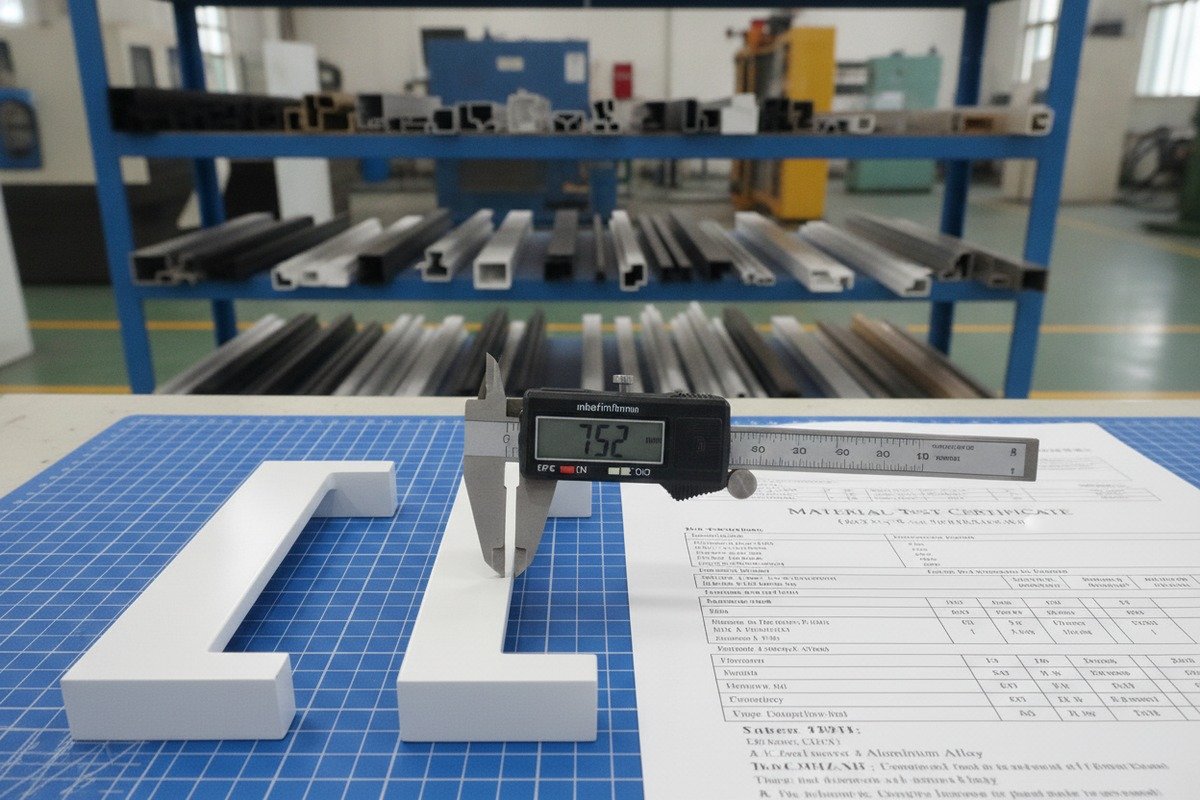
The Aluminum Body Is Only Part of the Story
Pure aluminum and standard architectural alloys like 6063-T5 are classified as noncombustible. That is a strong starting point. But a modern furniture handle is rarely just bare aluminum. Consider what else is on or in the handle:
- Anodized finish — Generally safe. Anodic oxide layers are inorganic and noncombustible.
- Powder coating — Contains organic polymers. Some formulations can affect flame-spread ratings.
- Paint or lacquer — May contain volatile organic compounds (VOCs) and can be combustible.
- Plastic inserts or end caps — Often made of nylon, PVC, or ABS. These are combustible and may release toxic fumes.
- Rubber gaskets or bumpers — Can be combustible depending on the formulation.
- Adhesives — Some adhesives used to bond inserts are flammable.
How to Cross-Reference with Vietnamese Codes
Vietnamese building safety codes like QCVN 06:2022/BXD set requirements for fire behavior of construction materials. While the regulation does not typically list "furniture handles" as a separate category, it does regulate materials used in buildings by their fire reaction class. If your handle is part of a built-in fixture in a regulated building, the materials in that handle may need to meet specific fire reaction classifications.
Here is a simplified way to think about it:
| Handle Component | Typical Material | Fire Concern Level | Document to Request |
|---|---|---|---|
| Handle body | Aluminum 6063-T5 | Low (noncombustible) | Mill certificate / MTC |
| Anodized finish | Aluminum oxide layer | Very low | Process specification sheet |
| Powder coating | Polyester or epoxy resin | Medium | SDS + fire test report |
| Plastic insert | Nylon / ABS | High | SDS + flammability test report |
| Screws | Stainless steel / zinc alloy | Low | MTC |
| Packaging | Cardboard, foam, plastic wrap | Medium (for storage/transport) | SDS if required by customs |
Practical Steps for Importers
- Get the alloy certificate first. Ask your supplier for the aluminum mill certificate. It should state the alloy grade, temper, and chemical composition. At our facility, every extrusion batch comes with a traceable MTC from the billet supplier.
- Request SDS for every non-metal component. Safety Data Sheets 6 (SDS) describe the chemical composition, hazard classification, and handling requirements of a material. They are essential for coatings, adhesives, and plastic parts.
- Send documents to a local Vietnamese consultant or testing lab. They can confirm whether the materials meet the applicable QCVN or TCVN requirements for your project.
- Do not rely on verbal assurances. If a supplier says "it's fine for Vietnam" but cannot produce the paperwork, that is a red flag.
When Independent Testing Is Needed
If the handles are destined for a public building, hotel, hospital, or school — or any project subject to fire-control design review — you should consider sending samples to a Vietnamese accredited testing lab 7. This removes ambiguity and gives you a locally recognized report you can present to inspectors.
Will my Chinese supplier provide the technical data sheets I need for local fire safety inspections?
In our 18 years of exporting aluminum profiles and handles, we have learned that documentation gaps cause more project delays than production issues do. The question is not just whether a supplier can provide data sheets — it is whether they understand why you need them.
A reputable Chinese supplier should provide Material Test Certificates, Safety Data Sheets for coatings and finishes, product dimension drawings, and declarations of conformity — but you must specify exactly which documents you need, in which format, and referencing which Vietnamese standards, before production begins.
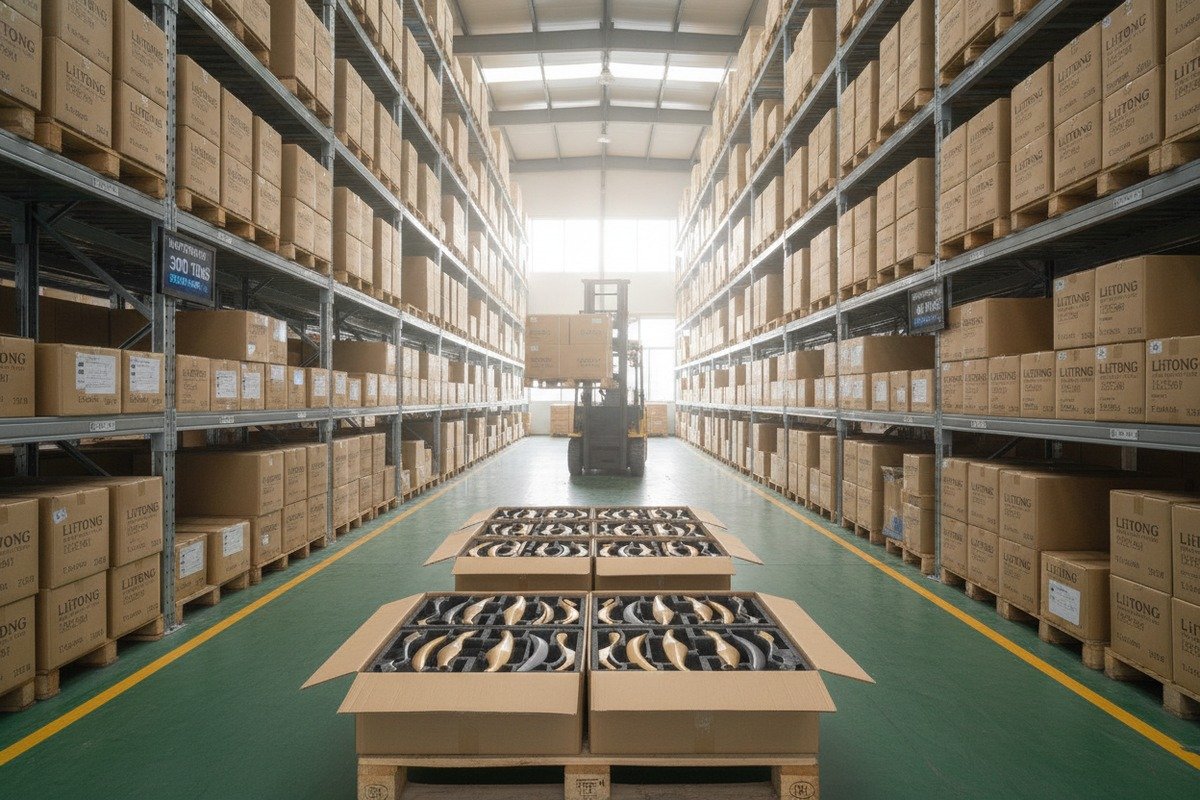
What "Technical Data Sheets" Actually Means
The term "technical data sheet" is vague. Different inspectors, customs officers, and project managers expect different things. Here is what you should be requesting — and what each document actually tells you:
| Document | What It Contains | Who Needs It |
|---|---|---|
| Material Test Certificate 8 (MTC) | Alloy grade, temper, chemical composition, mechanical properties | Customs, project fire inspectors |
| Safety Data Sheet (SDS/MSDS) | Chemical hazards, handling, fire behavior of coatings/finishes | Fire inspectors, safety auditors |
| Product Drawing / Technical Spec | Dimensions, tolerances, surface finish, assembly details | Project engineers, QC teams |
| Declaration of Conformity 9 (DoC) | Manufacturer's statement that the product meets a named standard | Customs, project owners |
| Third-Party Test Report | Independent lab results for specific fire, chemical, or mechanical tests | Fire review authorities, importers |
How to Get These Documents from Your Supplier
Here is where many importers make a mistake. They order the handles, wait for shipment, and then ask for documents at the last minute. By then, it is often too late.
Build documentation requirements into your purchase order. At our company, we include a documentation checklist in every OEM/ODM agreement. The checklist specifies:
- Which documents are required before shipment
- Which standards each document must reference
- The language (English, Vietnamese, or both)
- The format (PDF, hard copy, or both)
- Whether documents must be notarized or apostilled
What If Your Supplier Cannot Provide a Document?
Not every Chinese factory has the same documentation capability. Smaller workshops may not have MTCs for their raw materials or SDS for their coatings. In that case, you have two options:
- Request that the supplier obtain the document from their upstream material supplier. For example, the aluminum billet maker should have an MTC. The powder coating supplier should have an SDS.
- Arrange for independent third-party testing in China before shipment. Labs like SGS, TÜV, and Bureau Veritas have offices throughout Guangdong and can test samples and issue reports recognized by Vietnamese authorities.
The Cost of Missing Documents
Missing documents can lead to:
- Customs holds or delays at Vietnamese ports
- Rejection by the project owner or general contractor
- Failed fire-safety inspections during building acceptance
- Post-installation disputes and liability exposure
The cost of getting documents right upfront is a fraction of the cost of dealing with any of these problems.
How do I ensure that my custom-designed aluminum profiles comply with Vietnamese fire-retardant standards?
When our R&D team develops custom handle profiles for Vietnamese clients — like the sleek recessed pulls with champagne gold anodized finishes that are popular right now — we always start with one question: what is the project context?
To ensure custom-designed aluminum profiles comply with Vietnamese fire-retardant standards, confirm the fire reaction classification required by your building project, select alloys and finishes that meet those classifications, test the finished product at an accredited lab, and maintain a complete technical file linking the design to the applicable QCVN or TCVN standard.

Start with the Project, Not the Product
This is the most important principle in this entire article. Vietnamese fire and building safety regulations 10 are triggered by the project — the building type, occupancy, and fire-control design review status. A custom aluminum handle for a residential kitchen drawer is treated very differently from the same handle installed in a hospital corridor cabinet.
Before you finalize your custom design, gather these details from your end client:
- Building type (residential, commercial, public, industrial)
- Occupancy classification
- Whether the project is subject to fire-control design review
- Whether the component is part of an evacuation route, fire compartment, or fire-rated assembly
- Any specific standards named in the project specification
The Design-to-Compliance Workflow
Here is the workflow we follow at our Foshan facility when a Vietnamese client orders a custom handle for a regulated building project:
Step 1: Receive the client's specification and project context.
We need to know the alloy, finish, dimensions, and installation method — but also the building type and any named standards.
Step 2: Select materials that meet the fire-performance requirement.
For the aluminum body, we use 6063-T5 or 6061-T6 — both noncombustible. For finishes, we choose anodizing over organic coatings when fire performance is a concern. If powder coating is required, we select formulations with documented fire-test data.
Step 3: Produce samples and test.
We send samples to a third-party lab for any required fire, chemical, or mechanical testing. Results are compiled into a product test report.
Step 4: Compile the technical file.
The technical file includes the product drawing, bill of materials, MTCs, SDS sheets, test reports, and a Declaration of Conformity referencing the applicable Vietnamese standard.
Step 5: Ship with documentation.
All documents travel with the shipment or are sent digitally before arrival. The client has everything needed for customs clearance, project acceptance, and fire-safety inspection.
Common Failure Points in Custom Orders
Based on our experience, these are the most frequent compliance problems with custom aluminum handles destined for Vietnam:
- Undisclosed plastic components. The buyer approves the aluminum design but does not realize the handle includes a hidden nylon insert. That insert may need its own fire test.
- Coating substitution. The factory switches from the specified powder coating to a cheaper one without informing the buyer. The new coating may not have the same fire-test data.
- Missing traceability. The buyer cannot prove which alloy batch or coating lot was used on the shipped handles. Without traceability, test reports lose their value.
- Late discovery of project requirements. The buyer learns after shipment that the project requires a local Vietnamese fire test. Retesting and re-documentation add weeks or months.
Building a Compliance Checklist
Every importer should have a compliance checklist tailored to their product and market. Here is a starting template for aluminum furniture handles going into Vietnam:
- Product description complete (type, dimensions, alloy, coating, inserts, screws)
- End use identified (residential, commercial, public building, built-in or loose)
- Applicable Vietnamese standard confirmed with local consultant
- Supplier MTC for aluminum alloy obtained
- SDS for all coatings, adhesives, and non-metal components obtained
- Third-party fire test report obtained (if required by project)
- Declaration of Conformity prepared and signed
- Technical file compiled and stored digitally
- Labeling compliant with Vietnamese import labeling rules (product name, responsible entity, country of origin)
- Pre-shipment inspection completed (if required)
This checklist is not exhaustive. Your local Vietnamese compliance consultant, testing lab, or customs broker may add items based on your specific project. But it is a strong foundation.
Working with Vietnamese Consultants and Labs
We always recommend that our Vietnamese clients engage a local fire-safety consultant or accredited testing laboratory early in the procurement process. They can:
- Confirm the exact QCVN or TCVN standard that applies
- Review supplier documentation for completeness
- Arrange local testing if required
- Advise on customs classification and labeling
- Serve as the point of contact for fire inspectors during building acceptance
The cost of a consultant is small compared to the risk of non-compliance. And the peace of mind is worth every dollar.
Conclusion
Compliance is a process, not a single document. Match your handles to the right Vietnamese standards, get the right paperwork from your supplier, and verify with local experts before shipment arrives.
Footnotes
1. Explains the distinction and legal nature of QCVN (mandatory) and TCVN (voluntary) standards in Vietnam. ↩︎
2. Confirms that aluminum alloys are classified as non-combustible under relevant testing standards. ↩︎
3. Provides an overview of Vietnam’s National Technical Regulation on Fire Safety for Buildings and Constructions. ↩︎
4. Explains the basic requirements for fire prevention and protection in building design in Vietnam. ↩︎
5. Provides information on ISO 9001, a standard for quality management systems, not product fire safety. ↩︎
6. Explains Safety Data Sheets provide comprehensive information on chemical composition, hazards, and safe handling. ↩︎
7. Explains that accredited testing labs demonstrate competence and generate reliable results through ISO/IEC 17025. ↩︎
8. Defines a Material Test Certificate as a quality assurance document for material properties in the metals industry. ↩︎
9. Defines a Declaration of Conformity as a manufacturer’s formal statement of product compliance with regulations. ↩︎
10. Provides an overview of recent updates to Vietnam’s fire safety laws and regulations. ↩︎