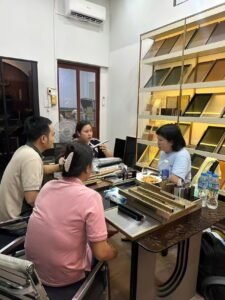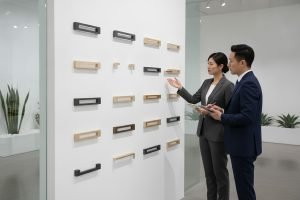
Every week, our sales team in Foshan fields calls from overseas buyers who have been burned by suppliers pretending to be factories National Enterprise Credit Information Publicity System 1. The problem is real, costly, and surprisingly common. You find a listing for sleek, minimalist recessed aluminum handles 2 at a great price. You place an order. Then the lead time stretches, communication becomes vague, and the finished product does not match the sample. Often, the root cause is simple: you were not dealing with the actual manufacturer CNC machines 3. You were dealing with a middleman who added markup, lost control of quality, and had no real authority over the production line.
To determine whether a Chinese aluminum handle supplier is a direct factory or a trading company, verify their business license scope for manufacturing terms, request live video tours of production lines, test their technical knowledge on alloy grades and finishing processes, and compare their lead times and MOQs against industry norms for direct producers.
The steps below break down exactly how to run this verification yourself anodizing lines 4. Each method is something we have seen work in practice, because our own customers use them on us and on every other supplier they evaluate. Let’s walk through them one by one.
How can I verify a supplier's business license to see if they are a real aluminum handle manufacturer?
When we onboard new wholesale partners, the first document we share is our business license — before they even ask raw aluminum billets 5. Most buyers skip this step entirely, and that is where sourcing problems start.
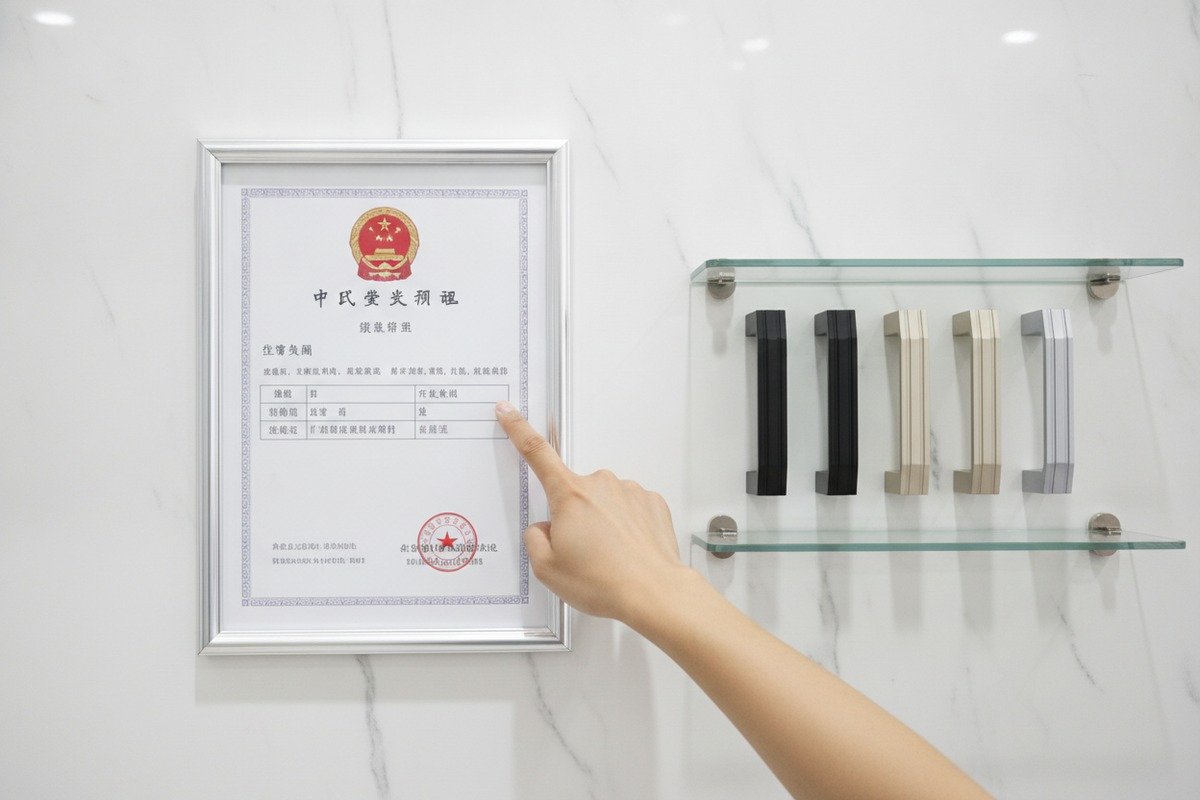
Request the supplier's Chinese business license and check the business scope field (经营范围) for terms like "生产" (production), "加工" (processing), or "制造" (manufacturing). If only "销售" (sales) or "贸易" (trade) appears, you are likely dealing with a trading company, not a direct factory.
What Is a Chinese Business License?
Every legally registered company in China holds a business license issued by the local Administration for Market Regulation 6. This document contains the company's legal name, registered address, legal representative, registered capital, date of establishment, and — most importantly — the business scope. The business scope is a short paragraph that lists what the company is legally permitted to do. business license scope 7 It is the single most reliable first-pass filter for separating factories from traders.
How to Read the Business Scope
Look for specific Chinese characters. Here is a quick reference table:
| Chinese Term | Pinyin | English Meaning | What It Suggests |
|---|---|---|---|
| 生产 | shēngchǎn | Production | Direct factory |
| 加工 | jiāgōng | Processing / Fabrication | Direct factory |
| 制造 | zhìzào | Manufacturing | Direct factory |
| 销售 | xiāoshòu | Sales | Could be trading company |
| 贸易 | màoyì | Trade | Trading company |
| 进出口 | jìn chūkǒu | Import & Export | Common for both, not decisive |
A genuine aluminum handle factory will almost always include production or processing in its scope. A trading company will lean heavily on sales and trade terms. Some companies have both — they manufacture certain products and trade others. In that case, dig deeper.
Where to Cross-Check
You do not have to rely solely on the document the supplier sends you. You can verify independently:
- National Enterprise Credit Information Publicity System (国家企业信用信息公示系统): This is the official Chinese government database. Enter the company name and pull up its registered details for free.
- Tianyancha or Qichacha: These are popular Chinese business intelligence platforms. They show registration info, legal disputes, shareholder changes, and related companies.
Compare the registered address on the license to what the supplier tells you. If the license says an office tower in Guangzhou but the supplier claims to be a factory in Foshan's industrial zone, that mismatch deserves a direct question.
A Real-World Check We Recommend
Ask the supplier to send a photo of their business license hung on the wall inside their facility. Factories in China are required to display it visibly. If they hesitate or send a cropped digital image with no context, press further. A confident factory has nothing to hide.
Also, check the registered capital. While not a perfect indicator, factories that invest in equipment, raw materials, and production space tend to have higher registered capital than small trading offices. For an aluminum extrusion 8 and handle production operation, a registered capital below ¥500,000 would be unusually low and worth questioning.
What specific signs should I look for during a video call to confirm I am talking to a direct factory?
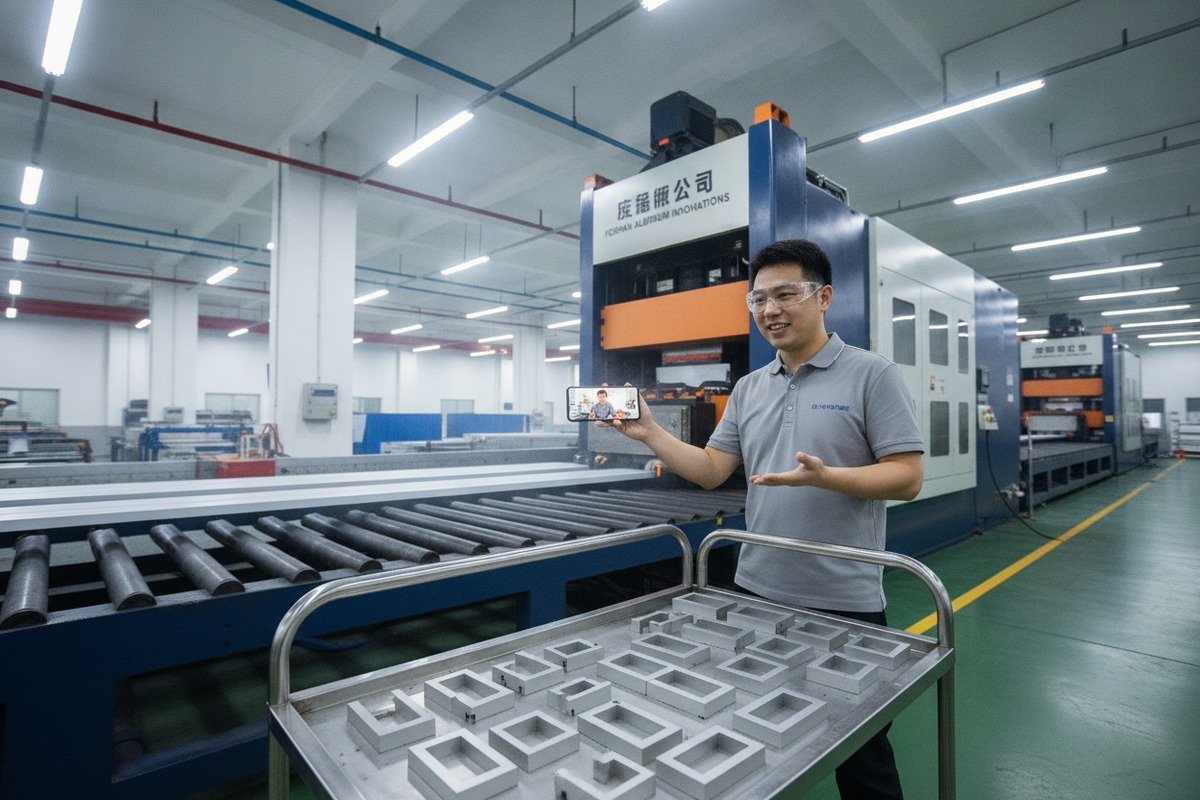
Our production floor runs aluminum extrusion, CNC cutting, anodizing, and packaging under one roof. When a buyer asks for a live video tour, we hand the phone to a workshop supervisor and let them walk freely. That confidence is hard to fake.
During a live video call, look for active production equipment such as extrusion presses, CNC machines, and anodizing lines; workers in uniforms performing real tasks; raw aluminum billets or coils in storage; and the supplier's branding or signage visible on the building. A trading company cannot convincingly replicate a live, unscripted factory walkthrough.
Why a Video Call Beats Photos Every Time
Photos can be borrowed, staged, or purchased from stock libraries. We have seen competitor listings use identical workshop images. A live, unscripted video call eliminates that risk. The key word is "unscripted." You want to control the camera direction, not the supplier.
What to Watch For
Here is a checklist of what genuine factory video calls usually reveal versus what trading companies struggle to show:
| Sign | Direct Factory | Trading Company |
|---|---|---|
| Active machinery running | Extrusion presses, CNC routers, polishing stations visible and operating | May show a quiet or empty workshop, or avoid showing the floor |
| Raw materials on site | Aluminum billets, coils, or bar stock in a warehouse area | No raw material storage visible |
| Workers on the floor | Uniformed operators at stations, doing repetitive production tasks | Few or no workers; may show office staff only |
| Product in various stages | Semi-finished handles, parts awaiting anodizing, packaged goods | Only finished goods on a display shelf |
| Signage and branding | Company name on building exterior, banners, or safety boards inside | Generic office with no production identity |
| Willingness to pan the camera | Open to showing any area you request | Reluctant to move camera beyond a specific zone |
Questions to Ask During the Call
Do not just watch passively. Direct the conversation:
- "Can you show me where the aluminum profiles are extruded?"
- "Walk me to your anodizing or powder coating line."
- "Show me a batch of handles that are in production right now."
- "Can I see your quality inspection area?"
A factory with 18 years of experience and 30 team members, like ours, will not hesitate. The workshop supervisor can explain each station. A trading company representative, by contrast, may fumble, redirect, or say the factory is "closed today." If the factory is always conveniently closed when you ask for a tour, that is a strong red flag.
Check the Environment
Factories are located in industrial zones. You will see concrete floors, high ceilings, ventilation systems, and possibly neighboring factories through windows. Trading companies operate from commercial office buildings with small showrooms. The physical environment on camera tells you a lot before anyone speaks a word.
Ask for a Spontaneous Demonstration
Request that the person on camera pick up a handle from the production line and explain its finish. A real factory worker or engineer will talk about alloy type, surface treatment, and tolerances naturally. A sales agent from a trading office will struggle to go beyond catalog talking points.
Can I tell if a supplier is a trading company by the way they handle my custom OEM requests?
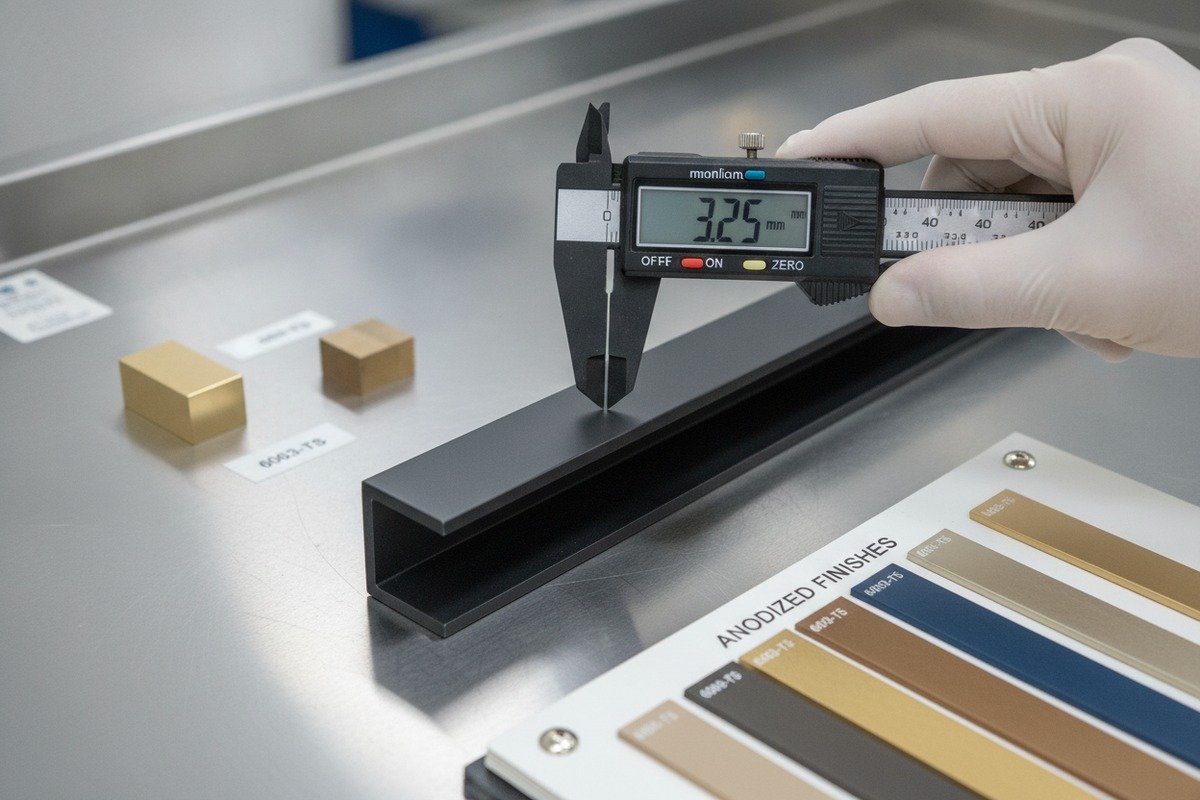
When buyers send us a custom handle drawing — say a recessed pull with a specific champagne gold anodized finish and a non-standard hole spacing — our engineering team responds within hours with feasibility notes, tooling cost, and a timeline. That speed and depth is only possible because we control the process in-house.
Yes. A direct factory responds to custom OEM requests with specific technical feedback — such as tooling feasibility, alloy recommendations, finish options, and tolerance limits — within a short timeframe. A trading company typically delays, gives vague answers, or says "let me check with the factory," because they must relay your request to an external producer they do not control.
The Customization Test
Customization is where the gap between a factory and a trader becomes most obvious. A direct factory lives inside its own capabilities. It knows what its extrusion dies can do, what finishes its anodizing line supports, what CNC tolerances it can hold, and what minimum batch size makes a custom run economical. A trading company knows none of this firsthand.
Key Questions That Expose a Trader
Try asking these specific questions and observe the response quality and speed:
- "Can you modify this handle's cross-section by 2mm without opening a new die?"
- "What aluminum alloy do you recommend for a handle that needs salt-spray resistance above 500 hours?"
- "If I change the surface from matte black anodizing to champagne gold, does that affect the lead time?"
- "Who owns the tooling if I pay for a custom extrusion die?"
- "Can you hold a tolerance of ±0.1mm on the screw hole centers?"
A factory answers these with process-level detail. A trader answers with marketing-level generality or delays.
Response Pattern Comparison
| Behavior | Direct Factory | Trading Company |
|---|---|---|
| Response time for technical questions | Hours to one business day | Several days; often says "checking with factory" |
| Detail level in answers | Specific: alloy grade, die cost, surface treatment parameters | General: "yes we can do it" with no specifics |
| Sample lead time for custom items | 5–10 days (they make it themselves) | 10–20+ days (they must coordinate externally) |
| Tooling ownership clarity | Clear policy: buyer owns the die after payment | Vague or avoidant on tooling ownership |
| Willingness to share drawings or specs | Will annotate your drawing with production notes | Returns your drawing unchanged with a price quote |
| Finish options offered | Lists exact processes: anodizing, powder coating, electrophoresis, brushing | Lists finishes by color name only, without process detail |
Why This Matters for Aluminum Furniture Handles
Aluminum handles for modern furniture — especially the sleek, recessed, architectural-style pulls popular in today's market — are highly finish-sensitive. A champagne gold anodized handle that looks warm and luxurious requires precise control of the anodizing bath chemistry, voltage, and sealing process. A matte charcoal grey finish demands consistent surface preparation before coating.
If your supplier cannot explain how they achieve these finishes, they probably do not do it themselves. And if they do not do it themselves, you lose control over consistency, color matching across batches, and defect resolution. In our own facility, we run sample batches on the same line that handles production orders, so the color you approve is the color you receive. A trader cannot guarantee that.
The Sample Workflow Reveals Everything
Ask for a custom sample before committing to a production order. Then watch the process closely. How long does it take? Does the supplier ask smart follow-up questions about your application? Do they suggest improvements to your design? A factory with real OEM experience will treat the sample as a mini engineering project. A trader will treat it as an order to forward.
How do the lead times and MOQ I receive help me identify if my supplier is a middleman?
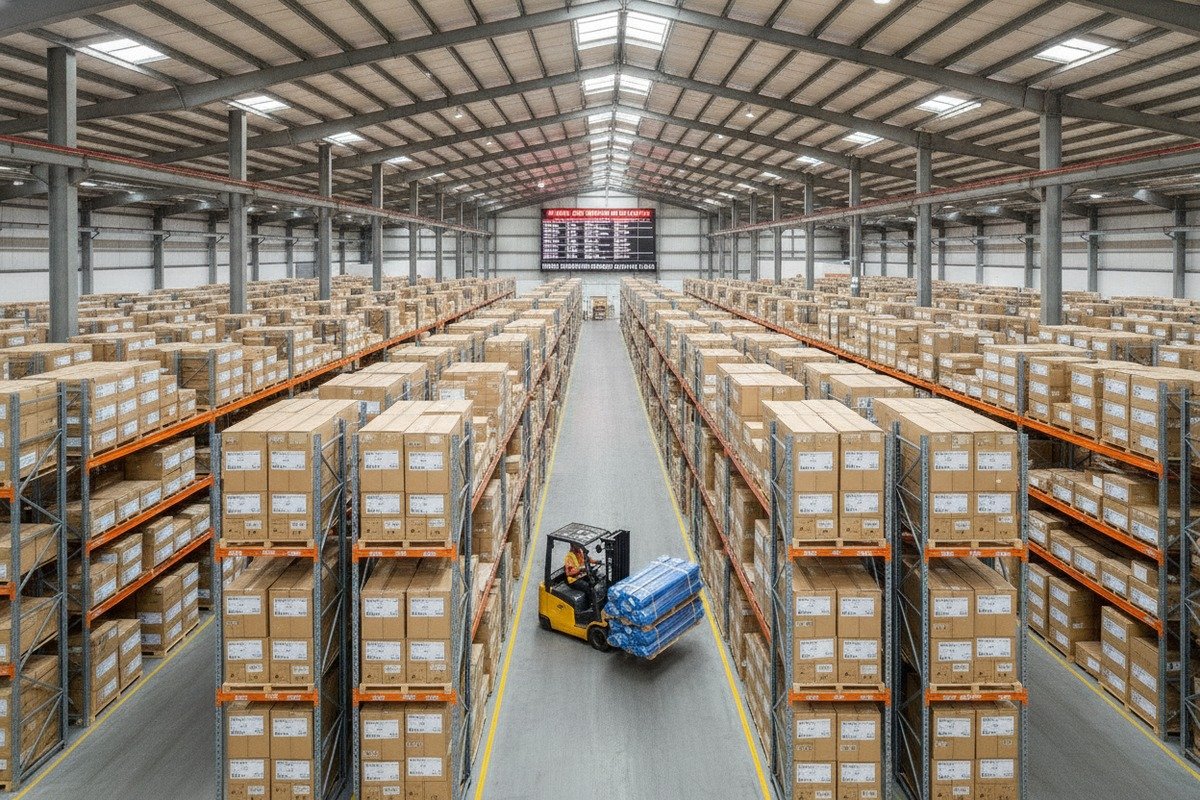
We keep over 300 tons of aluminum handle profiles in our Foshan warehouse, ready for 48-hour dispatch on stock items. When a new buyer compares our lead time to what a trader quotes for the same product, the difference is often a full week or more. That gap tells a story.
Lead times and MOQs are strong indicators. Direct factories offer shorter, more precise lead times — often 3 to 7 days for custom runs and 48 hours for stock items — because they control production scheduling. They also set MOQs based on real production economics. Trading companies quote longer, vaguer lead times and may inflate MOQs to meet the actual factory's requirements plus their own margin buffer.
How Lead Times Expose the Supply Chain
Every link in a supply chain adds time. When you order from a factory, the chain is short: you place the order, the factory schedules production, the factory ships. When you order from a trading company, the chain grows: you place the order, the trader forwards it, the factory schedules production, the factory ships to the trader or directly to you, and the trader coordinates logistics. That extra coordination step adds days — sometimes weeks.
Typical Lead Time Benchmarks
For aluminum furniture handles, here are the lead time ranges we see across the industry:
| Order Type | Direct Factory (Typical) | Trading Company (Typical) |
|---|---|---|
| Stock / ready-to-ship items | 24–72 hours | 5–10 days |
| Standard production run (existing die) | 3–7 days | 10–18 days |
| Custom OEM run (new die required) | 15–25 days | 25–40+ days |
| Sample production | 3–7 days | 7–15 days |
If a supplier quotes lead times at the longer end without a clear explanation — such as high season, custom tooling, or special finishing — that suggests they are not producing in-house.
How MOQs Tell the Same Story
A factory sets its MOQ based on production efficiency. For aluminum extrusion, there is a minimum run length that makes it economical to set up a die and run the press. For anodizing, there is a minimum batch size for the chemical bath. These are real, physics-based constraints. A factory knows its numbers and can explain them.
A trading company, on the other hand, takes the factory's MOQ and adds a buffer. If the factory's real MOQ is 200 pieces, the trader might quote 500 to ensure they hit the factory's threshold after accounting for their own logistics, inspection, and margin requirements. Or they might quote a suspiciously low MOQ to win your interest, then raise it later after you are committed.
What to Ask
- "What is your MOQ for this specific handle, and why?"
- "Can I order below your MOQ if I pay a premium? How much?"
- "What is the exact production time, not including shipping?"
- "Do you produce to order or hold inventory?"
A factory answers with production logic. A trader answers with commercial logic. The distinction is subtle but consistent. If the supplier says "our factory needs at least X days" — note the word "our." Then ask, "Is it your own factory, or a partner factory?" The answer, and the hesitation before it, tells you a lot.
The Flexibility Test
Try requesting a small adjustment to the standard lead time. Ask if you can get delivery two days faster by paying a rush fee. A factory can evaluate this immediately because they know their production queue. A trader has to ask someone else and come back to you — which adds its own delay and proves the point.
When a Trading Company Might Still Work
To be fair, trading companies are not always the wrong choice. If you need multiple product categories from different factories — say, aluminum handles, stainless steel hinges, and zinc knobs — a trading company can consolidate sourcing and shipping. For small, mixed orders, the convenience may outweigh the markup. But for large-volume, custom aluminum handle orders where finish consistency and lead time reliability matter, a direct factory is almost always the better path.
Conclusion
Telling a direct factory from a trading company is not about one single test. It is about layering multiple checks — business license verification, live video tours, technical depth on custom requests, and realistic lead time and MOQ benchmarks — until the picture becomes clear. The goal is not just a lower price. It is a trustworthy production path that gives you consistent aluminum handles, reliable delivery, and real control over quality. Do your homework before the first order, and you protect every order that follows.
Footnotes
1. Provides a complete guide to China’s official enterprise credit information system (NECIPS). ↩︎
2. Provides an ultimate guide to aluminum cabinet handles, including recessed types. ↩︎
3. Replaced 403 link with an educational resource providing a clear explanation of what CNC machines are and how they work. ↩︎
4. Replaced unknown HTTP status link with a comprehensive and authoritative Wikipedia article on anodizing. ↩︎
5. Explains what aluminum billets are, their production, and their importance as raw material. ↩︎
6. Explains the role and responsibilities of China’s State Administration for Market Regulation. ↩︎
7. Explains the legal definition and importance of a company’s business scope in China. ↩︎
8. Replaced 404 link with an authoritative industry source explaining the basics of the aluminum extrusion process. ↩︎
9. Replaced 404 link with an authoritative and comprehensive encyclopedia entry on Chinese business licenses. ↩︎
10. Replaced 406 link with an authoritative Wikipedia article defining ‘Original equipment manufacturer’ and its various meanings. ↩︎