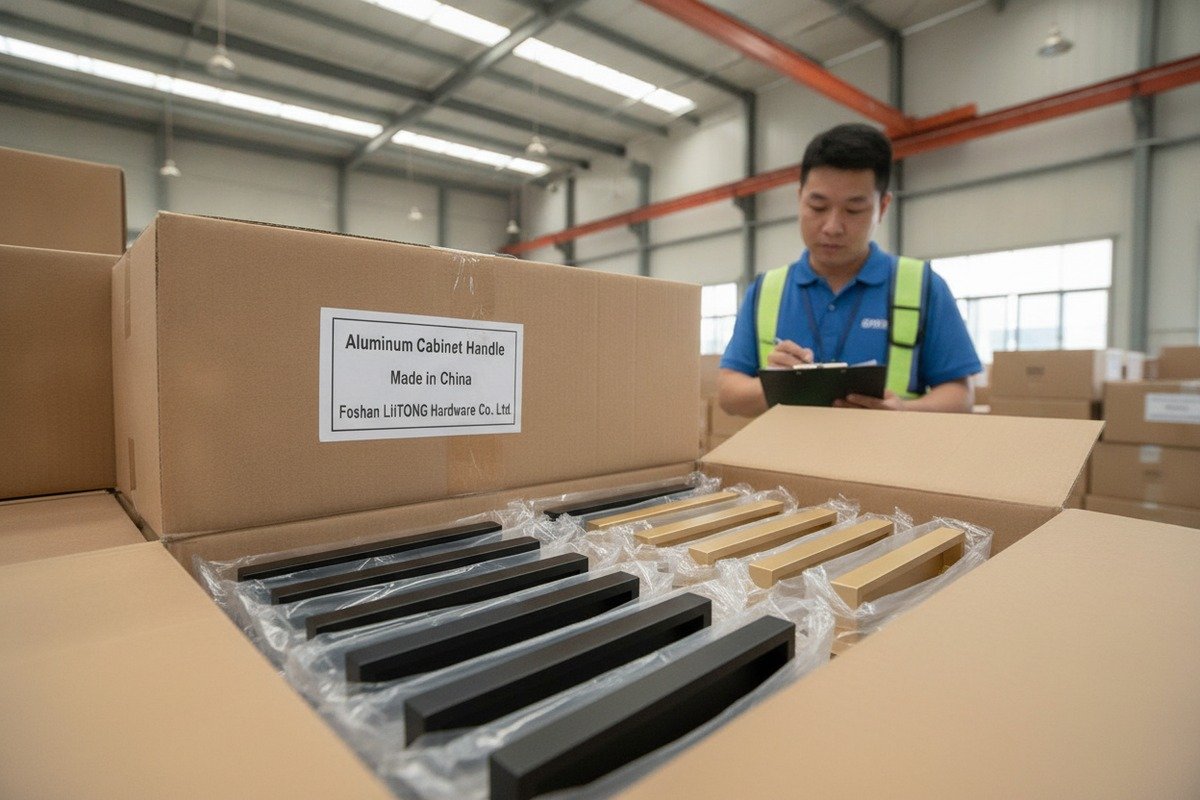
Every month, our Foshan warehouse ships hundreds of cartons of aluminum handles to Vietnamese distributors — and labeling questions come up on nearly every order.
Vietnam requires imported aluminum furniture handles to carry an original label showing the product name, country of origin, and manufacturer details. If the original label is not in Vietnamese, the importer must add a Vietnamese supplementary label before selling the goods in the local market. These rules come from Vietnam’s general goods-labeling decrees, not a special hardware regulation.
Below, we break down the exact information your labels need, how to verify your supplier’s markings, when a Vietnamese sub-label is required, and the most common mistakes that cause customs delays general goods-labeling decrees 1. Let’s walk through each step so your next shipment clears smoothly.
What mandatory information must I include on labels when importing aluminum handles into Vietnam?
When we prepare export documents 2 for our Vietnamese clients, the labeling checklist is one of the first things we review together before production starts.
You must include the product name, country of origin (e.g., "Made in China"), the manufacturer's name and address, and — on the Vietnamese supplementary label — the importer's name and address in Vietnam. These are the core mandatory elements under Vietnam's Decree 43/2017 as amended by Decree 111/2021.
The Legal Basis: Decree 43/2017 and Decree 111/2021
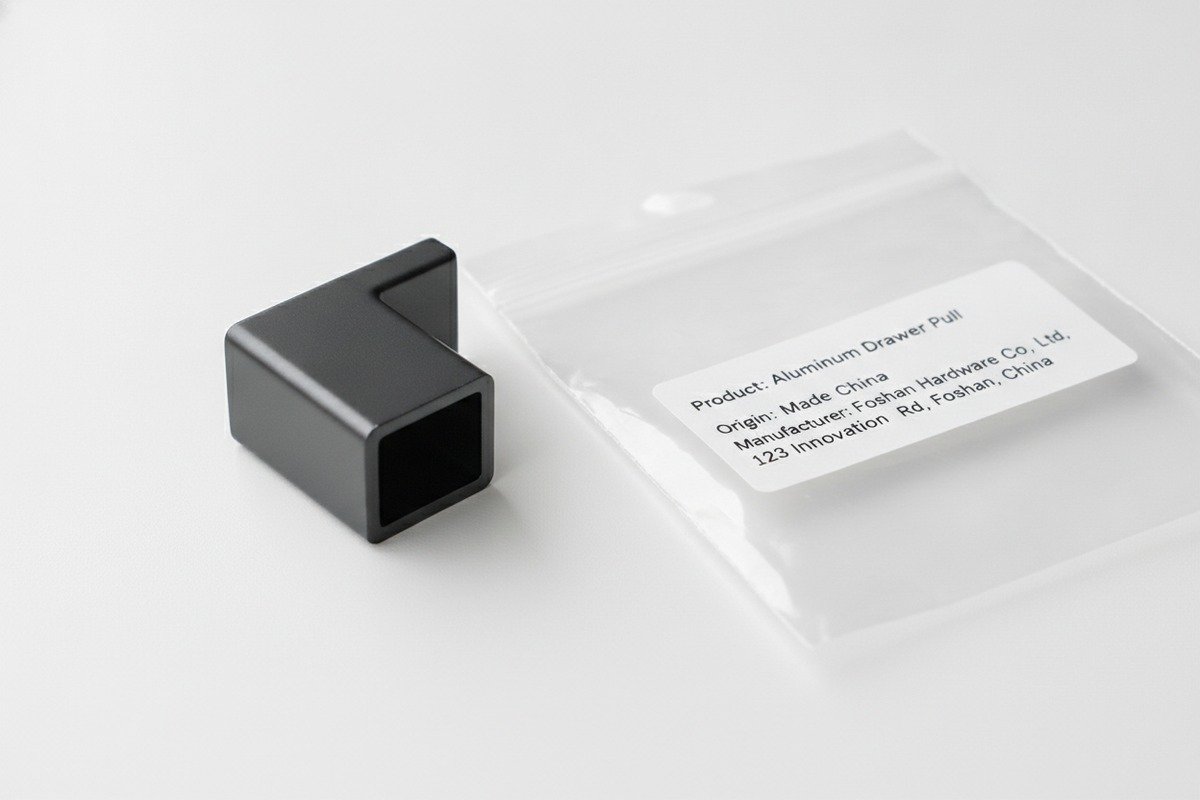
Vietnam's general goods-labeling system is governed by Decree No. 43/2017/ND-CP 3, which was updated by Decree No. 111/2021/ND-CP. These decrees apply to virtually all commercial goods 4 circulated in Vietnam, including ordinary hardware products like aluminum cabinet handles Decree No. 111/2021/ND-CP 5. Because furniture handles are not classified under a special regulated category — unlike food, pharmaceuticals, or medical devices — the labeling obligations follow the general framework rather than any sector-specific rule.
This is good news for importers. It means you do not need to chase a product-specific certification mark just to bring aluminum handles into the country. But it also means you must get the general label right, because customs officers check it carefully.
What Goes on the Original Label?
The original label is the one applied at the factory — our factory, in this case. It travels with the goods from China to Vietnam. Here is what it must show:
| Label Element | What to Write | Example |
|---|---|---|
| Product name | A clear description of the goods | "Aluminum Cabinet Handle" or "Furniture Drawer Pull" |
| Country of origin 6 | Where the goods were manufactured | "Made in China" |
| Manufacturer name | The producing company's legal name | "Foshan LiliTONG Hardware Co., Ltd." |
| Manufacturer address | Factory or registered office address | "Foshan, Guangdong, China" |
| Quantity or specifications | If applicable, dimensions or count | "Length: 256mm / 1 pc per bag" |
The original label can be in English, Chinese, or Vietnamese. At customs clearance, the officer needs to see this label physically attached to the product or its immediate packaging. If the label is missing, your shipment can be held.
What Goes on the Vietnamese Supplementary Label?
The supplementary label is what the importer adds after the goods arrive in Vietnam but before they are sold. This label must be in Vietnamese. It does not replace the original label — it sits alongside it. The supplementary label must include:
- Product name in Vietnamese
- Importer's name and address in Vietnam
- Country of origin in Vietnamese (e.g., "Sản xuất tại Trung Quốc")
- Any other mandatory details not already shown in Vietnamese on the original label
Our team often helps Vietnamese distributors draft the supplementary label content so it matches the original label exactly. Consistency between the two labels is critical.
What Vietnam Does Not Usually Require for This Product Type
Aluminum furniture handles 7 are ordinary hardware. Based on current regulations, they do not typically require the CR mark, ICT mark, EE label, or other certification symbols that apply to electrical, electronic, or medical products. You also do not need to print a manufacturing year or detailed usage instructions unless the product involves a genuine safety concern. Keep the label simple, accurate, and complete.
How can I verify that my Chinese manufacturer is correctly marking the country of origin on my hardware?
Over the past 18 years of exporting aluminum profiles and handles, we have learned that origin marking errors are one of the fastest ways to trigger a customs inspection — in Vietnam or anywhere else.
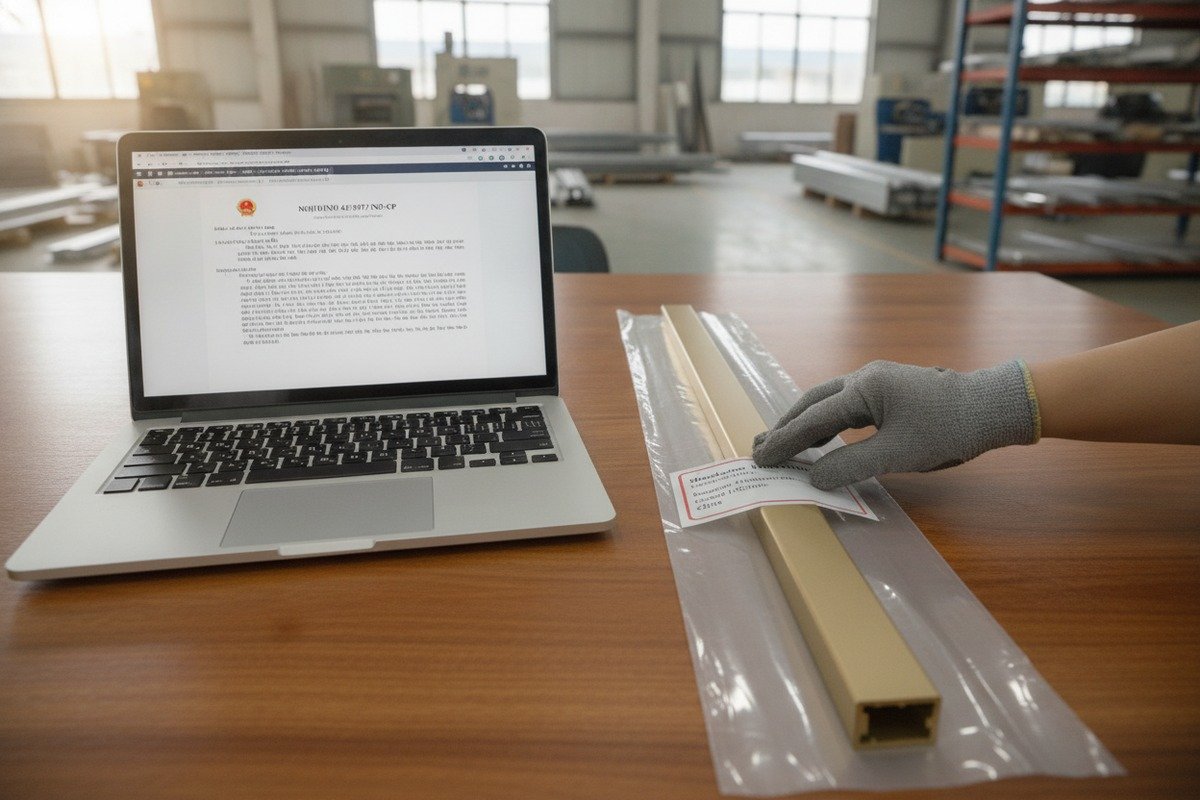
Request a pre-shipment label photo or sample carton before your order ships. Confirm the origin statement reads "Made in China" or an equivalent phrase, check that it is permanently printed or engraved rather than on a removable sticker, and cross-reference it with your commercial invoice and certificate of origin.
Why Origin Marking Gets Extra Scrutiny
Vietnam has experienced cases of origin fraud involving aluminum products — goods manufactured in China but falsely labeled as "Made in Vietnam" to exploit trade preferences or avoid duties. As a result, customs authorities pay close attention to origin claims on aluminum imports. Your origin marking must be truthful and consistent across every document and label.
Acceptable Origin Phrases
Vietnam's labeling rules accept several standard phrases. Here are the most common options:
| Acceptable Phrase | Language | Notes |
|---|---|---|
| Made in China | English | Most widely recognized internationally |
| Manufactured in China | English | Also acceptable; slightly more formal |
| Product of China | English | Less common for hardware but valid |
| Sản xuất tại Trung Quốc | Vietnamese | Required on the Vietnamese supplementary label |
| 中国制造 | Chinese | Acceptable on the original label if Chinese is the label language |
Avoid vague phrases like "Imported" or "Foreign Made." These do not satisfy the origin requirement.
Practical Verification Steps
Here is what we recommend to our buyers:
- Ask for label artwork before production. Our team sends a label layout for approval before we print. You should review the origin statement, font size, and placement.
- Request a photo of the actual label on the product. Once production is done, ask your supplier for a close-up photo of the label as it appears on the handle or packaging.
- Check your commercial invoice. The country of origin on the invoice must match the label. If the label says "Made in China" but the invoice is ambiguous, customs may flag it.
- Get a certificate of origin (CO). For Vietnam, a China-ASEAN Free Trade Area Form E is common. The CO should match the origin on the label and invoice.
- Inspect during quality control. If you use a third-party inspection company, add label verification to the inspection checklist.
What About OEM and Private-Label Buyers?
If you are ordering handles under your own brand through an OEM arrangement 8, the origin must still say "Made in China." Your brand name can appear on the product, but that does not change where it was manufactured. On the Vietnamese supplementary label, list your Vietnam-based entity as the importer or distributor. This is a point where many private-label importers make mistakes — they assume that branding replaces origin, but it does not.
Do I need to provide a Vietnamese sub-label if my original packaging is in English or Chinese?
Most of the handles leaving our factory carry English or Chinese labels — and nearly every Vietnamese buyer we work with needs to add a local-language sub-label before selling.
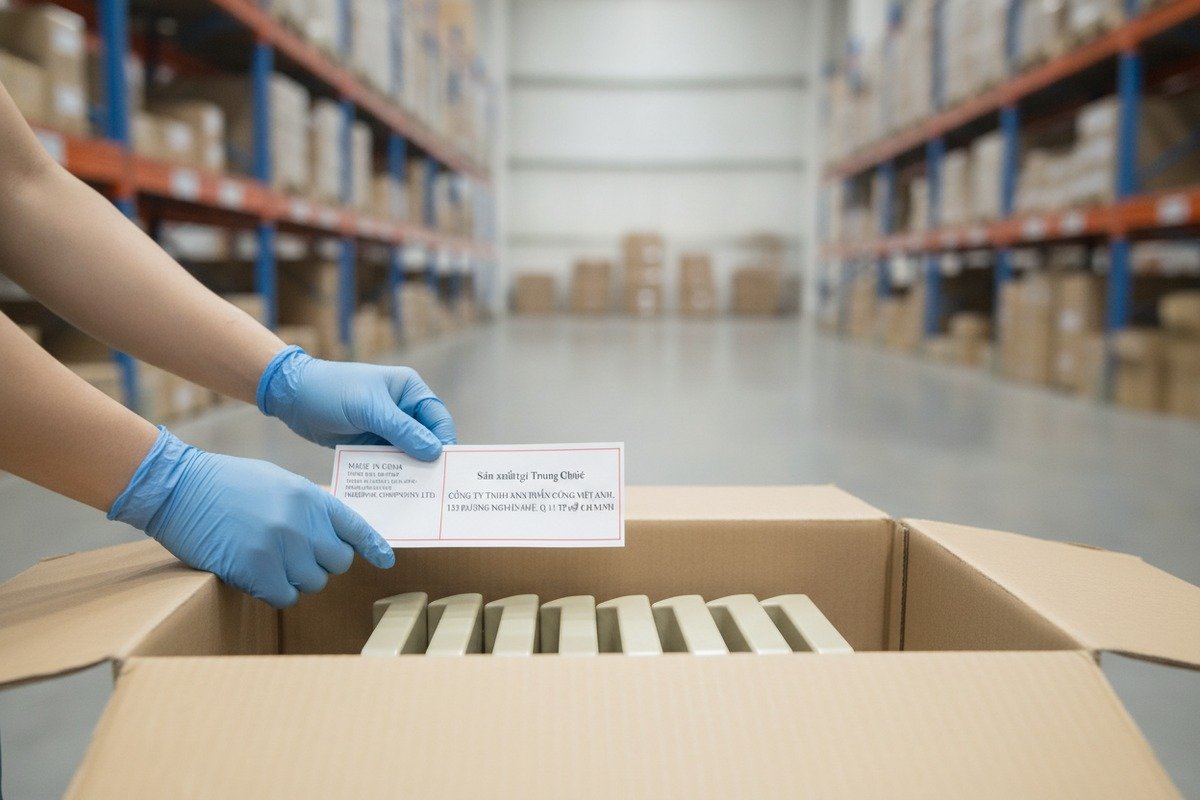
Yes. If your original packaging is in English or Chinese and the goods will be sold in Vietnam, you must add a Vietnamese supplementary label before the products enter the domestic market. This label translates and supplements the mandatory information so Vietnamese consumers and market inspectors can read it.
When Exactly Must the Sub-Label Be Added?
The timing matters. At customs clearance, the original label — even in English or Chinese — is usually sufficient as long as it contains the mandatory information. The Vietnamese supplementary label must be applied after customs clearance and before the goods are offered for sale in Vietnam. This means you have a window between the port and your warehouse to prepare and attach the labels.
Some importers print the Vietnamese labels in advance and apply them in their local warehouse. Others use a labeling service near the port. Either approach works, as long as the label is on the product before it reaches the end buyer.
What the Supplementary Label Must Include
The supplementary label does not need to repeat everything on the original label. It must provide, in Vietnamese, any mandatory information that the original label does not already present in Vietnamese. In practice, for aluminum furniture handles, the supplementary label typically includes:
- Product name in Vietnamese (e.g., "Tay nắm tủ nhôm")
- Country of origin in Vietnamese (e.g., "Sản xuất tại Trung Quốc")
- Importer's legal name and address in Vietnam
- Quantity or specifications, if not already clear from the original label
Can English Stay on the Label?
Yes. The original English or Chinese label remains. The Vietnamese supplementary label is added alongside it, not as a replacement. You can even have a bilingual supplementary label — Vietnamese plus English — but the Vietnamese text is the compliance baseline. If an inspector sees only English on a product in a Vietnamese retail shop, that product is non-compliant.
Who Is Responsible?
The importer in Vietnam holds the legal responsibility for the supplementary label. As a Chinese manufacturer, we can help draft the content and even print bilingual labels at our factory if the buyer provides the Vietnamese text. But the legal obligation sits with the entity importing the goods into Vietnam. This is an important distinction that many first-time importers overlook.
| Responsibility | Party | Action |
|---|---|---|
| Original label content and accuracy | Manufacturer (China) | Apply correct label at factory before shipment |
| Vietnamese supplementary label | Importer (Vietnam) | Prepare and apply label before domestic sale |
| Label consistency check | Both | Ensure supplementary label matches original label |
| Legal liability for non-compliance | Importer (Vietnam) | Faces fines, delays, or sales prohibition if labels are wrong |
What are the specific labeling mistakes I should avoid to ensure my furniture handles clear Vietnam customs smoothly?
After processing thousands of orders for the Vietnamese market, our shipping team has seen the same labeling problems cause delays over and over again.
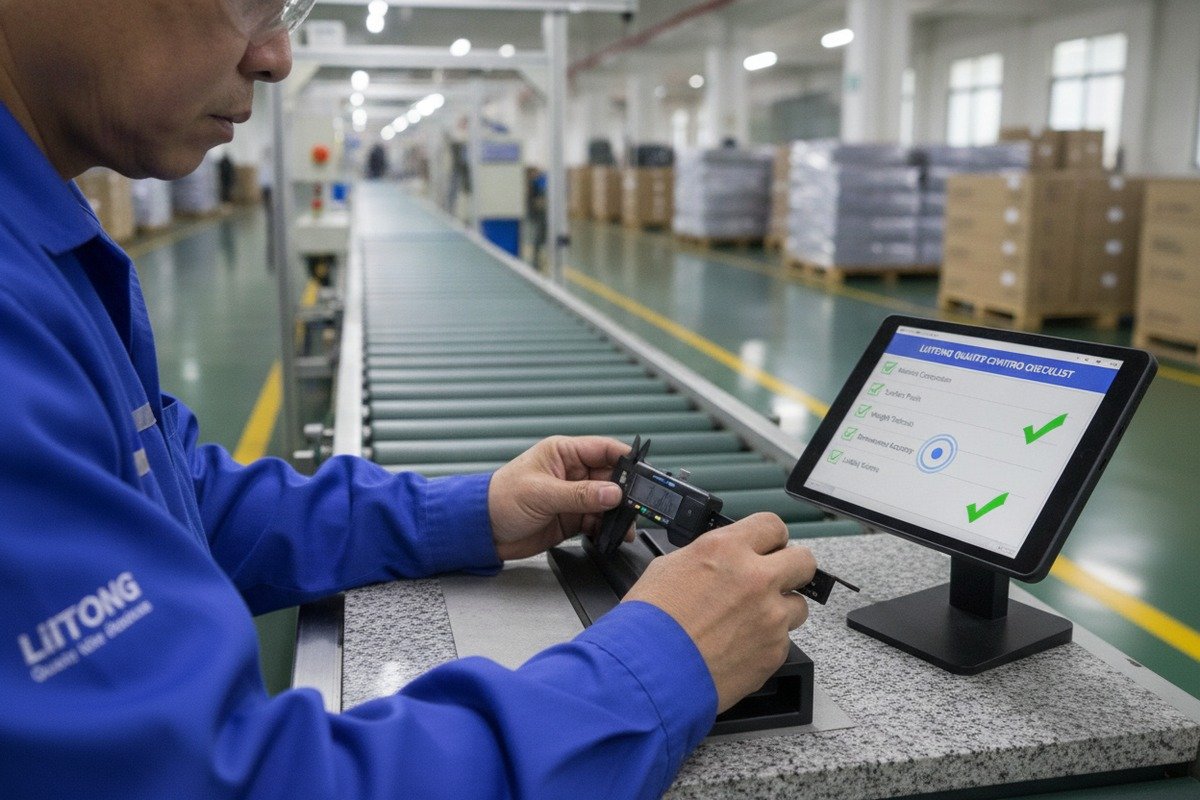
The most common mistakes are missing or vague country of origin statements, inconsistencies between the label and shipping documents, forgetting the importer's name and address on the Vietnamese sub-label, and labeling only the outer carton while leaving individual product packaging unmarked. Avoiding these errors can save you weeks of customs processing time.
Mistake 1: Vague or Missing Origin Statement
Writing "Imported" instead of "Made in China" is not enough. Some suppliers leave the origin off entirely, assuming the commercial invoice covers it. It does not. The label on the product or its immediate packaging must state the origin clearly. We always double-check this before sealing cartons.
Mistake 2: Label Says One Thing, Documents Say Another
If your product label says "Made in China" but your invoice lists a Hong Kong trading company as the manufacturer, customs may flag this as an inconsistency. Make sure the manufacturer name and origin are aligned across the label, commercial invoice, packing list, and certificate of origin.
Mistake 3: Only Labeling the Outer Carton
A master carton label is not a substitute for individual product labels. If each handle is sold separately in Vietnam, each handle — or its individual packaging — needs the required label. We often see buyers label the shipping carton but forget the poly bag or inner box. This creates problems when the goods are unpacked for retail.
Mistake 4: No Importer Information on the Vietnamese Label
The Vietnamese supplementary label must include the importer's name and address. Some importers skip this, thinking the manufacturer's details are enough. They are not. Vietnam's rules specifically require identification of the responsible entity within Vietnam.
Mistake 5: Conflicting Information Between Original and Supplementary Labels
If the original label says "Aluminum Alloy Cabinet Handle" and the Vietnamese label says "Stainless Steel Drawer Pull," you have a conflict. This can trigger an inspection or even a charge of mislabeling. The supplementary label must translate and supplement — not contradict — the original.
Mistake 6: Using Removable Stickers for Origin Marks
A sticker that peels off easily may be treated as if no origin mark exists. Use durable labels — printed, engraved, or firmly adhered — so the marking survives shipping, handling, and warehouse storage.
Quick Reference: Mistakes and Fixes
| Common Mistake | Risk | How to Fix |
|---|---|---|
| Vague origin like "Imported" | Customs rejection or hold | Use "Made in China" explicitly |
| Document-label mismatch | Inspection and delays | Align all documents before shipment |
| Only outer carton labeled | Non-compliance at retail level | Label each individual unit or inner pack |
| Missing importer info on sub-label | Sales prohibition in Vietnam | Add importer name and Vietnam address |
| Conflicting original and sub-label | Mislabeling charge | Translate accurately; do not add new claims |
| Removable origin sticker | Treated as unlabeled | Use permanent print or strong adhesive labels |
A Final Practical Tip
Before your first shipment, create a labeling checklist with your Chinese supplier and your Vietnamese customs broker 10. Share the checklist with both sides. At our factory, we provide label proofs for buyer approval before every production run. This one step eliminates most of the problems listed above. A ten-minute review prevents a ten-day delay.
Conclusion
Getting your labeling right is not complicated — but it does require coordination between your Chinese supplier and your Vietnamese import team. Focus on accurate origin marking, complete mandatory information, and a proper Vietnamese supplementary label, and your aluminum furniture handles will clear customs without unnecessary delays.
Footnotes
1. Explains Vietnam’s general labeling requirements for goods. ↩︎
2. Replaced with an authoritative .gov link from the International Trade Administration detailing common export documents. ↩︎
3. Official information on Vietnam’s primary goods labeling decree. ↩︎
4. Replaced with a Wikipedia page providing a general definition of ‘goods’, including a specific mention of ‘commercial goods’ in an economic context. ↩︎
5. Provides details on the amendment to Vietnam’s goods labeling decree. ↩︎
6. Explains the rules and importance of country of origin in international trade. ↩︎
7. Provides an overview of aluminum handles, their features, and applications in furniture. ↩︎
8. Defines Original Equipment Manufacturer (OEM) and its role in production. ↩︎
9. Explains the purpose and types of certificates of origin in global trade. ↩︎
10. Describes the role and importance of customs brokers in international shipping. ↩︎