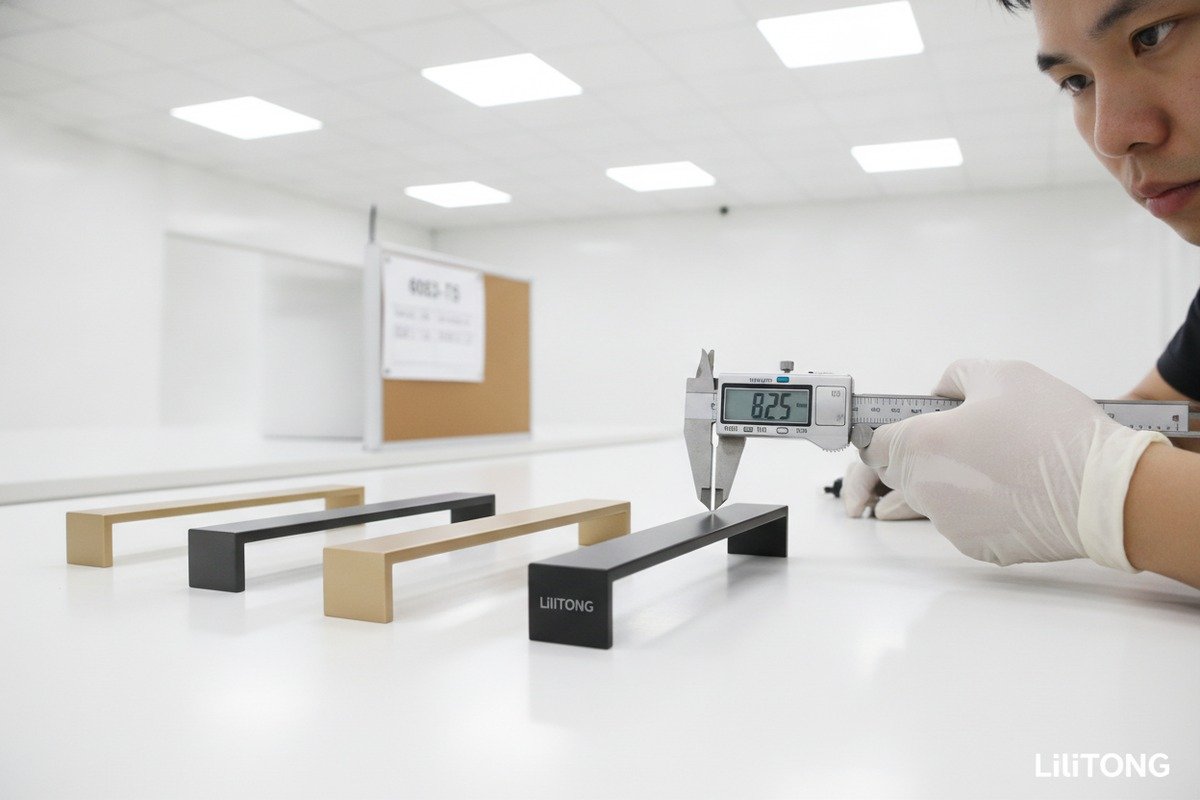
Every week, our production team fields calls from furniture factory owners frustrated by handles that bent, corroded, or snapped after just a few months of use material hardness 1. The root cause is almost always the same: the buyer focused on price and appearance but never checked the actual material specs. It is a costly mistake — not just in replacement hardware, but in damaged furniture, lost end customers, and a tarnished brand reputation.
When sourcing aluminum furniture handles, focus on three non-negotiable quality indicators: material hardness (verified by alloy grade and temper designation like 6063-T5 or 6061-T6), corrosion resistance (ensured through anodizing or powder coating), and load-bearing capacity (determined by wall thickness, profile design, and mounting hardware quality).
These three pillars separate handles that last a decade from those that fail in months powder coating 2. Let me walk you through each indicator in detail so you can evaluate your next shipment with confidence.
How Can I Verify the Hardness and Material Grade of Aluminum Handles to Ensure They Won't Deform Under Heavy Use?
Over 18 years of producing aluminum handles in our Foshan facility, we have seen one issue more than any other: buyers receive handles made from unspecified, soft aluminum alloys that deform the first time someone pulls open a heavy drawer. The problem is not aluminum itself. The problem is using the wrong alloy and temper.
To verify hardness, always request the specific alloy grade (6063-T5 for standard use, 6061-T6 for heavy-duty applications) and the temper designation from your supplier. Confirm with a material test certificate, and perform simple bend and scratch tests on samples before placing bulk orders.

Why Alloy Grade Matters More Than You Think
"Aluminum" is not one material. It is a family of alloys with wildly different properties. The alloy determines the base hardness, strength, and workability of the handle.
In our production lines, we primarily work with two alloys:
- 6063-T5: This is the industry standard for extruded furniture handles. It contains magnesium and silicon, which give it a good balance of strength, smooth surface finish, and excellent extrudability. It is the go-to for most cabinet pulls and drawer handles.
- 6061-T6: This alloy is stronger and harder. We recommend it for heavy-duty applications like large wardrobe doors or commercial cabinetry that sees thousands of pulls per day.
The alloy you should avoid is the 1100 series. It is essentially pure aluminum — very soft, easy to bend by hand, and completely unsuitable for furniture hardware. Some low-cost suppliers use it because it is cheap. It will fail quickly.
Understanding the "T" Temper Designation
The number after the "T" tells you how the aluminum was heat-treated. This directly affects hardness.
| Temper | Process | Hardness Level | Best Use Case |
|---|---|---|---|
| T5 | Artificially cooled and aged after extrusion | Medium-high | Standard cabinet handles, drawer pulls |
| T6 | Fully heat-treated, quenched, and aged | High | Heavy-duty pulls, commercial furniture, large doors |
| T0 / No temper | No heat treatment | Low (soft) | Not suitable for handles |
If your supplier cannot tell you the temper designation 3, that is a red flag. Walk away.
Simple Tests You Can Do on Samples
Before committing to a bulk order, test the samples:
- The Bend Test: Hold the handle at both ends and apply moderate downward pressure in the center. A 6063-T5 4 handle should not flex noticeably. If it bends easily, the alloy is too soft or the walls are too thin.
- The Scratch Test: Run a coin firmly across the surface. Properly tempered aluminum resists light scratching. Soft, untempered aluminum will scratch easily and deeply.
- Request a Mill Test Certificate (MTC): This document from the raw material supplier confirms the alloy composition and temper. Any reputable manufacturer — including us — can provide this on request.
The Cost of Getting Hardness Wrong
A soft handle does not just look bad when it bends. It creates a chain reaction. The bent handle puts uneven stress on the mounting screws. The screws loosen. The door or drawer sags. The end customer blames the furniture maker. And the furniture maker blames the wholesaler who supplied the hardware. I have seen this cycle play out dozens of times with clients who switched to us after a bad experience elsewhere.
What Surface Treatment Standards Should I Require to Prevent My Handles from Corroding or Fading Over Time?
When we ship handles to clients in the Middle East or Southeast Asia, humidity and salt air are constant enemies. Our engineering team learned early on that even the best alloy will fail without the right surface treatment. The finish is not just cosmetic. It is the handle's armor.
Require anodized finishes (clear or color) for kitchen and bathroom handles, as anodizing creates a thick, hard oxide layer that resists corrosion, scratching, and fading. For outdoor or UV-exposed applications, powder coating at 3–5 mils thickness offers superior UV and chip resistance.
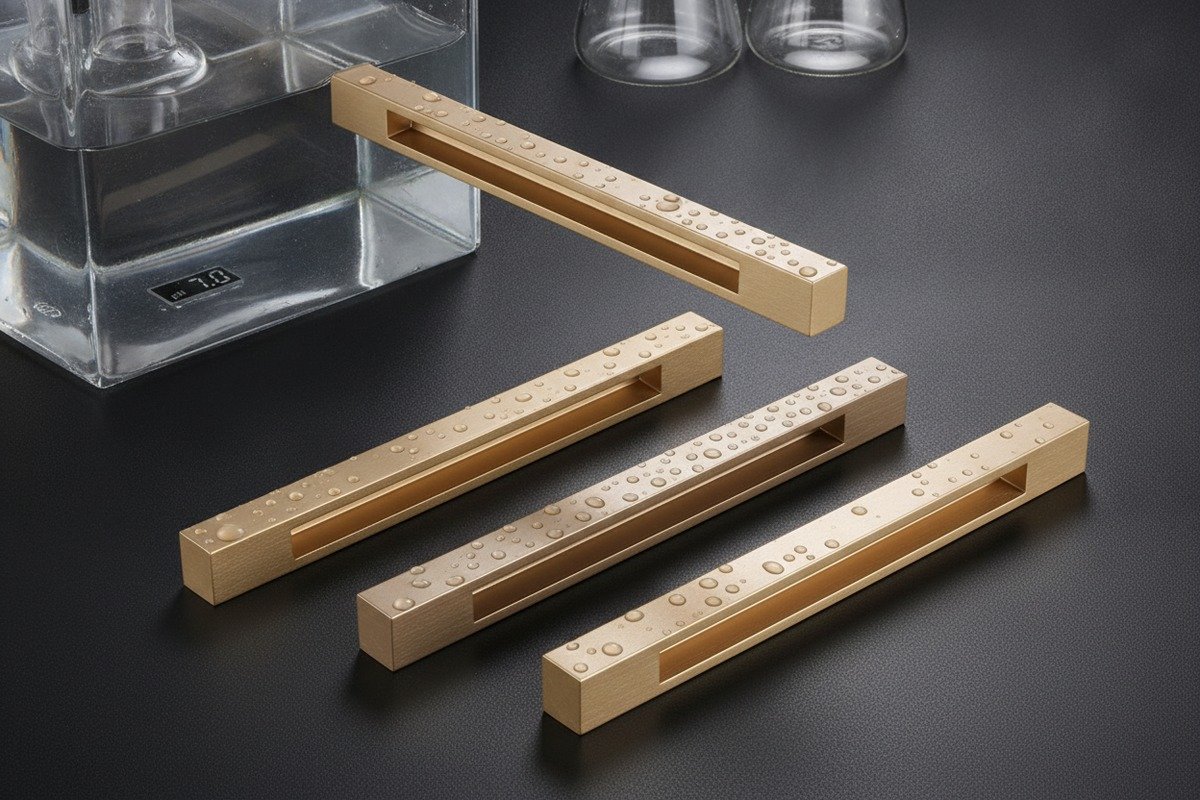
Anodizing: The Gold Standard for Indoor Handles
Anodizing is an electrochemical process 6 that thickens aluminum's natural oxide layer. The result is a surface that is extremely hard, non-conductive, and resistant to moisture, chemicals, and abrasion.
In our factory, we offer both clear anodizing and color anodizing. Clear anodizing preserves the natural metallic look — that smooth, satin sheen you see on premium handles. Color anodizing adds champagne gold, bronze, black, or other tones while keeping the same protective properties.
Here is how different finishes compare:
| Finish Type | Corrosion Resistance | Scratch Resistance | UV Resistance | Best Application |
|---|---|---|---|---|
| Mill Finish (uncoated) | Very low | Very low | None | Never use in kitchens or bathrooms |
| Clear Anodized | High | High | Moderate | Kitchen cabinets, bathroom vanities |
| Color Anodized | High | High | Moderate-high | Modern kitchens, interior furniture |
| Powder Coated (3–5 mils) | Very high | High | Very high | Outdoor furniture, UV-exposed areas |
Why Mill Finish Is a Trap
Mill finish means the aluminum has no protective coating at all. It relies solely on the thin natural oxide layer 7, which is only a few nanometers thick. In a humid kitchen, a mill finish handle will start to oxidize within weeks. It turns dull, then chalky, then black. Vinegar, lemon juice, or tomato sauce can accelerate this process dramatically.
I have had clients send me photos of competitor handles that turned black and sticky in under six months. Every single time, the handles were mill finish. If your supplier offers "raw aluminum" handles at a very low price, this is almost certainly what you are getting.
How to Visually Inspect a Finish
You do not need a lab to spot a quality finish:
- Anodized surfaces have a uniform, slightly glassy or satin sheen. They feel smooth and hard to the touch.
- Poor finishes look dull, chalky, or uneven. You may see streaks, bubbles, or pitting.
- Powder coated surfaces should be uniform in thickness with no drips, orange peel texture, or bare spots.
The Acid Test for Kitchen Handles
For handles destined for kitchens, ask your supplier about acid resistance. A properly anodized handle should resist contact with common kitchen acids — vinegar, citrus juice, cleaning products — without staining or corroding. At our facility, we test sample batches by exposing them to acidic solutions for 48 hours. The finish should show zero degradation.
Color Stability Under Light
If your handles will be near windows or under cabinet lighting, ask about UV stability. Anodized colors are generally stable because the color is embedded in the oxide layer, not painted on top. Powder coats with UV-resistant formulations also hold up well. Cheap painted finishes, however, will fade and chalk within a year or two of UV exposure.
How Do I Evaluate the Load-Bearing Capacity and Structural Integrity of Aluminum Handles for Large Cabinet Doors?
We once received a return request from a furniture factory in Vietnam. Their handles — sourced from another supplier — were snapping off heavy kitchen drawers loaded with pots and pans. The handles looked fine. The alloy was acceptable. But the walls were paper-thin, and the screws were cheap zinc-plated steel that rusted and loosened within weeks. Load-bearing failure is rarely about one thing. It is a system failure.
Evaluate load-bearing capacity by checking the handle's wall thickness (minimum 2mm for heavy-duty use), extrusion profile design (solid and uniform), and mounting hardware quality (stainless steel 304 screws with tapped holes). These three elements together determine whether a handle can withstand daily use on heavy cabinet doors and drawers.

Wall Thickness: The Hidden Differentiator
From the outside, two handles can look identical. But cut them in cross-section, and the difference is obvious. Premium handles have walls of 2mm or thicker. Budget handles often have walls of 1mm or less. That extra millimeter makes an enormous difference in rigidity and resistance to bending.
When we design handles for our OEM clients, we always discuss the intended application first. A small bathroom vanity knob does not need the same wall thickness as a 12-inch pull on a heavy pantry door. Matching the profile to the use case is critical.
Extrusion Profile Design
The shape of the handle's cross-section determines how it distributes force. Our recessed, L-shaped profiles — like the ones in our current minimalist line — are engineered to direct pulling force along the strongest axis of the aluminum. A poorly designed profile concentrates stress at weak points, leading to cracking or deformation.
Look for these signs of a strong profile:
- Uniform wall thickness throughout the cross-section
- No thin spots or sudden transitions in material thickness
- Tight tolerances — the handle should feel precise, with no wobble or gaps when installed
Mounting Hardware: The Weakest Link
A handle is only as strong as its mounting. This is where many suppliers cut corners.
| Mounting Component | Premium Choice | Budget Choice | Risk of Budget Choice |
|---|---|---|---|
| Screws | Stainless Steel 304 8 or 316 | Zinc-plated carbon steel | Rusts in humid environments; screws snap |
| Screw Holes | Tapped (threaded into aluminum) | Reamed (smooth hole, nut on back) | Lower load retention; loosens over time |
| Screw Length | Matched to door/drawer thickness | Generic, one-size-fits-all | Poor grip; handle wobbles |
We always pair our handles with stainless steel 304 screws. For clients in coastal or high-humidity regions like the UAE or Vietnam, we recommend upgrading to 316 grade stainless steel for maximum corrosion resistance on the fasteners themselves.
Practical Load Tests You Can Perform
Before approving a batch, do these simple checks:
- The Pick-Up Test: Hold the handle in your hand. It should feel solid and dense, not hollow or flimsy. Weight indicates material.
- The Wobble Test: Install the handle on a sample door. Grip it and try to wiggle it side to side. There should be zero play.
- The Pull Test: Apply firm, repeated pulling force to the installed handle — ideally 50+ times. Check for any loosening, bending, or screw deformation.
For commercial applications — hotel room furniture, restaurant cabinetry, retail displays — we recommend specifying handles rated for at least 10,000 cycles of use. Our quality control team performs cycle testing on every new profile design before it enters production.
Choosing the Right Handle Length for Heavy Doors
For large, heavy cabinet doors, longer handles distribute force more evenly. A 7-inch or longer horizontal pull spreads the load across a wider area of the door panel. Two small knobs on a heavy door concentrate all the force at two small points, which accelerates wear on both the handle and the door.
What Technical Specifications Should I Provide to My Supplier to Ensure the Custom Handles Meet My Factory's Quality Standards?
When a new furniture factory client contacts us for custom handles, the first thing our sales team asks for is a detailed specification sheet. Without one, misunderstandings are inevitable. You end up with handles that look close to what you wanted but do not fit, do not perform, or do not match your existing hardware.
Provide your supplier with a complete specification sheet that includes: alloy grade and temper (e.g., 6063-T5), surface finish type and thickness, exact dimensions with tolerances, mounting hole spacing and thread size, color code or sample, required load rating, and packaging requirements. This eliminates ambiguity and ensures consistent quality across every batch.
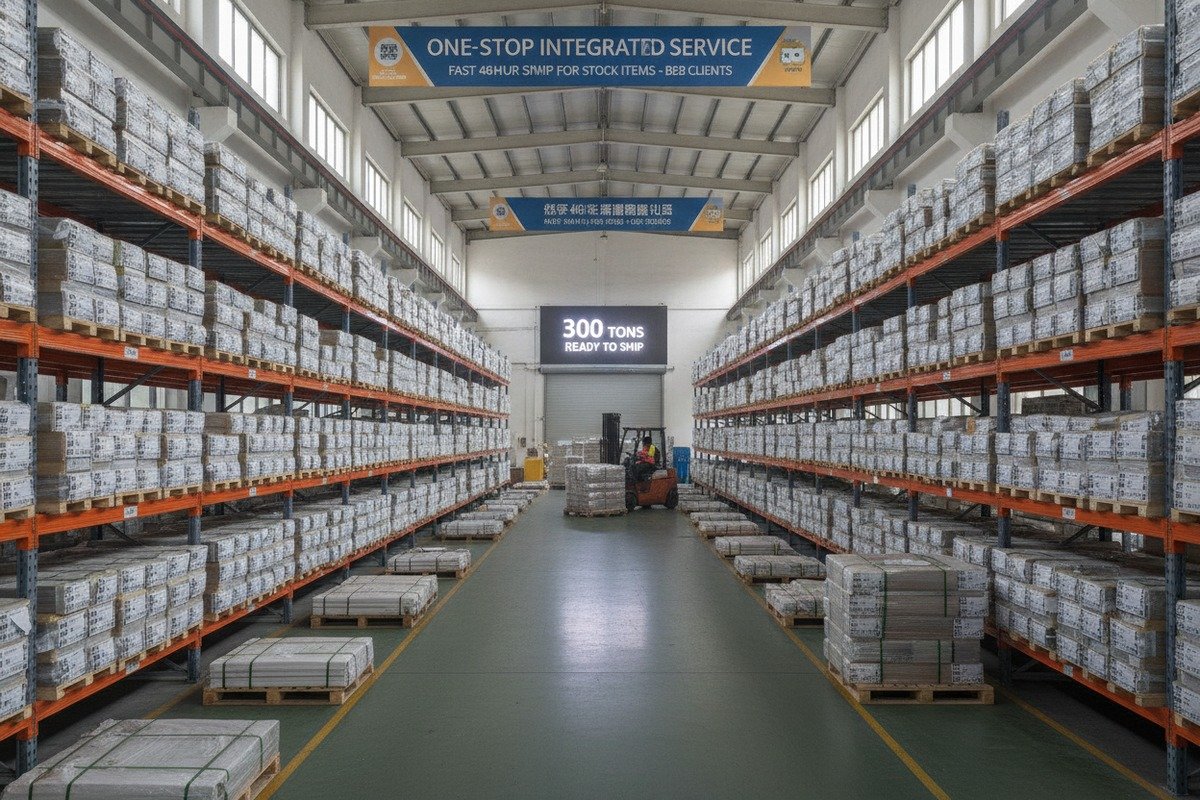
The Essential Spec Sheet Checklist
Here is the minimum information your specification sheet should include when working with any aluminum handle supplier:
- Alloy and Temper: State "6063-T5" or "6061-T6 9" explicitly. Do not accept "aluminum alloy" as a description.
- Surface Finish: Specify "clear anodized," "color anodized (champagne gold)," or "powder coated RAL 9005 matte black." Include the finish thickness if possible.
- Dimensions: Provide total length, height, depth, and the cross-section profile with tolerances (e.g., ±0.2mm).
- Hole Spacing (Center-to-Center): This is critical for installation. Standard spacings include 96mm, 128mm, 160mm, and 192mm. Custom spacings must be stated precisely.
- Screw Specifications: Thread size (M4, M5, etc.), screw length, and material (stainless steel 304).
- Color Reference: Provide a Pantone code, RAL code, or physical sample. "Gold" or "black" is too vague.
- Load Rating: If applicable, state the minimum pull force the handle must withstand.
- Packaging: Specify individual poly bags, foam inserts, retail packaging, or bulk packing.
Why Tolerances Matter for Installation
If the hole spacing is off by even 1mm, the handle will not align with pre-drilled holes in the cabinet door. This creates rework, delays, and waste on the furniture factory floor. At our facility, we maintain a standard tolerance of ±0.15mm on hole spacing. We verify this with digital calipers on every production run.
Sample Approval Process
Never skip the sample stage. Here is the process we follow with our clients:
- Initial Sample: We produce 2–3 samples based on your spec sheet and ship them for review.
- Feedback Loop: You test the samples for fit, finish, feel, and function. Provide detailed feedback.
- Revised Sample (if needed): We adjust and send a second round.
- Golden Sample Approval: Once approved, this sample becomes the benchmark for mass production. We keep one in our factory as a reference.
This process adds a few days to the timeline but eliminates costly quality disputes later.
Communicating Quality Standards Clearly
Many procurement managers assume the supplier "knows" what quality means. They do not. Quality standards vary widely across markets. A handle acceptable in one market may be completely unacceptable in another.
Be explicit about your expectations:
- Surface defects: State that no visible scratches, dents, or pitting are acceptable on the A-side (visible face).
- Color consistency: Specify that color variation between batches must stay within Delta E ≤ 1.5.
- Inspection standard: Reference AQL (Acceptable Quality Level) sampling — for example, AQL 2.5 for major defects and AQL 4.0 for minor defects.
When our clients provide this level of detail, the result is consistently clean shipments with minimal rejections. When specifications are vague, problems are almost guaranteed.
Requesting Certifications and Documentation
For traceability and quality assurance, ask your supplier for:
- Mill Test Certificate (MTC) for the raw aluminum
- Surface treatment test reports (salt spray test results for anodizing)
- Dimensional inspection reports for each batch
- Photos of finished goods before shipping
We provide all of these as standard practice. If a supplier hesitates to share documentation, consider it a warning sign.
Conclusion
Sourcing quality aluminum handles comes down to verifying three things: hardness through alloy and temper, corrosion resistance through proper finishing, and load-bearing capacity through profile design and mounting hardware. Specify clearly, test samples thoroughly, and always demand documentation.
Footnotes
1. Explains the definition and scope of material hardness in engineering contexts. ↩︎
2. Wikipedia provides a comprehensive overview of powder coating technology and applications. ↩︎
3. Replaced with a comprehensive guide to aluminum temper designations, including T and H tempers, from an authoritative manufacturing source. ↩︎
4. Provides detailed properties and applications of 6063-T5 aluminum alloy. ↩︎
5. Replaced with a Wikipedia article providing detailed information on the 1100 aluminum alloy, an authoritative source. ↩︎
6. Details how anodizing works as an electrochemical process to create an oxide film. ↩︎
7. Explains the formation and protective properties of aluminum’s natural oxide layer. ↩︎
8. Details the properties, corrosion resistance, and applications of 304 stainless steel. ↩︎
9. Describes the properties and uses of 6061-T6 aluminum, contrasting it with other tempers. ↩︎
10. Details how aluminum alloys are classified and their properties. ↩︎