
Every year, our sales team in Foshan fields calls from buyers who lost thousands of dollars because their purchase contract was too thin to enforce anything meaningful.
Your purchase contract for aluminum furniture handles from China should include detailed product specifications, quality standards with AQL levels, inspection rights, delivery penalties, tooling ownership, IP protection clauses, warranty terms, and clearly defined breach liabilities with enforceable liquidated damages and a workable dispute resolution mechanism.
A contract is not just a price document. It is your risk-allocation tool. Below, we break down the exact clauses that protect your money, your timeline, and your custom designs when sourcing handles from Chinese manufacturers.
How Can I Define Quality Standards and Inspection Terms in My Contract to Avoid Receiving Defective Aluminum Handles?
We have shipped over 300 tons of aluminum handles, and the orders that go smoothest always start with a contract that spells out exactly what "acceptable quality" means — not vague phrases like "meet standard quality."
Your contract should define quality through exact product specifications, an Acceptable Quality Limit (AQL) sampling plan, pre-shipment inspection rights, approved reference samples, and clear rejection and replacement procedures for nonconforming goods.
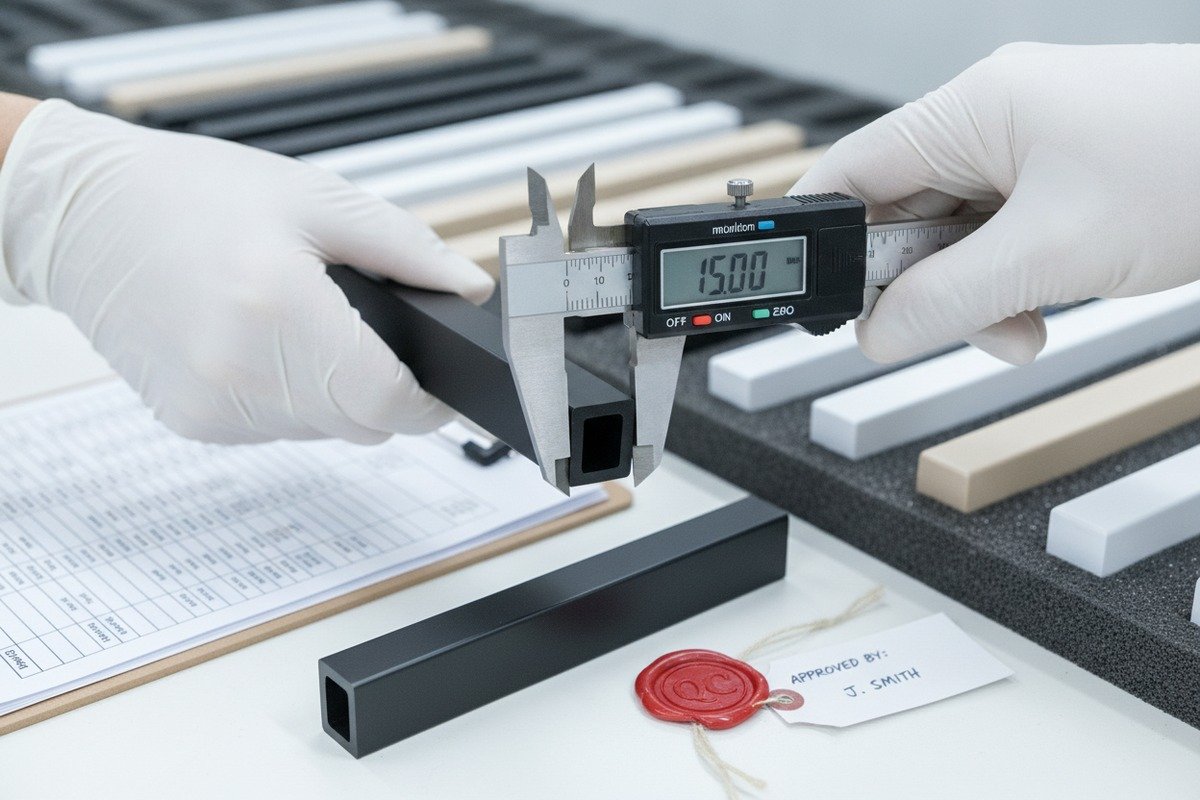
Why Vague Quality Language Fails
Many buyers write "good quality" or "as per sample" in a purchase order and assume that covers them Acceptable Quality Limit (AQL) 1. It does not. When a shipment arrives with a slightly different anodized tone or a 0.3 mm dimensional variance, there is no contractual basis to reject it. The supplier can argue the goods are "substantially conforming." You need numbers, tolerances, and test methods written into the contract.
What Your Product Specification Clause Should Include
Think of the specification clause as the technical passport of your aluminum handle. It should cover every measurable attribute.
| Specification Element | What to Define | Example |
|---|---|---|
| Alloy grade | Exact aluminum alloy | 6063-T5 |
| Dimensions | Length, width, depth, tolerances | 128 mm ± 0.2 mm |
| Surface treatment | Anodizing, powder coating, electrophoresis | Matte champagne gold anodized, 10–15 μm film thickness |
| Color reference | Pantone or RAL number, approved sample | RAL 1035 or sealed golden sample |
| Corrosion resistance | Salt spray test hours | ≥ 48 hours per ASTM B117 |
| Packaging | Inner and outer packaging, labeling | Individual poly bag, 50 pcs per carton, barcode label |
| Weight per piece | Minimum weight to prevent material substitution | ≥ 38 g per handle |
How to Structure Inspection Terms
Your contract should grant you three inspection windows: pre-production, in-line, and pre-shipment. At minimum, insist on pre-shipment inspection rights. State that a third-party inspector 2 (such as SGS or a firm you choose) may enter the factory with 24 hours' notice. Define the AQL level — typically AQL 2.5 for minor defects and AQL 1.0 for major defects for hardware products.
Rejection and Remedy Procedures
Spell out what happens when handles fail inspection. Options include: the supplier reworks the batch at its own cost within a set number of days; the supplier replaces the full order; or the buyer can cancel the order and receive a full refund including any prepayment. Never leave this to goodwill. If the contract is silent, a failed inspection turns into weeks of email arguments with no resolution.
Bill of Materials Control
If your handle design requires specific sub-materials — say, a stainless steel screw set or a particular rubber gasket — list them. Otherwise, the factory may substitute cheaper components to improve its margin. Our production team has seen competitors swap 304 stainless screws for carbon steel without telling the buyer. A bill of materials 3 clause prevents this.
What Specific Penalties Should I Include for Late Deliveries to Ensure My Furniture Production Stays on Schedule?
On our production floor, we manage orders for dozens of overseas furniture factories simultaneously. We know firsthand that a two-week delay on handles can halt an entire kitchen cabinet assembly line.
Your contract should include a fixed per-day or per-week liquidated damages clause for late delivery, a mandatory advance notice duty for anticipated delays, a defined grace period, and a buyer's right to cancel and claim a full refund if the delay exceeds a maximum threshold.

Defining "Late" Precisely
The contract must state the exact delivery date or lead time (e.g., "within 25 calendar days after deposit receipt"). It should also specify the Incoterm 4 — FOB Foshan, CIF Ho Chi Minh City, or whatever applies — so both parties agree on when delivery is considered complete. If you use FOB 5, delivery happens when goods pass the ship's rail. If the supplier drops off goods at the port one day late, that is a breach.
Grace Period and Notice Duties
A short grace period — typically 3 to 7 days — is reasonable and shows good faith. But require the supplier to notify you in writing at least 10 days before the original delivery date if a delay is expected. This gives you time to adjust your own production schedule or source from safety stock.
Liquidated Damages Table
Here is a practical penalty structure that balances enforceability and deterrence:
| Delay Period | Penalty | Buyer's Additional Rights |
|---|---|---|
| 1–7 days past grace period | 0.5% of order value per day | Buyer may demand expedited shipping at supplier's cost |
| 8–14 days past grace period | 1.0% of order value per day | Buyer may source from alternate supplier; supplier bears price difference |
| 15+ days past grace period | Penalty capped at 15% of order value | Buyer may cancel order and receive full refund within 10 business days |
Why Penalties Must Be Reasonable
Chinese courts and arbitration tribunals can moderate penalty clauses they consider excessive. A clause demanding 50% of the order value for a one-week delay is unlikely to be enforced. The best clause is one a court will uphold, not one that merely looks tough. Tie the penalty to foreseeable losses — like the cost of air freight versus sea freight, or documented customer chargebacks — and it becomes much harder for a supplier to challenge.
Force Majeure vs. Excuses
Your contract should include a force majeure clause 6, but keep it narrow. List specific events: natural disasters, government-ordered shutdowns, war. Do not let broad language like "any event beyond the supplier's control" become a loophole for poor planning. Require the supplier to provide evidence of the force majeure event within a set number of days and to take reasonable steps to mitigate the delay.
Connecting Delivery to Payment
One of the strongest tools is linking payment milestones to delivery. For example, hold 30% of the total payment until goods pass pre-shipment inspection and are loaded on time. If the supplier knows the final payment depends on on-time delivery, the incentive to perform is built into the cash flow.
How Do I Protect My Custom Handle Designs and Technical Specifications Within a Chinese Manufacturing Agreement?
Our engineering team develops custom aluminum handle profiles regularly — recessed pulls, slim architectural channels, unique anodized finishes. We understand the value locked inside a CAD file, and we have seen what happens when that file ends up with the wrong party.
Protect your custom designs by including an NNN agreement (Non-Use, Non-Disclosure, Non-Circumvention), a clear IP ownership clause, a tooling and mold ownership provision with return rights, restrictions on unauthorized subcontracting, and cybersecurity safeguards for shared digital files.

Why Standard NDAs Are Not Enough for China
A generic NDA drafted under U.S. or European law is difficult to enforce in Chinese courts. The standard approach for China is an NNN agreement 7 governed by PRC law. This covers three risks: the factory cannot use your design for its own products (non-use), cannot share it with third parties (non-disclosure), and cannot sell directly to your customers (non-circumvention). Each element addresses a distinct risk.
Tooling and Mold Ownership
Custom aluminum handles often require extrusion dies or stamping molds. If you paid for the tooling, the contract must state that you own it. Go further: specify where the mold is stored, require the supplier to maintain it in working condition, and grant you the right to retrieve it at any time with 30 days' notice. If the supplier refuses to return it, a liquidated damages clause should pre-set compensation — because proving actual loss from a withheld mold is very hard.
| Tooling Clause Element | What to Specify |
|---|---|
| Ownership | Buyer owns all molds, dies, and fixtures paid for by buyer |
| Storage location | Supplier's factory, Building/Section X, with photo documentation |
| Maintenance duty | Supplier maintains tooling at its own cost for duration of agreement |
| Return on demand | Supplier returns tooling within 30 days of written request |
| Penalty for refusal | Liquidated damages of 200% of tooling cost if not returned within 60 days |
| End of contract | All tooling returned or transferred to buyer's designated party within 45 days |
Restricting Subcontracting
If your supplier quietly moves production of your custom handle to an unknown subcontractor, your design files travel with it. The contract should forbid subcontracting without your written consent. If the supplier breaches this clause, you should have the right to terminate immediately and claim damages.
Digital File Security
You share CAD drawings, 3D models, finish specifications, and packaging artwork with the factory. Include a clause requiring the supplier to limit access to these files to named personnel, store them on secured systems, and delete all copies within 30 days of contract termination. While perfect enforcement is difficult, the clause creates a clear legal basis for action if a leak occurs.
Assignment and Change of Control
Add a clause preventing the supplier from assigning the contract to another entity without your consent. If the factory is sold or merged, your designs should not automatically transfer to the new owner. You want the right to approve or terminate.
What Are the Most Effective Ways to Structure Breach of Contract Liabilities to Protect My Investment When Sourcing from Foshan?
Working from our Foshan headquarters, we see both sides of the supplier-buyer relationship every day. The contracts that hold up best are the ones where breach liabilities are specific, proportional, and tied to a forum where enforcement is actually possible.
Structure breach liabilities by defining each type of breach separately, assigning specific remedies — rejection, replacement, refund, liquidated damages, indemnity, or termination — to each, capping penalties at enforceable levels, and selecting Chinese arbitration or a Chinese court as the dispute resolution forum.
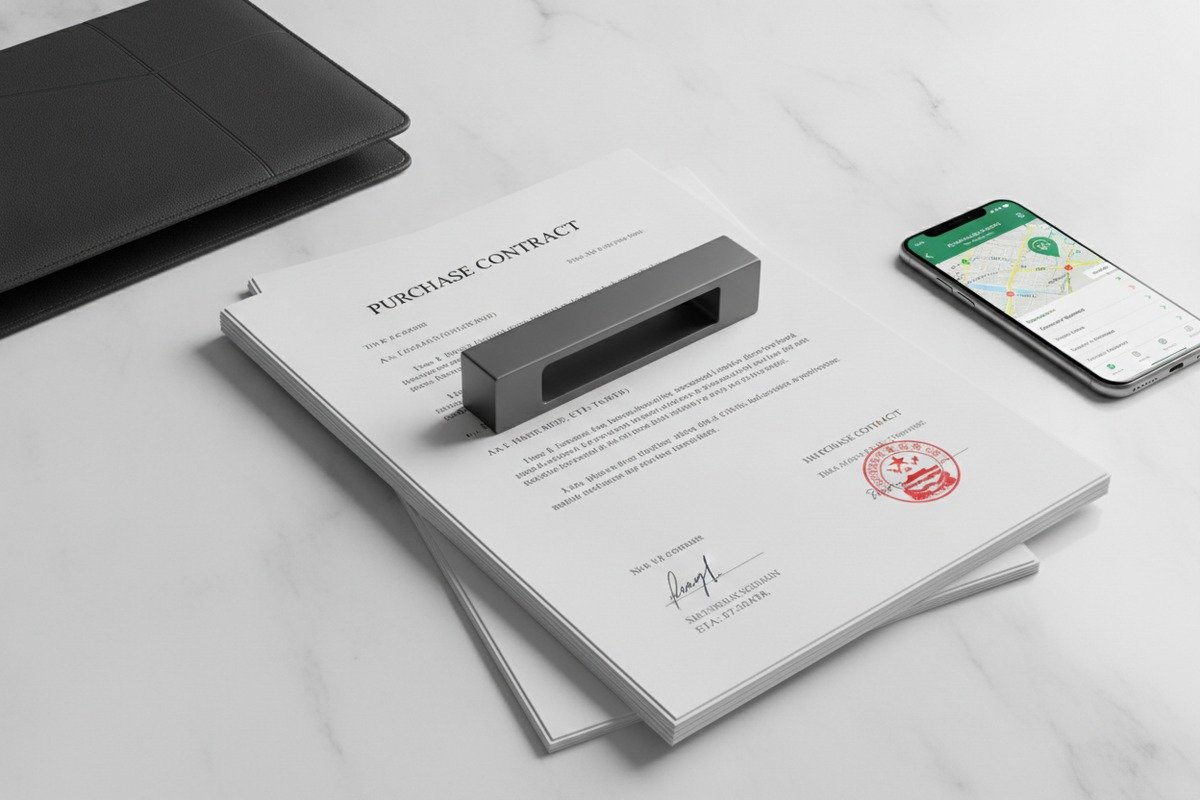
Categorize Breaches Clearly
Not all breaches are equal. A minor packaging error is different from shipping the wrong alloy. Your contract should distinguish between minor breaches (correctable without major loss), material breaches (causing significant harm), and fundamental breaches (destroying the purpose of the contract). Each category should trigger a different level of remedy.
Match Remedies to Breach Types
Here is a practical framework:
Minor breach — for example, labels printed with a typo. Remedy: supplier corrects at its own cost within a set timeframe. No termination right.
Material breach — for example, handles fail AQL inspection or arrive 10 days late. Remedy: buyer may reject, demand replacement, claim liquidated damages, or deduct from the outstanding payment balance.
Fundamental breach — for example, supplier uses unauthorized subcontractor, leaks your design, or fails to deliver after receiving full payment. Remedy: buyer may terminate immediately, claim full refund plus damages, and pursue injunctive relief for IP violations.
Indemnity for Downstream Losses
If defective handles cause injury to an end user — say, a sharp edge on a recessed pull cuts someone's hand — your contract should require the supplier to indemnify you. This means the supplier pays for defense costs, settlements, and judgments arising from product defects attributable to manufacturing. Without this clause, you absorb all downstream liability even though the defect originated at the factory.
Dispute Resolution That Actually Works
A contract is only as strong as your ability to enforce it. For aluminum handles sourced from Foshan, the most practical options are:
- Arbitration at CIETAC (China International Economic and Trade Arbitration Commission) — awards are enforceable in China and in most countries under the New York Convention 9.
- Chinese court with jurisdiction in Foshan or Guangzhou — useful if the supplier has assets in Guangdong Province that can be seized.
- Tiered escalation — start with direct negotiation (14 days), then mediation (30 days), then arbitration. This preserves the relationship while keeping legal options open.
Avoid specifying a U.S. or European court as the sole forum. A judgment from a foreign court is extremely difficult to enforce against a Chinese supplier with no assets outside China.
Governing Law and Language
Choose PRC law as the governing law. Draft the contract in both English and Chinese, and state that the Chinese version prevails in case of conflict. This is not just a formality — it is what makes the contract enforceable in the jurisdiction where the supplier operates.
Verify the Legal Entity
Before signing, confirm the supplier's exact legal entity name by checking its Chinese business license. Contract with the manufacturing entity, not a trading company or sales office that may have no assets. Run a basic corporate check through China's National Enterprise Credit Information Publicity System. If the entity you contract with is a shell, your breach clause is worthless no matter how well it is written.
Payment Structures That Reduce Risk
Link your payment to performance milestones: 30% deposit on order confirmation, 40% after pre-shipment inspection passes, 30% after goods arrive and are accepted. If the supplier defaults after receiving only 30%, your exposure is limited. If you pay 100% upfront, even the strongest penalty clause may not recover your money fast enough.
Conclusion
Your purchase contract is the single most important document in your China sourcing relationship. Define specs, inspect before you pay, protect your designs, and make every penalty clause enforceable where it matters.
Footnotes
1. Replaced HTTP 403 with an authoritative Wikipedia page for AQL definition. ↩︎
2. Explains the role and benefits of using independent inspection services. ↩︎
3. Defines what a Bill of Materials is and its importance in manufacturing. ↩︎
4. Explains the international commercial terms that define delivery responsibilities. ↩︎
5. Replaced HTTP 403 with an authoritative legal definition of FOB from Cornell Law School. ↩︎
6. Defines the legal concept of force majeure in contracts. ↩︎
7. Explains the purpose and enforceability of NNN agreements in China. ↩︎
8. Replaced HTTP 404 with a Wikipedia page explaining the Contract Law of the PRC, including its historical context and replacement by the Civil Code. ↩︎
9. Defines the international treaty for recognition and enforcement of arbitration awards. ↩︎
10. Explains the role of CIETAC in resolving international trade disputes. ↩︎