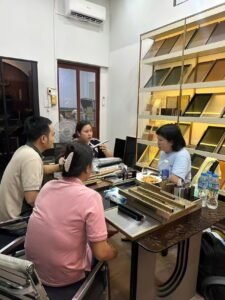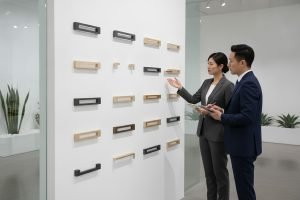
Last year, a project contractor in Singapore messaged me on WhatsApp asking where to source slim frame glass door aluminum profiles with stable quality, ready stock, and proven export experience — and that question sparked this entire guide.
The top 10 slim frame glass door aluminum profile suppliers in 2026 include Schüco (Germany), Sky-Frame (Switzerland), Solarlux (Germany), Finstral (Italy), Fleetwood (USA), Western Window Systems (USA), NanaWall (USA), Hotian (China), Alumil (Greece), and OTIIMA (Portugal), each offering distinct strengths in thermal performance, customization, and architectural innovation.
Choosing the right supplier depends on your project scope, budget, and compliance needs. Below, I break down how to evaluate these suppliers and build a reliable supply chain for your 2026 projects.
How do I choose the most reliable slim frame aluminum profile supplier for my 2026 projects?
A buyer in Southeast Asia once told me his biggest frustration was not price — it was inconsistency in profile dimensions across shipments, which caused weeks of rework on site.
Choose a slim frame aluminum profile supplier by verifying their export track record, quality certifications (ISO 9001, AAMA, NFRC), stock availability, thermal break profile performance, and their willingness to provide samples and reference projects before committing to large orders.
Understanding the 2026 Supplier Landscape
The slim frame glass door market in 2026 is split into three tiers. European system leaders like Schüco, Sky-Frame, and Solarlux dominate the ultra-premium segment. They offer Passive House 1-level thermal efficiency and minimal sightlines, but their pricing reflects that engineering depth. US architectural brands — Fleetwood, Western Window Systems, and NanaWall — excel at custom large-opening systems, including multi-slide and lift-slide configurations. Then there are high-performance Asian manufacturers like Hotian and Alumil, offering strong value with comparable engineering and rapid capability growth.
From our experience in B2B international trade, stability matters more than brand prestige. A supplier who ships on time, holds ready stock of common architectural aluminum extrusions, and has documented export experience to your target region will save you more money than a famous name that delivers late.
Key Selection Criteria
Here is a comparison of the top 10 suppliers across the attributes that matter most:
| Supplier | Country | Profile Slimness | Thermal Performance | Security Rating | Customization | Price Tier |
|---|---|---|---|---|---|---|
| Schüco | Germany | Ultra-slim | Passive House | RC2/RC3 | High | Ultra-premium |
| Sky-Frame | Switzerland | Ultra-slim | Excellent | RC2/RC3 | High | Ultra-premium |
| Solarlux | Germany | Slim | Excellent | ISO 9001 2/14001 | High | Premium |
| Finstral | Italy | Slim | Very Good | ISO 9001/14001 | Extensive | Premium |
| Fleetwood | USA | Slim | Good | AAMA 3/NFRC | Very High | Premium |
| Western Window Systems | USA | Slim | Good | AAMA/NFRC 4 | Very High | Premium |
| NanaWall | USA | Slim | Good | AAMA/NFRC | High | Premium |
| Hotian | China | Slim | Good | CE | Excellent | Mid-range |
| Alumil | Greece | Ultra-slim | Passive House | RC2 | High | Mid-premium |
| OTIIMA | Portugal | Ultra-slim | Very Good | CE | Bespoke | Premium |
What Drives Cost Differences
Price benchmarks for premium slim-frame aluminum sliding doors in 2026 range from approximately $4,640 for a Cortizo Cor-Vision Plus system to $7,461 or more for a Sapa Artline or Aluprof MB-Skyline configuration. The cost drivers are clear: thermal break profiles add material cost, RC2/RC3 security ratings require reinforced hardware, and bespoke surface finishes like anodized or specialty powder coats increase production complexity.
I always advise our partners to request a full cost breakdown. Separate the raw extrusion cost from the finishing, hardware, and logistics. This way, you can compare apples to apples across suppliers in different regions.
Avoid Confusing Furniture Profiles with Architectural Systems
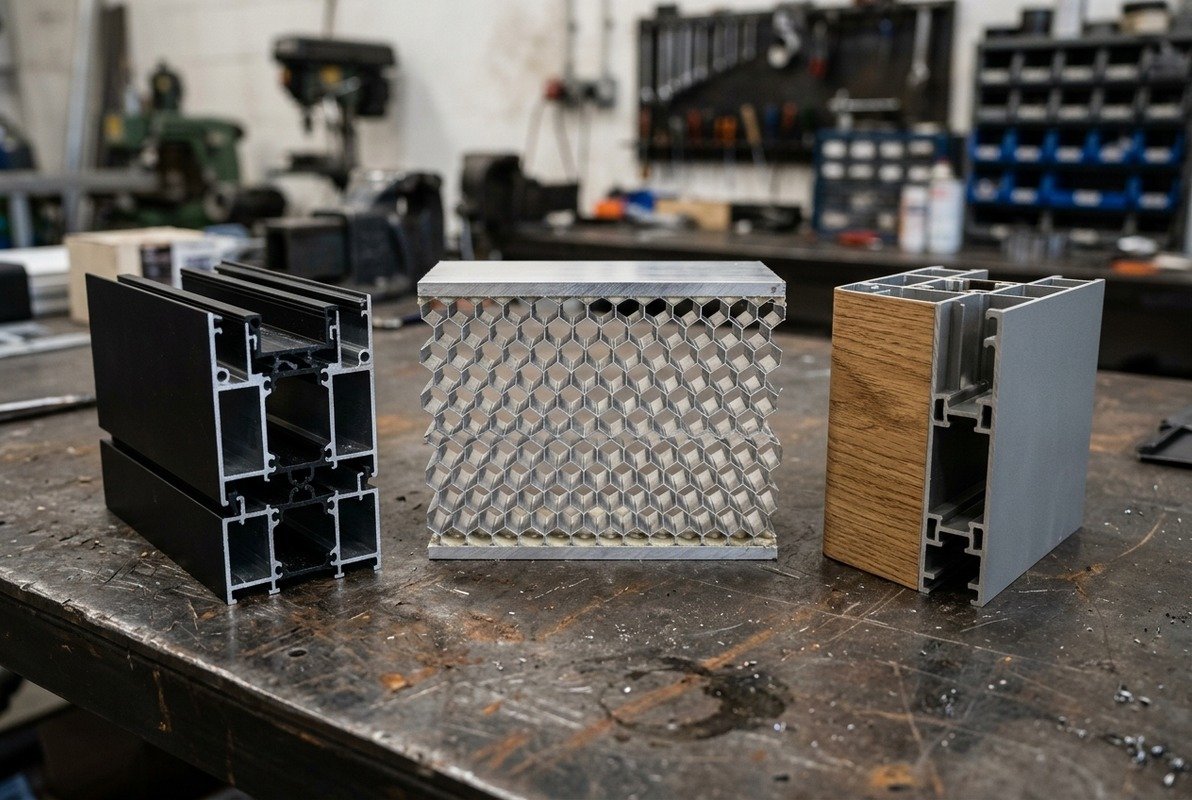
One critical distinction: furniture aluminum extrusion manufacturers — companies that make cabinet door frames or appliance trim profiles — are not suitable for architectural glass door projects. Architectural systems require system-level performance, including thermal breaks, weather sealing, and compliance with fenestration industry standards. A honeycomb composite panel or a compact appliance glass door frame uses a completely different engineering approach than a floor-to-ceiling sliding door system designed for modern architecture.
Can I customize my glass door aluminum profiles to meet specific architectural requirements?
During a recent project discussion, a contractor asked if we could adjust profile cross-sections by just 3mm to match an existing curtain wall grid — that small change made the entire facade line up perfectly.
Yes, most top-tier slim frame glass door aluminum profile suppliers offer extensive customization, including bespoke profile dimensions, custom aluminum profiles with unique cross-sections, a wide range of surface finishes (anodized, powder-coated, wood-grain), specialized hardware, and configurations such as sliding door systems, bi-fold, swing, and motorized operations.
What Can Be Customized
Customization in the slim frame glass door world spans several dimensions. Let me break them down:
Profile geometry. Suppliers like OTIIMA and Hotian can produce bespoke profile shapes using precision extrusion with 6063-T5 or 6063-T6 aluminum alloys 5. This matters when your architect specifies narrow stile doors with sightlines under 20mm, or when you need profiles that integrate with an existing building envelope.
Surface treatment. The finish affects both aesthetics and durability. Anodized finishes 6 resist corrosion in coastal environments. Powder coatings offer hundreds of RAL color options. Wood-grain transfer printing mimics natural textures — similar in concept to the decorative surfaces seen on honeycomb composite panels, but applied through a completely different process for architectural fenestration.
Glass integration. Tempered glass, laminated glass, triple glazing, and low-E coatings can all be specified. The profile must be engineered to support the glass weight and thickness, especially for large-span interior glass doors or exterior sliding door systems.
Operation type. From standard sliding to lift-slide, multi-slide, bi-fold, curved, and motorized — the profile design changes for each. Panda Windows & Doors, for example, specializes in curved and motorized mega-size sliding doors for commercial projects.
Customization Capabilities by Supplier
| Supplier | Custom Profiles | Finish Options | Operation Types | MOQ Flexibility |
|---|---|---|---|---|
| Hotian | Full custom | Anodized, powder-coat, wood-grain | Sliding, bi-fold, swing | Moderate |
| Finstral | Extensive | Full RAL range, wood-grain | Sliding, tilt-turn, swing | Higher |
| OTIIMA | Bespoke | Anodized, custom colors | Sliding, pivot, fixed | Project-based |
| Panda | Full custom | Powder-coat, anodized | Curved, motorized, mega-slide | Project-based |
| Fleetwood | Full custom | Custom colors | Multi-slide, lift-slide, pocket | Higher |
| Alumil | High | Full RAL, anodized | Sliding, lift-slide, bi-fold | Moderate |
Minimalist Design Meets Engineering Precision
The trend toward minimalist design in 2026 pushes profile engineering to its limits. When you reduce frame width, every millimeter counts structurally. Alumil invests heavily in R&D and advanced production facilities to ensure that their ultra-slim profiles maintain structural reliability. This is not just about aesthetics — it is about wind load resistance, water tightness, and long-term performance across climate zones.
From our own work in supply chain management 7, I have learned that customization requests need to be locked down early. A change to profile geometry after tooling has started can delay your project by four to six weeks. Define your specifications clearly, get samples approved, and then commit.
Smart Integration — The 2026 Frontier
Smart home technology integration is another customization frontier. Motorized slim frame glass doors that respond to climate control systems, security automation, and voice commands are no longer science fiction. They are standard requests on high-end commercial projects and luxury residential builds. The aluminum profile must accommodate sensors, wiring channels, and motor housings without compromising the slim aesthetic.
How do I manage logistics and quality control to prevent delays in my supply chain?
One lesson I learned the hard way: a shipment of profiles arrived at a Southeast Asian port with surface scratches because the packing team skipped the protective film on a Friday rush — that single oversight cost three weeks and a partial reorder.
Prevent supply chain delays by requiring pre-shipment inspections, specifying packaging standards in your purchase order, using third-party QC agencies, maintaining buffer stock of critical profiles, and establishing clear communication protocols with your supplier’s logistics and production teams.

The Real Pain Points
Having worked with EPC project managers and procurement teams across Southeast Asia, Africa, and South America, I see the same three problems repeatedly: delivery delays, quality inconsistency, and costly product returns. These are not abstract risks. They are concrete project killers.
Delivery delays cascade. If your aluminum profiles arrive two weeks late, your glass fabricator is idle, your installers are rescheduled, and your project timeline slips by a month. Quality issues are worse — a batch of profiles with dimensional variance outside tolerance means on-site rework or rejection.
A Practical QC Process
Here is the quality control workflow I recommend to every buyer:
-
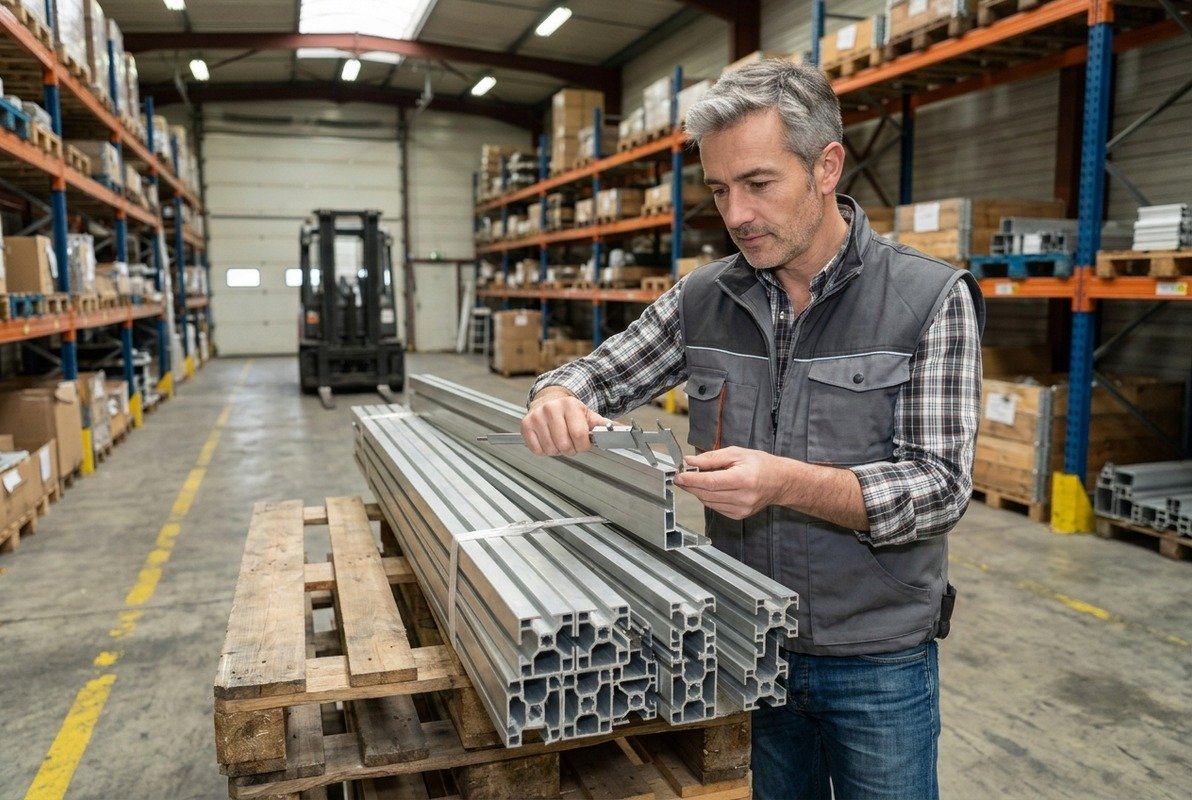
Pre-production sample approval. Request extruded samples from the actual production die. Check dimensions with calipers. Verify alloy composition with a mill certificate (6063-T5 or T6 for most architectural aluminum extrusions).
-
In-process inspection. For orders above a certain value, hire a third-party inspector to visit the factory during production. Check extrusion tolerances, surface finish quality, and thermal break insertion.
-
Pre-shipment inspection. Before the container is loaded, inspect a random sample per AQL standards. Verify quantities, packaging, labeling, and surface protection.
-
Packaging specification. This is often overlooked. Profiles must be wrapped in protective film, separated by foam or cardboard, and secured in wooden crates or bundles. Specify this in your purchase order.
Logistics Planning
| Stage | Action | Who Is Responsible | Timeline |
|---|---|---|---|
| Order Confirmation | Lock specifications, confirm delivery date | Buyer + Supplier | Day 1 |
| Production Start | Supplier begins extrusion and finishing | Supplier | Day 3–7 |
| In-Process QC | Third-party inspection at factory | QC Agency | Mid-production |
| Pre-Shipment QC | Final random sample inspection | QC Agency / Buyer | Before loading |
| Container Loading | Verify packing, take photos | Supplier + QC | Loading day |
| Shipping | Track vessel, prepare customs docs | Freight forwarder | 2–6 weeks |
| Port Arrival | Clear customs, inspect on delivery | Buyer / Agent | Arrival day |
Buffer Stock Strategy
For projects with tight timelines, I always suggest ordering 5–10% extra on critical profile types. The cost of holding a small buffer is far less than the cost of a production halt waiting for replacement profiles. This is especially important when sourcing from overseas suppliers where ocean freight adds 3
Footnotes
1. Official website of the Passive House Institute, defining the standard for energy-efficient buildings. ↩︎
2. Official ISO page explaining the international standard for quality management systems. ↩︎
3. Information about the American Architectural Manufacturers Association (now FGIA) and its standards. ↩︎
4. Official site of the National Fenestration Rating Council, explaining its role in energy performance ratings. ↩︎
5. Compares the properties and applications of 6063-T5 and 6063-T6 aluminum alloys. ↩︎
6. Explains the anodizing process and benefits for aluminum, including durability and corrosion resistance. ↩︎
7. Defines supply chain management and its key components from a professional organization. ↩︎