Last year, a project contractor in Singapore told me his biggest headache was sourcing slim frame glass door aluminum profiles 1 that matched architect specs without blowing his timeline. That pain stuck with me—because in our cable management production lines, we see the exact same pressure for precision extrusion 2, tight tolerances, and on-time delivery.
The top 10 slim frame glass door aluminum profile manufacturers in 2026 include Sky-Frame, Schüco, Hotian, Solarlux, Finstral, Fleetwood, Western Window Systems, Reynaers Aluminium, Kawneer, and Alumil—ranked by system capability, thermal efficiency, minimal sightlines, and global project relevance.
Below, I break down each manufacturer, explain what separates them, and share practical advice on choosing the right partner for your next project thermal efficiency 3. Whether you are an EPC contractor, a wholesaler, or a procurement manager, this guide gives you the data you need to decide.
How do I choose the best slim frame glass door aluminum profile manufacturer for my project?
A trade-off I weigh constantly when evaluating suppliers—even for our own cable tray extrusions—is whether to prioritize unit cost or total project cost. One bad batch of architectural aluminum extrusions can delay an entire building envelope by weeks. The decision framework for slim frame glass door profiles is no different.
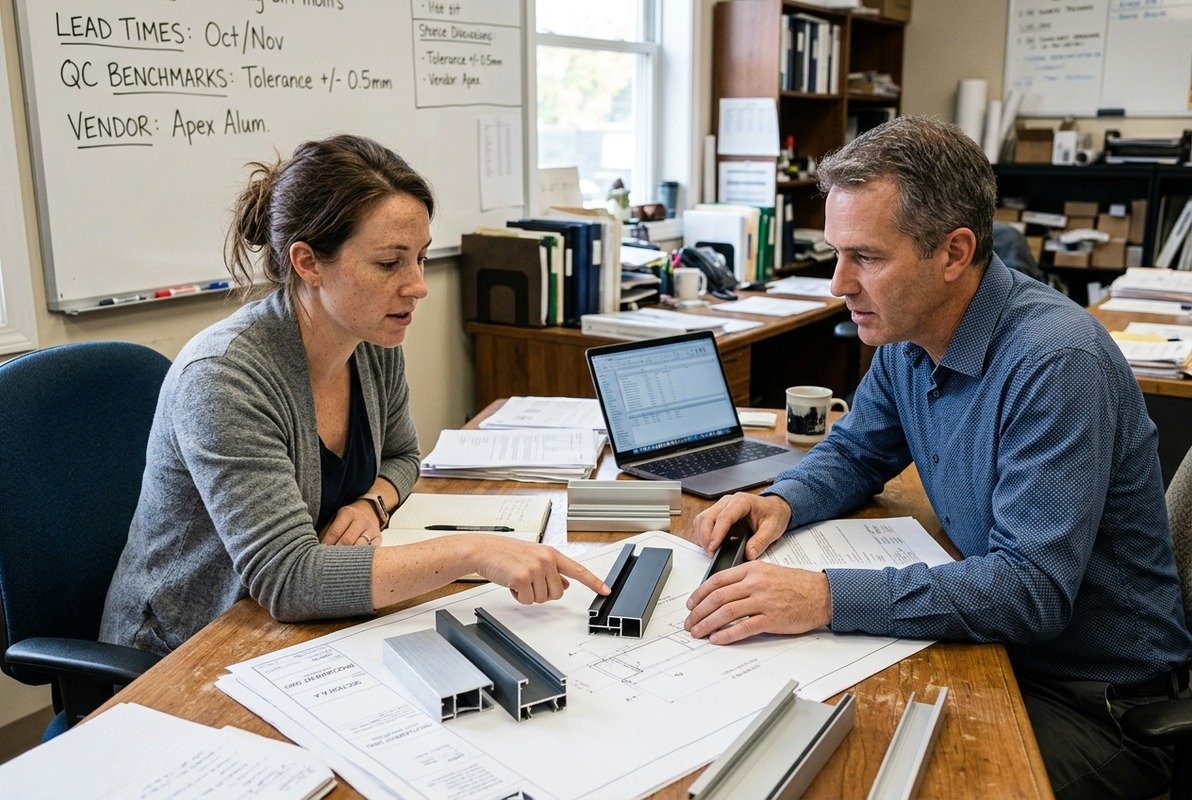
Choose a slim frame glass door aluminum profile manufacturer by evaluating five pillars: system performance and thermal efficiency, engineering and quality certifications, design customization depth, sustainability practices, and proven global delivery track record with verifiable project references.
The Five Evaluation Pillars
Let me walk you through each pillar in plain terms.
1. System Performance and Thermal Efficiency. Slim frame means sightlines under 20–25mm. But narrow stile doors must still meet energy codes. Look for Passive House-level ratings 4, advanced thermal break profiles, and multi-chamber construction. A profile made from 6063 aluminum alloy 5 offers the best strength-to-weight ratio for minimalist design doors.
2. Engineering Capability and Certifications. Certifications tell you whether a manufacturer's claims hold up. In my experience sourcing materials for projects across Southeast Asia and Africa, I have learned that buyers who skip certification checks end up paying more in rework.
3. Design Customization Depth. Can the manufacturer produce custom aluminum extrusions in your exact dimensions? Can they offer curved profiles, motorized sliding door systems, or unique powder coating finishes? The best manufacturers say yes to all of these.
4. Sustainability Practices. Closed-loop recycling of aluminum scrap, ISO 14001 environmental management 6, and low-energy press operations matter—especially for projects chasing LEED or BREEAM credits 7.
5. Global Delivery Track Record. A manufacturer with beautiful profiles is useless if they cannot ship on time. Ask for references. Ask for average lead times. Ask what happens when a container is delayed.
Top 10 Manufacturers at a Glance
| Rank | Manufacturer | Headquarters | Core Strength | Key Certifications |
|---|---|---|---|---|
| 1 | Sky-Frame | Switzerland | Frameless glass doors, ultra-premium precision | RC2/RC3, Minergie |
| 2 | Schüco | Germany | Passive House thermal systems | Passive House, CE |
| 3 | Hotian | Hefei, China | Extensive customization, cost-effective global delivery | NAMI, NFRC, CE |
| 4 | Solarlux | Melle, Germany | Ultra-slim sightlines, Cero sliding windows | CE, ISO 9001 |
| 5 | Finstral | Ritten, Italy | Italian design, FIN-Slide doors | CE, ISO 14001 |
| 6 | Fleetwood | Corona, USA | Mega-size multi-slide and pivot doors | AAMA, NFRC |
| 7 | Western Window Systems | Phoenix, USA | Moving glass walls, custom ultra-slim profiles | AAMA, NFRC |
| 8 | Reynaers Aluminium | Belgium | Balance of aesthetics and performance | CE, Passive House |
| 9 | Kawneer | USA | Commercial-scale code compliance | NFRC, AAMA |
| 10 | Alumil | Greece | R&D-driven, competitive pricing | CE, ISO |
What Sets the Leaders Apart
Sky-Frame pioneered the frameless glass doors concept. Their sliding panels disappear into the floor and ceiling, leaving zero visible frame. Schüco brings industrial scale to Passive House standards. Hotian combines the customization depth you expect from a dedicated OEM partner with pricing that works for emerging-market projects. Solarlux and Finstral deliver German and Italian precision for tempered glass panels at minimal sightlines. Fleetwood and Western Window Systems dominate the North American luxury market with architectural-grade sliding door systems. Reynaers and Alumil offer European engineering without the ultra-premium price tag. Kawneer handles large commercial rollouts with tight code compliance.
When I help my own buyers source components, I always tell them: match the manufacturer to the project tier. A luxury residential tower in Singapore demands different tolerances than a water treatment facility in Lagos. For a broader look at how suppliers are ranked across this niche, see our guide to the top slim frame glass door aluminum profile suppliers in the world.
Can I customize my slim frame aluminum profiles to meet specific project requirements?
A buyer in South America once sent our team a sketch on WhatsApp—a cable tray cross-section he had drawn by hand, with exact millimeter dimensions. We turned it into a production-ready extrusion die within days. That same collaborative development mindset drives the best slim frame glass door profile manufacturers in 2026.
Yes, leading slim frame aluminum profile manufacturers offer extensive customization including bespoke profile geometries, custom powder coating finishes, motorized hardware integration, curved or oversized panels, and project-specific thermal break configurations—all developed through OEM/ODM collaboration.
What Can Be Customized
Customization in slim frame glass door profiles falls into several categories. I will break them down so you know exactly what to ask for.
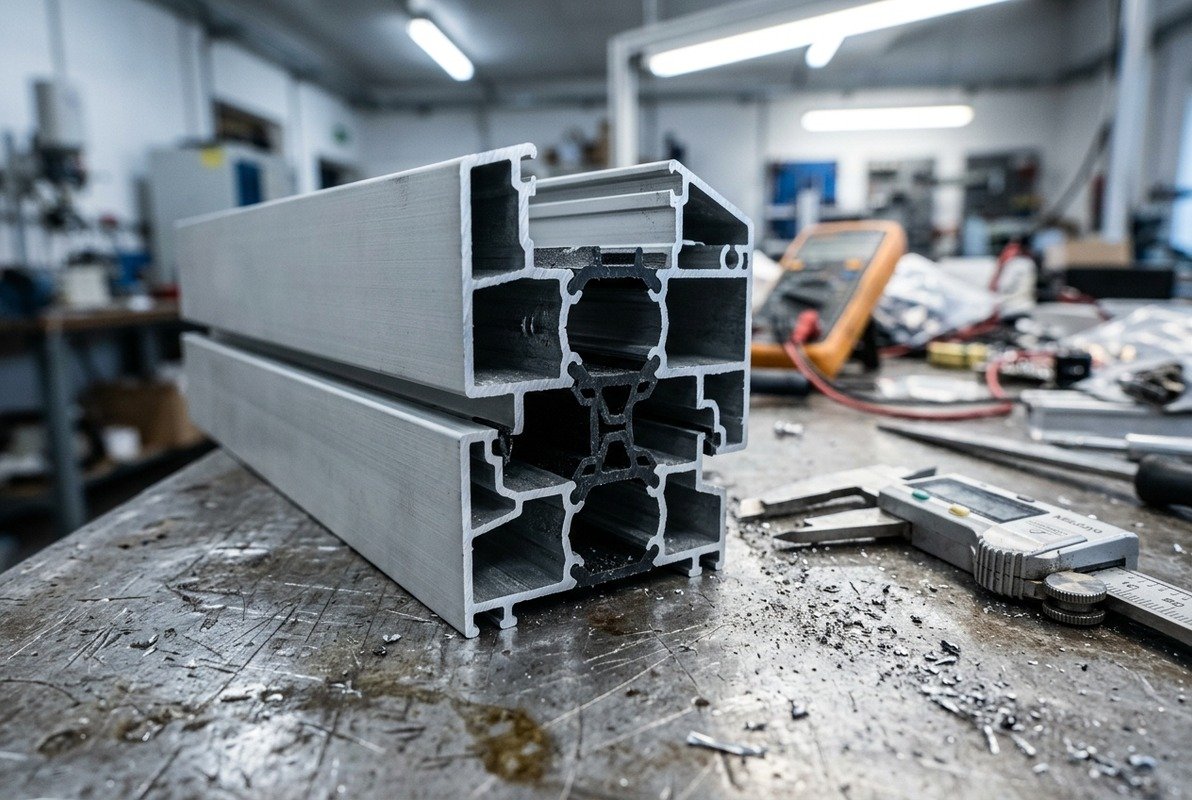
Profile Geometry. Standard catalog profiles work for simple projects. Complex builds—think interior glass partitions with curved walls or pivot doors with asymmetric frames—require custom aluminum extrusions. Manufacturers like Hotian and Finstral specialize in this. They modify die tooling to produce profiles in the exact cross-section your architect specifies.
Surface Treatment. Powder coating finishes dominate the market. Popular colors in 2026 include matte black, deep charcoal, and bronze. Anodizing 8 is another option for projects that demand a metallic look with superior corrosion resistance. Some manufacturers offer wood-grain transfer printing on aluminum, which pairs well with honeycomb composite panel cores for lightweight door assemblies.
Hardware and Automation. Smart technology integration is now standard at the top tier. Motorized sliding door systems with hidden tracks, automated locking, and app-based controls are available from Fleetwood, Western Window Systems, and Hotian. When specifying, make sure the profile's internal channels can house wiring and actuators.
Thermal Configuration. Projects in cold climates need thermal break profiles with polyamide strips. Projects in tropical zones may prioritize ventilation channels instead. The best manufacturers let you choose the thermal break width and material.
Customization Capabilities by Manufacturer
| Manufacturer | Custom Geometry | Custom Finish | Motorized Options | Thermal Break Config | Minimum Order Flexibility |
|---|---|---|---|---|---|
| Sky-Frame | Limited | Yes | Yes | Standard | Low (premium pricing) |
| Schüco | Yes | Yes | Yes | Passive House | Medium |
| Hotian | Extensive | Yes | Yes | Configurable | High |
| Solarlux | Yes | Yes | Yes | Standard | Medium |
| Finstral | Extensive | Yes | Limited | Configurable | Medium |
| Fleetwood | Yes | Yes | Yes | Standard | Low |
| Western Window Systems | Yes | Yes | Yes | Standard | Low |
| Reynaers | Yes | Yes | Yes | Passive House | Medium |
| Kawneer | Yes | Yes | Limited | Code-specific | High |
| Alumil | Yes | Yes | Limited | Configurable | High |
A Practical Tip
In my own business, I have found that the biggest customization bottleneck is not the extrusion itself—it is the die lead time. A new die can take two to four weeks. If your project timeline is tight, ask the manufacturer upfront whether they have existing dies close to your spec. Sometimes a 1mm adjustment to a stock profile saves you a month.
Also consider modularity. Modular and prefabricated slim frame systems are a growing trend. They reduce on-site labor and speed up installation. If your project involves repetitive door openings—like a hotel corridor—modular systems cut total cost significantly.
What quality control standards should I look for to ensure the durability of my glass door frames?
One lesson I learned the hard way: a client in Africa received a shipment of cable trays where the zinc coating thickness was 10 microns below spec on a small batch. It was not a catastrophic failure, but it eroded trust. Quality control is the single most important trust signal between a supplier and a project buyer. The same principle applies to slim frame glass door aluminum profiles, where a dimensional error of half a millimeter can make a tempered glass panel impossible to install.
Look for ISO 9001 quality management, ISO 14001 environmental management, CE marking for European compliance, NFRC and AAMA ratings for North American projects, and Passive House certification for energy performance—these standards collectively ensure dimensional accuracy, structural durability, and long-term weather resistance.
Understanding the Certification Landscape
Not all certifications carry equal weight in every market. Here is a breakdown to help you match certifications to your project region and requirements.
ISO 9001 is the baseline. It proves the manufacturer has a documented quality management system. Every serious slim frame profile maker should hold this. If they do not, walk away.
CE Marking is mandatory for products sold in Europe. It covers safety, health, and environmental protection. For architectural aluminum extrusions used in building envelopes, CE marking 10 also validates structural performance under European load standards.
NFRC and AAMA matter for North American markets. The National Fenestration Rating Council (NFRC) rates thermal performance. The American Architectural Manufacturers Association (AAMA) tests air infiltration, water penetration, and structural wind load. Fleetwood, Western Window Systems, and Kawneer all carry both.
Passive House Certification is the gold standard for energy efficiency. Schüco and Reynaers offer Passive House-certified systems that achieve U-values below 0.8 W/m²K. This matters for projects in cold climates or projects targeting green building credits.
What to Inspect Beyond Certifications
Certifications prove a system exists. Inspections prove it works daily. Here is what I check on my own production floor and what you should ask your profile supplier about:
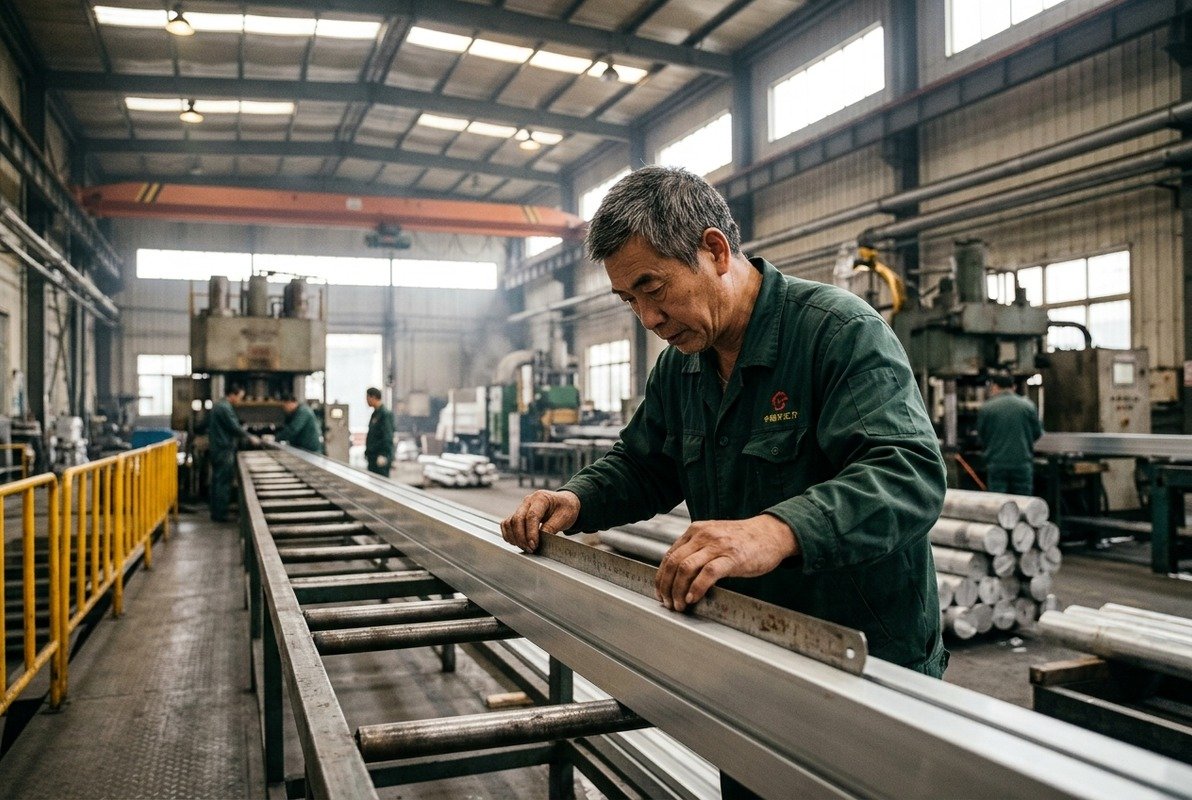
- Dimensional tolerance checks on every extrusion run. For slim profiles with 20mm sightlines, even 0.2mm deviation causes fit problems.
- Surface finish consistency. Powder coating finishes should be tested for adhesion (cross-cut test), hardness (pencil hardness), and UV resistance (accelerated weathering). Ask for test reports.
- Alloy composition verification. 6063 aluminum alloy is standard for architectural profiles. A material test certificate (MTC) from the billet supplier should accompany every shipment.
- Assembly and hardware testing. Sliding door systems must be cycle-tested. How many open-close cycles has the system been validated for? Top manufacturers test to 50,000 cycles or more.
Certification Quick-Reference by Region
| Project Region | Must-Have Certifications | Recommended Certifications |
|---|---|---|
| Europe | CE, ISO 9001 | Passive House, ISO 14001 |
| North America | NFRC, AAMA | ENERGY STAR, ISO 9001 |
| Middle East | CE, ISO 9001 | Gulf Standards (GSO) |
| Southeast Asia | ISO 9001 | CE, NFRC (for premium projects) |
| Africa | ISO 9001 | CE (for government/EPC projects) |
In my experience exporting to multiple continents, I have noticed that buyers in Southeast Asia and Africa increasingly request CE marking even when it is not legally required—because it signals a higher manufacturing standard. If you are sourcing from China, ask whether the manufacturer holds both CE and ISO 9001. Hotian, for example, carries NAMI, NFRC, and CE—covering multiple market entry requirements from a single source.
The Role of AI in Quality Control
An emerging trend for 2026 is AI-driven quality inspection. Machine learning algorithms can scan extruded profiles in real time, flagging dimensional deviations faster than manual gauging. Some advanced manufacturers are already using predictive maintenance on their extrusion presses—monitoring die wear, billet temperature, and press speed to prevent defects before they happen. Ask your shortlisted suppliers whether they use automated inspection systems.
How can I manage logistics and lead times to prevent delays in my door profile procurement?
A buyer interaction that stays with me: Shimkien, a project director I work with in Singapore, once told me that a two-week delivery delay on a door profile shipment pushed his entire fit-out schedule back by a month. The cascade effect was brutal—subcontractor penalties, idle labor, client frustration. Logistics is not a back-office problem. It is a project survival problem.
Manage logistics and lead times by confirming production capacity upfront, negotiating phased shipment schedules, requiring real-time order tracking, diversifying supplier geography to reduce single-point risk, and building a two-to-three-week buffer into your procurement timeline.

Why Lead Times Vary So Much
Slim frame glass door aluminum profiles are not commodity items. Each order may involve custom die work, specific powder coating finishes, thermal break assembly, and hardware integration. That complexity means lead times range from four weeks for stock profiles to twelve weeks or more for fully custom orders.
European manufacturers like Schüco and Reynaers typically quote eight to twelve weeks for custom systems. Their quality is excellent, but the lead time reflects multi-stage European production and rigorous testing protocols. North American manufacturers like Fleetwood and Kawneer offer similar timelines, often with the added complexity of AAMA testing on new configurations.
Asian manufacturers—especially Hotian—can compress lead times significantly. Their production capacity (running 1,250- to 4,500-ton extrusion presses) and vertically integrated operations allow four-to-six-week turnaround on many custom profiles. The trade-off is logistics. Shipping from China to the Americas or Europe adds two to four weeks on the water.
A Five-Step Lead Time Management Process
-
Pre-qualify your supplier. Before the project starts, send your profile drawings and finish specs. Get a written lead time commitment. Do not wait until the project is awarded to start this conversation.
-
Lock in die availability. If your project requires custom aluminum extrusions, confirm whether the supplier has an existing die or needs to fabricate one. Die fabrication adds two to four weeks.
-
Negotiate phased deliveries. Large projects rarely need all profiles on the same day. Break your order into phases aligned with your installation schedule. This smooths the supplier's production load and reduces your warehousing cost.
-
Require tracking visibility. Ask for a production schedule with milestones: die ready, extrusion complete, surface treatment complete, quality inspection passed, packed and shipped. In our own operations, we send WhatsApp updates at each milestone—our buyers in Singapore and Africa appreciate this level of transparency.
-
Build buffer time. Add two to three weeks to the supplier's quoted lead time. Customs delays, port congestion, and last-minute design changes are inevitable. The buffer absorbs them without derailing your project.
Pricing Context for Budget Planning
When managing procurement, it helps to understand the pricing landscape so you can make informed trade-offs between speed, quality, and cost.
| System / Brand | Approximate Price Range (2026) | Tier |
|---|---|---|
| Cortizo Cor-Vision Plus | ~$4,640 per unit | Mid-Premium |
| Yawal MOREVIEW | ~$4,833 per unit | Mid-Premium |
| Sapa Artline | ~$7,461 per unit | Ultra-Premium |
| Hotian Custom Systems | Varies (cost-effective) | Value-Premium |
| Alumil Standard Systems | Varies (competitive) | Value-Premium |
These numbers reflect complete door system pricing, not just raw profiles. Your actual cost depends on size, glazing specification, hardware, and finish. For interior glass partitions or frameless glass doors in commercial fit-outs, the profile cost is typically 20–30% of the total installed door cost.
Regional Logistics Considerations
European and North American buyers sourcing from Asia should factor in container shipping times: roughly 25–35 days from Chinese ports to Northern Europe, and 15–25 days to the US West Coast. Consolidating orders with a single manufacturer reduces the number of shipments and simplifies customs clearance.
For projects in Southeast Asia and Africa—markets I know well—sourcing from China offers a clear logistics advantage. Shipping times from Hefei or Shanghai to Singapore, Lagos, or São Paulo are shorter and cost less than sourcing from Europe. Hotian and other Chinese producers have built global distribution networks specifically for these corridors.
The key is communication. In my experience, the suppliers who prevent delays are not necessarily the fastest producers. They are the ones who communicate problems early, offer alternatives quickly, and treat your timeline as their own.
Conclusion
Choosing the right slim frame glass door aluminum profile manufacturer in 2026 comes down to matching system performance, customization depth, quality certifications, and logistics reliability to your specific project requirements and regional market.
Footnotes
1. Explains the design, benefits, and specifications of slim profile aluminum glass doors. ↩︎
2. Details the steps and importance of precision in the aluminum extrusion manufacturing process. ↩︎
3. Explains the concept of thermal performance and its relevance in building design. ↩︎
4. Provides official information on Passive House standards and certification criteria. ↩︎
5. Replaced with the Wikipedia page for 6063 aluminium alloy, an authoritative general reference. ↩︎
6. Replaced with a highly authoritative page explaining ISO 14001 environmental management systems. ↩︎
7. Replaced with the official U.S. Green Building Council (USGBC) page for LEED certification, a primary green building standard. ↩︎
8. Explains the anodizing process, its types, and the benefits for aluminum surfaces. ↩︎
9. Clarifies the definitions and operational differences between OEM and ODM manufacturing models. ↩︎
10. Provides a comprehensive guide to CE marking requirements for construction products in the EU. ↩︎