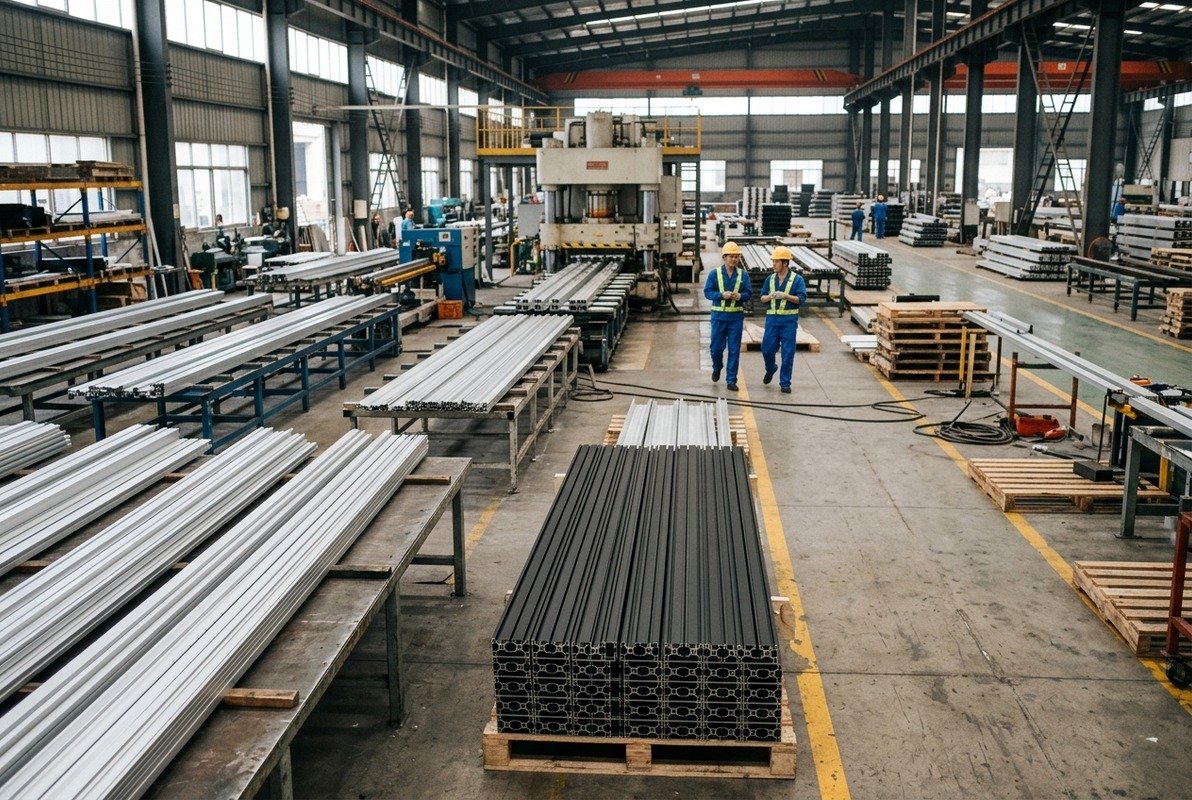
Finding reliable slim-frame glass door aluminum profile suppliers in China can feel overwhelming when thousands of factories claim to offer the best quality and price.
The top 10 slim-frame glass door aluminum profile suppliers in China for 2026 include ZMR Windows, OPPEIN, YY Windows, Doorwin Group, Superhouse, HOGLAD, Beidi, Kanod, BOSWINDOR, and Guangdong Xingfa Aluminium — each offering distinct strengths in certifications, customization, and export capacity for global B2B buyers.
This guide breaks down what matters most when sourcing these suppliers ISO 9001-certified quality management 1. I will walk you through the selection criteria, customization options, quality control expectations, and logistics planning so your 2026 project stays on track and on budget.
How do I choose the most reliable slim-frame aluminum profile supplier for my 2026 project?
A buyer in Singapore once asked me to recommend a supplier for narrow frame sliding doors. He had been burned twice by factories that looked great on Alibaba but couldn't deliver consistent aluminum extrusion profiles 2 on time.
Choose a slim-frame aluminum profile supplier by verifying their export certifications (AS2047, CE, NFRC), confirming production capacity with a factory audit, requesting physical samples, checking MOQ flexibility, and ensuring they have documented after-sales support for international orders.

The first decision you need to make is whether you need finished glass doors or raw aluminum extrusion profiles. This distinction shapes everything — your cost, your timeline, and your risk exposure.
Finished Doors vs. Raw Profile Suppliers
Finished door manufacturers like ZMR Windows and HIMOLON handle everything. They integrate glass door hardware, apply powder coated aluminum finishes 3, and ship ready-to-install units. Profile-only suppliers like Guangdong Xingfa or Jiangxi Jinpeng extrude the raw sections. You then fabricate locally.
For EPC contractors and project directors, finished doors reduce on-site labor. For wholesalers with their own fabrication lines, raw profiles offer lower base costs and more flexibility.
| Criteria | Finished Door Supplier | Raw Profile Supplier |
|---|---|---|
| Cost per unit | Higher (includes fabrication + hardware) | Lower (profile only, ~US$4,500/ton) |
| Lead time | 30–60 days typical | 15–30 days for profiles |
| Customization | Full (color, glass, hardware, size) | Limited to profile shape and finish |
| Quality control | End-to-end warranty | Buyer must QC fabrication |
| Best for | Contractors, project buyers | Wholesalers, local fabricators |
| Examples | ZMR, OPPEIN, Doorwin | Xingfa, Jinpeng, Weiye |
The Top 10 at a Glance
Here is a quick comparison of the leading suppliers. I compiled this based on export track records, certification coverage, and product range relevant to minimalist door design.
| Rank | Supplier | Location | Type | Key Certifications | Key Advantage |
|---|---|---|---|---|---|
| 1 | ZMR Windows & Doors | Foshan, Guangdong | Finished doors | AS2047 4, NFRC, CSA, CE, AAMA | Multi-national standards |
| 2 | OPPEIN | Guangzhou | Finished doors + home systems | CE, ISO | Whole-house solutions |
| 3 | YY Windows | Shanghai | Finished doors | Saber, GCC | Coastal durability |
| 4 | Doorwin Group | Shandong | Energy-efficient doors | CE, PHI | Passive House certified |
| 5 | Superhouse | Shanghai | Commercial + residential | AS2047, NFRC 5 | Dual certification |
| 6 | HOGLAD | Shandong | Custom doors | NFRC, CE | Strong export support |
| 7 | Beidi | Henan | Standard residential | CE | Stable mid-range |
| 8 | Kanod Windows | Fujian | Custom doors | Multiple export certs | Residential custom focus |
| 9 | BOSWINDOR | Guangdong | uPVC + aluminum | CE | Large energy-efficient projects |
| 10 | Guangdong Xingfa | Guangdong | Extrusion + doors | ISO9001 | Massive production capacity |
Geographic Hubs Matter
Foshan in Guangdong is the premium hub for architectural aluminum systems. Most top-tier window and door profiles come from here. Shanghai focuses on commercial building materials and large-scale sliding door systems. Shandong excels at energy-efficient and custom extrusion services.
When I source components for our cable management projects, I always pay attention to where the factory is. Proximity to ports matters for shipping costs. Foshan factories ship through Guangzhou or Shenzhen ports. Shanghai factories have direct port access. Shandong ships through Qingdao.
What to Confirm Before Ordering
Before placing any order, confirm these specifics:
- Door type (sliding, bifold, casement)
- Profile thickness and visible frame width (under 20mm for true slim-frame)
- Glass type (double or triple glazed, low-E)
- Hardware integration (hidden or exposed)
- Color and finish (powder coated aluminum, anodized, wood-grain)
- MOQ and sample policy
- Lead time and production schedule
- Warranty terms and after-sales process
Can I customize my glass door profiles to meet specific architectural requirements and aesthetic standards?
Last year, a project contractor reached out about bifold door profiles for a luxury villa. The architect wanted less than 18mm visible frame width, a specific bronze anodized finish, and triple glazing compatibility. That level of detail is exactly what separates a good supplier from a great one.
Yes, most leading Chinese slim-frame glass door aluminum profile suppliers offer extensive customization — including profile dimensions, colors, finishes (anodized, powder coated, wood-grain), glass thickness, hardware integration, and thermal break configurations — to meet specific architectural and aesthetic requirements.
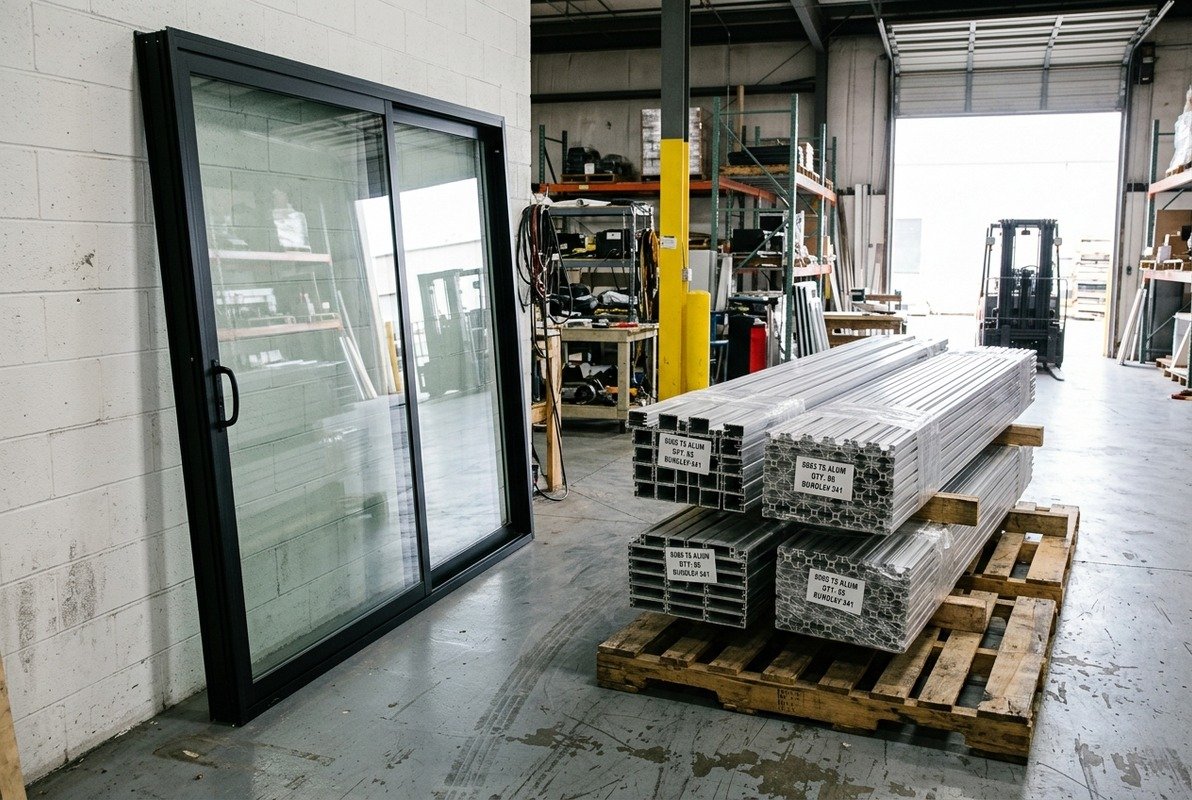
Customization in this market is not a luxury. It is the norm for serious B2B buyers. The question is how deep the customization goes and what it costs.
Profile Customization Options
Ultra-narrow profiles with less than 20mm visible width are the defining feature of modern minimalist door design. But "slim" alone is not enough. Architects want specific alloy grades (6063-T5 6 is the standard for window and door profiles), custom cross-sections, and thermal break profiles 7 for energy efficiency.
Most suppliers in the top 10 can adjust:
- Frame width: From 15mm to 30mm visible width
- Profile depth: Varies by wind load and glass weight requirements
- Alloy grade: 6063-T5 standard; 6061-T6 for high-strength applications
- Thermal break: Polyamide strips integrated into the profile for insulation
Surface Finish Options
The finish defines the look. Here is what the market offers:
| Finish Type | Description | Best For | Durability |
|---|---|---|---|
| Powder coated | Wide color range, matte or gloss | Commercial and residential | 15–20 years outdoor |
| Anodized | Metallic look, scratch-resistant | High-end residential, coastal | 20+ years |
| Wood-grain transfer | Simulates natural wood appearance | Luxury villas, traditional designs | 10–15 years |
| Electrophoretic | Smooth, corrosion-resistant | Humid climates | 15+ years |
| PVDF coating | Premium fluorocarbon paint | High-rise commercial, curtain walls | 25+ years |
In our own cable tray manufacturing, we offer similar finish customization — hot-dip galvanized, powder coated, stainless steel. The principle is the same across industries: surface treatment must match the environment. A coastal project in Southeast Asia demands anodized or PVDF. An interior commercial space can use standard powder coated aluminum.
Hidden Hardware and Smart Integration
The trend toward seamless glass integration means hardware must disappear. Top suppliers now offer concealed hinges, flush-mounted handles, and integrated tracks for narrow frame sliding doors. Some advanced systems, like those from HIMOLON and Doorwin, are compatible with smart home protocols including Matter 2.0 for automated opening, closing, and climate control.
DIY-Friendly Assembly
A growing segment of the market demands no-weld assembly for retrofit and smaller projects. These systems use mechanical connections — clips, screws, and interlocking profiles — so installers can complete projects in days rather than weeks. This reduces labor costs significantly and opens up the market for buyers who do not have specialized welding teams on site.
The key takeaway: customization capability is a baseline requirement. What differentiates the best suppliers is their speed of turnaround on custom orders and their ability to maintain quality consistency across large batches.
What quality control measures should I expect when sourcing slim-frame profiles from China?
One lesson I learned early in our export business: the factory that shows you a perfect sample can still ship inconsistent bulk orders. Quality control is not about one good piece. It is about systems that produce thousands of good pieces.
When sourcing slim-frame profiles from China, expect ISO 9001-certified quality management, raw material traceability, dimensional tolerance checks, surface finish inspections, thermal performance testing, and third-party pre-shipment inspections — all documented with test reports and certificates.
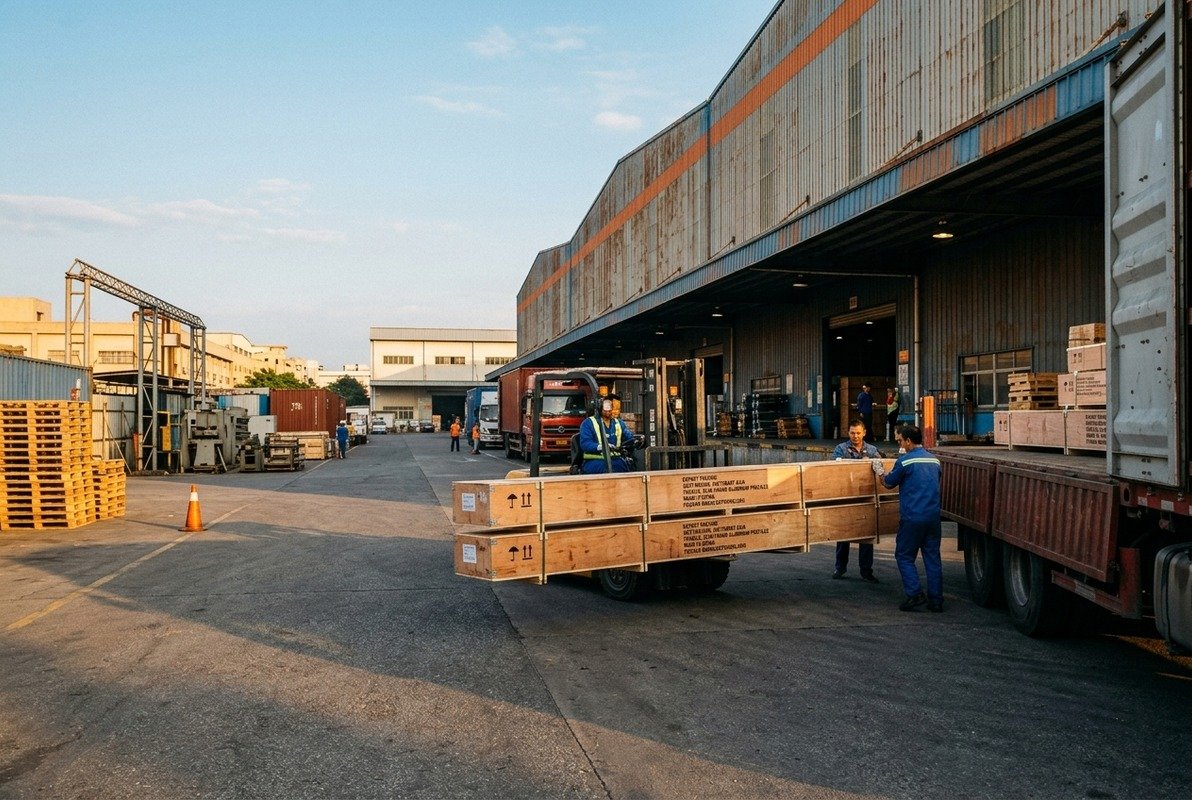
Quality stability is the single most common pain point I hear from buyers. Delivery delays and product returns both trace back to weak QC. Here is what a robust QC system looks like, stage by stage.
Incoming Material Inspection
Everything starts with the aluminum billet. Reputable suppliers test incoming 6063-T5 billets for chemical composition and hardness. They should provide mill certificates. If they cannot, that is a red flag.
In-Process Quality Checks
During extrusion, profiles must be checked for:
- Dimensional accuracy: Tolerances typically ±0.1mm to ±0.2mm for architectural aluminum systems
- Straightness: Critical for sliding door systems where any warp causes binding
- Surface defects: Scratches, die lines, and pitting are caught here
- Wall thickness uniformity: Ensures structural integrity across the entire profile length
Thermal break profiles require an additional step. The polyamide strip insertion must be tested for adhesion and alignment. A poorly bonded thermal break defeats the entire purpose of the profile.
Surface Treatment QC
After extrusion, profiles go through surface treatment. For powder coated aluminum, the key checks are:
- Coating thickness (typically 60–80 microns)
- Adhesion (cross-hatch tape test)
- Color consistency (spectrophotometer readings against approved samples)
- Salt spray resistance 8 (minimum 1,000 hours for outdoor applications)
For anodized finishes, oxide layer thickness and sealing quality are critical. Qualicoat certification 9 is the gold standard for powder coating quality in Europe.
Pre-Shipment Inspection
This is your last line of defense. I always recommend a third-party inspection before the container is loaded. The inspector checks random samples against your approved specifications, photographs any defects, and verifies packing quality. Companies like SGS, Bureau Veritas, and TÜV operate throughout Guangdong and Shandong.
What Good Documentation Looks Like
A reliable supplier provides:
- Material test certificates (MTC) for each batch
- Dimensional inspection reports
- Surface treatment test reports
- Packing list with profile identification markings
- Photos of loading and container sealing
In our cable tray business, we follow the same documentation discipline. When buyers in Southeast Asia and Africa receive shipments, they need paperwork that matches every piece in the container. The same principle applies to window and door profiles — traceability protects both buyer and seller.
How do I ensure my bulk aluminum profile order arrives on schedule without logistics delays?
A project director I work with in Singapore told me his biggest frustration is not price. It is waiting. A two-week delay on commercial building materials can cascade into penalty clauses and missed handover dates. I understand that pressure because we face it every day shipping cable trays to EPC projects across three continents.
Ensure on-time delivery of bulk aluminum profile orders by confirming production schedules in writing, staging payments tied to milestones, booking freight early, using pre-shipment inspections, and working with suppliers who maintain ready stock of standard profiles and have proven export logistics experience.

Logistics is where many sourcing plans fall apart. The factory finishes on time, but the container sits at port for a week. Or customs documentation is incomplete. Or the buyer did not book the vessel early enough. Here is how to prevent each of these failures.
Production Timeline Management
Lock in a production schedule before you sign the contract. A clear timeline should include:
- Order confirmation and deposit: Day 0
- Raw material procurement: Days 1–7
- Extrusion: Days 8–20
- Surface treatment: Days 21–30
- Quality inspection and packing: Days 31–35
- Pre-shipment inspection: Day 36
- Container loading and dispatch: Days 37–40
For standard profiles, some suppliers like Xingfa keep ready stock. This can cut your lead time to 15 days or less. Custom extrusion services for unique cross-sections or special finishes add 10–15 days.
Freight Planning
Do not wait until the goods are ready to book shipping. Ocean freight from Guangzhou or Shanghai to Southeast Asia takes 5–10 days. To Europe, 25–35 days. To South America, 30–45 days. Peak season (August–November) can add another week of waiting for vessel space.
| Route | Transit Time | Peak Season Risk | Recommended Booking Lead |
|---|---|---|---|
| Guangzhou → Singapore | 5–7 days | Moderate | 2 weeks before loading |
| Shanghai → Rotterdam | 28–35 days | High | 3–4 weeks before loading |
| Shenzhen → Lagos | 25–30 days | Moderate | 2–3 weeks before loading |
| Guangzhou → São Paulo | 35–45 days | High | 4 weeks before loading |
| Qingdao → Sydney | 14–18 days | Low–Moderate | 2 weeks before loading |
Payment Terms That Protect Your Timeline
Tie payments to milestones. A common structure is 30% deposit on order confirmation and 70% against copy of bill of lading 10. This incentivizes the supplier to finish and ship on time. For large orders, consider a letter of credit (L/C) with specific shipment date clauses.
Export Documentation Checklist
Incomplete documentation causes customs delays. Make sure your supplier provides:
- Commercial invoice
- Packing list
- Bill of lading (or airway bill)
- Certificate of origin
- Material test certificates
- Fumigation certificate (for wooden packing)
- Any required certification documents (CE, AS2047, etc.)
Working with Export-Experienced Suppliers
This is where the insight of "有出口经验" (export experience) really matters. Suppliers who regularly ship to Europe, North America, and Southeast Asia know the documentation requirements cold. They understand container loading optimization — how to pack bifold door profiles, sliding door systems, and architectural aluminum systems without damage during transit.
When we ship cable trays, we use custom crating and edge protection. The same care applies to slim-frame glass door profiles. Any dent or scratch during shipping becomes a quality complaint on arrival. Good suppliers use foam separators, corner protectors, and shrink wrapping.
One more thing: always get the supplier's freight forwarder contact. If you are managing your own logistics, having a direct line to the person loading the container can save you days of back-and-forth.
For a broader perspective beyond China, you can also explore the top slim-frame glass door aluminum profile suppliers in the world to compare international options alongside these domestic leaders. Additionally, if you want to evaluate which companies focus specifically on profile production rather than finished doors, our guide to the top slim-frame glass door aluminum profile factories in China provides a complementary factory-level analysis.
Conclusion
Sourcing slim-frame glass door aluminum profile suppliers in China for 2026 requires careful evaluation of certifications, customization depth, quality systems, and logistics planning to ensure your project succeeds on time, on spec, and on budget. For buyers also evaluating slim-frame glass door aluminum profile manufacturers worldwide, comparing Chinese suppliers against global competitors can further sharpen your sourcing strategy.
Footnotes
1. Official ISO page detailing the globally recognized standard for quality management systems and its requirements. ↩︎
2. Replaced 404 link with an authoritative source on aluminum extrusion process basics. ↩︎
3. Explains the process, benefits, and durability of powder coating for aluminum, enhancing protection and appearance. ↩︎
4. Details Australia’s mandatory performance standard for windows and external glazed doors, including key tests. ↩︎
5. Official site explaining NFRC’s role as a non-profit certification body for fenestration energy performance. ↩︎
6. Replaced unknown HTTP status link with a Wikipedia entry on 6063 aluminium alloy, including T5 temper. ↩︎
7. Explains how thermal breaks use insulating material to separate aluminum profiles, reducing heat transfer and improving energy efficiency. ↩︎
8. Explains the ISO 9227 standard for evaluating material corrosion resistance through neutral and acidic salt spray tests. ↩︎
9. Official website for Qualicoat, detailing its role as a quality label for powder coating on architectural aluminum. ↩︎
10. Replaced unknown HTTP status link with an authoritative legal definition of a bill of lading. ↩︎